Is Hammock Camping Safer Than Tent Camping?
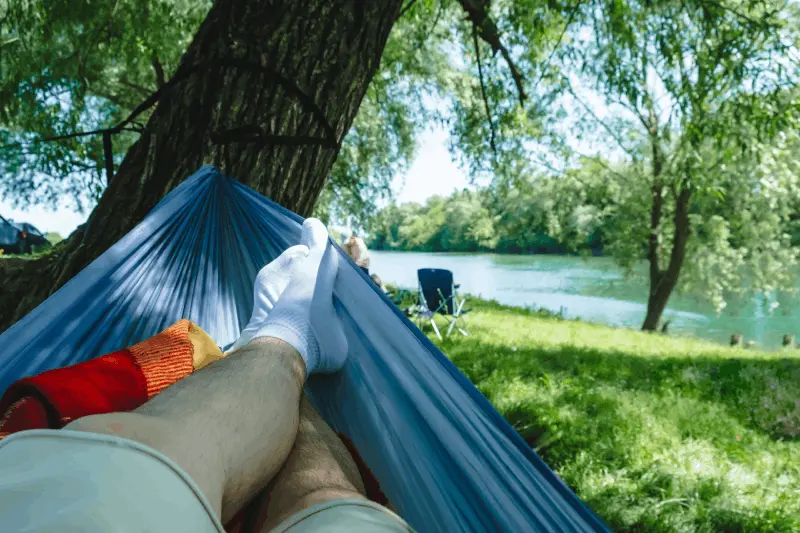
The safety of hammock camping can be higher than tent camping when set up correctly. Sleeping suspended in the air, away from ground moisture, uneven terrain, and crawling creatures (like snakes and scorpions) eliminates many local risks. However, the key to this safety lies in the choice of trees and the security of the attachment points. Problems like flooding or moisture that can occur when in direct contact with the ground in a tent do not happen in a hammock. On the other hand, when hammock camping, it is essential to analyze environmental factors well; because wind passing from below can lead to heat loss. Although this situation can trigger what is known as "cold butt syndrome," with proper insulation, hammock camping offers a more ergonomic and safer alternative than a tent in all seasons. The fundamental element determining safety is the camper's knot knowledge, tree health checks, and the selection of equipment suitable for weather conditions.
Is It Possible to Protect Against Wild Animal Attacks While Sleeping in a Hammock?
Regarding wild animals, a hammock actually offers more than just a psychological barrier. Sleeping at a height of about 40 to 60 cm from the ground makes it difficult for small mammals and insects to reach you. When it comes to bears or large predators, there is no physical difference in protection between a hammock and a tent; since both are made of thin fabrics. However, a hammock makes it easier to observe your surroundings because it makes your campsite more compact. The most basic safety rule in areas where bears are present is to hang your food at least 60 meters away from the hammock, on a high branch. Managing odors while hammock camping can be more critical than in a tent because airflow can spread the scent over a wider area. As a result, while a hammock keeps you elevated from the ground and protects you from small pests, the way to safety against large predators is camping discipline and odor management.
How Does Choosing the Right Hammock Fabric Affect Your Safety?
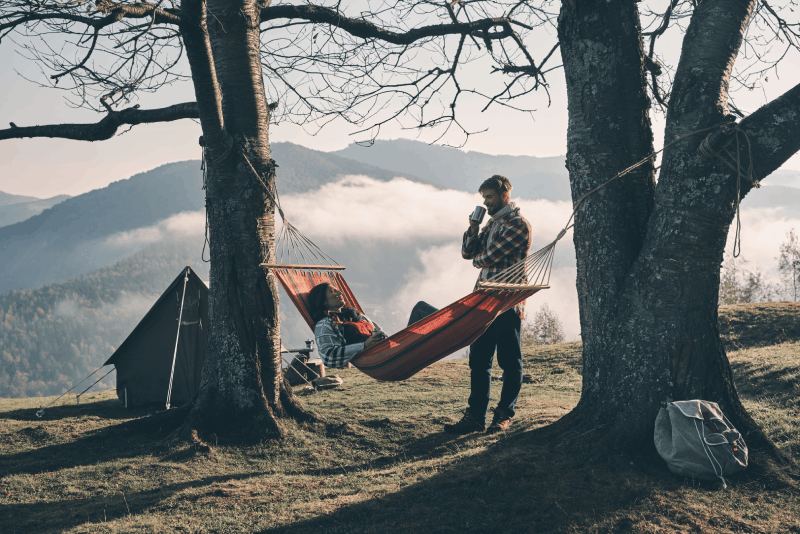
The fabric of the hammock is not only a matter of comfort but also a structural safety issue. The most commonly found fabric on the market, "Parachute Nylon," is known for its flexibility and durability. However, for those seeking a more technical experience, "Ripstop Nylon" fabrics are safer due to their square weave structure, which prevents damage from potential punctures or tears. The "Denier" (D) value of the fabric represents the thickness of the thread; for example, a 70D fabric is heavier but much more durable than a 20D fabric. For safe sleeping, you should choose a hammock that has at least twice the carrying capacity of your weight. Additionally, fabrics exposed to UV rays can lose their strength over time. Therefore, an old hammock left under the sun for a long time carries the risk of tearing unexpectedly. When selecting fabric, it is essential to balance breathability and weave density, as this prevents sweating and ensures safe carrying.
Why Is the Width of Tree Straps an Ecological Safety Issue?
Using wide straps (Tree Straps) instead of traditional ropes in hammock camping is essential for both tree health and your safety. Thin ropes can damage the tree's "cambium" layer (the layer that transports nutrients) under the weight, leading to the tree's drying out. This not only causes ecological damage but also weakens the tree over time, increasing the risk of branch breakage or toppling, thus jeopardizing your safety. An ideal tree strap should be at least 2.5 cm (1 inch) wide. A wider surface area distributes the pressure over the tree trunk, reducing stress and preventing slippage at the attachment point. The material of the straps should generally be polyester; because nylon straps stretch when wet, causing you to get closer to the ground during the night. A static, non-stretching, and wide strapping system is the most professional way to maintain a secure suspension and respect nature.
Is the "30 Degree Rule" a Requirement for Safety in Hammock Setup?
The biggest myth of hammock camping is that the hammock must be pulled tight. However, this is a significant mistake for both spinal health and equipment safety. For a safe and comfortable sleep, the angle at which the hammock straps attach to the tree should be approximately 30^\circ. This angle optimizes the tension on the hammock. The tighter the hammock is pulled, the greater the force on the straps and tree. For example, a hammock hung at a 30^\circ angle will exert a load on the straps equal to your body weight, while at a 0^\circ (completely flat) hang, this load can physically rise to tons and cause equipment failures. Additionally, this curve allows you to lie diagonally in the hammock. Diagonal lying helps align your back, preventing back pain and providing the most natural sleeping position. Therefore, the 30^\circ rule is fundamental to both mechanical safety and physical health.
Which Tarp Models Should Be Chosen to Stay Dry in Rainy Weather?
The "Tarp" (tarp) that serves as a roof in hammock camping is key to creating a safe shelter. Only small diamond-shaped tarps that cover the hammock may be sufficient in light rain, but they may be inadequate in windy and severe storms. For safe camping, "Hex" or "Winter Tarp" models should be preferred. The length of the tarp should be at least 30 to 60 cm longer than the hammock. Additionally, drip lines, which are ropes that prevent rainwater from dripping into your hammock straps, should be installed to ensure that water does not reach the hammock. The tension of the tarp should be adjusted to prevent water pooling on it; otherwise, the weight of the accumulated water can tear the tarp or break the attachment points. A quality silicone-coated nylon (SilNylon) or Dyneema tarp allows you to create a dry and safe haven even in the harshest weather conditions.
Is Underquilt Required to Avoid Freezing in the Hammock During Winter?
In tent camping, you can insulate yourself from the ground using a mat, but in a hammock, the airflow underneath quickly absorbs your body heat. This is called "Convective Heat Loss." Even when the air temperature drops below 20^\circ\text{C}, you can feel the chill on your back. Using a sleeping bag inside the hammock alone is not sufficient; because your body weight compresses the insulation material of the sleeping bag, eliminating its insulating properties. For a safe winter camp, insulation quilts called "Underquilts" that are hung outside the hammock are essential. Underquilts maintain their loft (volume) because they are not compressed and trap warm air. If your budget is limited, a high R-value sleeping pad placed inside the hammock can also be a solution, but for comfort and complete protection, an underquilt is unmatched. Ensuring complete insulation in winter camping is a vital safety parameter to prevent the risk of hypothermia.
What Techniques Can Reduce the Risk of Falling from the Hammock to Zero?
The fear of falling from the hammock is common among beginners, but this risk can be completely eliminated with a few simple techniques. First, you should never try to enter the hammock standing; always sit first and then bring your legs inside. The height at which the hammock is hung should be adjusted so that when you sit down, it is about 45-50 cm (chair height) above the ground; this way, in case of an accident, you are very close to the ground. Using a "Structural Ridgeline" ensures that the hammock remains at the same angle and stability each time, reducing the risk of tipping over. Additionally, you should ensure that you are sitting in the center of the hammock and that your weight is evenly distributed. Ensuring that the straps and carabiners are locked and that the "Daisy Chain" rings are secure also eliminates the mechanical risk of falling. With the right equipment and entry technique, a hammock becomes a safer sleeping area than a bed.
Why Are Asymmetrical Cut Hammocks the Safest Option for Those with Back Pain?
Traditional "banana" shaped hammocks can create pressure points on the back and shoulders during long sleeps. However, modern camping hammocks typically have an "Asymmetrical" cut. This design forces the user to lie diagonally at an angle of about 15-30 degrees rather than parallel to the axis of the hammock. Thanks to the asymmetrical cut, your body lies flat and allows your body to take a natural position. This "Flat Lay" position reduces the load on the spine, making hammock camping much safer and more ergonomic for people with back pain or herniated discs than sleeping on hard mats in a tent. Positions like side sleeping or lying on your stomach also become possible in asymmetrical hammocks. If you want to wake up refreshed in the mornings and avoid joint pain, an asymmetrical cut hammock that is at least 3.3 meters (11 feet) long is the most professional choice.
How Many Meters Should Be the Distance Between Trees for a Safe Sleep?
One of the most critical factors when setting up a hammock is the distance between the trees. The ideal distance is usually between 3.5 meters and 5 meters. If the trees are too close together, the hammock will take on a very deep "U" shape, and you won't be comfortable; additionally, there won't be enough space to stretch the tarp. If the trees are too far apart (more than 6 meters), you will need to attach the straps high above the tree to achieve the necessary 30^\circ angle, which will make setup difficult and can put the tension on the straps at dangerous levels. As the distance increases, the "folding force" increases, and your equipment limits are strained. To measure the ideal distance, you can use the "5-6 steps between two trees" rule. Additionally, make sure that the trees you choose are healthy, with strong trunks and root systems. Weak trees or thin saplings are unsafe for hammock camping and can damage the environment.
How Is the Load Capacity of Carabiners and Attachment Points Calculated?
The weakest link in your hammock system determines your overall safety. Therefore, the carabiners used should not be ordinary keychain carabiners. You should prefer climbing-type carabiners specifically manufactured for camping hammocks, which have values written on them such as at least 12\text{ kN} (1200\text{ kg}) or 22\text{ kN}. Dynamic loads (instant forces created when sitting or moving in the hammock) can exceed your static weight significantly. For example, a person weighing 80\text{ kg} can suddenly put 200-300\text{ kg} of load on the attachment points when they sit down hard in the hammock. If lightweight attachment elements like "Whoopie Sling" or "Soft Shackle" are used in the system, their material must be high-strength ropes like "Amsteel-Blue" (Dyneema). Checking the wear, fraying, or rusting of the attachment elements before each camp is a vital safety procedure to prevent mechanical failures.
Should Integrated Bug Net Models Be Purchased to Protect Against Bugs and Mosquitoes?
Ticks and mosquitoes, which are among the biggest safety threats while sleeping in nature, are not only annoying but also disease carriers. For a safe sleep in hammock camping, "Integrated Bug Net" models are the most logical choice. In these hammocks, the bug net is attached to the hammock with a zipper, completely sealing any gaps through which insects could enter. Separate bug nets that cover the entire hammock in a "Socc" shape are also effective but are more cumbersome to set up. The bug net's mesh should be tightly woven, so that even the smallest no-see-ums cannot get through. Additionally, treating the hammock fabric with "Permethrin" or using a double-layer hammock provides an extra layer of security to prevent mosquito bites. A hammock without bug protection can turn a peaceful night in nature into a nightmare; therefore, a bug net is not just a luxury but a basic necessity.
What Are the Advantages of Double Layer Hammocks in Terms of Safety and Comfort?
Double layer hammocks are created by sewing two layers of fabric on top of each other. The first advantage of this structure is increased carrying capacity; it offers a much safer platform for heavier campers. The second and most important advantage is the pocket for placing an insulation mat. The mat placed between the two layers does not slip during the night and provides you with a stable insulation area. Additionally, double-layer fabrics make it almost impossible for mosquitoes to bite you from underneath; because the needles cannot penetrate both layers. Although they may be a disadvantage in terms of weight (they can be 500-800 grams heavier), they are far superior to "Single Layer" hammocks in terms of durability and functionality. If you are going on long expeditions or want to ensure that your equipment will not tear even in the harshest conditions, a double-layer structure will be your safest haven.
Does "Dead Branch" Control Save Lives in Hammock Camping?
One of the most overlooked but dangerous risks in hammock camping is the "Widowmaker" dead branches. The trunks of the trees you are going to set up your hammock on may look very healthy, but if you do not check the branches above, you are at significant risk. A dead branch above you can fall on your hammock due to wind, leading to fatal consequences. Therefore, before tying your hammock straps, you must always lift your head up and inspect the top of the tree. If there are large pieces that are dry, leafless, broken, or hanging from other branches, you should stay away from that tree. Similarly, you should ensure that the neighboring trees to the one you set up your hammock on do not pose a risk of falling. The "Look Up" rule is the golden rule of hammock camping and is the most concrete example of how a simple observation can save lives. Your safety depends not only on the equipment you are suspended from but also on the health of the trees around you.
How Reliable Is the Daisy Chain System in Hammock Straps?
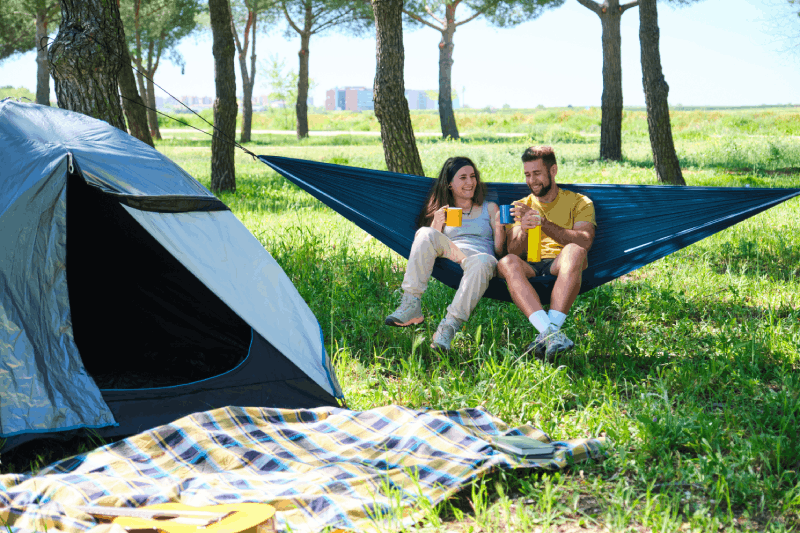
The "Daisy Chain" straps, which are the most popular connection system for beginners, are polyester straps that have many ready loops. The reliability of this system depends on the quality of the stitching and the rigidity of the material used. Each loop is usually reinforced with a "Bar-tack" stitch and can withstand high weights. The biggest advantage of the daisy chain system is its ease of use; you can set it up in seconds by attaching the carabiner to the appropriate loop. However, the "fine adjustment" capacity of this system is limited; sometimes one loop may be too loose while another is too tight. From a safety perspective, you should always check the total tensile load of the straps (WLL - Working Load Limit). If you are not after ultra-lightweight, a quality daisy chain system is the safest and least error-prone setup method.
Is the Risk of Lightning Strikes Higher in Hammock Camping Compared to Tents?
The risk of lightning strikes exists for anyone outdoors; however, hammock camping does not directly increase this risk. A common misconception is that hammock straps will act as a conductor for lightning. However, trees are already natural lightning rods, and lightning typically strikes the highest point in the area. If lightning strikes a tree, everything nearby (including tents) is at risk due to "step voltage" or "side flash." Being elevated in a hammock may provide some protection from ground currents, but this is not scientifically guaranteed. To stay safe in stormy weather, you should avoid setting up your hammock under the tallest trees or isolated trees. Instead, it is safer to choose forested areas with trees of equal height. Monitoring weather conditions and choosing the right campsite is the only way to minimize lightning risk.
Does Using a Sleeping Bag Inside a Hammock Restrict Movement?
Many people think that getting into a sleeping bag inside a hammock feels like being trapped like a mummy. Classic mummy-type sleeping bags can be difficult to zip up in a hammock due to their narrow design, restricting your range of motion. This situation can create a safety risk by forcing you to exit the hammock quickly in an emergency. The most professional way to overcome this issue is to use a "Topquilt" (top blanket). Topquilts are special sleeping bags that do not have a back section and only have a footbox. They are laid over you in the hammock like a blanket, saving weight and making it incredibly easy to get in and out of the hammock. If you are going to use a standard sleeping bag, it is safer and more practical to put it on while outside the hammock and then slide into it after sitting down, rather than sitting down in it. Being able to move comfortably is essential for both sleep quality and operational safety.
How Does the Maintenance of Hammock Camping Equipment Affect Safety?
Hammocks and straps wear out over time due to ultraviolet (UV) rays, moisture, salty air, and abrasion. A strap that appears to be in perfect condition may have weakened fibers if it has been left in the sun for too long. To protect your safety, you should check your equipment after each camp. Fraying on straps, cracks in carabiners, or tiny holes in hammock fabric can be harbingers of significant failures in the next camp. You should never wash hammocks with detergent; they should only be cleaned by hand with warm water; because chemicals can reduce the durability of the fabric. Additionally, you should never put away your equipment without completely drying it; as moisture can lead to mold and mildew, compromising the structure of synthetic fibers. Keeping track of your equipment's lifespan and retiring parts that look risky without saying "it still holds" is a safety discipline of a professional camper.
Is Solo Camping Psychologically Safe?
Camping alone (solo camping) is a great way to connect with nature, but in hammock camping, this situation takes on a different psychological dimension. The lack of walls in a tent can make you feel more vulnerable in the wilderness. However, this "openness" is actually a safety advantage; you hear the sounds around you better and can detect dangers more quickly. To ensure your psychological safety, you should do your first solo camps in familiar areas. You should always have a satellite communication device or at least a friend who knows your route nearby. The sounds that come while swaying in the hammock at night can be frightening, but knowing you have a headlamp and a sturdy knife with you gives you a sense of control. Hammock camping is one of the safest and most educational solitary experiences to confront your fears and build your self-confidence.
What Are the Ideal Tree Types and Trunk Thicknesses for Hammock Camping?
Not every tree is suitable for carrying a hammock. The type of tree and trunk thickness you choose for a safe setup is crucial. The most ideal trees are solid trunk types in the hardwood category, such as oak, beech, hickory, or maple. Softwoods like pine and spruce can also be used, but resin runoff can damage your equipment, and their branches are more fragile. The diameter of the tree trunk should be at least 15-20 cm (about the width of a dinner plate). Thinner trees can bend and damage your attachment points, posing a risk of harming the tree. Trees with weak root systems, like palm trees, should be chosen with great caution due to the risk of toppling under weight. Additionally, checking for rot, large cavities, or insect infestations in the tree trunk is the first step to ensuring the tree is healthy.
What Should Be the Height Limit When Hanging a Hammock?
The idea that "the higher I hang it, the safer it will be" is one of the most dangerous mistakes in hammock camping. In a safe setup, the hammock should be no more than 45-60 cm above the ground when you sit down. This height allows you to get in and out of the hammock comfortably and minimizes the risk of serious injury if there is an equipment failure. Some campers set up high for the view or to avoid predators (stacking), but this makes rescue operations and daily needs impossible. Remember, falling from a height is the real danger, not falling from the hammock. Having your hammock at "chair height" is the golden balance between comfort and safety. Additionally, you can increase wind protection by setting your tarp lower and keep yourself in a more sheltered microclimate.
Is Hammock Camping Suitable for Children and Pets?
Hammock camping can be a great source of fun for children, but it may require some adjustment for pets. For children's safety, the hammock should be set up very low and a soft surface (or mat) should be placed underneath. Models with bug nets are safer for preventing children from falling out of the hammock while sleeping. Camping with dogs is possible, but you should either put booties on your dog to prevent their claws from tearing the hammock fabric or lay a sturdy blanket on the bottom of the hammock. Many dogs prefer to sleep on a mat placed under the hammock, giving them a sense of security and protection. If your dog is going to sleep with you, choosing a double-sized hammock and balancing the weight is critical to prevent tipping. Family hammock camping can be an unforgettable bonding experience with the right precautions.
How Can I Safely Store Shoes and Bags While Hammock Camping?
In a tent, you can keep your belongings close to you, but space is limited in a hammock. To keep your belongings safe and dry, you can use small hammocks called "Gear Sling" or hang your bag from the ridgeline of your hammock. Instead of placing your shoes directly on the ground, hanging them from the hammock strap or tying them to the end of the hammock in a bag prevents bugs or moisture from getting in. Placing your bag under the hammock, in an area protected by the tarp, is the most practical solution. Some campers prefer to hang their bags from a tree to protect them from mud. Keeping your valuables (phone, wallet) in the hanging pockets (organizers) inside the hammock allows you to access them at any time. Keeping your belongings safe and organized not only enhances your comfort but also increases your ability to move quickly in an emergency.
Do Ultralight Hammocks Compromise Durability and Safety?
"Ultralight" hammocks, designed for lightweight enthusiasts, are typically made from very thin monofilament nylons like 15D or 20D. These hammocks can be small enough to fit in your palm, but their safety margins are narrower. Thinner fabrics are much more sensitive to sharp objects, zipper attachments, or harsh abrasions. If you are using an ultralight hammock, you should remove any jewelry, belt buckles, and cutting tools from your pockets before getting in. Additionally, these hammocks have a higher stretch ratio, which can cause your hang angle to change throughout the night. If you are not going on a world tour or are not counting every gram, "standard" camping hammocks with a fabric thickness of 40D or 70D are a more logical investment in terms of long-term safety and durability. Lightweight is nice, but durability gives you more confidence in harsh conditions.
Why Are "Leave No Trace" Principles Important for a Safe Future in Hammock Camping?
Our safety in nature is tied to the health of the environment. The "Leave No Trace" principles focus heavily on tree protection in hammock camping. If we damage trees, we will not find healthy trees to camp in the future. Never tie your straps directly to the bare trunk of a tree; if necessary, place a piece of cloth or a tree protector in between. When leaving your campsite, make sure you leave no ropes or remnants on the trees. Hammock camping is the least damaging type of camping to the plant cover since you are not stepping on the ground; however, this advantage should be supported by proper waste management and trash discipline. Respecting nature is not just an ethical rule; it is also a safety strategy that minimizes wildlife interactions by preserving the ecosystem's balance. A clean campsite is a safe haven for both you and those who come after you.
How Can I Protect Myself from Wild Animal Attacks While Sleeping in a Hammock at Night in the Forest?
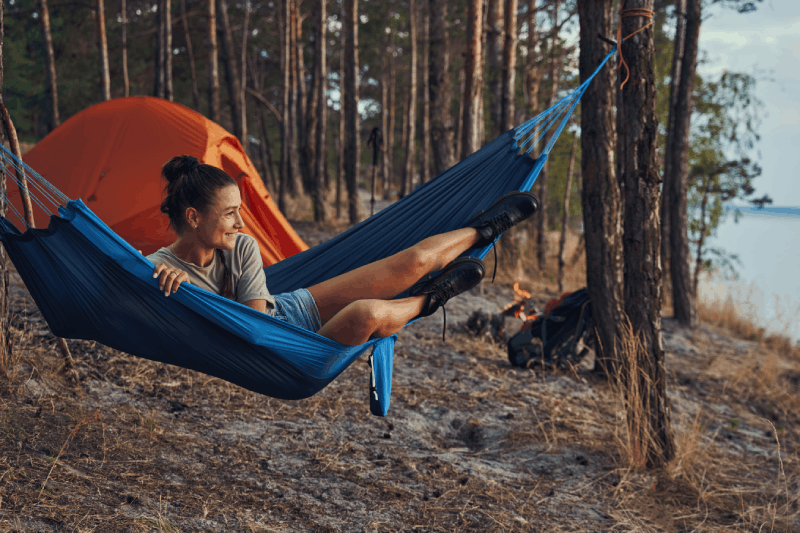
The biggest fear of beginners in hammock camping is feeling vulnerable despite being elevated from the ground, like a "human cocoon." While we know that the thin fabric of a tent does not provide a security wall, it gives a sense of a closed space visually. In a hammock, however, your surroundings are open. But the reality is that wild animals usually avoid human scent. To increase your safety, you should cook your food at least 50 meters away from where you sleep and hang your food in odorless bags on a high branch. A mat or an underquilt that you place under your hammock not only provides insulation but also creates a psychological and physical barrier against small critters or abrasions that may come from below. Remember, you are a threat to animals; they do not see you as prey.
Does Sleeping in a Hammock Cause Severe Back and Neck Pain When I Wake Up?
Many people think that sleeping curled up in a hammock will trigger back pain. If you sleep in a banana shape, yes, pain is inevitable. However, in professional hammock camping, the "asymmetrical sleeping" technique is used. You should lie diagonally at an angle of 30 degrees rather than flat. This way, your body positions itself as if it were on a flat surface. A hammock set up with the right tension and made of quality fabric offers a much more comfortable sleep than lying on a mat on the ground by evenly distributing the pressure points on your body. You should ensure that the hammock is neither too tight nor too loose and that the setup angle adheres to the "30-degree rule" for your spinal health.
If I Can't Find Trees at the Right Distance at My Camping Site, Will I Have to Sleep on the Ground?
The biggest logistical nightmare for hammock campers is not being able to find two trees at the right distance at the destination. To avoid this situation, it is crucial to research the area's vegetation before you go. If you are going to an area with grassland or scrub, hammock camping is a risky choice. However, if you are a prepared camper, you can use devices called "hammock stands" or portable lightweight tripod systems. If there are no options left, you can set up your tarp like a tent and lay your mat underneath for a bivy-style accommodation. Therefore, when going hammock camping, you should always carry a thin ground mat that can be used on the ground just in case.
Will Cheap Hammock Straps Stretch and Cause Me to Fall to the Ground in the Middle of the Night?
Cheap and low-quality nylon straps sold on the market stretch within hours under weight. When you are 50 cm above the ground while sleeping, you may find that your bottom is touching the ground when you wake up in the morning. Worse, a cheap seam bursting can lead to an instant fall and serious injuries. Therefore, you should prefer tree straps made from non-stretching (low-stretch) materials like "polyester" or "Dyneema." The carrying capacity of the straps should be at least 200 kg, and having multiple attachment points called "daisy chain" speeds up setup and guarantees your safety. Safety is not a risk that can be taken cheaply.
Can a Properly Set Up Tarp Keep Me and My Gear Dry Even in Heavy Rain?
A properly set up tarp can keep you drier than a tent even in the heaviest storms. The critical point here is the size of the tarp and the angle of setup. "Hex" or "Winter" type tarps with side wings prevent rain from coming in with the wind. Additionally, to prevent water from dripping into your hammock straps, you should add "drip lines" or a simple knot to the straps. The tension of the tarp should be adjusted to prevent water pooling on it; otherwise, the weight of the accumulated water can tear the tarp or break the attachment points. A quality silicone-coated nylon (SilNylon) or Dyneema tarp allows you to create a dry and safe haven even in the harshest weather conditions.
Will Sleeping Without a Mat and Only a Sleeping Bag in a Hammock Cause My Back to Freeze?
Yes, this is almost guaranteed. In temperatures below 15 degrees, sleeping without any protection (mat or underquilt) from below will cause you to wake up shivering in the middle of the night. You lose a significant portion of your body heat through the surface you are in contact with (through conduction) and the airflow from below (through convection). The insulation in the sleeping bag will be as thin as paper under your body weight, providing no thermal resistance. The first rule of hammock camping is: "Never sleep with a bare back." In emergencies, placing a few layers of newspaper or dry leaves under your hammock is better than having nothing.
Is It Safe to Camp with Children in a Hammock, or Is the Risk of Them Falling Out Too High?
Hammock camping can be an amazing adventure for children, but it does carry safety risks. Because children move a lot in their sleep, the likelihood of them falling out of a hammock without a bug net is high. Therefore, it is essential to choose "cocoon" type hammocks with zippers for children. Additionally, setting the hammock very low (almost touching the ground) can prevent injuries in case of a fall. Since children are lighter, placing two children side by side (in separate hammocks but under the same tarp) makes monitoring easier. You should teach them the rules of getting in and out of the hammock like a game and never allow them to stand up inside the hammock.
If I Stuff My Hammock into My Bag While It's Wet, Will I Face Mold Smell and Material Degradation?
Nylon and polyester fabrics do not break down as quickly as organic fibers, but wet packing can initiate a process called "hydrolysis." This causes the waterproof coating of the fabric (PU coat) to peel off and become structurally compromised. Additionally, moisture trapped inside can lead to a musty smell and bacterial growth. If you have to pack up your gear in the rain, you can put your equipment in your bag while wet, but as soon as you get home (within 12 hours at the latest), you should spread your hammock and tarp out in a wide area to dry completely. To extend the lifespan of your equipment, you should always store it in a dry, cool place away from sunlight.
Will a Hammock Swing Like a Sail in Strong Winds and Throw Me Out?
In very severe storms, a hammock can sway, but it is physically difficult for it to throw you out because your body weight pulls the hammock down like an anchor. The real danger is if the tarp catches the wind and tears or if the attachment points to the tree come loose. In windy weather, you should set your tarp very low and at a narrow angle (A-frame). Additionally, you should position the closed side of the tarp against the direction of the wind. If the wind is very strong, tightening the "ridgeline" of the hammock will maintain structural integrity. Still, the most fundamental safety rule is to avoid camping in high places or weak trees on stormy days.
Does Parachute Fabric or Nylon Blends Cause Less Skin Irritation?
"Parachute fabric" is actually a general term used for marketing purposes and usually means 210T Nylon. This fabric is durable but can feel a bit "plastic." Special weaves like "Monolite" or "HyperD" used in higher-end hammocks feel much softer on the skin and provide a cotton-like sensation. If you have sensitive skin, you should pay attention to the texture of the fabric and its breathability (CFM value). The more breathable the fabric, the less irritation and sweating on your skin. Additionally, you can maximize comfort by placing a thin sheet or silk sleeping bag liner over synthetic fabrics.
Can I Make a Safe Setup with Just a Carabiner Without Knowing Complicated Knots?
Yes, modern hammock suspension systems are designed to be "knotless." Thanks to systems like "Cinch buckle" or "carabiner + daisy chain," you do not need to know any sailor knots. You wrap the strap around the tree, attach the carabiner to the appropriate loop, and the process is complete. These systems reduce the margin for error and significantly speed up setup time. However, it is still beneficial to learn at least a basic knot like the "taut-line hitch" for unexpected situations where you need to tighten your tarp. Trust technology, but do not neglect basic survival skills.
Does Using Extra Rope When the Distance Between Trees Is Too Far Endanger My Safety?
The ideal distance between two trees is 4-5 meters. If the distance is 6-7 meters, you will need to use extra extension ropes. In this case, you will need to hang the hammock higher (to maintain the 30-degree rule) and be aware that the tension on the ropes will increase. If the rope's carrying capacity is low, the risk of breaking increases. Always use "Dyneema" or high-strength static ropes for long distances. Using elastic ropes (dynamic ropes) can cause you to sag during the night and find yourself on the ground in the morning. Also, the longer the rope, the more it will sway in the wind.
Does Hammock Camping Make Me Feel Claustrophobic or Is Watching the Sky a Real Therapy?
If you feel cramped between the narrow and closed walls of a tent, hammock camping is perfect for you. Falling asleep while watching the sky, stars, and tree branches removes all barriers between you and nature. For those with claustrophobia, models that offer bug nets and open views provide a sense of freedom. However, when you feel too exposed, you can create a protective area by setting your tarp more closed over you. Hammock camping is not just a way of sleeping; it is the art of directly engaging with the rhythm of nature, feeling its sounds and movements with all your cells. Once you experience this, it is quite challenging for most campers to return to a tent.