Should You Choose a Single Tent or a Double Tent?
One of the most confusing topics in the camping world is the number of tent layers. Single-layer tents are generally designed for backpackers looking for lightweight and quick setup or for those who camp for short periods only in the summer months. However, breathability in these models is quite low, and moisture from your breath can condense on the inner walls of the tent and drip onto you. Double-layer tents consist of an inner mesh cabin and a waterproof outer tent that covers it. The air gap between the two layers almost completely prevents condensation and provides excellent thermal insulation. If you plan to camp in harsh weather conditions, on windy and rainy days, you should definitely prefer double-layer models for your comfort and setup.
Is Dome Type or Tunnel Type More Secure?
The geometric structure of the tent directly affects wind resistance and the internal volume. Dome tents are set up by the cross intersection of poles at the top and have a freestanding structure. This design allows you to set up the tent without anchoring it on soft or hard ground and provides a balanced resistance against winds from all directions. Tunnel tents, on the other hand, consist of parallel pole arches and offer a very spacious internal volume and storage area. However, they cannot stand on their own; they must be staked to the ground. Tunnel tents are very durable when facing wind head-on, but they can be compromised by strong side winds. If you are looking for a structure that adapts to all terrains, is resistant to storms, and is practical, you should choose dome type; if you are looking for a spacious living area and comfort, you should opt for tunnel type tents.
Are Season Ratings Realistic?
The ratings specified by manufacturers for tents, such as 3-season, 4-season, or 5-season, are often misunderstood. 3-season tents are optimized for spring, summer, and autumn months. Their ventilation is excellent due to the dense mesh panels, but they are not resistant to harsh winter winds and heavy snow loads. 4-season tents should actually be known as "winter tents." The fabric of these tents is thicker, the poles are sturdier, and the mesh panels are at a minimum level; the aim is to retain the warm air inside and support the weight of snow. Staying in a 4-season tent in summer is akin to sleeping in a sauna. 5-season tents are designed for extreme mountaineering and polar expeditions and are heavy-duty tents. Season ratings are definitely realistic, but you should choose based on the most extreme conditions you will be using the tent in.
How Does Pole Material Affect Wind Resistance?
The material that makes up the poles forming the skeleton of the tent determines whether your tent will stand or not during a stormy night. Cheap tents often use fiberglass poles. Fiberglass poles are heavy, their flexibility is low, and when they break in strong winds, they can damage the tent fabric with sharp shards. In quality camping tents, aluminum poles (especially duralumin or DAC poles) are preferred. Aluminum poles are extremely lightweight, incredibly flexible against bending, and durable. Even if they bend in the wind, they do not break and can easily return to their original shapes. Carbon fiber poles are the lightest and stiffest but are quite expensive. To ensure safety in challenging natural conditions, it would be the best long-term investment to stretch your budget and choose tents with aluminum poles.
What Should the Water Column Value Be at Minimum?
The waterproof level of tent fabrics is measured by the "millimeter (mm) water column" value. This value indicates how much water pressure the fabric can withstand before leaking. Generally, you will see values ranging from 1000 mm to 10000 mm. For light summer rains and drizzles, a waterproof rating of 1000 mm - 1500 mm may be sufficient. However, if you plan to camp under heavy downpours, storms, and prolonged autumn rains, your outer tent's water column value should be at least 2000 mm, ideally 3000 mm. The tent floor should have a much higher value because it directly contacts the wet ground and is subjected to pressure when you sit on it. The water column value of the tent floor should be at least 3000 mm, and for harsh winter conditions, it should be 5000 mm or more to completely prevent water leakage.
Does Ripstop Fabric Really Prevent Tears?
Ripstop is a special weaving technique obtained by placing thicker and stronger threads at regular intervals during the fabric's weaving process. This technique creates a pattern of small squares on the fabric. Ripstop nylon or polyester fabrics do not completely prevent tearing of the tent; however, when a hole or tear occurs due to wind, branches, or sharp stones, it stops the spread and lengthwise progression of the tear. The tear remains within the boundaries of the square cells formed by the thick, strong threads. This allows you to easily repair your tent in the field with temporary patches. Especially if you are camping in the wild, on challenging and abrasive routes, having your outer tent and floor made with Ripstop technology is a vital assurance.
Is Extra Protection Needed for Tent Floors?
What is a Tent?
No matter how high quality the ground fabric of your tent is, when it is set up on direct soil, gravel, sharp stones, or tree roots, it will wear down over time and create micro holes. These holes cause the tent to completely lose its waterproofing. The tent floor protectors called "Footprint" are specifically designed to solve this problem. Placing a protective cover suitable for the tent size under the tent prevents the floor from wearing out, getting dirty, and becoming wet. Additionally, it makes the cleaning process much easier by preventing the floor from remaining muddy when packing up the tent. Purchasing a footprint is not an extravagant expense that can extend the life of an expensive tent by two or even three times; it is definitely a necessary and economical investment that must be made.
How Do Ventilation Windows Prevent Condensation?
One of the most common problems encountered in nature is waking up to a wet tent inside, even when it hasn't rained outside. This situation is entirely caused by condensation. The human body continuously releases moisture into the air through breathing and sweating while sleeping. If there is not enough air circulation inside the tent, this warm and humid air hits the cold outer fly and condenses, dripping inside the tent. Ventilation windows allow the warm air inside the tent to rise and escape outside while letting in clean and dry air from below. In double-fly tents, positioning these windows at the peak points of the outer fly creates a continuous chimney effect that prevents moisture accumulation. You should ensure that the ventilation windows of the tent you are going to buy have supportive structures that can remain open even in windy weather.
Why is the Size of the Storage Area Important?
Focusing only on the sleeping area of tents is a big mistake. The storage areas created by extending the outer fly, called "Vestibule," directly determine your camping comfort. You wouldn't want to bring your muddy boots, wet backpacks, and dirty equipment into the sleeping area of the tent on a rainy day. Leaving these items outside can also lead to dampness or allow insects to get inside. A spacious storage area ensures that you can keep all these materials safe, dry, and within reach. Additionally, since cooking inside the tent is dangerous and prohibited in windy weather, protected storage areas provide a safe space where you can light a stove and prepare meals. Therefore, you should prefer tents with at least one, ideally two, spacious storage areas.
How Should Tent Weight and Pack Size Be Balanced?
The most important crossroads in choosing a tent is how you will get to the campsite. If you are going to the campsite by car and will set up your tent right next to it (car camping), the weight and pack size of the tent do not matter at all. In this case, you can prioritize comfort, height, and spaciousness by choosing large family tents weighing 5-10 kg. However, if you are going on a hike where you will carry your tent for miles in your backpack, every gram counts. For backpacking, it is desired that the weight of the tent does not exceed 1.5 kg (for example, a two-person tent should weigh a maximum of 2.5 - 3 kg in total). To reduce weight, manufacturers use thinner, lighter poles and fabrics, which increases the price of the tent. You should establish a good balance between weight and budget according to your purpose.
Are Geodesic Designs Resistant to Severe Storms?
Geodesic tents have a complex and geometric structure where the poles intersect at many more points than standard dome tents. This multiple intersection of poles makes the external skeleton of the tent incredibly strong and resilient. The wind load does not concentrate on a single pole but is distributed evenly across the entire skeleton structure. The same applies to the weight of snow accumulating on the tent during heavy snowfall; the geodesic structure does not crush or collapse under snow load. These designs are intended to survive severe storms in open and unprotected high-altitude areas. If you are not doing extreme winter camping, these tents may be unnecessary due to their weights and difficult setups, but they are the only safe option for extreme conditions.
How Can We Extend the Life of the Polyurethane Coating?
Most modern tent fabrics (especially polyester and nylon) are coated with a chemical layer called Polyurethane (PU) from the inside to provide waterproofing. The PU coating is highly effective but is sensitive to moisture, heat, and UV rays. If you pack your tent wet or damp and keep it closed for days, a chemical reaction called "hydrolysis" begins. As a result of this reaction, the PU coating deteriorates, starts to peel, and the tent begins to smell; this completely destroys the tent's waterproofing. To extend the life of the PU coating, you should always dry your tent completely at home after each camping trip, store it in a dry and cool place that does not receive direct sunlight, and keep it loosely packed outside of a tightly sealed carrying bag.
Why is Seam Taping a Lifesaver?
Even if a tent's fabric is resistant to a water column of 10000 mm, the thousands of needle holes created at the seams are the weakest points for water to seep through. Quality tent manufacturers factory tape these seam lines with special waterproof tapes under high heat. This process is called "seam sealing." If the tent you are going to buy does not have these transparent tapes at the seam lines or if they have worn out over time, even in the lightest rain, water will seep through the seams of the tent. It will leak water inside. When buying a tent, you should pay attention to the seams being double-stitched and completely sealed with tape from the inside. You can easily repair the peeling seam tapes of your old tents with special seam sealing liquids sold in the market.
Are Snow Skirts Only Used in Winter?
Snow skirts are additional fabric pieces that extend from the bottom of the outer tent to the ground, used to stabilize the tent by weighing it down with snow, dirt, or stones. Their primary function is to prevent freezing winter winds from entering under the tent and cooling the inner tent, as well as to prevent the tent from lifting in the wind. However, contrary to popular belief, snow skirts are not only used in winter; they are also widely used in dry areas where sandstorms or heavy sand winds occur, completely preventing sand and dust from entering the tent. On the other hand, in summer camps, snow skirts completely block the air entry under the tent, leading to excessive heat and stuffiness inside. For this reason, models with snow skirts that can be folded and secured with Velcro for multi-purpose use should be preferred.
Are Pop-Up Tents Suitable for Professional Camping?
"Set up in seconds" pop-up tents are extremely practical models that self-erect when pulled out of their bag thanks to integrated flexible fiberglass rings. They are an excellent option for festivals, backyard camping, or day activities by the lake on calm summer days. However, they are definitely not suitable for professional, long-term, and challenging nature camps. Their round-shaped packages do not fit in a backpack and can catch the wind like a sail in windy conditions. Additionally, since the poles are sewn into the fabric, if a pole breaks in the wind, it becomes impossible to repair the tent in the field, rendering the tent unusable. For a true nature adventure, you should choose tents with a classic pole structure.
How Does the Number of Doors Affect Comfort of Use?
Single-door tents are generally lighter and more economical, but they create significant usability challenges, especially when camping with two or more people. When you want to go to the bathroom in the middle of the night, you have to crawl over the person next to you, which disturbs both parties' sleep. Double-door tents provide each user with their own personal exit space. Additionally, the double door, especially when opened alternately on hot summer days, creates a tremendous breeze and air circulation inside the tent, keeping the interior cool. If the tent will be used by multiple people, you should definitely opt for double-door and double-luggage models to enhance your comfort, privacy, and sleep quality.
Why is the Mesh Density of the Insect Net Important?
The quality of the insect net used in the inner tent of a tent not only prevents insects but also determines the quality of your sleep. Standard insect nets block large flies and mosquitoes, but they cannot prevent tiny pests like "sand flies" or "no-see-ums" that are densely found in wetlands and forests. High-quality tents use ultra-tight mesh called "No-See-Um Mesh," which has an extremely high number of holes per square inch. This tight mesh prevents even the smallest micro pests from entering while allowing air to circulate freely. If you plan to camp in areas near lakes, rivers, or humid forests, you should examine the insect net detail and choose tents with ultra-tight mesh technology.
How is Tent Stake Selection Made According to the Ground?
The standard steel or aluminum stakes that come with the tent you purchase are not suitable for every ground. The type of ground you will be securing the tent on determines the type of stakes you need to use. Standard thin stakes provide no grip on soft, sandy, or heavily snowy grounds and can easily pull out in the wind; for these grounds, wide, perforated snow and sand stakes should be used. On hard, rocky, or frozen grounds, thin stakes can bend or break; here, thick steel or titanium "rock stakes" that can be hammered in are preferred. For general use, triangular cross-section aluminum "Y-Stakes" provide the most balanced performance. Acquiring additional stakes suitable for the geographical structure of the area where you will camp guarantees your tent's safety.
How Do Interior Height and Wall Angle Determine Usability?
The peak height value stated in a tent's technical specifications is not a sufficient indicator of comfort on its own. What matters is the livable volume inside the tent. In classic dome tents, the walls rise at a narrow angle towards the peak, which only makes you feel high at the very top, while sitting towards the edges causes your head to touch the tent fabric. In modern tents with pre-bent pole technology or vertical wall design, the walls rise almost vertically from the ground. This structure offers an incredibly wide movement area at head and shoulder level without narrowing the tent's floor space. To be able to sit comfortably inside the tent, change your clothes, and spend time, you should prefer models with vertical wall angles.
What is the Use of Pole Repair Tube?
Unexpected accidents can always occur in nature. In a severe storm or due to a heavy branch falling on the tent, one of your aluminum or fiberglass poles may break or snap. A pole repair tube (splint) is useful in such emergencies. A life-saving tent pole is a lightweight metal tube, slightly wider than the tent pole, approximately 10-15 cm long. By sliding this tube over the broken pole, you can center the broken area and secure both ends with a strong packing tape. This temporary solution protects the structural integrity of your tent and ensures you can safely spend the night without having to cut your camping short. When purchasing a tent, you should definitely check whether this small repair tube is included in the package.
Does the Color Selection of the Tent Affect Its Warmth?
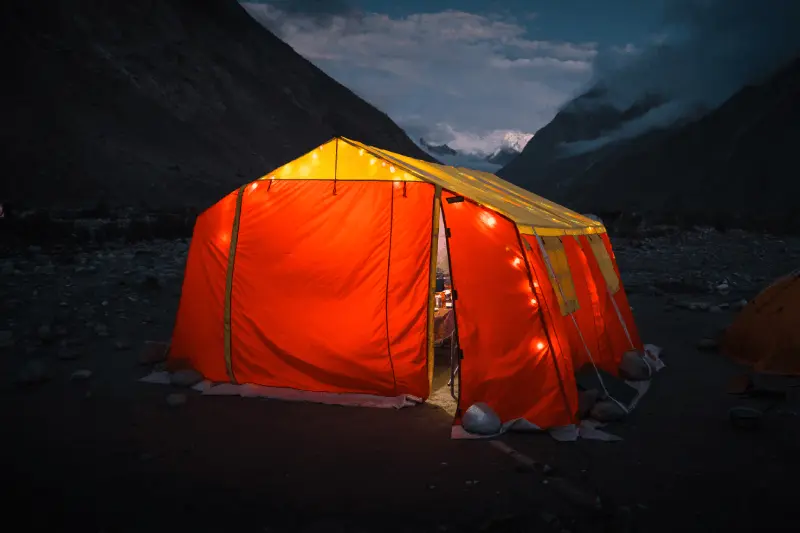
The color of the tent's outer canopy is not just an aesthetic choice; it is also a factor in thermal comfort, light permeability, and safety. Dark-colored tents (green, dark blue, black) quickly absorb sunlight, helping to keep the inside of the tent warmer during winter months, but in summer, they can turn the interior into an unbearable heat trap. Light-colored tents (white, gray, light yellow), on the other hand, reflect sunlight, keeping the interior cooler in summer and allowing more natural light to enter, creating a spacious environment. From a safety and search-and-rescue perspective, neon colors with high visibility, such as orange and red, ensure you can be easily spotted from the air or afar in emergencies. You should choose the color that suits the season you will be camping in and your purpose.
Are Lighting Hooks and Interior Pockets Necessary?
Tent interior organizers may seem like insignificant details at first glance, but they make a big difference in practical use. Losing your phone, headlamp, flashlight, or keys inside the tent in the dark can be extremely frustrating. The mesh pockets (gear loft) located on the walls and ceiling of the tent help keep your valuable and small items organized and prevent you from stepping on them and breaking them. The lighting hook (lantern hanger) located right in the center of the ceiling allows you to hang your camping lamp, ensuring that the light is evenly distributed throughout the tent. These details do not significantly affect the cost of the tent, but they directly enhance your quality of life inside the tent; therefore, you should prefer tents that are rich in organizing pockets and hanging systems.
How Does UV Resistance Affect the Lifespan of a Tent?
Ultraviolet (UV) rays from the sun are the biggest enemy of tent fabrics. Polyester or nylon fabrics that are exposed to direct sunlight for long periods enter a process called "photodegradation"; the fibers of the fabric weaken, colors fade, and waterproof coatings lose their effectiveness. As a result, the fabric becomes fragile like paper and can easily tear under the slightest tension. Silicone-coated fabrics (Silnylon) show much higher resistance to UV rays compared to standard polyurethane-coated fabrics and have longer lifespans. If you want to use your tent for many years, you should make sure to set it up in shaded areas under trees that do not receive direct sunlight and prefer fabrics with UV protective coatings.
Is Ease of Setup a Deciding Criterion on Its Own?
Many new campers fall into the trap of buying low-quality and flimsy tents just because they set up quickly. Yes, being able to set up a tent in 5 minutes after a tiring hike feels great, but this ease should not come at the expense of the tent's storm resistance and waterproofing. Tents with quick-setup mechanical frames are often heavy, sensitive to wind, and cannot be repaired in the field when mechanical joints break. Setting up a quality tent with a classic pole and clip system takes a maximum of 10-12 minutes but offers you complete safety in a storm. Ease of setup is an important comfort criterion, but it should never take precedence over safety, material quality, and wind resistance; achieving the right balance is vital.
Is Warranty Period and Spare Parts Support Critical?
Camping equipment is constantly exposed to wear and damage under harsh conditions. Reputable and quality outdoor brands stand behind their products by offering long-term warranties and, most importantly, "spare parts" support. Being able to obtain original spare parts for a broken pole, torn outer canopy, or lost connector from authorized service can save your tent from being thrown away. In nameless, cheap, and imported tents, the breakage of a single pole can render the entire tent unusable, as finding compatible spare parts is impossible. Therefore, when determining your budget, you should consider not only the purchase price but also the brand's after-sales technical service, repair options, and spare parts guarantee.
What is the Difference Between Silicone Coating and Polyurethane Coating?
There are two main coating technologies used to ensure the waterproofing of tents: Polyurethane (PU) and Silicone (Sil). PU coatings are more economical, suitable for seam taping, but can hydrolyze and peel off when exposed to moisture over time, and they can weigh down the fabric. Silicone coating (commonly known as Silnylon) is applied by allowing silicone to penetrate the fabric fibers. This process makes the fabric incredibly lightweight, significantly increases tear resistance, provides excellent protection against UV rays, and never peels off. However, silicone-coated surfaces are very slippery, and standard seam tapes do not adhere to this surface; therefore, they need to be sealed by hand with special seam sealers (silicone seam sealer). If you are looking for a professional, ultra-light, and long-lasting tent, silicone-coated models are the top-tier option.
Which Campsite Should Be Chosen to Reduce Tent Condensation?
As much as the technical features of your tent, where you set up the tent also affects condensation. affects the amount of moisture directly. Water edges (lakes, rivers), humid grassy areas, and deep valleys that do not receive wind are the places where the humidity level in the air is highest. When you set up your tent in such areas, it is inevitable that you will wake up in the morning with a significant dampness inside the tent. To keep humidity to a minimum, you should choose your campsite at least 50-100 meters away from the river or lake shore, in a place with a light breeze, and on dry ground or leaf-covered surfaces instead of grassy areas. A light breeze helps to continuously bring fresh air through the ventilation windows of the tent, assisting in expelling the humid air inside without condensation.
Should Cotton Canvas Tents Still Be Preferred?
Before the widespread use of modern nylon and polyester tents, all tents were made from cotton canvas fabric. Even today, canvas tents are indispensable for glamping (luxury camping), long-term fixed camps, and for those who want to use a wood stove inside the tent during winter. Cotton is a naturally breathable material; thus, condensation is almost nonexistent in canvas tents, providing a cool interior in summer and a warm environment in winter. Additionally, they do not melt and puncture immediately like nylon when exposed to sparks. However, canvas tents are incredibly heavy (usually between 15-40 kg), their packed sizes are enormous, and they take a long time to dry when wet; if packed while wet, they quickly become moldy. If you are traveling with your vehicle and planning comfort-focused, stove-equipped winter camps, you may prefer canvas tents.