Why Do Camping Stove Canisters Freeze in Cold Weather and How to Solve It?
Winter camping is a great opportunity to experience the silence of nature and the white blanket, but it also brings technical challenges. At the forefront of these challenges is the loss of performance or complete failure of the camping stove in freezing temperatures. It can be disheartening to ignite your stove with the dream of a hot tea or a nourishing meal only to face a flickering flame. In this guide, we will examine the trials of camping stove canisters against the cold, the physical laws behind this situation, and the solution methods that will facilitate your survival in detail.
What Are the Signs of Freezing in Camping Stove Canisters During Winter Camping?
The first and most obvious sign that your camping stove canister is starting to freeze is a sudden and consistent drop in flame height. You may see a normal flare when you first ignite the stove, but within a few minutes, the flame diminishes to almost invisible levels. Additionally, the formation of frost or ice on the exterior of the canister indicates that the contents have dropped below critical temperatures. As the flow rate of the gas decreases, the "hissing" sound from the stove weakens, and the boiling time of water begins to take two to three times longer than normal. Recognizing these signs early gives you time to adjust your cooking strategy.
Why Do LPG Mixtures Perform Differently in Cold Weather?
The camping gas canisters available on the market typically contain a mixture of butane, isobutane, and propane gases. Each of these gases has different physical properties, and their resistance to cold varies according to these ratios. Standard butane liquefies around 0 degrees Celsius, while propane can remain in gas form down to -42 degrees. Cheap canisters often contain a high proportion of butane, leading to performance loss even in mildly cool weather. In professional canisters of the distributed type, however, the ratio of isobutane and propane is high. These mixture differences are the key factors that determine at what temperature the canister will "stop working".
How Do the Boiling Points of Butane and Propane Affect Efficiency?
For gases to transition from liquid to gas, they must absorb heat from their surroundings and exist at temperatures above their boiling points. The boiling point of butane is approximately -1 degrees Celsius; that is, when the air temperature drops below this value, butane ceases to vaporize and remains in liquid form. Propane, on the other hand, can transition to gas form under much harsher conditions with a boiling point of -42 degrees. As the canister cools, propane gas quickly evaporates while butane sinks to the bottom in liquid form. This situation can cause the stove not to ignite despite having fuel inside the canister because the external temperature is insufficient to vaporize butane.
Why Does the Vaporization Process of Liquid Gas Inside the Canister Slow Down in the Cold?
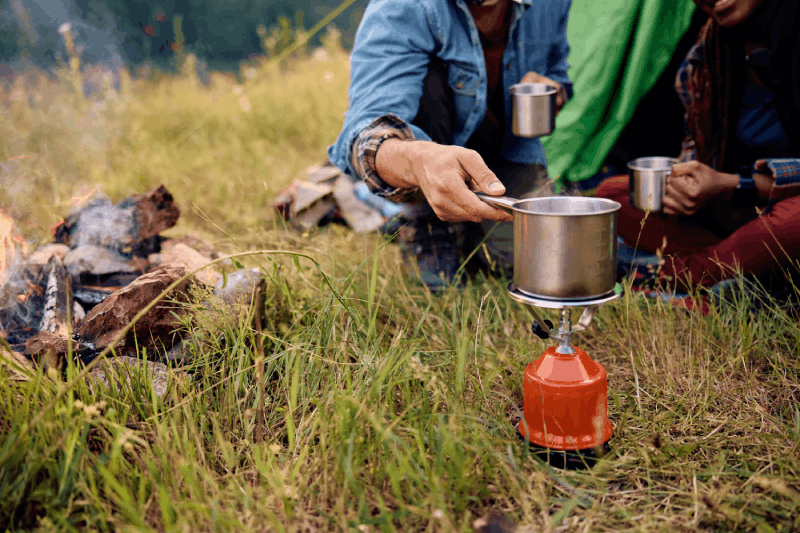
The fuel inside the canister is kept in liquid form under high pressure. When you open the stove's valve, the pressure drops, and the liquid fuel quickly turns into gas, moving towards the burner. This transformation process requires "latent heat of vaporization." The liquid gas draws the energy it needs to transition to gas from both the surrounding air and the canister's own body. Since the external environment is already cold, heat transfer slows down, and the liquid gas cannot find enough energy to vaporize. As a result, the vaporization rate becomes insufficient to meet the stove's needs, and the combustion process comes to a halt.
Why Does the Flame of a Camping Stove Continuously Diminish in Cold Weather?
The fundamental reason for this situation is the drop in pressure inside the canister, which is directly proportional to heat loss. Due to an event called "vaporization cooling," the temperature of the canister can even drop below the ambient temperature while the stove is operating. As the canister cools, the internal pressure decreases, and the force pushing the gas towards the burner weakens. The reason the initially strong flame diminishes over time is that the canister freezes itself due to its own operation. If sufficient heat support cannot be provided from the environment, the flame height drops to a minimum level and eventually goes out completely. This is a cycle that occurs much faster, especially with low-quality fuel mixtures.
How Does the Joule-Thomson Effect Cool Camping Stove Canisters?
In physics, the Joule-Thomson effect describes the change in temperature of a real gas as it moves from a high-pressure area to a low-pressure area. In camping stoves, gas expands through a narrow valve opening into atmospheric pressure. During this rapid expansion, energy is expended to overcome the attractive forces between gas molecules, and this energy is drawn from the system's internal heat. This leads to rapid cooling of both the gas and the valve mechanism. If the external environment is already freezing, this additional cooling effect can cause the connection points of the canister and stove to frost over, completely blocking the gas flow.
Why Are Isobutane Mixtures More Suitable for Winter Conditions?
Isobutane has a lower boiling point (-12 °C) than standard butane due to its chemical structure. This property makes it a much more reliable choice for winter camping. While standard butane fails at 0 degrees, canisters containing isobutane can continue to vaporize even in light frost conditions. Mixtures containing 70-80% isobutane and 20-30% propane are considered the standard for winter camping. These types of canisters not only ensure efficient operation of the stove with their low boiling point but also help you save fuel with their stable internal pressure values.
Why Does Canister Pressure Dramatically Drop at Low Temperatures?
According to gas laws, the pressure inside a container is directly related to temperature. As temperature decreases, the kinetic energy of gas molecules decreases, and the force they exert on the walls of the container, i.e., the pressure, drops. When this situation reaches a critical threshold in camping canisters, the driving force that ensures the gas escapes from the canister is lost. Especially in canisters with low propane content, when the temperature drops below -5 degrees, the internal pressure decreases so much that the stove's regulator can no longer deliver gas to the system. This situation is a fundamental physical barrier that causes a full canister to behave as if it were empty.
Is There a Freezing Difference Between Screw-On Canisters and Push-On Canisters?
Technically, both types of canisters can freeze depending on the gas mixture inside, but screw-on (Lindal valve) canisters are more advantageous in terms of safety and leak-proofing in winter conditions. The seals at the connection points of push-on or clip-on canisters can harden in extreme cold, leading to leaks. Screw-on systems provide a tighter grip between metal and metal, minimizing the risk of gas leakage even in low-pressure situations. Additionally, winter performance mixtures are generally produced only in screw-on canister format; cheap "picnic tube" style push-on canisters typically only contain summer-grade butane.
Does Using a Canister Jacket Really Improve Gas Flow in Cold Weather?
Canister jackets (made of neoprene or insulating fabrics) do not heat the canister by themselves, contrary to popular belief. Their primary function is to retain the existing heat around the canister and prevent cold transfer from the ground. However, there is a disadvantage to jackets: the canister needs heat to vaporize, and the jacket can prevent the relatively warmer air from reaching the canister. Still, if you preheat the canister and place it in the jacket, you can retain the initial heat for a longer time. In camps set up on snow, using a canister jacket positively contributes to performance as it directly cuts off contact with the ice.
Is It Safe and Effective to Store the Canister in Your Sleeping Bag Overnight?
This method is one of the most commonly practiced solutions among experienced winter campers. Having the canister at room temperature (approximately 20-25 degrees due to your body heat) when you wake up in the morning ensures that the stove operates at maximum efficiency while preparing breakfast. Your body heat revives the gas molecules inside the canister, creating high initial pressure. For safety, you should ensure that the canister's valve is fully closed and not leaking. By placing the canister at the foot of your sleeping bag or beside you, you can enjoy boiling water within minutes after a freezing morning.
How Does the Warm Water Bath Method Quickly Revive a Frozen Canister?
If your canister is frozen and the flame has weakened, placing the canister in a shallow container and filling it with warm (not boiling!) water creates a miraculous effect. Water has much higher thermal conductivity than air, allowing the liquid gas inside the canister to heat up quickly and triggering vaporization. During the water bath, you must ensure that the water does not freeze; as the water cools, you may need to add fresh warm water. This method is the safest and most effective technique used to neutralize the canister's self-cooling effect, especially when melting snow or cooking for extended periods.
How Do Copper Wire or Heat Conducting Rods Improve Camping Stove Performance?
This is an advanced technique based on the principle of creating a "heat bridge." One end of a copper wire is placed near the flame of the stove, while the other end is wrapped around the canister's body. Thanks to copper's high thermal conductivity, a portion of the heat taken from the flame is directly transferred to the canister. This continuous heat supplementation provides the energy needed for the liquid gas to vaporize and prevents pressure drop. However, extreme caution must be exercised when applying this method; excessive heating of the canister can lead to dangerous pressure increases. Therefore, the contact point of the conductor should be kept at a temperature that does not burn the hand.
In What Situations Is Using the Canister Upside Down a Solution?
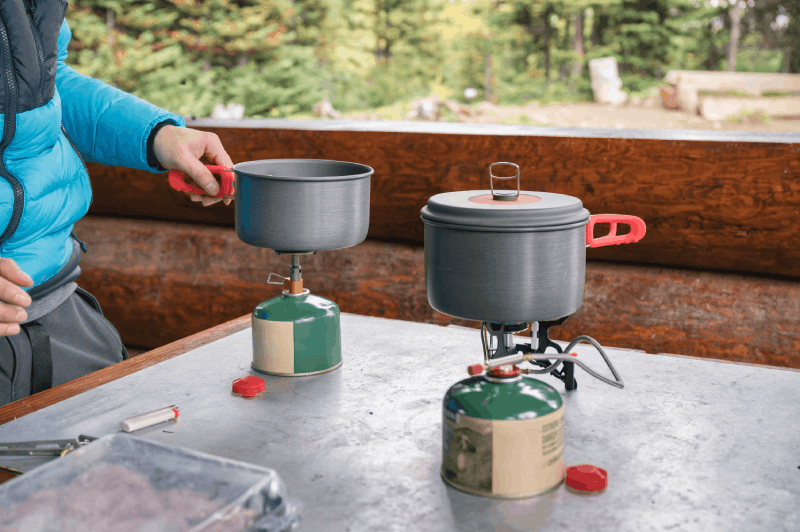
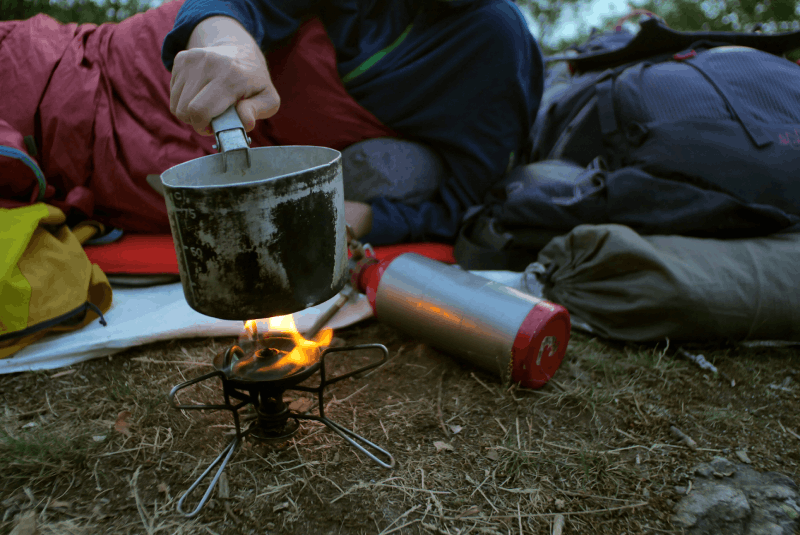
Most hose-connected (remote connection) camping stoves are designed to allow you to use the canister upside down. When the canister is inverted, the liquid fuel flows directly into the hose and from there into the stove's generator tube due to gravity. In this tube heated by the stove flame, the liquid gas expands and transitions to gas form. This method ensures the stove operates even in situations where the internal pressure of the canister is very low because the vaporization of the gas occurs in the hot tube above the stove, not inside the canister. This is the most professional way to use a gas stove in extreme cold.
Does Using a Windshield Help Protect Canister Heat?
Wind not only blows the flame but also quickly takes away the heat from the canister through "convection." Using a good windshield creates a micro warm air zone around the stove. This accumulated heat delays the freezing of the canister and increases combustion efficiency. However, you should not set the windshield too tightly to completely trap the canister; this can lead to excessive heating that could risk an explosion. An ideal windshield should allow for air circulation that keeps the canister warm enough not to burn your hand while blocking the wind.
Why Is It Critical to Insulate Under the Camping Stove on Snowy Ground?
Snow is an excellent heat absorber, and when you place the canister directly on a snowy surface, all the valuable heat inside the canister quickly transfers to the ground. This situation instantly paralyzes the vaporization process. Placing a piece of insulated mat, a wooden board, or even an empty cooking pot under the stove cuts off contact between the canister and the ice. An insulated base helps retain the heat of the air around the canister and minimizes heat loss. This simple step, which should never be neglected in winter camps, can double the stove's operating time and efficiency.
Why Is It Very Dangerous to Use a Lighter or Match to Heat the Canister?
One thing that should never be done is attempting to heat a frozen canister directly with a flame source (lighter, match, or campfire). The metal walls of camping canisters are thin and can be locally overheated when they come into direct contact with fire. This can compromise the structural integrity of the metal and lead to uncontrolled pressure increases, causing the canister to explode. Always prefer indirect methods (body heat, warm water, hand warmers) to heat the canister. Safety is the top priority in winter camping, and no hot meal is worth the risk.
Why Are Gas Stoves Superior to Gasoline Stoves in Winter Conditions?
Liquid fuel (gasoline, kerosene) stoves are not affected by external temperatures because they manually pressurize the system with a pump. The fuel is forced into the system by a mechanical pump and vaporized in a preheating tube before being burned. This system can operate at the same performance even at -40 degrees. Gas stoves, on the other hand, rely on natural laws (external temperature) for vaporization. If you regularly camp in extreme cold or at high altitudes, acquiring a gasoline stove instead of dealing with the whims of gas canisters is the most reliable way to ensure your cooking safety.
What Alternative Fuel Systems Completely Eliminate Freezing Issues?
Alternatives that can be used in winter camping besides gas canisters include liquid fuel stoves, alcohol stoves, and wood stoves. Alcohol stoves are very simple in design and have no freezing risk, but their heat outputs are lower and they are difficult to ignite in the cold. Wood stoves (bushcraft type) provide endless energy as long as you can find fuel, but they are impossible to use in snowstorms. The most modern alternative is the "pressure-regulated" new generation gas stoves. These stoves can use low-pressure gas more efficiently by stabilizing it. However, for extreme cold, liquid fuel systems with mechanical pumps are always unmatched.
How Does the Behavior of Gas Canisters Change at High Altitudes?
At high altitudes, atmospheric pressure decreases, which theoretically makes it easier for gas to escape from the canister. However, as altitude increases, the temperature also drops rapidly, negating this advantage. In low-pressure environments, gas molecules expand more easily, but the lack of oxygen reduces combustion quality. This can lead to incomplete combustion in the stove and produce more carbon monoxide. For this reason, high-altitude campers prefer special "high propane" mixtures and always try to keep their canisters warm inside their jackets or sleeping bags to balance these physical disadvantages.
Why Does the Risk of Freezing Increase as the Amount of Gas Inside the Canister Decreases?
The more fuel there is inside the canister, the larger the "thermal mass" it has, and it takes longer to cool down. As fuel decreases, the amount of liquid gas drops, and the vaporization surface decreases. The small amount of remaining liquid fuel heats up much faster when the stove is operating, dropping below critical temperatures. Additionally, the volatile propane gas in the mixture is usually consumed first, leaving only butane, which is harder to ignite, in the last quarter of the canister. Therefore, it is always wise to set out with full canisters or combine two half-full canisters with adapters in winter camping.
Why Should Remote Connection Stoves Be Preferred in Winter Conditions?
"Top-mounted" stoves that screw directly onto the canister keep the canister completely away from the heat. However, remote connection stoves allow you to place the canister 30-40 cm away from the stove head. This distance makes it safe to place the canister next to the stove, inside a windscreen, or in a warm water container. Additionally, the low center of gravity of remote connection stoves reduces the risk of tipping over on snowy surfaces. Most importantly, the "liquid feed mode" (inverting the canister) found in many of these stoves offers the most definitive solution to freezing issues, making them indispensable equipment for serious winter activities.
How Does Snow and Ice Accumulation on the Canister Prevent Heat Transfer?
Accumulated snow or ice formed as a result of vaporization cooling on the exterior of the canister acts as an insulation layer. However, this is a "reverse insulation"; it prevents the canister from absorbing heat from the surrounding air. Ice has much lower thermal conductivity than metal. If the canister is surrounded by ice, the fuel inside becomes isolated from the relatively warmer air outside and is trapped in its own cooling cycle. Cleaning the ice off the canister while cooking or keeping the canister dry is critical to optimize heat transfer. A wet canister will lose heat much faster during vaporization, accelerating the freezing process.
Can Chemical Hand Warmers Be Used to Keep the Canister Warm?
Yes, chemical hand warmers (iron oxide-based packets) are extremely practical and safe helpers for reviving a frozen canister. Activating a hand warmer and placing it under the canister or tightly wrapping it inside a jacket provides continuous and safe heat supplementation to the canister. These packets typically provide a steady heat of around 40-50 degrees, which is an excellent level for increasing pressure. Especially on very cold nights, placing two hand warmers under the canister while boiling water can play a lifesaving role by ensuring the stove operates continuously and efficiently.
How Does Cleaning the Camping Stove Optimize Gas Flow in Cold Weather?
Cold weather can affect the density and viscosity of the gas. If there is dirt, carbon buildup, or frozen moisture in the stove's jet nozzle or hose, the already low gas pressure cannot overcome these obstacles. It is vital to clean the stove's nozzle with a fine wire and check the connection points before winter activities. Especially in stoves used in "liquid feed" mode, ensuring that the fuel line is clean allows the liquid gas to reach the vaporization area smoothly. A clean stove will burn even the most challenging mixtures more efficiently, minimizing fuel loss.
What Are Efficient Cooking Techniques in Winter Camping?
To save fuel and reduce the risk of freezing, quick-cooking meals should be preferred (pasta, instant soup, etc.). Keeping the pot lid closed at all times takes advantage of the steam's heat, shortening the boiling time. If you are obtaining water by melting snow, starting with a small amount of liquid water at the bottom of the pot speeds up heat transfer and reduces fuel consumption. To prevent the canister from freezing, cooking should be kept as short as possible, and if necessary, the canister should be periodically warmed with your hands or placed inside your jacket. Efficient energy use will be your greatest success in winter.
Does the Lifespan of a Canister Shorten if It Experiences Freezing Issues?
The freezing of a canister or the liquefaction of the gas inside does not degrade the quality of the fuel or cause lasting damage to the canister itself. When the canister returns to normal temperatures, the gas mixture inside regains its previous performance. However, the priority consumption of propane during "freezing" can lead to performance loss in the remaining lifespan of the canister. If you force the canister to operate continuously in the cold, combustion may stop while there is still butane inside, making the canister feel "unusable." Although the canister does not physically get damaged, its efficiency will significantly decrease due to the imbalance in the mixture.
What Backup Equipment Should We Carry for a Safe Winter Camp?
In winter camping, the principle of "one system, no system" should be followed. You should always have a second ignition source (storm lighter, magnesium rod) with you. A backup canister with a high propane ratio or, if possible, an alternative stove (like an alcohol stove) should be carried. A piece of mat for canister insulation, a windscreen, and a wide container that can be used to heat the canister (for a water bath) are essential. Additionally, carrying a spare seal (O-ring) in case the canister's seal breaks in the cold is a small but lifesaving precaution.
How Effective Are Homemade Heat Reflectors in Preventing Freezing?
Simple heat reflectors made from aluminum foil or an old windbreaker fabric are quite effective in directing the stove's heat towards the canister. Shiny surfaces placed under and around the canister reflect thermal radiation (heat) back, preventing the canister from excessive cooling. This method is ideal for those looking for a lightweight and inexpensive solution. However, care should be taken to ensure that the foil does not get too close to the stove and melt or that the canister does not overheat to the point of explosion. A cleverly placed piece of foil can turn even the simplest stove into a "winter beast" and can increase fuel efficiency by around 20%.
How Do Pressure Regulators in Modern Camping Stoves Work in the Cold?
Pressure regulators found in high-end camping stoves mechanically adjust the pressure of the gas escaping from the canister. When the canister is full and warm, it restricts gas flow; when the canister cools and the pressure drops, it tries to open the valve further to balance the flow. This system ensures that the stove burns with a stable flame even when the pressure inside the canister is very low. Stoves with regulators can provide much longer high performance in cold weather compared to standard stoves. If you are frequently camping in extreme cold, investing in a stove with a regulator is the most technological solution to eliminate canister freezing stress.
Why Does the Risk of Gas Leakage Increase in Cold Weather Conditions?
Extreme cold causes rubber and plastic materials to lose their elasticity, leading to "glazing." The seals in the valve section of the canister or the hose connection of the stove can freeze and crack in the cold. This situation can lead to gas leaks and even fire hazards. You should visually check the seals before each use in winter and listen for leaks when connecting the canister. Additionally, it is harder to smell gas in cold weather, so you should ensure that the connections are seated properly. For your safety, regularly lubricating the seals with silicone grease helps keep them flexible in the cold.
How Can We Extend the Lifespan of a Canister by Saving Energy During Winter Camping?
Energy saving not only preserves your fuel in winter but also ensures that the canister cools down less. Instead of opening the stove fully, using it at medium heat balances the vaporization rate and slows down the freezing rate of the canister. Using insulated pot covers (pot cozy) allows you to retain heat for a longer time after cooking, reducing the need for reheating. When melting snow, adding snow gradually to the pot helps maintain the water's temperature. Planned and efficient kitchen management will ensure your survival for days with a limited number of canisters.
How Does Melting Snow to Obtain Water Trigger the Freezing Process of the Canister?
Melting snow requires much more energy and time than boiling regular water. The "melting heat" required to convert the snow's crystalline structure into water causes the stove to operate continuously for a long time. Prolonged operation maximizes the vaporization cooling inside the canister and triggers rapid freezing. During the snow melting process, a method that keeps the canister warm (such as a warm water bath or hand warmer) must be used. Otherwise, even half of the snow may not melt, and the canister's performance can drop to zero. Melting snow is the biggest enemy of winter fuel.
Which Brands' Gas Mixtures Perform Better in Harsh Winter Conditions?
Brands labeled as "4 seasons" or "extreme" on the market are generally more successful. For example, canisters from brands like MSR (IsoPro), Primus (Winter Gas), and Jetboil are known for their high-quality isobutane and propane mixtures. In Primus's special "Winter Gas" series, the paper reflectors embedded inside the canister increase the surface area of the liquid gas, accelerating vaporization and promising high efficiency down to -22 degrees. The extra cost for such technical products is the most important investment that distinguishes between being able to drink a warm soup in winter and going hungry.
What Are the Frequently Asked Questions and Answers About Camping Stove Canisters?
One of the most frequently asked questions is, "Can I take an empty canister home to refill it?"; the answer is definitely no, as this process poses a risk of explosion. Another question is, "Is it harmful to leave the canister in the sun?"; yes, even in winter, a closed container under direct sunlight can lead to excessive heating. The question "How many canisters do I need for a winter camping trip?" depends entirely on the stove's efficiency and how much snow you plan to melt; you should account for 50-70% more fuel in winter compared to summer. Knowledge is as protective equipment in nature as a quality sleeping bag.