What Basic Materials are Needed to Brew Coffee Over a Campfire?
Enjoying a quality cup of coffee at sunrise in the campsite begins with the selection of the right basic equipment. First, you need to decide what your heat source will be; a small camping stove or a safe fire pit is a fundamental starting point. Next, you will need a lightweight and durable kettle or camping pot to heat the water. The method you choose for brewing coffee (such as AeroPress, V60, or French Press) determines the main setup you need to carry. Additionally, if you plan to use fresh beans, a manual grinder, a precise scale, and an insulated camping mug to keep your coffee warm are essentials on your list. Each of these pieces ensures that you can capture the comfort of home even in the challenging conditions of nature.
How Does Water Quality Affect the Taste of Camp Coffee?
Since coffee is made up of approximately ninety-eight percent water, the quality of the water you use is one of the most critical factors that directly affects the brewing result. While camping, natural spring water or portable bottled water is typically used; however, high mineral or chlorinated waters can overpower the complex notes of coffee. Water sourced from nature must be filtered and have an appropriate pH balance. Hard waters can make coffee bitter, while very soft waters can result in a weak flavor. Therefore, if you are a true coffee connoisseur, having clean, fresh, and smooth drinking water with you may be even more important than using the most expensive beans.
Why are Manual Coffee Grinders Indispensable in a Camping Backpack?
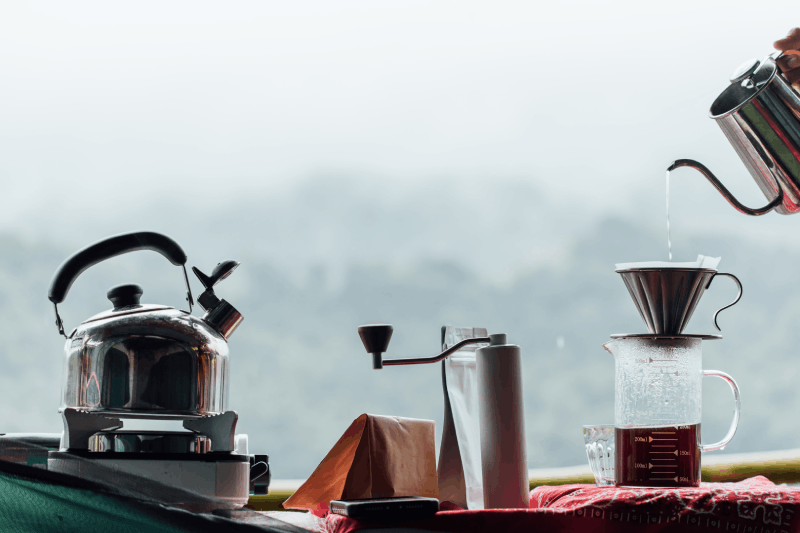
Once coffee beans are ground, they begin to lose their aromas quickly, which is why fresh grinding is vital for campers. Manual grinders are among the most valuable items in camping backpacks due to their lack of electrical requirements and compact design. Modern manual grinders allow you to adjust settings from Turkish coffee to French Press thickness thanks to ceramic or steel blade systems. Lightweight aluminum bodies and foldable cranking arms save space. Brewing your own coffee at camp not only ensures freshness but also makes the ritual more meaningful and enjoyable as you hear the sound of the beans being crushed in the morning silence.
Why is AeroPress the Most Practical Option in Camping Conditions?
AeroPress has become the number one choice for campers worldwide due to its durability and speed. Its unbreakable polycarbonate construction, lightweight design, and self-cleaning feature provide significant advantages in nature. In just a few minutes, it allows you to brew a smooth and low-acidity coffee using pressure. Additionally, it is suitable for those who want to prepare espresso-like strong coffees. Its minimal space requirement in your backpack and the fact that it produces almost no waste (only a small paper filter) are key features that put AeroPress ahead of its competitors for those seeking an eco-friendly camping experience.
Are Portable Scales Necessary for Precise Brewing in Nature?
While many people may think that using a scale while camping is an excessive hassle, maintaining the coffee-to-water ratio is essential for a delicious cup. Measurements made by eye often result in either overly strong or overly watery outcomes. Nowadays, there are ultra-thin digital scales designed for campers that can be charged via USB or run on batteries. These scales help you track not only the weight but also the brewing time. If you really have no space in your backpack, at least you can prepare pre-measured bean packets; however, if you plan to brew different amounts each day, carrying a small scale is the most professional way to ensure consistency.
How Do Camping Stoves and Heat Distribution Affect Coffee Profile?
Camping stoves typically have a narrow and intense flame, which can create "hot spots" on the bottom of the kettle. Uncontrolled heating of the water can lead to the burning of coffee beans and create a burnt taste. A quality camping stove should allow for precise flame adjustment. Especially in pour-over methods like V60, the water temperature should be maintained between 92-96 degrees. Using a windscreen in windy conditions helps prevent heat loss, allowing the water to reach the desired temperature more stably and increasing your control over the coffee brewing process.
What are the Differences Between Foldable Dripper Models?
For campers looking to save space, foldable drippers made from silicone or stainless steel are a fantastic solution. Silicone models are generally lighter and more flexible, but sometimes their heat retention capacity may be lower, leading to quicker cooling of the coffee. Stainless steel models with springs or plates are more durable and less affected by wind. The most important point to consider in both types is whether the paper filter fits snugly against the inner surface of the dripper. Some niche models have micro-perforated metal meshes that eliminate the need to carry paper filters.
What are the Key Points for Making Coffee with a Moka Pot Over a Campfire?
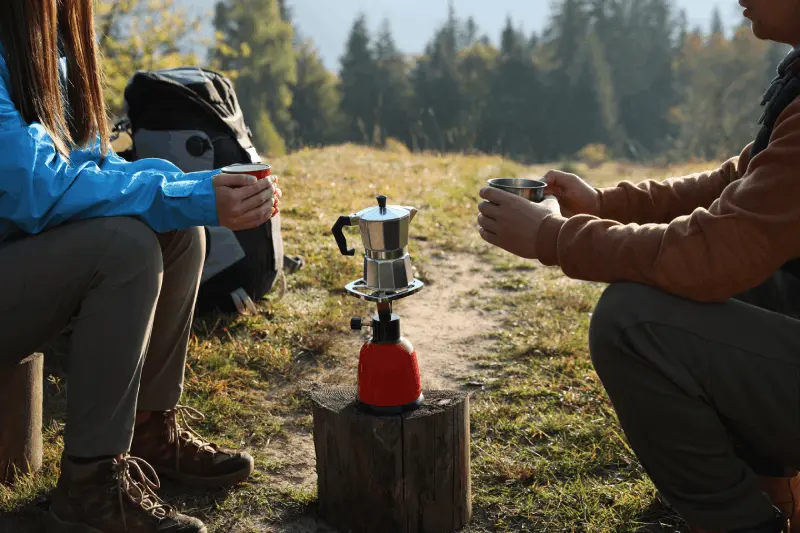
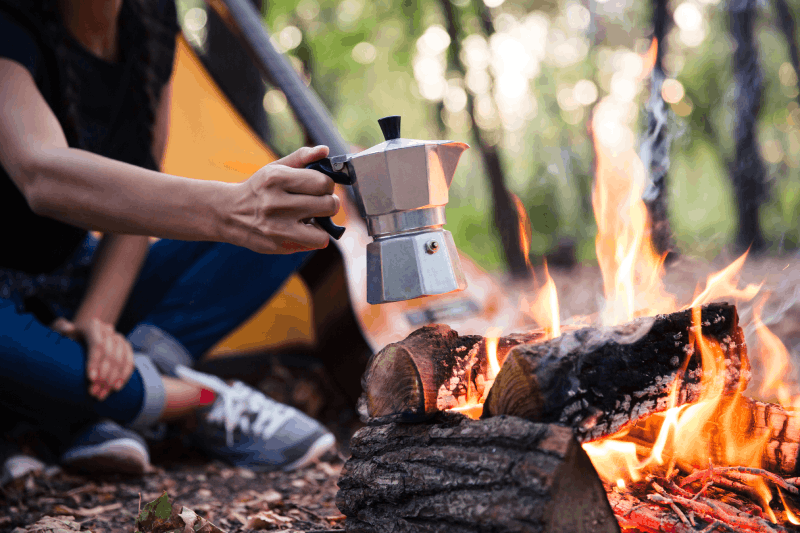
The Moka Pot is an ideal classic tool for preparing strong coffee over a campfire or directly on a camping stove. However, aluminum models can sometimes be damaged by direct exposure to high heat from the campfire. The most important tip when using a Moka Pot is to place pre-heated water in the chamber instead of cold water. This way, the coffee beans can sit on the stove until the water boils without "cooking" and will have a fresher aroma. Additionally, when the coffee starts to overflow, reducing the flame or moving the pot away from the heat will prevent the coffee from overheating and becoming bitter.
How Can a French Press be Transported Without Breaking in a Camping Backpack?
Classic glass French Press models are quite risky for camping conditions; they can shatter into pieces with the slightest jolt or fall. To overcome this issue, campers should opt for stainless steel or BPA-free plastic models specifically designed for camping. Steel models have the added benefit of keeping coffee warm for longer due to their double-walled construction. If you must carry a glass model, wrapping it between your sleeping bag or placing it in the center of a box with kitchen supplies, supported by soft cloths, is the safest method. However, in the long run, investing in a camping-specific durable model is the most sensible choice.
How Well Do Vacuum Storage Containers Preserve Coffee Freshness?
The biggest enemies of coffee beans are oxygen, moisture, and light. The camping environment is often a place where all three factors are prevalent. Standard zip-lock bags do not completely stop air circulation, leading to rapid staleness of the beans. Special storage containers with vacuum or one-way valves allow the carbon dioxide inside the coffee to escape while preventing outside air from entering. These containers are vital for preserving the aromatic quality of coffee for camps lasting more than a week. By choosing small and lightweight models, you can minimize the weight in your backpack while maximizing flavor.
Should Paper Filters or Metal Filters be Preferred?
This choice in camping conditions varies depending on your taste preferences and practicality. Paper filters provide a cleaner, brighter cup with distinct acidity by filtering out the grounds and oils in the coffee; they are also very easy to clean, as you just throw the filter away when you're done. Metal filters allow the natural oils of the coffee to pass into the cup, providing a fuller and richer flavor. However, cleaning metal filters can be cumbersome when water is limited at the campsite; you need to thoroughly rinse out the coffee residues that clog the pores. If you want to avoid waste, metal is the way to go, but if you want a clear taste and quick cleaning, paper filters are the best choice.
How Does Thermos Selection Determine the Duration of Coffee Enjoyment?
If you won't be consuming the brewed coffee immediately or if you're going on a long hike, a quality vacuum thermos is your best friend. Poor-quality thermoses can only keep heat for a few hours, while high-end models with double-layer vacuum technology can keep your coffee drinkable for 12 to 24 hours. When choosing a thermos, the inner surface should be made of stainless steel, and the lid should guarantee leak-proofing. Additionally, the design of the thermos opening should be easy to clean to prevent coffee oils from building up and creating unpleasant odors over time. Pre-warming the thermos by rinsing it with hot water before putting your coffee in it is a simple yet effective way to minimize heat loss.
Is the Cowboy Coffee Technique Still Relevant?
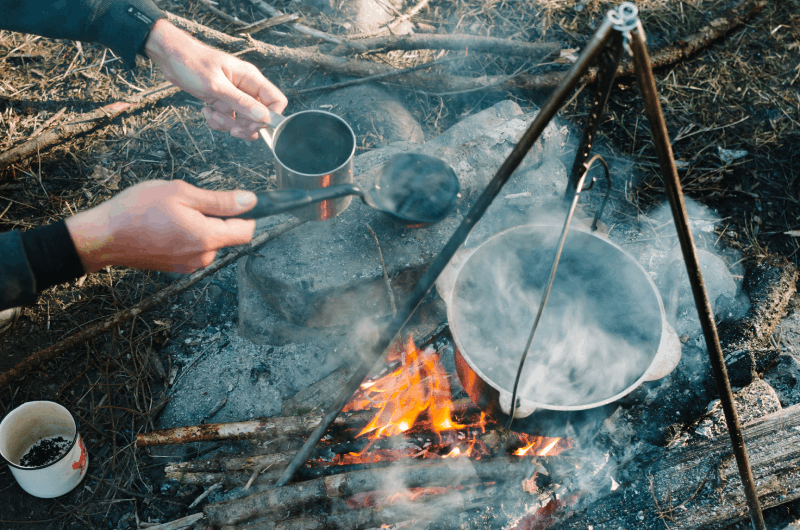
Traditional "Cowboy Coffee" is the most minimalist camping technique as it requires no equipment other than a pot and water. In this method, coarsely ground coffee is simply added to boiling water, steeped for a few minutes, and then a little cold water is poured on top to settle the grounds. Although it may not yield as clear a result as modern brewing methods, when done correctly, it offers a very satisfying and nostalgic flavor. This technique can be a lifesaver in emergencies when your equipment breaks or you forget to bring it. It remains a popular and valid option for those who want to feel the spirit of old times in the midst of nature.
How to Protect Coffee Beans from Moisture While Camping?
Especially in camps set up in forested areas or near rivers, nighttime humidity can damage the structure of coffee beans. Moist beans can stick to the blades of the grinder while being ground and may not provide the desired aroma during brewing. To prevent this, you should always store your coffee in airtight containers and only open the lid briefly when you need to use it. If you are carrying your coffee in a large package, the amount of moisture entering will increase with each opening; therefore, preparing small vacuum-sealed packets for daily portions is a much more professional approach. Additionally, you should store your coffee container in a dry box elevated off the ground rather than directly on the soil.
Is a Gooseneck Kettle Essential for Selecting a Kettle?
If you are using pour-over methods like V60 or Chemex, a gooseneck kettle makes a significant difference in controlling the flow rate and direction of the water. Standard wide-spouted kettles pour water all at once and unevenly, causing channeling in the coffee bed, which leads to uneven brewing. There are small, lightweight, and even foldable gooseneck kettles designed for camping. However, if space is tight, you can also create a similar effect by using a small flow control attachment that fits onto the spout of your standard kettle. In espresso-based or immersion methods, a gooseneck kettle is not a necessity.
How Should Cleaning and Waste Management be Done in Nature?
While enjoying coffee in nature, adhering to the "leave no trace" principle is the duty of every camper. Although coffee grounds are organic waste, dumping them in large quantities near natural water sources can harm the local ecosystem. The best method is to collect used grounds and paper filters in a zip-lock bag and take them with you when you leave the campsite. When cleaning equipment, biodegradable soaps should be used, and this process should be carried out at least 60 meters away from water sources. To reduce the amount of water you use while washing your equipment, roughly cleaning the residues with a paper towel right after brewing will make the washing process much more practical.
How is the Boiling Point of Water Calculated When Brewing Coffee at High Altitudes?
As you ascend above sea level, atmospheric pressure decreases, causing water to boil at lower temperatures. For example, at 2000 meters, water boils at about 93 degrees. If you are following standard brewing recipes, you may notice that your water is actually cooler than it should be. In this case, you may need to extend the brewing time or grind your coffee beans a bit finer to fully extract the flavors. Using a thermometer at high-altitude camps helps you know the actual temperature of the water, preventing surprises. Understanding how water behaves as altitude changes is important knowledge for a true coffee enthusiast.
Is Investing in Titanium Coffee Equipment Worth It?
In terms of lightweight and durability, titanium is at the pinnacle of camping equipment. For those who do long hikes with a backpack, every gram counts, and titanium mugs or drippers can be lifesavers. Titanium is lighter than steel and highly resistant to corrosion; it also does not leave a metallic taste. However, titanium's heat conductivity is different from that of steel and is generally more expensive. If you are just going camping with your vehicle, you may not need to pay extra for titanium. However, if you want a nearly weightless equipment set that you can use for a lifetime in extreme conditions, titanium is definitely the best choice.
How to Prevent Heat Loss When Brewing Coffee in Cold Winter Camps?
In cold winter camps or cool mountain mornings, the biggest problem is that water loses heat quickly while transferring from the kettle to the cup. This can lead to under-extracted coffee and a sour taste. To prevent heat loss, you should always pre-warm your equipment by rinsing it with hot water before you start brewing. Covering the dripper with a lid or wrapping the body of the AeroPress with an insulated sleeve during brewing will also be beneficial. Additionally, drinking your coffee from double-walled insulated mugs instead of porcelain or single-layer metal cups will help retain that precious heat. Preventing the wind from directly hitting your equipment will also increase stability.
Do Hybrid Systems Like Espro Press Provide Advantages While Camping?
Advanced French Press systems like Espro Press offer the rich body of a French Press while providing clarity close to that of paper filter cleaning thanks to their double-filtered design. These hybrid devices completely cut off the connection between coffee and grounds as soon as the brewing process is finished, preventing the coffee from becoming bitter as it sits. This is a significant advantage while camping because you can keep your brewed coffee in the same container without needing to transfer it to another vessel. With durable steel bodies and sleek designs, these niche devices are excellent options for those looking to combine quality and practicality in their camp kitchen.
How to Prepare Cold Brew for Camping Nights?
In hot summer camps, if you want to enjoy a refreshing cup of coffee as soon as you wake up, Cold Brew is your best friend. You can prepare a mixture of coarsely ground coffee and cold water in a jar or a special Cold Brew bottle the night before. This cold brewing process, which takes about 12-15 hours, allows you to obtain a concentrate with very low acidity and a sweet taste. When you wake up in the morning, all you need to do is strain it. This method also saves you from the hassle of lighting a stove. If you have ice, you can enjoy a luxurious coffee bar experience in the midst of nature by diluting the concentrate with ice and cold water.
Does the Material of the Camping Mug (Enamel vs. Steel) Affect the Taste?
The choice of camping mug is not just an aesthetic preference; it is also a technical issue that affects the drinking experience. Classic enamel mugs are very photogenic and add a nostalgic touch, but they conduct heat very quickly, causing your coffee to cool rapidly and potentially burn your lips. Additionally, if enamel chips off, it can impart a taste to the coffee underneath. Stainless steel, especially those with double walls, is far superior in terms of heat retention and offers a completely neutral taste. Some gourmet campers prefer steel cups with ceramic-coated inner surfaces to enjoy the purest flavor of coffee. Ultimately, how much you want to retain the heat of your coffee is the main factor determining this choice.
Does Carrying a Milk Frother Make Camping Coffee Luxurious?
For those who do not want to settle for just black coffee in nature, battery-operated or manual small milk frothers can be a real game changer. The milk you heat in a small pot can be turned into a rich froth in just 30 seconds, allowing you to enjoy a great Latte or Cappuccino while sitting in your camping chair. These small devices are very lightweight, so they do not add much weight to your backpack. Especially for families with children or those who prefer their coffee to be creamy, this small touch can transform your camp kitchen into an "outdoor cafe." Using durable small packaged milk instead of powdered milk is always a better way to achieve fresh flavor.
How to Make Coffee if the Gas Canister Freezes in Winter Camps?
In freezing cold, butane-propane gas canisters lose pressure, causing the stove to burn inefficiently or even not at all. This can make it impossible to heat water for your morning coffee. As a solution, you can keep the canister warm by placing it inside your sleeping bag at night or warming it under your jacket before use. Another method is to use liquid fuel stoves, which are much more reliable than gas stoves in extreme cold. If you have the opportunity to start a fire, you can place your kettle directly over the coals to heat your water. Being prepared for these technical challenges is essential to ensure that your coffee enjoyment is not interrupted during winter camping.
Is it Logical to Roast Your Own Coffee and Bring It to Camp?
If you are a true coffee enthusiast and the time between your camping destination and home is short, bringing freshly roasted beans with you just before your camping trip guarantees the highest level of flavor. The first 2-10 days after coffee is roasted is when the aromas are at their peak. However, roasting coffee at the campsite is generally not recommended as controlling the heat can be difficult; uncontrolled fire can burn the outside of the beans while leaving the inside undercooked. Instead, getting beans roasted just before your camping date from a trusted roastery will do the trick. Remember that the aroma of freshly roasted coffee is one of the most powerful sensory elements that can enhance your experience in nature.
Are "Single Serve" Packs Sufficient for Minimalist Campers?
In "fast and light" style climbs or bike tours, where speed and lightness are crucial, quality instant coffees or single-use "drip bag" filters are excellent alternatives. Unlike the coffee we find in stores, these products are made from high-quality beans that are freeze-dried or packaged with nitrogen. They require no brewing equipment; just hot water is enough. Although they may not fully replace the experience of freshly brewed AeroPress coffee, they are the most reasonable and tasty middle ground for those looking to save weight and time.
How to Choose Multi-Purpose Equipment to Save Space in Your Backpack?
When selecting equipment, focusing on products that hit "two birds with one stone" is a smart strategy in camping. For example, there are titanium mugs that can be used both as a French Press and placed directly on the stove. Or there are grinder models that serve as both a scale or storage container. Insulated coffee presses that can also be used as water bottles eliminate the need to carry two separate items in your backpack. These types of multi-purpose designs provide great convenience for backpackers in managing volume. When purchasing equipment, consider whether it only serves one purpose or if it meets other needs as well to optimize your backpack organization.
Are Nanopresso or Wacaco Models Suitable for Espresso Lovers?
For true espresso lovers, enjoying this pleasure in nature used to be impossible, but manual pressure devices like Nanopresso or Picopresso have completely changed that. These devices can reach 18-20 bars of pressure using only hand power without requiring any electricity. The resulting coffee is a real espresso with a rich crema on top. While using these devices may require some practice (like pre-heating and finding the right grind size), the results can rival those of professional machines. For campers who enjoy making espresso-based drinks or prefer strong shots, these technological wonders should definitely find a place in their backpacks.
Is Filtration Necessary When Sourcing Brewing Water from Natural Sources?
Although a clear stream in nature may look clean, it can harbor bacteria, parasites, or microplastics that are not visible to the naked eye. While boiling the water can kill many microorganisms, it does not remove cloudiness or chemical contaminants. Therefore, if you are sourcing drinking water from nature, it is essential to use filtration devices like Sawyer or LifeStraw that filter at the micron level to ensure your safety. Filtered water not only protects your health but also ensures that your coffee tastes clearer because it is free from sediment. Safe water is the foundation of a safe camp and should not overshadow the flavor of your coffee.
Should Organizer Bags be Used to Keep Order in the Camping Kitchen?
Coffee equipment is often small and consists of many parts; when filters, scales, grinders, and beans are in separate places, preparing morning coffee can turn into chaos. Collecting all your coffee gear in a single hard-shell or compartmentalized organizer bag prevents parts from getting lost and protects your equipment from impacts. Preparing this type of "coffee kit" ensures that everything is at your fingertips when you arrive at the campsite. Additionally, placing a small cloth inside these bags means you will always have a material to dry wet items. An organized camp kitchen makes your morning ritual more peaceful and enjoyable.
How Do Different Roasting Profiles (Light vs. Dark) Behave While Camping?
Light roasted coffees are denser and more difficult to extract their flavors into water, requiring higher water temperatures and finer grinds. Dark roasted coffees, being more porous, extract very quickly and can easily become bitter at high temperatures. If you cannot control the water temperature very well while camping, medium-dark roasts may be more "forgiving" and tolerate mistakes better. However, if you enjoy fruity and high-acidity coffees, make sure your water is hot enough and that you extend the brewing time a bit when brewing light roast beans.
How Does Using a Windshield Shorten Brewing Time?
When brewing coffee in open areas, wind can reduce the efficiency of the stove and quickly steal the heat from the brewing coffee. Using a simple aluminum windscreen can almost halve the boiling time and save fuel. Especially in pour-over methods like V60, the wind can cause the water to cool during the moments it is in contact with the air, stopping extraction. The windscreen should be placed in a way that protects not only the stove but also the carafe you are brewing in. This small and lightweight device is one of the unsung heroes that allows you to brew coffee at home standards even in challenging weather conditions.
What are the Bulk Brewing Methods for Your Camping Friends?
If you are camping as a large group, preparing each person's coffee individually with a single AeroPress or a small V60 can be very time-consuming. In this case, large French Presses or large-volume brewers known as "Percolators" are the most practical solutions. You can also make "Cowboy Coffee" in a large camping pot to serve everyone hot coffee at the same time. If there is a quality-focused group, a large Chemex can provide an elegant presentation and clean drinking experience, but extra care must be taken to prevent it from breaking during transport. Using a large measuring container to accurately calculate the coffee-to-water ratio in bulk brewing will reduce the margin of error.
Is Using a Percolator Nostalgic?
Percolators are old-fashioned brewers that continuously boil coffee and pass it through, often producing a very strong, sometimes over-brewed coffee. Although they are not commonly preferred in the modern coffee world, the sound and sight of a bubbling pot over a campfire is an irreplaceable nostalgia for many campers. Thanks to their durable constructions, they can be placed directly into the fire. If you are going to use a Percolator, be careful not to let the coffee boil for too long after it starts boiling and ensure that the coffee grounds are quite coarse. This method is still an option for those who prioritize the camping atmosphere and traditional experience over flavor.
How to Brew Turkish Coffee Best Over a Campfire?
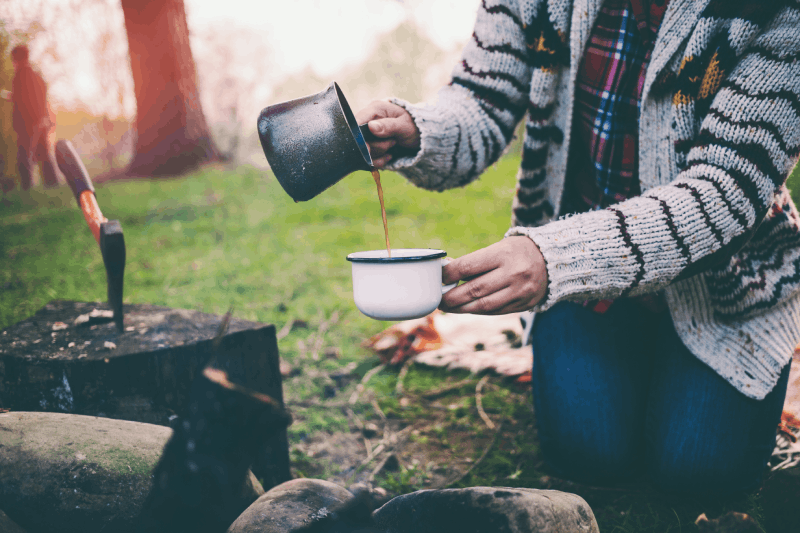
Turkish coffee reaches its deepest aromas when brewed slowly over hot coals. The hot embers around the campfire ensure even heating of the cezve, creating a perfect foam and consistency. When making Turkish coffee at camp, using a copper cezve is best for heat conduction. However, the key point is to place the cezve over the heated coals instead of directly over the flames. The few minutes of patience combined with the silence of nature can yield the best Turkish coffee. Pairing it with a piece of Turkish delight and clean spring water elevates this ancient tradition to its peak while camping.
Is Leaving Coffee Grounds as Fertilizer Harmful to Nature?
While coffee grounds are known to be rich in nitrogen and used as fertilizer in gardens, the situation is different in natural ecosystems. Coffee waste with high acidity can disrupt the balance of microorganisms in the area or harm certain sensitive plant species. Additionally, the smell of coffee can attract some wildlife to the campsite, which can be undesirable for both you and the animals. Therefore, the most responsible behavior is to collect coffee grounds and dispose of them in a trash bin. The philosophy of "leave no trace" applies to coffee waste as well. An eco-friendly camper always pays attention to this small detail to leave nature as they found it.
Do Digital Scales Become a Problem in Long-Term Camps?
In long-term (more than a week) camps, the charging of digital devices is always a source of concern. However, modern camping scales consume very little energy and can be used for weeks on a single charge. Still, to be cautious, it is wise to choose models that can be charged via USB and keep a power bank with you or select models that use replaceable batteries. If you do not want to rely on an electronic scale, you can develop a "volumetric estimation" method by measuring what a certain level in your grinder corresponds to in grams at home. This way, even if your battery dies, you can continue brewing your coffee without significant deviation.
Can Steel Filtered Bottles be Used for Both Transport and Brewing?
Some specially designed bottles on the market contain an integrated filter system. These systems are commonly known as "French Press bottles." After putting coffee inside and adding hot water, you push the filter down, and your bottle becomes a cup. This is a significant convenience for those on the move (hiking) as it eliminates the need to carry an extra cup or brewing equipment. However, a disadvantage of these types of bottles is that the coffee grounds can remain at the bottom, causing the coffee to continue brewing and potentially becoming bitter. If you plan to consume the coffee immediately after preparing it, these "all-in-one" solutions are unmatched for saving space.
Should Spices (Cinnamon, Cardamom) be Used in Camping Coffee?
When brewing with limited equipment in nature, sometimes the beans may not perform as expected, or you may simply be looking for a different flavor. Adding a pinch of cinnamon, cardamom, or clove while brewing coffee can give your camp coffee an exotic and warming character. Especially on cold nights, spiced coffees can help raise your body temperature. Mixing spices with ground coffee and adding them to the brewing chamber allows the flavors to infuse together. These small touches can inspire your creativity in the camp kitchen and allow you to greet each morning with a different flavor. Creating your own special camp blend can be a very fun process.
What Do You Need for a Quick Coffee Break While Hiking?
Taking coffee breaks while hiking towards the summit or on a long trail is critical for morale and energy replenishment. Speed is everything during these breaks; therefore, integrated stove systems like Jetboil that boil water in seconds should be preferred. For brewing, either direct bottle filters or quickly prepared quality instant coffees should be used. You should also set aside some of the water you are carrying for this break, and your coffee equipment should be easily accessible in your backpack. A short 10-minute break, combined with the right equipment, can provide you with the motivation to hike the next 5 kilometers.
How Does Camping Coffee Culture Promote Socialization?
Coffee has always been a tool that brings people together throughout history, and the same is true in camping areas. When the aroma of freshly brewed coffee wafts from nearby tents, it often marks the beginning of a lovely conversation. Sharing your equipment, teaching different brewing methods, or simply offering a cup of coffee can enhance friendships among campers. Many campers note that deep conversations held around the evening fire over coffee are some of the most memorable moments of the trip. Coffee is not just a beverage; it is also a common language and sharing culture among nature lovers.
How Can Wrong Equipment Selection Turn the Camping Experience into a Nightmare?
Choosing inappropriate equipment for camping, whether it is too heavy, too fragile, or too complicated, can turn that relaxing nature holiday into a hassle. For example, if a glass Chemex breaks inside your backpack, it not only leaves you without coffee but also risks contaminating your other gear with glass shards and poses a risk of injury. A machine made of too many parts that is difficult to clean can lead you to waste a significant portion of your limited water supply on cleaning. Therefore, when selecting equipment, always keep the rule of "durability, simplicity, and lightweight" in mind. The right equipment is the one that does its job without making its presence felt.
What Do Professional Baristas Think About Camping Coffee?
Many professional baristas argue that the camping environment is more about enjoying the moment than the technical details of coffee. According to them, even if you cannot brew with laboratory precision, the effect of oxygen and the scenery in the open air will make that coffee taste like the best coffee in the world. However, baristas still recommend not compromising on two things: fresh beans and the right water temperature. As long as you ensure these two fundamental elements, small deviations in other details will not spoil the taste; rather, they will reflect the natural character of camping. In the eyes of professionals, camping coffee is a process of harmonizing with nature, setting perfectionism aside.
What Can We Expect in the Future of Camping Coffee Technology?
As technology advances, camping coffee equipment is becoming smarter and more compact. In the future, it is highly likely that we will see fully integrated brewing bottles that filter and heat water using energy sourced from the sun. Additionally, there is ongoing research on metal filters that never get dirty and can be cleaned without water thanks to nanotechnology. Ultra-light devices similar to AeroPress made from recycled ocean plastics may become the new standard for sustainability-focused campers. For nature enthusiasts, these innovations mean more flavor and comfort with less weight; the passion for coffee will continue to push boundaries as it merges with technology.