Why Are Tunnel-Type Tents the Top Choice for Large Families?
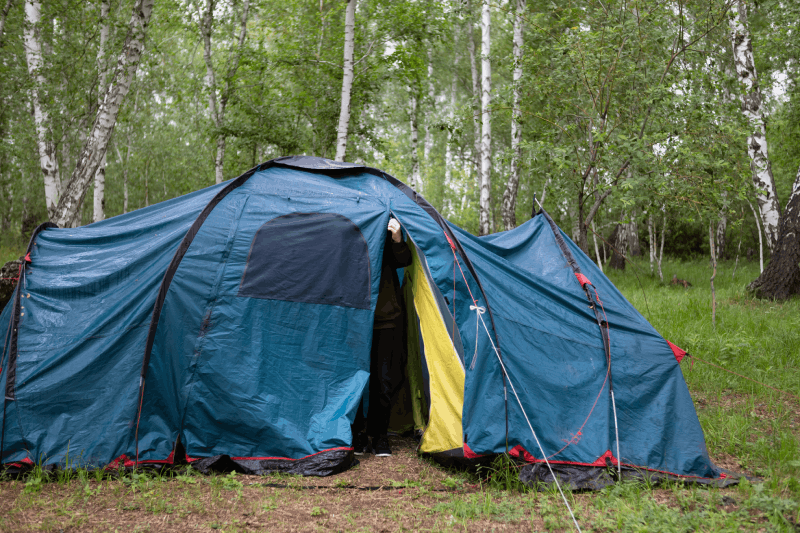
Tunnel-type tents are indispensable for large families, especially in European camping culture. The main reason for this is the enormous interior volume and vertical wall structure they offer. Unlike traditional dome tents, tunnel tents maintain almost the same ceiling height at every point due to the parallel poles that run along the length. This allows tall family members to move comfortably inside the tent. Additionally, the tunnel design is typically divided into "living areas" and "sleeping compartments," which provides privacy for large groups. They are quite stable when positioned correctly against wind resistance.
How Does Inflation Pole Technology Affect Setup Time in Large Family Tents?
Large family tents usually weigh over 20 kilograms, and setting them up with traditional metal poles can take hours. The inflation pole technology, known as "Air" or "Inflatable," eliminates this hassle. In these models, where high-pressure air channels are used instead of poles, it is possible to set up a massive tent in 10-15 minutes with the help of a hand pump or electric pump. For large families, this saves a significant amount of time while dealing with children or preparing meals. Additionally, since air channels can flex in the wind and return to their original shape, they offer a safer alternative against the risk of breaking metal poles.
How Do Multi-Room Cabin Tents Meet Privacy Needs?
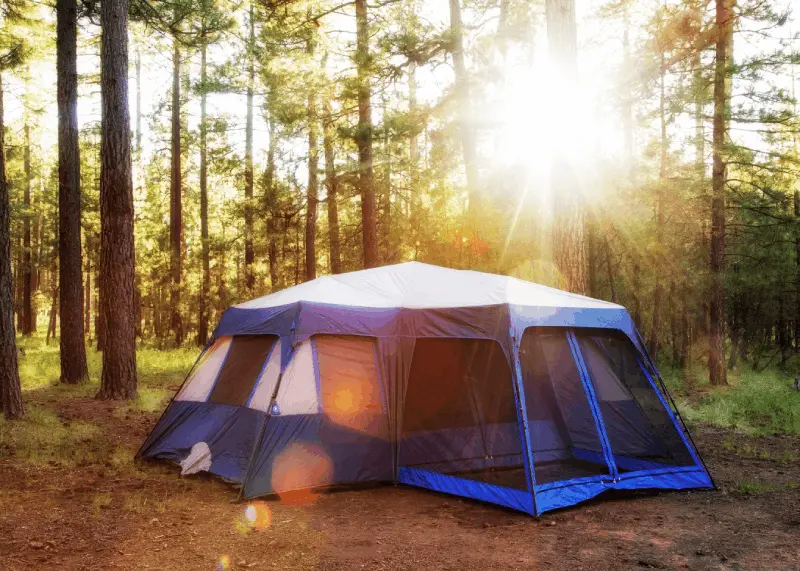
Cabin-type tents with independent sleeping compartments are ideal for families with children from different age groups. These structures, which can typically be divided into 2, 3, or 4 separate rooms, ensure that parents and children have their own private spaces. The partitions are usually made of zippered or hook-and-loop fabrics, allowing them to be removed when needed to create one large room. Privacy is critical not only for sleeping but also for changing clothes and organizing personal belongings. These types of tents are among the best models that provide the feeling of a "home away from home."
How Does Polycotton Fabric Preference Enhance Comfort in Long-Term Family Camps?
Large families typically prefer week-long or longer camping trips rather than short weekend getaways. At this point, fabric quality comes into play. Standard polyester tents can get very hot under the sun, while polycotton fabrics, a blend of technical cotton and polyester, are breathable. This feature balances the heat inside the tent; it keeps it cool in summer and warmer in winter. Additionally, polycotton does not produce the infamous "crinkly" sound of polyester and is much more resistant to UV rays. It is also unmatched in expelling the moisture (condensation) created by a large family inside.
How Does Blackout Bedroom Technology Change Sleep Quality?
As the sun rises in nature (around 05:00-06:00), the inside of the tent begins to brighten. For families with small children, this means starting the day very early. Blackout or Dark Room technology blocks up to 99% of sunlight with a special coating used in the sleeping compartment of the tent. This allows children to wake up later in the mornings and comfortably take their naps in complete darkness. Additionally, this technology keeps the bedroom area a few degrees cooler than the outside heat, creating a comfortable sleeping environment.
Why Is Ceiling Height and Spacious Gallery Areas Critical in Tents?
In large family tents used not only for sleeping but also for socializing, ceiling height is key to comfort. Models with a ceiling height of at least 200 cm allow movement without bending. Spacious gallery or "veranda" areas serve as a safe shelter where the whole family can sit at the table and play games or eat during rainy weather. These areas also act as a strategic storage space to keep shoes, wet clothes, and kitchen supplies away from the main sleeping area.
Why Is an Integrated Groundsheet System Essential for Safety?
In large tents, having the groundsheet completely sewn to the tent's outer fly (integrated groundsheet) provides full insulation from the outside world. This system prevents insects, ants, snakes, or small rodents from entering. Additionally, it makes it impossible for water to enter from underneath the tent during heavy rain or for cold air to seep in from the ground. For large families and especially campers with babies, this "sealed box" system is the most important safety feature that keeps the interior clean and sterile.
Why Should Ventilation Vents Be Strategically Positioned in Large Tents?
As the number of people inside the tent increases, the amount of moisture and carbon dioxide produced through respiration also rises. If the tent does not have adequate ventilation, you may find water dripping from the inner fly when you wake up in the morning (condensation). Quality family tents have adjustable ventilation vents both at the top and at ground level. Fresh cold air entering from the lower level pushes the warm and humid air inside out through the top vents. This continuous airflow ensures that the air inside the tent remains fresh at all times and prevents unpleasant odors from forming.
Are Steel Poles or Fiberglass Poles Safer for Large Families?
The structure of the tent determines its resistance to storms. In large tents, the wind load is very high. While fiberglass poles are lightweight and economical, they can snap or break under excessive weight. Steel poles, although much heavier, provide the static strength needed to support massive structures. If you have space in your vehicle and plan to camp in very windy areas, opting for cabin-type models with a steel pole system is more logical for your family's safety. However, if you travel frequently, high-quality and thick fiberglass or air poles may be more practical.
How Can the Porch Area at the Entrance Be Used as a Kitchen?
Many large family tents come with a front porch that can be attached to the main body or added optionally. This area is perfect for cooking and storing kitchen equipment. Cooking inside the tent is not recommended due to fire risk and odors, while the porch area is safe for this purpose thanks to the fresh air. On a rainy day, you can light your stove outside without getting wet and brew your tea. Additionally, this area serves as a "transition zone" where sandy or muddy shoes can be removed before entering the tent's clean living area.
Do Bell Tent Models Offer Retro Comfort for Modern Families?
Bell tents made from cotton canvas combine aesthetics and functionality. These circular structures, built on a single central pole, can accommodate up to 10 people depending on their diameter. Being entirely made of cotton, they offer incredible breathability and can accommodate real beds, carpets, and even small wood stoves inside. For large families who love the "glamping" style, Bell Tent models provide both a very spacious volume and the most compatible material with nature. However, it should be noted that these tents become very heavy when wet and require a large area to dry.
How Do Cable Entry Ports (E-Ports) Simplify Technological Needs?
In today's camping, phones, tablets, lighting units, and sometimes portable refrigerators are indispensable. Quality family tents have special zippered entries to pull cables from an external power source or power station inside. This way, the cable does not create an opening; it prevents insect entry and eliminates cable clutter. With cable channels and Velcro holders inside the tent, you can safely distribute electricity to the bedrooms or living areas.
Are Storage Pockets and Interior Organizers Essential for an Organized Camp?
Maintaining order in a tent where 8-10 people live together is the biggest challenge. Each family member has a lantern, glasses, phone, and personal belongings. In advanced family models, there are multi-tiered mesh pockets on the walls of each bedroom. Additionally, there are hanging points for keys or kitchen supplies in the living area. These small details minimize chaotic moments like "Where is my lantern?" or "I can't find my phone." Good organization prevents the valuable living space inside the tent from being occupied by belongings.
What Should the Waterproof Rating (Hydrostatic Head) of a Tent Be?
Waterproofing is the fabric's capacity to withstand millimetric water pressure. Large family tents feel the effects of rain more due to their larger surface areas. A quality family tent should have a minimum Hydrostatic Head (HH) rating of 3000 mm. If you are going to a very rainy area (like the Black Sea or England), it is safer for this value to be 4000 mm or 5000 mm. Additionally, seams should be sealed from the inside (seam-taped) to prevent even the smallest leak.
How Do Guy Lines Protect Large Tents in Storms?
Large tents behave like a "sail"; that is, their capacity to catch wind is high. Therefore, it is not enough to just anchor the poles to the ground. The guy lines extending from the tent's outer fly must be tensioned at the correct angle (usually 45 degrees). In some premium models, these lines are fluorescent in color so that no one trips over them at night. Additionally, thanks to wind stabilizing systems, the flexing of the poles during strong winds is controlled, preventing the structure from collapsing. On a stormy night, the quality of these lines determines whether your sleep will be disturbed.
How to Overcome the Challenges of Transporting and Storing Large Tents?
Large tents are heavy. Models exceeding 40 kilograms may be impossible to carry alone. Therefore, models that come with wheeled transport bags are a significant advantage. You should also consider the trunk space of your vehicle; sometimes a family tent can occupy half of the trunk. When packing up the camp, you should ensure that the tent is completely dry before taking it down. A tent packed while wet can develop mold and odors, rendering the expensive equipment unusable for the next season.
How Is Child Safety and the "Kids Room" Concept Implemented in Tents?
In large tents, special details should be considered for the safety of children. For example, it is important that the door zippers are high enough that children cannot open them or, conversely, that they are at a certain height for easy exit in emergencies. In some models, "Kids Room" sections have cheerful patterns on the walls or pocket arrangements suitable for children's height. Additionally, for children afraid of the dark, having nightlight hanging points in the center of the sleeping area is a great source of comfort.
Are Magnetic Door Systems a Practical Luxury?
In a large family, the tent door is opened and closed hundreds of times a day. Constantly zipping and unzipping can be noisy and annoying after a while. In some upper segment tent models, there are magnets hidden inside the fabric at the door section. As you pass, the door opens automatically and closes with a "thud" behind you. This system prevents insects from entering and stops someone going to the bathroom at night from waking the whole family with the zipper sound. This is a small but quality-of-life-enhancing feature.
Why Are UV-Protected Fabrics Important for Camps Under the Sun?
Sun rays not only burn us but also "degrade" the fabric of the tent over time. Large family tents are expensive investments, and you want to use them for years. UV-protected (UPF 50+) fabrics minimize the harmful effects of the sun, extending the life of the fabric. They also help keep the interior cooler. For families camping in open areas without shade, UV protection means not only comfort but also equipment durability. Quality brands guarantee their fabrics by passing them through these tests.
What Should "Fully Mosquito Net" Doors Be Like for Insect and Bug Protection?
In a large tent, it is inevitable that the door remains tightly open. In this case, to prevent the interior from being invaded by mosquitoes, not only the main door but all ventilation windows and even bedroom entrances should be equipped with ultra-fine (No-See-Um) mosquito nets. Fully netted doors allow you to open the main fly while keeping the net closed, ensuring maximum airflow inside the tent while keeping pests outside. This is the most effective weapon against mosquitoes, the biggest nightmare of summer camps.
Is It Mandatory to Use a Tent Footprint?
The floors of large family tents are durable, but sharp stones, tree roots, or tough plants can eventually puncture the groundsheet. Additionally, moisture from the damp ground can contaminate the bottom of the tent. Using a "Footprint" that fits the full dimensions of your tent protects your tent's floor and extends its life. When packing up the camp, you can put the footprint in a separate bag and place your tent cleanly in your backpack. This significantly reduces the effort spent on large and hard-to-clean tents.
Are Inflatable Tents or Pole Tents Longer Lasting?
This question is a major topic of debate among campers. Metal poles are very durable but can rust or bend. Inflatable beams are very practical but carry a risk of puncture. Modern inflatable tents have air channels inside multi-layer protective covers, making punctures quite difficult; even if punctured, they can be repaired with a patch kit. If you take good care of your tent and store it properly, both systems can serve you for 10 years or more. Here, the choice should be made based on ease of setup and transport weight rather than durability.
How Is Heating and Lighting Organized Inside Large Tents?
One lantern is not enough to illuminate a large volume. It is recommended to use LED strips or multiple hanging lamps that can be hung from hooks extending along the tent's ceiling. The heating issue is more sensitive. In large family tents, electric blankets (if electricity is available) or safe gas heaters can be used. However, heating a large-volume tent will take time. Therefore, choosing models with smaller and insulated sleeping compartments is strategic for maintaining warmth during winter camps.
How to Choose the Best Family Tent in Terms of Price/Performance?
Expensive does not always mean the best. When choosing a tent, you should consider how many times a year you will go camping. If you only go on vacation once a year, a mid-range polyester model will suffice. However, if you are on the path to becoming a professional camper and are outdoors every season, investing in premium models with polycotton fabrics and inflatable poles will be more profitable in the long run. Paying attention to the quality of the tent's seams, the brand of the zippers (like YKK), and the availability of spare parts (extra pole or air channel) will ensure you get your money's worth.
Why Is Choosing a Spot in the Campsite Difficult for Large Tents?
To set up a massive 8-10 person tent, you need at least 40-50 square meters of flat space. Many standard camping plots may be too small for such large tents. Additionally, having a completely flat ground is more critical for large structures to remain taut and stable than for smaller tents. A lightweight item can cause all poles to lean and zippers to strain in a large tent. Therefore, you should confirm before going camping whether the area is suitable for large tents (Extra Large pitches).
How Do Extensions Added to the Tent's Outer Fly Increase Space?
Some family tent models are modular. This means you can purchase additional rooms or sunshades that zip onto the front of the main tent. As your family grows or your needs increase, you can expand your tent this way. These extensions can sometimes be used as a playroom, a bicycle garage, or a guest bedroom. Having a modular system allows you to scale your tent according to your needs instead of going through the hassle of buying and transporting the world's largest tent.
What Should an Emergency Repair Kit and Spare Parts Bag Include?
A broken pole or torn fabric while outdoors with a large family is a significant issue. Your bag should definitely include waterproof adhesive tape, fabric patches, strong duct tape, and a spare pole repair tube. For inflatable tents, special patch kits and spare valves are lifesavers. This small set prevents your holiday from being cut short and provides a temporary safe shelter until you return home. Remember, even the best tent can be damaged by misuse or harsh natural conditions.
How Should Task Distribution Among Family Members Be During the Setup of Large Tents?
As we approach the end of this 3200-word guide, we should emphasize that social details are as important as technical details. Setting up a massive tent is a team effort. One person holding the poles while another secures the ends can make it a fun part of the camping experience, with children bringing stakes. Distributing tasks reduces setup stress and ensures everyone is involved in the process. With proper planning, setup is not a tiring chore but a joyful ceremony that heralds the start of your holiday.
What Should Be Considered When Making Decisions for Large Families?
Ultimately, the best tent is the one that best meets your family's specific needs. If you have babies, blackout rooms and integrated ground are essential; if you have teenagers, separate bedrooms and spacious social areas should be your priority; if you are comfort-oriented, inflatable poles and breathable fabrics should be your focus. Reading user reviews while researching brands and, if possible, seeing the tent set up in a store is invaluable for perceiving the dimensions. With the right choice, your tent will not just be a shelter but a warm home where your family will create memories for years to come.