How Do the Aerodynamic Forces of Wind Affect the Structure of a Tent?
When wind hits a tent, it not only applies a pushing force but also creates a lifting force as it passes over the tent. This is similar to the principle found in airplane wings. The difference in air pressure between the outer fly and the inner tent causes the tent to be pulled upwards. If the anchoring points are weak, the tent poles can buckle or break under this load. Therefore, understanding the direction of the wind and positioning the tent to deflect the wind rather than block it is the first and most critical step in stabilization.
What Is the Best Tent Positioning Angle to Deflect the Wind?
When setting up your tent, determining the main direction of the wind is crucial. If you are using a tunnel-type tent, you should turn the narrow back side into the wind. While dome tents can take wind from any direction, having the lowest profile facing the wind minimizes wind load. You should never set the entrance of the tent directly facing the wind; when the door is opened, wind can rush in and create a parachute effect, potentially blowing the tent inside out. Adjusting the entrance to face the wind at a 45-degree angle or completely opposite direction is the best way to maintain the tent's stability.
What Hidden Dangers Should Be Considered When Choosing Natural Windbreaks?
While it may seem logical to shelter behind trees or next to cliffs to protect from the wind, it carries certain risks. Branches known as "widowmakers" can break off in a storm and fall onto your tent. Additionally, large rocks can create turbulence on the windward side, causing the tent to sway from all directions. The ideal placement is behind low-growing groups of trees that gradually reduce the wind or on gentle slopes that cut the wind's speed without creating turbulence. When selecting natural barriers, you should also consider the drainage capacity of the ground; rain brought by the wind should not leave your tent underwater.
What Geometric Arrangements Increase the Strength of Stakes on Hard and Rocky Ground?
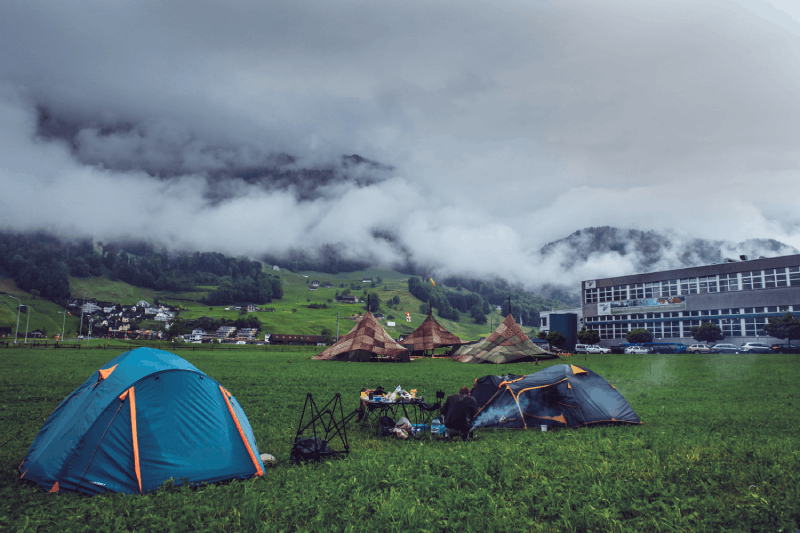
Driving stakes into rocky ground can sometimes be impossible. In this case, you need to use "V" or "Y" type hard alloy stakes. When driving the stake, you should place it at a 45-degree angle towards the tent. If the ground is very hard, you can create "extra pressure" by placing a large rock on top of the stake after driving it in. Additionally, driving two stakes side by side and threading the lines between them ensures that the load carried by a single stake is more than doubled. The arrangement of the stakes should create a wide range according to the direction of the wind, thus distributing the load evenly across all anchoring points.
In What Situations Does the 'Deadman' Technique Save Lives?
In situations where the ground is too soft, sandy, or snowy for stakes to hold, the "Deadman" technique is the most reliable method. In this method, instead of a stake, a long piece of wood, a large rock, or a bag filled with sand is used. The tent's guy line is attached to this object, which is buried horizontally about 30-50 cm deep in the ground or snow. When covered and compacted, the wind's pulling force is countered by this large surface area. This technique acts as an anchor that does not budge even in the most severe storms, making it impossible for the tent to uplift.
How Should the Correct Tension Level of Guy Lines Be Adjusted?
Many campers pull guy lines too tight, which causes excessive static load on the poles. Ideally, the lines should be taut but have a slight give. Allowing the poles to sway slightly during a storm helps absorb wind energy (damping). If the lines are too tight, a sudden gust of wind can cause the line to snap or tear the tent fabric. Due to temperature changes and humidity overnight, the lines may loosen, so it is necessary to check the tension at regular intervals and tighten them slightly if needed.
What Are the Most Secure Knots That Won't Slip in a Storm?
The heart of anchoring techniques lies in the right knots. The "taut-line hitch" allows you to easily adjust the tension of the line and lock it even while under load. The "bowline" creates a loop that never slips and tightens as weight is added but can be easily untied by hand. Knots should be chosen that are simple enough to be tied even with gloves in storm conditions but stable enough not to slip under shock. If nylon lines with slight stretch are preferred over static lines, sudden loads are better absorbed.
What Are the Aerodynamic Benefits of Building a Snow Wall Around the Tent?
Building a snow wall around the tent during winter camping is not just an insulation method but also a strategic stabilization support. The wall prevents wind from entering under the tent and reduces wind load hitting the tent surface directly. However, you should not build the wall too close to the tent; snow blown by the wind can accumulate behind the wall and crush the tent (snow loading). The ideal distance is about 1-1.5 meters. The height of the wall should be about half the height of the tent's highest point. This structure redirects the wind upwards, creating a low-pressure area above the tent.
How Is Tent Fabric Protected When Using Rocks for Stabilization?
When you have to use rocks in areas where stakes cannot be used, the biggest risk is the rope rubbing against the sharp edges of the rock. In a storm, the rope will move continuously, which can quickly wear it out. To prevent this, you can wrap the parts of the rope that touch the rock with an old cloth or a spare sock. Instead of placing the rock directly on the tent fabric, you should first wrap the rope around the rock and then place a secondary heavy rock on top of the first to increase stability. Using a method called "rock basket," gathering a few small stones together and threading the rope through the center of this pile also distributes the load and increases safety.
How Is a Vacuum Effect Created on Sandy Ground?
Sandy ground is an unstable surface that easily releases stakes. When anchoring in sand, instead of standard stakes, wide-surfaced "sand stakes" should be used. The stake should be buried parallel to the surface and deeply, rather than vertically. Pouring water over the sand to wet it reduces the voids between the sand grains, creating a "vacuum effect" that makes it harder for the stake to pull out. If the sand is very loose, placing sandbags in the corners of the tent can lower the center of gravity, relieving the load on the external guy lines and supporting the tent's stability from within.
Does the Strategic Placement of Items Inside the Tent Increase Stability?
Stabilization is not only an external process; the internal arrangement also affects storm resistance. You should place your heavy backpacks, kitchen supplies, and other heavy equipment in the corners facing the direction from which the wind is coming. This makes it harder for the tent to lift from that side. However, you should ensure that these items do not press directly against the tent poles or fabric, as this can deform them. The lower the center of gravity and the closer it is to the wind side, the lower the risk of the tent tipping or lifting. Even the position of your sleeping bag is important as it determines how your weight is distributed on the tent floor.
How Does the Flexibility of Poles Dampen Wind Energy?
Modern tent poles (aluminum or carbon fiber) are designed to flex to a certain degree. It is desirable for the tent to flex slightly rather than remain rigid in a strong storm. This flexing helps convert the wind's kinetic energy into potential energy, preventing the structure from breaking. If you secure the poles with very tight guy lines, you eliminate the flex and this can lead to "metal fatigue" or sudden breakage. The strength of a quality storm tent lies in its ability to dance with the wind; controlled flexibility provides stability instead of excessive resistance.
How Do Ventilation Windows Prevent Wind from Entering?
While it may seem logical to close all windows during a storm, this can lead to a buildup of air pressure inside and condensation. It is important to leave the ventilation openings on the leeward side open to allow the air inside to escape. The windows on the windward side should be tightly closed. If wind is entering from under the outer fly, the exit paths (ventilation) should be kept open to prevent this air from being trapped inside and lifting the tent. A well-managed airflow reduces the stress on the fabric by balancing the internal and external pressures of the tent.
How Much Does the Double Staking Method Increase Strength?
Relying on a single stake in expected severe storms is risky. In the double staking method, two stakes are driven in about 20-30 cm apart in succession. The guy line is attached to the first stake, and the remaining end is wrapped around the second stake. This "serial connection" system ensures that if the first stake starts to pull out of the ground, the second stake will take over. Additionally, driving the two stakes in a "V" shape and sharing the line between both ensures that the stabilization does not fail even if the wind changes direction. This method provides more than 50% additional strength compared to standard anchoring.
Is the Non-Stretch Property of Dyneema Lines an Advantage in a Storm?
High-strength lines like Dyneema or Spectra are much stronger than traditional nylon lines and stretch almost not at all. This ensures that the tent maintains its shape very well in a storm. However, non-stretching also means that the shock loads on the poles are transmitted directly. To mitigate this risk, small, strong elastic shock cords can be added to the ends of Dyneema lines. This hybrid system allows you to benefit from the breaking strength of the line while providing the necessary micro-stretch to protect the poles. When balanced correctly, these lines are the best friends of professional campers.
How Does Lowering the Profile of the Tent Reduce Wind Load?
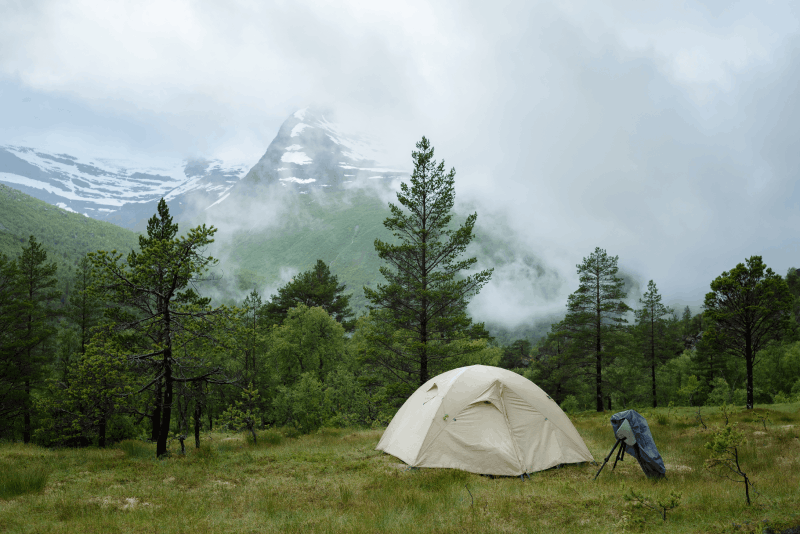
If your tent is pushing the limits in a storm, one of the smartest moves you can make is to lower the tent's profile. In tents with adjustable pole systems, shortening the pole lengths or setting the poles at a wider angle reduces the surface area that the wind hits. Wind load is directly proportional to the square of the surface area; thus, reducing the profile height by 20% significantly decreases the pressure exerted by the wind. This is an advanced survival technique that should be applied especially in open terrain and at high altitudes where there is no shelter.
What Is the Principle of Counter-Tensioning?
Counter-tensioning is supporting the tent against wind coming from one direction with a counter force from the opposite direction. If the wind is blowing from the north, you should tighten the guy lines on the south side more and secure them at strategic points. This creates an internal resistance against the wind trying to "crush" the tent. It is not enough to secure just the windward side; a tension network should be established from all directions against the wind's pushing force. This balanced tension surrounding the tent's skeleton like a spider web allows the structure to move as a whole, distributing the load on individual points.
Are Adjustable Tensioners or Manual Knots Safer?
Many modern tents come with plastic or aluminum tensioners (line tensioners). These are excellent for quick adjustments. However, the constant vibrations and factors like sand/ice created by the storm can cause these tensioners to slip. To ensure safety, a simple "half stake knot" or "safety knot" should be tied just behind the tensioner. Manual knots (especially in freezing conditions) can sometimes be more reliable as they do not require a mechanical part. However, if your knot-tying skills are weak, a combination of quality metal tensioners and safety knots yields the best results.
Why Is the Distance of the Outer Fly Critical?
Tents that are too far from the ground can allow wind to enter under the fly and create a "hovercraft" effect. In this case, the wind pushes the tent from below upwards. When expecting a storm, you should stretch the outer fly as close to the ground as possible, even if it means making contact with the ground. By weighing down the edges of the fly (snow skirts) with rocks or dirt, you can completely cut off wind entry, preventing the tent from being inflated like a balloon. This detail is often overlooked but is one of the most critical elements in preventing the tent from uplifting.
How to Prevent Stakes from Loosening in Wet Ground?
Storms often come with heavy rainfall, which softens the ground and weakens the holding power of the stakes. In muddy soil, stakes can easily pull out due to the "wedge" effect. To prevent this, stakes should be driven deeper, and the point where the line attaches to the stake should be kept as close to ground level as possible. When the line is attached from above, it applies a lifting force to the stake; however, when attached from ground level, the force is only horizontal. Additionally, compacting the soil around the stake by stepping on it or placing a large and wide rock on top can help maintain stability.
How to Repair a Torn Tent Fabric During a Storm?
If the anchoring fails and a tear occurs in the fabric, the wind can quickly enlarge this tear. It is impossible to sew during a storm, so you should always have high-adhesion tapes like "duct tape" or "tenacious tape" on hand. Before applying the tape, try to dry the area as much as possible. Applying tape to both sides of the tear (sandwich method) yields the most secure result. If the tear is at an anchoring point, you should take the line from that point and transfer it to a more secure point where the poles connect to reduce the load on the fabric.
Why Are the Corner Attachment Points of the Tent the Weakest Link?
Tents often start to tear at the corners and seams. During a storm, all the loads converge at these points. To strengthen these points, tents should be selected that have been reinforced during the manufacturing process or reinforced with extra stitches by the user. Additionally, instead of attaching the tension directly to the plastic ring in the fabric, you can place a piece of helper rope or shock cord in between to prevent sudden impacts (shocks) on the fabric. Ensuring that the direction of the fabric's tension is aligned with the direction of the pull of the line minimizes the risk of tearing by reducing shear forces.
What to Do to Avoid Losing Stakes in a Night Storm?
Trying to find a loose stake in a storm that breaks out in the middle of the night is complete chaos. To prevent this, you should attach reflective strips to your stakes and guy lines. Fluorescent or reflective lines will shine in the light of your headlamp, allowing you to see the anchoring points immediately. Additionally, marking the location of each stake in your mind or with small markers will save you time when you need to intervene in complete darkness. Checking all points before the storm starts and reinforcing areas that may loosen will eliminate the need to go outside at night.
How to Remove Stuck Stakes After a Storm Without Damage?
After a storm, the ground may be dry or frozen, making it difficult to remove stakes. Instead of pulling the stake straight up, you should use another stake or a sturdy stick to lift it from the loop of the stake. Gently rocking the stake side to side will loosen the surrounding soil, reducing the resistance to removal. If the stake is frozen in ice, you can pour some warm water over it to melt the ice. Avoid forcing the stake out; a damaged stake will never provide the same strength in the next storm. Removing it patiently and at the correct angle extends the life of your equipment.
Is It Correct to Use the Car as a Windbreak When Camping by the Vehicle?
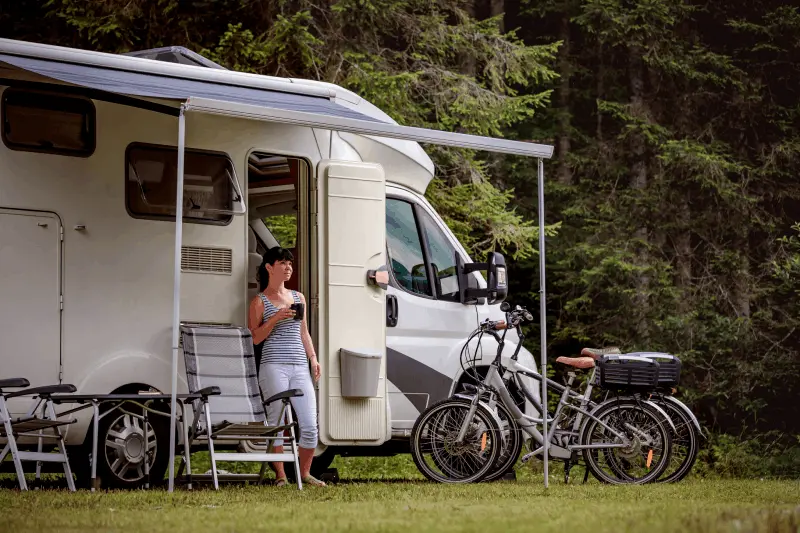
If you are camping with your vehicle, you can use the car as a large windbreak. However, you should avoid parking the car too close to the tent. Wind can accelerate as it passes under and around the vehicle (Venturi effect) and can hit the tent with more force. Park the vehicle about 2-3 meters away from the tent, cutting the wind directly, and secure the tent's guy lines to the vehicle (to the wheels or roof rails) for extra safety. However, you must ensure that the vehicle's exhaust is not facing the tent and that the handbrake is engaged; safety should always be a priority.
Is It Logical to Connect Multiple Tents Together in Group Camps?
Sometimes the idea of connecting tents together to create a common strength area may seem appealing. However, this is often risky. If one tent starts to lift, it can drag the others along or break their poles. Each tent should have its own independent anchoring system. Instead, it is more logical to set up the tents in a strategic arrangement (for example, in a "V" or "U" formation) that protects each other from the wind. This way, the tents in front do not create a wind tunnel for those behind but instead act as a barrier that cuts the wind's speed.
Is It Safer to Stay Inside the Tent or Evacuate During a Storm?
This decision depends on the severity of the storm and the quality of your tent. If the poles of the tent start to buckle and there are serious tears in the fabric, staying inside poses the risk of the poles breaking and harming you. However, a well-anchored storm tent is much safer than an open area outside. If you decide to evacuate, make sure to take your emergency backpack and warm clothing with you. Staying calm during the storm while checking the anchors is crucial. As soon as you understand that your tent is going to lift, you should move the weights inside (including yourself) to a safe place instead of cutting the guy lines.
How to Develop Stabilization Practices for Long-Term Camping Safety?
Tent anchoring is a skill that develops with experience. You should try new techniques in different terrains and wind strengths during each camping experience. Practicing on windy days in your backyard or a local park will help you learn how to behave in a real storm. Being able to tie knots with your eyes closed, understanding the language of guy lines, and reading the signs of nature will make you a master camper. Remember, the best anchoring technique is the one prepared for the worst-case scenario before the storm hits.
Don't Fight Nature, Move with It?
All these techniques needed to prevent your tent from uplifting in stormy weather actually teach you to manage the wind's energy rather than fight against it. With proper positioning, strategic staking, reliable knots, and intelligent internal arrangement, you can safely and peacefully weather even the fiercest storms. Camping is a reward for being prepared and respecting the rules of nature. On your next adventure, instead of fearing the sound of the wind, enjoy the wild beauty from inside your securely anchored tent.