Why is Brewing Tea Over Campfire Embers Considered an Art?
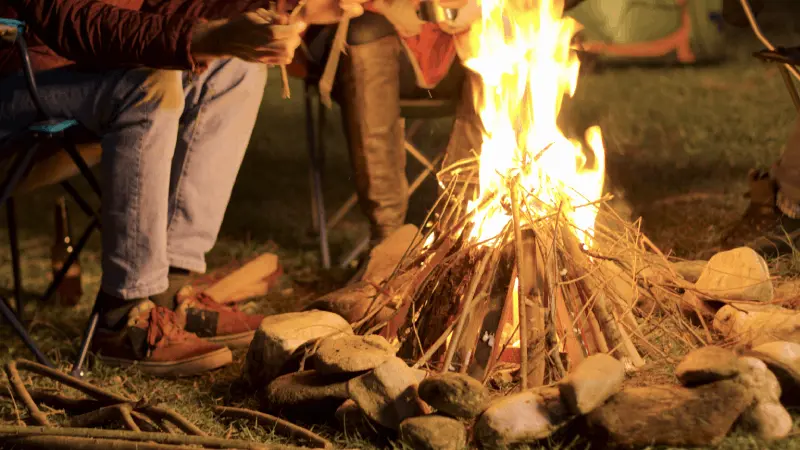
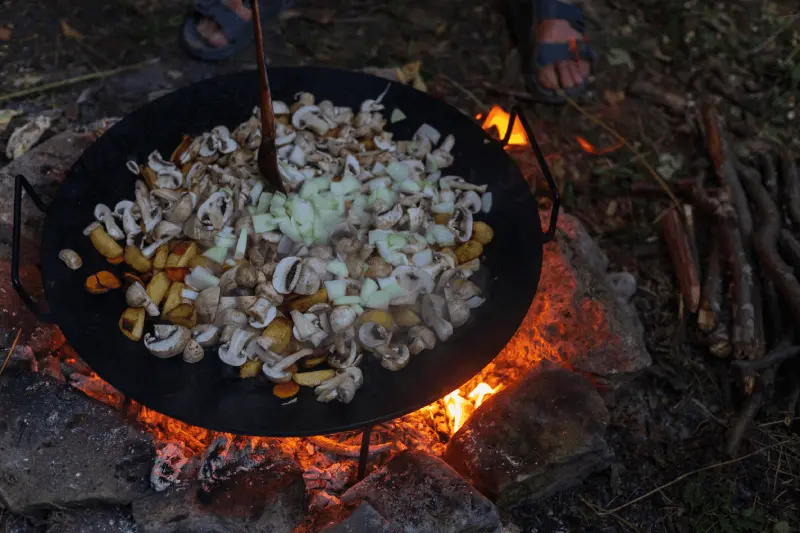
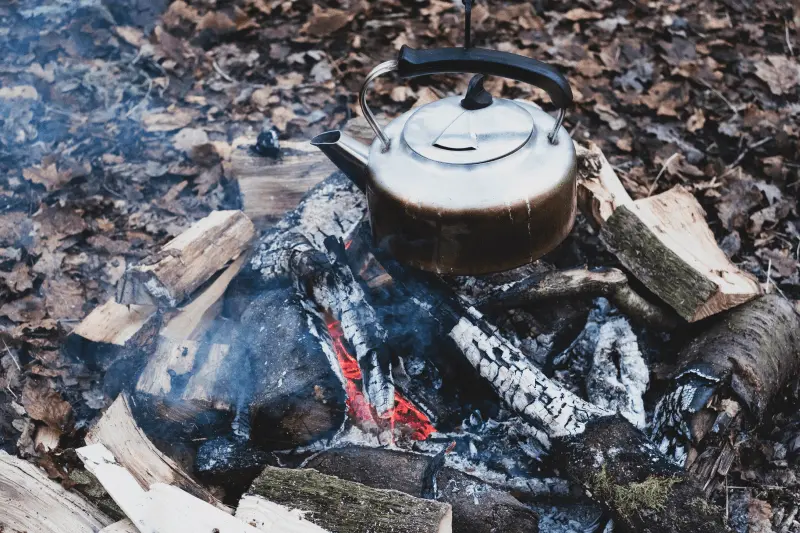
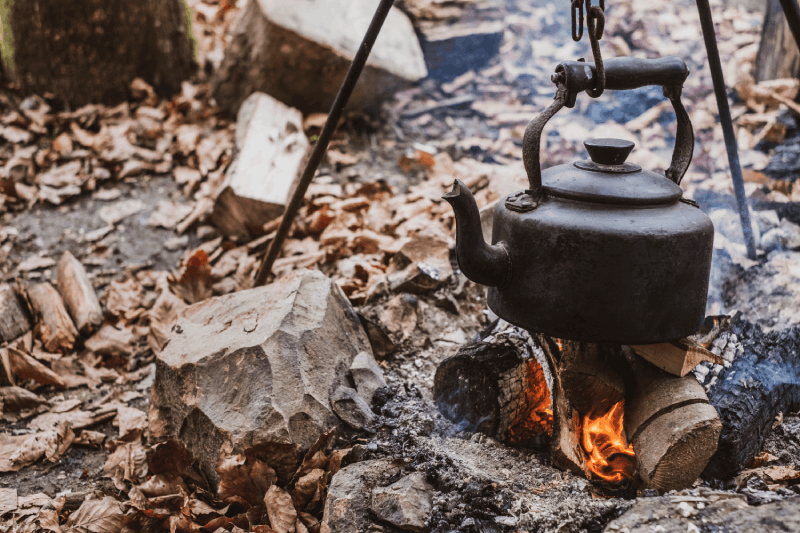
Lighting a campfire in the embrace of nature, away from the city's noise, is not just an act done for warmth or cooking; it is actually the beginning of a ritual that soothes the soul. Brewing tea over embers is the most captivating part of this ritual because this process is not limited to just boiling water and steeping tea. The management of the fire, the selection of the right wood, calculating the direction of the wind, and deciding whether to place the teapot directly over the embers or to the side requires skill. Unlike electric machines or gas stoves used in modern kitchens, control over a campfire is entirely natural. When this uncertainty and patience combine with the deep flavor that emerges when the tea is brewed, it transforms into a true art form. With every sip of tea, you can feel the effort of the person who lit the fire, the breath of the trees in the forest, and the smoky aroma of the smoke. For this reason, brewing tea over embers is not just a preparation process but the most sincere expression of a bond established with nature.
Which Types of Wood Should You Prefer to Achieve the Best Embers?
The flavor of tea depends on the quality of the water as well as the character of the fire beneath it. Not every type of wood produces the same heat or aroma. For example, resinous woods like pine or spruce burn quickly and produce a lot of soot; this can sometimes add an unwanted bitter smoky flavor to the tea, causing the outside of your teapot to turn pitch black. However, hardwoods like oak, beech, or hornbeam burn slowly, creating a stable and high-heat ember bed that can last a long time. Oak embers are the best source for providing the consistent heat needed for brewing tea. If you have the chance to find wood from fruit trees (like apple or plum), their embers will impart a slightly sweet and fruity aroma to the tea. Remember that to obtain the right embers, the wood must be completely dry; green wood only produces smoke and unnecessarily prolongs the brewing time by forcing the water to boil. This can lead to the tea's flavor becoming "stale."
Copper or Enamel: Which Teapot Can Withstand the Heat of the Ember Better?
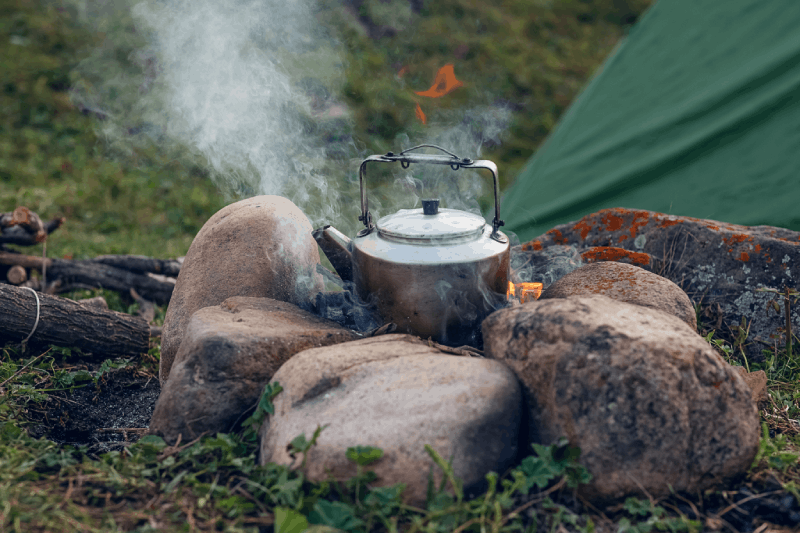
The choice of teapot to be used over a campfire is critical in terms of both durability and heat transfer. Professional campers and traditional flavor enthusiasts often prefer hammered copper teapots. Copper ensures that heat is distributed very quickly and evenly, allowing the water to heat uniformly over the embers. Additionally, the unique metallic character of copper harmonizes perfectly with the smoky aroma of the embers. However, copper requires careful maintenance and can tarnish quickly over the embers. On the other hand, enamel teapots stand out for their nostalgic appearances and ease of cleaning. Since enamel is a glass coating over metal, it never alters the taste of the water inside and is quite resistant to the high heat from the embers. The only disadvantage of enamel teapots is that their inner coating can chip under very hard impacts. If you are a modern camper, you might also prefer stainless steel, but the metal's sudden heat transfer can lead to the tea being scorched during the brewing phase. Therefore, the teapot that best resonates with the spirit of tea brewed over embers is always a handcrafted copper teapot.
How Does the Heat of the Embers Affect the Aroma of the Tea?
The quality of a tea is measured by how well the essential oils and tannins in its leaves are combined with water at the right temperature. Controlling the heat over embers is much more challenging than on a stove, but it is equally rewarding. A very hot ember quickly boils the water and scorches the tea leaves, resulting in a "burnt" and very bitter taste. Ideally, sprinkling a bit of ash over the embers helps to ensure that the heat reaches the teapot in a more "gentle" and gradual manner. This slow heating method allows the tea leaves to open gradually and release their aromas into the water step by step. The infrared radiation emitted by the embers envelops the teapot, ensuring that the water inside is heated from the inside out. This way, the tea achieves a clarity and fullness that cannot be reached on a stove. A tea brewed over the right heat leaves a slight sweetness on the back of the tongue and a lingering smoky character on the palate.
Why Does the Boiling Point of Tea Water Vary Over Embers?
If you are lighting a fire at a campsite located at a higher altitude, you should know that the water will boil at lower temperatures. This physical reality requires you to adjust your strategy when brewing tea over embers. At high altitudes, water begins to boil at around 90-92 degrees; this means that the 100 degrees of energy needed for the tea leaves to fully "open" cannot be achieved. In this case, it may be necessary to use the hottest part of the embers and slightly submerge the teapot into the embers. The embers heat not only the bottom of the pot or teapot but also its sides, so the boiling speed of the water is higher than on a stove. This intense boiling process can reduce the oxygen level in the water. Tea brewed with oxygen-depleted water tends to have a dull and lifeless color. To prevent this, after taking the water from the embers, wait a second and fill the teapot from above to aerate the water, which will help the tea appear brighter and livelier.
How is the Famous Smoky Flavor of Tea Balanced?
Many people love tea brewed over embers for that unique smoky aroma, but too much of this smoke can overpower the tea's original flavor. To maintain the smoky flavor in perfect balance, you should ensure that the lid of the teapot is tightly closed. If you want the smoke to penetrate the tea more, you can slightly open the lid while the water is boiling; however, be careful, as too much smoke can make the tea bitter. The primary source of smoke is the particles released from burning wood. If your fire is not burning completely and producing a lot of smoke, you should not bring the teapot too close to the fire. It is best to wait for the wood to turn into embers and for the smoke to be replaced by a flickering heat. Some masters lightly coat the outside of the teapot with soapy water to maintain the balance of smoke; this prevents the smoke from adhering to the metal and helps the smoky flavor to seep in a controlled manner. Ultimately, the light woody aroma you achieve should dance with the tea's natural flavor, not overpower it.
Why Should Ash Be Sprinkled Around the Teapot During Brewing?
One of the biggest secrets of brewing tea over embers is using ash to control the intensity of the heat. If you place the teapot directly over the embers when they are at their hottest, the water in the lower teapot can evaporate very quickly, or the tea in the upper teapot can scorch. Instead, sprinkling a layer of ash close to the embers creates a kind of thermal shield. This layer of ash ensures that the heat is transmitted to the teapot in a more homogeneous and gentler manner. Additionally, ash delays the embers' contact with air, helping your tea stay warm for a much longer time. This method is especially crucial during the "steeping" phase. Instead of placing the tea directly into the embers, placing it next to the embers that have been sprinkled with ash allows the tea to rest while it brews. This slow process allows for a more balanced release of theine from the tea and results in a smoother infusion.
Does Snowmelt Water from the Highlands Really Turn Tea into a Source of Healing?
Using water from a spring or clean snowmelt instead of tap water while brewing tea in nature elevates the flavor to a higher level. The chlorine and high lime content in city tap water masks the true aroma of the tea and can lead to lime buildup inside the teapot. Spring waters are generally soft and have a high mineral balance. This purity, combined with the smoky flavor of the embers, creates an incredible contrast. The molecular structure of snowmelt water is said to make the tea brewed with it "lighter" and "more fluid" due to its different melting process. However, it is important to note that the water from nature must be filtered or boiled thoroughly. Pure spring water that has been boiling over the embers for a long time absorbs the essence of the tea leaves better. When you take a sip, you can feel the character of the soil and rocks from that region along with the aroma of the smoke, which is an experience you cannot find in any café.
How Does Adding a Branch to the Embers Strengthen the Character of the Tea?
When brewing tea over embers, sometimes taking advantage of the additional aromas that nature offers can enhance the depth of the tea. If you add a small branch of thyme or a clove to the edge of the embers or inside the teapot, the aromatic oils of these spices will blend into the tea with the heat from the embers. Thyme, especially on cold camping nights, helps balance body heat while slightly cutting the smoky flavor from the embers, resulting in a smoother and sweeter infusion. However, the key here is a "niche" touch: you should add the thyme while the tea is brewing, not before the water boils. This way, the thyme does not become overpowering but remains a subtle "note" in the background. Some campers also add bay leaves or wild fruits to the embers; the smoke released from these plants creates a unique layer of aroma that seeps into the tea. These small touches can transform a standard tea experience into an unforgettable gourmet experience.
What is the Chemical Basis for Showing Patience While Brewing Tea?
For those of us accustomed to quickly consuming everything in modern life, brewing tea over embers is a test of patience. Chemically, when tea leaves come into contact with water, the amino acids and sweet compounds are released first. If you serve the tea immediately, its flavor will be lacking. However, tea that has been waiting in the gentle heat of the embers for about 15-20 minutes allows the tannins and polyphenols to gradually seep into the water. During this process, the tea's color darkens, clarifies, and its "body" settles. The advantage of brewing over embers is that the heat is never constant; as the fire gradually cools, the brewing process follows a natural cooling curve. This allows the tea leaves to release all their flavor into the water without stress. The term "taking its brew" actually refers to this chemical maturation process. The expected 20 minutes at the embers is not just a time frame but a transformation process where the flavor matures within the teapot.
How Does the Direction of the Wind Affect the Heat Distribution in the Teapot?
The wind at the campsite can be both a friend and an enemy during the tea brewing process over embers. The wind can increase the heat by allowing the embers to take in more oxygen, but it can also cause one side of the teapot to cool while the other side overheats. This uneven distribution of heat can lead to some of the water in the teapot boiling while other parts remain stagnant. For ideal brewing, you should either have the wind at your back or create a small windbreak around the teapot with stones. The windbreak ensures that the heat rising from the embers focuses directly on the teapot. If the wind is very strong, you may need to place the teapot deeper over the embers and cover it with a camping cloth (from a safe distance) if necessary. By using the direction of the wind correctly, you can manage the fire like a blindfold, manually adjusting the boiling speed of the water.
How Does Cleaning the Residue in the Teapot Affect the Quality of the Next Brew?
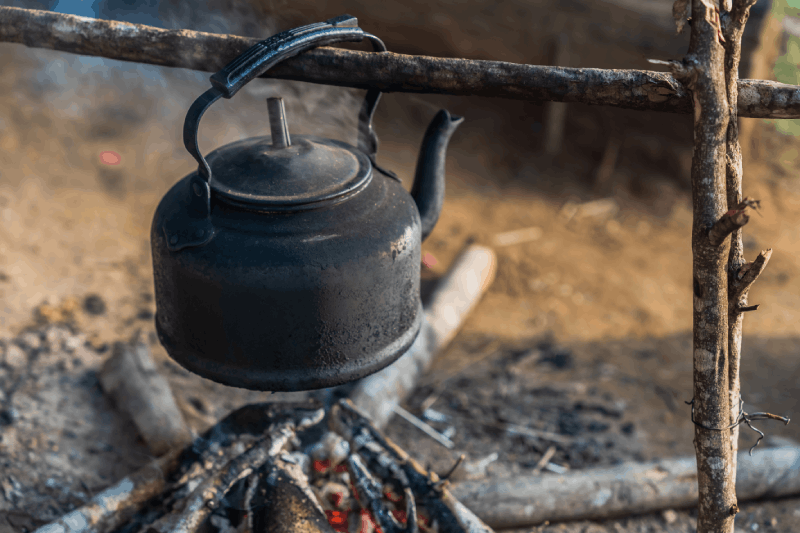
When tea is brewed over embers, the teapot inevitably becomes covered with a layer of residue (soot). While many people love this appearance as a badge of honor for camping, this layer actually serves as an insulator. As the soot layer thickens, it becomes harder for the heat from the embers to penetrate inside, and the boiling of the water takes longer. Additionally, old soot can fall into the fire during the next brew and produce a foul-smelling smoke. Therefore, it is important to gently clean the teapot after each brew. However, instead of using chemical detergents for this cleaning, you can use a paste made by mixing the ash from the campsite with a bit of water. Ash is a great abrasive and cleaner; it polishes your copper or enamel teapot while balancing the soot smell on it. Simply rinsing the inside of the teapot with water is sufficient; the "patina" (tea stains) that forms inside is actually a natural preservative that ensures the tea will be more flavorful the next time.
What Happens If Charcoal Pieces Left in the Embers Mix with the Tea Water?
Sometimes, while moving the teapot over the embers, small pieces of charcoal may accidentally fall into the water. In some traditional cultures, this is actually a deliberate act. A small piece of charcoal that possesses active carbon properties can absorb unwanted chlorine or heavy metal residues in the water, giving it a slightly alkaline character. However, it is essential that this charcoal is from "fully burned" and clean wood (especially oak or fruit wood). If too much charcoal remains in the water, the tea's color can darken and its flavor can become muddy. In such a case, it is best to strain the tea before drinking it. The microscopic soot aroma that the charcoal adds to the water is an element that enhances the "smoky flavor" of the tea. Of course, this may not suit everyone's palate; therefore, instead of deliberately adding charcoal to the water, it is a more controlled method to allow the smoke rising from the embers to naturally influence the water.
Should You Add Tea Leaves Before or After the Water Boils?
One of the most debated topics in brewing tea over embers is when to add the tea leaves to the teapot. At home, water is usually poured into the upper teapot after it has boiled; however, the method is slightly different over embers. If you prepare the tea using the "cold brewing" method, meaning placing the dry tea in the upper teapot and waiting for the water in the lower teapot to gradually heat it, the tea's aroma will deepen significantly. When the water boils, the leaves in the upper teapot will have already "sweated" from the heat of the embers and will be ready to release their aromas. Then, slowly pouring the boiling water from above prevents the leaves from going into shock. Another method is to boil the water and then add the tea after removing the teapot from the embers; this method ensures that the tea is clearer and less bitter. You can experiment with both methods at the embers to find the one that best suits your palate; however, the "sweating" method aligns best with the slow spirit of camping.
Does the Environment Next to the Campfire Affect the Flavor of the Tea?
In the world of gastronomy, "flavor" is not just the taste perceived by the tongue; it is a combination of all senses. Drinking tea brewed over embers in a plastic cup in a noisy environment versus drinking it in a quiet glass cup by a stream with the sounds of birds makes a world of difference. The coolness of the environment helps the steam rising from the tea to be more pronounced. The crackling of the wood fire is the most beautiful symphony that accompanies you while waiting for the tea to brew. Psychologically, spending time in nature sharpens our senses as it reduces stress levels. This sharpness allows you to feel the warmth of the embers, the purity of the water, and the slight bitterness of the tea more deeply. Holding the tea glass in your hands and warming yourself with that liquid that still carries the warmth of the embers reminds you that you are alive and that you are a part of that moment. Therefore, brewing tea over embers is not just a drink; it is a reflection of that moment.
What is the Hidden Power of the Embers Left Overnight in the Morning Tea?
The "morning embers" formed by large chunks that have been burning slowly overnight are invaluable for breakfast tea. These embers have burned slowly throughout the night, releasing all volatile gases, and have remained as a pure and stable heat source. When you wake up in the morning and gently stir these embers and blow off the ash on top, the warmth that emerges will boil the water in the softest way. Listening to the water slowly trickling over the embers you placed in the morning chill is the most peaceful way to start the day. These morning embers naturally extend the brewing time of the tea due to their lower heat compared to the blazing fire of the night. This long and slow brewing, combined with the tranquility of the morning, helps to release the stimulating substances in the tea more evenly and aids in starting the day refreshed. The flavor that emerges from the embers of the previous night symbolizes the cyclical nature of camping life.
Which Type of Glass Best Preserves the Heat of Tea Brewed Over Embers?
Drinking that special tea brewed with great effort over embers in a wide-mouthed cup that loses heat immediately is one of the biggest mistakes. The ideal choice is a slender glass cup; because the wider bottom and narrower middle of the glass help trap the heat inside. However, carrying glass cups in a camping environment can be risky. In this case, double-walled stainless steel cups or titanium mugs can be preferred. These modern tools preserve the immense heat of the tea for a long time; however, they cannot fully replicate the visual pleasure that glass provides (seeing the color of the tea). If you are truly looking for a niche experience, you can use traditional wooden "kuksa" cups carved from wood. Wood is one of the least conductive materials; thus, while your tea does not cool down, your hands do not get burned. Additionally, the natural texture of wood provides an aesthetic and sensory unity with the smoky character of the tea brewed over embers.
How Should the Sweetness Balance of Ember Tea Be Established: Sugar or Honey?
Using sweeteners to balance the smoky and sometimes intense flavor of tea brewed over embers is a personal preference. However, refined white sugar tends to "flatten" the complex aroma profile of the embers. If you want to sweeten your tea, you should use brown sugar, which has a caramelized flavor, or better yet, high-quality flower honey. Honey should be added after the tea has brewed and reached a drinkable temperature; because high heat destroys the beneficial enzymes in honey. The pollen aromas in honey, when combined with the woody scent of the embers, create a kind of "forest elixir." Some campers place a slice of apple or dried fruit next to the embers instead of using sweeteners. Warming a piece of this fruit while sipping the tea provides a natural sweetness balance and softens the characteristic bitterness of the ember tea. Remember, ember tea tells its own story; it should not be silenced with too much sugar.
What Safety Precautions Should Be Taken When Brewing Tea Over Embers?
While enjoying tea in nature, maintaining safety is vital for both yourself and the forest. You should ensure that the teapot is balanced over the embers; otherwise, it can tip over, leading to both the fire being extinguished and serious burns. To prevent this risk, you should create a stable stove from stones or use a portable camping stove. Additionally, you should clear away dry leaves and branches around the embers to prevent the fire from spreading uncontrollably. When removing the teapot from the embers, always use heat-resistant gloves or a sturdy cloth; metal handles can reach dangerously hot temperatures in seconds due to the intense heat of the embers. After finishing your work, completely extinguishing the embers and covering them with soil is one of the most basic duties of a camper. Leaving that delicious tea you obtained from nature without harming it is a part of this culture.
What Are the Natural Remedies for Cleaning the Soot from the Teapot?
Cleaning the soot from the teapot during a camping trip can sometimes be tedious. However, there are very effective ways to do this without using chemicals. One of the best methods is to place the teapot inside a large pot and boil it with water, plenty of baking soda, and a bit of citric acid. This mixture softens the soot layer and allows it to be easily removed. If you are outdoors, you can create a natural sanding effect by rubbing fine sand from the riverbank onto the teapot with a cloth. Sand quickly removes the black layer left by the embers while also polishing the metal. However, caution should be taken when using sand on enamel teapots; it can cause scratches. Another method is a mixture of vinegar and salt. Vinegar disrupts the chemical structure of the soot while salt provides mechanical cleaning. After cleaning, be sure to rinse and dry the teapot thoroughly; otherwise, rust or staining may occur on the metal.
What Is the Place of Brewing Tea Over Embers in Traditional Turkish Culture?
In Turkish culture, tea is not just a drink; it is the key to hospitality and conversation. "Tea brewed over embers" is one of the purest and oldest forms of this culture. Especially in the highland culture, it is indispensable for shepherds and mountaineers. Serving tea brewed over embers to a guest in Anatolia is a sign of the value given to them and the effort spent. Because tea brewed over embers is not "waited for" but "expected." The tea on the stove is quick and hurried; but the tea over embers is tranquil. This culture is an extension of those ancient times when people gathered around the fire to tell stories and share their troubles. Today, the interest of those escaping modern city life in tea brewed over embers stems from the longing for those peaceful fire-side conversations embedded in our genetic code. A cup of ember tea brings us closer to our roots, nature, and each other.
How Do Brewing Techniques for Ember Tea Vary Across Different Geographies?
Brewing techniques for tea over embers vary across different parts of the world. For example, in Morocco, mint tea is sometimes prepared in large metal teapots placed directly over the embers and caramelized with sugar. In Russia, traditional samovars heat water using embers placed in a tube in the middle; this method maximizes the contact of heat with the water. In Mongolia, milk and salty teas (Suutei tsai) are cooked over embers; here, the smoke from the embers combines with the milk fat to create a very different aroma profile. Each culture combines the wood, water, and plants offered by its geography with the strength of the embers. Knowing these differences and drawing inspiration from these techniques while camping can elevate your tea experience to a global level. Perhaps one day, by adding a pinch of salt to your embers, you can try the Mongolian style, or by using plenty of mint, you can experience the Moroccan style and surprise your palate.
Why Is the Heating of the Upper Teapot Important During the Brewing Process?
Many amateur campers focus only on boiling the water in the lower teapot, but the real skill lies in keeping the upper teapot at the right temperature. If the upper teapot remains cold, when you add the boiling water, the temperature of the water will drop suddenly, and the tea leaves will float in the water instead of brewing. When brewing over embers, you should place the upper teapot in such a way that it sits perfectly on top of the lower teapot, allowing the steam rising from the lower teapot to heat the upper teapot thoroughly. Some masters even pour a small amount of hot water (just enough to wet the leaves) into the upper teapot to preheat it. A warm teapot allows the cell walls in the tea leaves to soften, thus releasing their aromas generously as soon as they come into contact with water. Maintaining this balance over embers is much more critical than on home stoves; because the wind can cool the upper part quickly.
What Filtration Method Should Be Used to Preserve the Clarity of Ember Tea?
Tea brewed over embers can sometimes become cloudy due to the movement of the fire and the shaking of the teapot. A clear tea not only presents a visual feast but also provides a cleaner taste. To maintain clarity, you should pour the tea into the cup very slowly. If possible, prefer traditional cloth filters instead of fine-meshed metal strainers attached to the spout of the teapot. Cloth filters are the best material for capturing microscopic dust from the tea leaves and any particles that may come from the embers. Additionally, try not to shake the teapot too much while filling the cup; leaving a last finger of tea in the teapot will prevent the sediment at the bottom from getting into the cup. Adding a bit of "dead water" (water that has stopped boiling and has rested) to the top of the tea will also enhance the clarity in the cup. A clear ember tea should reflect light like a ruby and contain no foreign substances.
How to Keep Tea Fresh When the Campfire Starts to Die Down?
During the hours when the fire gradually turns to ash, keeping the tea in the teapot fresh is a challenge. As the heat decreases, the tea begins to cool and its flavor becomes heavy. To prevent this, you should arrange the embers around the teapot like a "wall" and cover them again with a thin layer of ash. This "burial" method keeps the liquid inside the teapot at a stable temperature for a long time. If the tea has become too strong, you can refresh it by adding hot water from the lower teapot (quickly boiling the water by placing a small stick over the embers). However, if the tea has been sitting for more than an hour, it has likely lost its freshness. In this case, the best option is to throw in a couple of fresh pieces of wood into the embers and start a new brewing process. When ember tea is consumed fresh, it is a delight; when it has been waiting for a long time, its flavor becomes "tired." Managing this correlation between the life cycle of the fire and the freshness of the tea is a true camping skill.
What Are the Ways to Turn the Ember Tea Experience into a Social Event?
Tea brewed over embers is a drink that should never be consumed alone; it is a social catalyst that beautifies as it is shared. Gathering around the fire with your friends while the tea brews, discussing the color of the brew, and helping each other gather wood is part of this process. By assigning different tasks to everyone (bringing water, managing the embers, preparing cups), you can turn brewing tea into a joint project. A small beautiful word spoken while passing the tea glass or the tranquility felt in that moment strengthens social bonds. The stories told while the steam of the ember tea rises leave much more lasting impressions than the photos taken. To take this experience a step further, you can keep small local snacks or nuts that you can lightly roast over the embers alongside you. Remember, drinking tea over embers is not just about quenching thirst; it is about collecting moments.
What Is the Effect of Brewing Tea in Nature on Psychological Relaxation?
The concept of "slow living" in modern psychology perfectly overlaps with the process of brewing tea over embers. Waiting for a fire to burn down, watching the water boil, and patiently following the color of the tea allows our brains to shift from "fight or flight" mode to "rest and digest" mode. The warm red light emitted by the embers awakens a sense of security in the human brain that dates back to prehistoric times. The familiar aroma of tea triggers peaceful moments in memory. Staying away from the digital world during this process and focusing solely on the teapot in your hands and the nature around you is a form of active meditation. The calmness you feel when sipping your tea is not just due to theine; it is the result of the entire preparation process. Brewing tea over embers is the most delicious way to synchronize your soul with the rhythm of the forest.
What Are the Most Common Mistakes Made While Brewing Tea Over Embers and How to Avoid Them?
The most common mistake is acting impatiently and placing the water on a still smoldering, smoky fire; this fills the tea with an undrinkable smoky flavor. Another mistake is allowing the water in the lower teapot to run out, which can burn the bottom of the teapot; the embers consume water much more insidiously, so the water level should be checked frequently. Using too many leaves while brewing can unnecessarily intensify the already strong character of the ember tea; it is better to keep the portions slightly less than at home. Additionally, failing to take precautions against the wind can prevent the water from boiling at all. To avoid these mistakes, you can create a "ember checklist" for yourself: Is the wood dry? Is there a windbreak? Is the water level sufficient? Is my patience in place? If the answer to these questions is "yes," then a perfect ember tea is waiting for you.
How to Create a Special Kit for Ember Tea Among Camping Equipment?
If you are a true ember tea enthusiast, you should have a special kit for this purpose in your backpack. This kit should include a small copper teapot that you won’t hesitate to use, a quality stainless steel water container (lower teapot), a packet of quality loose black tea, a few sticks of thyme, a cloth strainer, and a small leather glove. Additionally, adding a lightweight, foldable metal tongs to manage the embers will make your job much easier. As for cups, titanium mugs or two glass slender cups carried in a protective sleeve will be the stars of your kit. Collecting all these materials in a waterproof small bag will allow you to quickly set up a "tea station" when you reach the campsite. Brewing tea with your own kit guarantees that you will achieve the same standard of flavor at every camp and elevates this special ritual to a more professional level.
What Are the Best Camping Foods to Pair with Ember Tea?
The smoky and full-bodied nature of tea brewed over embers pairs perfectly with foods cooked over embers as well. For breakfast, toasted bread with butter and honey over embers perfectly balances the bitterness of the tea. In the evening, a cup of hot tea alongside potatoes cooked in the embers (baked style) is the most satisfying moment of the camp. If you are looking for something sweet, lightly melted marshmallows or grilled bananas over embers create an exotic combination with the smoky flavor of the tea. After meat dishes, ember tea is indispensable for alleviating the heaviness of oily meals and aiding digestion. Every food you add should carry the characteristic "smoky" signature of the embers. This harmony ensures the integrity of flavors on the palate and transforms the camp table into a feast.
What Is the Determining Role of Seasons on the Flavor of Ember Tea?
Each season adds a different dimension to the experience of brewing tea over embers. A tea brewed over embers under the snow in winter provides survival energy and deep warmth; during this season, adding ginger or black pepper enhances the warmth of the embers. In spring, tea consumed alongside the fresh scents of flowers celebrates the awakening of nature; during this period, lighter and more aromatic tea blends can be preferred. In summer, tea brewed over embers during the coolness of the night is the best excuse to watch the stars. Autumn is the time when the scent of fallen leaves and the smoky aroma blend the most, making it the most "romantic" time for ember tea. The wood used in each season burns differently; hard woods are preferred for heat in winter, while fruit branches are chosen for aroma in spring. Regardless of the season, tea brewed over embers is always a flexible flavor that harmonizes with the spirit of the moment.
How Can We Pass on the Art of Brewing Tea Over Embers to Future Generations?
The best way to ensure that this ancient tradition does not disappear is to involve children and young people in camping processes. Teaching them to light a fire, select wood, and patiently wait by the teapot is not just a cooking skill but a life philosophy. Small pieces of information like "Look, my child, the sound of this fire tells you that the water is boiling" or "It’s time to brew the tea when the color of the embers turns pink" help them establish a connection with nature. One day, when those children grow up and light their own campfires, every steam rising from the teapot will remind them of the patience and love for nature that you taught them. Brewing tea over embers is more than just a drink; it is the liquid form of the stories passed down through generations, the shared efforts, and the respect for nature. Living this art honors one of humanity's oldest and most sincere habits.