What Is the Role of Portable Power Sources in Modern Camping?
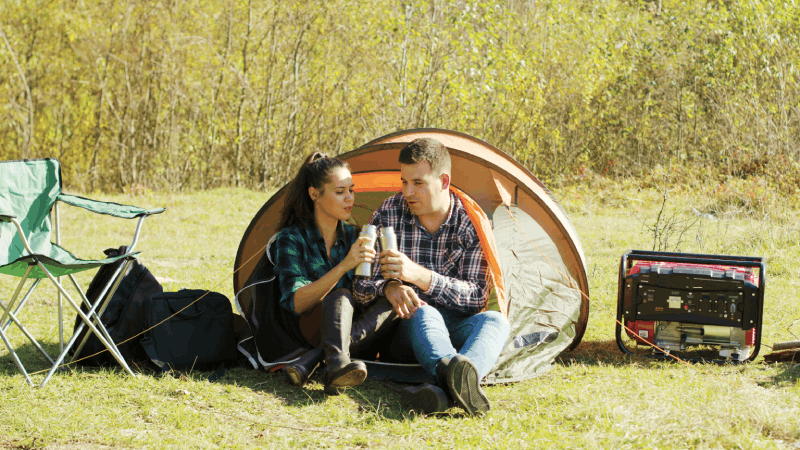
The modern camping experience is no longer just about a tent and a sleeping bag. With advancing technology, the smart phones, GPS devices, cameras, and sometimes laptops that we carry with us require energy even in the midst of nature. At this point, portable power sources have become the "lifeblood" of the camper. Beyond just charging a phone, providing lighting at the campsite, running a mini refrigerator, or powering a professional video editing laptop for hours is made possible by these devices. Choosing the right power source is a factor that directly affects the comfort and safety of the camp.
What Are the Best Portable Power Stations for Digital Nomads?
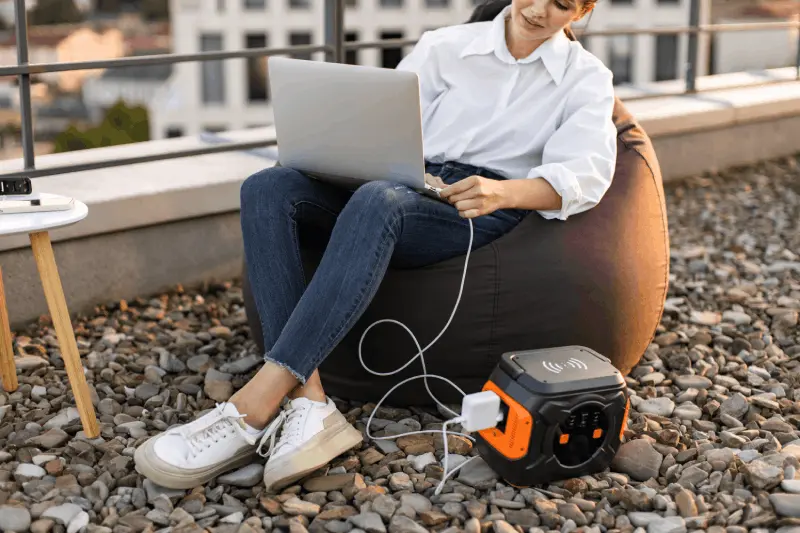
For digital nomads who leave city life behind and work in nature, energy is not just a luxury but a necessity. The best options for these users are typically "Portable Power Stations" with a capacity of 500Wh or more. The Jackery Explorer series, EcoFlow River and Delta series, and Anker Solix models are world leaders in this field. Especially the EcoFlow River 2 Pro model can charge a laptop multiple times with its 768Wh capacity and 800W (1600W with X-Boost) output power. These devices not only provide USB ports but also allow you to use your computer adapters directly by providing a standard home outlet (AC output).
Why Is Wattage Important When Choosing a Power Bank for Charging Laptops?
Not every power bank can charge a laptop. To charge a laptop, the power bank must have "Power Delivery" (PD) technology and sufficient watt (W) output power. Most modern ultrabooks require at least 30W-45W, while MacBook Pro or gaming laptops need 65W, 100W, or even 140W of power output. If you use a standard phone power bank with 20W output, your laptop may not charge at all or the charging speed will lag behind your usage speed. Therefore, when purchasing a laptop power bank for camping, you should definitely look for "PD 65W" or "PD 100W" on it.
Why Should LiFePO4 Battery Technology Be Preferred in Camping Power Sources?
When purchasing a portable power station, battery chemistry is a critical detail. Older generation lithium-ion (NMC) batteries offer about 500 charge cycles, while the new generation LiFePO4 (Lithium Iron Phosphate) batteries maintain performance for 3000-4000 cycles. This means that even if the device is used every day for 10 years, it will retain 80% of its capacity. Additionally, LiFePO4 batteries are more stable at high temperatures and have a much lower risk of burning or exploding. In challenging outdoor conditions like camping, opting for LiFePO4 models offered by brands like Anker or Bluetti is the most profitable investment in the long run for the device's lifespan and safety.
How Does Pure Sine Wave Inverter Feature Protect Sensitive Devices?
The electricity coming from the outlets of power stations can be "Modified Sine" or "Pure Sine Wave." Sensitive electronic devices such as laptops, medical devices (CPAP), and professional cameras require Pure Sine Wave current. Modified sine wave can cause overheating in these devices' adapters, lead to noisy operation, and eventually cause motherboard failures in the long run. A quality camping power source (such as Jackery Explorer 1000 or EcoFlow Delta) provides Pure Sine Wave current of the same quality as the electricity from your home outlet, protecting your expensive computers from electrical fluctuations.
What Are the Lightest and Most Powerful Power Banks for Backpackers?
If you are going camping with your backpack instead of your vehicle, weight is everything. In this case, instead of massive power stations, high-capacity but compact power banks come to the forefront. The Nitecore NB20000 model is one of the lightest 20,000mAh power banks in the world with its carbon fiber body, designed for tough outdoor conditions. Additionally, the Anker 737 (PowerCore 24K), with its 140W dual-direction fast charging feature, charges itself quickly and starts charging a laptop in seconds. Despite being small enough to fit in your pocket or the side pocket of your backpack, these devices can charge an iPhone 4-5 times and fully charge a MacBook Air.
How to Set Up a Power Source Combination with Solar Panels?
In long-term camps, your power source's energy will eventually run out. At this point, the "Solar Generator" concept comes into play. Most portable power stations can be connected to foldable solar panels thanks to the DC input on the back. For example, a 100W or 200W solar panel is ideal for charging a station with a capacity of 500Wh. On a sunny day, these panels can fully charge the station in 5-7 hours. The important point to note is that the output voltage of the solar panel must be compatible with the input voltage of the power station (usually between 12V-30V). Panels like Jackery SolarSaga are among the easiest options to set up with a plug-and-play logic.
What Should Be Done to Protect Battery Performance in Winter Camps?
Batteries do not like cold. When the temperature drops below zero, the chemical reactions inside lithium batteries slow down, and capacity can suddenly drop. In fact, many devices refuse to charge below 0°C for safety reasons. To protect your power source during winter camping, you should keep it inside the tent, preferably in an insulated bag or blanket. Some high-end models (like EcoFlow Delta 2) have built-in heating systems that bring the battery to the ideal operating temperature. If you are going to charge your phone, keeping the power bank warm in your pocket with your body heat will increase efficiency by about 30%.
How Can You Calculate How Many Times You Can Charge a Laptop?
The capacity of power sources is usually indicated in mAh (milliampere-hours) or Wh (watt-hours). When it comes to charging laptops, the Wh unit is more accurate. A laptop's battery typically ranges between 50Wh and 100Wh. If you have a power station with a capacity of 500Wh, with simple math (taking losses into account), you can achieve approximately 4-5 full charges. In power banks, a device with 20,000mAh stores about 74Wh of energy. This means it can fully charge an average laptop once or partially charge it 1.5 times. When calculating, it is always more realistic to leave a loss margin of 15-20% due to inverter efficiency.
Who Are the Rugged Power Bank Models That Are Waterproof and Shockproof For?
If you are doing canoe camping, rainy nature hikes, or dusty desert safaris, standard electronic devices can break down quickly. "Rugged" power bank models with IP67 certification continue to work even if they fall into water. The Goal Zero Venture series is one of the most iconic products in this field. The rubber coating absorbs shocks, while the waterproof caps protect the USB ports from water and dust. These devices often also have a built-in flashlight, making them indispensable for emergency bags. Not having to worry about your device getting wet while charging your phone is a big plus for extreme campers.
Why Is Pass-Through Charging a Lifesaver While Camping?
"Pass-through charging" is the feature that allows a power source to charge itself while simultaneously charging other connected devices. Why is this feature critical while camping? Let's say you have only one solar panel and need to charge both your power station and your phone. If your device supports this feature, you can connect the solar panel to the station and the phone to the station, powering both at the same time. This feature is not available on every device; because charging and discharging the battery at the same time requires thermal management. Brands like Anker and EcoFlow provide this feature in a stable manner, making time management easier.
How Do Fast Charging Technologies (QC 3.0 and PD 3.1) Shorten Camping Duration?
At the campsite, you may have limited time to get sunlight or need to quickly charge your device at a café before hitting the road. In this case, fast charging technologies come into play. PD 3.1 technology allows power transfer of up to 240W, enabling even the most powerful laptops to charge 50% in 30 minutes. Qualcomm Quick Charge (QC) offers similar speed for phones. When choosing a camping power source, you should also look at the input speed. Some stations fully charge from the outlet in 1.5 hours, while others take 10 hours. Models with fast charging technologies like "X-Stream" significantly speed up the preparation process.
How Does Having Multiple Ports Provide an Advantage in Camping Sharing?
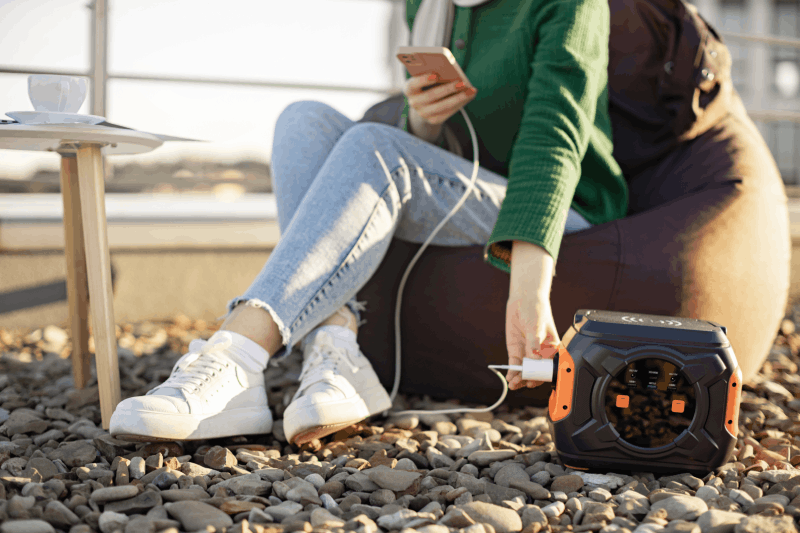
When you go camping with a large group of friends, energy becomes the most shared "resource." Having only one USB port on a power source is a significant limitation. The best camping power stations offer at least 2 AC outlets, 3-4 USB-A ports, 2 USB-C ports, and one 12V car socket. This variety allows one person to work on their computer while another charges their phone, and someone else powers the camping lamp. Having more ports reduces cable clutter and ensures that everyone's energy needs are met simultaneously, maintaining peace within the camp.
Do Wireless Charging Supported Power Sources Provide Convenience?
In recent years, wireless charging pads integrated into portable power stations have become quite popular. Leaving your phone on the station while you sleep at night eliminates the hassle of searching for cables. However, there is one detail you should know: wireless charging is much less efficient than wired charging. About 30% of the energy is lost as heat. If you have limited energy and your solar panel charging options are restricted, it is more logical to prefer wired charging. Still, in emergencies or scenarios where your cable is broken, wireless charging support serves as a significant "Plan B."
How Does GaN Technology Reduce Camping Equipment Size?
GaN (Gallium Nitride) technology has revolutionized the world of charging devices. Compared to traditional silicon-based chargers, GaN components produce much less heat and are more efficient, successfully squeezing massive power outputs into tiny adapters. For campers, this means smaller and lighter adapters. Today, a GaN power bank can offer 100W of power in a size that fits in your palm. If you want to save space in your backpack, make sure both your power bank and wall adapter have GaN technology. This technology also helps minimize energy loss, allowing your battery to last longer.
Why Is BMS (Battery Management System) Important for Camping Safety?
A power source is essentially an "electric box" that contains a massive energy potential. Uncontrolled discharge or overheating of this energy can be dangerous. BMS (Battery Management System) is an intelligent brain that monitors the voltage, current, and temperature of each cell in the battery second by second. Features like short circuit protection, overcharge protection, and low voltage protection operate thanks to BMS. In environments where flammable materials (tents, dry leaves) are present, avoiding unbranded power sources without a reliable BMS system is crucial for safety. Quality brands present these systems as a layered security wall.
How Does the Vehicle Charging Feature Facilitate Energy Storage on the Road?
When going camping or changing locations between campsites, you can use your vehicle's alternator as an energy source. Most portable power stations come with a cable that can be charged from the vehicle's socket. Charging your device while on the move (usually at 12V 8-10A) ensures you arrive at the campsite with a fully charged battery. Some advanced systems can charge the station much faster by drawing higher current from the vehicle's battery (DC-DC charging). This method is especially a great alternative on cloudy days when solar panels are not working and turns travel time into an efficient energy storage process.
What Do LCD Screen Models Show While Tracking Energy?
In the past, power banks only had 4 small LED lights, and we tried to guess how much energy we had left. Modern camping power stations have detailed LCD screens. These screens show the current battery percentage, the amount of watts being drawn at that moment (output), the incoming charging power (input), and most importantly, how many more hours the battery will last at that pace. For example, if your screen says "9.5 hours left" when you connect your computer, you can plan your work accordingly. This transparency prevents you from unexpectedly running out of energy in the middle of camping and helps you understand how much each device consumes.
How Are Power Stations with UPS Feature Used at Home and While Camping?
Some portable power stations (such as Bluetti and EcoFlow models) have UPS (Uninterruptible Power Supply) features. If you leave the device plugged into the wall at home and connect your computer to it, it switches to battery in less than 20 milliseconds if the power goes out. This ensures that when you return from camping, the device is not just sitting idle but also protects your home workstation. While camping, if you are dependent on a generator or an uncertain power source, you can use the power station as a "filter" to power your sensitive computer through this device, protecting it from voltage fluctuations.
Are Hybrid Models of Camping Lamps and Power Sources Functional?
Some portable power sources come with massive LED panels. These models eliminate the need to carry extra equipment for tent lighting or outdoor lighting. For example, some models from brands like Goal Zero and Claymore are both high-capacity batteries and offer professional-level adjustable lighting. If you value minimalism, these hybrid devices can charge your phone and illuminate your campsite like daytime. Being able to adjust the brightness and color warmth greatly enhances the atmosphere of the camp.
What Are the Rules for Carrying Power Sources on Air Travel?
If you are flying to the place where you will camp, you need to pay attention to airline rules. Most airlines do not allow lithium batteries with a capacity over 100Wh (approximately 27,000mAh) in the cabin. In some cases, special permission may be granted for up to 160Wh. However, large portable power stations (300Wh, 500Wh, etc.) are absolutely not allowed on the plane and cannot be shipped either. In this case, renting from the destination or carrying a few high-capacity power banks within the allowed limit may be a solution. You should definitely check the airline's "Dangerous Goods" policy before your trip.
Does Smart Application Support Allow Remote Control of the Power Source?
Next-generation portable power stations can connect to smart phone applications via Bluetooth or Wi-Fi. With these applications, you can turn on and off the outputs of the power station outside while lying inside your tent, adjust the fan speed, or limit the charging speed. Additionally, performing firmware updates to enhance the device's performance is also possible with these applications. Viewing energy consumption graphs in the past provides excellent data analysis to understand which device is draining the battery. This is a significant comfort for users who blend technology with nature.
What Are the Differences in Warranty and Service Between Local and Foreign Brands?
Portable power sources are expensive investments, so after-sales support is critically important. Global brands (Jackery, EcoFlow, Bluetti, Anker) typically offer warranties ranging from 2 to 5 years. Purchasing through the official distributors of these brands in Turkey ensures that you have someone to turn to in case of a potential malfunction. Some local brands (like Orbus) may offer affordable solutions, but their technology and efficiency often lag behind global giants. Having to send the device abroad for a technical issue poses a significant logistical problem; therefore, you should research the breadth of the service network before making a purchase.
What Is the Most Logical Power Source Capacity in Terms of Price/Performance?
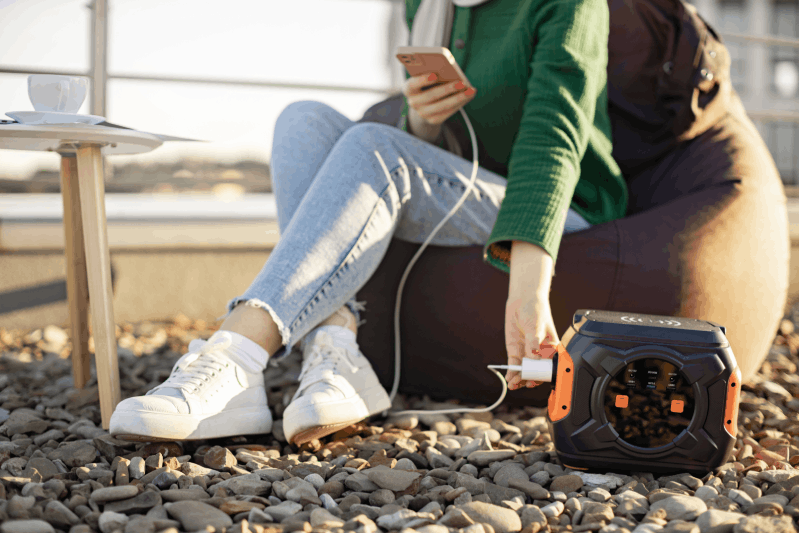
If you are only charging phones and tablets, a quality power bank between 20,000mAh - 30,000mAh is the most logical price/performance product. However, if you need to charge a laptop, compact power stations with a capacity of 250Wh - 300Wh (e.g., EcoFlow River 2 or Jackery 240) are great for entry-level. These devices are both portable and powerful enough to charge a laptop 2-3 times. If you are not doing professional work, devices over 1000Wh can be unnecessarily heavy and expensive. For most weekend campers, models around 500Wh are considered the "golden ratio"; they have sufficient capacity and reasonable weight.
How to Solve Heating Problems When Charging Multiple Devices?
Charging 3-4 devices at the same time can cause the electronic components inside the power source to heat up. If the device's cooling fans are insufficient or if the device is left in the sun, it may reduce the charging speed for safety reasons. To prevent overheating, always keep the power source in the shade and do not block the ventilation channels. Additionally, avoid covering the devices while charging. Some high-end models use aluminum bodies or advanced active cooling systems that quickly dissipate heat, preventing performance degradation. Thermal management is the most important factor in extending the lifespan of the batteries inside the device.
Where Should the Power Source Be Placed in the Camping Gear List?
The power source should be classified as "essential equipment" rather than just a camping accessory. Just as the tent and mat provide shelter, the power source ensures communication and lighting safety. When arranging your backpack, it should be placed in a central location where it won't get damaged and away from items that could cause liquid spills (like a water bottle). If traveling by vehicle, it should be secured in a way that it won't tip over during bumps. Remember, a working phone can save your life when your phone's charge runs out at midnight or when you lose your way in the forest. Therefore, your power source should always be "ready and available."
Is USB-C Standardization a Revolution for Campers?
In the past, every laptop had its own massive charging plug and connector. With the widespread adoption of USB-C and Power Delivery (PD) standards, you can now charge your phone, laptop, headlamp, and headphones through a single cable and port. This minimizes the number of cables you need to bring along while camping. A quality USB-C cable (preferably supporting 100W and braided) can meet all your energy needs. When choosing a camping power source, opting for models with at least 2 high-speed USB-C ports prepares you for future technology.
What Do Modular Power Systems and Additional Battery Options Offer for the Future?
Some brands (like EcoFlow Delta Max/Pro or Bluetti AC200 series) offer a modular structure. This means you can add extra battery packs alongside the main unit to multiply the capacity. This allows you to continue your journey by simply adding batteries instead of having to change the entire system if your camping needs increase over time. In the future, it is expected that lighter and denser energy-storing "Solid-State" batteries will be integrated into these modular structures. For now, these modular systems offer the most professional solution for long-term caravan living or off-grid home projects.
What Are the Ways to Save Energy While Using a Power Source?
If you have limited energy, using it efficiently is an art. Reducing the screen brightness of your laptop, closing unnecessary applications running in the background, and charging devices while they are off can make a big difference. Additionally, putting your phone in "Airplane Mode" cuts off the intense energy your device spends searching for a base station in low signal camping areas. You should turn off the AC inverter (outlet output) of the power station when you are not using it; because even when the inverter is idle, it consumes a certain amount of energy to keep its internal systems running. DC (USB) outputs are always more efficient.
What Is the Best Camping Power Source for You?
The best power source is the one that best suits your camping habits and energy consumption. If you are just a hobby camper who escapes to nature on weekends, a 20,000mAh PD power bank will suffice. However, if you are working in nature, shooting videos, or do not want to compromise on your comfort, a portable power station with LiFePO4 batteries, at least 500Wh capacity, and solar panel support can change your life. When investing in technology, prioritizing safety, battery life, and charging speed will give you an unparalleled sense of freedom in the heart of nature.