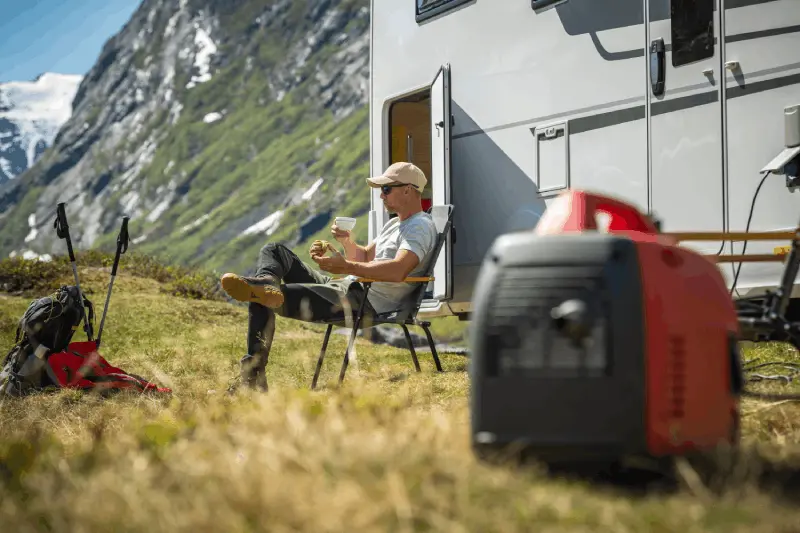
How Long Do Portable Power Stations Last in Camp?
For campers who do not want to disconnect from modern technology while spending time in nature, portable power stations have become silent and eco-friendly alternatives that replace traditional generators. So, how long can these devices last during a camping trip?
What Do the Capacity Values of Portable Power Stations Really Mean?
The most important value you encounter when purchasing portable power stations is the Watt-hour (Wh) unit. This value indicates the total energy storage capacity of the battery. For example, a station with a capacity of 500 Wh can theoretically power a device that draws 500 Watts for 1 hour. However, in practice, you cannot use the entire capacity due to the efficiency of the inverter inside the device and the energy consumption of the battery management system. Generally, about 85-90% of the capacity is usable. Therefore, when examining capacity values, it is essential to focus not only on the number on paper but also on the efficiency rate in real-world tests of the device. The higher the capacity, the longer you can spend time at camp, but the weight of the device will also increase accordingly.
How Can You Calculate the Total Energy Amount You Need at the Campsite?
To understand how much energy you will need during your camping duration, you should determine the Watt value of each electronic device you will bring and its daily usage time. For example, if you will use a 10 Watt camping lamp for 5 hours a day, your daily consumption will be 50 Wh. You can find your daily total Watt-hour needs by adding up items like phone charging, laptop usage, mini fridge, and CPAP device if you have one. By multiplying this number by the number of days you will be camping, you will reach the minimum battery capacity required. It is always recommended to leave a 20% safety margin in your calculations; unexpected weather changes or efficiency losses of devices can disrupt your plans. This mathematical approach is the most guaranteed way to avoid running out of power while camping.
Does the Watt-Hour (Wh) Value Directly Determine the Operating Time of a Device?
While the watt-hour value is a basic indicator, it is not the only factor that determines the operating time. The instantaneous power (Watt) drawn by the device and the inverter efficiency of the station play a critical role in this equation. If a device draws very low Watts (for example, an LED flashlight), the amount of "idle consumption" that the station uses to power its own circuits can remain high compared to the device's consumption. This situation can lead to a performance that falls short of theoretical calculations. Additionally, high Watt-drawing devices (like heaters) can increase the internal resistance of the battery, leading to voltage drops and consequently faster depletion of capacity. In other words, if the Wh value is a storage volume, the Watt consumption of the device is the speed of water flowing from that storage. No matter how large the storage is, if the tap is left wide open, the water will run out quickly.
How Long Do Mini Fridges Consume Power from Portable Power Stations?
One of the most curious topics for campers is the performance of fridges. Modern compressor camping fridges typically consume between 30-50 Watts, but this consumption is not continuous. The compressor stops when the internal temperature reaches a certain level and only operates when the temperature rises. On an average summer day, a well-insulated fridge consumes about 15-20 Wh of energy per hour. A power station with a capacity of 500 Wh can run a fridge under these conditions for approximately 20 to 25 hours. If you frequently open the fridge door or if the outside temperature is very hot, the compressor will run more and the duration will shorten. To extend this duration, it is crucial to pre-cool the fridge at home and keep it in a cool, shaded spot.
How Do Low Temperatures Affect Battery Performance During Winter Camping?
Lithium-based batteries do not like cold weather. When the temperature drops below 0 degrees Celsius, the chemical reactions inside the battery slow down, which can reduce capacity by 20% to 40%. When using your portable power station in winter, you should prevent the device from coming into direct contact with a cold surface and, if possible, keep it on an insulated mat or a raised platform inside a tent. While some advanced models have internal heating systems, this system also consumes energy from the battery, affecting the total usage time. Additionally, trying to charge the battery in temperatures below freezing can cause permanent damage to the cells. When planning energy for winter camping, it is advisable to be much more conservative compared to summer camping and to double the capacity needs.
Can Charging with Solar Panels Make Your Camping Duration Unlimited?
Theoretically, if you can recover the energy you consume daily with solar panels on the same day, your camping duration can become unlimited. However, this depends heavily on the sunlight duration in the area, the angle of the panels, and the weather conditions. For example, a 100 Watt solar panel can produce about 70-80 Watts of real energy per hour under ideal conditions. Assuming you get 5 hours of efficient sunlight, you can store about 400 Wh of energy. If your daily consumption is below this number, your portable power station will return to full capacity every morning, providing you with an endless cycle. However, in cloudy weather or in shaded areas, this efficiency can drop to as low as 10%. Therefore, it is more realistic to view solar panels as a supportive resource rather than a primary source.
What is the Lifespan Difference Between LiFePO4 and Lithium-Ion Battery Technologies?
The batteries, which are the heart of power stations, generally have two different chemical structures: Lithium-Ion (NMC) and Lithium Iron Phosphate (LiFePO4). Traditional Lithium-Ion batteries are lighter and more compact but typically offer 500 to 800 full charge cycles. On the other hand, LiFePO4 batteries can maintain their performance for up to 3000 or even 5000 cycles. This means that even if you charge the device every day, it can last over 10 years. While they may not make a direct difference in terms of usage time while camping, LiFePO4 models are thermally more stable and operate more safely at high temperatures. If you are a professional user who frequently takes your device camping, LiFePO4 technology will be a much more economical and sustainable choice in the long run. The weight disadvantage is offset by the safety and long lifespan it offers.
How Can You Estimate How Many Times You Can Charge a Smartphone?
Charging a smartphone is one of the most basic functions of power stations. A modern phone's battery typically has a capacity of 15-20 Wh. In a station with a capacity of 500 Wh, considering inverter efficiency and cable losses (approximately 80% efficiency), you will have usable energy of 400 Wh left. Dividing 400 by 20 gives you the result that you can charge your phone approximately 20 times fully. If you charge your phone directly from DC (USB) outputs, the losses decrease as you won't need to run the AC inverter, and this number can go up to 25. The same logic can be applied to other small devices like tablets and smartwatches. For someone who will only use a phone and a light during the camping trip, a station with a capacity of 250-300 Wh can comfortably last for a week.
What Share Do Camping Lighting and LED Systems Have in Energy Consumption?
Thanks to LED technology, lighting has become one of the least energy-consuming areas for campers. A standard camping LED lamp consumes only between 2 to 5 Watts per hour. This means you can provide hundreds of hours of lighting with a device that has a capacity of 500 Wh. However, if you are using high-powered LED lights or very powerful outdoor projectors, the consumption can rise to 20-30 Watts per hour. Connecting lighting systems directly to the power station's 12V DC or USB outputs is much more efficient than using AC (mains) outputs. Because when you turn on the AC output, the inverter inside the device starts to operate, and just being on can consume 5-10 Watts per hour. This simple technical detail can nearly double your camping lighting duration.
What is the Most Suitable Power Station for Campers Using CPAP Devices?
For campers with sleep apnea, the uninterrupted operation of a CPAP device is a matter of life and death. A CPAP device typically consumes about 10-15 Watts per hour when the humidifier and heated hose features are closed. In this case, approximately 100-120 Wh of energy is needed for 8 hours of sleep. If you turn on the humidifier and heating features, the consumption can spike to 60-100 Watts, which can drain a standard power station overnight. It is recommended for CPAP users to have models with at least 500 Wh, preferably 1000 Wh capacity, and definitely with a DC adapter. Running it over DC provides 30% more efficiency compared to using AC mains. Additionally, stations with a "low power mode" feature should be preferred to ensure that the device does not turn off automatically when it draws low current during the night.
How Does Inverter Efficiency Reduce the Usable Energy of a Power Station?
Inside power stations, there is an inverter that converts the DC (Direct Current) energy in the battery to AC (Alternating Current) energy found in household outlets. This conversion process is not 100% efficient due to the laws of physics; it typically operates at around 85% efficiency. So when you use the outlet, 15% of the energy drawn from the battery is lost as heat. Additionally, the inverter itself consumes a certain amount of power just for being "on" (even if no device is plugged in). This "standby" consumption usually ranges from 5 to 15 Watts per hour. Therefore, if you want to save energy while camping, you should use USB or 12V vehicle outlets whenever possible. Only turn on the AC outlet when you really need it (for laptop charging or kitchen appliances), as this will significantly increase your total usage time.
Why Are Electric Heaters a Nightmare for Portable Power Sources?
Electric devices used for heating, such as electric heaters (fan heaters, electric blankets, etc.), demand massive amounts of energy. Even a small fan heater typically draws a minimum of 1000-1500 Watts. This means that even the largest portable power stations (for example, a giant model with a capacity of 2000 Wh) can only run this device for 1-1.5 hours. Therefore, trying to heat a tent with a power station is not practical. However, electric blankets are an exception. A quality electric blanket consumes only 40-60 Watts on low settings. A power station with a capacity of 500 Wh can run an electric blanket all night long (approximately 7-8 hours). If you set your heating strategy for winter camping to "heat the body" instead of "heat the environment," you can get much more efficiency from your power station.
Why Are Charging Times from the Car Longer Than from Home Outlets?
Charging the power station from the vehicle during a camping trip is quite common, but this process is usually very slow. Most vehicles' cigarette lighter outlets provide a maximum of 10 Amper and 12 Volts, which means a charging speed of about 120 Watts. If you have an empty station with a capacity of 1000 Wh, it will take about 9-10 hours to fully charge from the vehicle. Standard wall outlets at home, combined with modern fast charging technologies, can provide between 500 Watts and 1500 Watts, meaning the same device can be charged in 1-2 hours. Some new generation vehicles have high voltage outputs or special DC-DC charging units that can shorten this time. When planning your camping trip, it is always most logical to take your station fully charged from home; use vehicle charging only for small boosts during the journey.
How Do You Protect the Battery Health When You Don't Use the Power Station for a Long Time?
When the camping season ends and you bring your device home, you need to pay attention to battery health. Storing lithium batteries at 0% or 100% charge for long periods can lead to capacity loss in the cells. The ideal storage condition is generally between 40% and 60% charge. You should check your device every 3 months and recharge it if it has discharged. Also, make sure the device is turned off; some smart screens or Bluetooth modules can continue to draw power in standby mode, leading to deep discharge of the battery. A lithium battery that enters deep discharge can become completely damaged and may not recharge again. It is also critical to store the device in a dry place at room temperature to maintain chemical stability.
How Does Plugging in Multiple Devices at Once Affect the Discharge Rate?
Portable power stations usually have multiple output ports. You can charge your phone, run the fridge, and turn on the lights at the same time. However, the total Watt consumption of each device directly determines the discharge rate of the battery. For example, if the fridge consumes 40W, the laptop 60W, and the lamp 5W, the total instantaneous draw is 105 Watts. This situation causes the battery to deplete much faster than when only the fridge is plugged in (40W). Additionally, during high instantaneous draws, the inverter heats up more, and fans start to operate. The operation of the fans is also an additional energy consumption item. When managing energy while camping, prioritizing non-essential devices for charging or plugging them in only when needed will help optimize battery life.
Why is Pass-Through Charging a Lifesaver While Camping?
Pass-through charging is the feature that allows a power station to charge itself while simultaneously providing energy to external devices. This provides a tremendous advantage, especially when used with solar panels. While your station is charging from the panels during the day, you can simultaneously run your fridge or charge your phones. This cycle allows you to deliver energy from the sun directly to your devices without depleting the energy in the battery. However, not every power station supports this feature, or even if it does, it may impose certain limitations to protect battery life. In a quality device, this feature makes camping life seamless. You can charge your battery until sunset and ensure you start the night with a fully charged capacity, but this is only possible with the efficient operation of this system.
How Does the Noise-Free Operation Feature Enhance the Camping Experience Compared to Traditional Generators?
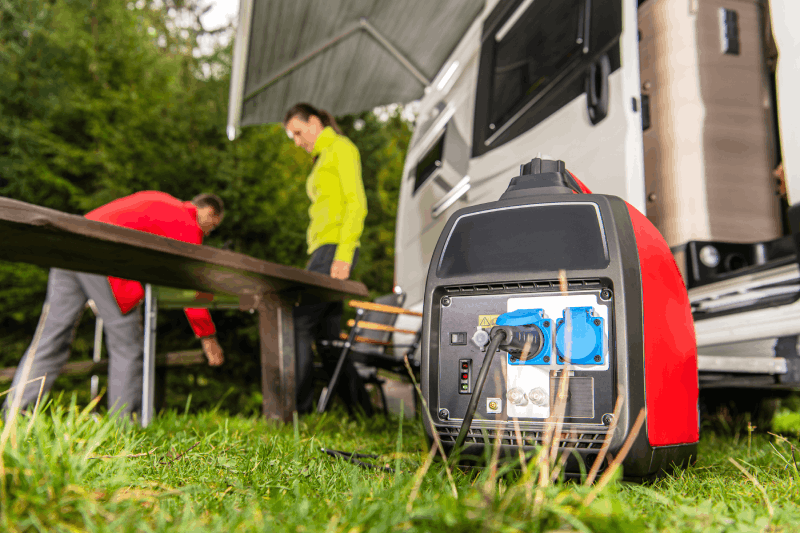
Traditional gasoline generators use internal combustion engines to generate energy, which means both noise and exhaust fumes. Portable power stations, on the other hand, are completely silent; only the slight sound of small cooling fans that kick in when high power is drawn can be heard. This silence is an invaluable advantage for campers who want to listen to the sounds of nature. Additionally, since you do not create noise pollution, you will not disturb your camping neighbors, and you can safely keep your device inside your tent throughout the night. Since there are no exhaust fumes, they can even be used in completely enclosed spaces. This "invisible" energy provided by power stations elevates camping comfort to a whole new level, allowing you to integrate technology without harming nature.
How Many Watts Do Coffee Machines and Blenders Require in Camping Kitchens?
If you do not want to compromise on luxury in your camping kitchen, you should know the high power requirements of kitchen appliances. A capsule coffee machine or electric kettle typically draws between 1200 Watts and 1800 Watts of instantaneous power. If the continuous output power of your power station is below this value, the device will not operate. Many mid-range stations have a limit of 500W or 1000W. For coffee enjoyment, you should either choose low Watt special camping machines or acquire a high-capacity station with at least 2000W output power. Blenders typically consume 300-600 Watts and can usually be easily operated by most stations. Short-term use (for example, brewing coffee for 2 minutes) may not significantly reduce total battery capacity, but the ability to meet that momentary "peak" power depends on the device's hardware capacity.
How is the Weight of Power Stations Related to Their Capacity and Portability?
Energy density is a limiting factor in lithium battery technologies. This means that if you want more energy (Wh), you need to carry more battery cells and thus more weight. Generally, a device with a capacity of 500 Wh weighs between 5-7 kg, while a 1000 Wh device weighs 10-14 kg, and models of 2000 Wh and above can weigh more than 20 kg. If you can drive your vehicle right up to the campsite, weight is not an issue. However, if you need to carry your equipment a certain distance, you must strike a balance between capacity and portability. Models with LiFePO4 batteries tend to be slightly heavier than Lithium-Ion models at the same capacity, but the long lifespan they offer makes this difference reasonable.
How Efficient is Battery Charging in the Field for Drone Pilots?
For nature photographers and drone enthusiasts, portable power stations are the biggest helpers in the field. A drone battery typically ranges from 40-80 Wh. With a 500 Wh station, even accounting for efficiency losses, you can charge your drone batteries approximately 5-6 times fully. Many drone chargers use fast charging protocols (PD or QC), so connecting them directly to the power station's fast charging USB-C ports is much more logical than using AC outlets. This way, both the charging time is shortened, and inverter loss is avoided. For professionals who continuously fly in the field, a model of 1000 Wh or more provides the freedom to shoot continuously throughout the day.
How Does the BMS (Battery Management System) Ensure the Safety of a Power Station?
Every portable power station has a BMS (Battery Management System) at its core. This system monitors the voltage, temperature, and current values of the battery cells in milliseconds. If a device tries to draw power beyond the limits of the station or if the battery overheats, the BMS immediately activates, shutting down the system and preventing the risk of fire. It also ensures balanced charging among the cells, preventing one part of the battery from wearing out faster than the other. Devices with a quality BMS offer multi-layered security features such as short circuit protection, overcharge protection, and low voltage protection. In camping, especially under variable weather conditions and outdoor use, these electronic safety systems protect not only your device but also your personal safety.
What Are the Differences in Energy Needs Between Caravan and Tent Camping?
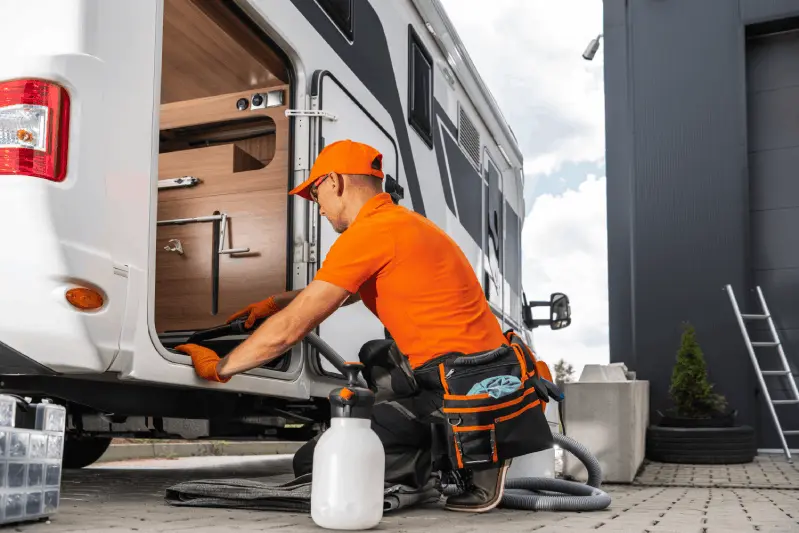
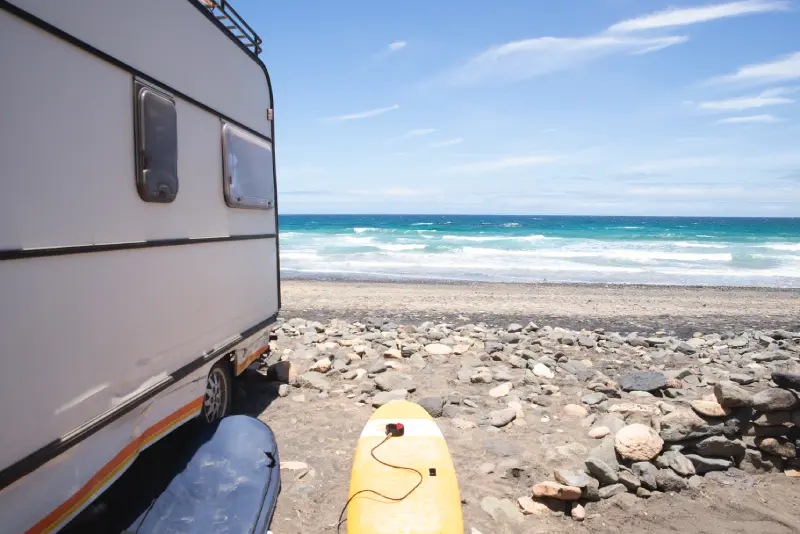
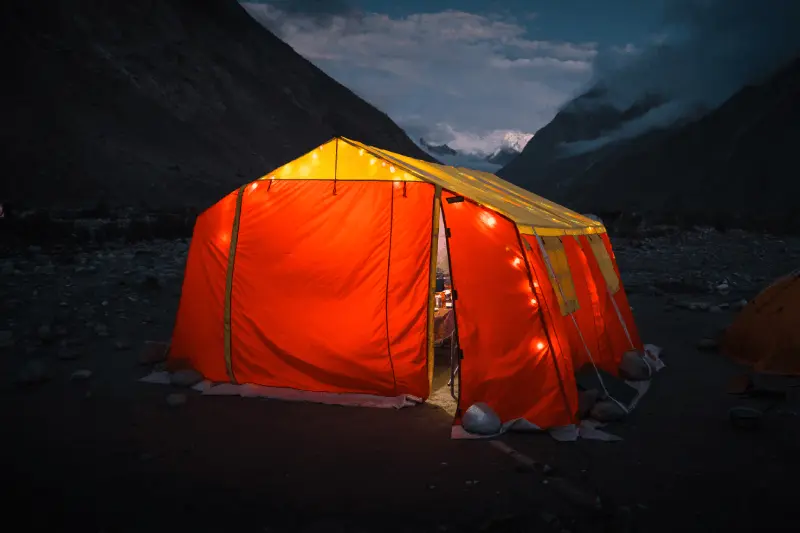
Energy needs in caravan camping are generally much higher; because the internal lighting, water pump, fridge, and possibly television of the caravan already create a consumption. Caravanners typically use giant power stations of 2000 Wh and above as "home-type" backups to support these systems. In tent camping, however, needs are more minimal; charging a phone, a headlamp, and perhaps a small speaker will suffice. For tent campers, models with a capacity of 300-600 Wh that are highly portable are ideal. Since the installation area for solar panels is broader in caravans, ensuring energy continuity is easier, while tent campers need to be more economical in their energy expenditures due to limited space and portability requirements.
What is the Difference in Device Compatibility Between Modified Sine and Pure Sine Inverters?
When choosing a power station, you should pay attention to the "Pure Sine Wave" inverter label. Sometimes, cheaper models come with "Modified Sine Wave" inverters. Modified sine wave can be risky for sensitive electronic devices; it can cause overheating of laptop adapters, create interference in sound systems, and lead to inefficient operation or even failure of some motorized devices (like refrigerators). Pure sine inverters produce the same electricity as the wall outlet in your home, sometimes even cleaner. If you will be using sensitive and expensive equipment like laptops, CPAP devices, and modern camping fridges, you must choose a power station that produces pure sine waves. This is not just a luxury; it is a necessity for the long-term health of your devices.
How Do Fast Charging Features (USB-C PD) Optimize Camping Duration?
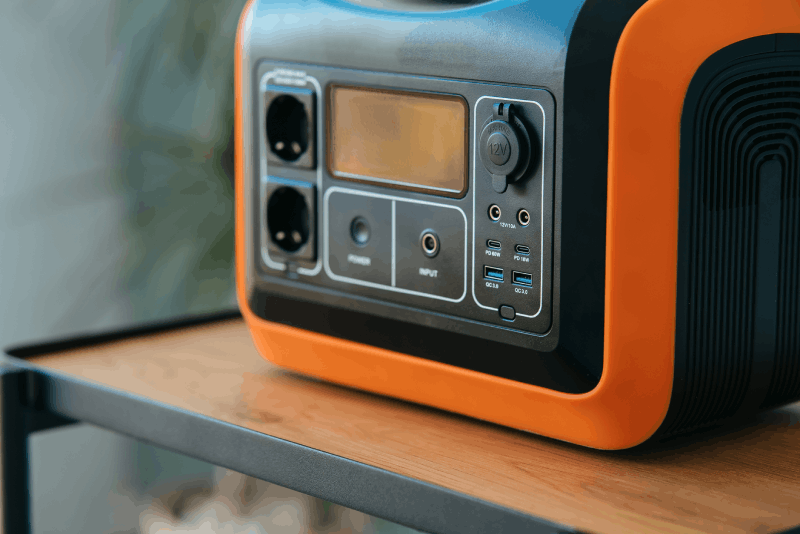
The USB-C Power Delivery (PD) ports on power stations can charge new generation laptops and phones at very high speeds directly via DC. A USB-C PD port that can provide 60W or 100W output charges a device like a Macbook just as quickly as its original adapter at home. The biggest advantage of this in camping is that it eliminates the need to turn on the AC inverter. When the inverter's own internal consumption and conversion losses are eliminated, you use the energy in your battery 20%-30% more efficiently. At the same time, since charging times are shortened, the duration your devices remain connected to the station decreases, which increases your mobility. Having at least one high Watt USB-C port in a modern camper's station provides a significant strategic advantage in energy management.
Is It Logical to Use Additional Battery Units in Power Stations?
Some modular power stations support external battery packs that can be connected to increase capacity. These systems are fantastic for campers looking for flexibility. For short weekend trips, you can just take the main unit for lightness, while for longer and more demanding trips, you can bring an additional battery to double or even triple your capacity. However, these additional packs are often expensive, and not every brand-model is compatible with each other. If you anticipate that your energy needs will increase over time, it makes sense to invest in brands that offer an expandable ecosystem. Otherwise, purchasing a single unit that meets your needs is more practical to avoid cable clutter and facilitate transport.
How Can You Prevent Static Energy Consumption (Standby Drain) Overnight?
Many campers notice that their battery has decreased by 5-10% by the time they wake up in the morning, even though no devices are plugged in. The reason for this is "vampire power" consumption. If AC inverters or DC outputs are left on, the sensors and circuits inside the device continue to remain active. In fact, in some models, the illumination of the LCD screen or Bluetooth/Wi-Fi connection can also be considered a significant consumption. To prevent this, you should turn off all output buttons one by one when you finish using them and ensure that the screen is off. The "Auto-off" feature found in some devices prevents these losses by shutting down the system if no current is drawn for a certain period. This small habit can save you enough energy for an extra full phone charge during a 3-4 day camping trip.
How Reliable Are the Percentage and Remaining Time Information on Digital Screens?
The smart screens in modern power stations display instantaneous input/output Watt values, battery percentage, and "remaining time" based on current consumption. This information is generally quite consistent, but when there is a sudden change in the load the device is under (for example, when the fridge compressor kicks in), the time estimate can change rapidly. The "0 hours" information displayed on the screen usually indicates that the battery is not completely depleted but has reached a safety margin. Monitoring the input/output Watt values helps you understand how much energy each device is "drawing" and allows you to plan for savings for the remainder of the camping trip. However, at very low currents (for example, when only a smartwatch is charging), the sensitivity of the screen may decrease, and the displayed values may not accurately reflect actual consumption.
Can You Bring Portable Power Stations on Air Travel?
There is a strict rule here: Airlines generally do not allow lithium batteries with a capacity of over 100-160 Wh to be taken into the cabin or cargo compartment of passenger planes. Most camping-type power stations are over 300 Wh, which means they cannot be transported on commercial flights. If you are going to camp somewhere by plane, you may need to send the device in advance via ground shipping or rent it from the place you are going. Only very small, pocket-sized power banks (usually below 99 Wh) are suitable for flights. This restriction arises from the risk of lithium batteries posing a threat to flight safety in the event of a potential fire. If you are planning international travel, you should keep this technical detail in mind.
Why is Waterproofing and Impact Resistance Important in Extreme Outdoor Conditions?
Most portable power stations on the market are designed like household electronic devices; that is, they are very sensitive to water and dust. A single drop of rain entering through the ventilation grills can short-circuit the device. However, some models with "rugged" designs have IP ratings and offer protection against external impacts and water. If you are going canoe camping or if you have a scenario where your device will be outside in dusty and humid environments, you should choose models that prioritize durability. For standard devices, you should definitely get a waterproof carrying case and keep the device elevated and dry. Remember, even the most advanced power station can turn into a technological waste if not protected against outdoor conditions.
How Will Solid-State Batteries Change Camping Energy Solutions in the Future?
Battery technology is rapidly evolving, and "Solid-State" batteries are on the horizon. This technology promises to store twice as much energy in the same volume compared to current lithium-ion batteries. This means that a 1000 Wh station that currently weighs 10 kg could weigh only 5 kg in the future. Additionally, solid-state batteries will be much safer as they do not contain flammable liquid electrolytes and will be almost unaffected by extreme cold/hot weather. Charging times are also expected to decrease to minutes. Although this technology is not yet widely available in commercial power stations, it is certain that in the next 5-10 years, camping equipment will become much lighter, more powerful, and more durable.
How Many Wh Are Required for a Week-Long Completely Off-Grid Camping?
The energy requirement for a week-long camping trip without solar panel support depends entirely on your personal luxuries. If you are only charging a phone, a camping lamp, and occasionally a camera, a 500 Wh unit will comfortably last you for 7 days. However, if you include a camping fridge and laptop usage every evening, your daily needs can rise to about 300-400 Wh. In this scenario, you will need a massive battery with a capacity of 2500-3000 Wh or a powerful solar panel set that can charge daily. Most "full-time" campers see the combination of a 1000 Wh main unit with a 200 Watt foldable solar panel as the "golden ratio"; this duo can provide uninterrupted energy for weeks under favorable weather conditions.
How Quickly Do Portable Power Stations Recoup Their Investment Costs While Camping?
Power stations are not cheap devices, but it is essential to calculate the comfort and long-term savings they provide. If you have to pay extra fees for electricity at campsites, replace dead batteries, or buy ice at every camp, these costs accumulate over time. Additionally, they can allow you to work professionally (freelancing, etc.) in nature, saving you time and generating income. The annual cost of a quality device with a lifespan of 5-10 years remains quite reasonable alongside the freedom it offers. Setting aside the payback period; the psychological comfort of spending time under the stars with a cold drink without worrying about your phone dying is the greatest return on this investment.