
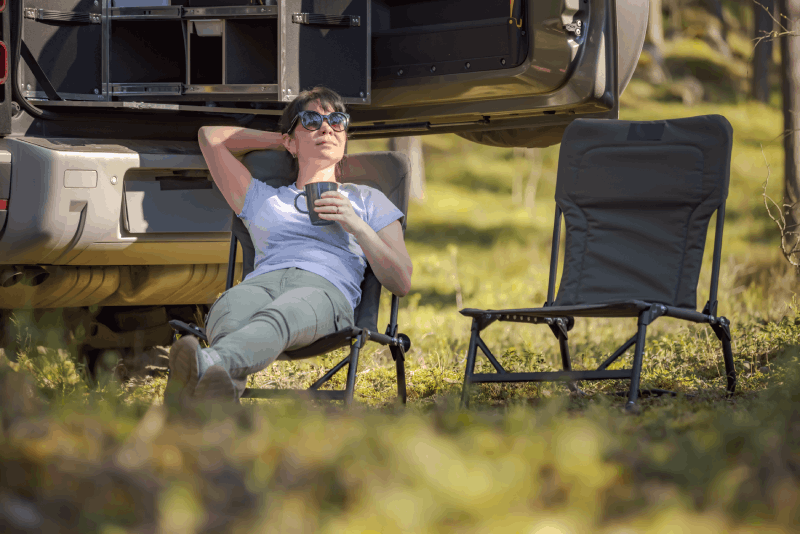
Camping chairs, which are one of the most important elements of comfort and safety while camping, must prove how resistant they are to outdoor conditions.
How is the Static Load Capacity Test Conducted on Camping Chairs?
The static load test is based on the principle of leaving a certain weight on a camping chair for an extended period without any movement or vibration. In a laboratory setting, the chair is placed on a flat surface, and weights that are generally 20-30% more than the stated carrying capacity are added. These weights are left on the chair for between 24 to 48 hours to observe whether the frame bends, whether the fabric opens at the seams, or whether the plastic parts turn white or not. This test is vital for determining the theoretical limits of the chair, but it does not cover dynamic movements, such as people sitting down on the chair abruptly, so it is only a starting point.
How Do Dynamic Load and Impact Tests Simulate Real-World Usage Scenarios?
The dynamic load test measures the shock that occurs when a user suddenly sits on the chair or moves while on it. In this test, weights typically between 50 kg and 100 kg are repeatedly dropped from a certain height (for example, 10-15 cm) onto the seating area of the chair. This process is repeated thousands of times to calculate the material's fatigue margin. In real life, users do not always sit gently; sometimes they drop themselves excitedly or tiredly. Thus, dynamic tests provide the most critical data determining the chair's lifespan by measuring the stress created at the joints of the frame and the tensile strength of the fabric.
How is the Denier (D) Value of the Fabric and Tear Resistance Measured?
Expressions like "600D" or "900D" that frequently appear in camping chair fabrics represent the Denier unit, which indicates the weight and thickness of the thread. As the Denier value increases, the thickness of the fabric and thus its abrasion resistance also increases. However, thickness alone is not sufficient; in laboratories, a tear test called "Elmendorf" is applied to the fabric. In this test, a small cut is made on the fabric, and the force required to continue tearing is measured with the help of a pendulum. A fabric made using ripstop weaving technique scores much higher in durability tests because it consists of small squares that prevent the progression of tears and promises long-lasting use.
Is the Flexibility Margin of Aluminum Alloy Frames Critical for Safety?
Camping chair frames commonly use 6063-T6 or 7075 series aluminum alloys, which offer a balance of lightness and strength. However, the "flexibility margin" (modulus of elasticity) of these metals indicates how much deformation the chair can withstand before breaking. A very rigid and non-flexible metal can suddenly break under excessive load, while alloys with a certain flexibility distribute the load better. In tests, the buckling strength of the profile tubes is measured, and it is checked whether the material returns to its original form. If a frame remains permanently bent after the load is lifted, this indicates that there has been a disruption in its crystalline structure and that the risk of breaking increases next time.
How is the Strength of the Rivets at the Joining Points Tested?
The weakest link of a camping chair is usually the rivet or screw points where the tubes are joined. These points are stress centers where all body weight is concentrated. In durability tests, lateral (shear) loads are applied to these areas. Whether the rivets are made of steel or a softer metal like aluminum determines the chair's lifespan. In quality chairs, rivets are usually made of stainless steel and are supported by plastic washers to reduce friction. The testing machine checks whether the rivet holes have widened by opening and closing the chair thousands of times; if the holes start to become oval, the chair will begin to wobble and lose its balance over time.
How Does UV Exposure Testing Determine Fabric Lifespan?
Camping chairs can be exposed to sunlight for days, and the ultraviolet (UV) rays from the sun can degrade plastics and fabric fibers over time. In artificial aging chambers called "Xenon Arc" tests, chairs are exposed to intense UV light and humidity cycles. A few hours of exposure in this test simulates the sunlight that lasts for months in real life. The test results check whether the color of the fabric has faded and, most importantly, whether the fibers have lost their tensile strength. A chair with low UV resistance can tear like paper when sat on for just one day, even if it looks good from the outside. Therefore, durability is measured not only by weight but also by resistance to environmental factors.
How Does the Saltwater Spray Test Prove Corrosion Resistance?
For those camping near the sea, corrosion is the biggest enemy. The "Salt Spray" test measures how resistant the metal frame of the chair is to rust. The frame is exposed to salty water vapor for a certain period inside a sealed chamber. Since steel-framed chairs are more prone to corrosion, the quality of the powder coating on them comes into play here. If there are microscopic cracks in the paint, salt can seep through these cracks and corrode the metal from the inside. Although aluminum chairs are naturally resistant to oxidation, this resistance can be maximized through anodized coating, aiming for zero corrosion in tests.
Why is Testing the Folding Mechanism Thousands of Times Important?
Camping chairs have movable mechanisms that are continuously folded and unfolded. The "Cycle Test" measures the fatigue resistance of this mechanism. With the help of an automatic arm, the chair is opened and closed 5,000, 10,000, or more times. During this test, situations such as wear at the joints, cracking in plastic parts, or jamming of the mechanism are observed. A chair may carry 150 kg, but if its mechanism fails on the 100th opening, that chair is considered weak. The test of a quality brand is designed to verify whether the mechanism operates fluidly like on the first day and whether the locking systems (if any) maintain their safety.
How are the Ground Grip and Stability Tests of the Feet Conducted?
Durability is not only about not breaking but also about not tipping over the user. The design of the feet and the materials used determine the stability of the chair on surfaces like sand, mud, or slippery rocks. In "Tip-over" tests, the chair is placed on platforms with a certain incline, and weights are placed on it to record at which angle it begins to tip over. Wide and textured foot pads prevent sinking into soft ground, thus preventing the uneven distribution of the load on the frame. If the foot pads are made of low-quality plastic, they can quickly wear out due to friction on hard surfaces, causing the chair's balance to be disrupted and creating a secondary durability issue that leads to frame bending.
What Laboratory Methods Measure the Impact Resistance of Plastic Parts?
The plastic parts that connect the frame tubes of camping chairs or are located at the foot are generally made from polymers like "nylon-6" or "polypropylene." To measure the durability of these parts, the "Izod Impact" test is applied; in this test, the amount of energy the plastic can absorb is measured by striking it with a certain speed. Additionally, the performance of these plastics at low temperatures is also critical. In cold weather (for example, -10°C), plastics become brittle. Quality tests also include thermal shock tests to ensure that the chair does not crack even when subjected to impacts in freezing cold. Non-flexible and brittle plastic is the most insidious detail that can end a camping chair's lifespan.
How Does Stitch Density and Thread Quality Affect Carrying Capacity?
As much as the strength of a fabric matters, how that fabric is attached to the frame is also important. The "Stitch per Inch" test measures the density of the stitches. Very sparse stitches can slip between the fabric fibers under load (stitch slippage). Additionally, the type of thread used is also crucial; high-strength polyester threads are generally preferred. In tests, a stitched sample is pulled from both sides (tensile strength test) to measure the moment the stitch breaks. Double-stitched or reinforced (cross-stitch) areas can increase the durability at the most stressed points of the chair, such as the back and seating joints, by up to 50%.

How Does the Seat Area Sagging Test Establish the Connection Between Comfort and Durability?
When you first buy your chair, it is taut, but after a while, it may sag like a "hammock." This indicates that the elastic deformation limit of the fabric has been exceeded. In the process called the "Sagging Test," a long-term load is applied to the chair, and after the load is lifted, the extent to which the fabric returns to its original state is measured. Low-quality fabrics become permanently deformed after stretching once. This not only disrupts comfort but also causes the user's center of gravity to shift, leading to uneven loading on the designed points of the frame and accelerating metal fatigue. A good durability test should document that the fabric retains its shape at least 95%.
How Does Ergonomics and Weight Distribution Extend the Lifespan of the Frame?
In poorly designed chairs, weight is concentrated on only one or two points of the frame, while in a well-engineered example, the load is evenly distributed across four legs and diagonal supports. "Pressure Mapping" tests show the weight distribution on the surface where the user sits. If the weight concentrates heavily on a specific rivet, that rivet will eventually give way, no matter how strong it is. Modern testing methods identify stress points on the chair using computer-aided analyses (FEA - Finite Element Analysis). This durability analysis conducted during the design phase allows predicting where the chair will break even before physical production and ensures that the area is reinforced.
What is the Effect of Extreme Temperature Changes on Material Fatigue?
Camping materials can be exposed to scorching heat during the day and temperatures below freezing at night. The "Thermal Cycling" test simulates the expansion and contraction of the chair under these temperature differences. Since metal tubes and plastic joints expand at different rates, this can lead to loosening of the connections between them. In durability tests, chairs are rapidly heated and cooled in special climate chambers. If the materials of the chair are incompatible, this cycle can eventually create gaps or micro-cracks at the connection points. A truly durable chair should maintain its structural integrity under all types of extreme temperature changes, from the Sahara Desert to Siberia.
Why Should Chemical Resistance Be Tested in Camping Environments?
Not only water or sun but sometimes chemicals in the camping area can also damage the chair. Insect repellent sprays (containing DEET), sunscreens, or spilled coffees can disrupt the molecular structure of plastics and fabrics. In "Chemical Resistance" tests, these commonly used liquids are dripped onto the chair material and left for a certain period. Some plastics can melt or become sticky when they come into contact with insect repellent sprays. A durable chair manufacturer adds these tests to their portfolio to verify that surfaces are made of coated or resistant materials against these potential external factors encountered outdoors.
How is the Balance of Durability Between Portability and Weight Maintained?
A chair weighing 10 kg does not guarantee that it is very sturdy; it may simply indicate that the material used is excessive (and possibly of low quality). Engineering marvel chairs can be very lightweight (for example, under 1 kg) yet carry 150 kg. This balance is measured by the "Strength-to-Weight Ratio." Aircraft-grade aluminum tubes are subjected to buckling tests in laboratories. To eliminate unnecessary weight, the internal structure of the tubes is optimized. The durability test here measures not only "unbreakability" but also the efficiency of the material; that is, the chair that provides the highest resistance with the least material is the pinnacle of design success.
What Do Certification Processes (ISO, ASTM, EN) Indicate to Consumers?
A chair labeled "carries 150 kg" may not always be accurate. However, if there are certifications like ISO (International Organization for Standardization) or EN 581 (European standard for outdoor furniture), it means that the chair has passed specific test protocols in independent laboratories. EN 581 standards set minimum requirements for the chair's safety, stability, and structural durability. For consumers, these certifications represent the approval of an objective testing machine rather than the manufacturer's own claims. The quickest way to understand whether a chair is durable is to check which international standards it has been tested against.
How Do User Experience and Field Tests Complement Laboratory Data?
Laboratories are sterile environments, but nature is not. "Field Testing" involves professional campers using the chair for months in real camping environments. Situations that the laboratory cannot predict, such as sandy winds entering joints, the chair being crushed under other heavy items in the luggage, or children jumping on it, arise here. Field tests demonstrate the "practical" side of durability. If a chair can carry 200 kg in the laboratory but rusts in the third month in the field or its fabric tears, it means that the durability testing process of that product has not been completed. Therefore, the best brands combine both machine and human tests to create the final durability report.
How is the Strength of the Tube Diameter and Wall Thickness of the Frame Determined?
When you touch the tubes of a camping chair, the feeling of fullness you sense is actually a technical data point. The outer diameter of the tube (for example, 19mm or 22mm) and the thickness of the tube wall (wall thickness, usually between 0.8mm - 1.2mm) determine the chair's torsional resistance. Thinner-walled but wider diameter tubes are lightweight but can easily be crushed under impacts (can effect). Testing machines measure the "crushing resistance" by applying point pressure on the tubes. For ideal durability, the tubes must have sufficient thickness and the inner parts must be reinforced with extra layers at the points where stress is most intense. These details are often not visible from the outside but are the main factors that make a difference in test reports.
What is the Static Benefit of Cross Support Systems and X-Frame Structure?
The X-shaped rods between the legs of the chair are not just visual; they are called "cross-bracing" and serve to prevent the chair from swaying side to side (lateral stability). In durability tests, not only vertical but also lateral loads are applied to the chair. The X-frame structure distributes the load coming from one point to the other three points. If these supports are absent, when the user leans slightly to the side, all the load will rest on a single tube, leading to sudden buckling of that tube. In tests, the extent to which these cross supports flex at their joints is observed to score the chair's "engineering intelligence".
How is the Abrasion and Slip Resistance of Chair Feet Pads Measured?
Feet pads are the only point of contact between the chair and the ground and are usually made of hardened plastic or rubber. The durability of these parts is measured by the "Abrasion Resistance" test; the feet pads are rubbed thousands of times under a certain pressure on a sandpaper-like surface. If the pads wear out quickly and the metal tube inside starts to protrude, this not only damages the ground (like a tent floor) but also causes direct impacts on the frame. Additionally, whether there are steel washers inside the pads to prevent the metal tube from cutting through the plastic is also an important part of the durability analysis.
Why Should the Durability of the Carry Bag and Cover Not Be Overlooked?
No matter how sturdy the chair is, if the bag or cover carrying it is weak, the chair will be damaged in a short time. The quality of the bag's stitches and zipper is subjected to "Zipper Strength" and "Seam Strength" tests. Especially, the zipper must withstand being opened and closed repeatedly, and the seams must not burst while forcing the chair into the bag. One of the most common problems for campers is that the sturdy chair's carrying bag tears in the first week. The durability testing is a comprehensive process and requires that all components (fabric, zipper, cord, buckle) of the product meet the same quality standards from packaging to transportation.

What is the Quality of Welding and the Reliability of Robotic Welding Technology?
Some camping chairs use welded joints instead of rivets. Weld points are where the metal is joined at the molecular level, but a faulty weld can weaken the metal in that area (thermal processing degradation). "Non-Destructive Testing" methods such as X-ray or ultrasonic tests are used to detect voids or cracks within the weld. Today, robotic welding technology stabilizes durability by ensuring a uniform and flawless joint in every chair. "Cold weld" errors that can occur in manual welding pose the greatest risk of causing the chair to suddenly separate under load.
What is the Load-Bearing and Flexibility Capacity of Chair Armrests?
Users often lean on the armrests when getting up from the chair. Therefore, armrests are not just an accessory but a supportive load-bearing component. In test procedures, vertical loads between 40-60 kg are applied to the armrests. While the strength of the stitches and the connection rings to the frame are measured in fabric armrests, the break resistance is tested in hard plastic or wooden armrests. A chair with weak armrests can become unstable due to the sudden pressure from the user at the moment of getting up, which can lead to twisting of the main frame. Therefore, in a durable design, armrests should be integrated and supported with the main body.
How is the Performance of Recycled Materials in Durability Tests?
In the name of sustainability, many brands now use recycled plastics and fabrics. However, the molecular chains of recycled polymers can sometimes be shorter than those of original (virgin) materials, which can affect impact resistance. Durability tests also check whether chairs made from recycled materials meet the same standards. Special "Aging" tests measure how quickly these materials oxidize over time and how long they retain their durability. Quality brands support these recycled materials with strengthening additives to establish this balance without compromising durability.
What Simple Durability Checks Can Users Perform at Home?
Besides laboratory tests, you can also check the quality of a chair by hand. First, look at the stitches; if the stitches are single and sparse, avoid it. Lightly stretch the frame with your hand; if the metal tubes feel as thin as paper or if there is excessive looseness (wobbling) at the joints, this chair will have a short lifespan. Check for the presence of plastic washers on the rivets and whether the edges of the fabric are reinforced with overlock stitching. Also, when folding the chair, ensure that the mechanism operates smoothly without jamming, and that the rails or plastics inside are smooth and uniform, which are the simplest indicators of production quality and thus durability.
How is the Ventilation and Strength Balance of Mesh Panels Maintained?
Mesh parts found in summer camping chairs can prevent sweating but may raise a question mark regarding durability. The "Tear and Bursting Strength" tests of these meshes measure how much pressure the fabric can withstand from all directions. Generally made from high-strength nylon or polyester, these meshes should be supported with extra strips called "bias" at the stitching points. The testing machine detects the moment of puncture by applying a spherical force to the mesh part. If the mesh design is done correctly, it can sometimes show more impact-absorbing strength than the full fabric due to its flexibility; however, this entirely depends on the quality of the material used.
Do Structural Integrity Effects Exist for Accessories Like Cup Holders and Pockets?
A cup holder or newspaper pocket next to the chair may seem insignificant, but the points where these additions are attached to the fabric can disrupt the stress distribution of the fabric underneath the load. In durability tests, the chair's movement is simulated while these accessories are full. A poorly placed cup holder can cause the fabric to stretch from that point and lead to micro-tears over time. In quality chairs, these types of additions are either riveted in a way that does not damage the main carrying fibers of the fabric or mounted with wide surface stitches. Durability is measured by the ability of each piece of the product to perform its function without imposing a load on the main body.
How are Maintenance Tests Applied to Extend the Lifespan of Camping Chairs?
Manufacturers sometimes test scenarios where the chair has not been maintained (left muddy, wet). "Environmental Degradation" tests measure the wear caused by sand and dust entering the joints. To protect the user's durability, it is recommended to wipe the chair with a damp cloth after each camping trip and to apply silicone-based lubricants (not WD-40, but thinner oils) especially to moving parts. Test results show that a regularly cleaned and dry-stored chair lasts 3-4 times longer than a chair that has not been maintained. Durability does not only begin in the factory; it continues in the user's hands.
Are Warranty Periods and Brand Reliability Indicators of Durability?
A brand offering a 5-year or "lifetime" warranty on its product instead of 2 years is actually a testament to how much confidence it has in its own laboratory tests. The warranty period also determines the "cost of the chair's life cycle." Products that successfully pass durability tests have a low failure rate, so the manufacturer does not hesitate to offer long-term warranties. Instead of buying a "cheap but unwarranted" chair, choosing a tested and backed brand protects both the budget and safety in the medium term. Remember that no brand wants to lose money by offering a long-term warranty on a product that will break continuously.
What Technologies Will Be Used in Future Camping Chair Tests?
As technology advances, durability tests are also becoming digital. In the future, tests with sensors that instantly show how much load is on which point of the chair will become widespread thanks to "Smart Fabrics." Additionally, with 3D scanning methods, changes at the micron level that are not visible to the naked eye can be detected after testing for metal fatigue. AI-supported simulations will be able to model what a chair will look like in 10 years in seconds. These technological advancements will ensure that camping chairs become lighter, more comfortable, and most importantly, possess a durability that "never leaves you stranded".
The durability of a camping chair is not only determined by how many kilos are placed on it but also by the combination of thousands of details, from the chemistry of the fabric used to the molecular structure of the metal, from the density of the stitches to the rigidity of the rivets. We recommend that you consider these technical details and testing processes when choosing your chair to sit confidently during your next camping trip.