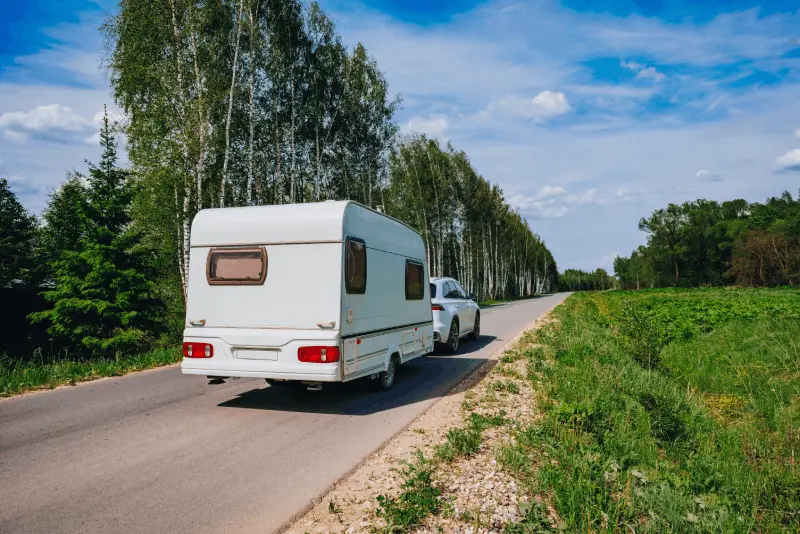
Being on the road with a caravan, waking up to a different view every morning, and drawing your own boundaries is an exhilarating experience. However, for a woman traveling alone, this freedom becomes truly enjoyable when combined with a state of "being consciously alert." Safety is not just about physical protection; it is also an art of preparation and strategy. In this article, we will examine seven critical questions and their answers that will elevate your safety on the roads beyond classic advice.
What Hidden Criteria Should You Pay Attention to When Choosing a Place to Stay?
Choosing a place to stay is the most critical decision for a caravanner during the day. While most travelers focus only on the view or tranquility, a woman traveling alone must act according to the principle of "strategic geography." A place being merely "beautiful" is not enough; it is vital that the location also has an escape route and interacts well with the surroundings. Staying in a secluded cove may sound romantic, but being isolated to the point where no help can reach you increases risks. At this point, you should also consider the option of a "quick exit." The front of your caravan should always be oriented towards the exit, and there should be no obstacles in front of you.
Additionally, it is very important to observe the social fabric of the place you will be staying. If you are in a campsite, you should choose spots where the lighting is sufficient but privacy is maintained. When staying in urban areas or isolated parking lots, you should analyze the closing hours of nearby shops, whether streetlights are on or off, and the nighttime character of that area in advance. By doing "internal geographical mapping," you should ensure that the place where you feel most comfortable is not only visually safe but also logistically secure. Also, when looking at internet reviews and mobile applications (like Park4Night), pay attention to the tone of recent comments; even a single comment saying "this place feels a bit unsafe" should be a sufficient reason to change your route.
Does the Exterior Appearance of Your Caravan Make You a Target?
How your caravan looks from the outside sends the first message to potential ill-intentioned individuals. "Stealth camping" techniques can be lifesaving, especially in urban areas or regions where one feels insecure. Excessive decorations that enhance the image of "Woman Traveling Alone" on your caravan, such as floral curtains or stickers with personal names, can unfortunately make you an easier target. Ideally, when viewed from outside, your caravan should not give a clear hint about who is inside, how many people are there, or whether someone is living inside.
Windows should be covered with film in a way that does not show the interior, or thick curtains should be used to prevent silhouettes from leaking outside when the lights are on at night. An old tactic like leaving men's boots in front of the caravan door can still work; however, a more professional approach is to create small, official-looking warning labels stating "security system in place" on the outside of the caravan. The cleanliness and maintenance of the caravan's exterior also send a message; a well-maintained and "professional-looking" vehicle gives the impression that its owner is in control and prepared for everything. A messy caravan with things hanging out from everywhere can evoke feelings of weakness or abandonment. Remember, privacy is your greatest protector; the less attention you attract, the more freedom you have.
How Do You Optimize Security Technologies While Hiding Your Digital Footprint?
Social media is both a community support and a significant security vulnerability for women traveling alone. Sharing your location in real-time is akin to telling someone exactly where you are with precise coordinates. The principle of "sharing after the fact" should come into play here; that is, sharing photos of a place after you have left is the safest way. However, digital security is not limited to social media. Smart security systems that you integrate into your caravan protect you independently of your physical presence.
GPS tracking devices are a necessity against the risk of your caravan being stolen; however, for your personal safety, you should also prefer systems with an "emergency button." These devices can send your location and a help request to trusted individuals you have designated with a single touch. Additionally, low-energy cameras or sensor lights placed outside the caravan that send notifications to your phone when they detect movement can deter unwanted guests that may arrive at night. Ensure that your internet connection is always stable; satellite internet (like Starlink) or a powerful 4G/5G antenna will keep you connected to the world even in isolated areas where your phone may not have reception. Being invisible in the digital world and building a technological fortress inside your caravan is key to feeling secure.
Are Your Physical and Psychological Defense Mechanisms Ready in Case of a Potential Threat?
Safety is not just ensured with equipment; your greatest defense tool is your mind and your preparedness. You must visualize in advance what you would do in the event of a physical threat and develop an appropriate "muscle memory." You should be able to find your legal defense tools (pepper spray, a powerful flashlight, alarm devices) as if they were placed there by your hand, even in the dark. Hiding pepper spray at the bottom of a drawer will render it ineffective in an emergency. These tools should be secured right next to your bed or in an easily accessible spot on the sofa.
Psychological preparedness begins with "panic management." Plan in advance how you will react when someone knocks on your door or when you hear a suspicious sound around your caravan. Never open the door immediately; inside...
Calling out loudly with a "male name" or playing a dog barking sound (recorded or real) can disrupt the other party's intentions. Additionally, learning basic self-defense techniques not only provides physical strength but also instills tremendous self-confidence. This confidence reflects in your posture and looks; it sends the message that you are not an "easy target" when viewed from the outside. Acting with awareness rather than fear helps you sense danger before it arises and aids in your defense.How to Create the Illusion of "I Am Not Alone" When Communicating with Strangers?
Meeting new people on the road is one of the most beautiful aspects of caravan life; however, being "selectively discreet" is of vital importance in these interactions. When a stranger asks you, "Are you traveling alone?", your response should always be "No, my spouse/friend will be here soon" or "They are sleeping in the back". This prevents the other party from spreading the information that you are alone to third parties, even if they do not intend to harm you. The fact that you are alone in the caravan should only be shared with people you know very well and trust.
Moreover, acting as if there are two people living inside your caravan is an effective illusion. Keeping two glasses on the table, having two pairs of shoes (one must be large and male-type) in front of the door, or pretending to talk to someone with radio-like devices are simple yet effective methods. When communicating with locals, avoid giving too much personal information. Do not elaborate on which route you will take, where your next stop is, or the technical specifications of your caravan. Be friendly but maintain your distance. Remember, the less they know about you, the more control you have. This is not insecurity; it is a precaution for a professional traveler.
Can Your Emergency Exit Plan and Escape Scenarios Kick In Within Seconds?
In a moment of danger, you may need to leave the caravan or quickly get away from there. For this scenario, the inside of the caravan should always be in "ready to roll" mode. Not placing any items on the driver's seat before going to bed at night, arranging the curtains to be opened with a single motion, and keeping the keys always in the same, easily accessible spot (preferably in the ignition or right next to the steering wheel) saves seconds. If someone is trying to enter your caravan, the best defense is to start the caravan immediately and get away from there.
Your escape plan should not be limited to the vehicle; you should also prepare a "go-bag" for situations where you need to leave the vehicle. This bag should contain a spare key, cash, passport, portable charger, basic medications, and a flashlight. Additionally, check all exits of the caravan (windows, roof hatch). Some windows may be locked from the inside but can be forced from the outside; these points may need to be reinforced with extra security bars or alarms. Every night before going to bed, ask yourself this question: "Can I start the engine and get out of here in 10 seconds?" If your answer is no, you should reassess your setup inside the caravan. Speed is your greatest ally.
How Can You Turn Your Intuition into a Logical Security Protocol?
The "sixth sense" that women refer to as intuition is actually a result of thousands of small details that our brain perceives without us realizing it. If a place, a person, or a situation feels "wrong" to you, immediately distance yourself without trying to rationalize why. Thoughts like "Am I exaggerating?" or "Would it be rude?" should be set aside when it comes to safety. If your intuition is sending you a danger signal, that signal is a product of thousands of years of survival instinct.
To turn this intuition into a protocol, apply a "comfort level" test to yourself. When you park somewhere, give it a score from 1 to 10. If your score is below 7, regardless of how dark it is or how tired the road is, push yourself to move to a safer location. Do not allow external factors (social pressure, curiosity) to manipulate your decision-making process. The top item on your security protocol should be: "If you feel uneasy, move." This simple rule has protected thousands of women traveling alone from unseen dangers. You are the greatest authority on your own safety, and your intuition is your most loyal guide.
Traveling alone in a caravan is an incredible adventure where you discover yourself and push your limits. The 7 points above show how this journey requires not only physical but also mental preparation. Safety is not a shackle that restricts your freedom; rather, it is the strongest foundation that enables you to sustain that freedom. Be prepared, trust your instincts, and enjoy the journey!