How to Teach Children Navigation Techniques Without a Compass in Nature?
The ability to navigate in nature is one of the skills that boosts a child's self-confidence and spatial awareness to the highest level. To teach children how to determine direction without a compass, you can start by examining the mossy sides of trees. You can explain to them, like a detective story, that in the Northern Hemisphere, the parts of trees facing north receive more moisture and therefore grow moss. Additionally, observing that ant nests usually indicate south, as ants prefer warmth, is a great biological clue. You can develop children's analytical thinking skills through methods such as the position of the sun, shadow length, and finding the North Star at night. During this process, having them create a simple sundial will help solidify the unbreakable link between time and direction.
How to Organize a Natural Dye Workshop Using Plant Pigments in Camp?
Having children discover the source of colors in nature deepens their artistic perspective. The fallen leaves, forest fruits like blueberries, or red soil you can find in camp are natural pigment sources. You can encourage them to create their own paints by crushing these materials on a stone and adding a little water. For example, obtaining brown from walnut shells, green from spinach leaves, or orange tones from clay soils will amaze the children. Discussing the chemical structure of plants during this activity and explaining why chlorophyll is green makes the biology lesson fun. Painting on a piece of white cloth or smooth stones with the paints they create helps them establish an emotional connection with nature.
How to Conduct Ecological Discovery with Light Traps While Observing Night Insects?
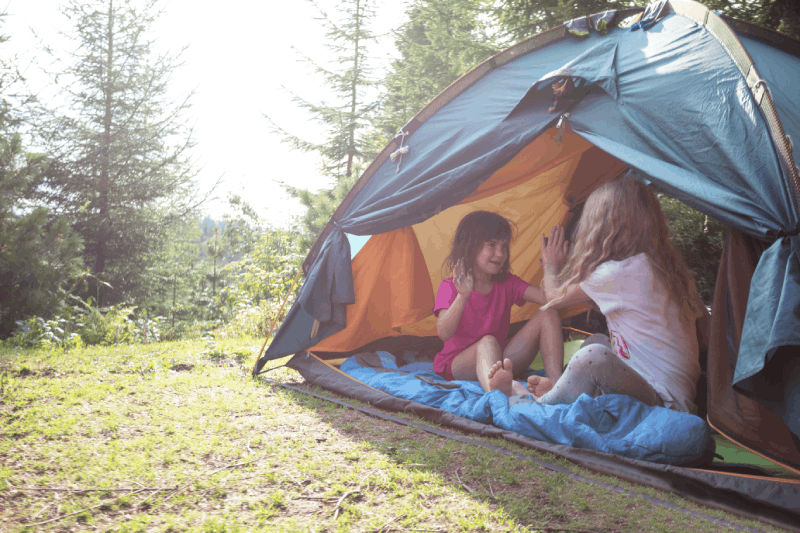
When night falls, the forest transforms into a completely different world. To help children recognize nocturnal creatures, you can set up a simple light trap using a white sheet and a strong flashlight. By stretching the sheet between two trees and shining the light behind it, moths, beetles, and other night insects will gather on the sheet. At this point, examining the species that come with the children using a magnifying glass provides a unique scientific experience as they observe their forms and behaviors. Discussing why nocturnal animals are attracted to light, their adaptation processes, and their roles in the ecosystem can turn children's fears of nature into curiosity. At the end of the observation, turning off the light and allowing the animals to return to their homes fosters ethical observation awareness.
How to Apply Water Filtration Experiment with Natural Materials for Little Survivors?
Water is life, and understanding the process of water purification is a vital lesson for children. You can create a layered filter by inverting a plastic bottle and placing cotton (or a cloth), activated charcoal (leftover from campfire), fine sand, coarse sand, and gravel stones inside. Observing how murky stream water becomes clear after passing through this filter teaches children basic physics and chemistry principles. Discussing which size particles each layer holds helps them understand how soil layers in nature purify groundwater. This experiment is critical for grasping the ecosystem's cleaning capacity. However, you should always remind them that although the water appears visually clean, it needs to be boiled to eliminate microbes; this is part of safe camping rules.
How to Foster Sky Literacy in Children by Storytelling about Constellations?
The most captivating aspect of camping nights is the sky away from city lights. Using mythological stories instead of dry facts while teaching children about the sky increases retention. While showing the Big Dipper and Little Dipper constellations, explain how ancient civilizations named these stars. Demonstrate how to find the North Star (Polaris) by following the edge stars of the Big Dipper in the shape of a "ladle." Discussing how the stars in the sky are actually massive suns and how long it takes for their light to reach us encourages children to dream about the vastness of the universe. You can stimulate their creativity by asking them to create their own imaginary constellations and name them. This activity can lay the foundation for a lifelong curiosity about astronomy in children.
How to Materialize the Concept of Time in the Forest with a Sundial?
Time is an abstract concept for children; however, materializing this concept in nature is very easy. A stick planted in a flat surface and stones placed where the shadow falls throughout the day can create a sundial. Marking the shadow of the stick with a stone at the beginning of each hour and writing the time on it allows children to see the world's rotation around its axis. Discussing why the shadow lengthens and shortens and how the angle of the sun changes enhances their basic geography knowledge. Questioning why the sundial does not work on cloudy days develops their cause-and-effect reasoning skills. Through this activity, children realize that a clock is not just a digital screen but a part of a universal rhythm.
How to Create a Wildlife Archive by Casting Animal Tracks in Plaster?
Seeing animals in nature is difficult, but finding the tracks they leave behind is possible. Pouring plaster over a paw print found in muddy or soft ground and letting it set is one of the children's favorite "archaeological" activities. Placing a cardboard frame around the print and waiting for the plaster to set after pouring the prepared plaster into it requires patience. During this process, investigating which animal the track belongs to (with details like the number of toes, whether there are claw marks or not) sharpens children's detective skills. The obtained casts can create a nature collection when taken home. This activity helps children empathize with the quiet inhabitants of their surroundings and respect wildlife.
How Does Forest Bathing Experience Contribute to Children's Stress Management?
Forest bathing, known as "Shinrin-yoku," is not just about walking; it is about being in the forest with all senses. You can start this activity by asking children to close their eyes and count the sounds they hear (bird chirping, rustling leaves, the whisper of the wind). They should be encouraged to inhale the scent of the earth and feel the texture by touching the bark of a tree. In today's hyperactive world, allowing children to stand still and keep pace with nature's rhythm balances their nervous systems and reduces anxiety levels. This meditation-like practice gives children the opportunity to listen to their inner voice while allowing them to experience nature's healing power firsthand. These moments of quality silence spent in nature visibly enhance emotional intelligence and concentration skills.
How to Raise Awareness of Renewable Energy through Wind Turbine Design?
Understanding energy in nature is critical for future environmental consciousness. You can show children how the kinetic energy of the wind is converted into motion energy by making a wind turbine with simple materials (paper, a stick, and a pin) at the campsite. The change in rotation speed according to the wind's speed is excellent preliminary knowledge about how wind turbines work. While doing this activity, you can explain the energy sources in the world, the harms of fossil fuels, and why we need sources like wind and solar energy in simple terms. Watching their own designs spin in the wind awakens a desire to create and turn nature's gifts into something useful. This is a fundamental physics application that triggers engineering curiosity.
How to Explain Geological Layers through Stone Painting Art?
Every stone on the surface has a story. You can start by collecting stones of different textures, colors, and shapes from the campsite with children. Discussing why these stones are so different, whether they are volcanic or sedimentary (in simple terms according to age level) can be enlightening. Then, drawing nature-inspired patterns on these stones or painting the stone itself to resemble an animal is a wonderful visual art activity. For example, they can turn a flat stone into a ladybug or a pointed stone into a mountain. This activity attracts children's attention to geology while also developing fine motor skills. Learning that stones are formed over thousands of years reminds them of the vast perspective of time and the resilience of nature.
How to Develop Focus Skills through a Silence Session in Nature?
It is often thought that children are constantly in motion; however, a "silence session" (solitude sit) gives them a completely different perspective. Ensure that each child chooses a special spot at least 10 meters away from others and sits there for 10 minutes without talking, just observing their surroundings. Give them a notebook and ask them to draw or write the smallest detail they see (like an ant carrying a leaf, the shape of a leaf). This activity helps children cope with their "boredom," be alone with their thoughts, and notice the microscopic world around them. The deep focus and reflection skills that modern education systems often overlook can be rekindled in nature through this simple yet effective method.
How to Safely Apply a Guide to Recognizing Edible Wild Herbs?
Knowledge of finding food in nature not only burdens children with responsibility but also increases their interest in biological diversity. However, this activity should be conducted with the rule of "never taste, just identify." For example, you can introduce children to the stinging nettle's stinging hairs, the broad leaves of the plantain, or the scent of wild mint. Matching plants with a guidebook enhances children's classification and observation skills. Learning which plants are poisonous and how similarities in nature can be misleading instills a vital level of caution. This activity helps them understand that plants are not just ingredients used in salads but also the pharmacy and pantry of nature. This game, where recognizing the right plant is presented as a reward, opens the doors to the science of botany.
How to Examine Soil Micro Life with a Microscope?
Discovering the unseen world is an experience that shakes children's imagination. Examining a handful of soil with a portable microscope or a powerful magnifying glass you bring to camp helps them recognize the true workers of the forest. The tiny mites, fragmented leaf cells, and tiny fungal threads (mycelium) in the soil show children that soil is actually a "living" organism. Explaining how plants feed on these organisms, that nothing in nature is waste, and that everything returns to the cycle helps them grasp the ecological cycle. Drawing microscopic images on paper also develops their scientific illustration skills. This activity encourages children to approach the soil they step on with more respect and awareness.
How to Support Engineering Intelligence in Camp with Knot Tying Techniques?
Tying knots is not just a practical skill; it is also a mathematical and geometric intelligence game. Teaching children basic camping knots (like bowline, taut-line hitch, and clove hitch) develops their hand-eye coordination. Testing why each knot has a different structure, which knot is tight under weight, and which can be easily untied serves as a physics lesson. Using these knots to set up a hammock between two trees or create a simple shelter frame gives them the chance to apply theoretical knowledge practically. Choosing the right knot to solve a problem accelerates children's analytical thinking processes. Successfully tying a strong knot boosts a child's self-confidence and ability to manage their own tasks in nature.
How Does Keeping a Birdwatching Journal Enhance Children's Patience Skills?
Birds are the most active and colorful creatures in nature. Giving children a pair of binoculars and a birdwatching card can be a great start to a wonderful hobby. Guessing what a bird eats based on the shape of its beak and what it feels based on its song develops children's empathy skills. Noting the colors, sizes, and behaviors of the birds they see in a journal helps them become disciplined observers. Discussing the migration routes of birds, their nesting habits, and how they are affected by environmental changes raises children's awareness of global ecological issues. This patient waiting teaches children to "slow down" and appreciate the miraculous moments of nature.
How to Create Musical Instruments with Natural Materials and Establish a Forest Orchestra?
Nature has its own unique music, and children love to harmonize with it. You can create a forest orchestra by making percussion instruments from hollow dried branches, simple flutes from reeds, or maracas from empty pine cones filled with small stones. Discovering that each object produces a different sound (tone) enhances children's auditory perception. Keeping tempo with the sound of the wind or creating melodies that match the rhythm of a flowing stream blends nature with art. During this activity, you can explain how sound is produced, what vibrations are, and how sound travels through the air, making physical phenomena fun. Making music together strengthens teamwork while enriching children's creative expressions.
How to Teach Geometric Shapes and Static Knowledge While Building a Shelter?
One of the most fundamental rules of survival in nature is building a shelter. Constructing simple shelters like "A-frame" or "lean-to" types using fallen branches with children teaches them the basics of architecture and engineering. They learn why the triangle is the most stable shape, how branches support each other, and the importance of the center of gravity through experience. Covering the shelter with leaves and pine branches allows you to discuss the concepts of thermal insulation and water resistance. Sitting inside a small structure they built with their own hands gives a child an incredible sense of achievement and security. This activity develops vital skills such as problem-solving, teamwork, and resource management while also teaching them how to create comfort in nature.
How Does Mythical Storytelling by the Campfire Feed Imagination?
Fire has been the oldest "screen" that brings communities together throughout human history. Telling children myths about the formation of stars, mountains, or rivers around the campfire enhances their verbal intelligence and cultural heritage. Asking them to pause at a point in the story and imagine what happens next triggers their creative thinking skills. Personifying elements in nature (like why the wind is angry, what trees whisper to each other) encourages children to look at their surroundings with more sensitivity and meaning. These traditional sharing moments strengthen family bonds and leave unforgettable, warm memories in children's minds. Storytelling supports language development while also nurturing the ability to express oneself in front of a community.
How to Use Scientific Methods While Creating a Flora and Fauna Inventory?
Giving children the opportunity to act like "scientists" ensures they learn with seriousness. Mark a specific area of the campsite (for example, a 1 square meter area) with ropes and ask them to list all the plant, insect, and stone species within this area. This is called "inventory taking." Counting different plant species, noting the behaviors of insects, and recording this data in a table introduces children to basic statistics and methodology. Discussing why some areas have more diversity and how sunlight and water affect this diversity helps them understand the complexity of ecological systems. This micro-observation serves as an analytical tool that allows children to see the bigger picture.
How to Teach Soil Conservation Awareness in the Forest with Erosion Experiment?
To explain why soil is valuable and how trees protect it, you can conduct a wonderful nature experiment. Prepare two small plots, one filled with bare soil and the other with plants/weeds on top. Pour the same amount of water (like rain) over both. Observing that the water flowing from the bare soil is muddy and washes away the soil, while the water from the planted area is clearer and the soil remains in place will amaze children. This is an invaluable lesson on erosion and the importance of plant cover. They will understand that forests are not only a source of oxygen but also protect the soil in a tangible way. This awareness lays the foundation for them to become sensitive individuals towards future environmental policies.
How to Test Problem-Solving Skills with Natural Maze Design?
Designing a complex maze using pine cones, stones, or fallen branches in a wide area of the campsite develops children's strategic thinking skills. First, build the maze together, then it can turn into a game where other family members or friends try to escape from this maze. Creating dead ends and placing directions while designing the maze enhances children's planning abilities. During this activity, you can also discuss the "bird's eye view" perspective and mapping concepts. Watching how others overcome an obstacle they created teaches them design thinking processes. Engaging the mind while in motion is the most efficient learning method for children.
What Can Be Learned About Tree Anatomy Using Leaf Printing Technique?
The leaves of trees are unique, just like human fingerprints. You can start by collecting fallen leaves from different trees with children and creating "leaf prints" by applying paint to their veined surfaces and pressing them onto paper or a flat board. The result of the print clearly reveals the vein structure of the leaf (xylem and phloem pathways). At this point, explaining how plants transport water and nutrients through these veins to the farthest points materializes botanical knowledge. Discussing why leaf shapes differ (adaptations like capturing sunlight, resistance to wind) helps them grasp the relationship between form and function in nature. This artistic activity elevates children's interest in the plant world to an aesthetic level.
How is the Concept of Social Cooperation Explained by Observing Ant Colonies?
Ants are one of the most successful social organizations in the world. Finding an ant nest in the campsite and leaving a small piece of bread next to it to observe the process teaches children a lesson about "teamwork." Observing how ants share the crumbs, how they send signals to each other, and how they carry heavy loads together is fascinating. At this point, you can discuss concepts like cooperation, hierarchy, and sacrifice with the children. Discussing the similarities between human societies and ant colonies develops a sociological perspective. Seeing how a small creature supports a massive system fosters respect for every living being and helps children notice the complex order in nature.
How to Reduce Ecological Footprint through Recycling Box Design?
Camping is the perfect time to teach the principle of "leave no trace." Creating temporary waste stations (organic, plastic, paper) with children at the campsite instills a sense of responsibility. Discussing how long it takes for different materials to decompose in nature (for example, the difference between an apple core and a plastic bottle) encourages them to question consumption habits. Sorting waste can be turned into a game; the one who sorts the most accurately can be declared the "nature protector." This activity emphasizes that environmental cleanliness is not just a task but a way of life. Children who learn how to reduce their ecological footprints will carry this awareness from the campsite to their homes and schools.
How to Combine Compass Use and Map Reading Skills with Treasure Hunting?
Knowledge of compass and map reading can be taught to children in the fastest way through an adventurous "treasure hunt" game. You can draw a simple map of the campsite and hide small rewards or clues at specific points (for example, "10 steps north of the Big Oak"). Having children use the concept of degrees on the compass to find these points enhances their geometry and navigation skills. Matching the symbols on the map with the real world develops their ability to turn abstract thinking into reality. Working as a team to solve clues strengthens their communication and collaborative decision-making skills. The sense of achievement they feel when they reach the treasure transforms compass use from a tedious lesson into an exciting skill.
Which Plant Fibers and Techniques Should Be Used for Natural Rope Making?
Teaching children how to make rope, one of humanity's oldest technologies, shows them the potential in nature. The inner barks of some trees (like linden or willow) or dried long grass fibers are suitable for this work. Demonstrating how twisting fibers together creates a stronger structure is a basic lesson in material science. Seeing that a single fiber can easily break but when woven together can carry heavy loads physically proves the saying "strength in unity." They can make simple knots with these ropes or use them for small repairs at camp. This activity instills a curiosity and skill for primitive technologies by showing children how to benefit from nature without relying on industrial products.
How to Analyze Water Quality in a Lake Ecosystem with Children?
If there is a lake or stream near your campsite, you can turn it into a mini water laboratory. You can prepare a report by measuring the clarity of the water (using a sekki disk-like method), the diversity of living organisms in it (indicator species: for example, the presence of stonefly larvae indicates clean water), and the temperature of the water. Discussing concepts like the pH value of the water and how pollution affects the water ecosystem combines biology and environmental science. Explaining the role of microscopic organisms in the food chain helps them understand that a lake is not just a body of water but a living city. This activity instills a lasting instinct to protect water resources in children.
How to Materialize the Pollination Process through Flower Observation?
Silently waiting in an area where flowers are present to observe the movements of bees and butterflies is critical for understanding the continuity of life. Demonstrating the pollen (pollen baskets) that bees carry on their legs while moving from flower to flower is the best way to explain the concept of "pollination." Learning that without bees, many of the fruits we eat would not exist will surprise children and increase their respect for these small creatures. Discussing why each flower has different colors and scents (strategies to attract insects) provides a simple yet effective introduction to evolutionary biology. This observation helps children understand that every living thing in nature is connected by invisible threads and how the system will shake if one link breaks.
How to Convey the Mysterious Life Cycle of Fungi to Children?
Fungi are neither plants nor animals; they are the most mysterious recyclers of nature. Examining the mushrooms you find in damp areas or on tree trunks (without touching, just observing) expands children's understanding of biological classification. Describing the vast communication networks of fungi underground (mycelium) as "the internet of nature" will immediately capture children's interest. Placing a mushroom cap on a piece of paper and waiting overnight to see the "spore print" is a fascinating experiment that shows how they reproduce. Making vital warnings about poisonous mushrooms emphasizes the importance of being careful in nature. The role of fungi in returning decaying matter to the soil is an excellent example of the cyclical nature of life.
How to Read Natural Signs to Predict Weather?
Before modern devices, how did people predict the weather? The answer to this question can be found by observing nature with children. Examining the shapes of clouds (cumulus, cirrus, etc.), tracking changes in wind direction, or observing how pine cones close in humid weather and open in dry weather are great meteorological clues. Additionally, discussing behavioral signs like birds flying low or ants raising their nest entrances shows how sensitive animals are to nature. This activity increases children's awareness of atmospheric changes around them and teaches them to "speak" the language of nature. Being able to predict the next rain or storm by observing nature gives a child a real sense of being a "nature expert."
How to Teach First Aid Training to Children with Scenarios in Nature?
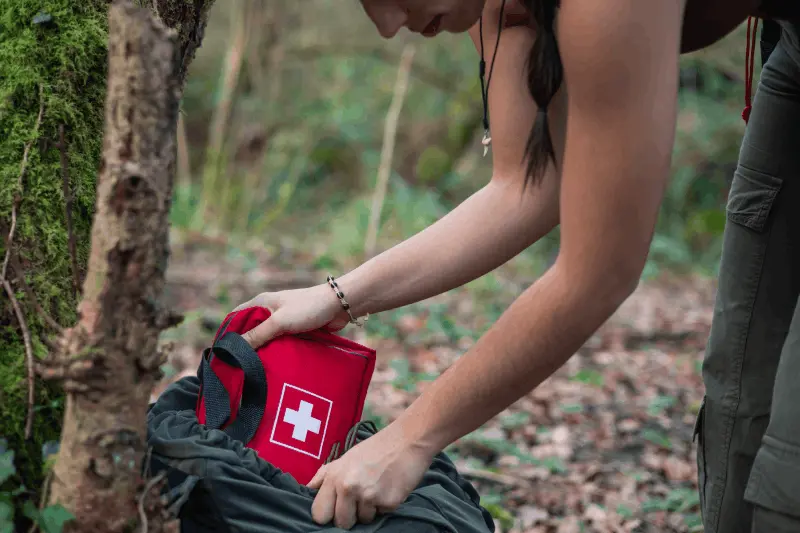
Safety is an integral part of camping. Teaching children basic first aid information appropriate for their age (what to do for a small cut, what to apply in case of sunburn, etc.) through small theatrical scenarios is both fun and life-saving. Practicing how to support a friend's sprained ankle or how to signal for "help" in nature (using a mirror to reflect light, using a whistle) develops children's ability to stay calm in panic situations. Recognizing the essential first aid supplies that should be carried in a backpack instills a sense of personal responsibility. This training ensures that children are equipped to help not only themselves but also others, strengthening their awareness of social cooperation.
How to Focus on Details in Nature with Photography Tools?
By giving children a camera (or a safe phone) and assigning them a photography task based on specific themes (for example, "textures in nature," "the smallest living thing," "light and shadow"), you sharpen their visual perception. While trying to capture the droplet inside a flower or the texture of a tree's bark, children begin to look at their surroundings much more deeply. Sharing the photographs at the end of the camp as a "nature exhibition" digitally or in print enhances their sense of achievement. Photography teaches children to be patient and wait for the right moment. Additionally, the skill of creating aesthetic compositions allows them to nourish their artistic creativity with the natural decor of the camp environment.
How to Explain Agriculture and Food Security by Recognizing Soil Types?
Soil is not just dust and mud; it is the source of everything we eat. Examining soil samples taken from different points in the campsite (riverbank, forest interior, open area) helps children understand the structure of soil (sandy, clayey, humus-rich). Demonstrating which type of soil retains water better or which is more nutritious for plants through experiments (like soaking the soil and shape-giving experiments) is the beginning of basic agricultural knowledge. Learning that it takes thousands of years for soil to form raises awareness about food waste and sustainable agriculture. Discussing how a seed germinates in this soil helps children establish a direct connection between nature and nourishment, fostering environmental ethics.
How to Establish Global Ecosystem Connections by Tracking Migration Routes?
During a camp coinciding with the migration period of birds or butterflies, showing children the thousands of kilometers these creatures travel on a map broadens their horizons. Discussing why a swallow comes from Africa and chooses to nest in this particular tree helps them understand how vast the world is and how interconnected it is. Discussing the impact of habitat loss (deforestation, urbanization) on these creatures raises children's sensitivity to global environmental issues. This activity provides children with a broader perspective, allowing them to see themselves as part of the entire world, not just their neighborhood. The rhythm of nature, which knows no boundaries, teaches children concepts of freedom and resilience.
How to Sharpen the Senses During Night Walks?
In the darkness of night, when vision is limited, other senses become more active. Conducting a safe and short "silent night walk" with children tests their hearing, smelling, and touching senses. They are asked to feel the softness of the ground beneath their feet, try to distinguish a distant owl's call, or notice the scent of flowers that bloom at night. This experience helps children overcome their instinctive fear of the dark and introduces them to the tranquility of nature at night. Seeing how nocturnal animals (thanks to the "tapetum lucidum" layer in their eyes) reflect light is an exciting biological discovery. This activity increases children's confidence in themselves and their senses while helping them discover that every moment in nature holds a different beauty.
How to Establish the Relationship Between History and Climate by Examining Tree Growth Rings?
A cut tree stump or a thick fallen branch is essentially a living history book. Counting the growth rings with children not only helps find out how old the tree is but also provides information about the climate of past years. Explaining that wide rings represent years of abundant rainfall and fertility, while narrow rings indicate drought or difficult periods grounds the concept of climate change. If a specific ring coincides with the child's birth year or an important historical event, it connects history with nature. Learning that trees engrave their experiences into their trunks each year teaches children that nature has a memory and that every living thing has a story. This activity helps children grasp the deep relationship between time and the environment.
What Are the Sources of Inspiration for a Creative Writing Workshop in Nature?
Nature is the greatest source of inspiration. Asking children to write short stories or poems based on themes like "a tree's diary," "the journey of the wind," or "the memories of a stone" combines their language skills with creativity. Sitting by a stream and writing to the sound of flowing water makes it easier to pour emotions onto paper. Reading what they have written to each other around the campfire enhances their confidence and public speaking skills. Using metaphors from nature (like the sun after a storm, taking root, bearing fruit) enriches children's abstract thinking and expression abilities. This writing activity balances the physical fatigue of camping with mental production and gives children the power to recreate nature with words.
How to Simulate the Predator-Prey Relationship in the Ecosystem with Games?
You can teach children the predator-prey relationship, which forms the basis of balance in nature, through a game of "hide and seek" or "strategy." Games where one group of children acts as "rabbits" (prey) and the other as "foxes" (predators) use camouflage and silence skills to survive gamify biological principles. Discussing why predators need to hide and why prey must be agile at the end of the game enhances the concept of adaptation. During this process, explaining the flow of energy in the ecosystem and that no living thing is inherently "bad" but that every role is necessary for the system to function provides an ethical perspective. This activity helps children release their energy while also helping them understand the fundamental dynamics of life.
How to Prepare Simple Devices for Cooking with Solar Energy?
Using the sun's energy to cook food provides children with an unforgettable lesson on thermodynamics and renewable energy. By lining the inside of a shoebox with aluminum foil and placing a piece of chocolate or marshmallow in a black container, you can demonstrate how heat is trapped by melting it under the sun (solar oven experiment). Explaining the concept of the "greenhouse effect" through this oven allows you to introduce the topic of global warming scientifically. Seeing how focusing sunlight on a point creates energy increases children's interest in clean energy sources. Eating these small treats they have cooked serves as a "sweet" reward for science and the most concrete proof of the free energy nature provides.
How to Instill Ecological Ethical Values and the Pledge to Protect Nature?
At the end of the camp, evaluating the time spent with children and preparing a "Pledge to Protect Nature" that includes their responsibilities towards nature crowns everything learned. Allowing them to determine items like "I will leave it cleaner than I found it," "I will not harm living beings," and "I will not waste water" helps internalize these rules. Reading this pledge together as a ritual and giving symbolic "Nature Protector" certificates (which can be made from natural materials) provides children with a social and environmental identity. This is not just a camping activity but a process of nurturing conscious citizens for the future. The ethical values gained in nature will form the strongest building blocks of children's character development.
In conclusion, camping with children is not just fun but also a multifaceted development process. The niche activities above will keep children's curiosity alive while providing them with scientific, artistic, and ethical vision. Children growing up in the embrace of nature will become sensitive and talented individuals with the potential to make the world a better place.