Why Is Choosing the Right Season Critical for First-Time Campers?
In your first camping experience, choosing the season is the most fundamental factor that determines the comfort and safety of the entire process. Generally, late spring or early summer is the ideal time frame for beginners. During these periods, temperatures do not reach extreme highs, and the difference between day and night temperatures is manageable. Winter camping can be risky for a first experience as it requires special technical knowledge and high-cost thermal equipment. Choosing the right season not only prevents you from being discouraged but also helps keep your motivation high by minimizing the potential challenges you may encounter in nature (storms, heavy snow, excessive humidity).
What Are the Key Differences Between Three-Season Tents and Four-Season Tents?
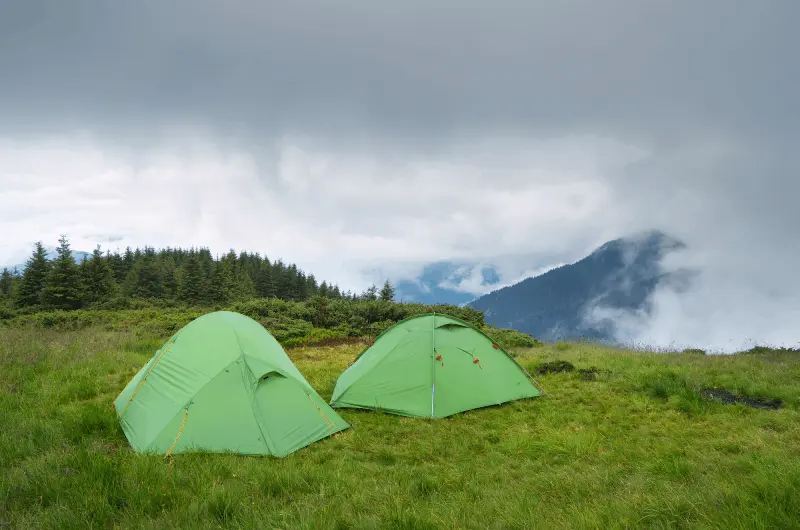
One of the biggest mistakes made when starting camping is purchasing the most expensive and heavy four-season tents when they are not needed. Three-season tents are generally lightweight and can breathe during hot weather thanks to ventilation panels; they are resistant to rain and light winds. Four-season tents are essentially "winter tents". They are produced with heavy poles and thick fabrics to withstand heavy snow loads and severe storms. A lightweight, easy-to-set-up three-season tent with good ventilation will provide you with a much more comfortable sleeping area for your first experience.
Is It Mandatory to Use a Footprint to Protect the Tent Floor?
A footprint, or tent footprint, is a critical layer that protects the tent from sharp stones, thorns, and moisture on the ground. While many people see this as extra weight, it is actually the most important accessory that extends the life of your tent. No matter how durable the ground fabric is, constant abrasion and ground moisture can eventually compromise the waterproofing. Using a footprint helps keep the bottom of the tent clean, speeds up the packing process, and somewhat reduces cold conductivity from the ground. You should definitely get a footprint to minimize the risk of tearing your tent during your first camping experience.
What Do Comfort Rating and Limit Rating Mean When Choosing a Sleeping Bag?
When buying a sleeping bag, you should pay close attention to the ratings on the labels. The "comfort rating" represents the temperature at which a standard user can sleep comfortably and without feeling cold inside the bag. The "limit rating" shows the lowest temperature at which someone who is a bit more resistant to cold can sleep without shivering. It is vital to check the lowest night temperature of the area you will be camping in and choose a bag with a comfort rating that is 5-10 degrees lower than that temperature. Remember, a sleeping bag does not generate heat; it only traps your body heat. Therefore, the insulation quality of the bag is key to your sleeping comfort.
Are Inflatable Mats or Foam Mats More Suitable for First Camping?
The second important piece that comes to mind when talking about sleeping systems is mats. Foam mats are cheap, lightweight, and never puncture; however, their comfort is lower and they take up a lot of space in your bag. Inflatable mats distribute body weight evenly, take up the space of a water bottle when packed, and provide excellent insulation (R value). If you want to avoid back pain and aim to completely cut off the cold coming from the ground during your first camping experience, it would be wise to allocate part of your budget for a good inflatable mat. Quality sleep is the biggest requirement for enjoying the next day.
Is It a Wise Decision to Bring Your Home Pillow When Choosing a Camping Pillow?
Many new campers want to bring the comfort of their home to nature by taking large cotton pillows with them. However, cotton fabrics quickly absorb moisture from the environment and become heavy, plus they take up a lot of space in your bag. Special camping or compressible synthetic fiber pillows are much better in terms of hygiene and space-saving. If you are very sensitive, you can also make a temporary pillow by stuffing your spare clothes into a stuff sack. However, if you do not want to compromise on comfort, you should get a lightweight, compact camping pillow that provides neck support.
Why Are Canister Stoves the Safest Option for Beginners?
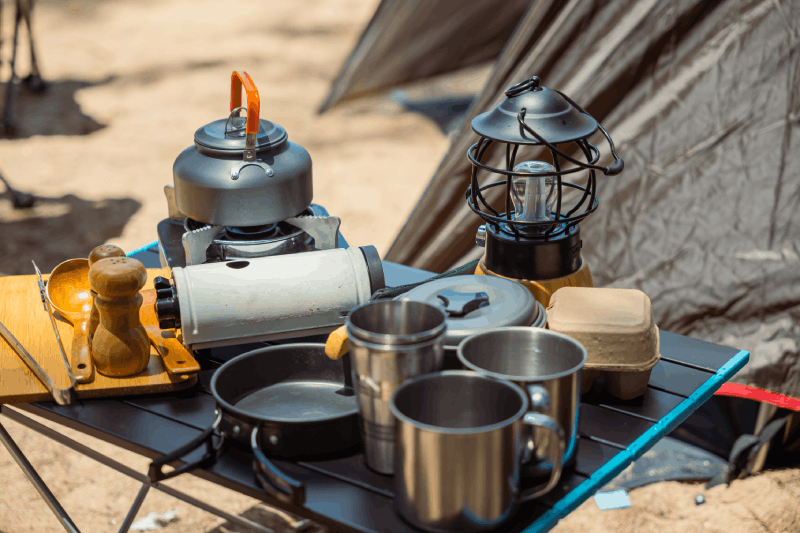
There are many types of stoves used for cooking in nature (liquid fuel, alcohol, wood). However, for your first experience, screw-on canister (butane/propane mix) stoves are among the safest and easiest to use. They make cooking easier as they allow for flame adjustment and perform well even in difficult conditions thanks to wind-protected models. Canister stoves do not clog and require no maintenance. The only challenge is predicting when the canister will run out; therefore, you should always keep a spare canister nearby to eliminate the risk of running out.
Should Aluminum or Stainless Steel Be Chosen When Selecting a Cooking Set?
Material selection in camping kitchens affects both weight and cooking quality. Hard anodized aluminum sets are very popular among campers due to their lightweight and quick heat conduction; however, they can react with acidic foods. Stainless steel is much more durable and easy to clean, but it can cause food to burn on the bottom due to uneven heat distribution. For your first camping experience, a lightweight aluminum set that offers pots and pans that can nest inside each other will be one of the most logical choices for beginners due to its portability and quick cooking performance.
Why Are Water Purification Tablets or Filters Essential in Your Bag?
Even if there is a water source in the camping area, the drinkability of that water is not always guaranteed. There may be a dead animal or agricultural waste upstream. Therefore, even if you carry enough water with you, you must have a water filter or purification tablet for emergencies. Simple "straw" type filters or systems that filter water from a bag filled with water using gravity can remove 99% of microorganisms and bacteria in nature. Water is the second most important need for survival after oxygen, and drinking contaminated water can end your vacation in a hospital bed.
What Are the Advantages of Using a Headlamp Over a Flashlight?
When night falls, the most needed item in the camping area is light. While flashlights provide powerful illumination, they occupy one of your hands while cooking, setting up the tent, or carrying things. Headlamps free up your hands completely and allow you to focus on the direction you are looking at. Having a red light mode in a quality headlamp is a significant advantage; because red light does not disturb your night vision and does not blind other campers. For your first camping experience, you should get a reliable headlamp with at least 150-200 lumens, either battery-operated or USB rechargeable.
Is a Lantern Necessary to Illuminate the Camping Area?
While headlamps provide personal lighting, area lamps are designed to illuminate the inside of the tent or the area around the dining table with uniform light. A small LED lantern hung from the tent ceiling will provide great convenience when reading a book in the evening or searching for something inside the tent. These lamps usually have soft, warm light modes, creating a much more peaceful atmosphere in the camping area. To overcome the fear of darkness during your first camping experience and to spend comfortable time in common areas, a 360-degree light-emitting area lamp should definitely be with you.
How Should the Layering System Be Applied?
The weather in nature can change rapidly. Therefore, instead of a single thick jacket, you should apply the "layering system". The first layer (base layer) is thermal underwear that wicks moisture away from the body. The second layer (mid layer) is a fleece or synthetic jacket that retains body heat. The third layer is an outer shell (hardshell) that protects against wind and rain. You should definitely avoid cotton clothing because cotton does not dry when wet and quickly absorbs body heat. Technical fabrics like synthetic or merino wool allow you to adapt to all weather conditions and keep your body dry.
Why Should Special Hiking Socks Be Preferred for Camping?
Foot health determines the fate of a camping or trekking trip. Ordinary cotton socks absorb moisture from the feet, causing blisters and friction, leading to water accumulation. Special camping/hiking socks have extra cushioning at the heels and toes, wick moisture away, and minimize friction due to their seamless construction. Merino wool blend socks keep your feet warm in winter and allow them to breathe in summer. For your first camping experience, buying a quality pair of socks for your feet is actually one of the cheapest but most effective investments.
Should You Choose Ankle-Support Boots or Lightweight Hiking Shoes?
If you will be walking on a rugged path to reach the campsite and carrying a heavy backpack, ankle-support boots (hiking boots) will protect your ankles from sprains. However, if you will be going to the campsite by vehicle or if the ground is flat, lighter and breathable low-cut hiking shoes may be sufficient. The important thing is that the sole of the shoe is non-slip and does not hurt your feet. Wearing a new pair of boots for the first time while camping is a big mistake; you should wear the shoes in your daily life before camping to allow them to adapt to your feet.
Why Should Full-Tang Knives Be Preferred When Choosing a Camping Knife?
A camping knife is not only used for cooking but also for chopping wood, cutting rope, or protecting yourself in emergencies. "Full-tang" knives are models where the blade extends as a single piece to the handle, providing maximum durability. While folding knives offer portability, locking mechanisms can fail during heavy tasks. For beginners, you can choose an economical yet extremely durable knife like the Swedish brand Mora. Remember, your closest friend in nature is a reliable cutting tool that won't leave you halfway when you trust it.
In What Situations Can Multi-Tools Be Life-Saving in Nature?
Sometimes a single knife may not be enough. Multi-tools combine many functions such as screwdriver, scissors, can opener, and saw into a single body. The presence of a multi-tool is invaluable in situations like repairing a tent pole, maintaining a stove, or keeping a pot warm. Especially if you do not have a can opener in your kitchen set, a multi-tool will open that can. A quality multi-tool is a universal tool that you can use for many years both in the camp and at home. Having a small but functional model in your first camping bag will help you solve many technical problems instantly.
What Are the "Must-Have" Medical Supplies That Should Be in a First Aid Kit?
Nature is a place open to accidents. Small cuts, burns, insect bites, or sprains can happen at any moment. In a first aid kit that you prepare yourself, you should definitely include sterile gauze, adhesive bandages, antiseptic solution, pain relievers, allergy medication, and burn cream. Additionally, you should keep a backup of any prescription medications you personally use in an accessible place in your kit. You may not expect to use your first aid kit, but knowing that it is there when you need it is the most critical equipment that will give you peace of mind. Always be prepared, remembering how long help can take in nature.
What Supplies Should Be Added to the Bag for Toilet Needs in Nature?
Most camping areas do not have modern toilets. This is one of the most stressful issues for beginners. You should definitely carry biodegradable (naturally decomposing) toilet paper, hand sanitizer, and a small trowel with you. Burying what you throw away is important for hygiene and keeping wildlife away from the camping area. According to the "Leave No Trace" principles, it is most ethical to collect toilet papers in a bag and take them back to the city. This preparation shows your respect for nature while keeping you hygienic.
When Choosing a Camping Chair and Table, Should Weight or Comfort Be Prioritized?
The most enjoyable moment of camping is sitting by the fire after eating your meal. If you are going to the camp by vehicle, a large and spacious camping chair will provide you with maximum comfort. However, if you will be walking with your backpack, you should prefer "ultra-light" chair models with aluminum frames. A camping table is also a large necessity for preparing meals and keeping items off the ground. When choosing your chair for your first camping experience, you should pay attention not only to the seating area but also to the durability of the fabric and the weight capacity. A comfortable chair allows you to enjoy nature without suffering from back pain.
When Choosing a Thermos and Water Bottle, Is Steel or Plastic More Practical?
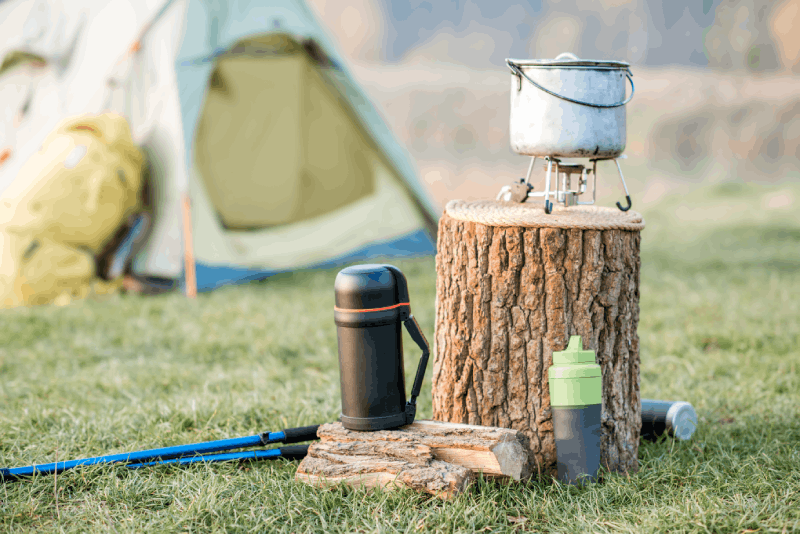
A leak-proof water bottle is essential for water consumption. BPA-free plastic bottles (like Nalgene) are lightweight and resistant to impacts, and you can fill them with hot water and keep them in your sleeping bag to warm yourself. Steel thermoses keep your tea or coffee hot for hours; however, they are heavier. For your first camping experience, I recommend a 1-liter plastic bottle for your daily water needs and a small steel thermos for your favorite drinks. Having a wide mouth on your water container will make it much easier for you to fill water from a stream or attach a filter.
How to Determine the Backpack System and Liter Capacity When Choosing a Backpack?
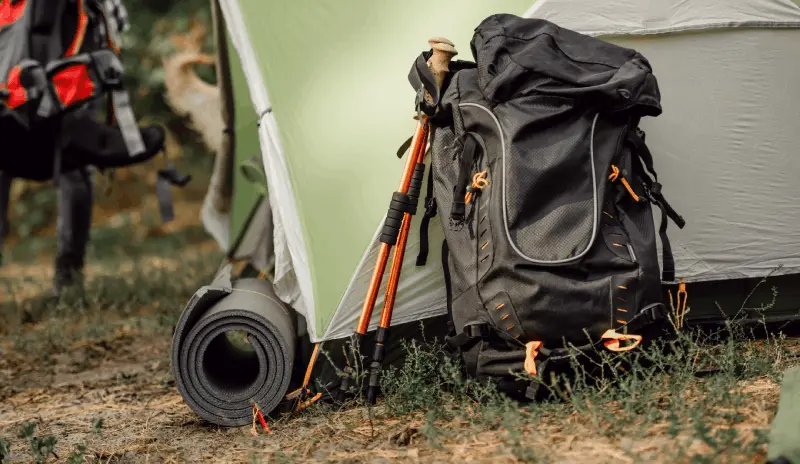
The backpack that will carry all these materials should fit your body structure perfectly. Generally, a 50-65 liter bag is sufficient for a 2-3 day camping trip. The "back system" of the bag should be adjustable and have a sturdy hip belt that transfers 80% of the weight from your shoulders to your hips. You should not buy a bag without trying it on; fill it up and check how it sits on your back. It is also important to check whether the bag is waterproof. Choosing the wrong bag can cause back and neck pain even after walking just a few kilometers, ruining your camping experience.
What Preparations Should Be Made for Trash Bags and Waste Management?
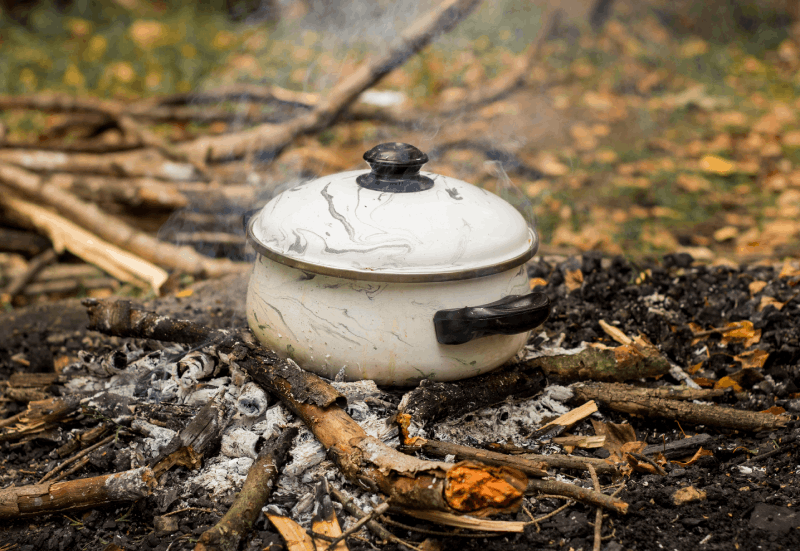
Everyone going to nature's biggest responsibility is to leave it cleaner than they found it. You should definitely carry durable, leak-proof trash bags with you. Collecting not only your own trash but also the litter around is part of camping culture. You should never leave food waste exposed; this causes bad odors and attracts wildlife like bears, pigs, or foxes to your camp. You can create an extra layer of protection by using ziplock bags to carry your trash inside your bag to prevent it from damaging your other gear.
Why Should Sunscreen and Insect Repellent Be in Your Bag Every Season?
Not only in summer but also in winter, serious sunburns can occur due to the reflection of the snow. A high-factor sunscreen and lip balm protect your skin against harsh weather conditions in nature. Insect repellents help protect you from pests like ticks, mosquitoes, and horseflies, especially in wooded and wet areas. Experiencing an allergic reaction in nature can be dangerous since you are far from a hospital. These small protective items are silent heroes that enhance your comfort and prevent potential health issues.
What Are the Modern and Traditional Methods Required to Start a Campfire?
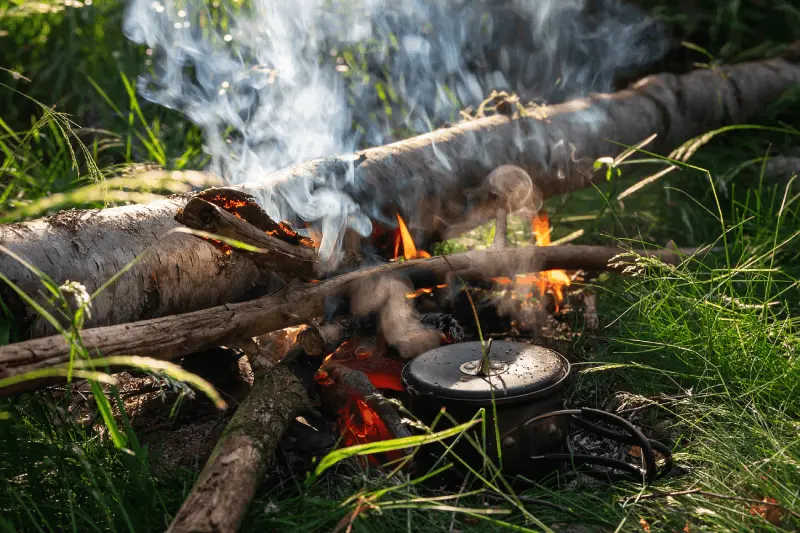
Starting a campfire is an art, but it is not always easy. Just having a lighter may not be enough; the lighter can get wet or run out of gas. Storm matches, magnesium rods (ferrocerium rods), and homemade fire starters (like cotton soaked in petroleum jelly) speed up the fire-starting process. Before starting a fire, you should ensure the safety of the area, pay attention to the direction of the wind, and make sure the fire is completely extinguished when you are done. Also, do not forget that lighting a fire is not allowed in every camping area; you should always comply with forest regulations.
What Are Practical Solutions for a Personal Hygiene Kit?
It can be difficult to stay clean when spending a long time in nature. For a practical hygiene kit, you should carry a microfiber towel (dries quickly and takes up little space), no-rinse shampoos, moist body wipes, and biodegradable soaps. Unlike regular towels, microfiber towels do not become heavy when wet and can be hung to dry while you walk. Body wipes are the biggest helper that keeps you feeling fresh when water is limited. Staying clean not only provides freshness but also boosts your morale and increases your desire to continue camping.
How Should Backup Battery and Power Bank Capacity Be Calculated?
Your phone serves as navigation, flashlight, and camera in nature. Therefore, battery management is critical. Cold weather can cause batteries to drain much faster. You should have a solid power bank with a capacity of at least 10,000 or 20,000 mAh that supports fast charging. If your headlamp is battery-operated, you should definitely carry a set of spare batteries. When your devices are not in use, putting them in "airplane mode" and keeping your power bank warm by placing it inside your sleeping bag at night are practical tips to help conserve your energy.
In What Situations Is Paracord Used in Camping?
A simple 10-15 meter length of paracord can solve dozens of different problems in camping. It is ideal for hanging a tarp, tightening the tension of a tent, replacing a broken shoelace, or hanging food from a high branch. Paracord, despite being lightweight, has the capacity to carry hundreds of kilos, and its inner strands can even be used for sewing. Keeping some cord on the side of your camping bag allows you to create creative solutions in unexpected technical emergencies.
How Should Spices and Oil Containers Be Prepared for Camping Cooking?
Spices determine the taste of meals. Instead of carrying large jars from home, you can use small pill containers or special camping spice containers. Liquids like olive oil can be placed in leak-proof small plastic containers (like dropper bottles) to save weight and prevent your bag from becoming oily. A well-seasoned camping meal is the biggest reward you can receive after a tiring day. These small details turn camping from just a necessity into an enjoyable gourmet experience.
Why Should Navigation and Map Knowledge Not Be Left to Apps Alone?
Relying on technology is good, but technology can leave you stranded in nature. Your phone can break, fall, or lose signal. Therefore, having a physical map of the area you are going to and a simple compass with you, and even learning how to use them at a basic level, is vital. Offline map applications (like AllTrails, Gaia GPS) are great, but when the battery runs out, a real map and compass will be your only salvation. Getting lost is the scariest part of the camping experience, and these small tools minimize that risk.
Why Should an Emergency Blanket Be in Every Camper's Pocket?
Emergency blankets, although they look like thin aluminum foil, reflect 90% of your body heat back. They are very lightweight and take up as much space as a wallet. If you unexpectedly find yourself in an emergency or if your sleeping bag is insufficient, this blanket can save your life. Additionally, since they are waterproof, they can also be used as a tarp in emergencies. You may not use it at all during your first camping experience, but in the event of an accident or extreme cold, this 50-gram material can be the line between survival and freezing.
How Should Camping Equipment Be Maintained and Stored?
Your work does not end when the camping is over. When you return home, you must ventilate your tent, sleeping bag, and mat and ensure they are completely dry. Tents left damp can mold and damage the fabrics. Storing sleeping bags in compression sacks can cause them to lose their insulation properties; therefore, you should store them in wide mesh bags or hang them. Taking good care of your equipment not only protects your money but also ensures that your gear will not let you down on your next camping trip.
Is It Necessary to Prepare a Checklist for Your First Camping Experience?
Missing a piece of equipment can make the entire camping experience difficult. Before leaving home, going through a checklist that includes questions like "Are the tent poles complete?", "Is there fuel for the stove?", "Did I bring my medications?" can save you from major mistakes. Instead of relying on your memory, you should check off the list you wrote down on your phone or on a piece of paper one by one. First camps are always a learning process; after each camp, you can add notes like "I should have brought this" or "I didn't need that" to your list to gradually create your perfect camping setup.