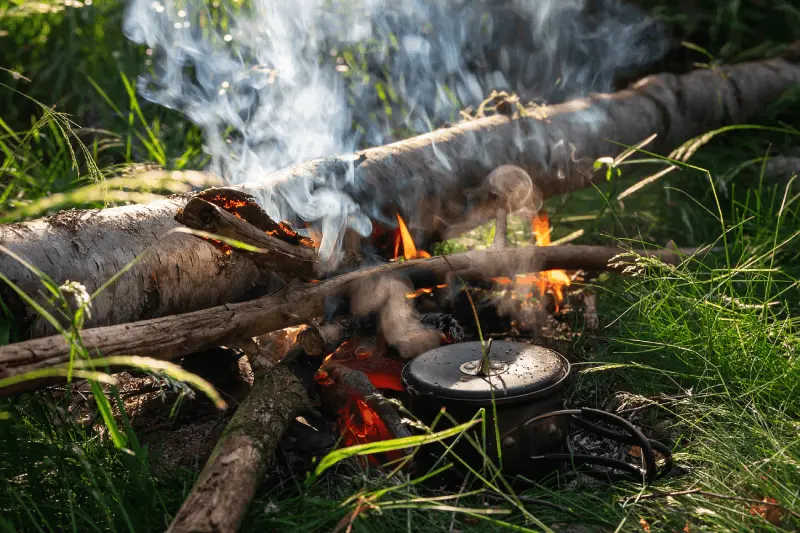
When planning to go camping, we often consider the most basic needs we have. However, when we find ourselves in the middle of a cold night, with a dying lantern or waiting for a meal that won't boil, we realize how vital those "small" details are. This guide is prepared with niche headings and a comprehensive 50-item list distilled from the experiences of professional campers, each offering a solution to a problem. Here is the ultimate guide that will guarantee your camping comfort and safety.
Why Does Every Camper Need a Tent Footprint?
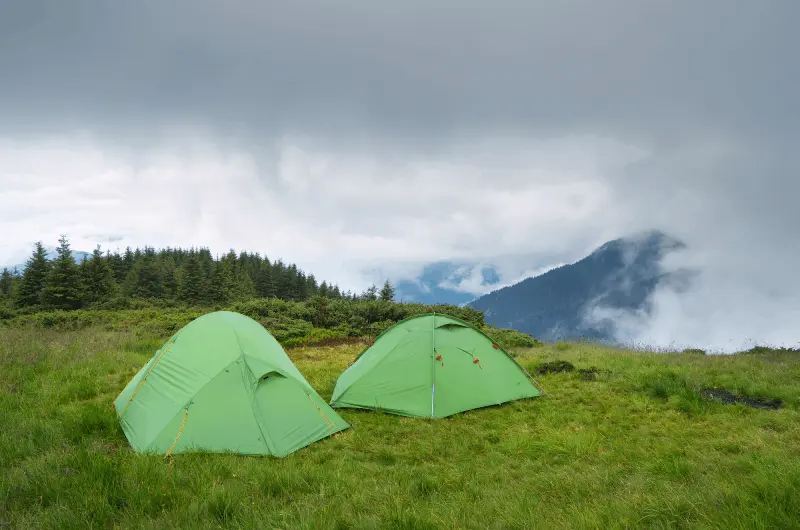
Many new campers think that buying a quality tent is enough; however, a "footprint" to be placed under the tent is the unsung hero of camping comfort. The footprint not only protects the bottom of your tent from cutting stones and branches but also prevents moisture from the ground from coming into direct contact with the tent fabric. This minimizes condensation inside the tent and prevents you from waking up in a damp environment in the mornings. Additionally, it speeds up the packing process by keeping the bottom of your tent clean while you pack it up. Remember, no matter how expensive your tent is, a thin barrier you place between it and the ground can double the lifespan of your equipment.
How Accurately Do Sleeping Bag Ratings Reflect Reality?
When buying a sleeping bag, the "Extreme", "Limit", and "Comfort" values you see usually represent ideal laboratory conditions. The -10 degree label on a bag does not mean you will sleep comfortably at that temperature; rather, it may indicate your survival limit. For true comfort, you should always base your choice on the "Comfort" value and select a bag that is 5-10 degrees warmer than the expected lowest temperature of the area you will be going to. Your body type, level of fatigue, and your nutrition on that day can also affect your comfort level. Therefore, instead of blindly trusting the technical specifications of your bag, you should plan the right combination of supportive mat and thermal clothing.
Is an Inflatable Mat or a Foam Mat More Comfortable?
The choice of mat is the most critical crossroads determining sleep quality while camping. Foam mats (z-mats) provide security with their lightness and guaranteed non-puncture, but their insulation capacities are often limited and can cause you to feel hard surfaces. On the other hand, modern inflatable mats conform to body ergonomics, providing comfort comparable to your bed at home and offering much higher insulation. If you are a backpacker, you should consider the balance between weight and durability; however, if you are car camping, comfort-focused thick inflatable mats will ensure you start the next day much more refreshed. The ideal solution is to provide double-layer insulation by placing a foam mat underneath and an inflatable mat on top during winter camps.
Why Should Titanium Sets Be Preferred in Camping Kitchens?
The choice of material in kitchen equipment directly affects both your carrying capacity and your cooking performance. Titanium is a much lighter material compared to steel and much more durable than aluminum. Additionally, titanium's ability to heat quickly and cool quickly allows you to save fuel and pack your equipment safely right after cooking. However, titanium's heat distribution capacity is lower, making it ideal for boiling water and consuming ready-made food rather than gourmet meals. In long-distance routes, where even grams matter, a titanium cup and pot set becomes an investment that takes up no space in your backpack and can be used for a lifetime.
Which Method is the Safest for Water Purification in the Wild?
Access to clean water in the wild is a vital priority, and just because the water looks clear does not mean it is drinkable. Filtration systems (straw or pump) effectively clean bacteria and protozoa, but they may not always provide complete protection against viruses. At this point, UV light purifiers or iodine-based tablets come into play. The safest method is to first remove large particles from the water, then filter it with a quality micron filter, and finally boil it. If you are looking for a technological solution, filters with hollow fiber membrane technology can make thousands of liters of water drinkable in seconds, saving you the hassle of carrying heavy water supplies.
Do Multi-tools Save Lives?
A Swiss army knife or a multi-tool with pliers is your pocket workshop for every technical problem in the campsite. You need these tools not just for cutting food; you may need them to tighten a loose glasses screw, open a can, carve wood, or cut fabric in an emergency. A quality knife made of steel with a locking mechanism is also critical from a safety perspective. Many professional campers carry a multi-tool that includes pliers alongside their main knife; because nothing can replace the pliers for tasks like stove repair or wire cutting. When choosing these tools, you should ensure they fit comfortably in your hand and are resistant to rust.
Is a Headlamp or a Flashlight More Functional?
Having your hands free while camping provides great freedom when cooking, setting up a tent, or carrying wood. Headlamps enhance this freedom to the highest level by directing the light where you are looking. The "red light" mode found in modern headlamps allows you to see without disturbing your night vision.
It ensures that you see the light and does not dazzle your friends. While flashlights provide stronger illumination and long-distance visibility, they fall short in practicality compared to headlamps. In an ideal scenario, having a high-lumen rechargeable headlamp as the main light source and a small flashlight as a backup is the most sensible approach.How to Choose the Right Shoes When Going Camping?
Your feet are your most important means of transportation to reach the campsite, and choosing the wrong shoes can cause you to turn back halfway. Camping boots must not only be waterproof; they should also be breathable and support your ankles on rugged terrains. Wearing a new pair of boots for the first time at camp is a big mistake; you should definitely break them in by wearing them in the city before camping. Additionally, when you reach the campsite, carrying a lightweight camp slipper or sandal to take off your heavy boots will relieve your circulation and increase your comfort. Remember, wet feet not only get cold but also invite blisters.
Why Should You Bring Thermal Underwear When Going Camping?
Many people only use thermal underwear in winter, but they are a critical part of the "layering" system during seasonal transitions. Underwear made from materials like synthetic or merino wool quickly wicks moisture away from your body, preventing wet clothes from cooling you down. Merino wool, thanks to its natural antibacterial properties, does not smell even after days of wear and continues to keep you warm even when wet. While you can walk around in just a t-shirt during sunny daytime, the thin thermal layer you wear underneath when the sun sets will keep your body heat, allowing you to have a comfortable night without needing to wear heavy jackets.
What Materials Must Be Included in a First Aid Kit?
A standard first aid kit contains band-aids and gauze, but a real camper's kit should also include "secondary" but vital items. At the top of this list are sterile adhesive strips (steri-strips) used to close deep cuts, strong pain relievers for severe pain, antihistamines, and electrolyte powders. Especially during long hikes, electrolyte support against dehydration can be life-saving. Additionally, a thermal blanket (space blanket) can be used both against the risk of hypothermia and to signal in emergencies. You should not leave the contents of your kit as you bought them; you should customize it according to your personal needs and the risks of the area you are going to (insect bites, poisonous plants, etc.).
What to Consider When Choosing a Camping Chair?
A large part of the long hours spent at the campsite is spent sitting, and a low-quality chair can lead to waking up with back pain the next day. While low and unsupported "festival" type chairs are lightweight, they increase the load on your spine with prolonged use. You should prefer models with high back support, where you can rest your arms, and that sit stable on the ground. If you are camping with gear, "recliner" type chairs with neck support offer luxurious comfort. If you are hiking with a backpack, investing in branded technical chairs that weigh only 500-800 grams but provide ergonomic seating will make your rest times much more efficient.
How Do Windbreaks Affect Cooking Time?
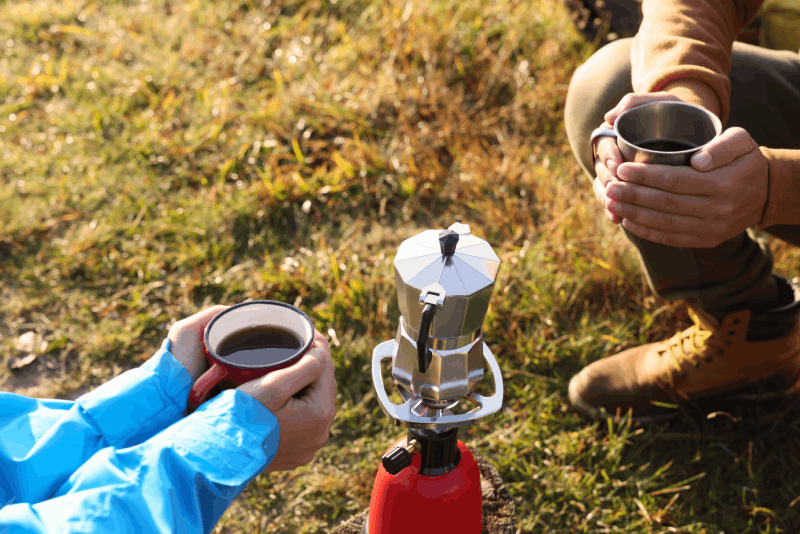
Your biggest enemy when cooking outdoors is the wind; because the wind disrupts the flame of the stove, preventing heat from reaching the pot. Using a simple aluminum windbreak panel can reduce cooking time by 30% to 50%, which means saving fuel directly. Especially at high altitudes or coastal areas, boiling water without a windbreak can sometimes become impossible. If you don't have a professional device with you, you must create a barrier using your backpacks or natural stones. However, a lightweight and foldable wind panel protects the lifespan of your stove and ensures that you can enjoy your evening meal much faster.
Are Portable Power Sources Necessary?
Even if we go camping to disconnect from technology, the devices we use for navigation, emergency communication, and capturing moments need to be charged. A high-capacity (at least 20,000 mAh) and fast-charging power bank enhances your safety in nature. Remember that cold weather quickly drains battery life; therefore, keeping your power source inside your sleeping bag will help maintain its performance. While solar panels may look great as an addition, they require a stable sun exposure to work efficiently. Therefore, your main energy source should be a fully charged power bank, and you should only consider the solar panel as a supportive option for long-term (over 3 days) stays.
How to Choose the Ideal Tree for Setting Up a Hammock?
Sleeping in a hammock is the most enjoyable way to cut off the cold from the ground and relax with an unmatched view; however, it can be risky if not set up correctly. Ideal trees are those that are about 4-5 meters apart, with a trunk diameter at least as thick as an adult's body and are alive. You should definitely avoid trees with dead or "widowmaker" branches. Using tree protector straps when setting up the hammock prevents damage to the tree bark. Additionally, achieving a 30-degree hanging angle allows you to lie diagonally instead of curling up like a banana inside the hammock, providing a flat surface. You must use an "underquilt" against the wind at night; otherwise, you will feel cold from the back. is unavoidable.
What to Consider When Choosing Insect Repellent Spray?
The smallest but most annoying elements that can disrupt your peace in nature are ticks and mosquitoes. Although DEET-containing sprays available on the market provide the strongest protection, they can damage plastic surfaces and some technical fabrics. If you are looking for a more natural solution, you can opt for sprays containing Picaridin or lemon eucalyptus oil. Especially the "Permethrin" formulations that you can apply to your clothes against ticks make a big difference in preparation before camping. Remember, it's not enough to just spray on your body; keeping tent entrances closed at all times and preferring earth tones instead of bright colored clothes will also reduce the interest of insects.
Is an Axe or a Saw More Efficient for Cutting Wood?
The tool you choose to prepare wood for the campfire determines the amount of energy you will expend. An axe is unmatched for splitting large logs, but it is heavy to carry and poses a greater safety risk. A foldable hand saw (Laplander type) is much faster, lighter, and safer for cutting medium-sized branches. Professional campers often combine the two: they saw the wood to the appropriate length and then split it into smaller pieces with a small axe or knife (using the batoning method). If you are just going to start a small fire for warmth, a quality saw is the most logical choice to save you from the burden of carrying an axe.
How to Manage Waste in the Campsite to Achieve Zero Waste?
"Leave No Trace" principle should be the constitution of every camper. When leaving the campsite, it is our duty not only to take your own trash but also to collect the litter left by those before you. You should start waste management before camping: removing unnecessary cardboard and plastic packaging from foods at home and transferring them to sealed bags can reduce the waste you will generate at the campsite by 50%. Instead of wet wipes, using biodegradable cleaning products and not burying organic waste (like fruit peels) in the campsite is essential to protect wildlife; because these wastes disrupt the feeding habits of animals. Always carry a leak-proof, sturdy trash bag with you and transport your waste to the nearest recycling point.
What to Consider When Cooking at High Altitudes?
As altitude increases, air pressure decreases, which causes water to boil at lower temperatures. Cooking pasta or rice at 2000 meters or above will take much longer. Additionally, butane-propane mixed gas canisters can lose performance in cold and low-pressure conditions. In such cases, using stoves with pressure regulators or liquid fuel (gasoline) stoves is vital. When cooking your food, never lift the pot lid and, if possible, soak the food beforehand to shorten the cooking time. Since your body will expend more energy at high altitudes, opting for quick-cooking and high-calorie carbohydrates (like couscous, instant soup, etc.) is the most practical solution.
Cooking Techniques on a Campfire
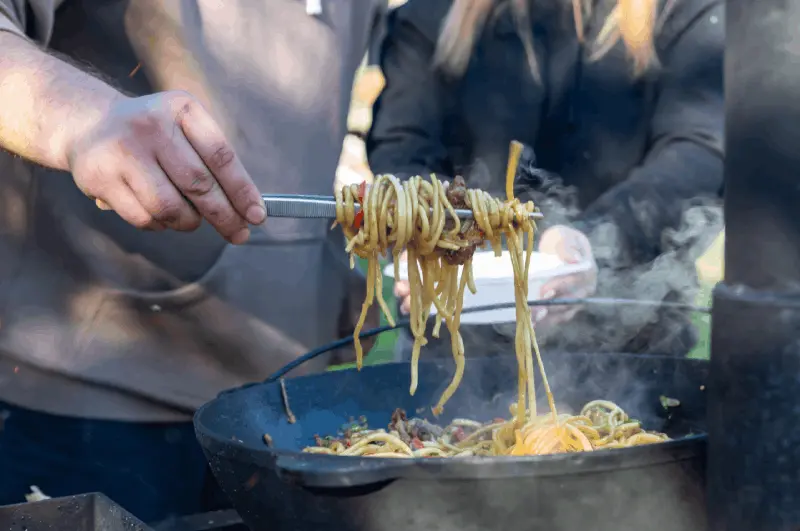
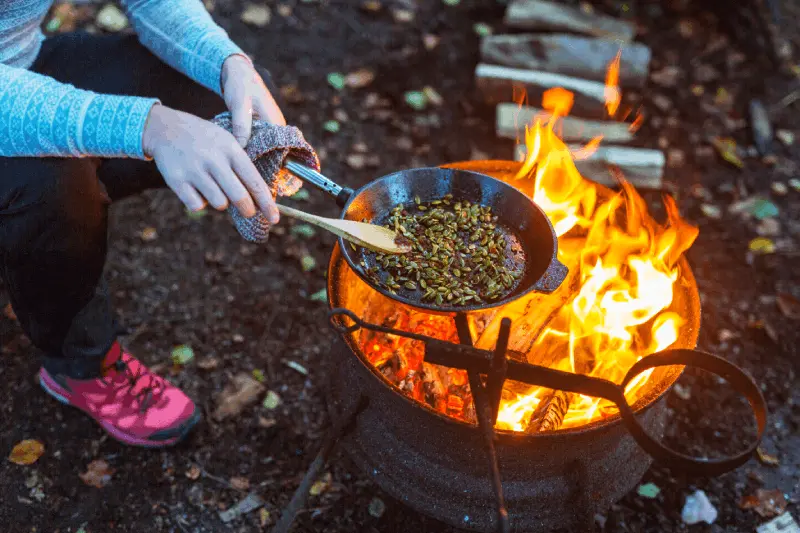
A campfire is not only a source of warmth but also an excellent source for making great meals. Cooking over the coals instead of direct flames ensures more controlled heat distribution. A cast iron pan can withstand the high heat of a campfire and allows you to cook your meats sealed on the outside and juicy on the inside. Placing vegetables, fish, or chicken in aluminum foil packets and burying them in the coals is a method that does not create dirty dishes and preserves nutritional value through steaming. When cooking over a fire, be patient and always have a long-handled tool that can withstand heat by your side.
Do Solar Panels Work in Cloudy Weather?
Portable solar panels are eco-friendly energy sources of modern camping; however, their effectiveness largely depends on weather conditions. In cloudy weather, the efficiency of the panel can drop to 10-20%, meaning it may take hours to charge your phone. To get the highest efficiency from the panels, they need to be positioned at a 90-degree angle to the sun's rays. Therefore, instead of keeping the panel stationary throughout the camping trip, you should adjust its position according to the sun's movement. The best strategy is to hang the solar panel over your backpack throughout the day to charge a power bank and charge your devices overnight through this power bank; thus, you protect your devices' batteries from voltage fluctuations caused by passing clouds.
Microfiber Towels or Traditional Towels?
Every square centimeter and every gram matters when camping; a standard cotton towel takes up a lot of space and takes hours to dry when wet. Microfiber towels can absorb 7-10 times their weight in water and dry much faster. Additionally, they can be compressed to the size of an apple when packed. You can even dry your towel by hanging it outside your backpack after camping. The silver ion technology found in some models prevents bacteria from growing and bad odors when the towel remains damp. These towels are very versatile, not only for personal hygiene but also for wiping down the tent or drying wet gear.
Is It Risky to Rely Solely on Smartphones for Navigation?
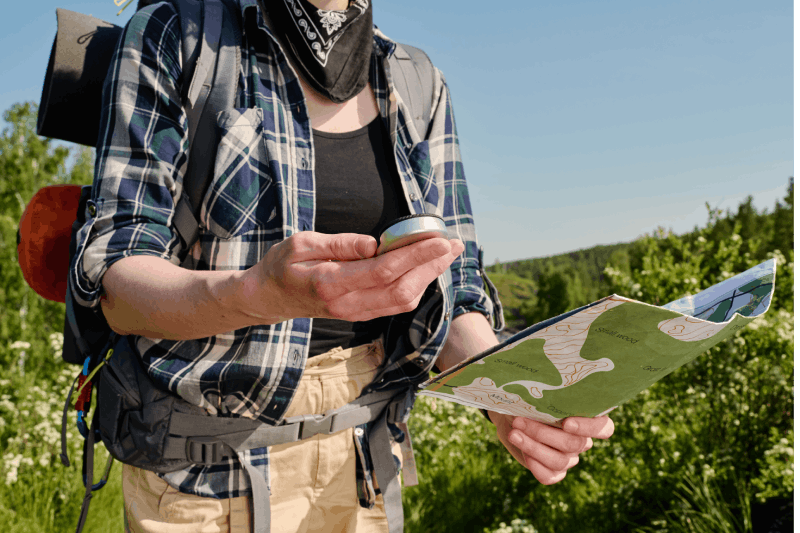
While GPS applications on smartphones are great, there is always a risk of electronic devices malfunctioning, running out of battery, or losing signal. A true camper should always carry a physical topographic map of the area they are going to and a compass, and they should know how to use them. Physical maps do not drain batteries and allow you to see a wide area at a glance, making route planning easier. Using your phone for navigation... Make sure to download the maps in "offline" mode. Additionally, putting your phone in airplane mode as a "power-saving" measure will prevent the device from constantly searching for a base station and draining the battery.
Are Foot Warmers a Luxury in Winter Camping?
The biggest problem in winter camping is that your feet never seem to warm up, even inside the sleeping bag. Chemical foot and body warmer pads, which activate upon contact with air, provide continuous warmth for 8 to 12 hours, taking your comfort to an incredible level. These pads are not just a luxury; they are safety equipment, especially in extreme cold where there is a risk of frostbite. Placing these pads over your socks (without direct skin contact) 15 minutes before entering your sleeping bag helps keep your circulation warm and aids in warming your entire body. Additionally, in emergencies, giving a warming pad to a struggling friend is invaluable in terms of moral and physical support.
How Do Waterproof Cases Protect Your Electronics?
The weather in nature is always unpredictable, and a sudden downpour can render your thousands of lira worth of equipment unusable in seconds. Waterproof bags, known as "dry bags," not only trap the air inside to prevent your equipment from getting wet but also prevent your bag from sinking in water during an accident. Transparent waterproof cases that hang for your phone allow you to use navigation even in the rain. You should definitely organize your electronics, spare clothes, and sleeping bag in dry bags of different sizes. This method not only provides protection but also helps you find what you are looking for instantly by eliminating the clutter inside your bag.
Are Camp Tables Suitable for Backpacking Travelers?
Traditional camp tables are heavy and impossible to carry in a backpack; however, ultra-light, foldable fabric tables developed in recent years have changed this situation. Weighing only 600-900 grams, these tables allow you to eat off the ground, prepare meals, and prevent your gear from touching the ground/dirt. If you are planning a long stay, having a table completely changes your organization at the campsite. While every gram is counted for backpacking travelers, for those who value comfort, this type of technological and lightweight gear is an "extra" that enhances the quality of the break taken at the end of a tiring day.
50 Item Checklist You Won't Regret
The list below covers basic and advanced needs for all types of camping scenarios. You can use this list as a checklist while preparing your bag:
Tent (Season appropriate, double fly)
Sleeping Bag (Comfort rating suitable for the targeted temperature)
Camping Mat (Inflatable or foam, high R-value)
Tent Footprint
Headlamp (With spare batteries or rechargeable)
Multi-tool
Camping Stove and Fuel
Pot and Pan Set (Lightweight and nesting)
Water Filter or Purification Tablets
First Aid Kit (Personalized)
Navigation: Map and Compass
Powerbank (High capacity)
Firestarter and Magnesium Rod (In a waterproof container)
Spare Socks (Merino wool preferred)
Thermal Base Layer
Waterproof Jacket / Raincoat
Camping Chair
Camping Towel (Microfiber)
Insect Repellent Spray
Sun Cream and Lip Balm
Personal Hygiene Kit (Soap, toothbrush, etc.)
Biodegradable Wet Wipes
Trash Bag (Durable and leak-proof)
Duct Tape (For emergency repairs)
Paracord (At least 10 meters)
Spice Container for Camping Kitchen (Small size)
Collapsible Water Bottle
Spare Shoes or Slippers (For the campsite)
Hat and Beanie (For sun and cold protection)
Lightweight Inflatable Pillow
Whistle (For emergency signaling)
Mirror (For signaling or personal care)
Thermal Blanket (Foil)
Cutlery Set (Fork, spoon, knife/spork)
Ziplock Bags (For food organization)
Waterproof Bags (Dry Bags)
Hand Saw (For wood preparation)
Foot and Body Warmer Pads
Sunglasses (UV protected)
Camping Lantern / Flashlight (For ambient lighting)
Pressure Regulator Gas Cartridge
Windbreak Panel
Steel or Titanium Cup
Lightweight Fleece Jacket (Mid layer)
Biodegradable Toilet Paper
Shovel / Small Spade (For toilet needs and fire management)
Disinfectant Gel
Dried / Lightweight Food Supplies
Electrolyte Powders (To mix with water)
Nature Journal and Pen (To note down moments)
Camping is the most liberating activity in the world as long as you are prepared. The items and headings in this list will equip you against the surprises of nature.