Why is Water the Most Critical Element for Survival in the Wilderness?
The human body is like a complex biological machine, and this machine has an absolute need for water in the processes of thermoregulation, nutrient transport, and the elimination of cellular waste. You can survive for weeks without food in the wilderness, but without water, this duration is limited to just a few days depending on climate conditions. Dehydration not only leads to a loss of physical strength but also causes mental confusion that dulls your decision-making ability. Therefore, in a survival situation, your first priority should be to identify a sustainable and safe water source even before building a shelter. Water prevents your organs from failing by maintaining your blood volume and provides you with the energy needed to return to civilization.
What Terrain Features Should Be Followed to Identify Natural Water Sources?
Tracking water in the wilderness goes beyond understanding the principles of gravity. Water always flows towards the lowest point; therefore, valleys, canyon floors, and the bases of mountains are the first places to look for potential water sources. From a distance, a green line in the terrain or vegetation that appears greener compared to other areas is the biggest indicator of an underground stream or seep. In rocky areas, water may accumulate from cracks. Especially in places where permeable rocks like sandstone or limestone exist, you have a high chance of finding springs where water filters cleanly through the rocks. Reading the terrain allows you to go directly to the source without wasting energy.
How Do Plant Cover and Animal Behaviors Indicate the Location of Water?
The inhabitants of nature, plants and animals, know much better than we do where water is located. Tree species that depend on water, such as willow, poplar, and sycamore, are indicators that there is a water source nearby their roots. If the vegetation around you suddenly becomes denser, there is likely a source of moisture there. In the animal kingdom, birds often fly towards water in the early morning or late evening. Pigeons and doves, in particular, follow regular routes to access water. If ant trails lead into tree hollows, rainwater may have accumulated in those hollows. Additionally, the paths created by grazing animals often converge at a water source; following these trails can lead you directly to a stream or pond.
What Are the Key Points for Finding Water in Mountainous Areas and Valleys?
Finding water in mountainous areas may seem easier than in flatlands, but strategic thinking is required. The shaded sides of mountains (north slopes) retain moisture longer due to less evaporation. While it may seem logical to go down to the deepest points of valleys, sometimes water can seep underground and later rise back to the surface. If a valley floor is dry, you can try digging into the outer parts of elbowing or winding areas to reach underground water. In rocky slopes, holes where birds nest or moss-covered stones are indicators of seepage water. Additionally, the lower parts of snowdrifts that remain can provide a continuous flow of water as long as melting continues. Although water in these areas is usually cold and fresh, it should always be purified.
What Mistakes Should You Avoid When Obtaining Drinking Water from Snow and Ice?
Eating snow and ice directly is one of the biggest mistakes you can make in a survival situation. The body expends a tremendous amount of heat energy to melt snow, which can trigger hypothermia and lead to fatal outcomes. You should always use a container and fire to melt snow. Putting a small amount of water at the bottom of the container while melting snow makes it easier for the snow to absorb the heat and prevents the container from burning. Ice contains more water than snow; therefore, you should prefer ice whenever possible. Additionally, you should choose freshly fallen white snow and avoid areas that have turned gray or have animal tracks. Snow water is very low in minerals; drinking only snow water for an extended period can disrupt your electrolyte balance, so adding a bit of salt or pine needle can be beneficial.
Why Are Clear-Looking Streams Not Always Safe?
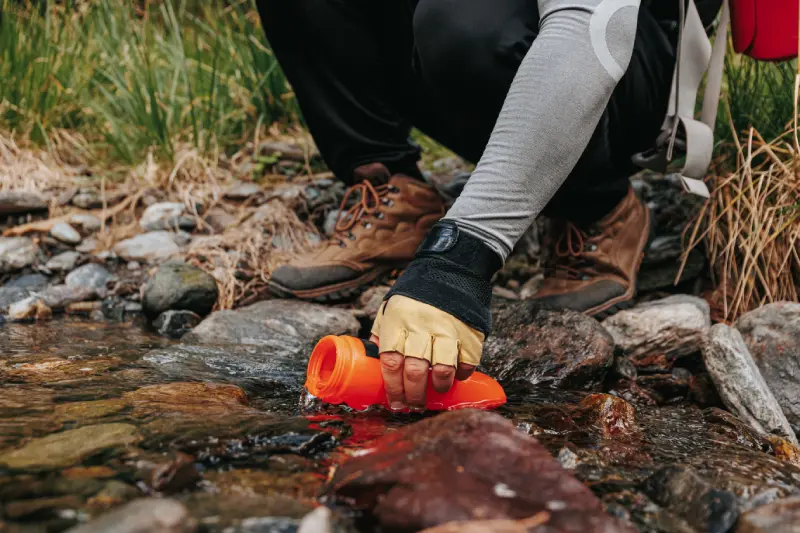
A water source being crystal clear in the wilderness does not mean it is drinkable. Microscopic dangers such as bacteria, protozoa, and viruses cannot be seen with the naked eye. A fast-flowing stream, while more oxygenated and fresh than stagnant water, may have a dead animal carcass or waste from a camping group a few yards upstream. Especially, the waters brought by melting snow in the mountains can carry heavy metals or parasite eggs from the soil. Parasites like Giardia and Cryptosporidium can survive even in the clearest waters and can lead to severe diarrhea, putting you at risk of dehydration and death. Therefore, no matter how clean it looks, treating every water source in nature as "dirty" is a lifesaving approach.
What Are the Dangerous Pathogens and Parasites Associated with Water?
Wild water sources host various microorganisms that pose serious threats to human health. At the top of the list is Giardia, also known as "beaver fever"; this parasite settles in the intestines and causes weeks of fatigue and diarrhea. Cryptosporidium is another common parasite that is resistant to chlorine and causes stomach cramps and fever. At the bacterial level, diseases like E. coli, Salmonella, and Cholera are transmitted through waters, especially those near settlements or livestock areas. Although viruses (Hepatitis A, Norovirus) are rarer, they can pass through some filters due to their much smaller size. Each of these pathogens can cause your body to lose fluids, dramatically reducing your chances of survival.
What Is the Working Principle of Portable Filters Like Lifestraw?
Portable water filters like Lifestraw operate using "hollow fiber membrane" technology. This technology consists of thousands of tiny tubes resembling very thin pasta. The surfaces of these tubes have microscopic pores of 0.2 microns (for Lifestraw) or 0.1 microns (for Sawyer). When you force dirty water through this filter, water molecules pass through these pores while bacteria, parasites, and sediments remain outside because they are larger than the pores. This is a purely physical blocking method; no chemicals are added to the water. This way, the taste of the water you drink is not altered, and you instantly obtain safe drinking water. However, it should be noted that these pores are not small enough to stop viruses or chemicals that may be dissolved in the water.
How Does Hollow Fiber Membrane Technology Purify Water from Microbes?
This technology is essentially a miniaturized version of the dialysis machines or industrial water purification plants found in nature. The walls of each fiber are like a complex labyrinth. When water passes through these walls under pressure (by suction or gravity), the passage of microbiological contaminants is blocked. Most bacteria are larger than 0.5 microns, so pores of 0.1 or 0.2 microns successfully capture them at a rate of 99.9999%. This method offers a much higher flow rate compared to traditional paper or ceramic filters and can be reused repeatedly by performing "backflushing" in case of clogging. Not requiring electricity or batteries makes this technology the most reliable tool for adventurers wanting to survive in the wilderness.
Which Filter Is More Suitable for You: Sawyer Mini or Lifestraw?
Both filters perform excellently, but they differ according to their intended uses. Lifestraw, as its name suggests, is designed like a straw for drinking directly from the source. It is lightweight and very easy to use, but it does not allow you to carry water with you or store water for cooking. Sawyer Mini, on the other hand, is more versatile; it can be attached to standard plastic bottles, integrated into a water bladder line, or used as a straw. The lifespan of Sawyer (approximately 370,000 liters) is much longer than that of Lifestraw (4,000 liters) and can be preserved by backflushing. If you are looking for a simple solution for your emergency kit, Lifestraw is ideal; however, if you want a more flexible system for long-term hiking and camping, Sawyer Mini is a more logical choice.
In What Situations Are Portable Filters Ineffective Against Viruses?
The biggest limitation of standard portable filters is their pore sizes. While most bacteria and parasites can be stopped at the 0.1-0.2 micron level, viruses are generally between 0.02 and 0.1 microns. This means that viruses can pass through the pores of physical filters. If the area you are in is deep in the wilderness and the risk of human/animal contamination is low, viruses usually do not pose a significant problem. However, in areas after flooding, in rivers in developing countries, or in water sources with heavy human use, the risk of viruses is high. In such cases, physical filtration alone is not enough; you should either boil the water or use devices in the "purifier" category (ultraviolet or chemical-based) that can eliminate viruses.
How Are Chemical Purification Tablets Combined with Mechanical Filtration?
The safest water purification method is to combine mechanical filtration with chemical treatment. First, you use a mechanical filter (like Sawyer or Lifestraw) to remove sediments, bacteria, and parasites from the water. This process increases the clarity of the water and ensures that the chemical works more effectively. Then, especially in emergency situations, while mechanical filtration removes coarse dirt, tablets complete biological safety. When using tablets, you need to pay attention to the temperature of the water and the waiting time (usually between 30-240 minutes). This dual method provides complete protection against almost all biological threats you may encounter in the wilderness.
How Can a Dirty Filter Endanger Your Life and How Should It Be Maintained?
Filters become clogged with mud and sediment as they are used. In a clogged filter, the water flow rate decreases, and the user has to exert more effort. If the filter is not maintained, bacteria can grow in the moist environment left inside, causing the filter itself to become a source of contamination. The most important maintenance procedure is "backflushing." Using the syringe provided with the filter, clean water is forced through the filter in the reverse direction; this way, particles that have clogged the pores are expelled. Additionally, before long-term storage, the filter should be disinfected with very lightly chlorinated water and allowed to dry completely. In freezing conditions, you should keep the wet filter close to your body; because if the water inside freezes, it can rupture the fibers and render the filter inoperable.
How Is Freshwater Produced from Salty Water Using Solar Energy and Distillation?
If you are stranded on the beach or the shore of a salty lake, filters cannot remove salt. In this case, the "solar still" method is your only option. Dig a wide hole in the ground and place a container in the middle. Surround the hole with seawater or moist plants. Cover the hole with a plastic sheet (or poncho) and place a small stone in the center of the cover (so that it rests on the container). The sun's heat will evaporate the water inside the hole; the vapor will condense on the plastic cover and drip into the container in the center as pure water droplets. This method is slow (producing about 0.5 - 1 liter of water per day), but the water obtained is completely purified from salt and microbes. You may need to set up multiple setups to survive.
How to Build a Primitive Filter with Charcoal and Sand in Emergencies?
If you have no equipment, you can create a layered filter with natural materials. Cut the bottom of a pant leg or a plastic bottle to create a container. Place a clean cloth at the bottom layer, followed by fine sand, crushed charcoal on top of that, then fine gravel, and finally large stones on top. The key element here is charcoal; while it absorbs chemicals and bad odors in the water, sand and stones filter out sediments. Slowly pour water over the top of this setup and collect the filtered water from the bottom. Note: While this filtration method may clarify the water, it may not completely eliminate bacteria. Therefore, it is essential to boil the water obtained from primitive filtration for at least 1-5 minutes for your safety.
Why Should You Wait for the First Rain When Harvesting Rainwater?
Although rainwater appears to be one of the cleanest water sources in nature, it collects dust, smoke, and chemicals from the atmosphere as it falls. Additionally, there may be bird droppings and dust accumulated on the surfaces where you collect the water (leaves, rocks, or your plastic cover). Therefore, the "first flush" rule should be applied; you should not collect the water flowing in the first 10-15 minutes of rain and allow the surfaces to be cleaned. The water collected afterward will be relatively cleaner. Using a large surface area (such as a tarp or clean large leaves) to collect rainwater increases efficiency. Still, it is a good idea to filter the collected rainwater through a cloth or simply filter it to remove any small insects and dust that may have fallen into it.
How to Recognize the Symptoms of Dehydration and Prevent It?
Dehydration is a sneaky enemy. When you feel thirsty, it means your body has already lost 1-2% of its water. The first symptoms are dry mouth, dark urine, and mild headache. At moderate levels, the pulse quickens, skin loses elasticity, and extreme fatigue begins. The best way to combat thirst is to "manage sweating." Instead of moving during hot hours, you should rest in the shade, keep your body cool by wetting your clothes, and only exert effort during cool hours (dawn or dusk). If your water supply is limited, stop eating; because the digestion process causes the body to expend water. Drinking small amounts of water frequently is more efficient than drinking large amounts at once because the body can expel excess water through urine without absorbing it.
How Many Different Water Purification Methods Should Be in Your Survival Kit?
In the wilderness, the rule "one is none; two is one" applies. Relying on a single method leaves you vulnerable if that method fails (such as a broken filter or running out of tablets). An ideal survival kit should have a threefold system: First, a mechanical filter (like Sawyer or Lifestraw) for quick and practical use. Second, chlorine dioxide tablets as a backup or for waters with a risk of viruses. Third, a single-walled stainless steel bottle for both storing water and boiling it. A steel bottle is essential; because it can be placed directly into the fire and will never break down since it has no mechanical parts. This threefold combination guarantees access to clean water in every scenario around the world.
How Effective Is Obtaining Water Through Plant Transpiration?
The method of obtaining water through plant transpiration can be lifesaving, especially in arid areas where there is no water source at all. On a sunny day, wrap a large plastic bag around a branch with live, green leaves and tie it tightly at the mouth. As the plant breathes and sweats due to the sun's effect, the water vapor that escapes from the leaves condenses on the inner surface of the bag and collects at the bottom of the bag. With this method, you can obtain about half a glass of water in a few hours. While it may not be very efficient, it allows you to collect water without expending energy. However, the most important thing to pay attention to is that the plant you choose is not toxic; because water obtained through transpiration from toxic plants can also have toxic properties. Therefore, you should only use safe plants that you know.
How to Ensure Long-Term Water Storage and Hygiene Standards?
When storing the water you find and purify in the wilderness, you should also be careful. If you store purified water in a container that has previously come into contact with dirty water, the bacteria remaining in the container can contaminate the clean water within seconds. You should periodically disinfect your storage containers with boiling water or a very small amount of chlorine. Leaving water in places exposed to direct sunlight accelerates the growth of algae and bacteria; therefore, you should keep your water in a cool and dark place. Additionally, placing a silver coin or a bit of charcoal inside the container is a natural preservation method used since ancient times to keep your water fresh. Remember, the safety of water should be maintained not only at the time of purification but throughout the entire process until you drink it.
Why Is Drinking Urine or Seawater During Thirst Potentially Fatal?
While cartoons or misconceptions suggest that drinking urine can save your life, this is a major misconception. Urine is filled with waste salts and toxins that the body is trying to expel. In a state of dehydration, your urine is already very concentrated and toxic; drinking it puts excessive strain on your kidneys and exacerbates your thirst. Seawater is even more dangerous than urine; its high salt concentration causes the water in your cells to exit (through osmosis). Drinking seawater leads to expelling more water from your body than you consume, hallucinations, kidney failure, and can quickly lead to death. Therefore, you should never, ever consume these two liquids directly; you should only drink them after purifying them through distillation.
What Should Be Done When Encountering Algal and Stagnant Waters?
Stagnant waters, especially those with a green layer or algae, are excellent breeding grounds for bacteria and mosquito larvae. If you have no other option, you should take water from the cleanest-looking middle parts of the water, avoiding the surface layer. Algae may filter the water to some extent, but they can also produce toxins (especially blue-green algae). When taking this water, you should definitely pass it through several layers of cloth or a sand filter to remove coarse sediments, then purify it with your portable filter, and finally, if possible, boil it. If the stagnant water smells bad, adding activated charcoal or pine needles boiled in water can somewhat reduce the unpleasant odor.
How Can You Turn Water Searching in the Wilderness into a Fun Practice?
Water finding and purification skills are not only for emergencies but also serve as a "mindfulness" exercise for every moment spent in nature. Even if you have your filters with you on your next nature hike, reading the map and predicting that "there might be a source here" and hearing the sound of water when you get there is an incredible satisfaction. Following animal tracks, recognizing plant species, and examining the terrain like a detective will connect you more to nature. Learning to use tools like Lifestraw, taking a break by a stream, and safely sipping ice-cold water directly can revive that ancient survival instinct that modern humans have lost. These skills are your most valuable insurance that you carry in your pocket.