Why Is Cast Iron Pan the Most Loyal Friend of Campfire?
Cast iron pans are the only kitchen equipment that can tame the chaotic and fierce heat of a campfire. The greatest feature of these pans is their high thermal mass; once they absorb heat, they retain it for a long time and distribute it evenly across the surface. Even if the flames of the campfire fluctuate in height, the thick bottom of the cast iron pan absorbs these fluctuations, preventing one side of the food from burning while the other side remains raw. Additionally, due to the porous structure of cast iron, it develops a natural non-stick layer over time known as "seasoning." This layer provides you with the comfort of a professional kitchen while cooking oily and high-protein meals outdoors. The durability of the cast iron pan is legendary; a piece of wood or extreme heat falling on it does not deform it, but rather adds character.
How Should You Control the Heat of the Fire Precisely?
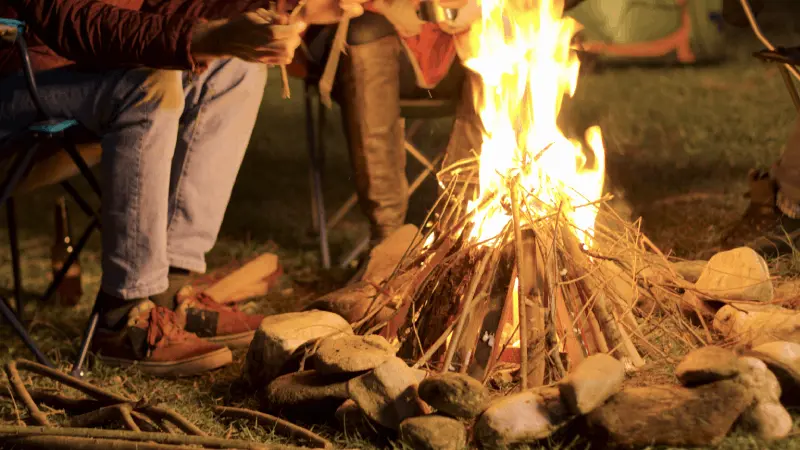
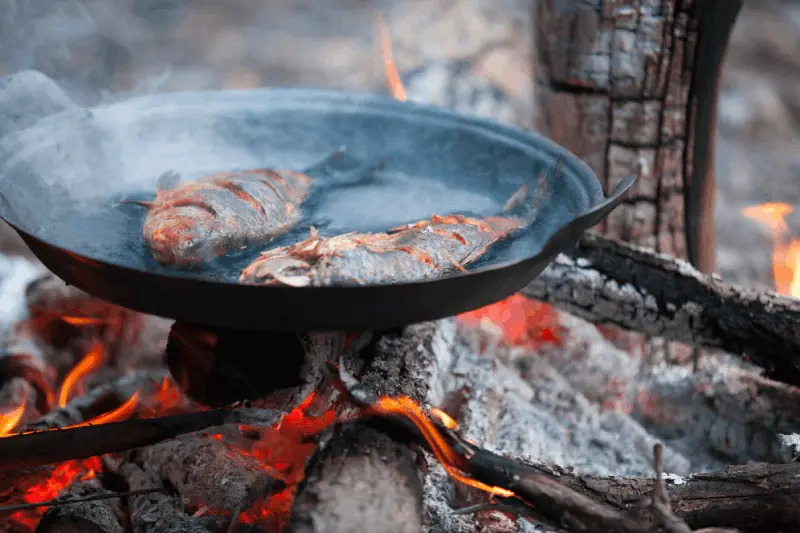
Controlling the heat of a campfire is not as easy as turning a knob, but a cast iron pan gives you a significant advantage in this regard. The most effective way to control the heat is to adjust the distance of the pan from the fire. Instead of placing it directly over the flames, positioning your pan over the embers provides a more stable heat. If you want to increase the heat, you can pull a few fresh embers under the pan; if you want to reduce it, you can push the embers aside. You can test the heat by holding your hand about ten centimeters above the pan; if you can hold your hand there for more than two seconds, that is an ideal high heat for searing. Around five seconds is medium, while eight seconds or more is suitable for slow cooking or simmering. This manual control, combined with the cast iron pan's heat retention capacity, yields excellent results.
How Should You Prepare Your Cast Iron Pan at Home Before Going Camping?
To have a seamless cooking experience in the wild, preparations actually start in your home kitchen. Before going camping, you should ensure that the "seasoning" layer of your pan is intact. If there are gray areas or slight rust spots on your pan, you should oil it with a thin layer of vegetable oil (flaxseed or grape seed oil is recommended) and bake it in the oven at high heat for about an hour. This process creates a protective shield that prevents the metal's pores from being exposed to the elements. Also, make sure that the handle of the pan you will be carrying is covered or has a suitable handle system. Before going camping, lightly oil your pan and wrap it in a paper towel for transport; this prevents the pan from coming into contact with air, thus preventing rust, and also keeps your other camping gear clean.
Why Should You Prefer Cooking Over Embers Instead of Direct Flames?
The most common mistake made by novice campers is throwing the pot or pan directly into the rising flames. However, true flavor and controlled cooking lie in the glowing embers left after the flames die down. Flames can cause soot buildup on the outside of the pan and lead to unpredictable increases in heat; this results in the outside of your food burning while the inside remains raw. Embers, on the other hand, radiate a more even and homogeneous heat. The cast iron pan perfectly absorbs this deep heat emitted by the embers, creating an oven effect. If you are making a meat or stew that requires slow cooking, you should place your pan on a bed of embers and even put a few pieces of embers on top if the pan has a lid. This technique maximizes the potential of the cast iron by surrounding the heat from all sides.
What Oils and Techniques Should You Use to Prevent Sticking?
The sticking problem in cast iron pans usually arises from the wrong choice of oil or insufficient heating of the pan. Using oils with a high smoke point in a camping environment is crucial. Butter or extra virgin olive oil can burn at low temperatures, leaving a bitter taste; therefore, corn oil, sunflower oil, or ideally clarified butter (ghee) should be preferred. Before starting to cook, the pan must be thoroughly heated as "empty." The pores of the heated metal expand and absorb the oil, creating a slippery surface. When you place the meat in the pan, do not try to flip it immediately; when the cast iron pan has seared the meat, it will naturally release from the pan. If the meat is sticking to the pan, it means it has not yet seared enough or the pan is not hot enough. Patience is as important as oil when using a cast iron pan.
Can You Cook Acidic Foods in a Cast Iron Pan?
This topic is one of the most debated among cast iron enthusiasts. Acidic foods like tomato sauce, wine, or lemon can dissolve the protective oil layer (seasoning) on the pan and impart a metallic taste to the food. However, if the maintenance layer of your pan is very strong and you are not going to leave the food in the pan for hours, short-term acidic cooking usually does not cause problems. Making a quick tomato menemen on a campfire will not damage your pan. The key point to pay attention to is to clean your pan immediately after cooking the acidic food and lightly re-oil it. If your pan is new or its maintenance is weak, it is safer to avoid acidic foods or use an enamel-coated cast iron pan for such dishes.
How to Avoid Thermal Shock and Cracking of the Pan?
Although cast iron pans appear to be as durable as a tank, they have a physical weakness: thermal shock. Putting a very hot cast iron pan into ice-cold stream water at the campsite or suddenly pouring cold water over it can increase the stress inside the metal, causing the pan to crack or warp. This is an irreversible hazard. After cooking, you should allow the pan to cool down slowly on its own. If you need to use water for cleaning, make sure the water is warm or hot. Similarly, throwing frozen meat that has just come out of the freezer directly into a very hot pan over the fire can create local thermal stress. Bring your meat to room temperature (or as close as possible under camping conditions) before cooking; this will extend the life of your pan and ensure better cooking.
Is Using Soap for Cleaning Really a Taboo?
The long-standing myth that "soap should not touch cast iron" was actually valid for harsh caustic soaps of the past. Today's mild dish detergents do not easily remove the polymerized (bonded to the metal) oil layer on the pan. If your food at the campsite is very sticky, there is no harm in using a small amount of biodegradable detergent. However, if you prefer traditional methods, the best cleaner is coarse salt. Pour some coarse salt into the pan and scrub it with a paper towel or cloth; this creates a sanding effect that removes food residues while preserving the natural structure of the pan. The most critical step to pay attention to after cleaning is to leave not a single drop of water on the pan. Place the pan next to the fire to ensure it dries completely, and then "seal" it with a thin layer of oil.
How to Deal with Signs of Rust in the Wild?
Rust formation on a cast iron pan left wet by mistake or in the humid environment of the campsite can be unavoidable. If you see orange spots on your pan when you wake up in the morning, do not panic. Rust is not the end of your cast iron pan. To clean rust in camping conditions, you can cut a fresh potato in half and sprinkle salt on the rusty area to scrub it. The oxalic acid in the potato and the abrasiveness of the salt will dissolve the rust. If the situation is more serious, you can scrape the rusty part with sand or a hard stick and then rinse it thoroughly. After cleaning, immediately place the pan over the fire to heat it up and scrub it with plenty of oil when the pores open. This will stop the progression of rust and temporarily protect the surface. When you return home, you may need to perform more detailed maintenance.
When and Why Should You Use Tripod Systems?
Placing a cast iron pan or pot directly over the embers can sometimes cause excessive heat. This is where camping tripods or hanging systems come into play. These systems allow you to adjust the distance of the pan from the fire with millimeter precision. They are invaluable for dishes that require long cooking times, slow-cooked meats, or bread making. When the pan is suspended in the air, heat passes from below and provides a gentler cooking process. Additionally, in windy conditions, keeping the pan off the ground prevents the embers below from suffocating by getting more oxygen. If your ground is very uneven or wet, suspending your pan is the most logical choice for both safety and stability. Due to the weight of the cast iron pan, you should ensure that the tripod you use is sturdy and well anchored to the ground.
How Should the Position and Rotation of the Pan Be for Even Cooking?
A campfire does not provide a circular and stable heat like home stoves; the direction of the wind and the position of the wood constantly change the heat in the area. Therefore, simply placing the cast iron pan over the fire and leaving it there can cause one side to burn. Rotating the pan a quarter turn every five minutes during the cooking process ensures more even distribution of heat on the surface. If one side of your pan is very hot, you can place thicker pieces of meat on that side and vegetables on the cooler areas. Although the cast iron pan conducts heat, if one side is in direct contact with flames while the other side is exposed to cold wind, a significant temperature difference can occur. To prevent this, using windbreaks or surrounding the pan with stones to create a heat shield can significantly improve cooking quality.
How to Apply Baking Techniques with Cast Iron Pan on Campfire?
Cast iron pans are not only for searing and frying; they are also excellent for baking. You can make cornbread, cakes, and even pizza over a campfire. For this, you can use the "double skillet" method, where two pans are placed on top of each other, or the technique of tightly covering a deep pan with aluminum foil. In the baking process, having the heat source only from below can cause the bottom to burn. Therefore, after placing the pan over the embers, you should also place a few glowing embers on top of the lid or foil to provide heat from above. The ability of cast iron to trap heat creates a moist and stable temperature inside, allowing baked goods to rise. The most important thing to pay attention to in this method is to keep the amount of embers underneath slightly less than those on top to prevent the bottom from charring.
What Are the Most Common Mistakes Made in the Searing Process of Meat?
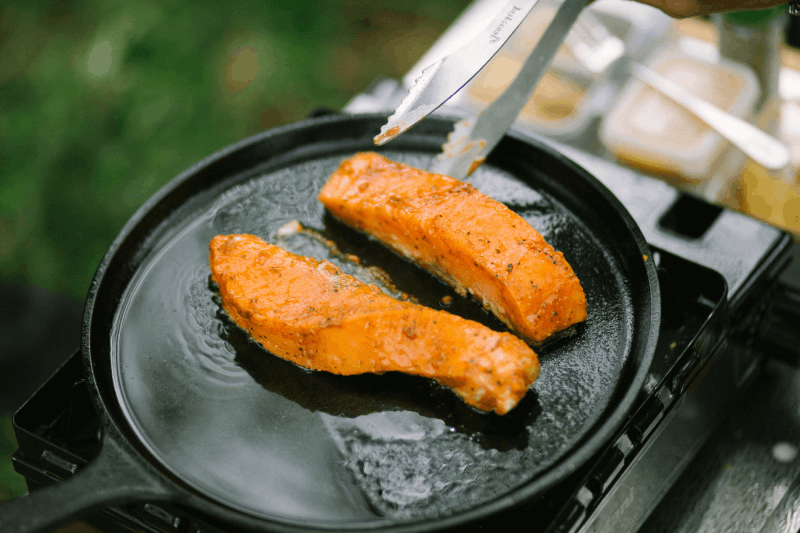
To achieve a perfect steak or chop, searing in a cast iron pan (Maillard reaction) is essential, but this process is prone to errors in a camping environment. The biggest mistake is not having the pan hot enough; if the pan is not smoking when you add the meat, it will result in steaming instead of searing. The second mistake is pressing down on the meat as soon as it is placed in the pan. If you do not want to lose the juices of the meat, do not touch it. The third mistake is exceeding the capacity of the pan. If you place too much cold meat in the pan at once, the heat of the cast iron will suddenly drop, and the meats will start to release their juices. It is necessary to cook in batches and allow the pan to heat up again after each batch. Finally, do not cut the seared meat immediately; since cast iron transfers heat very well, allowing the juices to redistribute requires at least a five-minute resting period on the camping plate.
What Should Be Done to Prevent Vegetables from Darkening and Losing Vitamins?
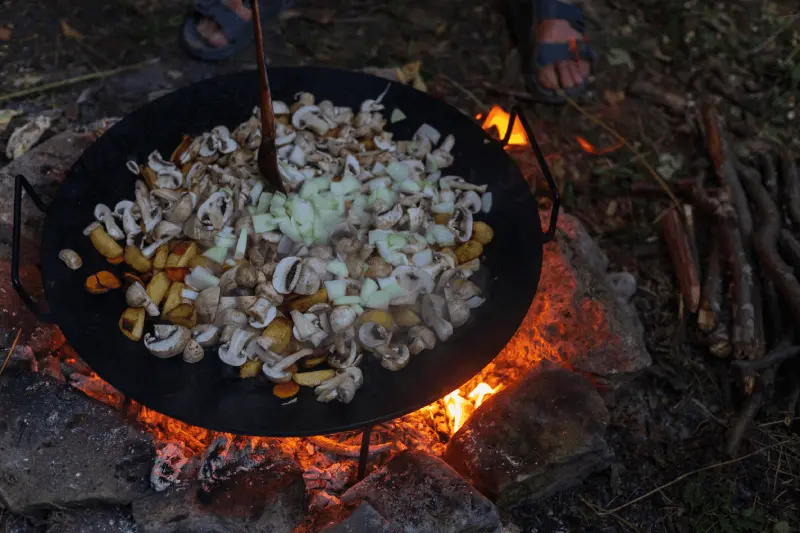
Cooking vegetables in a cast iron pan requires skill because high heat quickly breaks down the cellular structure of the vegetables. To prevent vegetables from darkening, you should add them to the cast iron pan last. Especially leafy greens can darken within seconds. Cooking vegetables briefly over high heat using the "sautéing" method preserves their color and ensures they remain crisp. The wide surface of the cast iron pan allows vegetables to cook without piling on top of each other; thus, they will fry instead of steaming. If you have previously cooked meat in your pan, turning the vegetables in the meat's fat adds incredible depth of flavor. However, pre-cooking hard vegetables like carrots or potatoes and bringing them to camp or adding a small amount of water/broth while cooking in the cast iron pan and covering it to steam is a professional technique that minimizes vitamin loss.
Is It Possible to Clean Without Water at the Campsite?
Sometimes the place where you are camping may have limited water, or you may not want to deal with water in winter conditions. Fortunately, the cast iron pan is the most suitable equipment for dry cleaning. Immediately after cooking, while the pan is still hot, scrape the surface with a coarse paper towel or wooden spatula. Then pour some coarse salt into the pan. The salt will absorb the oil and scrub away food residues. After thoroughly spreading the salt around the pan with a cloth, discard it. As a final step, apply a thin layer of vegetable oil to the surface with a clean cloth. This method both sterilizes your pan and prepares it for the next use. The antiseptic properties of salt and the high heat of the fire prevent the formation of microbes. This "dry cleaning" method is even healthier than washing the seasoning layer of the cast iron pan with water.
What Maintenance Should Be Done Before Long-Term Storage?
Putting your cast iron pan directly into the cupboard after returning from camping can lead to a rusty surprise the next time you use it. When you arrive home, wash the pan thoroughly with warm water (using detergent sparingly or not at all). Then place it over the stove and heat it until all the moisture evaporates. While the pan is still warm, spread a high smoke point oil (a few drops are sufficient) all over it and continue heating until it starts to smoke. This is the "top-up seasoning" process. Before removing the pan, make sure to let it cool to room temperature. If you are going to stack your pans, place a paper towel between them; this prevents scratching and creates an additional layer of protection against rust by absorbing any moisture in the environment. A cast iron pan is a heirloom that is passed down from generation to generation as long as it is cared for with love and attention.
How to Safely Carry a Heavy Pan?
Cast iron pans are heavy, and this weight can disrupt the balance of your camping backpack. When carrying the pan, you should place it in the middle section of your backpack closest to your body; this maintains the center of gravity. If you are camping with gear, place the pan at the bottom or in a stable corner to avoid crushing other delicate equipment (glass cups or lanterns). It is wise to cover the handle with an old sock or a special leather cover to prevent it from damaging your backpack. Additionally, you can save space by filling the inside of the pan with small camping supplies (spice containers, cleaning cloths). However, remember that these items need to be wrapped in a cloth to avoid scratching the inner surface of the pan. Remember, while cast iron pans can be heavy, the flavors and reliability they offer are worth every gram.
What Is the Effect of Wood Type on Food Flavor?
The fuel you use while cooking in a cast iron pan determines the final notes of the dish. Coniferous trees like pine burn very quickly, produce a lot of smoke, and can impart a resinous, sometimes unpleasant taste to the food. The best woods for cooking are hardwoods like oak, beech, hickory, or fruit trees (apple, cherry). These woods create embers that last longer and provide more stable heat. Especially hickory embers, when placed under the cast iron pan, provide intense and clean heat. The smoke from fruit trees adds a subtle sweet aroma to the meats. If you leave the lid of your pan slightly ajar, this smoke aroma will infuse into the food. The campfire is not only a heat source but also the most important seasoning for your food; therefore, you should pay attention to what you are burning as much as what you are cooking.
What Are the Differences Between Cast Iron Pot (Dutch Oven) and Pan?
In camp cooking, cast iron pans (skillets) and cast iron pots (Dutch ovens) serve different roles. The pan is designed for quick cooking at high heat, searing, and breakfasts; its sides are low, allowing moisture to evaporate quickly and creating crispy textures. The Dutch oven, on the other hand, works like a pressure cooker or oven due to its deep structure and heavy lid; it is ideal for stews, soups, and breads. If you are only going to carry one piece of cast iron equipment, choosing a model that is deeper and can also fit the lid of the pan increases versatility. In some camping sets, the lid of the Dutch oven can be used as a pan when turned upside down; these "combi-cooker" models are invaluable for campers. Choosing which one to take based on your menu will lighten your load and optimize your cooking efficiency.
Can the Seasoning Process Be Renewed in the Field?
If you notice that your pan is starting to stick or its surface has dried out during your camping trip, you can refresh the seasoning process over the campfire. First, heat the pan thoroughly over the fire and remove any residues. Then apply a thin film of oil that you have spread on a clean cloth to the inner surface of the pan. Keep the pan over the embers until it starts to smoke, and repeat this process a few times. This quick maintenance done in the field will repair the protective layer of the pan and ensure that your next meal is more successful. The key to remember is not to use too much oil; excess oil will create a layer of buildup instead of polymerizing. A little oil, high heat, and patience are enough to restore your cast iron pan to its original performance, even in the field.
Why Is Using Heat-Resistant Gloves and Long-handled Spatulas Life-Saving?
Cast iron pans retain heat not only at the bottom but also intensely at the handle. The handle of a cast iron pan can reach the same temperature as its body, which can lead to serious burns. When working over a campfire, you should always use heat-resistant leather gloves or specially made silicone/leather handle covers for cast iron pans. Additionally, using a long-handled professional spatula (poker) to change the position of the pan or adjust the embers protects your hands from direct radiant heat. Having an accident in a camping environment can end your vacation. Therefore, do not fall for the misconception of "I can hold it with a towel"; a wet towel can transfer heat within seconds, causing a steam burn. Safety equipment should be an integral part of your camping gear when using cast iron pans.
What Are the Priorities for Preparing Breakfast in a Cast Iron Pan?
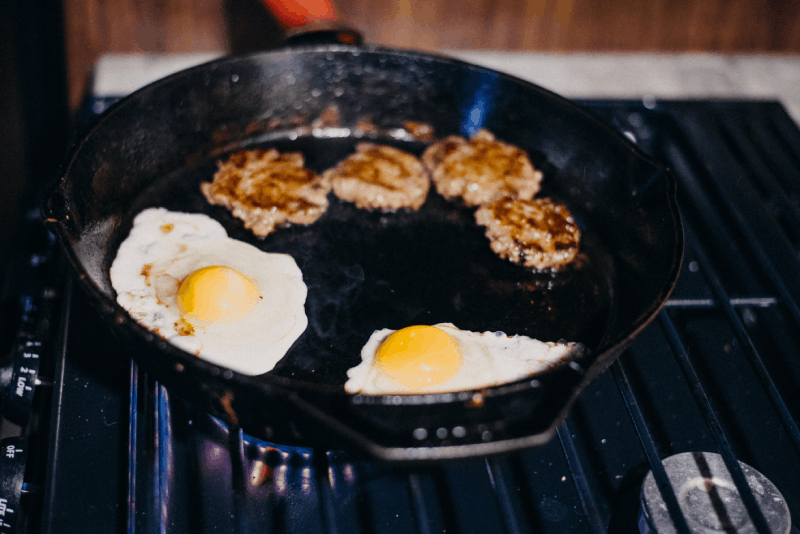
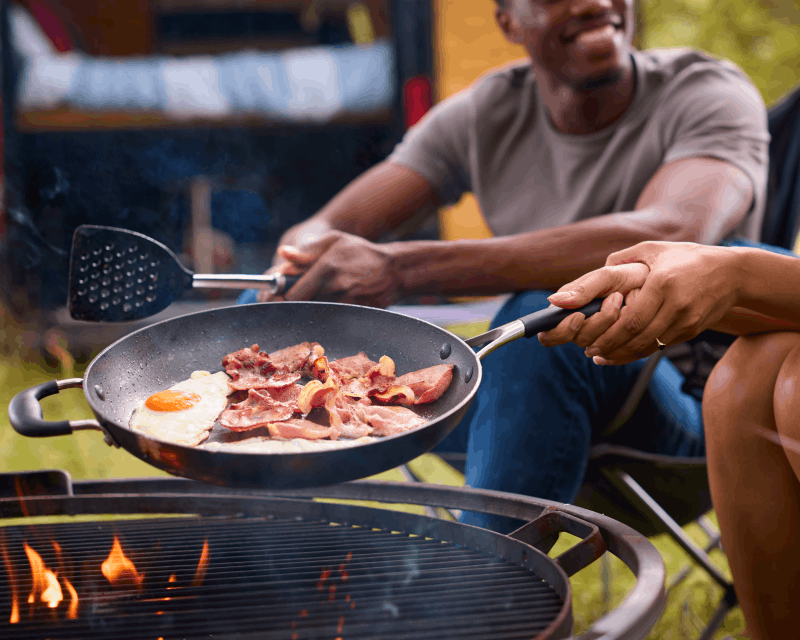
The cast iron pan breakfast, which is indispensable for camping mornings, turns into a feast with the right order. First, you should cook fatty meats like bacon or sausage to create a natural flavor base and oil layer in the pan. Frying potatoes in the aromatic fat left by these meats will double the flavor you achieve. You should add the eggs last, when you have slightly reduced the heat; the residual heat of the cast iron is sufficient to cook the eggs perfectly without burning them. If you are making pancakes or crepes, make sure the surface of the pan is smooth and do not forget to lightly oil the surface with each batch. Since the cast iron pan retains heat, serving directly from the pan will keep the food warm for a long time, even in the cool morning air of the camp.
How to Reduce the Effect of Wind on Cooking Time?
In open air, wind is the biggest enemy of campfires because it constantly pulls heat away from under the pan and uncontrollably increases the burning rate. On a windy day, while cooking in a cast iron pan, building a natural stone wall around the fire or using a collapsible aluminum windbreak can increase heat efficiency by up to 50%. Wind also cools the upper surface of the pan, extending cooking time; therefore, always try to use a lid. If you cannot find a lid, covering the pan with a piece of aluminum foil will also do the same job. Trapping heat inside neutralizes the negative effects of wind by activating the oven-like properties of the cast iron. Maintaining a steady heat is the first rule for achieving delicious results in a cast iron pan, and blocking the wind is the biggest step in that direction.
Is It Harmful to Leave Food in the Pan After Cooking?
Leaving food in the cast iron pan after cooking with the thought of "I'll clean it later" is not a good idea for either your pan or your health. The moisture and acids in the cooked food begin to penetrate the seasoning layer as the pan cools down. This can lead to rust formation on the pan and impart an unpleasant, heavy metallic taste to the food. Especially at night, the condensation that occurs due to the drop in temperature at the campsite accelerates rust formation when combined with the food left in the pan. As soon as cooking is finished, you should transfer the food to plates or storage containers and clean the pan while it is still warm. Cleaning a hot pan is ten times easier than cleaning a cooled one. A disciplined cleaning routine is the most important habit that extends the life of your cast iron pan.
Does a "Flavor Memory" Really Exist in Cast Iron Pans?
The "flavor memory" often discussed among cast iron users is actually based on scientific principles. The polymerized oil layer on the surface of the pan traps aromatic fatty acids from previous cookings at a microscopic level. This does not mean that the pan is dirty; rather, it means that the pan has "aged." Each searing process adds subtle notes of these aromas to the new food, creating depth. Especially when combined with the smoke from the campfire, this process reveals why food cooked in a cast iron pan is not the same as food cooked in a non-stick pan at home. To preserve this flavor accumulation, it is essential to avoid harsh chemicals and always nourish your pan with natural oils. The older your cast iron pan is and the more camping it has seen, the richer its flavor profile will be.
Why Should You Avoid Different Types of Metals?
Thin aluminum or cheap stainless steel pans may seem attractive in camp cooking because they are lightweight. However, in high and uneven heat sources like campfires, these metals quickly create "hot spots" that cause food to burn. Aluminum has very high thermal conductivity but low heat capacity; meaning it cools down the moment you pull it off the fire. Cast iron, on the other hand, is the opposite; it is heavy, absorbs heat slowly but never releases it. Additionally, thin metals can warp at high temperatures, while a quality cast iron pan maintains its shape up to a thousand degrees. Cooking outdoors should be a pleasure, not a survival struggle with burnt food. Therefore, despite its weight, choosing cast iron is a strategic decision that elevates the quality of your camp cooking to the highest level.
What Is the Secret to Making Pizza with Cast Iron Pan Over Campfire?
Making pizza in a cast iron pan is one of the most impressive things you can do at the campsite. The secret lies in treating the pan like a "stone oven" (pizza stone). First, heat your pan very well over the embers. Before spreading the dough in the pan, sprinkle plenty of cornmeal on the bottom; this prevents sticking and ensures the bottom becomes extra crispy. After adding the toppings, cover the pan with its lid and place plenty of glowing embers on top of the lid. While the bottom of the pizza cooks with the heat from the cast iron, the cheese on top will melt and brown with the radiant heat from the embers you placed on the lid. In about 10-12 minutes, you will have a delicious, wood-smoked pizza that is better than the best pizzeria outside. This technique is the most concrete evidence of why cast iron pans are referred to as "portable ovens."
Is It Possible to Make Desserts in the Wild with Cast Iron Pan?
Many people think of cast iron pans only for meat and savory dishes, but they are also a great tool for desserts. Especially in the campfire, desserts like "paz paz" (skillet cookie) or fruity "cobblers" are unforgettable. After caramelizing slices of apple or peach in the pan with butter and brown sugar, you can add ready-made cookie dough or crumbled oat mixture on top and cover it to bake. The even heat provided by the cast iron ensures that the sugar caramelizes slowly without burning. When making desserts, make sure that the pan does not carry strong garlic or onion odors from previous meals; for this, it is a good idea to lightly boil the pan with water before making desserts. The caramelized fruits combined with the smoky aroma of the wood fire will be the greatest reward that crowns your camping night.
Are Double Handle Models or Single Long Handle Models More Practical?
When it comes to camping use, the physical design of the pan directly affects ergonomics. Long-handled pans allow you to intervene without getting too close to the fire and have high maneuverability. However, the long handle can create a risk of tipping over on an uneven surface due to shifting the center of gravity outside. Double-handled (short-handled) models are more stable, sit more securely on the camp stove or over the embers, and take up less space in your backpack. However, these models expose your hands to heat more when removing them from the fire. The ideal solution is to choose a long-handled model and use a support that balances the weight of the handle or to prefer "helper handle" models that offer the advantages of both designs. Making a choice based on your cooking style and carrying capacity determines your comfort in the field.
How to Perform Deep Cleaning After Returning Home from Camping?
The cast iron pan that has endured the harsh conditions of camping deserves a little "spa" day at home. When you bring the pan home, use hot water and a stiff brush to clean off the residue and burnt oils from the campfire. If there are any rough spots on the surface, you can lightly go over them with fine sandpaper or steel wool. Then, dry the pan completely and oil it with a thin layer of quality oil (preferably flaxseed oil). Bake the pan upside down in the oven at 230-250 degrees for an hour. This process rebuilds the protective layer worn during camping and deeply seals the pores of the pan. Turn off the oven and allow the pan to cool slowly inside. This deep cleaning will keep your cast iron pan fresh and rust-free until your next adventure.
How to Choose Equipment That Will Be Passed Down to Future Generations?
A quality cast iron pan can last for over a hundred years if well cared for. When purchasing a cast iron pan, you should look at the quality of the cast iron and the surface finish rather than the brand. Vintage pans tend to have thinner and smoother surfaces, making them lighter and less prone to sticking. Modern cast iron pans are generally heavier and more textured; however, textured surfaces also fill with oil over time, becoming smoother. Ensure that the bottom of the pan is completely flat and does not have any cracks or casting defects. The handles should be securely attached to the body (preferably made from a single piece of cast iron) for safety. Buying a good cast iron pan is not just about acquiring a kitchen tool; it is about obtaining a living piece of history that carries a camping story in every line that you will pass down to your children and grandchildren.
Why Are Patience and Observation Essential in the Art of Cooking with Cast Iron?
Cooking with a cast iron pan over a campfire is essentially a form of meditation. In an environment without digital thermometers and timers, you will learn to use your senses. The tone of the sizzle when the meat hits the pan tells you the heat; the change in the aroma of the food signals the beginning of caramelization; the color of the smoke reveals the state of the fire. Cast iron pans do not like to be rushed. They take time to heat up, cool down, and require patience to cook food. However, this slowness allows the spirit of camping to infuse into the food. This primal connection established with fire, iron, and food is the very peace we seek when escaping the chaos of modern life. Therefore, stand by your pan, watch the fire, and witness the miracle of cast iron.