What Does the 750 Kg Limit Mean for Class B License Holders?
According to the traffic regulations applied in Turkey and the European Union standards, drivers with a Class B license can tow trailers and caravans with a loaded weight of less than 750 kilograms without needing any additional license class. This limit refers to the total "maximum loaded weight" reached not only by the empty weight of the caravan but also by the water tank, kitchen utensils, personal belongings, and furniture you will put inside. If the value in your caravan's registration or type approval document is 750 kg or less, you can legally take it on the road with your standard car license. Caravans falling into this category are generally registered with an O1 certificate and are exempt from obligations such as taxes and inspections, which provides a significant economic advantage for beginners.
How Can O1 Certified Trailers Be Used with a Class B License?
O1 certified caravans are trailers that do not exceed a maximum weight of 750 kg, and these vehicles are among the most popular options that can be used with a Class B license. There is no need to add an "E" notation to your license to use these caravans; however, the most important consideration is the capacity of the towing vehicle. The towing capacity specified in your vehicle's technical documents must be compatible with the weight of the caravan. O1 certified caravans are unplated and are used with the towing vehicle's plate attached to the back of the caravan. Under traffic insurance, damages that may occur while the caravan is attached to the vehicle are generally covered by the towing vehicle's insurance. Nevertheless, for safety, it is vital to ensure that the weight center of the caravan is correctly adjusted and that the installation of the vehicle's tow hitch has been planned for towing safety.
Is a BE License Required for Caravans Over 750 Kg?
If your dream caravan exceeds the 750 kg limit, meaning it falls into the O2 category, your Class B license alone will not be sufficient. In this case, it is a legal requirement for drivers to take a driving course and obtain a "BE" class license. The BE license allows you to tow trailers weighing between 750 kg and 3500 kg with a Class B vehicle. Many users mistakenly believe that a caravan with an empty weight of 730 kg is sufficient; however, inspections look at the caravan's actual weight at that moment or the maximum capacity on the registration. If the technical capacity of the caravan is determined to be 1000 kg, you will need a BE class license even if you are towing it empty. Otherwise, you may face heavy fines for driving with insufficient licensing and could be denied insurance coverage in the event of an accident.
What is the Maximum Loaded Weight Limit for Class B License Holders When Using a Motorhome?
Unlike trailers, motorhomes are independent vehicles with their own engine and driving mechanism. According to the Highway Traffic Regulation, vehicles with a Class B license can use vans or panel vans with a maximum loaded weight not exceeding 3,500 kilograms (3.5 tons). This means that most standard motorhomes on the market (such as Fiat Ducato, Peugeot Boxer, or Volkswagen Crafter models) can be driven with a Class B license. However, the vehicle must be registered as a "Special Purpose Vehicle - Caravan" in the M1 category on its registration. If the motorhome is built on a large truck chassis and weighs over 3,500 kg, you will need to have a C or C1 class license as it will fall into the truck category. Before making a purchase, you should always check the vehicle's weight on the scale and the registration data.
Can the Total Weight of the Vehicle and Caravan Exceed 3500 Kg When Towing a Caravan?
The most confusing technical detail regarding the Class B license is the issue of "Combination Weight." The regulation states that you can use combined vehicles with a total weight not exceeding 3,500 kg with a Class B license. However, there is an exception here: If the trailer you are towing is under 750 kg (O1 certified), even if your towing vehicle is 3,500 kg, a Class B license is still considered sufficient for a total of up to 4,250 kg (3,500 + 750). However, if the caravan you are towing is over 750 kg (O2 certified), a BE class license is required if the total loaded weight of the vehicle and caravan exceeds 3,500 kg. Some large SUVs already weigh around 2.5 tons; if you tow a 1.2-ton caravan with such a vehicle, the total weight reaches 3.7 tons, making the standard B license invalid. When calculating, you must always add the maximum loaded weights of both vehicles.
What License is Required to Tow a Caravan with Vehicles Registered as Trucks?
Many users tow caravans with vehicles registered as "Pick-up" or trucks, such as the Ford Ranger or Toyota Hilux. As long as these vehicles are registered as trucks, they can be used with a Class B license. However, the 750 kg rule applies again when using a towing caravan. You can tow a caravan under 750 kg with a truck-registered vehicle using a Class B license. However, since trucks have high own weights and carrying capacities, when combined with a caravan over 750 kg, the total combination weight can quickly exceed the 3,500 kg limit. In this case, a "BE" license becomes essential. Additionally, when towing a caravan with commercially registered vehicles, whether additional commercial qualifications such as an SRC certificate are required depends on whether your usage purpose is "personal"; generally, no additional commercial documents are required for recreational uses.
How Do Braked and Unbraked Caravan Selections Affect License Requirements?
While the braking system in caravans does not directly change the license class, it is a technical factor that determines the category of the caravan and thus the need for a license. Generally, caravans under 750 kg (O1) can be unbraked; however, for safety reasons, braked systems are preferred even at this weight. In all caravans over 750 kg (O2), having a reverse-acting (torsion) braking system is a legal requirement. Having a braked caravan increases driving safety by reducing the load on the towing vehicle's braking system. From the driver's perspective, controlling an unbraked caravan is more challenging and increases the risk of "snaking" during sudden stops. If your license is Class B and you are looking at a caravan within the 750 kg limit, choosing a braked O1 model is the most logical decision; as this choice saves you from additional license costs and ensures safe travel on the road.
Is a Class B License Sufficient for Converted Motorhomes from Panel Vans?
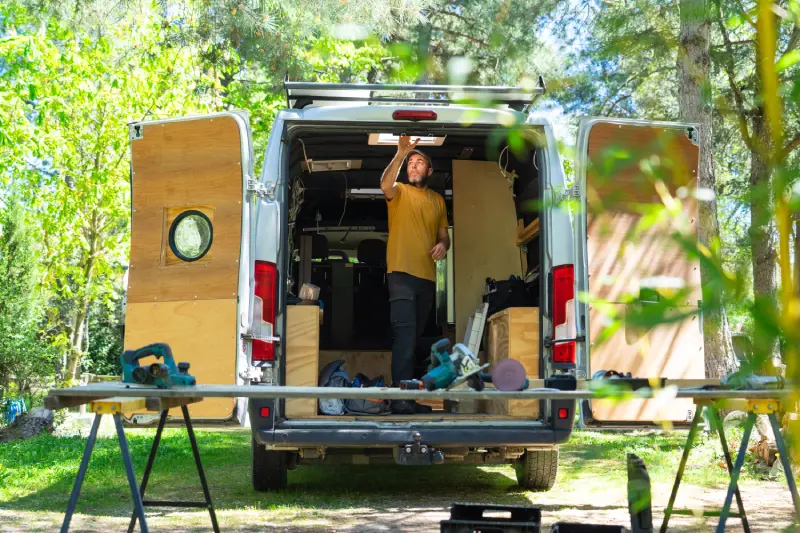
The most critical point when converting a panel van into a caravan is the total weight the vehicle reaches after the conversion. The insulation materials, wooden furniture, appliances, water tanks, and kitchen equipment added to the empty weight of a standard panel van significantly increase the vehicle's weight. If the vehicle's weight remains below 3,500 kg after the conversion and is registered as "Special Purpose Vehicle," your Class B license is entirely sufficient to drive this vehicle. However, especially in larger vehicles (17 cubic meters and above), using excessive heavy materials may result in the vehicle exceeding 3.5 tons. In this case, the vehicle approaches a "truck" status, and it is legally impossible to use it with a Class B license. Therefore, choosing lightweight materials (such as poplar plywood) during the conversion phase is a vital strategy to stay within license limits.
Is a C Class License Required for Motorhomes Over 3.5 Tons?
Yes, if the maximum loaded weight of a motorhome exceeds the 3,500 kg limit on the registration, this vehicle is technically classified as a truck. To use such massive caravans, American-style large motorhomes, or vehicles like the Mercedes Unimog, you must obtain a C1 or C class license. The C1 class license allows you to drive vehicles weighing between 3,500 kg and 7,500 kg, while the C class license covers heavier vehicles. The annual inspection costs, highway tolls, and speed limits for these vehicles also differ from standard cars. Using these vehicles with a Class B license falls under "insufficient license" and can lead to serious penalties during a traffic police inspection.
Why Are Folding Caravans Advantageous for Class B License Holders?
Folding caravans (Pop-up campers) typically remain below the 750 kg limit due to their lightweight structures, making them a perfect fit for Class B license holders. They reduce wind resistance during travel due to their low profile and provide fuel savings. Additionally, since they do not obstruct the view behind the towing vehicle, driving is much easier. These caravans are usually sold with an O1 certificate; therefore, they do not have issues like license plate issuance, inspection visits, or MTV payments. Once you arrive at the campsite, their rising roofs provide a spacious living area. Due to both the ease of licensing and practical use, folding models are the most effortless way for small engine or lightweight vehicle owners to start their caravanning adventure.
What Are the Restrictions Imposed by a Class B License When Using Off-Road Caravans?
Off-road caravans designed for challenging terrain conditions can be heavier than standard caravans due to their reinforced chassis and heavy suspension systems. If the off-road caravan you choose is under 750 kg, you can enter the depths of nature with a Class B license. However, professional-grade, fully equipped off-road models typically weigh between 1,000 kg and 1,500 kg. At this point, having a "BE" license becomes mandatory. The weight of the caravan during off-road driving directly affects the vehicle's towing performance and maneuverability. A driver with a Class B license may struggle with situations such as the vehicle getting stuck or the caravan pulling the vehicle backward on uneven terrain while towing a heavy off-road caravan. Therefore, you should consider not only legal limits but also your technical skills and the off-road capacity of your vehicle.
Is the Tow Hitch Certification and Planning Process Independent of the License Type?
The process of installing the tow hitch on your vehicle for towing a caravan is a technical procedure completely independent of the license class you hold. Whether you have a Class B or BE license, the tow hitch installed on your vehicle must have a TSE-approved project, and this must be recorded on your registration. Towing a caravan with an unapproved and unregistered tow hitch is considered a defective act according to traffic rules and carries heavy penalties. Additionally, the suitability of the tow hitch is checked during inspections. Even if your license is suitable for the weight of the caravan, if your tow hitch is not registered, you cannot legally tow a caravan. Another point to pay attention to in this process is the vertical loading capacity of the tow hitch; this capacity must be compatible with the load on the caravan's tow bar (usually between 75-100 kg).
What is the Importance of License Type in Caravan Insurance and Comprehensive Coverage?
Insurance companies primarily check whether the driver has the authority to use that vehicle or the combined vehicle in the event of an accident. If you get into an accident with a caravan weighing 1,200 kg and your license is only Class B, the insurance company will refuse to pay for damages by emphasizing the "invalid license" clause. Even damages you cause to the other party may come out of your pocket. O1 caravans under 750 kg are generally covered by the traffic insurance of the towing vehicle, but it is wise to include the caravan in comprehensive coverage for full protection. O2 caravans over 750 kg have separate mandatory traffic insurances due to their own separate registrations. When obtaining a comprehensive policy, you should ensure that your license class is suitable for the weight of the caravan and check whether the policy includes the "towing a caravan" clause.
Is a Class B License Valid for Towing a Caravan Abroad?
Turkish licenses, especially the new chip types, are valid in many countries that are parties to the Vienna Convention. You can use a caravan under 750 kg that you can use in Turkey with your Class B license under the same rules throughout Europe. However, in some European countries, inspections regarding the combination weight (vehicle + caravan) are much stricter, and scale checks are conducted rigorously. If the weight values on your caravan's registration are within limits and it is detected that it exceeds 750 kg during weighing, local authorities can impose heavy fines and may not allow you to continue your journey due to the lack of a BE license. To avoid issues at border crossings, ensure that your caravan's O1 or O2 certificate, tow hitch project, and green card insurance are complete. Additionally, some countries may require different highway devices (Vignette) for vehicles over 3.5 tons.
What Driving Techniques Should Beginners with a Class B License Use When Towing a Caravan?
Towing a caravan with a Class B license requires a very different set of attention and skills compared to driving a standard car. The first rule is to double the following distance, as the weight of the caravan will extend the braking distance. There is a "cutting in" effect with the caravan in turns; therefore, entering turns at a wider angle prevents the trailer from swaying. Reversing maneuvers are the most challenging aspect; you should remember that the caravan will react contrary to your steering movements and practice in a wide open space. Especially in windy conditions, passing large vehicles can create a vacuum that causes the caravan to sway (snaking). In such cases, do not panic brake; gradually lift your foot off the gas and wait for the vehicle to return to a straight line. By loading correctly (keeping the weight close to the axle and low to the ground), you can maximize driving stability.
What Are the Differences Between Old Type Class B Licenses and New Type Licenses?
Old type pink Class B licenses obtained before 2016 seem to grant broader rights according to the regulations of that time, but in the new system, all licenses are categorized according to European standards. The towing rights of old license holders are also subject to the existing 750 kg rule. However, drivers who replace their old licenses with new chip cards can see more clearly which vehicles they can use in the categories section on the back of their licenses. In the new system, the "BE" class is now defined as a completely separate area of expertise. If you have an old type license and are planning to enter a comprehensive caravan world, renewing your license and taking the BE exam if necessary will ensure you are legally protected on both national and international roads. Completing standard procedures such as a health report and biometric photo is sufficient during the card renewal process.
Is the Empty Weight of the Caravan or the Maximum Loaded Weight Taken into Account?
This question is the most commonly misunderstood technical detail in the caravan world. In traffic inspections and legal regulations, the determining value is not the current empty weight of the caravan but the "Maximum Loaded Weight" value written on its registration or conformity document. For example, your caravan's empty weight may be 700 kg, but if the registration capacity is determined to be 1000 kg, this caravan falls into the O2 class and requires a BE license to tow. The driver's defense that "it is currently empty, it weighs 720 kg when weighed" is legally invalid. License classification is based on the vehicle's technical capacity. Therefore, when purchasing a caravan, you should check the maximum weight value in the technical document provided by the manufacturer (COC document) to ensure your license is suitable. If you only have a Class B license and do not want to obtain another license, you must ensure that the caravan is registered with a maximum weight of 750 kg.
Do Speed Limits Change for Class B License Holders When Towing a Caravan?
A vehicle towing a caravan is no longer considered a standard passenger car and transitions to the status of a "trailer vehicle." According to the Highway Traffic Regulation, the speed limits for trailer vehicles are generally 10 kilometers lower than those for vehicles of the same type without trailers. For example, if the speed limit for cars on the highway is 130 km/h, this limit is not 120 km/h for the same car with a caravan attached but is much lower (generally around 90-100 km/h for trailer vehicles). Having a Class B license does not change this rule. Not adhering to speed limits not only results in fines but also disrupts the aerodynamic balance of the caravan, leading to serious accidents. The turbulence created behind the caravan can cause you to lose control of the vehicle at high speeds. Therefore, maintaining a patient speed is the golden rule of caravanning.
Is a Class B License Sufficient for Commercial Use of a Caravan?
If you are using your caravan not just for personal vacations but as a business model (for example, for caravan rental or as a mobile office), additional responsibilities are added to your license class. The B or BE rules apply according to the weight of the caravan; however, when commercial activity is involved, the driver may need to possess qualifications expected from commercial vehicle drivers, such as an SRC certificate and a psychotechnical report. Additionally, if the towing vehicle to which the caravan is attached is registered as "commercial," rules such as the annual technical inspection requirement come into play. While it is quite a free area to tow a caravan under 750 kg with a Class B license for personal use, you should remember that inspections may be stricter when invoices and commercial profits are involved. If you are going to use a caravan for your own business, it is beneficial to learn the current commercial usage conditions from your relevant professional chamber and traffic registration units.
What Are the Limits of a Class B License When Parking and Maneuvering a Caravan in the City?
Even small-sized caravans used with a Class B license can face serious challenges in city traffic. Not taking into account the width and length of the caravan while making turns in narrow streets can cause damage to parked vehicles. Legally, your Class B license grants you the right to use this vehicle, but this does not mean you can enter everywhere. Many city centers have areas where towing vehicles are prohibited or closed parking lots with height restrictions. Additionally, parking your caravan on the street may be considered "occupation" according to some municipalities' regulations and may lead to the vehicle being towed. In urban uses, always plan your route in advance, avoid entering dead-end streets, and always maneuver with a helper (spotter). Remember, your license grants legal permission, but the responsibility for safe driving lies entirely with you.
What Modifications Can Help Reduce the Weight of the Caravan to Stay Within Class B License Limits?
If your caravan is very close to the 750 kg limit and you do not want to obtain a BE license, you can make some weight-reducing modifications inside the caravan. For example, using much lighter lithium (LiFePO4) batteries instead of heavy lead-acid batteries can save you 20-30 kg. Removing heavy MDF materials used in furniture and replacing them with marine plywood or aluminum-framed structures can provide significant weight reduction. Keeping the water tank empty while traveling and filling it only upon arrival at the campsite is also the most effective way to keep the combination weight low. However, you should be careful not to disturb the center of gravity of the caravan while making these modifications. Additionally, the changes made should not conflict with the data in the caravan's type approval document (characteristic features). A lighter caravan not only provides a licensing advantage but also extends the lifespan of your towing vehicle's clutch and braking system.
What Are the Best 5 Caravan Types Compatible with Class B License for Beginners?
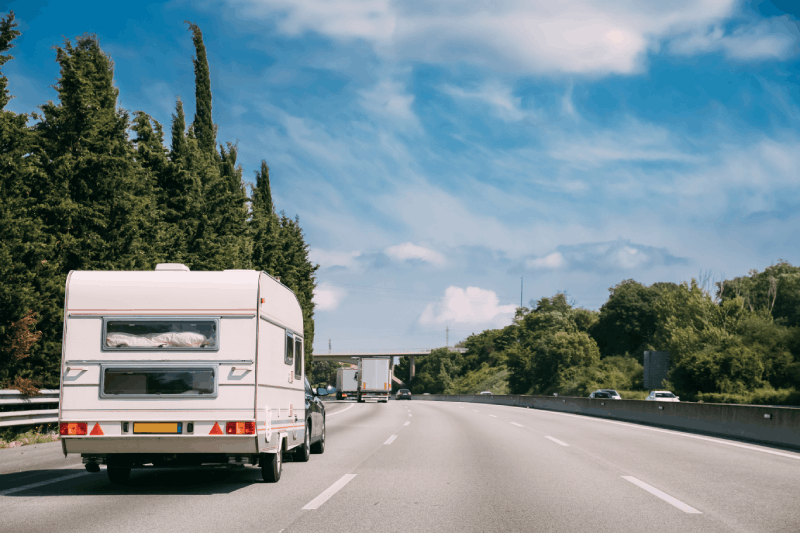
For those looking for caravans compatible with a Class B license, the first option is definitely minimalist trailers with an O1 certificate. In second place are "Teardrop" caravans that offer ease of towing and low wind resistance. Thirdly, for families needing space, foldable models (Pop-up) that can raise their roofs are ideal. Fourthly, compact motorhomes converted from panel vans that are kept under 3.5 tons are included. Finally, "Truck Camper" models mounted on the beds of pickup trucks, which are not classified as trailers, are also options that can be used with a Class B license without exceeding the vehicle's load limit. The common feature of these models is that they do not incur additional license costs and can be towed even with standard cars. Depending on your needs, you can choose one of these types to quickly and legally start your caravanning adventure.
Why is the Height of the Tow Hitch Ball Important for Towing a Caravan?
No matter what your license is, for safe towing, the caravan must be level with the ground. If the height of the tow hitch ball is too high, the back of the caravan approaches the ground; if it is too low, there is a risk of the front of the caravan scraping the ground. In lightweight caravans used with a Class B license, this situation directly affects the towing dynamics; as lightweight caravans are more sensitive to instability. If the front of the caravan is low, it causes excessive load on the rear axle of the towing vehicle and weakens the contact of the front wheels with the ground; this jeopardizes steering control. The ideal height is when the caravan is perfectly horizontal, and the vertical load (S-load) on the tow bar complies with the manufacturer's recommendation (usually between 50-80 kg). This technical adjustment allows you to combine the legal rights granted by your license with a safe physical reality.
How Do Accessories Not Listed on the Caravan Registration Affect the Weight Limit?
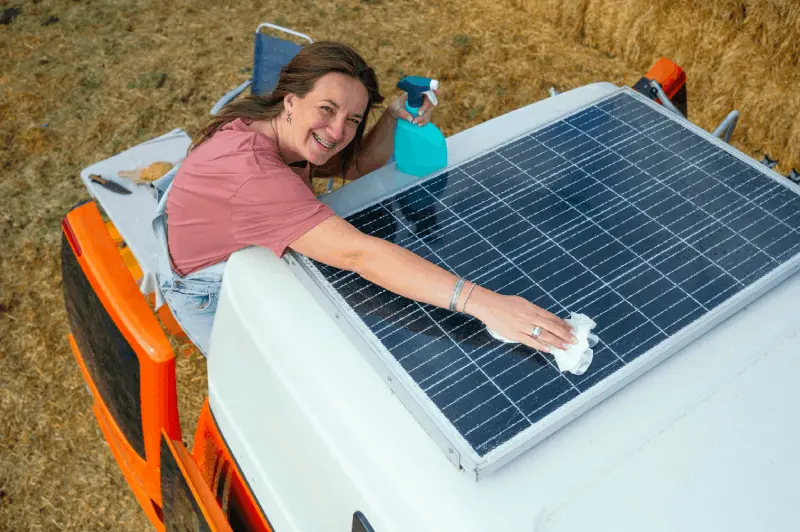
Accessories you add later to your caravan, such as solar panels, awnings, movers (systems that move the caravan remotely), air conditioning, and large cylinders, are not included in the empty weight listed on the registration. However, these accessories can add a total of 100-150 kg of extra weight. If you have an O1 certified caravan and it is produced at the limit (like 740 kg), after adding these accessories, your caravan's actual weight could rise to 850-900 kg. During a scale check or post-accident inspection, even if it says O1 (under 750 kg) on the registration, if it is determined that the vehicle actually has O2 class characteristics, your Class B license may be considered invalid. Therefore, before adding accessories, you should always learn the net carrying capacity of the caravan and, if necessary, opt for lighter equipment. Many caravan users think, "what is written on the registration is what it is," but if the physical reality exceeds the legal limits, the responsibility lies with the driver.
Do the Length and Width of the Caravan Change License Requirements?
While the direct change in license class does not occur due to the dimensions of the caravan, the size of the caravan is subject to the "size limits" in the Highway Traffic Law. In Turkey, the maximum width of a trailer can be 2.55 meters, and the maximum height can be 4.00 meters. The total combination length (vehicle + caravan) cannot exceed 18.75 meters. Most caravans towed with a Class B license are well below these limits, but custom-built massive Tiny House-style caravans may challenge these limits. Structures exceeding a width of 2.55 meters fall into the "special load" status and may require special permits and escort vehicles for towing. From the driver's perspective, as long as the caravan's weight is below 750 kg, a Class B license is sufficient regardless of how long the caravan is; however, maneuvering a long caravan is much more challenging than a short one and requires experience. Your driving skills may become a more significant constraint than the legal limits of your license.
Is the 100 Km/h Speed Approval (Tempo 100) Valid in Turkey for Caravans?
In Europe, especially in Germany, caravans that meet certain technical conditions (shock absorbers, tire age, stabilizers, etc.) are granted a "Tempo 100" certificate allowing them to travel at 100 km/h. However, in Turkey, the traffic regulation is based on general speed limits, and there is currently no legal equivalent for such special certification. When towing a caravan with a Class B license, regardless of how much technological equipment your vehicle has, you must adhere to the speed limits indicated on the signs or defined for trailer vehicles. High speeds disrupt the weight transfer of the caravan and jeopardize driving safety, regardless of your license class. Instead of speeding, enjoying the road and traveling at a safe speed aligns more with the philosophy of caravanning. Additionally, high speeds can increase fuel consumption by more than 50%.
How Do the Age and Pressure of Caravan Tires Affect Driving Safety?
Caravan tires often wear out not from mileage but from sitting and exposure to sunlight. Even if the tread depth looks good, tires older than 5-6 years carry a risk of bursting. Your license may legally allow you to tow a caravan, but if you lose control of the caravan due to a tire blowout, your license becomes irrelevant. The tire pressure values specified by the manufacturer (usually between 50-65 PSI) should be maintained; under-inflated tires can overheat and cause swaying. Before hitting the road, always check the sidewalls of the tires for cracks and ensure your spare tire is in good condition. Proper tire maintenance is one of the most critical mechanical preparations that ensure your journeys with a Class B license go smoothly.
Is It Mandatory to Extend the View Angle of Side Mirrors When Towing a Caravan?
If the caravan you are towing is wider than your vehicle and you cannot see the back of the caravan with your standard rearview mirrors, installing additional external mirrors is both a safety and legal requirement. This need is generally not felt in small caravans used with a Class B license, but mirror extensions are mandatory for caravans with a width of 2.20 meters and above. Towing a vehicle you cannot see behind you is considered "endangering traffic safety." Additionally, minimizing blind spots while maneuvering and changing lanes prevents accidents. Practical devices that attach to the existing mirrors or mudguards are available on the market. Maximizing your view angle increases the confidence of especially novice caravan drivers and reduces the risk of accidents.
What Motor Braking Techniques Should Be Considered When Descending and Ascending Hills with a Caravan?
Descending long and steep hills with a vehicle towing a caravan can cause the braking system to overheat and fail after a while (Fading). In this case, regardless of your license class, you should downshift to utilize engine braking. The rule of "downshift while descending" is a lifesaver in caravanning. When ascending, you should keep the engine at the right RPM to prevent overheating and not overstrain the vehicle. If your vehicle is automatic, it may be healthier to switch to manual mode to prevent constant gear shifting. Although lighter caravans used with a Class B license put less strain on the engine, it is always essential to check the cooling system and brakes. Especially on the slopes of the Aegean and Mediterranean, frequently checking the temperature gauge prevents your journey from being interrupted.
What is a Stabilizer and Why Should Every Class B Driver Use One?
A stabilizer is a mechanism placed on the tow head of the caravan that tightens the tow ball with its internal pads. This system mechanically prevents the caravan from swaying left and right (sway) and significantly increases driving comfort. Class B license holders generally use lighter vehicles, so the effects of wind or road irregularities on the rear caravan are more pronounced. Using a stabilizer mitigates these effects, ensuring the caravan stays in line with the vehicle. While many modern caravans come standard with stabilizers, they may not be found in older or economical models; in such cases, retrofitting is the best investment you can make. For a safe caravan journey, a stabilizer is as important a protector as the legal limits of your license.
Can the Expression "Under 750 Kg" in the Caravan World Change in the Future?
Within the European Union, various lobbying activities and draft studies are underway to increase the weight limits for caravans and trailers (for example, raising the 750 kg limit to 1000 kg). The main reason for this is that modern safety equipment and insulation materials have made caravans heavier. However, the 750 kg limit is currently definitive in Turkey, and no changes are anticipated in the near future. While it is essential to keep track of legislative changes, it is safest to act according to the existing laws when purchasing a caravan. If flexibility comes in the future, it will open the door for Class B license holders to more equipped caravans. Until then, traveling with the limits of your Class B license while being aware of and respecting these limits is the best way to protect both your wallet and your safety.