
Why Does the Internet Infrastructure in Caravans Not Work Efficiently with Standard Solutions?
Caravans are typically made from signal-blocking materials such as metal or fiberglass. This structure creates a Faraday cage effect, making it difficult for external base station signals to enter. The small internal antennas found in standard phones or portable jet modems struggle to overcome these barriers. Especially in nature, the increased distance to base stations and geographical obstacles such as hills and trees weaken the signal. For efficient internet in a caravan, professional outdoor antenna systems are needed to receive the signal from outside the vehicle and transfer it inside with minimal loss. These systems not only capture the signal but also stabilize unstable connections, ensuring a continuous data flow.
What Are the Benefits of Omni-Directional Antennas Mounted on Caravan Roofs?
Omni-directional antennas, which have a 360-degree coverage angle, are the most popular choice among caravan users. The biggest advantage of these antennas is that you do not need to know where the base station is when you park your caravan. They collect signals from all directions, making them ideal for users who need internet while constantly moving or changing locations. Thanks to their aerodynamic "puck" designs, they present a low profile on the roof. However, since they focus in all directions, their gain values are generally lower compared to directional antennas. Still, they are the most practical and hassle-free solution for urban and roadside camping.
Are Directional Antennas Necessary for Capturing Signals in Remote Villages?
If the place you are camping is far from the base station or the signal is very weak, directional antennas can be a lifesaver. These antennas can capture weak signals from base stations at great distances by focusing their energy in a single direction. They can come in the form of LPDA or panel antennas. However, there is a disadvantage to this system: when you park your caravan, you need to manually turn the antenna towards the direction of the base station. While this may seem like a cumbersome process, it is often the only way to get internet in deep forests or secluded bays. Because they provide high gain, they allow you to establish a stable connection even in areas where the signal is almost nonexistent.
How Does 4x4 MIMO Antenna Technology Double Data Speed?
MIMO (Multiple Input Multiple Output) is a technology that increases speed and stability by using multiple data paths simultaneously. The 4x4 MIMO antennas designed for caravans actually contain four different antenna elements within a single housing. When used with modern 4G LTE Cat 18 or 5G modems, this allows data to be received and transmitted simultaneously over these four paths, dramatically increasing bandwidth. Even in areas where signal quality is moderate, they offer much higher download speeds compared to single antennas. Especially for digital nomads who conduct video conferences or work with large files, the 4x4 MIMO structure is considered the gold standard for caravan internet and eliminates bottlenecks in the system.

How Should Indoor Antenna Distribution Be in Fiber-Reinforced Fiberglass Caravans?
While fiberglass caravans transmit signals better than metal caravans, the insulation materials and furniture used inside can disrupt signal distribution. When you bring in a strong signal from outside, you should use a quality indoor distribution antenna to spread it throughout the caravan. Ceiling-mounted dome antennas or wall-mounted panel antennas are suitable for this job. The placement of the indoor antenna should be as far away from the outdoor antenna as possible or behind an insulation layer; otherwise, feedback issues known as "oscilloscope" can occur, and signal quality may degrade. To avoid creating dead zones inside the caravan, placing the antenna in a central location, usually close to the seating and working area, maximizes efficiency.
Which Cables Should Be Preferred to Prevent Signal Loss in Metal Bodied Panel Vans?
The weakest link in signal amplification systems is usually the cable. The signal strength decreases (attenuation) along the cable running from the outdoor antenna to the modem. In a metal-bodied panel van, running the cable too close to the chassis can cause interference. Therefore, low-loss coaxial cables such as LMR-240 or better LMR-400 should be used. These cables are thick and rigid, but the amount of decibels (dB) they lose per meter is very low. Using thin, cheap RG-58 cables can make even the highest quality antenna inefficient. The cable length should be kept as short as possible, and high-quality SMA or N-type connectors should be used at all connection points. It should be remembered that every joint and every extra meter steals a piece of the signal.
What Is the Range Capacity of High-Gain Antennas?
The power of antennas is usually expressed in dBi. Options range from 3 dBi to 12 dBi. High-gain antennas can "see" further in the horizontal plane but have narrower vertical angles. This means that a 12 dBi antenna in a flat plain can pull a signal from a base station 30-40 kilometers away, while it may struggle to get a signal in hilly or mountainous terrains. For caravan users, the most balanced option is usually antennas in the 5-7 dBi range. This value allows you to cover distance while keeping the vertical angle of the signal wide enough to prevent disconnection in uneven terrains. Antennas with very high dBi values are ideal only for those camping in very flat areas.
What Are the Best Mobile Antennas to Prevent Internet Dropouts While in Motion?
When traveling from one base station to another, the signal continuously changes (handover). To prevent the connection from dropping during this process, antennas that can perform "active tracking" or very wide-opening omni-directional antennas are required. Antennas designed to automotive standards, which are low wind-resistant and vibration-resistant, are specifically designed for this job. The circuits inside these antennas filter out noise during moments when the signal weakens, ensuring that the modem maintains its connection to the base station. Especially when using maps or working in the passenger seat, these types of mobile antennas ensure that the internet flows without interruption. While magnetic base antennas are practical, fixed models that are screwed into the roof by drilling always perform better for reliable and consistent mobility.
Is Poynting or Panorama Antenna More Efficient for Caravans?
These two brands are giants in the caravan internet world. Poynting is known for its high efficiency and signal isolation under challenging conditions, especially with its "MIMO-3" series. Its antennas give a more technical engineering product feel and offer broad frequency band support. Panorama Antennas stands out with models like "The Great White," which are more compact, aesthetic, and easy to install. Which brand is more efficient depends on the brand of the modem you are using and the frequency structure of the area you are camping in. Poynting is generally considered one step ahead for future 5G transitions with its broader frequency range support (600MHz - 3800MHz), while Panorama aligns with more urban and modern caravan designs. Both are top-tier solutions on the market.
How to Choose Antennas Compatible with LTE Cat 18 Modems?
Cat 18 and above modems can use the "Carrier Aggregation" feature to receive data from different frequency bands simultaneously. To fully utilize this capacity, your antenna must support the entire range from 700MHz to 3500MHz, not just specific bands. Additionally, these modems typically come with 4 antenna inputs. If you connect an older antenna with only 2 antenna inputs, you will limit the modem's performance by 50%. Therefore, if you are using a Cat 18 modem, you must choose an outdoor antenna that supports 4x4 MIMO and is wideband. This combination is the only one that allows you to approach the fiber internet speeds of your home in your caravan.
What Is the Difference Between a Wi-Fi Extender and an External Antenna in a Caravan?
A frequently confused topic among caravan users is the difference between a Wi-Fi extender and a cellular (LTE/5G) antenna. A Wi-Fi Extender captures an existing Wi-Fi signal at the campsite and distributes it inside. In other words, your internet source is the modem at the campsite. An external antenna (LTE/5G) pulls internet directly from the cellular network. Since Wi-Fi at campsites is often very slow and of poor quality, professional users prefer to set up their own cellular antenna systems. However, some high-end caravan antennas have hybrid designs that can capture both cellular signals and campsite Wi-Fi simultaneously (all-in-one). These hybrid models offer maximum flexibility by allowing you to benefit from both worlds.
Are Parabolic Antennas a Practical Solution for Caravan Users?
Parabolic antennas can achieve enormous gain values (24 dBi and above) thanks to their dish structures resembling satellite receivers. Theoretically, they can pull signals from 100 kilometers away. However, it is hard to say they are practical for caravans. They have a very narrow focus angle, and even a few degrees of error can cause the signal to be completely lost. They are also greatly affected by wind, and fine-tuning is required for each installation. Still, for a digital nomad who will remain fixed in the same secluded location for months, a parabolic "grid" antenna can turn a place without internet into a digital office. For those who frequently change locations, this type of antenna is nothing but a waste of time.
How to Minimize the Negative Impact of Antenna Cable Length on Signal Quality?
As cellular signals travel through cables, they lose energy by converting it into heat. This loss increases as the frequency rises (for example, in 5G). To minimize cable length, it is most logical to place the modem on the roof of the caravan, right below the antenna. If you need to install the modem at a distant point, active signal boosters should come into play to prevent signal loss. However, boosters can be expensive. The most economical and efficient solution is to connect the modem to the antenna with a short cable and distribute the internet inside the caravan via Wi-Fi or Ethernet cable. Unlike coaxial cables, Ethernet cables carry data digitally, so they do not experience any speed loss up to 100 meters.

Are 5G Compatible Caravan Antennas Considered an Investment for the Future?
5G networks are rapidly spreading worldwide, and for caravan users, this means lower latency and higher speeds. Ensuring that an antenna you purchase today supports 5G frequencies (especially the 3.5GHz - 3.8GHz band) will keep your system up to date for the next 5-10 years. 5G compatible antennas are optimized not only to receive 5G signals but also to process 4G signals more efficiently. In a time when technology is advancing so rapidly, purchasing an antenna that only supports 4G may save money in the short term but could require a complete system overhaul in the long run. Therefore, when making an investment today, 5G support should definitely be sought.
Can Starlink Satellite Internet and Traditional LTE Antennas Be Used Together?
Starlink offers tremendous speed wherever the sky is clear, but it may experience interruptions in wooded areas or during heavy cloudy weather. In professional caravan setups, Starlink is used as the main internet source, while an LTE antenna and modem are configured as a "backup" (failover). Some smart routers automatically switch to cellular data via the LTE antenna when Starlink goes down, so the user may not even notice the connection has dropped during a meeting. This hybrid setup is the ultimate solution for those seeking complete reliability in their caravan. Since Starlink consumes a lot of electricity, LTE antenna systems that consume less power are more suitable for being left on overnight.
Is It Possible to Install an Antenna Without Drilling a Hole in the Caravan Roof?
Many caravan owners hesitate to drill holes in their vehicle's roof. In this case, magnetic base antennas or vacuum mounts can be used. However, magnetic antennas only work on metal roofs and pose a risk of flying off at high speeds. Another alternative is to mount the antenna using clamps on solar panel brackets or roof rails. For cable entry, refrigerator ventilation or existing solar panel cable channels can be used. However, for the best signal isolation and waterproofing, professionally drilling the roof using special waterproof "cable entry gland" boxes always yields the longest-lasting and most stable results. When quality polyurethane mastic is used for waterproofing, drilling a hole is no longer a risk.
How to Prevent Antenna Corrosion in Coastal and Humid Areas?
Saltwater vapor and humidity are the biggest enemies of antenna connection points. Connectors that oxidize over time can slow down signal transmission and even completely stop it. For those who love camping by the sea, antennas that meet "marine grade" standards should be preferred. The outer casing of these antennas is made from UV-resistant and corrosion-resistant ASA plastic. During installation, applying silicone grease over the connectors or wrapping them with self-amalgamating insulation tapes is crucial. This small precaution can extend the lifespan of the system from a few years to ten years.
How to Prevent Electronic Devices Inside the Caravan from Interfering with Antenna Signal?
Caravans are small enclosed spaces, and microwaves, inverters, LED light ballasts, and refrigerator motors operating in this space emit electromagnetic interference (EMI). If the cable of your internet antenna runs right next to an inverter, you may see mysterious drops in your internet speed. Keeping signal cables at least 10-15 cm away from power lines and using shielded cables whenever possible can solve this problem. Additionally, placing the modem away from metal surfaces and electrical panels ensures that the device's internal electronics operate cooler and interference-free.
How Should Antenna Configuration Be in Dual SIM Usage?
Base stations of different operators can be located at different positions and frequencies. If your caravan has a Dual SIM router, you can ensure that both operators benefit from the same antenna. However, in this case, it is crucial that the antenna performs equally well across all bands. Some advanced users create a hybrid setup using one high-gain directional antenna and one omni-directional antenna. The modem can intelligently choose which antenna or SIM card to use based on the current signal quality. This setup guarantees uninterrupted internet, especially in border crossings or rural areas where the coverage areas of different operators change.
What Device Should Be Used to Receive Free Wi-Fi Signal from Campsites Effectively?
Campground Wi-Fi is usually located in the office building, and it is impossible to connect to this network with your phone while parked 200 meters away. In this case, a Wi-Fi antenna or devices like "Wi-Fi Ranger" that support 2.4GHz and 5GHz frequencies should be used. These devices capture weak Wi-Fi signals from outside and amplify them, broadcasting a new and strong local network inside the caravan. This way, you save on your own cellular data plan. However, for security reasons, it is recommended to use a VPN when connecting to such networks, as campground networks are often unsecured and vulnerable to attacks.
Are LPDA Antennas a Lifesaver in Challenging Geographical Conditions?
LPDA (Log-Periodic Dipole Array) antennas are modern and enclosed versions of the famous "fishbone" shaped antennas. They offer high gain over a very wide frequency range. They are typically mounted on a telescopic pole in a caravan. If you are in a valley and the signal is only bouncing off a mountain above, you can establish what seems like an impossible connection by turning the LPDA antenna towards that point. Wind loads can be a bit high, so the pole may need to be lowered in stormy weather. Still, for extreme campers and true wilderness enthusiasts, LPDA antennas are a "heavy weapon" that must be in the backpack.
How to Balance Caravan Energy Consumption and Active Signal Boosters?
Active signal boosters consume electricity to operate, unlike passive antennas. They continuously draw power to amplify the signal. Since energy (Battery/Solar) is a limited resource in a caravan, the consumption of these devices should be kept in mind. Most quality boosters operate on 12V and can consume 1-2 Amper per hour. If your solar energy is limited and the weather is cloudy, it is logical to turn the system on only when you need to use the internet. Passive antennas (those connected directly to the modem) do not consume any electricity; they only operate with the energy the modem itself uses. Therefore, when establishing a balance between efficiency and energy savings, a passive but high-quality antenna system is always more environmentally friendly.
How to Conduct "Dead Zone" Analysis in Antenna Placement?
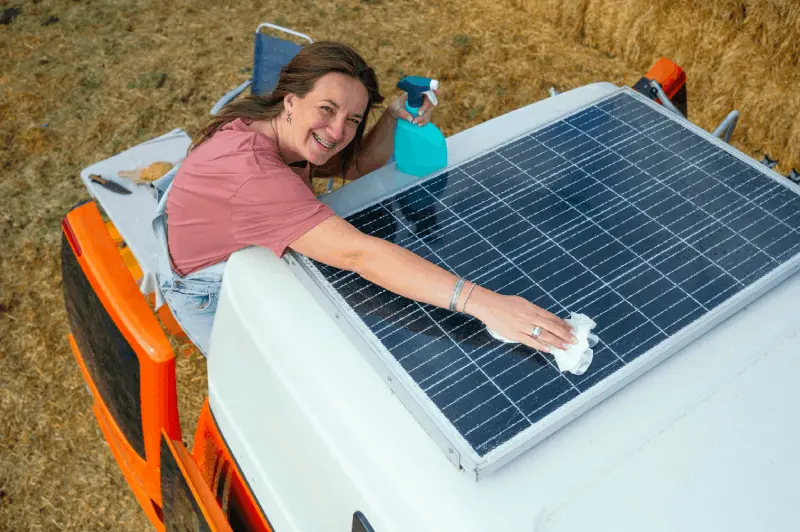
When placing the antenna on the roof of the caravan, every centimeter matters. If solar panels cast a shadow over the antenna, it can physically block not only electricity generation but also signal reception (especially at frequencies of 5GHz and above). The antenna should be placed at the highest point on the caravan roof, at least 50 cm away from other metal components (such as the air conditioning unit, TV antenna, etc.). This is called "ground plane" analysis. Some antennas require a metal surface to operate, while others can work on any surface (plastic/fiber). You must check whether your antenna is "ground plane independent" and choose the installation location accordingly.

How to Set Up the Most Reliable Internet for Mobile Office Users in a Caravan?
For mobile office users, latency (ping) and stability are more important than speed. To avoid dropping out in the middle of a Zoom meeting, a professional outdoor antenna supporting 2x2 or 4x4 MIMO, a 4G/5G router of Cat 12 or higher, and ideally a system containing two SIM cards from different operators should be set up. In this system, antennas should be positioned at least 1-2 meters apart or well isolated within a single body. Additionally, "band locking" should be implemented through the modem's software to prevent the modem from continuously switching base stations. This technical setup elevates the caravan to the level of a reliable corporate office.
Which Antenna Type Is Suitable for Low Frequency Bands (B20/800MHz)?
In rural areas, operators typically use the 800MHz (Band 20) frequency because this low frequency can travel long distances and navigate around obstacles. However, since the wavelength of this frequency is long, the physical size of the antenna elements also needs to be larger. Small, thin, and sleek antennas generally perform poorly at these low frequencies. If you plan to spend most of your time in rural areas, you should prefer physically larger antennas that promise high performance in the 700-900MHz range in their technical specifications. This is the most basic technical solution to the question, "Why isn't it working on the mountain top?"
What Is the Minimum Antenna Power Required to Watch Smart TV and Broadcast in a Caravan?
To watch 4K broadcasts via Netflix or YouTube, you need a stable speed of at least 25 Mbps. It is difficult to achieve this speed with just the weak signal inside the caravan. An outdoor MIMO antenna with 5 dBi gain usually comfortably meets this need. Improving the signal-to-noise ratio (SINR) of the antenna prevents the "buffer" indicator from appearing in the middle of the video. If you are a family with children and multiple devices will be streaming at the same time, a 4x4 MIMO antenna and a high-category modem are no longer just a luxury but a necessary infrastructure component to achieve home comfort.
What Should Be Done to Protect Antenna Systems from Lightning and Static Electricity?
Installing a metal-containing antenna at the highest point of the caravan theoretically creates a lightning rod. Although rare, static electricity buildup can burn the sensitive circuits of the modem. To prevent this, a small device called a "Lightning Arrestor" can be attached to the antenna cable. This device directs excess current through a cable to the caravan's chassis and then to the ground (if the caravan's feet are on the ground). Additionally, physically disconnecting the antenna connection from the modem during stormy weather is the cheapest and most effective protection method. This safety measure can be life-saving, especially when camping alone in open terrain.
Do DIY Antenna Systems Meet Expectations in Caravans?
You can find many DIY antenna projects made from pot lids or copper wires on the internet. These may work in laboratory settings or very specific situations. However, in a constantly shaking vehicle like a caravan, exposed to external factors (rain, UV, wind), these temporary solutions often end in disappointment. Professional antennas are engineering products where frequencies are calculated with millimeter precision and waterproofing is tested. The cost of losing work for a digital nomad is much higher than the money spent on a professional antenna. Therefore, for critical tasks, it is most logical to turn to certified products from reliable brands instead of DIY.
Are Indoor Antennas Installed on Caravan Windows Worth the Money?
Thin "film" antennas or small suction cup sticks installed on windows are better than having no antenna at all. However, even insulation films on the glass can cut this signal by 30-50%. If you do not want to drill into the caravan, they may be a solution for starters, but they do not provide a real signal boost. They generally perform similarly to standard antennas that come out of the modem's box. If you want a real performance difference, you must transition to outdoor units that bypass signal-blocking glass and wall layers. These "toy" level products only work when you are very close to the base station.
What Are the Antenna Strategies to Reduce Internet Costs During Long-Term Caravan Travels?
A powerful antenna not only increases speed but also reduces costs. How? In areas with weak signals, the modem consumes more power, and when the connection drops, data packets are resent repeatedly, which can increase data usage. More importantly, with a quality antenna, you can capture the free but distant Wi-Fi from the campsite and not waste your expensive mobile data. Additionally, with a good antenna, you gain the freedom to choose cheaper data plans since you can capture signals from even the cheapest (but less base station) operator. In other words, a good antenna is an investment that pays for itself in a few months.
Why Is an External Antenna Input Important in Caravan Routers?
Many cheap mobile modems sold on the market (like Vınn/Jet) do not have external antenna inputs. You will have to use these devices inside the caravan, and you will experience signal loss. A router used in a caravan must have external antenna inputs of TS-9 or SMA type. With these inputs, you can connect the cable from your professional antenna outside directly to the heart of the modem. Checking the number and type of antenna inputs during the purchasing phase is the first step to ensure the compatibility of the entire system. Devices with SMA inputs are more robust and industrial standard in terms of cable connection.
Are Signal Boosters or Direct Antenna Connections Better?
Signal boosters (Booster/Repeater) receive the external signal and broadcast it inside again. This ensures that your phone receives a signal everywhere, but the data speed may sometimes decrease (also increasing noise). A direct antenna connection (connecting the antenna directly to the modem) provides the highest data speed. If your goal is just to talk on the phone, a booster is good. But if your goal is fast internet, connecting an external antenna directly to a quality 4G/5G router always provides superior performance and lower latency. Most caravan experts recommend the direct connection method for data-focused living.