Why is Electricity Saving in a Caravan So Important?
Saving electricity in a caravan not only extends the life of your batteries but also determines how long you can spend in nature. When you are away from the grid, the amount of energy you have is limited, and the more efficiently you use this energy, the longer you can stay in remote bays or deep in the forest without heating. When energy management is not done, problems such as the lights going out at the most needed moment or the refrigerator stopping become inevitable. Additionally, using energy efficiently reduces your carbon footprint on the environment and helps you adopt a more sustainable lifestyle. In caravanning, energy is the key to comfort and safety; therefore, calculating every watt is fundamental to being a professional caravanner.
Does Increasing the Efficiency of Solar Panels Contribute to Savings?
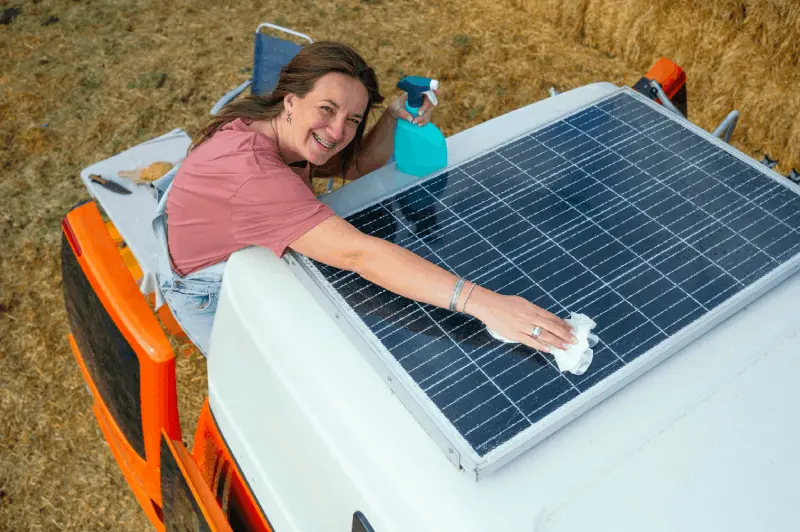
Absolutely yes. Solar panels are the main energy source of the caravan, but it is not enough for the panels to just exist. Even the smallest shadow falling on the panels can reduce the overall efficiency by up to 40%. Therefore, the panels need to be regularly cleaned of dust, bird droppings, or leaves. Additionally, the installation angle of the panels is also important. Since the angle of the sun changes seasonally, using adjustable feet to position the panels perpendicular to the sun maximizes energy production. Producing more energy charges your batteries faster and prevents the system from being strained. Saving is not just about not spending; it is also about incorporating the existing resource into the system in the most efficient way. Clean and properly positioned panels ensure you get the maximum benefit from free energy.
Does Using an MPPT Charge Controller Prevent Electricity Waste?
Many new caravanners prefer PWM charge controllers because they are cheaper; however, this is a big mistake. MPPT (Maximum Power Point Tracking) devices increase the current while converting the high voltage from the solar panel to the voltage needed by the batteries. During this process, energy loss is at a minimum level. PWM devices pull the panel voltage directly to the battery voltage, converting excess energy into heat and wasting it. By using MPPT, you can transfer up to 30% more energy from your panels to your batteries. This allows you to charge your batteries even on less sunny days and thus significantly reduces your dependence on external sources, resulting in substantial savings. The MPPT, being a technological investment, is the most important saving element of the system in the long run.
How Does Battery Selection Affect Energy Efficiency in a Caravan?
The type of battery used in the caravan determines how much of the energy you can actually use. You can only use about 50% of the capacity of traditional flooded or gel batteries; drawing more than that damages the battery. However, in Lithium (LiFePO4) batteries, this ratio is around 90-95%. This means that with a smaller and lighter lithium battery, you can obtain more energy than a much heavier gel battery. The internal resistance of lithium batteries is also lower, which means less energy loss while charging and that the voltage remains stable during use. An efficient battery system allows you to utilize every drop of stored energy. Properly managing the depth of discharge of the batteries and opting for high-efficiency technologies is a fundamental saving strategy for the caravan's electrical system.
How Much Energy Can Be Saved by Choosing LED Lighting?
Using old halogen or incandescent bulbs for caravan lighting literally throws energy out the window. LED bulbs consume 80% to 90% less electricity compared to traditional bulbs. For example, a halogen bulb that consumes 20 watts can provide the same light with just 2-3 watts using an LED bulb. Considering that there are many lighting points in a small area like a caravan, the total consumption of lights that stay on throughout the evening can create significant differences. Additionally, LEDs do not produce heat; this helps prevent the internal temperature of the caravan from rising during the summer months, contributing to less operation of the refrigerator or fans. Using regional control and dimmable LEDs in lighting allows you to turn off unnecessary lights, taking savings to a higher level.
What Methods Should Be Followed to Save Electricity When Using a Refrigerator?
The refrigerator is the device that runs 24 hours a day in the caravan and consumes the most energy. The first rule for saving is to choose a refrigerator with a compressor suitable for the caravan. Keeping the ventilation vents at the back of the refrigerator clean and allowing hot air to escape easily ensures that the compressor runs less frequently. Avoiding unnecessary opening and closing of the refrigerator, filling the empty spaces inside with water-filled containers (to maintain cold) and not putting food in the refrigerator until it reaches room temperature are basic precautions. Additionally, since the air is cooler at night, slightly lowering the refrigerator's thermostat can save energy during critical night hours when the batteries are needed. A well-insulated refrigerator and proper usage habits can reduce daily total consumption by 25%.
Does Using an Inverter Cause Electricity Losses?
Inverters convert the 12V DC current in the battery to 220V AC current for household use. However, this conversion process inherently creates a loss. The efficiency of most inverters is around 85-90%; that is, for every 100 watts consumed, 10-15 watts are lost as heat. More importantly, inverters draw continuous current from the battery even when "idle" (when no devices are connected). Therefore, it is vital to completely turn off the inverter when it is not in use. Whenever possible, using direct 12V output adapters for charging phones, tablets, and laptops helps keep the inverter out of the circuit. Reducing the number of devices that require 220V is one of the smartest energy-saving moves that can be made in a caravan.
How is Caravan Insulation Related to Electricity Savings?
Many people think insulation is only related to heating, but insulation is also the unsung hero of electricity savings. In a well-insulated caravan, the internal heat is retained for a longer time. Insulation that prevents outside heat from entering during the summer significantly reduces the energy the refrigerator consumes to cool. If you are using air conditioning or a fan in the caravan, insulation shortens the operating time of these devices. In winter, it minimizes the need for electric blankets or fan heaters. Using quality insulation materials like elastomeric rubber foam or felt ensures that the caravan works like a thermos, greatly contributing to your energy budget. Insulation is the first line of defense against wasted energy.
Does Using a Diesel Heater Save Electricity?
Using an electric heater for heating is a disaster for caravan batteries. A heater that draws 1000-2000 watts can drain even the strongest battery bank in a few hours. This is where Webasto-type diesel heaters come into play. These devices burn diesel to produce heat, using electricity only to ignite the fuel and operate the fan that blows hot air inside. The current drawn by a diesel heater is very low (averaging 1-3 Amper per hour). By transferring the heating need to fuel, you can reserve your electricity for critical tasks like lighting and food preservation. Especially if you are camping in winter, using a diesel heater will be the most efficient part of your energy management.
Do Standby Devices Drain Batteries?
Yes, these energy thieves known as "vampire loads" quietly consume your batteries in the caravan. Televisions, satellite receivers, some radio systems, and even the indicator lights in USB ports continue to draw small amounts of current even when they appear to be off. While these amounts may be negligible at home, in a 12V system, a 0.5 Amp leak drawn continuously for 24 hours means a daily loss of 12 Amp-hours. To prevent this loss, you should use physical on-off switches for every main consumption group in the caravan. Unplugging unused devices or completely cutting the circuit with a switch ensures that you find your batteries fuller than expected when you wake up in the morning.
Does Choosing the Right Cable Size Prevent Energy Losses?
The thickness of the cables used in the electrical installation directly affects efficiency. In 12V systems, since the current (Amper) is high, it encounters resistance while being transmitted through the cables, and this resistance causes voltage drop. If your cable is thinner than necessary, the 12.8V electricity coming from the battery can drop to 11.5V by the time it reaches the device. This situation causes both inefficient operation of the device and energy waste due to the cable heating up. Especially in devices that draw high current like inverters, refrigerators, and water pumps, using appropriately thick cables for distance and current prevents energy from being lost as heat. Proper cabling is the lifeblood of the installation and preserves the overall efficiency of the system.
How is Energy Efficiency Achieved in Kitchen Appliances?
Using electric devices (water heater, toaster, electric stove) for kitchen tasks in the caravan requires a lot of energy. The first suggestion for saving is to do high-heat tasks on a gas stove. Using gas for brewing tea or cooking reduces your electrical load. If you must use electric devices, you should prefer low-wattage (for example, 600W-800W) travel-type models and operate these devices only during the hours when the sun is at its peak and the panels are providing direct energy. Additionally, using a pressure cooker reduces cooking time, thus decreasing the total energy requirement in the kitchen (including indirect effects like fans or lighting).
How Do Smart Energy Monitoring Screens (Shunt) Help Save?
You cannot manage what you cannot measure. A "Battery Monitor" or "Shunt" system tracks every milliampere entering and leaving your battery. With these screens, you can instantly see how much electricity each device is consuming. For example, seeing a light you left on or what the inverter is drawing from the battery encourages you to be more careful. Additionally, seeing the state of charge (SoC) of your batteries in percentage helps you plan your energy budget. If you see that the battery level is dropping, you can take precautions by turning off some devices. Smart monitoring systems increase the energy awareness of the caravanner, establishing a psychological and technical discipline for savings.
What Should Be Done to Save When Charging Laptops and Phones?
Laptops are among the most energy-consuming electronic devices in caravans. Typically, we turn on the inverter to charge the laptop and plug in a 220V adapter. However, this means raising 12V to 220V and then lowering it back to a lower voltage inside the laptop, resulting in energy loss at every step. Instead, using DC-DC laptop chargers (like PD-supported Type-C adapters) that operate from the direct 12V socket is much more efficient. The same applies to phones; using vehicle-type fast charging sockets eliminates the need for an inverter. Additionally, putting devices in airplane mode or keeping them closed while charging will shorten the charging time and reduce the total current drawn.
How Does the Location Where the Caravan is Parked Affect Electricity Production?
Where you park your caravan is critical for electricity production, not just for saving electricity. Parking under a shady tree in the summer keeps the interior cool and ensures the refrigerator runs less; however, in this case, the solar panels remain out of service. To solve this dilemma, you can use portable solar panels or position the caravan in such a way that it receives full sun for at least a few hours. In winter, on the contrary, you should prefer completely open areas to take advantage of every minute of sunlight. Choosing a location that receives wind can help you benefit from a wind turbine if available, but it may also cause the caravan to cool down more in winter. Positioning determines how you will harvest the free energy that nature offers.
Is It Possible to Save Electricity When Using a Water Pump (Hydrofor)?
The hydrofor is a device that activates every time you turn on the tap and draws significant current. To prevent the hydrofor from running unnecessarily, you can add an "expansion tank" (accumulation tank) to your system. This small tank traps water pressure inside and prevents the hydrofor from constantly cycling during small water uses (like washing hands). This both extends the life of the hydrofor and saves from the high current drawn each time. Additionally, aerators attached to faucet tips enrich the water flow with air, allowing you to achieve the same efficiency with less water (and thus less hydrofor operation). Water savings directly translate to electricity savings in the caravan.
What Are the Efficient Ways to Use Ventilation Fans?
Caravan ceiling fans (roof vents) are great for refreshing and cooling the air inside; however, running them continuously at the highest speed is unnecessary energy consumption. Most modern fans have different speed settings. Running at a low speed for a long time consumes less energy and is quieter than running at high speed for a short time. Additionally, running the fan in reverse (drawing in outside cool air instead of exhausting) during the evening hours quickly cools the interior, reducing the need for a fan. Keeping the fan blades clean also contributes to energy efficiency by preventing the motor from straining.
How to Protect Batteries When Shore Power is Available?
When you are connected to the grid at a campsite, the system should switch from "saving mode" to "charging and maintenance mode." During this process, using a quality AC-DC charger fills your batteries with the correct voltage profile and extends their lifespan. From a savings perspective, you should handle all high-consumption tasks (charging laptops, heating water, high-brightness lighting) while connected to the grid. This way, when you go out into nature, your batteries will be fully charged and healthy. Using grid electricity to run a 12V refrigerator through a 220V adapter (if this feature is available) allows you to rest your batteries and keep them as backup power only.
How to Plan Energy According to Seasonal Changes?
In winter, the days are short, the angle of the sun is equal, and the sky is cloudy. During this period, saving electricity is not a choice but a necessity. In winter months, you should use fewer electronic devices in caravan life, go to bed early in the evenings, or engage in passive activities like reading books. In summer, on the contrary, it is logical to use the excess energy produced during the day instead of storing it (for example, preparing hot water or charging devices). Making an energy budget according to the season eliminates the complaint of "not enough electricity in winter." Adjusting your living rhythm according to the sun's position is the secret of harmonious caravanning with nature.
Is an Alternator Charging (DC-DC Charger) System Necessary?
If you are traveling in areas where the sun is insufficient, a DC-DC charger that charges your house batteries while the engine is running is essential for savings and safety. This device intelligently regulates the energy coming from the vehicle's alternator to charge your house batteries while driving. Thus, when you arrive at your destination, your batteries will be full. This system allows you to draw energy from the engine's output when solar panels cannot produce energy. Utilizing solar energy on sunny days and engine power on driving days makes the system hybrid, eliminating the risk of running out of energy and the need for noisy/costly solutions like external generators.
Is It Really Logical to Use Air Conditioning in a Caravan?
Caravan air conditioners are very high energy-consuming devices. A standard roof air conditioner can draw around 80-100 Amper per hour. This means that without a massive lithium battery bank and very powerful solar panels (or a generator), the system will collapse within minutes. To save, it is best to avoid using the air conditioning. Instead, parking the caravan in the shade, using external glass solar screens, and providing cross ventilation are much more sustainable methods. If air conditioning is absolutely necessary, it should only be operated during the hours when the sun is at its strongest and the panels can meet this load. Running the air conditioning from the battery is the exact opposite of saving electricity in the caravan.
Does Using a Tablet Instead of a Television Save Energy?
Yes, it definitely does. A typical caravan television (regardless of 12V or 220V) consumes between 20-50 watts, while a modern tablet only consumes 5-10 watts. Since the tablet has its own battery, you can charge it during the day with energy obtained from the sun and use it independently at night. Additionally, tablets are more flexible and often have higher quality screen panels. If watching something is part of your caravan life, using a low-consumption tablet or a portable projector (battery-powered models) will save you from the energy load created by large-screen televisions.
How to Limit Electricity Use in Water Heating Systems (Boilers)?
Preparing hot water is one of the most energy-consuming processes in a caravan. Instead of electric boilers, gas or diesel heating systems (with a heat exchanger) should be preferred. If you have an electric boiler, you should wait for the solar panels to operate at full capacity to heat the water. Only heat as much water as you need and improve the insulation of the boiler to prevent the heated water from cooling down quickly. Additionally, simple solutions like solar shower bags that directly use the sun's heat can completely eliminate electricity consumption for showers in the summer months.
Are Portable Power Stations a Solution?
Portable power stations (EcoFlow, Jackery, etc.) are great helpers in addition to the main electrical system of the caravan. You can charge these devices from the sun or while driving; you can power sensitive electronics like laptops, phones, or drones from here. This way, you only reserve the main battery bank of the caravan for essential needs (lighting, water, refrigerator). Dividing the energy load ensures that the system operates more balanced. Additionally, since these devices are portable, they help you save energy during your activities outside the caravan and prevent overloading your main system.
How Should Electric Cooking Appliances Be Used in a Caravan?
Devices like air fryers, coffee machines, or toasters draw high current. When using these devices, you must apply the "one device" rule. This means avoiding running the hydrofor or any other high-current device while the air fryer is operating. This reduces the instantaneous load on the battery and prevents voltage drop. Additionally, you should ensure that the batteries are at least 80% charged before using these types of devices. Whenever possible, preparing coffee using manual methods (V60, French Press) will save you from the energy that an electric coffee machine would consume.
How Do the Tightness and Cleanliness of Cable Connections Affect Efficiency?
One of the biggest points of energy loss that goes unnoticed is loose or oxidized connections. A loose terminal or a corroded battery terminal creates resistance in the circuit. This resistance causes both heating (fire risk) and significant voltage losses. You should check all electrical panels, fuse boxes, and battery connections at least once a year, tightening screws and cleaning with contact spray if necessary. Lossless transmission ensures that the energy in the battery reaches the devices directly without any loss. A clean installation is the foundation of an efficient caravan.
Can Energy Savings Be Made in Wi-Fi and Internet Solutions in a Caravan?
4G/5G routers and satellite internet systems (like Starlink) used in caravans can consume a surprising amount of energy when left continuously on. Especially Starlink systems can draw between 50-100 watts per hour as they continuously scan the sky and heat the antenna. To save, you should only turn on these devices when you need the internet, and make sure to turn them off at night or when leaving the caravan. If you are only doing simple messaging, using your phone's personal hotspot is much more economical than running a powerful router.
How is "Energy Diet" Applied for Electricity Savings in a Caravan?
An energy diet is a process of eliminating unnecessary consumption without sacrificing the comfort you need. The first step in this process is to note the "watt" values on the labels of all devices. Then, calculate how many hours you use these devices throughout the day to create an energy budget. Make sure that your total consumption does not exceed your battery capacity. Turning off lights when leaving a room, not leaving devices in standby mode, and spreading high-consumption tasks over sunny hours are the basics of this diet. A conscious user can achieve the highest comfort even with the most limited energy.
What Should the Charge Levels Be to Extend Battery Life?
Keeping batteries constantly at 100% or continuously dropping below 10% (including lithium) can shorten their lifespan. The 50% rule is vital for gel batteries, while the ideal operating range for lithium batteries is between 20% and 90%. Protecting battery life means saving on the cost of new batteries in the long run. Preventing batteries from overheating or dropping below freezing (especially while charging) also preserves efficiency and capacity. Taking good care of your batteries means taking good care of the heart of your caravan and keeping the overall efficiency of the system high for years.
How Will Future Caravan Energy Systems Be More Efficient?
As technology advances, lighter, higher-capacity, and faster-charging solid-state batteries and more efficient flexible solar panels will enter caravans. Additionally, AI-powered energy management systems will be able to optimize the operating hours of the refrigerator or heater according to weather conditions. However, no matter how advanced technology becomes, the greatest savings will always be made by conscious users. Using energy respectfully protects your budget and allows you to experience the tranquility of nature for a longer time. Caravanning is the art of being one with nature, and energy saving is the most technical discipline of this art.