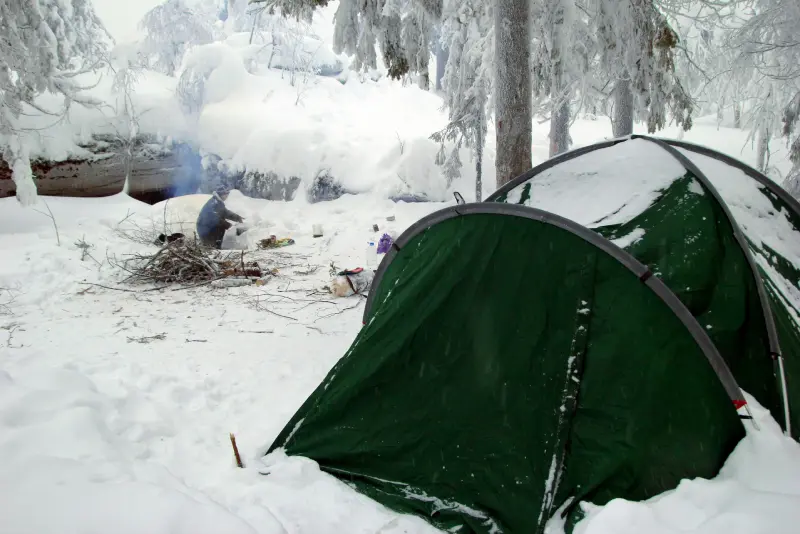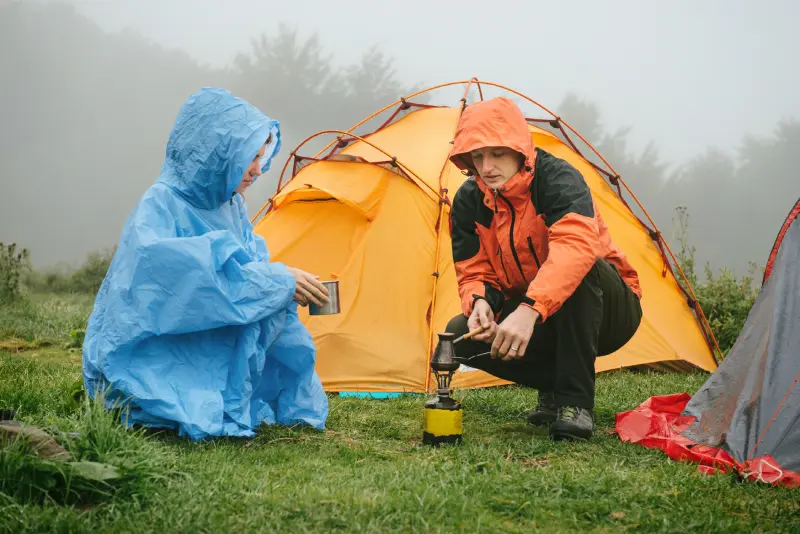
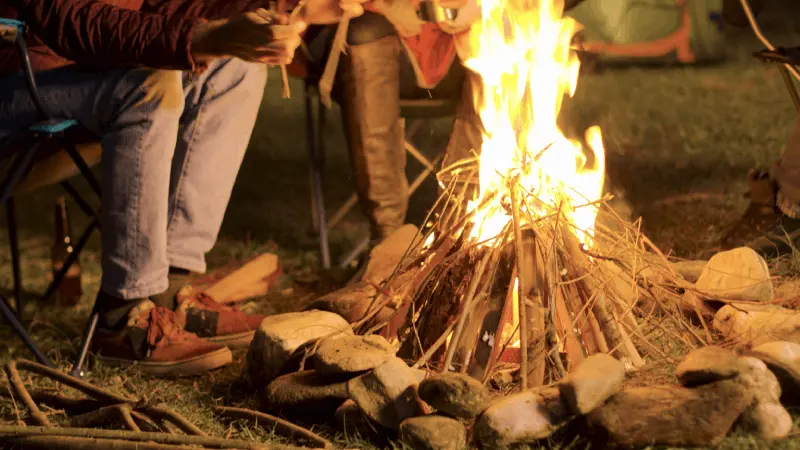
When camping, you will not always encounter sunny and dry weather. Starting a fire in a damp forest after rain or in a geography covered with snow in winter can be vital not only for warmth but also for survival. Although it may seem impossible for wet wood to burn, you can overcome this challenge with the right physical principles and preparation materials. Here are the steps you need to follow.
What is the Basic Logic of Starting a Fire with Wet Wood?
The challenge of starting a fire with wet wood is the amount of energy required for the moisture inside the wood to evaporate. Before the wood ignites, the water inside must reach its boiling point and evaporate; this absorbs all the energy in the initial phase of the fire and causes the flame to extinguish. Therefore, the basic logic is to start with the driest materials possible and gradually dry the wood to build the flame. Trapping heat and removing moisture is at the heart of this process.
Where to Look for Dry Wood in a Rainy Forest?
When it rains or immediately after, the wood on the ground absorbs water like a sponge. Therefore, you should avoid fallen branches that have been exposed to decay. The best sources are the lower branches of still-standing dead trees or dense pine trees. These "dead lower branches" are often protected by the living branches above like an umbrella and remain much drier than those on the ground due to the wind's effect. Additionally, looking at the lower parts of fallen trees increases your chances of finding dry material.
Why is Splitting Wood So Important?
A thick branch or log that appears completely wet from the outside may actually be bone dry inside. Wood typically absorbs water through its bark and outer layers, but the inner parts are resistant to moisture. When you split the wood lengthwise with a knife or axe, you reach the dry fibers inside. These dry inner parts are the main fuel you need in the initial phase of the fire. Removing the wet bark and using the dry tissue inside will account for 80% of your success.
How to Prepare Feather Sticks?
Feather sticks are the art of increasing surface area by turning the dry inner parts of wet wood into fine shavings. By making thin cuts along the edge of a dry piece of wood with a knife, you ensure that the shavings curl without breaking off from the branch. These curls create a large surface area that comes into contact with oxygen and can ignite even with the smallest spark. Preparing multiple feather sticks creates the heat bridge needed for the flame to transfer to other woods in a wet environment.
What are Natural Fire Starters?
In nature, there are miraculous materials that can ignite even when wet. At the top of these is birch bark; thanks to the natural oils inside, it ignites quickly even when wet. Additionally, the resin (pitch) that flows from the injured parts of pine trees or accumulates in their roots is an unmatched fuel. Dried grasses, abandoned bird nests, or dry moss on trees can also be used as tinder in emergencies. When collecting these materials, you should try to choose the ones with the least moisture whenever possible.
How to Find Pine Resin and Pitch Wood?
Pine resin is the most powerful combustible material that nature offers you. It accumulates especially where broken branches of pine trees connect with the trunk or in the center of cut pine logs. If a piece of log has a dark, translucent, and strong-smelling center, it is "pitch wood." When you turn this wood into fine shavings, you get a fire source that burns like a torch even in rainy weather. You can use a piece of branch to avoid getting resin on your hands while collecting it.
Why is Birch Bark a Miracle?
Birch bark contains a fatty compound called betulin. This substance repels water and ensures that the bark ignites even in the heaviest rain. When you peel the bark off the tree like paper, you can separate the thin layers to make a small bundle. This bundle instantly catches sparks from a magnesium rod. However, you must be careful; it is an ethical camping rule to only collect bark from fallen or dead birch trees to avoid harming living trees.
What are Strategies for Protecting Against Wind?
When dealing with wet wood, your enemy is not just water, but also wind. Wind quickly disperses the weak heat in the initial phase of the fire. You should build a windbreak around the area where you will light your fire using stones or wet logs. This barrier not only blocks the wind but also reflects heat back to the center of the fire, helping the wood to dry faster. Remember to determine the direction of the wind correctly and leave a small gap for the fire to "breathe."
How to Isolate Fire from Wet Ground?
Trying to light a fire directly on wet soil or snow causes the moisture from below to extinguish the fire. Before lighting your fire, you must create a "platform." By laying thick logs or flat stones side by side, prepare a raised base. This platform prevents the fire from being extinguished by its own embers and allows airflow from below. By placing your dry wood pieces on this platform, you can break the cold effect coming from the damp ground.
Does the Reverse Fire Method Work on Wet Wood?
In traditional methods, smaller pieces are placed at the bottom, and larger ones on top. However, with wet wood, the "Reverse Fire" (Top-Down Fire) can sometimes be more efficient. You place thick and wet logs at the bottom, followed by thinner branches on top, and finally dry tinder and feather sticks at the very top. As the fire burns downwards, the wet logs below will gradually ignite. The fire burns slowly and dries. This method provides a long-lasting burn by ensuring that the fire works like a self-feeding drying oven.
What is the Best Fire Setup?
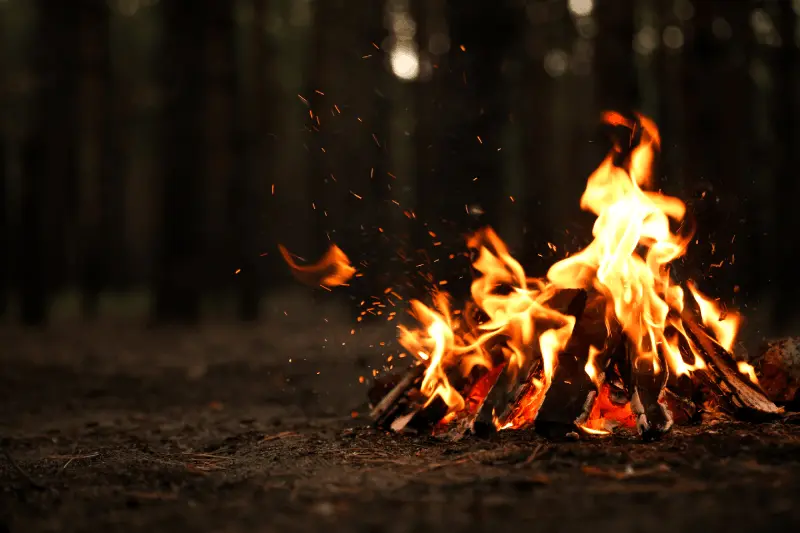
In wet conditions, a "Tipi" structure is generally the best. This structure ensures that the heat rises directly and helps the leaning logs to dry each other by making contact. However, you should not set it up too tightly; oxygen intake is vital. As long as the thin dry pieces inside ignite, the thicker and wetter logs outside will lose their moisture. Be patient and avoid adding thick logs until the flame is strong enough.
What are the Essentials of Firing?
There are three basic components of fire: Fuel, heat, and oxygen. When using wet wood, the heat is already reduced, so you must manage the oxygen very carefully. Blowing directly and too hard on the fire can cool the embers. Instead, you should provide a slow and steady airflow to the heart of the fire, the glowing center, using a straw or an empty pencil tube. Long and steady blows help increase the combustion temperature, aiding the faster vaporization of the water inside the wood.
What are the Techniques for Drying Wet Woods by the Fire?
Once you have successfully lit the fire, half the job is done. Now, what you need to do is arrange the wet woods you will use in the next phase around the fire. Place the logs close enough to not touch the flames but warm enough to evaporate the moisture. Leaning the logs vertically towards the fire (like a reflector) allows the water to drain downwards due to gravity and helps the heat to affect the surface better. You can continue the cycle by throwing the dried logs into the fire.
What Equipment Should You Have Nearby?
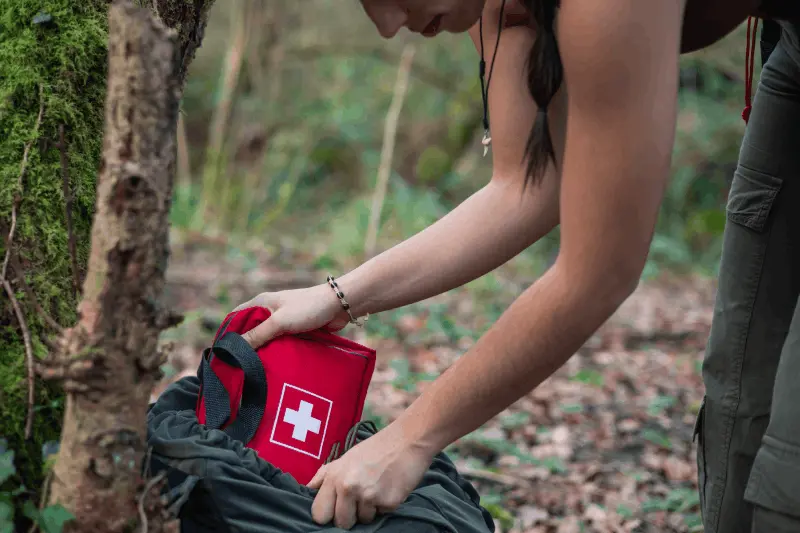
Being prepared for tough conditions can always save your life. You should always have a waterproof container in your bag with cotton soaked in petroleum jelly, a magnesium rod, and storm matches. Petroleum jelly cotton is a great artificial igniter that can burn long enough to dry wet woods. Additionally, a quality camping knife and a small hand saw provide the physical strength needed to reach the dry parts inside the logs. It is also wise to collect a piece of resin in advance and keep it in a corner of your bag.
Why is Patience Your Greatest Weapon?
Lighting a fire with wet wood is not a quick process. Many people ruin the fire by throwing large logs on it as soon as they see the first flicker of flame. However, in a wet environment, it takes time for the fire to "recover" and establish a stable bed of embers. You should progress in small steps, allowing each new piece of wood to heat up and dry. If you rush, your fire will go out, producing smoke. Keeping pace with nature's rhythm and observing the process is the key to success.
Does a Magnesium Rod Work When Wet?
Magnesium rods or ferrocerium rods are more reliable than lighters and matches in wet conditions. The mechanism of lighters can fail when wet, or the gas can lose its volatile properties in the cold. However, even if a magnesium rod gets wet, it can be wiped off and reused. Because they produce sparks up to 3000 degrees, they have a high chance of igniting even the slightly dampest tinder. Therefore, it should be one of the key pieces of equipment for every camper.
Which is More Suitable: Matches or a Lighter?
Ideally, you should carry both. However, standard matches often become ineffective in wet and windy conditions. Storm matches, on the other hand, outperform with their waterproof coatings and structures that do not extinguish in the wind. Lighters provide ease of use, but it can be difficult to operate the mechanism when your fingers are frozen. The safest method is to create a "fire kit" that includes a jet lighter, storm matches, and a magnesium rod together.
How to Reduce the Effect of Wind?
It is essential to build a structure not only to block the wind around the fire but also to retain the heat. Stones are excellent for this purpose because they absorb heat and release it for a long time. If there are no stones, you can create a reflector by stacking wet logs on top of each other like a wall. This reflective wall directs the heat towards your area, keeping your campsite warmer. It also prevents the wind from blowing the fire to one side and extinguishing it.
How to Manage Smoke?
Wet wood produces a lot of smoke when burning because the water inside vaporizes and carries unburned carbon particles with it. This smoke irritates the eyes and is uncomfortable to breathe. To protect yourself from smoke, you should follow the direction of the wind and increase the ventilation of the fire. Once the fire is adequately heated and the bed of embers is strong, the amount of smoke will decrease. Sometimes, a simple reflective wall or a small awning built over the fire can help change the direction of the smoke.
What is the Mushroom and Tinder Fungus?
Some mushrooms growing on tree trunks, especially the "tinder fungus" (Fomes fomentarius), are excellent fire carriers. The sponge tissue inside this mushroom can burn from the inside out for hours once ignited. It is challenging to find dry tinder in a wet forest, but the inner parts of these mushrooms usually remain dry. If you can prepare and dry this mushroom correctly, you will have a natural fire starter that you can carry with you. It is essential to recognize these hidden helpers that nature offers.
>Is the Fire Starting and Fuel Method Useful?
If you don't have modern equipment, starting a fire by friction (like a bow drill) is quite difficult in wet weather. This is because the dust obtained from the friction method needs to be completely dry; in humid weather, this dust absorbs moisture immediately. However, it is not entirely impossible. If you can obtain dry material from the inner part of a standing dead tree and keep the moisture in the environment under control, you can succeed. Still, in wet conditions, this method should be seen as a last resort, and you should conserve your energy for more practical methods.
Is It Necessary to Make a Heat Reflector?
Absolutely yes. Especially on cold and wet nights, 50% of the heat from the fire dissipates into the air. A simple reflector (a blanket, aluminum foil, or a wood wall) that you set up behind the fire will ensure that this heat returns to you. This not only keeps you warm but also helps the wet wood burn more efficiently by facilitating the concentration of the fire's heat. Using a heat reflector allows you to get more efficiency by burning less wood.
How to Keep the Fire Alive All Night?
To keep the fire alive on a rainy night, you should use thick logs arranged in a Leave the area you found cleaner. Also, avoid lighting large fires; only use as much wood as you need. We must never forget that we are guests in nature and not its owners.
How to use fire to dry clothes?
When hanging wet clothes next to the fire, you must be very careful about the distance. Synthetic fabrics (nylon, polyester) are very sensitive to heat and can melt even without catching fire. Hang the clothes at least an arm's length away from the fire, in a place where the heat can be felt but the fabric does not get hot. Do not place your boots too close to the fire; the leather can crack or the soles can melt. Make sure to turn your clothes frequently so that moisture can evaporate evenly from all sides.
Where should you throw your match?
You should throw the match into the bottom of the kindling you have prepared, so that the wind blows from behind. Since the heat moves upward, a small ember starting at the bottom will ignite all the kindling above. If you give the match from above, it will be harder for the fire to spread downward. When the kindling starts to burn, do not blow on it immediately; let the flame find its way. Once the flames become visible, gently add the finest dry twigs on top to gradually build up the fire.
What is the psychological benefit of lighting a fire with wet wood?
Being able to light a fire in wet and challenging weather not only provides physical warmth but also significantly boosts a person's morale and self-confidence. The fire creates a sense of a "safe zone" in the dark and wet forest. It makes you feel in control and enhances your survival motivation. Seeing that first flame with your friends or alone is proof of how strong your connection to nature is. This success gives you the strength to tackle other challenges in the camp.