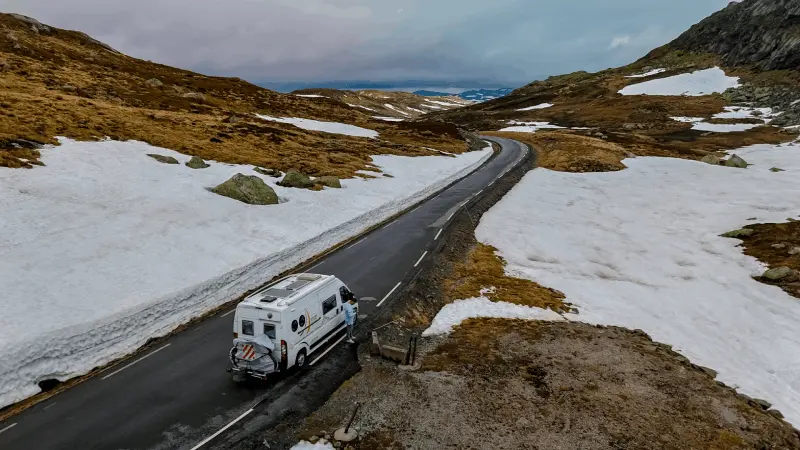
Spending a winter holiday in a caravan is the pinnacle of freedom, especially for ski and snowboard enthusiasts. Waking up right next to the lifts, avoiding crowded hotel lobbies, and staying in the heart of nature is an invaluable experience. However, to enjoy this experience smoothly, it is essential to know certain rules and preparations.
What Are the Advantages of Skiing in a Caravan?
The biggest advantage of a skiing holiday in a caravan is undoubtedly mobility. Without being tied to a fixed hotel room, you can change your route from one center to another depending on the snow conditions. Additionally, the hassle of transporting your ski equipment is eliminated; your caravan serves as both your home and your equipment storage. Economically, it offers a much more budget-friendly option compared to high-season hotel prices. The freedom to prepare your own meals and the luxury of having breakfast with a view of the slopes are other elements that make this experience unique. The need for social distancing and being in touch with nature is also met at the highest level.
Why Is Insulation in a Caravan Vital in Winter Conditions?
When the outside temperature drops below zero, maintaining the warmth inside your caravan is not just a matter of comfort but also a matter of survival. Insufficient insulation can cause the interior to remain cold despite your heater running continuously, leading to a rapid depletion of your energy resources. Thermal curtains or external insulation covers should be used to block the cold air coming from the windows. Floor insulation is also critical; stepping on a freezing floor with bare feet can ruin your comfort. Good insulation also reduces condensation, preventing moisture and mold formation inside the caravan. Therefore, before heading out for winter camping, ensure that your caravan has "four-season" features.
What Should Be Considered When Choosing a Heating System?
The most commonly used heaters in caravans during winter are diesel heaters (like Webasto) or gas systems (like Truma). Diesel heaters are logistically easier since they draw fuel from the caravan's main tank; however, care must be taken regarding battery consumption. Gas systems are quieter and heat without drying out the environment, but there is a necessity to carry spare cylinders. The heater's capacity should be suitable for the volume of the caravan. Additionally, having the heating ducts run alongside the water pipes provides a strategic advantage to prevent the pipes from freezing. For safety, the heater should be maintained, and there must always be a carbon monoxide detector inside.
How to Prevent the Freezing of Waste Water and Fresh Water Tanks?
Water tanks in temperatures below zero are the biggest nightmare for caravaners. The waste water (grey water) tank outside should be protected by adding antifreeze liquids or placing heating pads around the tank. Some caravaners prefer to leave the waste water valve open and place a bucket underneath to avoid freezing. The fresh water tank should ideally be located inside the caravan, in a heated compartment. Insulating the pipes with insulation materials helps maintain the flow of water. If the tank freezes, it should be remembered that there is a risk of the internal plumbing bursting, and it should never be forced.
Is It Legal to Stay in a Caravan at Ski Resorts?
The situation regarding staying in a caravan at ski resorts in Turkey and Europe varies from place to place. While most ski resorts have large parking lots, not every parking lot allows overnight stays. Some businesses have created special areas under the name "caravan park" that offer electricity and water facilities. Legally, short-term stops can be made in places where there is no "overnight stay prohibited" sign, but permission may be required for long-term camping. Contacting the local gendarmerie or the management of the facility can prevent you from waking up to an unpleasant warning in the morning. Especially in areas with national park status, the rules are much stricter.
Are There Electricity Connections at Caravan Parks?
In developed ski resorts (such as Erciyes, Kartalkaya, or centers in the Alps), there may be electricity connection points (EHU) in specially designated areas for caravans. However, this facility is not available at every center. In this case, the caravan must be self-sufficient (off-grid). Lithium batteries and solar panels can be lifesavers in winter. Even in places with electricity connections, you should have at least a 25-meter extension cord that can withstand winter conditions. Always have a backup plan (spare battery or generator) in case of a power outage. Care should be taken regarding the fuse capacity when using high-current devices like electric blankets.
How to Save Energy While Winter Camping?
Due to the decreased efficiency of solar panels in winter and the continuous operation of heaters, energy management is very critical. Lighting should use entirely LED systems, and unused devices should be unplugged. Keeping the internal temperature of the caravan stable at 20-22 degrees consumes less energy than constantly heating and cooling. Covering windows with thermal covers can reduce heat loss by up to 30%. The voltage level of the batteries should be checked regularly, and it should not be allowed to drop below critical levels. If possible, devices should be charged during the day, at the hours when the sun is at its peak, allowing you to save stored energy for the night.
How to Stabilize a Caravan on Snow?
When you park your caravan on a snowy or icy surface, it is essential to prevent the feet (support legs) from sinking directly into the snow. Placing wide wooden blocks or special plastic bases under the feet ensures the weight is distributed and prevents the feet from freezing to the ground. The handbrake should be engaged in very cold weather.
It is important not to leave the vehicle unattended; because the brakes can freeze and stick to the disc. Instead, using wheel chocks to secure the vehicle is a safer method. Additionally, having the vehicle level is necessary for both the refrigerator to operate efficiently and for water to drain easily.Why Should Caravan Interior Ventilation Not Be Neglected?
When it is very cold outside, we tend to close all openings, but this is very dangerous. The breath inside the caravan, cooking steam, and wet clothes create serious humidity. This humidity condenses on surfaces, leading to mold and deterioration of insulation. More importantly, there is a risk of oxygen depletion and carbon monoxide buildup when using a gas heater or stove. For this reason, the ventilation openings in the caravan should never be closed. Even if only for a short time during the day, opening the windows for "cross ventilation" is the best method to replace the dirty and humid air inside with clean and dry air.
How Should Tire Selection Be When Going to a Ski Resort with a Caravan?
Climbing mountain roads in winter requires much more than a standard vehicle. Caravans are very prone to skidding in the snow due to their high weight. Real winter tires (with snowflake symbols) must be used. The tread depth of the tires should be above the legal limit, preferably more than 4-5 mm. While the "M+S" (Mud and Snow) label is sufficient for heavy vehicles, vacuum tires should be preferred for icy surfaces. Tire pressures should be regularly checked as they will drop in cold weather. The right tires are essential not only for your safety but also for the safety of other drivers on the road.
In Which Situations Are Snow Chains and Tracks Mandatory?
Winter tires may sometimes be insufficient under heavy snowfall or icy conditions. It is legally required to have snow chains on roads leading to ski resorts, especially on steep slopes. You should practice how to install the chains in front of your house before hitting the road; trying to put on chains for the first time under a storm while your fingers are freezing is a big mistake. Track-type practical chains are quite useful for caravans. You should never speed while the chains are on. If your vehicle is being pushed from behind or if you are towing a caravan, it will increase safety to also attach devices to the steering wheels in addition to the drive wheels.
How Should Snow and Ice Accumulated on the Outside of the Caravan Be Cleared?
Snow accumulated on the roof of the caravan creates serious weight and can cause an accident by falling onto the vehicle behind you when you hit the road. It also puts pressure on roof windows and solar panels. Snow accumulations should be cleared with a soft-bristled brush. Even a thin layer of snow on solar panels can reduce energy production to zero. Care should be taken not to scratch the glass while scraping ice off the windows; pouring hot water can cause the glass to crack. Silicone sprays can be used in advance to prevent door locks from freezing. If the steps or awning are frozen, do not force them as it may damage the mechanism.
How to Dispose of Gray Water and Black Water in Winter?
The biggest problem in winter waste management is the freezing of disposal facilities or their inaccessibility due to snow. You should never dispose of your gray water on the snow or roadside; this is harmful to the environment and creates ice masses by freezing. You should use designated disposal points. Chemicals used for black water (toilet) cassettes can sometimes lose effectiveness in cold weather; therefore, concentrated products suitable for winter should be preferred. If you are going to stay for a long time, having a spare cassette will be a great convenience. In case of freezing of waste water pipes, trying to thaw them by pouring warm water can be a temporary solution.
How Should Ski Equipment Be Stored Inside the Caravan?
Ski and snowboards are usually wet and snowy. Bringing them directly inside the caravan will quickly increase the humidity level inside and make the floor slippery. If your caravan has an accessible "garage" section from the outside, this is the ideal place. If not, ski transport devices mounted on the outside should be used. If you must store them inside, you should place water-absorbing mats underneath and arrange the equipment only after thoroughly drying them. It is important that external devices are locked to prevent theft or that they are in the caravan's visible area.
What Methods Can Be Used to Dry Wet Clothes?
Wet jackets and pants after skiing all day take up space in the caravan. To dry them, hangers can be used near the heater vents. However, spreading clothes directly on the heater poses a fire risk. Since the caravan's bathroom is usually the smallest and easiest place to heat, leaving clothes hanging in the bathroom and keeping the ventilation open there is an effective method. Some caravan owners solve this problem by adding special drying rails to the luggage compartment. Shoe dryers (small electric devices) are also quite practical for removing moisture from inside boots.
How to Reduce Steam Formation in Kitchen Use?
Cooking in the small volume of the caravan instantly creates a large steam cloud. In winter, this leads to the windows becoming damp. If possible, avoid very watery or long-cooking dishes. When cooking, you should always crack open a window or turn on the exhaust fan if available. Keeping the pot lid closed shortens cooking time and retains steam inside. To absorb the moisture that forms after cooking, moisture-absorbing devices (tablet type or electric) should be placed near the kitchen counter. can be kept. Although eating outside in winter can be difficult, some preparations can be made at home in advance and only heated to reduce humidity.
How Should Nutrition Be Planned for Winter Camping with a Caravan?
Cold weather causes the body to expend more energy. Therefore, high-calorie foods rich in carbohydrates and proteins should be preferred. Hot drinks (tea, coffee, soup) help keep you warm from the inside and meet your hydration needs. Considering that water may be limited in the caravan, "one-pot" meals (pasta, casserole, canned food) that create less mess should be planned. You can use the cold outside air as a natural refrigerator, but you should also be careful not to let the food freeze. Always have at least 2-3 days' worth of backup food and bottled water for emergencies.
What Supplies Should Be Available in the Caravan for Emergencies?
You should be prepared for the possibility of being stranded due to road closures in winter or a technical malfunction. There should definitely be a snow shovel, sand or cat litter (to spread under the tires), jumper cables, a tow rope, and a powerful flashlight in the caravan. Additionally, in addition to a first aid kit, a blanket and foil emergency covers can be lifesaving. Keeping a small catalytic heater or quality sleeping bags as a strategic measure in case the heater fails is advisable. Backup power banks for charging your phone and local area maps should also be on your list.
What Should Be Done to Prevent Caravan Batteries from Being Affected by the Cold?
Batteries lose their capacity in cold weather because chemical reactions slow down. Especially older wet batteries are at risk of freezing. Gel or AGM batteries are more durable, but the best performance is obtained from lithium (LiFePO4) batteries. Insulating the area where the batteries are located or allowing them to share heat from the warm air inside increases performance. If the temperature of the batteries drops below zero, some lithium batteries will not accept a charge; in this case, battery heating pads come into play. Keeping the batteries continuously charged is safer in winter to lower the freezing point.
Do Solar Panels Work Efficiently in Winter?
The efficiency of solar panels in winter can decrease by 70-80% compared to summer. This is due to both the sun's angle being more equal and the days being shorter. However, the biggest obstacle in winter is snow accumulation. Even a thin layer of dust on the panel can cut off the current. The panels need to be cleaned frequently. If possible, having adjustable angles for the panels provides a significant advantage in capturing the low winter sun rays. Still, relying solely on solar panels during winter camping is risky; supportive systems such as external electricity sources or charging from an alternator must be installed.
What Are the Parking Rules at Ski Resorts?
The parking lots at ski resorts start to fill up with athletes early in the morning. When you stay overnight in your caravan, you should generally park in the farthest or quietest corners of the parking lot in a way that does not block the entrance of vehicles arriving in the morning. Some businesses may apply a separate fee schedule for caravans. Do not forget that snow removal vehicles (graders) may operate overnight; it is important to park in designated areas to avoid blocking their working area and getting stuck under snow in the morning. Building good relationships with parking staff can help you get assistance with electricity or water issues.
What Are the Relationships and Noise Rules with Neighboring Caravanners?
There is an unwritten culture of solidarity among caravanners at ski resorts. However, this proximity also requires adherence to privacy and noise rules. The use of generators is the biggest topic of discussion; running a generator after evening hours is frowned upon. Make sure that the exhaust of your heater does not blow into the window or ventilation of the neighboring caravan. Listening to loud music or making noise outside until late at night will disturb other campers seeking silence. Helping each other when a problem arises (towing, sharing materials) is part of the essence of winter camping.
How Is Fire and Carbon Monoxide Safety Ensured in the Caravan?
Using a heater and stove in a small and enclosed space brings safety risks. It should be ensured that the exhaust pipes of heating systems are not blocked by snow; otherwise, gas can leak inside. Carbon monoxide is odorless and tasteless, making it impossible to detect, which is why having a working CO detector is vital. Additionally, a fire extinguisher and fire blanket should definitely be kept in the kitchen area. Avoid overloading the electrical system, and open flame lighting (candles, gas lamps) should never be used inside the caravan. Before going to bed, everything should be checked to ensure it is closed or in a safe mode.
Can Winter Camping Be Done in a Caravan with Pets?
Many caravanners prefer to take their loyal friends along on ski vacations. However, winter conditions can be challenging for dogs as well. Since the floor of the caravan will be cold, extra insulation should be placed under the dogs' beds. Protective creams or dog boots can be used to prevent their paws from freezing in the snow outside or being affected by ice melt chemicals (salt). Wet fur can cause dogs to get sick, so they should be thoroughly dried after each outing. Additionally, if they will be left alone inside the caravan, it should be ensured that the heat remains stable and that ventilation is adequate.
What Are the Best Ski Resorts to Visit with a Caravan?
In Turkey, Erciyes Ski Resort is one of the places with the most developed infrastructure for caravanners; there is a special caravan parking area. Uludağ, especially in the 2nd Region, is also popular. They are popular with open areas, but sometimes restrictions may apply. Since the roads in Kartalkaya are steep, good preparation is required. In Europe, there are luxurious camping areas and free "Sosta" spots for caravans in Chamonix, France, Innsbruck, Austria, and the Dolomites region in Italy. The altitude of the destination, road conditions, and caravan acceptance policies should definitely be researched online or through social media groups before going.
How to Insulate Your Bed Against Falling Temperatures Overnight?
Beds in caravans are usually leaned against the outer walls, which means you will be in contact with a cold surface throughout the night. Placing thin roll insulation materials or blankets between the wall and the bed cuts this cold bridge. A ventilation net (anti-moisture mat) placed under the bed prevents moisture that will form due to sweating under the bed. High-quality down comforters or winter sleeping bags allow you to operate the heater at a lower level. Hot water bottles (gugum) are both a nostalgic and very effective method to warm the bed before getting in.
Should the Caravan's External Awning Be Used in Winter?
Caravan awnings are generally designed to provide shade in the summer and are not capable of carrying heavy snow loads. Heavy snow at night can break the arms of the awning or tear the fabric. Therefore, in winter, especially if snow is expected, the awning should not be left open. If it must be used, the awning's opening should be vertical so that snow does not accumulate on it. In stormy weather, the awning can catch the wind like a sail, causing the caravan to shake or even tip over. Instead of an awning, winter caravan tents that can withstand snow loads should be preferred to create an outdoor area during winter camping.
How to Open Frozen Doors and Locks?
In extreme cold and humid weather, the door seals or lock mechanisms of the caravan can freeze and stick together. Forcing the door open can tear the seals. To prevent this situation, silicone-based sprays or vaseline should be applied to the seals before going on the road. If the lock is frozen, slightly heating the key with a lighter and inserting it into the lock (being careful with plastic parts) may help. A hairdryer is also an effective solution, but you must have access to electricity. It is sensible to keep de-icing sprays not inside the caravan, but in an outside bag or in the driver's cabin of the vehicle.
What Are the Driving Techniques to Avoid Freezing Risks While Traveling with a Caravan?
Driving a caravan on snowy roads requires patience and precision. Sudden braking and sharp steering movements should be avoided. The weight of the caravan can double the braking distance. When descending a slope, the engine brake should definitely be used by downshifting; overheating and locking of the brakes on icy surfaces is dangerous. Speed should be significantly reduced before entering turns. If the vehicle starts to skid, the gas should be released without panicking, and the steering should be turned in the direction the back of the vehicle is going. Increasing the following distance to at least three times the normal distance will give you time to react in case of a potential skid.
How Should Caravan Maintenance Be Done After a Ski Holiday?
The salt and chemicals used on mountain roads are quite corrosive for the caravan's chassis and metal parts (they can cause rust). Upon returning from the holiday, the underside of the caravan should definitely be washed with pressurized water and cleaned of salt. To completely eliminate moisture inside, all cabinet doors should be opened, and the caravan should be well ventilated. Water tanks and pipes should be completely emptied, and valve openings should be left open; this prevents any remaining water from freezing and bursting the pipes. Batteries should be charged and left, and if necessary, connected to a battery protection device for the winter. This maintenance will extend the life of your caravan and ensure it is ready for the next winter.
Staying in caravans at ski resorts can turn into one of the most beautiful adventures of your life when proper preparation and rules are followed. By respecting nature and prioritizing your own safety, you can enjoy the beauty of the white blanket. Happy camping and safe travels!