Why Is Lightness So Important for Camping?
Every gram carried during camping and outdoor activities directly affects the amount of fatigue your body feels by the end of the day. Especially on steep slopes or routes that last for miles, minimizing the weight in your backpack not only increases your comfort but also protects your knees and back health. A lightweight cooking set allows you more freedom of movement by reducing the total weight of your kitchen gear. This enables you to stay in nature longer and enjoy the scenery without being exhausted. Lightness is not just a luxury in modern camping philosophy; it is a standard for sustainable performance.
What Does Ergonomic Design Change in a Cooking Set?
Ergonomics determines how efficient and safe the physical interaction of a piece of equipment is with its user. In a camping kitchen, an ergonomic design means handles that can be easily held even with gloves, shapes that prevent spills, and compact forms that can nest inside each other. An ergonomic pot set speeds up your cooking in confined spaces and minimizes the risks of accidental burns or spills. Additionally, modular structures that offer easy storage create space in your backpack for other essential items. Good ergonomics improves your overall experience by bringing the challenges of the camping environment closer to the comfort of home.
Are Titanium Sets Really the Best Option?
Titanium is one of the best metals in terms of weight-to-strength ratio. Despite being much lighter than steel, it offers similar strength, making it indispensable for "ultralight" campers. However, titanium's heat conductivity is not as uniform as aluminum; this can lead to hot spots on the bottom of the pot and cause food to burn. If you are only boiling water and consuming freeze-dried foods, titanium is unmatched. However, if you plan to cook complex meals, you need to carefully evaluate the balance between titanium's lightness and cooking performance. Still, for those aiming for the lowest weight, titanium remains the gold standard.
What Are the Advantages of Hard-Anodized Aluminum?
Hard-anodized aluminum is one of the most commonly preferred materials in modern camping kitchens. This process hardens the surface of aluminum, making it extremely resistant to scratches and wear. Its ability to distribute heat very quickly and evenly makes these sets ideal for cooking. Although it is slightly heavier than titanium, the cooking comfort it offers and its affordability make it the first choice for many professional campers. Additionally, the non-porous structure of this material makes it difficult for food to stick to the surface, greatly simplifying the cleaning process in camping conditions and conserving water.
Should Stainless Steel Camping Sets Still Be Preferred?
Stainless steel sets are the most reliable option in terms of durability; they do not easily dent and can be placed directly over high heat. However, when the weight factor comes into play, they fall behind titanium and aluminum. They are generally suitable for overlanding or short-distance camps where weight is not critical. Steel does not distribute heat as well as aluminum, but it is considered one of the safest and most chemically stable materials from a health perspective. If you are looking for a long-lasting set and a few grams of weight difference in your backpack is not critical for you, stainless steel will never let you down.
How Do Nesting Sets Save Space?
The design philosophy known as "nesting" is a geometric genius of the camping kitchen. In this system, pots, pans, plates, and sometimes even stoves are designed to fit inside a single pot. This not only creates a large empty space in your backpack but also ensures that your kitchen equipment stays together and does not get lost. When choosing an ergonomic set, it is very important to check whether a standard gas cartridge fits inside. These space-saving sets make organizing your backpack a breeze for campers who are particular about order and prevent rattling sounds while on the move.
Are Foldable Handles Risky from a Safety Perspective?
Many lightweight camping pots are equipped with foldable or removable handles for easy transport. Some users may worry about these handles wobbling or coming off while filled with food. However, quality brands (like MSR, Snow Peak) have developed very secure mechanisms that lock the handles in place. Silicone-coated handles prevent your hands from burning by blocking heat transfer. Ergonomically, foldable handles should provide a secure grip while reducing the external volume of the pot. If the handle mechanism of the set you choose does not inspire confidence, using an external pot lifter can be both safer and sometimes lighter.
Do Heat Exchangers Save Fuel?
Heat exchangers integrated into the pot's base ensure that the flame produced by the stove is transferred more efficiently to the pot surface. These rings prevent the wind from blowing the flame away and can speed up boiling times by up to 30%. Although this technology slightly increases the total weight of the set, it allows you to carry less fuel on long-term camps, effectively reducing the total weight of your backpack. This efficiency becomes critical, especially in cold weather and high-altitude conditions. Brands like Jetboil and Primus have successfully integrated this technology into their systems, making them the biggest allies of efficiency-focused campers.
Why Is the Sea To Summit X-Pot Series So Popular?
The X-Pot series from Sea to Summit is a true revolution in camping kitchens. The edges of these pots are made from food-grade silicone and can fold down completely flat when not in use. The base is made of hard-anodized aluminum, allowing it to be safely used over stove flames. This design is the most ambitious solution on the market for saving volume. When folded, the pot takes the shape of a disk, and other X-series cups and bowls can also fit inside. Offering lightness and incredible ergonomics, this set is especially loved by bicycle travelers and backpackers facing space constraints.
Why Are Snow Peak Titanium Sets Considered a Classic?
The Japanese brand Snow Peak is legendary worldwide for its expertise in titanium processing. Models like "Trek 700" or "Trek 900" have become symbols of minimalist camping. The reason these sets are so popular is not only their lightness but also their timeless and functional designs. Snow Peak products are often very thin-walled, making them one of the lightest options on the market. Their lids can also be used as a small pan or plate, enhancing the set's functionality. Aesthetically, these titanium sets are quite elegant, combining simplicity and performance into an engineering marvel.
Why Is the MSR PocketRocket Deluxe Kit Ergonomic?
The MSR PocketRocket Deluxe Kit is known for providing everything a camper needs in one compact package. The stove included in the set, along with its pressure regulator and piezo igniter, performs excellently in all weather conditions. The cooking set consists of a pot, bowl, and lid, all of which fit together perfectly. Its ergonomics come from the way each piece complements the others and the practicality it offers during use. The pot handle locks securely, and the plastic lid serves as a strainer. This set is ideal for those looking for a system that operates on a "plug-and-play" basis, free from complexity and extremely lightweight.
Are Jetboil Systems Leaders in Speed and Lightness?
Jetboil is the brand that introduced the concept of "personal cooking systems" to the world. In these systems, the stove and pot lock together, eliminating the risk of tipping and minimizing heat loss. Jetboil's biggest advantage is its incredible boiling speed; it can boil half a liter of water in about 100 seconds. Although they are heavier than titanium pots, their fuel efficiency and ease of use make them a more logical choice for many adventures. Thanks to the ergonomic neoprene sleeve, you can hold the pot even when it's hot. For a quick coffee or ready meal, Jetboil remains a leader in practicality.
What Is the Ideal Volume for Solo Campers?
For someone camping alone, the volume of the cooking set is a critical decision. Generally, a pot volume between 600 ml and 900 ml is sufficient for boiling water and preparing simple meals. This volume range allows for a 100-gram gas cartridge and a small stove to fit inside, enhancing transport ergonomics. Very large pots create unnecessary weight and take up space, while very small ones can make cooking a chore. Since lightness is a priority for solo campers, 750 ml titanium pots are often considered the ideal balance and are preferred by professional users.
Are There Lightweight Solutions for Group Camping?
When camping with two or more people, using a common cooking set instead of each individual carrying their own can significantly reduce the total weight. Group sets typically feature multi-pot systems with a volume of 2 liters or more that nest inside each other. For example, sets like GSI Outdoors' Pinnacle series allow pots to fit inside plates, cups, and even carrying bags that can be used as sinks. These types of sets offer the possibility of sharing weight among group members. To avoid compromising on lightness, these larger sets usually use anodized aluminum, as this material provides more efficient cooking in larger volumes than titanium.
Is It Practical to Use Lids as Strainers?
In modern cooking sets, pot lids are no longer just for keeping heat inside. Many models feature small holes integrated into the lid, making it an excellent strainer. This feature provides a significant ergonomic advantage, especially when preparing foods like pasta or rice that need to be drained. You avoid the hassle of carrying a separate strainer and can easily drain the water from your food without pouring it out of the pot. Additionally, some lids have transparent windows or steam holes that help you monitor the cooking process without opening the lid, indirectly contributing to fuel savings.
How Durable Are Non-Stick Coatings in Camping Conditions?
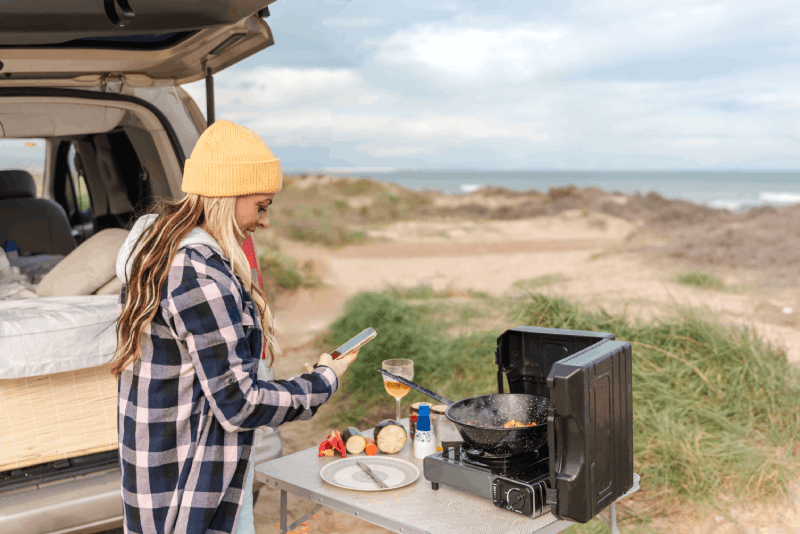
Non-stick coated camping pots are a great convenience, especially for those who enjoy making dishes like omelets or pancakes. However, these coatings can wear out faster in camping conditions compared to at home. Using metal spoons or cleaning with sandy water can scratch the coating and cause it to lose its properties. If you are considering a non-stick set, opting for ceramic-coated ones may provide a more durable solution. There are also hybrid sets where only the pan has a non-stick coating to avoid compromising on lightness. It should be noted that non-stick surfaces are still an attractive option in camping conditions as they reduce water usage during cleaning.
Is Silicone Material Safe Over Fire?
The silicone used in camping kitchens is generally food-grade and highly heat-resistant. However, silicone should never come into direct contact with open flames or extremely high heat from a stove. The base of silicone pots is always metal (usually aluminum), and the silicone parts sit on top of this base. When used correctly, silicones are extremely safe and healthy. Ergonomically, the flexibility of silicone allows products to be collapsible and resistant to impacts. Thanks to its heat insulation properties, silicone handles and edges protect the user from burns. Still, if you plan to cook over campfire coals, you should opt for entirely metal sets.
How Should the Compatibility Between a Camping Stove and Cooking Set Be?
Even if you have a lightweight and ergonomic cooking set, you will experience performance loss if it is not compatible with your stove. The base width of the pot should not be much wider than the support arms of the stove; otherwise, balance issues may arise, creating a risk of tipping. On the other hand, using a narrow-based titanium pot on a wide-flame stove can cause heat to escape from the sides and reduce efficiency. An ideal set is one where your stove fits inside the pot and creates a stable platform during use. Many brands prefer to sell the stove and pot together as a "kit" to guarantee this compatibility.
How Do Wind Shields Affect Lightness?
Wind is the biggest enemy of camping stove efficiency, potentially reducing it by up to 50%. While carrying a wind shield adds extra weight to your set, the fuel savings it provides balances the total weight. Some ultra-light cooking sets have integrated wind shields (like the MSR WindBurner). These systems nearly eliminate the effects of wind and stabilize cooking times. Carrying a separate aluminum foil wind shield is also an option and only adds a few grams of weight. Ergonomically, how well your stove and pot are protected from the wind is a factor that directly affects your cooking time and stress level outdoors.
What Are the Most Affordable Lightweight Cooking Sets?
For those looking for budget-friendly lightweight solutions, unbranded or lesser-known manufacturers' hard-anodized aluminum sets often stand out. Decathlon's Forclaz series offers quite successful and lightweight sets in terms of price-performance and ergonomics. Although these sets may not be as prestigious as titanium, they are comparable to many high-end products in terms of functionality. When purchasing an affordable set, it is important to check the safety of the handles and how well the nesting feature is designed. Sometimes, minimalist sets that only include a pot and lid can be much lighter and more practical than complex and expensive systems; therefore, opting for simplicity will also save your wallet.
How Is Weight Calculated for Ultralight Backpacking?
For ultralight enthusiasts, every material is weighed on the kitchen scale. The weight of a cooking set includes not just the pot; the lid, storage sleeve, stove, and even the spoon used are included. An ideal ultralight kitchen setup (excluding fuel) typically aims to stay under 200-300 grams. To save weight in this calculation, sometimes a piece of aluminum foil is used instead of a pot lid, or handles are removed from the pot. Achieving this level of lightness may require sacrificing some comfort, but every gram counts on long-distance hikes. The key is to know your limits and create the lightest combination without compromising your safety.
How Should Cooking Sets Be Maintained and Cleaned?
Proper maintenance is essential for the longevity of camping sets. While titanium sets are resistant to all types of cleaning agents, aluminum and non-stick coated sets should avoid harsh scrubbing sponges. While using sand or grass for cleaning in nature is a common method, it can scratch the inner surface of the pot. The best method is to use warm water and biodegradable soap. Cleaning the pot immediately after cooking prevents food residues from drying and sticking. Additionally, make sure your pot is completely dry before putting it in your backpack; otherwise, moisture can cause corrosion or unpleasant odors in the metal.
Is a Carrying Sleeve Necessary to Prevent Scratches?
Many camping cooking sets come with a mesh or fabric carrying sleeve. These sleeves not only keep the pieces of the set together but also prevent other items (like stoves or forks) from scratching the pot's surface. Especially in aluminum sets, scratched surfaces can give food a metallic taste over time. Additionally, the sleeve prevents the dirty or greasy exterior from contaminating other items in your backpack. Ergonomically, it is important that the sleeve fits snugly and securely around the pot. If your set did not come with a sleeve, wrapping the pot with a small towel or cloth piece will provide the same protection.
How Do Multi-Functional Tools Reduce Weight?
In a camping kitchen, having each piece serve at least two functions is key to lightness. For example, using a pot lid as a pan or plate allows you to reduce one item from your backpack. The "spork" (spoon-fork combination) is the most popular multi-functional tool. Some pot sets' carrying bags can also serve as buckets or sinks for carrying water. These design details allow you to accomplish the same tasks with fewer items. When making ergonomic choices, you should evaluate how well the pieces fit together and whether each has an alternative use.
Are Plastic Tools or Metal Tools Lighter?
There is serious competition between plastic and metal tools in terms of weight. High-quality nylon or polycarbonate tools are generally lighter than metals and do not damage the coating of your pot. However, plastics can melt at high temperatures and may trap food odors over time. On the other hand, titanium spoons and forks are often lighter than plastic and offer long-lasting durability. A long-handled titanium spoon is ergonomically superior as it prevents your hands from getting dirty when eating from deep ready-meal packages. If you are pursuing ultra-lightness, titanium metal tools stand out with their durability and hygiene advantages.
Should Material Selection for Winter Camping Be Different?
Winter conditions bring extra challenges for the camping kitchen. Boiling water in freezing temperatures requires much more energy. Therefore, in winter, sets with heat exchangers and wind protection (like the MSR Reactor) are almost essential. Additionally, if melting snow is part of your plans, you will need larger pots since snow takes up a lot of space but produces little water. Titanium pots can hold heat better due to their quick cooling in winter. Ergonomically, wide and sturdy handles that can be used with gloves are vital in winter camps; touching metal with bare hands can lead to frostbite.
What Sets Do Climbers Prefer?
For climbers and mountaineers, the most important criteria are reliability in extreme conditions and minimum weight. Therefore, they often prefer systems where the stove and pot are one unit. Since they may have to cook inside a tent or while suspended, the stability and safety of the system are critical. Systems that offer fast boiling, like those from Jetboil or MSR, are usually favorites. Additionally, since weight is everything on vertical walls, many climbers get by with just a small titanium cup and a mini stove. For them, the kitchen is a center for quickly obtaining the calories their body needs rather than a source of enjoyment.
How Is Kitchen Weight Balanced on Long-Distance Hikes?
On long-distance hikes (thru-hiking) lasting weeks, kitchen weight is not only about the initial equipment but also the fuel and food carried. While some use the "cold soaking" method and carry no cooking set to optimize lightness, a hot meal is very important for morale. These hikers typically choose ultra-light titanium pots that correspond with alcohol stoves or solid fuel tablets. Ergonomically, how quickly the material can enter and exit the backpack is measured. A simple set that takes only 30 seconds to set up after a day of hiking is the biggest luxury for a tired hiker and keeps motivation high.
What Should Be Considered When Buying Second-Hand Camping Sets?
Light and quality camping sets can sometimes be quite expensive, making the second-hand market an attractive option. However, when buying a second-hand pot set, you should check for deep scratches, bends, or corrosion on the inner surface. Especially for non-stick products, it is critical to check whether the coating has peeled off for health reasons. Testing the stove's burning performance and checking for leaks is essential for safety. You should also consider ergonomic details like whether the mechanism of foldable handles is still secure and whether the lid fits properly. If a good brand is purchased, camping kitchen equipment can last for decades with proper care.
Are DIY Can Stoves an Alternative to Sets?
Stoves made from empty cans, known as "cat can stoves" or "penny stoves," are iconic DIY projects in the camping world. These stoves are nearly weightless and free. However, they are not as efficient and safe as professional cooking sets. Flame control is difficult, and they typically use alcohol as fuel, which means low heat efficiency. Still, they are a great hobby tool for those wanting an ultra-light setup and enjoying the engineering aspect of it. However, on long and challenging routes, industrial designs that guarantee safety and performance are always a more reasonable and secure choice.
Why Are BPA-Free Materials Important?
It is vital for the plastic tools in your camping kitchen (cups, storage containers, or pot lids) to be BPA (Bisphenol A) free for health reasons. BPA is a harmful chemical that can leach into food when exposed to heat and can affect the hormonal system. Modern camping equipment manufacturers are now very sensitive to this issue and label their products as "BPA-Free." When choosing a lightweight set, you should consider not only the weight of the material but also its long-term effects on your health. Especially for plastic parts that come into contact with hot water, opting for reliable brands will help you stay healthy while enjoying nature.
What Is the Relationship Between Warranty and Durability in Cooking Sets?
Top-tier camping brands (like MSR, Primus, Sea to Summit) typically offer long-term warranties on their products. The pot sets from these brands are designed to be used thousands of times in challenging outdoor conditions. When you buy a cheap set, you may face risks like the pot handle breaking or the base puncturing, which can leave you in a very difficult situation in nature. Durability is as valuable as the lightness of a product; because even the lightest pot is useless if it breaks. Therefore, investing a little more upfront in a brand that offers reliable warranty and service support is much more economical in the long run.
Do Weather Conditions Affect Cooking Set Performance?
Yes, weather conditions can dramatically affect the performance of your cooking set. At high altitudes with low pressure, water boils at lower temperatures, meaning food takes longer to cook. Wind quickly dissipates heat from the pot. In very cold weather, the performance of gas cartridges can also decrease. In such cases, insulating sleeves (cozies) that trap heat and efficient pot designs can make a difference. Ergonomically, being able to quickly set up and pack your set in bad weather reduces the time spent in the cold, preventing risks like hypothermia. A cooking strategy suitable for weather conditions is one of the most fundamental elements determining the comfort level of your camp.
Is It a Criterion for Sets to Fit a Gas Cartridge Inside?
It is definitely a criterion. For professional campers, reducing the volume inside the backpack is a primary goal. A cooking set that can perfectly fit a standard 100g or 230g gas cartridge inside is an indicator of the ergonomic design of the set. Some pots are designed to accommodate both the cartridge and the stove. This compact structure ensures that the cartridge is protected from impacts and guarantees that everything related to cooking is kept in one place. When purchasing, comparing the inner diameter of the pot with the cartridge sizes prevents future disappointments and opens up a surprising amount of space in your backpack.
What Is the Difference with Brands Like Keith Titanium?
Keith Titanium is a manufacturer that focuses solely on titanium and offers designs that push the limits of this metal. The brand's difference lies in using titanium not only for pot making but also for water bottles, dining sets, and even multi-layered cooking systems. Their products combine simplicity with top-level craftsmanship. Keith products can often be lighter than other brands because they can produce at very thin micron levels. If you are looking for not just "lightness" but also a "work of engineering" in your camping kitchen, specific brands like Keith offer unique options for titanium enthusiasts.
Why Is the Primus Lite Plus a Design Marvel?
The Primus Lite Plus is one of the best examples in the camping world in terms of compactness and efficiency. The biggest feature of this system is the unique stability of the mechanism that locks the stove to the pot. The G-1000 fabric sleeve surrounding the pot provides excellent insulation and allows you to eat your meal without burning your hand. Additionally, this sleeve has attachments that allow you to hang the stove somewhere. Its ergonomics come from the consideration of every detail; the lid can also be used as a cup, and the pot handle locks the system during transport. The Primus Lite Plus is one of the rare products that offers the speed, lightness, and aesthetics needed for modern camping.
Where Does GSI Outdoors Stand in Ergonomics?
GSI Outdoors has an ergonomic understanding focused on "fun and social interaction" in the camping kitchen. Their products are often colorful, user-friendly, and filled with cleverly designed details. For example, the "Halulite" series pots combine the lightness of aluminum with excellent cooking capabilities, while the color-coded plate and cup systems fit inside, turning group camps into a feast. GSI's design reminds us that the camping kitchen is not just a survival tool but also a social activity. If lightness is important to you, and you also value the enjoyment of the dining experience and the visual harmony of the equipment, GSI Outdoors products will exceed your expectations.
How Is Minimalism Achieved in the Camping Kitchen?
Minimalism in the camping kitchen means leaving behind everything you think "I might need" and going with what you say "I can't do without." Often, a single pot, a spoon, and a small stove meet all your needs. Practical solutions like eating directly from the pot instead of carrying plates or using the pot lid instead of a cup are the result of a minimalist approach. Lightness is a natural outcome of this philosophy. A minimalist kitchen set not only lightens your backpack but also reduces your workload at the campsite; less washing up, less clutter, and more time to focus on nature.
How Will Future Camping Cooking Technologies Change?
In the future, camping cooking sets are expected to become even lighter and smarter. Research is ongoing into integrated heating systems with carbon fiber bases, nano-technology non-stick surfaces, and solar-powered heaters. Perhaps in the future, we will see hybrid materials that are as thin as paper when folded but harden when heated. In terms of ergonomics, AI-assisted fuel management and sensors that track the temperature of food inside the pot may enter our lives. However, the desire to return to "simplicity" inherent in outdoor sports guarantees that classic titanium and aluminum sets will always have a place.
Which Set Is Most Suitable for Your Needs?
Choosing the lightest and most ergonomic cooking set entirely depends on your camping style. If you are counting every gram, a titanium solo pot is the best for you. If comfort and quick cooking are your priorities, integrated systems like Jetboil are unmatched. If you are traveling in a group, multi-nesting aluminum sets are the most logical solution. To make the right decision, you should evaluate the length of your route, weather conditions, and your cooking habits. Remember that the best equipment is the one that makes your presence in nature forgotten, does its job flawlessly, and takes you to your destination.