Why is it So Important to Protect Your Caravan Awning in Windy Weather?
Outdoor awnings, which are an indispensable part of caravan holidays, actually serve as a "sail" against the wind due to their large surface area. Even a light breeze can create tremendous upward pressure when it gets under the awning. This situation can lead not only to tearing the fabric of your awning but also to the mechanisms attached to the body of the caravan being ripped off, arms being broken, and even the caravan's balance being disrupted. Beyond material damage, a flapping awning in the wind can also harm the environment and other campers. Therefore, wind management is not just a luxury but a fundamental necessity for a safe camping experience.
How to Position the Awning According to Wind Direction When Setting It Up?
When you arrive at the campsite, how you park your caravan is the first and most important step in determining the wind resistance of your awning. Ideally, the body of the caravan should be used as a shield against the wind. Turning the back or side wall of the caravan (the side without the awning) towards the direction the wind is blowing creates a "vacuum" or sheltered area in the vicinity of your awning. If you position it so that the wind directly fills the awning, even the slightest breeze increases the risk of the awning lifting. You should determine the prevailing wind direction by checking meteorological data and position your vehicle in a way that mitigates the intensity of this wind.
Are Storm Straps Really a Lifesaver?
Equipment known as "Storm Straps" or storm belts are your awning's closest friend in windy weather. These kits typically consist of heavy-duty woven straps that either go over the top of the awning or are directly attached to its legs. The primary function of these straps is to counteract the lifting force created by the wind by pressing the awning downwards. A quality storm kit not only holds the fabric in place but also has strong springs that absorb the shock waves created by the wind. If the area you are camping in is exposed to variable winds, using these types of professional tensioning systems instead of standard pegs is a critical investment that can extend the life of your awning for years.
How Do Support Poles Prevent the Awning Fabric from Flapping?
One of the most frustrating effects of wind on an awning is the constant flapping and slapping sound known as "flapping." This not only creates noise pollution but also weakens the fibers of the fabric over time and strains the seams. Support poles (rafters) are additional profiles stretched between the body of the caravan and the outer awning bar. These poles keep the fabric taut at all times, preventing the wind from playing with the fabric. The tighter the fabric, the harder it is for the wind to get underneath and lift it like a parachute. Especially in wide-open awnings, adding one or two rafter poles to the middle section significantly increases the overall stability of the structure.
When Should Sandbags or Weight Stabilizers Be Used?
The ground structure may not always be suitable for staking; for example, you might be camping on an asphalt parking lot or very hard, rocky ground. In such cases, sandbags, water containers, or special molded weights come into play to stabilize the awning legs. These weights prevent the awning leg from lifting off the ground, maintaining the integrity of the structure. However, it should be noted that weights may not have the same high pull resistance as a deeply driven stake. Therefore, as wind speed increases, increasing the amount of weights or placing these stabilizers in areas least affected by the wind will enhance your safety.
How Does Adjusting the Awning Angle Affect Rain and Wind Drainage?
Many campers fall into the trap of setting up the awning flat just to protect against the sun. However, giving the awning a certain angle (tilt) in windy and rainy weather is vital. Keeping one side of the awning slightly lower than the other provides an aerodynamic advantage that helps the wind pass under the fabric. Additionally, this angle prevents water from pooling on the fabric and creating a "water pocket" in case of potential rain. When a water pocket forms, the weight combined with the wind can suddenly break the awning arms. A "V" shape or a one-sided tilt setup facilitates the drainage of elements.
What is the Critical Wind Speed Threshold for Deciding to Close the Awning?
Every piece of equipment has a limit to its endurance, and the most fundamental rule of safety is knowing when to give up. Generally, when wind speeds exceed 30-35 kilometers per hour (about 20 miles), keeping the awning open poses a significant risk. Of course, this threshold can vary depending on the quality of your awning and how it is secured; however, when you start asking yourself, "Is the sound of the wind bothering me?" it actually means it's time to close the awning. To avoid panicking in sudden storms, if you anticipate that the wind will increase at night, it is best to pack up the awning before going to bed for a more peaceful and safe option.
How Do Side Panels Reduce the Lifting Force on the Awning?
Many people think that side panels (awning walls) are only for privacy or protection from the wind; however, these panels also have a significant impact on wind aerodynamics. If the side panels are mounted directly in the direction the wind is coming from, they create a barrier that prevents the wind from getting underneath the awning. However, there is a crucial point to be careful about: If all sides are closed and the wind somehow gets inside, the awning can then inflate like a "balloon." Therefore, using mesh panels that allow airflow while providing windbreak properties is the smartest way to maintain stability while relieving pressure.
What Type of Stakes Should Be Preferred for Rocky or Soft Grounds?
Standard plastic camping stakes are often inadequate in windy weather. Choosing the right stakes based on the type of ground is a critical technical detail to prevent your awning from flying away in the wind. For hard and rocky grounds, stakes known as "Rock Pegs" made of steel should be used. In very soft or sandy grounds, models with a wide surface area called "Sand Pegs" should be preferred to prevent the ground stake from being pulled back. In windy weather, stakes should be driven at a 45-degree angle, opposite to the direction of the awning, to provide the highest physical holding resistance.
What Can Be Done to Extend the Life of Awning Fabric Worn by Wind?
Wind is not only a physical force but also a constant abrasion factor on the fabric. Continuous rubbing or stretching of the fabric in the wind can lead to the degradation of the waterproof layer and the loosening of the fibers. To prevent this, after a camping period in windy conditions, the fabric should be washed with clean water to remove any salt and dust on it. Additionally, applying UV protectors and water-repellent sprays to the fabric at regular intervals helps maintain the fabric's flexibility, increasing its resistance to micro-cracks caused by the wind. A well-maintained fabric tolerates wind stress much better than a hardened and dried-out fabric.
How Do Automatic Wind Sensors Work in Smart Caravan Systems?
Modern caravan technologies offer automatic wind sensors (anemometers) to minimize human error. Typically integrated into electric awnings, these systems continuously measure the wind speed or use "G-sensors" that detect the swaying intensity of the awning. When the predetermined safety limit is exceeded, the system automatically retracts the awning. This feature can be lifesaving in sudden storms when you are away from the caravan or sleeping at night. However, instead of relying entirely on technology, periodically checking the battery status and mechanical cleanliness of these sensors ensures that the system will indeed work in times of need.
What Should Be Done Against the Combination of Snow Load and Strong Winds in Winter Camping?
Winter camping adds the risk of snow load to the wind. Snow accumulates on the awning fabric, creating tremendous weight, and when the wind hits this weighted structure, breaking becomes inevitable. Leaving the awning open in windy winter weather is a huge gamble. If it must remain open, the angle should be maximized, and snow should not be allowed to accumulate on it. The use of heaters under the awning should also be managed carefully; because the rising warm air can melt the snow, turning it into ice, which creates a rigid structure that makes the wind's effects feel harsher.
What is the Difference in Wind Resistance Between Acrylic and Vinyl Fabrics?
The material of the awning fabric directly affects its response to the wind. Acrylic fabrics are breathable and can allow some wind to pass through, which alleviates the load on them; however, they can stretch in very strong winds. Vinyl fabrics, on the other hand, are completely airtight and directly resist the wind. Since vinyl is a heavier material, it flaps less in the wind but transmits wind pressure more harshly to the mechanism. Regardless of which fabric you have, it is important to know the limits of the material. Tensioning systems are more critical in acrylic fabric awnings, while the connection points of the mechanism to the caravan are more prominent in vinyl awnings.
How to Ensure the Awning is Locked During Travel?
The wind hazard is not only present at the campsite but also while on the road. The air turbulence created by large vehicles passing by your caravan or strong crosswinds can dislodge an improperly closed awning. You must ensure that your awning's "travel locks" are fully engaged and that the cover is closed tightly if it is a cassette model. Many older types of awnings have manual locking pins that prevent them from opening during transit; never forget to engage these. A quick visual check before hitting the road can prevent a disaster that could occur on the highway.
How Can Small Tears Turn into Disasters in Big Storms?
A millimeter tear or rip in your awning is a "tear initiation" point in windy weather. When the wind enters through this weak point, it can tear the fabric like paper from end to end. Therefore, you should visually inspect the fabric every time you open the awning. If you detect a small hole, you should immediately repair it with a quality awning repair tape or patch kit. The repair process should not only cover the tear but also extend around it to provide support, distributing the pulling force created by the wind. Remember, a small patch made before a storm is much more economical than a complete awning replacement after the storm.
Is it Possible to Escape the Sound of Wind and Have a Peaceful Night?
The rustling and slapping sounds created by the awning on windy nights can disrupt your sleep and increase your anxiety levels. The way to minimize this sound is to close off the gaps where the wind can create vibrations. Systems with clamps that tightly grip the edges of the fabric, sold as "anti-flap" kits, can reduce noise by up to 80%. Additionally, attaching tension ropes (guy ropes) not directly to the awning arms but through softening springs can dampen the metallic sounds of sudden impacts. If, despite all these measures, the noise still bothers you, the best solution is to pack up the awning and listen to the sound of the wind only from the walls of the caravan.
How Do Spring Tensioning Systems Act as Shock Absorbers?
Physically, a fixed rope transmits the wind's impact directly to the stake or awning; this can lead to a point breaking. Spring tensioning systems, however, absorb and release this impact energy by flexing when the wind hits. This "shock absorber" effect also distributes the instantaneous load on the system. The springs used should be made of stainless steel and have sufficient stiffness. A very soft spring can stretch too much in the wind, causing uncontrolled movement of the awning, while a very stiff spring may not perform its function. Properly calibrated springs allow your awning to "dance" with the wind instead of fighting against it.
What Risks Can Wind Bring When Camping Under Trees?
While it may seem logical to park under a tree for shade, this poses a significant risk in windy weather. The wind can break tree branches and cause them to fall on your awning. Especially dried or weakened branches can pierce the awning fabric or, worse, damage the roof of the caravan. Additionally, resin and leaves that fall from trees can stick to the awning fabric when dried by the wind, potentially jamming the mechanism when closing the awning. If windy weather is anticipated, ensure there are no large branches swaying above you or move your caravan to a more open but sheltered area.
What Should Be Included in the Detailed Checklist to be Done After Every Storm?
After a strong wind passes, everything may seem fine, but hidden damages may have occurred. First, check the mounting screws and brackets attached to the body of the caravan; look for any looseness. Then, inspect the joints and hinges of the awning arms for any cracks or breaks. Fully open the fabric and check for any openings in the seams. Finally, check the condition of the tension ropes and stakes. This routine check is the most important safety procedure to prevent the "weak link" from breaking in the next windy weather.
How are Awning Damages Covered by Insurance and Policy?
Many caravan owners assume that their insurance automatically covers the awning, but this is not always the case. The awning is generally considered an "additional accessory" and may need to be explicitly stated in the policy. To receive payment from insurance after wind damage, it is important to document the weather conditions at the time of the damage (meteorological reports), show that the awning was secured according to regulations (photos), and report the damage immediately. Insurance companies may refuse to pay in cases of "neglect" or "carelessness" (for example, leaving the awning open in winds of 60 km/h). Therefore, knowing the details of your policy in advance provides financial protection.
Can DIY Windbreak Solutions Replace Professional Equipment?
Homemade windbreaks (tarps, plastic curtains, etc.) can offer short-term solutions, but they do not have the engineering advantages of professional equipment. Professional windbreaks are designed with special weaves to "break" the airflow instead of completely blocking it. A completely closed homemade tarp can trap the wind's force on it and put more load on the place it is attached to. If your budget is limited, purchasing the main carrying equipment (stakes and tensioners) professionally and opting for more economical solutions for side panels can allow you to save without compromising safety.
Why Do Old and Worn Awnings Pose More Risk in the Wind?
Over time, awning fabrics lose their shape due to the effects of wind, sun, and rain. A "stretched" fabric creates more area for the wind to fill, leading to what is known as the "sail effect". The fatigue of springs in old mechanisms can also prevent the arms from keeping the fabric taut enough. If your awning feels old, remember that your tolerance to wind should be much lower. Using additional support poles (rafters) is essential for such awnings. If the fabric's lifespan is exhausted, simply replacing the fabric can save the entire mechanism from the destructive effects of the wind.
How Do Salty and Strong Winds at the Seaside Damage the Awning Mechanism?
In seaside camps, wind is not only a physical force but also a carrier of corrosion. Salty sea spray can reach the innermost parts of the awning mechanism along with the wind. Salt causes oxidation of aluminum arms and can lead to the jamming of moving parts. A jammed mechanism can break when the wind hits it where it should flex. After camping by the sea, it is crucial to rinse the awning and mechanism with fresh water to remove this layer of salt brought by the wind. Additionally, applying a silicone-based lubricant to moving joints minimizes the friction and effects of corrosion caused by the wind.
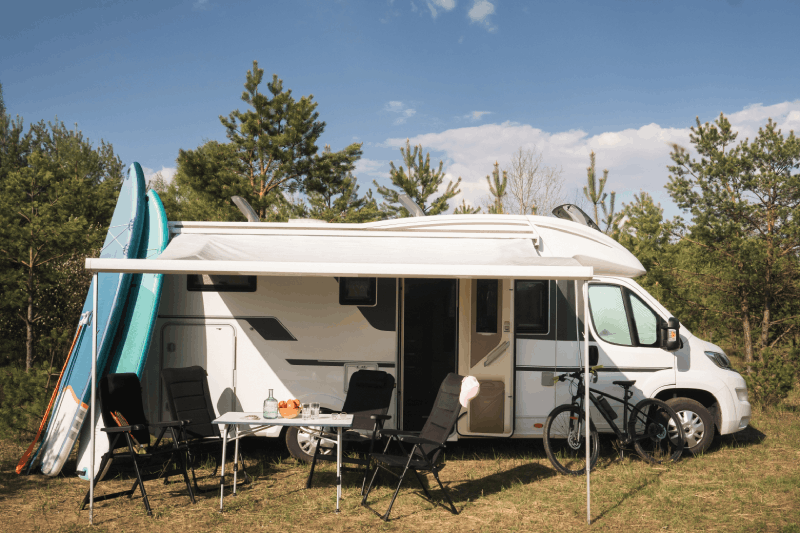
How Do Tension Ropes Attached to the Caravan Increase Stability?
Instead of just securing the awning legs to the ground, attaching diagonal tensioners to the caravan's chassis or wheels increases stability through the "triangulation" principle. This method significantly prevents the awning from swaying side to side or front to back. Since the chassis is the heaviest and most solid point of the caravan, directing the force created by the wind directly to this mass makes it difficult for the awning to move. However, when making this connection, protective pads should be used to prevent the ropes from rubbing against the caravan's paint or sharp edges. This method especially enhances wind safety in long-term stays.
Do Awning Lights and Decorations Pose Risks in Windy Weather?
Many campers love to hang LED strips, lanterns, or decorations on the arms of the awning. However, in windy weather, these objects can act as "pendulums," potentially damaging both the awning and the caravan. A swinging lantern can hit the caravan's window and break it or pull on electrical wires, causing a short circuit. When wind intensity increases, you should remove all these accessories before packing up the awning. Even just removing these accessories can reduce the unnecessary load and wind resistance on the awning (drag), allowing the main mechanism to operate more smoothly.
Why Are Wind Forecast Applications Indispensable for New Campers?
Experienced campers know how to feel the wind, but technological support is essential for beginners. Applications like "Windy" and "Windfinder" not only show the general weather conditions at your camping spot but also provide hourly updates on wind gusts and directions. Even if a wind's steady speed is 20 km, the gust speed can reach 40 km; it is usually these sudden gusts that cause damage. Using these applications to foresee when a storm will start gives you enough time to pack up the awning. Knowing that the wind will increase at night allows you to take precautions before battling a storm in the middle of your sleep.
How to Prevent the "Parachute Effect" by Managing Airflow Under the Awning?
The biggest enemy of the wind is being trapped in a closed area without an escape. Leaving pathways for the wind to "escape" during your awning setup prevents the parachute effect. For example, instead of completely closing the side panel facing the wind, it is healthier to position it at an angle that cuts the wind's speed but allows passage. Small air channels located at the very top of the awning fabric (found in some models) help relieve pressure. If your awning is "flapping" too much, lowering the front bar slightly to allow the air to escape over the fabric is an effective tactic to reduce air accumulation underneath.
What is the Flexibility Difference Between Carbon Fiber and Aluminum Poles?
The flexibility of the material used in awning support systems determines performance under wind. Aluminum poles are lightweight and provide a certain degree of rigidity; however, they can break or bend permanently when the limit is exceeded. Carbon fiber or high-quality fiberglass poles have a much higher flexibility margin; they bend when the wind hits and return to their original shape when the wind dies down. If you are frequently camping in windy areas, choosing support rafters or additional legs made from materials with flexibility can prevent the system from "breaking under stress" and avoid significant damage.
Which is Safer Against Wind: Manual or Electric Awnings?
Both systems have their advantages and disadvantages. Manual awnings can be more resistant to wind if properly set up, as they allow for more securing (tension ropes, etc.) during installation. However, electric awnings can be retracted much faster in sudden dangers thanks to wind sensors. Trying to pack a manual awning alone after a storm can be quite dangerous because the fabric can sweep you away like a sail. In electric systems, you can switch to safety with the push of a button. Ultimately, while sensor-equipped electric systems are superior in terms of safety, well-tensioned manual awnings are more reassuring in terms of structural integrity.
Is it Possible to Protect Against Wind Energy While Also Benefiting from It?
In caravanning, wind is often seen as an enemy, but some users try to convert wind into energy. However, care should be taken regarding the relationship between small wind turbines mounted on the caravan and the awning. The vibrations and turbulence created by the turbine can add extra load to the awning's securing points. Additionally, while wind turbines are usually desired to be installed at the windiest point, the awning should be in the most sheltered spot. Since balancing these two opposing needs is challenging, prioritizing the safety of the awning in windy weather and relying on solar panels or portable turbines located in areas where the wind does not affect the awning is more logical.
What is the Last Resort for the Awning When a Storm or Hurricane Warning is Issued?
If an extreme weather event warning has been issued in your area, you should not think, "Will closing the awning be enough?" In very severe storms, even closed awnings can be dislodged. The last resort and safest method is to completely remove the awning and take it inside the caravan or a secure storage area. If this is not possible, the closed awning should be secured to the body of the caravan at several points with extra strong straps, effectively "bundling" it. In this case, the main goal is not to use the awning but to prevent it from being torn off and becoming a projectile that could cause severe damage to your vehicle. Instead of resisting nature, respecting its power and hiding completely is the smartest way.
How to Collaborate with Neighbors for Wind Safety in the Campsite?
Wind is a common problem, and cooperation in the campsite can be lifesaving. If you notice that your neighbor's awning is dangerously flapping in the wind but they are not in their caravan at that moment, intervention may be necessary. It is important to establish communication in advance for such situations in caravanning communities (such as leaving phone numbers). Sometimes, two or three people may be needed to close an awning; one person may not be able to control the fabric against the wind, but with the help of neighbors, a safe packing can be achieved. Remember, your neighbor's flying awning can hit your caravan and cause damage; therefore, wind safety is not just an individual responsibility but a collective one.