What is the Fundamental Basis of Ethical Rules in Wildlife Observation?
The fundamental basis of ethical rules in wildlife observation is the principle that the observer's presence should not affect the animal's natural behaviors in any way. When a creature senses your presence, it activates its defense mechanisms, stops feeding, or becomes stressed to protect its offspring. This situation means drawing from the animal's survival energy. An ethical observer adopts the principle of hiding themselves as a part of nature and showing absolute respect to the animal in its living space. This awareness not only protects the animal but also gives you the chance to see real wildlife behaviors.
How Should Shoe Selection Be for Moving Silently?
Silence in nature is the first rule of invisibility. Shoe selection should minimize the sound produced when you step on the ground. Heavy boots with hard soles make loud noises when stepping on dry branches and leaves. Instead, shoes designed for nature with "softshell" soles or thin, flexible soles should be preferred. These types of shoes allow you to feel the ground beneath your feet, enabling you to maneuver before stepping on a branch. Additionally, having a sole pattern that does not hold mud and is slip-resistant reduces the noise of crunching on the ground, providing you with a significant advantage when approaching wildlife.
How Does Wind Direction Affect Observation Success?
Many wild animals, especially mammals, rely more on their sense of smell than their sense of sight. If the wind is blowing towards the animal from behind you, it can smell your scent from kilometers away and may leave the area before you even see it. Therefore, for successful observation, you should always feel the wind on your face. The "downwind" position, where the wind is blowing towards you, ensures that your scent is dispersed in a direction the animal cannot reach. Continuously checking the wind direction with a small dust bag or a light piece of string is one of the most effective ways to move like a professional ghost in nature.
Is Color Palette or Texture More Important in Camouflage Selection?
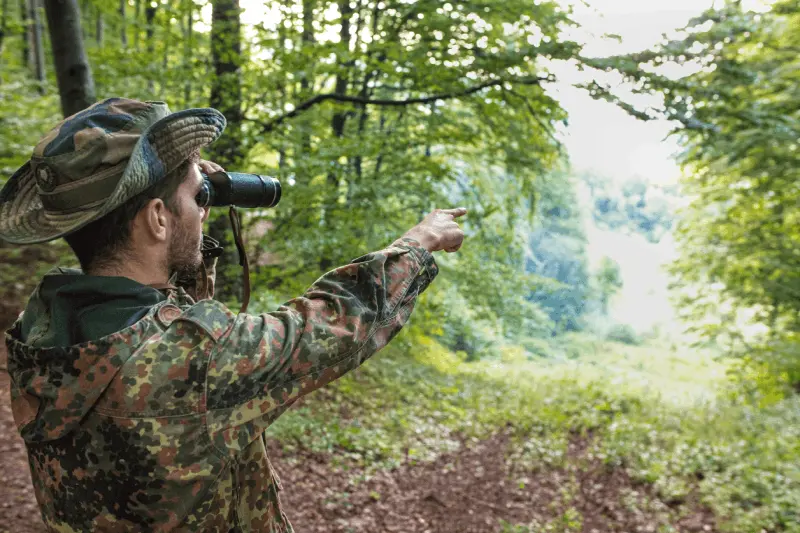
This topic is hotly debated among observers, but the reality is that texture is much more critical than color. Most wild animal colors are not perceived as sharply as we see them, but they perfectly perceive silhouettes and sudden movements. Instead of wearing a flat green outfit, pieces with patterned designs (camouflage) that disrupt the human body's shoulder and head lines should be chosen. 3D leaf-patterned camouflages or textured fabrics that blend with natural vegetation create visual depth, merging you with the surrounding branches or tree trunks. The important thing is not to appear as a foreign "clump" in nature and to become a part of the background.
How Can Eye Fatigue Be Prevented When Using Binoculars?
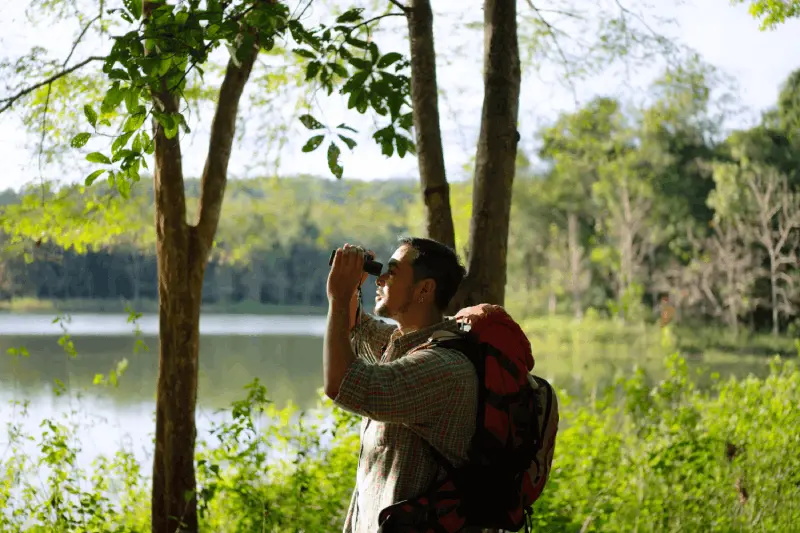
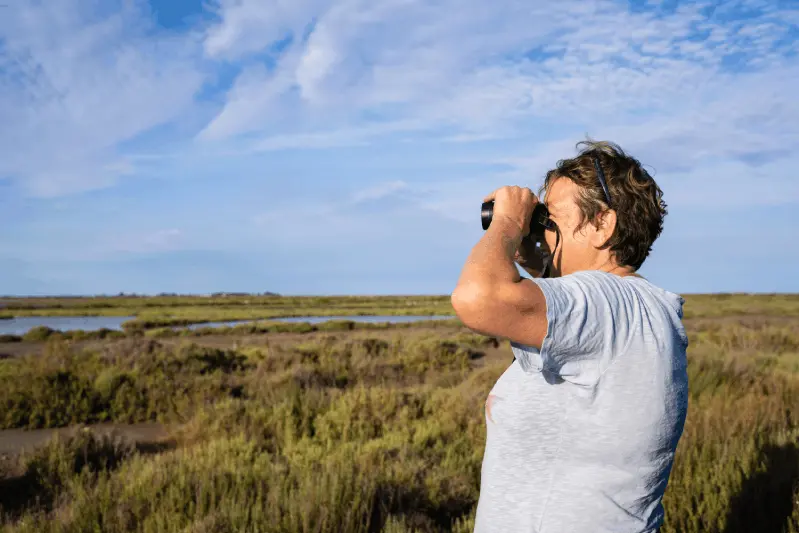
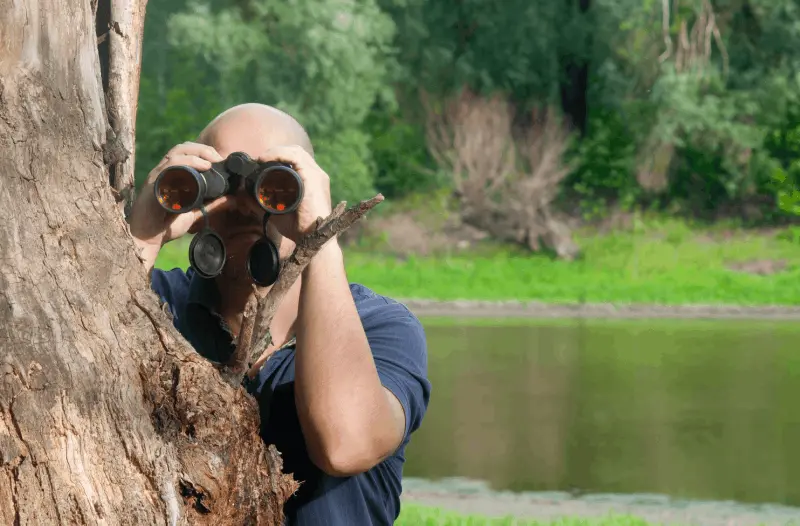
In long-term observations, eye fatigue can lead to distractions and missing details. To prevent this, a quality optical device with high light transmission should be selected first. The binocular's eye distance (interpupillary distance) should be precisely adjusted to minimize eye fatigue. Instead of resting your eyes on the binoculars, keep them a few millimeters away and look at a distant point without binoculars every 15-20 minutes to relax your eye muscles. Additionally, using a device that distributes the weight of the binoculars to the shoulders instead of the neck helps reduce physical fatigue, keeping your eyes more stable.
How to Protect Animals' Space When Shooting with Telephoto Lenses?
In photography, "closeness" should be visual rather than physical. Using telephoto lenses with a focal length of 400mm, 600mm, or more allows you to maintain the critical flight distance between you and the animal. Taking one more step towards the animal to capture a clearer shot can disrupt its feeding chain or cause it to abandon its nest. Using the optical power of your lens to document natural moments when the animal does not notice you is the greatest success. Remember, the best photograph is not one where the animal looks at the camera in fear, but one where it is focused on its own business.
Why Does the Playback Method in Bird Observation Carry Risks?
Playback, which involves recording bird sounds and playing them back to attract birds to your vicinity, is ethically quite controversial and risky. When a bird hears the sound of its own species, it perceives it as an invasion of territory by a rival. This can lead the bird to expend valuable energy fighting imaginary rivals instead of dealing with real competitors, finding a mate, or feeding its young. Especially during the breeding season, using playback can leave the bird's nest defenseless. Therefore, resorting to this method in order to see rare species constitutes a direct attack on the natural rhythm of wildlife.
How Can the Signs of Stress in Mammals Be Recognized?
The way to understand that a mammal has noticed you and is under stress is to read its body language. Ears erect, head suddenly freezing, tail stiffening, or constantly looking in your direction are the first warning signs. The animal may be experiencing the "calm before the storm." If the animal is stamping its feet, huffing, or making short bluff charges, it means you have violated its distance. In this case, retreating slowly and confidently without making eye contact is essential for both your safety and the animal's peace.
Why is Using Red Light in Night Observations Essential?
For nocturnal wild animals' eyes have evolved to see in low light and are extremely sensitive to white light. A strong white light can temporarily blind the animal and cause it to lose its orientation; this leaves it defenseless against predators. Red light occupies less space in the visual spectrum of most animals (especially mammals) and prevents their pupils from overreacting. Additionally, red light does not disrupt human night vision (rod cells), allowing you to continue seeing your surroundings when you turn off the light.
How to Prevent Environmental Damage While Tracking Footprints and Scat?
Tracking is a great way to find wildlife, but the fundamental rule during this process is "not to leave a trace." When examining a track, you should not walk over it, and you must not crush the surrounding vegetation. When conducting scat analysis, you should avoid direct contact to prevent pathogens from the animal from contaminating you or your scent from permeating the area. If you have to deviate from the main paths while tracking, you should ensure that the places you step on return to their original state and make the wildlife corridors (the paths frequently used by animals) your own walking route to avoid "human scenting" the area.
What Safe Distance Should Be Maintained While Observing Near Water Sources?
Water is the most critical and stressful area for wildlife. Animals are most vulnerable when drinking water. Therefore, lying in ambush right next to water sources (spring, pond, riverbank) is a significant disrespect. Ideally, you should wait at a well-hidden spot that clearly sees the water source but is at least 100-200 meters away. If animals hesitate or constantly scan the area when coming to drink, they have likely sensed your presence or smell. In this case, you should immediately expand the area to leave them a safe drinking space.
How Does Sharing Location on Social Media Endanger Wildlife?
One of the biggest mistakes made by wildlife observers in the modern world is sharing the photos they take with exact location (geotag) data. Specifying the exact location of sensitive species, rare owls, or large mammals can lead to dozens of uncontrolled people and worse, poachers, coming to that area the next day. If you want to share the location of a species, you should only provide a general area name or wait to share it after some time has passed. Your digital footprint should not erase the real footprint of wildlife.
Why is Energy Conservation Critical When Observing Wildlife in Winter?
Winter is a survival test for wildlife. Food sources are limited, and animals account for every calorie to maintain their body temperature. Causing a deer or a flock of birds to flee can lead to them exhausting the energy they would spend for hours in just a few minutes. This energy loss can lead to the animal's death, especially in harsh winter conditions. The "zero disturbance" rule should be applied much more strictly during winter observations, and the approach distance to animals should be increased at least twice compared to summer.
What is the First Intervention to be Made When Encountering Baby Animals?
If you see a lone baby in nature, your first instinct may be to help it, but often the best "intervention" is to quietly walk away from there. In the wild, mothers hide their young in safe places to search for food and return at specific intervals. Your presence there may cause the mother to be scared and unable to approach, leading to the baby being left hungry or abandoned. If the baby appears injured or sick, do not touch it and do not leave your scent. If it truly needs help, local wildlife rescue units should be notified instead of intervening.
How Should Personal Care Products Be Selected to Prevent Scent Pollution?
The perfumes, deodorants, scented soaps, and even the softener scents in clothes used by humans are a "danger" signal for wildlife. Before going into nature, you should wash with unscented soaps and clean clothes with fragrance-free detergents. Additionally, smoking during observation or consuming strongly scented foods can completely eliminate your invisibility due to the scent molecules released into the environment. If possible, you can achieve a "natural" scent profile by leaving your clothes outside overnight or in a natural pine/soil mixture.
How Should Communication Be Maintained in Group Observations?
Observations made with multiple people increase the margin of error. It is essential that everyone in the group has the same ethical awareness. Communication should not be done by talking, even in whispers; instead, pre-agreed hand signals should be used. Walking in a single file reduces noise and minimizes visual pollution. When one person spots a living creature, they should stop suddenly and warn the others with a hand signal. To avoid the group appearing crowded, positions should be taken behind trees and rocks whenever possible. Remember, the more "human noise" there is in nature, the less "wild noise" remains.
What is the Importance of Stopover Points During Migration Seasons?
Specific stopover points for migratory birds and mammals are the most critical parts of their thousands of kilometers long journeys. These points are stations where animals refuel. Excessive observation pressure in these areas during migration season can cause animals to continue their journey without resting and feeding adequately. This can lead to mass deaths along the migration route. Instead of entering sensitive areas, it is of great importance to observe them from a distance and not to block the animals' migration routes.
Why Should We Consult Local People and Experts?
The best knowledge about the wildlife of a region comes from the locals and biologists working there. Information gathered from local people can guide you about the animals' migration times or dangerous areas. Expert opinions help you understand which species are more sensitive during certain periods (for example, the incubation period). Acting on this information not only increases your observation success but also prevents you from unknowingly entering a species' nesting area. Knowledge is as valuable a tool for observation as equipment.
How to Isolate Sound-Producing Elements While Organizing Your Equipment Bag?
A metal sound from your backpack or the noise of a Velcro pocket opening can ruin all your efforts while moving quietly. Prevent zippers in your bag from clashing by securing them with rubber bands. Prefer silent zippers or buttoned pockets instead of Velcro compartments. Using a soft plastic (soft flask) instead of metal for your water bottle prevents the sloshing sound that occurs as the water decreases. Also, ensure that the straps of your bag do not squeak while moving; if necessary, you can apply a small amount of paraffin to the joints to silence them.
Why is Tire Pressure Important When Entering Nature with Vehicles?
If you are reaching an observation area with a vehicle, the first rule is not to go off the roads. However, reducing tire pressure while moving on soft ground helps minimize the pressure the vehicle exerts on the ground, causing less damage to the vegetation and allowing the engine to work more quietly. Stopping the engine while observing with the vehicle cuts off exhaust fumes and vibrations. Animals often perceive vehicles as a "single mass," so observing from inside the vehicle can sometimes be less disturbing than being outside; however, this is only true if you do not lean out of the windows or make sudden movements.
How to Determine Wildlife Corridors When Setting Up a Campsite?
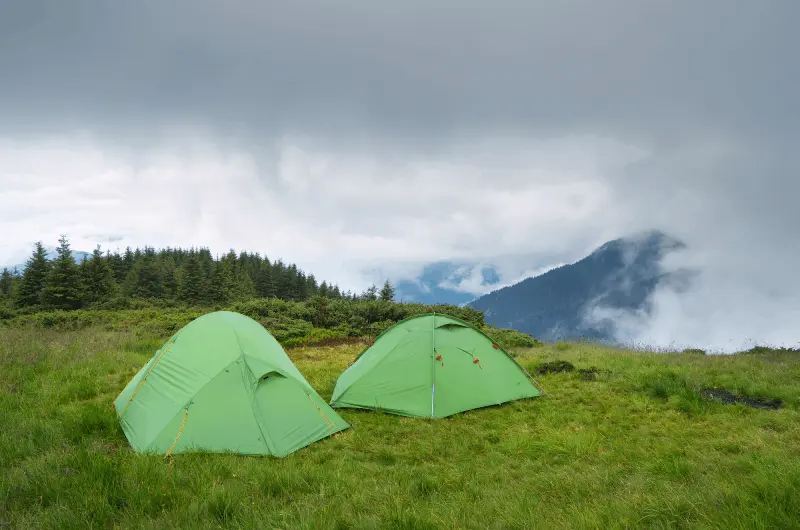
If you want to camp in nature, you should not set up your camp on the animals' water access routes or regular migration corridors. To detect animal trails, look for scratches and footprints on the ground. Setting up camp at least 50 meters away from these paths prevents you from disrupting the nighttime activities of wildlife. Additionally, keeping your kitchen separate from your sleeping area and storing food odors in sealed bags is vital to prevent curious bears or boars from being attracted to your camp. Your safety is directly related to the peace of wildlife.
How to Approach Micro Habitats in Insect and Arthropod Observation?
Observing small creatures requires as much sensitivity as observing large mammals. When you lift a stone or a fallen tree trunk, you disturb the homes of thousands of microorganisms and creatures living there. If you lift a stone to see an arthropod or insect, you must return the stone to the same position and angle after your observation. Micro habitats are very vulnerable to external factors; changing the position of a stone can disrupt the moisture balance underneath and end the life there.
How Does Keeping a Field Notebook Contribute to Scientific Data?
Noting your observations in a notebook (date, time, weather conditions, species behavior) is not only a beautiful memory for you but also valuable data for citizen science. By entering this data into platforms like eBird or iNaturalist, you can help scientists track species distribution and population trends. However, remember to use the "sensitive data" filter when sharing coordinates of a rare species on these platforms to protect that species from the pressures of curious crowds.
What Psychological Effects Do Drones Have on Wildlife?
While drones have revolutionized wildlife photography, they pose a significant threat to wildlife. Many birds and mammals perceive a flying drone as a predator (eagle or hawk). This perception can cause the animal to panic, increase its heart rate, and even lead to stress-related abandonment of young. Drone use is often prohibited in national parks, and there is a scientific basis for these bans. If it must be used, it should be done from very high altitudes and with devices that have zoom capabilities, continuously monitoring the animal's reaction.
Is It Possible to Observe Without Interfering with the Food Chain?
Feeding animals (hand-feeding) is one of the worst things you can do to them. When a wild animal becomes accustomed to receiving food from humans, it loses its hunting or foraging skills. Worse still, because they see humans as a "food source," they approach human settlements, which often results in the animal being shot or hit by a vehicle. A seemingly "harmless" piece of bread can disrupt a bird's digestive system. A true observer never interferes with the food chain in nature and watches the animal find its own natural sustenance from a distance.
What Behavioral Changes in Wildlife Occur During Rainy Weather?
Light rainy weather can actually be the most productive times for observation. The sound of rain masks your footsteps and makes it harder for your scent to disperse in the air. Many animals come out into open areas to feed on worms or insects that appear after the rain. However, during heavy storms, animals retreat completely to their shelters. Observing in rainy weather... While it does not let water through when making a tent, silent raincoats should be preferred instead of "rustling" synthetic fabrics. The smell of wet soil and the refreshed state of nature offer you a unique observation atmosphere.
How to Choose Safe Observation Points in Rocky and Steep Terrain?
When you climb to high altitudes to observe species such as mountain goats, raptors, or snow leopards, you should observe without putting yourself at risk. Standing on cliff edges or in active avalanche (landslide) areas is dangerous for you and can scare the wildlife below with the sound of a falling rock. The best observation points are those just below the ridgelines that do not show you as a silhouette against the sky. Sitting behind a rock and scanning the surroundings with just the top of your head reduces the chance of wildlife noticing you by 90%.
What Protocols Are Applied When Approaching Endangered Species?
When you encounter a critically endangered species, your responsibility increases tenfold. These species are often the most intolerant to human pressure. In such cases, you should switch from "observation" mode to "protection" mode. You should never approach the animal within 500 meters; if the animal is coming towards you, the area should be immediately vacated. When sharing photos of these species, it should never be understood where the background is. Remember, your momentary curiosity could cost the life of one of the last representatives of a species in the world.
How to Maintain Patience and Focus During Long Waits?
Wildlife observation is 10% action, 90% waiting. Standing still for hours without moving is physically and mentally exhausting. To maintain your patience, create a comfortable seating arrangement (a portable lightweight stool or an insulated mat). Dress in layers to keep your body heat; because when you remain still, you can cool down very quickly. To focus your mind, look at the small details around (insects, movement of leaves) but continue to scan the main target area with the edge of your vision. Patience is the price you must pay until nature offers you its greatest gift.
What Are the Harms of Light Pollution and Artificial Lighting to Nocturnal Species?
Powerful flashlights and camp lights used in nature disrupt the biological clock (circadian rhythm) of nocturnal species. Owls, bats, and nocturnal predators avoid areas with artificial light. This leads to a narrowing of their hunting grounds. When camping, illuminate only the area you need with low lumen and preferably yellow/orange toned lights. Direct the light downwards, not towards the sky or tree branches. Darkness is a refuge for wildlife; it is essential not to invade this refuge with artificial light.
What Are the Long-Term Effects of Litter Left in Nature on Wildlife Health?
The saying "Leave only footprints in nature" is not a cliché but a necessity. Even "organic" waste like apple cores or banana peels can be foreign and harmful to wildlife. These wastes attract animals to areas heavily populated by humans. Plastic waste is much more lethal; a piece of plastic that enters a bird's stomach creates a feeling of fullness, causing the animal to die of starvation. At the end of the observation, collecting not only your own trash but also the litter left by others is the noblest way to be a true nature protector.
What Should Be Done in Cases of Illegal Poaching Encountered During Observation?
If you notice illegal hunting activities, traps set up, or vehicles entering restricted areas during your observation, never intervene directly. This could pose a life-threatening risk to you. The best thing to do is to collect evidence with photos or videos from a safe distance, record location data, and immediately report the situation to the Nature Conservation and National Parks (DKMP) units or the gendarmerie. Remaining a silent observer is sometimes the most effective way to defend wildlife against poachers.