Why is Lightweight the Most Critical Priority in Caravan Furniture?
Weight management in caravans is not just about fuel economy; it is also vital for driving safety, braking distance, and suspension lifespan. A heavy caravan increases the risk of swaying in turns and puts excessive load on the braking system during descents. Reducing the weight of furniture helps keep the vehicle's center of gravity low, thus providing a more stable driving experience. Additionally, in many countries, there is a 3,500 kg limit for vehicles that can be driven with a Class B license. To avoid exceeding this limit, every kilogram must be accounted for. Lightweight furniture allows you to carry more water, food, and personal items, increasing your freedom.
Is Poplar Plywood Really the Ideal Material for Caravan Furniture?
In the caravan industry, "Poplar Plywood" is considered the gold standard due to its lightness and workability. Poplar is approximately 30-40% lighter than birch or pine plywood and holds screws well due to its fibrous structure, with a high degree of flexibility. However, being a softwood, poplar is sensitive to impacts on its surface. To overcome this issue, applying HPL (High-Pressure Laminate) coating increases surface hardness and provides a decorative appearance. Considering the variability of humidity levels inside the caravan, poplar's resistance to moisture makes it stand out from other composite panels.
How is the Skeleton System Established with Aluminum Sigma Profiles?
Using aluminum sigma profiles (T-Slot) instead of traditional wooden frame systems is a modern and ultra-light approach in caravan furniture making. The strength-to-weight ratio of aluminum is much higher than that of wood. A skeleton made with sigma profiles can be disassembled and rearranged at any time due to its modular structure. In this system, furniture panels are no longer load-bearing but serve only as coverings. This allows for thinner panels (for example, 4mm or 6mm) to be selected. The aluminum skeleton provides excellent rigidity, especially for securing heavy equipment (refrigerators, battery banks, etc.) and is unaffected by the vehicle's vibrations.
How Much Weight Does Sandwich Panel Technology Reduce in Furniture?
Sandwich panels consist of a lightweight core (XPS foam, honeycomb structure, or cork) placed between two thin surface layers (usually thin plywood or fiberglass). This technology provides up to 50% weight savings compared to a standard 15mm plywood. For example, when you make the side panel of a kitchen cabinet from a 12mm XPS core sandwich panel instead of solid plywood, you eliminate a massive load without compromising structural strength. The biggest challenge with these panels is the edge banding process; however, this issue can be aesthetically resolved with special aluminum profiles or epoxy fillers.
How is the Routing Technique Applied in Furniture Design?
Weight reduction is achieved not only through material selection but also by strategically removing material from the existing material. Creating circular or hexagonal voids in the unseen parts of furniture panels (back surfaces, internal compartments, under bases) with a CNC machine reduces weight without compromising the structural integrity of the panel. This technique, also known as the "Swiss Cheese" method, leaves load-bearing points solid while hollowing out areas that are not critical from a static perspective. With this method, it is possible to save between 30 to 50 kilograms from the total weight of a caravan's furniture.
Can Paulownia (Kiri) Wood Be Used in Caravan Decoration?
Paulownia is one of the fastest-growing and lightest hardwoods in the world. Known as the "tree of the future," Paulownia is even lighter than poplar and has excellent dimensional stability. Its use in caravan ceiling coverings, cabinet doors, and decorative elements is becoming increasingly common. Its high thermal and sound insulation properties also contribute to the internal climate of the caravan. However, due to its very soft texture, it is not recommended for use in areas prone to wear, such as floors. When varnished or treated with a light oil, its exotic appearance adds a premium feel to the caravan.
How are Furniture Panels with XPS Foam Cores Produced?
Producing your own lightweight panel offers customization options while reducing caravan costs. In this process, high-density XPS foam boards with a thickness of 10mm or 20mm are pressed between two 3mm poplar plywood sheets using polyurethane glue. These "homemade" sandwich panels are incredibly sturdy and lightweight. They provide excellent results, especially for bed platforms, spacious under-counter cabinets, and overhead cabinets. When cutting these panels, using sharp knives and "framing" the edges with wooden strips is a critical step to increase screw-holding capacity.
How is the Balance of Weight and Durability Established in Kitchen Countertop Selection?
The kitchen countertop can be one of the heaviest single-piece objects in the caravan. Materials like solid oak or marble are too heavy for a caravan. Instead, laminate covering over 12mm poplar plywood is the most balanced solution. If a more luxurious appearance is desired, thin versions of "Solid Surface" (Acrylic) materials can be applied over a lightweight substrate. Additionally, hollow bamboo panels can provide both sustainability and an aesthetic alternative. While reducing the weight of the countertop, sealing the edges of sink and stove cutouts with epoxy ensures long-lasting protection against water leaks.
What Lightweight Connection Elements Should Be Used in Movable Furniture Parts?
The hinges, rails, and locks used in caravan furniture can create significant weight when combined. Instead of steel drawer rails, plastic-based low-profile rails or simpler and thinner mechanisms without "soft-close" features can be preferred. In cabinet doors, simple mechanical arms or magnetic holders should be used instead of heavy gas struts. Additionally, using the "Kreg Jig" (hidden screw) method instead of heavy L-brackets when assembling furniture provides a cleaner appearance and minimizes metal usage, saving weight in grams.
How is Static Load Calculation Done in Upper Cabinet Design?
Overhead cabinets are one of the most influential factors affecting the vehicle's center of gravity. When designing these cabinets, "lightness" is not an option but a necessity. Instead of using 12mm panels in the skeleton of upper cabinets, it is more logical to use 8mm panels and supporting strips. Keeping the depth of the cabinets limited to 25-30 cm naturally restricts the weight of the items to be placed inside. Additionally, mounting these cabinets directly to the vehicle's chassis or support columns ensures that the load is distributed within the furniture itself. Using plexiglass or woven fillers instead of glass in the doors further reduces weight.
Should a Slatted System or Lightweight Panel Be Preferred for Caravan Bed Platforms?
The bed platform is critical for both ventilation and weight. Using a solid board can cause the mattress to sweat and mold. Instead, using plastic spring systems like "Froli" or thin poplar slats is much lighter. The slatted system allows the mattress to breathe and conforms to body ergonomics. If a panel is to be used, wide ventilation holes should be CNC cut into it. These holes not only provide ventilation but also reduce the panel's weight by 20%.
How to Combine Water Insulation and Lightness in Bathroom Modules?
Caravan bathrooms are often constructed with heavy materials due to the need for water insulation. However, using CTP (Glass Fiber Reinforced Plastic) panels or thin PVC sheets can create a waterproof and ultra-light wet area. A thin polyurethane coating applied over a wooden skeleton can replace heavy ceramic tiles. Choosing ready-made lightweight composite products as shower trays avoids the need for heavy custom-made metal or cast iron trays. In the bathroom door, instead of a heavy panel, folding accordion doors or lightweight waterproof curtains can be preferred to save space and weight.
How Does the Frame-Panel Method Affect Weight in Furniture Doors?
Instead of doors made from full-size solid plywood, the "Shaker" style frame-panel method is very efficient in caravans. In this method, the frame of the door is made from solid wood or plywood, while the middle panel is selected from a very thin material like 3-4mm. This way, the total weight of the door is reduced by 40% while maintaining structural durability. Using fabric, woven materials, or thin perforated metal sheets instead of wood in the middle panel provides ventilation and adds a textural richness to the interior.
What is the Relationship Between the Weight Center in the Caravan and the Placement of Furniture?
As important as lightening furniture is, where you place them is also crucial for driving dynamics. The heaviest furniture (kitchen, water tanks, battery cabinets) should be positioned between the vehicle's axles and as low as possible. Overhead cabinets and upper-level storage areas should only be used for lightweight textile products. Distributing the weight evenly between the left and right sides of the vehicle ensures balanced handling in turns. During the furniture design phase, the weight of each module should be noted, and an "weight map" should be created to address imbalances during the design phase.
Should Thin Acrylic or Paint Be Used Instead of Laminate Coating?
The method chosen for finishing panel surfaces directly affects the weight per square meter. HPL laminates are durable but add extra weight to each panel due to their thickness. Water-based light paints or natural oils allow the wood to breathe and add almost zero extra weight. Alternatively, thin decorative foils (vinyl wrap) that have become popular in recent years provide a modern look to the furniture without increasing weight. If high durability is required, it is wise to use laminate on the outer surfaces and a thin primer or paint on the inner surfaces.
Why is CNC Cutting Technology an Advantage in Reducing Furniture Weight?
CNC (Computer Numerical Control) machines not only allow cutting furniture parts with millimeter precision but also offer the possibility to apply complex weight-reducing patterns. A designer can simulate the panel's durability in a computer environment and thin out non-load-bearing points using the "pocketing" method. Additionally, through mortise and tenon designs, the need for screws and metal connection elements is reduced. Furniture produced with CNC fits together like a puzzle, which shortens assembly time and provides a monolithic resistance against vibrations.
Are Recycled Composite Materials Suitable for Use in Caravans?
In sustainability-focused caravan designs, lightweight composite panels made from recycled plastics or agricultural waste are gaining attention. These materials generally have natural resistance to water and do not harbor bacteria. However, the screw-holding capacity and thermal expansion coefficients of these panels differ from wood. Therefore, when using these materials, special adhesives and supporting aluminum profiles should be preferred instead of mechanical connections. In the future, cork panels are also expected to find more space in caravans due to their lightness and insulation capabilities.
How Does Modular Furniture Design Reduce the Total Weight of the Caravan?
Modular design allows a single piece of furniture to serve multiple functions. For example, transforming a dining table into a bed platform or using the space under a seating group for both storage and water tank storage eliminates the need to produce separate furniture units. The reduced number of pieces naturally means a decrease in total weight. In modular systems, lightness is achieved through "smart geometry." By avoiding unnecessary panels, minimal designs that only contain functional surfaces also make the interior space of the caravan appear more spacious.
What is the Weight Difference Between Magnetic Door Holders and Push-Button Locks?
Locking mechanisms are essential to prevent doors from opening during driving in caravan furniture. Classic metal push-button locks are secure, but each weighs about 100-150 grams. Assuming there are 20 doors in a caravan, just the locks can add 3 kg of extra weight. Instead, using neodymium magnets with high pulling power and lightweight plastic latches can reduce the weight by 80%. Magnetic systems are also invisible from the outside, providing a more minimalist and modern interior design.
What is the Strategic Connection Between Caravan Floor Insulation and Furniture Installation?
The caravan floor is the foundation for all furniture. Instead of installing furniture on a heavy wooden floor, the lightest solution is to use XPS foam insulation topped with a thin (9mm) plywood and then a vinyl covering. When mounting furniture to the floor, support points should be used that are directly screwed into the vehicle's metal base (bypassing the insulation). This way, the furniture holds the floor as a whole and prevents the floor from flexing during vibrations. This strategic installation ensures that the furniture skeleton remains rigid with less support.
How to Avoid Extra Weight When Creating Hidden Storage Areas?
Every void in caravans is a storage opportunity; however, every new shelf or drawer means extra panels and weight. In a lightweight design, instead of heavy drawer boxes, fabric storage boxes or mesh pockets can be used. In areas like step interiors or under seats, simple hinged panels that open from the top should be preferred instead of complex lid mechanisms. Using thin plastic sheets (coroplast) instead of wooden panels to divide the insides of storage areas minimizes weight while ensuring organization.
Do Curved Designs in Caravan Furniture Provide Weight Savings?
Curved furniture is often thought of as aesthetic but actually offers structural advantages as well. A corner formed by bending a thin plywood (for example, two layers of 3mm) can be lighter and more resilient than the joining of two thick panels in an L shape. Curved structures reduce the risk of injury in collisions and increase maneuverability in tight spaces. Additionally, since curved forms distribute weight more evenly across the surface, they allow for a reduction in the number of supporting elements in the internal skeleton, providing indirect weight savings.
Can Folding Tables and Counter Extensions Be Lightened?
Caravan tables are often bulky and heavy. Instead of folding or telescopic table legs, lightweight aluminum rail systems that are wall-mounted and only opened when needed can be used. The tabletop itself can be produced using a method called "torsion box," which has a hollow honeycomb structure, making it strong enough to sit on while being light enough to lift with one finger. In kitchen countertop extensions, lightweight composite sheets with simple mortise systems can be preferred instead of heavy hinges to optimize weight management.
Is it Logical to Integrate Electrical and Plumbing Channels into Furniture?
Plastic channels and coverings used to carry wires and pipes add extra weight. In a smart furniture design, the backs of cabinets or voids under bases already serve as channels. Strategic holes opened in the furniture skeleton allow the plumbing to pass directly through the furniture. This not only reduces weight but also facilitates access to the plumbing. Embedding electrical control panels directly into a furniture door or side panel eliminates the need for an additional housing box.
Does Using Aluminum Corner Brackets Increase Weight?
Many caravan builders use heavy metal corner brackets to reinforce furniture joints. However, when quality wood glue and proper joining techniques are used, these brackets are unnecessary. If corner protection is needed, thin anodized aluminum profiles should be used instead of heavy steel. These profiles protect panel edges from impacts and provide a modern industrial aesthetic. It should be noted that even 50 small metal corner brackets can create an unnecessary load of 1-2 kilograms when combined.
Why is the Use of Flexible Panels Important in Caravan Ceiling Furniture?
The ceiling sections of caravans are often curved, making it difficult to cover these areas with standard flat panels. Flexible plywood, known as "Flexi-ply," provides great ease in the lower parts of ceiling cabinets and in corner transitions. This material reduces the need for heavy screws and tensioners during installation since it takes shape without forcing. Flexibility in ceiling furniture allows the furniture to adapt to the twisting movements of the vehicle while driving, preventing creaking and rattling.
How are Safety Standards Maintained When Making Lightweight Furniture in Caravans?
The weight reduction process should not go so far as to cause the furniture to come loose in the event of an accident. Especially cabinets that store heavy items should be securely attached to the vehicle's main chassis with steel bolts. Since lightweight panels have low screw-holding capacity, "inserts" (reinforcements) made of solid wood should be placed at connection points. Lightweight techniques should never be applied in critical areas such as seatbelt attachment points; certified and robust structures should be maintained in these areas.
How are Professional Weight Reduction Techniques Applied in DIY Caravan Conversions?
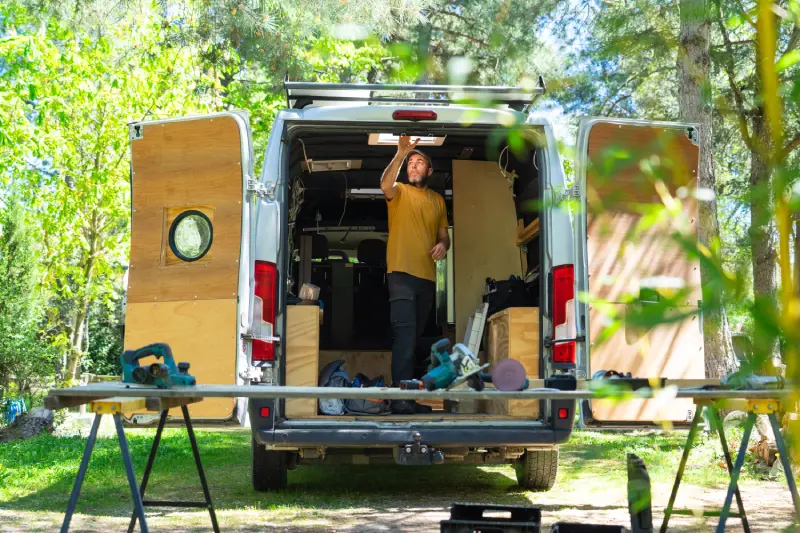
A hobbyist making their own caravan can achieve similar results even without professional press machines. Very strong sandwich panels can be produced at home using the vacuum bagging method. Additionally, creating "honeycomb" patterns on the backs of panels with a hand router is possible with a simple template. The important thing is to weigh each piece's weight with a kitchen scale during the design phase and ask, "Can I make this piece thinner?" or "Can I use mesh instead of wood here?"
Does the Choice of Glue and Adhesive Affect Weight in Caravan Furniture Manufacturing?
It may be surprising, but the weight of the glue used throughout a caravan can amount to several kilograms. Water-based white glues lose significant weight when dried, while some heavy epoxy fillers remain as they are. Modern polyurethane (PU) marine glues create a very strong bond even when used in small amounts and are resistant to moisture. In panel coverings, using spray-based lightweight adhesives instead of contact adhesives speeds up the work and minimizes the extra load on the surface.
Do Hanging Systems Instead of Legs Provide Space and Weight Savings?
Especially in seating groups and under-counter cabinets, "floating" designs that rely on wall support instead of heavy furniture legs that rest on the floor can be preferred. In this system, the furniture is suspended from reinforced strips on the vehicle's side walls. Leaving the floor empty facilitates cleaning and makes the interior feel more spacious. Additionally, reducing the number of pieces that touch the floor also minimizes the amount of screws and brackets used in the assembly, saving weight in grams.
What Are the Risks of Lightweight Materials for the Maintenance and Longevity of Caravan Furniture?
Lightweight materials are generally more vulnerable to impacts and scratches. Poplar plywood or sandwich panels can easily be crushed by a hard object's impact. To reduce this risk, protective strips made of solid wood or aluminum should be applied to the corners and edges of the furniture. Additionally, very thin panels may sag over time due to moisture; therefore, lightweight supporting braces should always be used in wide openings. Regularly checking the connection elements is essential to maintain the performance of lightweight furniture on bumpy roads.
What New Generation Lightweight Materials Await Us in Future Caravan Designs?
Carbon fiber composites, which have seeped from the aviation and space industry into the caravan sector, could be the key to ultra-light caravans in the future. Although currently costly, carbon fiber furniture skeletons can weigh one-tenth of wood. Additionally, furniture parts with internal lattice structures produced using 3D printing technology will minimize weight by ensuring that the material is only used where needed. Bioplastics and mycelium (mushroom root) based panels are also candidates to become the new favorites in the caravan world in terms of both lightness and ecological footprint.
In conclusion, making lightweight furniture in a caravan is an art of balance. When combined with the right material selection, smart engineering techniques, and functional design, it is possible to create a living space that is both safe and aesthetic. Every kilogram you save from weight will return to you as more range and less stress on the roads.