Why Is the Capacity Determined by Manufacturers Often Misleading?
Camping manufacturers typically base capacity on a standard sleeping mat width (approximately 50-55 cm). This calculation assumes that people will sleep inside the tent like canned goods lined up side by side. However, in reality, people move, turn while sleeping, and have personal belongings beside them. If two people are camping, it is generally recommended to opt for a tent designed for three people for a comfortable space. This way, you prevent your sleeping bags from touching each other and ensure better air circulation throughout the night.
How Should Shoulder Width and Sleeping Bag Dimensions Be Taken Into Account?
When checking the floor width of a tent, you should consider your own shoulder width and the design of the sleeping bag you will use. Especially winter sleeping bags take up more space than usual due to their filling material. If you have broad shoulders or are using wider rectangular bags instead of a "mummy" type, the width measurement of the tent becomes crucial. A minimum width of 65-70 cm is considered the lower limit for a "comfortable" modern camping standard. If you do not leave this margin, you may touch the walls of the tent and get wet due to condensation.
Should the Luggage Area Be Included in the Tent's Internal Volume?
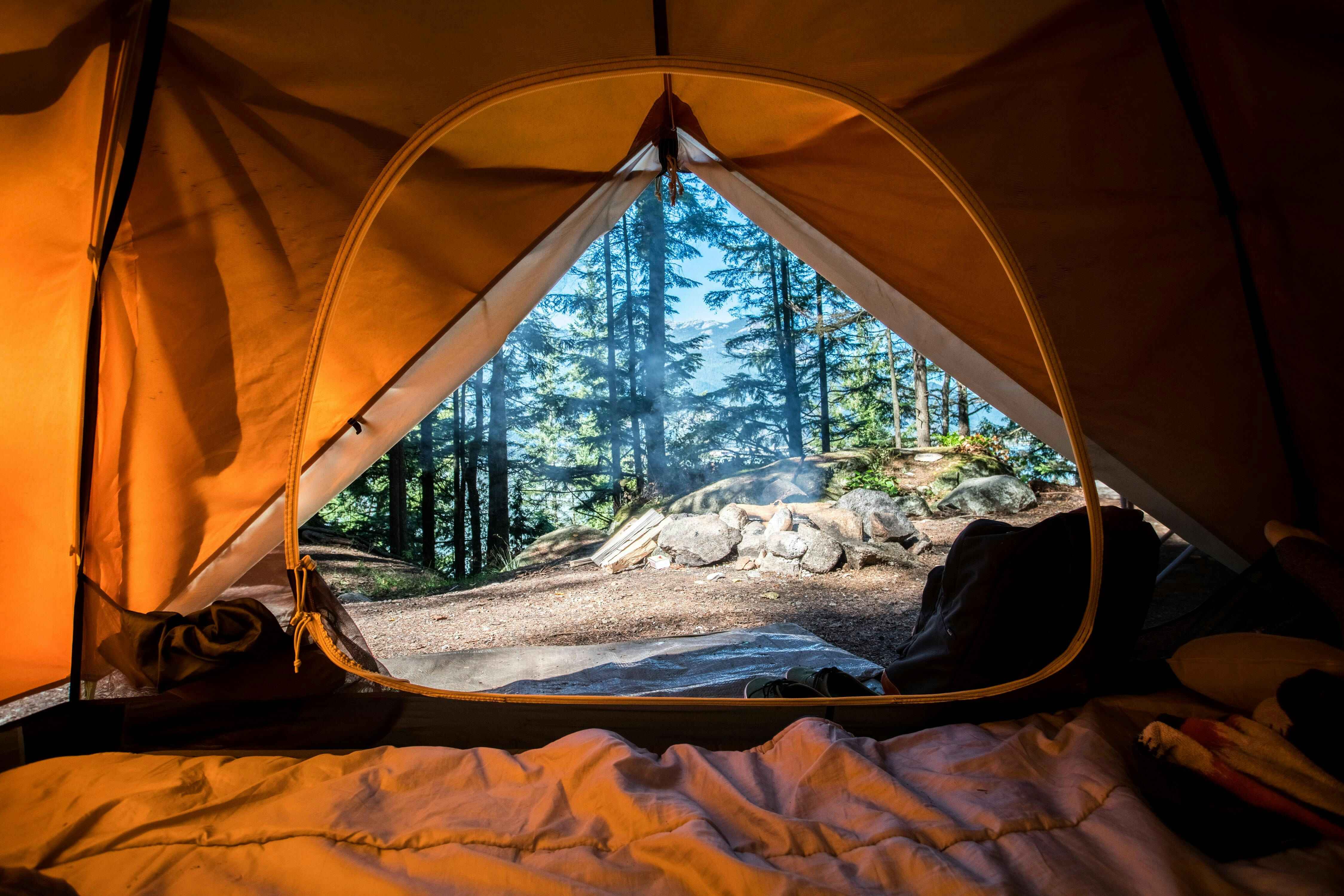
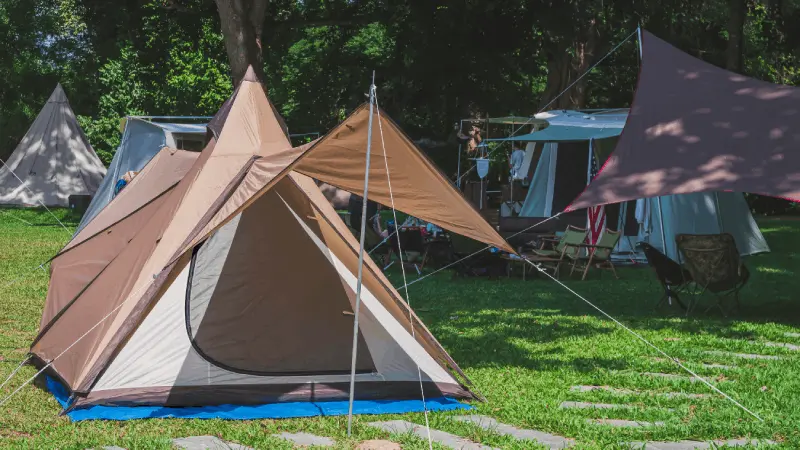
Many campers make the mistake of looking only at the total square meters of the tent. However, the luggage area (apsis/vestibule) is typically a space that is under the outer fly of the tent but outside the inner tent. The size of this area, where you will place your boots, wet clothes, and cooking gear, determines how "livable" the internal volume is. If you have a spacious luggage area, you can use the inside of the tent just for sleeping, allowing you to choose a smaller model. However, if you must keep everything inside, you should definitely add extra capacity for another person.
How Does Ceiling Height Affect Tent Comfort and Psychological Space Perception?
When choosing a tent, looking only at the floor area is thinking in two dimensions in a three-dimensional world. The peak height of the tent determines whether you can sit up inside and whether you can comfortably change your clothes. Tents with low ceilings are more resistant to wind, but they can create a claustrophobic feeling during long-term camping. If you plan to spend time inside the tent, read books, or seek shelter during stormy weather, you should prefer a height that allows your head not to touch the ceiling when you sit up straight.
Why Is Size a More Strategic Decision in Four-Season Tents?
The size of tents chosen for winter camping is critical in terms of insulation and safety. It is difficult to heat a very large four-season tent; your body heat may not be sufficient to warm the large air volume inside. However, in a very small tent, it becomes impossible to move around with your bulky winter clothes and large backpacks. Additionally, since more time will be spent inside the tent in winter, shoulder room and ceiling height become more important compared to a summer tent. The ideal is a volume that allows you to fit your gear without leaving unnecessary space.
How Is Weight and Space Balance Established for Backpackers?
If you are going to hike for miles with your backpack, you need to account for every gram. At this point, "ultralight" tents come into play. In these models, size is generally kept to a minimum. If you want to reduce weight, you should choose a snug two-person tent and plan to leave your gear outside (with waterproof covers). However, if you do not want to compromise on comfort, you should look into hybrid models that keep the weight per person around 1-1.2 kg but have a slightly larger internal volume. Never forget that as the size increases, the burden of carrying will also increase.
What Is the Effect of Floor Geometry on Sleeping Mat Placement?
The floors of tents are not always rectangular; some may be trapezoidal or hexagonal. Designs that taper towards the foot end are intended to reduce weight. However, this can prevent two standard rectangular mats from lying side by side. If you are using modern, wide, and thick mats, you should definitely check the floor map of the tent. In a tent that tapers at the foot, mats can overlap, which can significantly reduce sleep quality. Rectangular floors always offer the most efficient use of space.
How Much Square Meter Area Is Needed Per Person When Camping with Family?
For families with children, choosing a tent is like planning a small living room rather than a bedroom. Considering the play area for children, toys, spare clothes, and camping kitchen equipment, you should aim for approximately 2.5 - 3 square meters per person. For example, a tent of 10-12 square meters is ideal for a family of four, providing both sleeping and living space. Additionally, having partitions in family tents helps provide personal space for children and parents, aiding in maintaining peace during long-term camping.
How Should You Increase Tent Size for Your Pet?
If you have a dog with you while camping, you should not think of it merely as an "item." Your dog needs a space where it can have its own bed, move around during the night, and not damage your sleeping bag. A medium-sized dog takes up nearly half the space of a person. In larger breeds, it is most logical to add extra capacity for another person. Additionally, to prevent your dog's paws from damaging the tent floor, you will also need extra space to lay down an additional mat or protective cover on the ground.
Why Do Solo Campers Generally Prefer Smaller Tents?
Why Should You Prefer a Personal Tent?
If you are going camping alone, a personal tent may seem attractive for the weight advantage. However, most personal tents resemble a coffin; getting dressed inside or even bringing your bag can turn into a struggle. With just an additional 200-300 grams of weight, when you switch to a two-person tent, you can bring your bag, sit comfortably inside during bad weather, and feel less restricted. Most experienced solo campers accept the slightly increased weight for this "space luxury".
Why is Tent Length Critical for Tall Campers?
If you are over 1.85 meters tall, standard tents with a length of 210 cm can turn into a nightmare for you. When your feet and head touch the inner canopy of the tent while in your sleeping bag, it not only causes discomfort but also leads to moisture issues. The condensation that occurs as a result of the cold outside air meeting your breath inside moistens the tent walls. When you touch the wall, this moisture transfers to your sleeping bag. Tall individuals should look for models labeled "XL" or those with a length of at least 225-230 cm.
Is Extra Space Needed for Seasonal Gear Storage?
The equipment used in fall and winter camps takes up much more volume compared to summer gear. Thick jackets, boots, spare blankets, and large fuel canisters quickly fill the inside of the tent. If you are only camping in the summer, you can choose the capacity just right. However, if you are active in every season, you should consider the space that your winter gear will occupy. A camper's winter equipment requires approximately 40% more volume than summer gear. Therefore, you should choose the size according to the most challenging conditions for versatile use.
How Do Setup Area Restrictions Limit Size Selection?
While a large tent (for example, massive family tents for 6-8 people) offers great comfort, it may not always be possible to find such a wide and flat ground in every campsite. Especially in wooded areas or rugged terrains, the larger the tent's "footprint" area, the lower your chances of finding a suitable spot. You may not be able to squeeze a giant tent between two trees or find a flat space in uneven terrain. Therefore, you should balance between a massive comfort palace and a practical shelter by considering the geographies you will visit.
Do Ventilation Windows and Door Count Change the Perception of Space?
Even if the size of a tent remains physically the same, design details change how spacious that area feels. Double-door tents provide entry and exit options from both sides, eliminating the need to climb over each other, especially when two people are staying. This virtually expands the living space. Similarly, large windows and mesh panels reduce the pressure of the confined space by increasing the view. If you are going to buy a model that is limited in space, you should at least prefer a double-door design with high ventilation.
How Does Material Quality and Fabric Tension Affect Internal Volume?
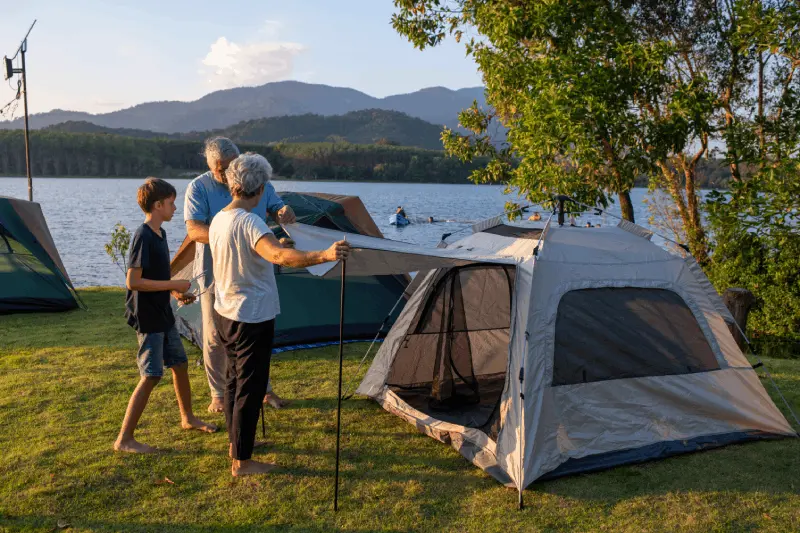
Thin and low-quality fabrics stretch over time or sag in the wind. This causes the tent to offer a narrower usable area than the measurements on the paper. Quality, silicone-coated nylon or ripstop polyester fabrics maintain the tent's shape excellently when properly tensioned. Tents with vertical wall technology ensure that you effectively use the entire floor area up to the top. While slanted walls may appear to offer a larger floor area, they narrow the space at shoulder level. This technical difference is decisive in size selection.
In Which Situations Does the Living Room Section Increase?
If you plan to do more than just sleep in the tent while camping, such as cooking, playing games, and socializing, tents with a "living area" like tunnel types or large dome types are essential. Especially if you are camping in rainy areas (like the Black Sea or Northern Europe), your chances of sitting outside will be low. In this case, you should prefer models that can accommodate your chairs and table and offer a height where you can stand. These types of tents are heavier and more challenging to set up, but their comfort is undeniable.
How Should Tent Segmentation Be Done According to Children's Ages?
While small children want to be close to their parents, teenagers demand their own personal space. When choosing the tent size, you should also consider your children's growth rate. Designs called "vis-a-vis", which have a living area in the middle and two opposing sleeping compartments, are great for families. The total size of these types of tents is quite large, but they provide privacy. If your children are still very small, more compact models where everyone sleeps in the same room may be a more logical choice in terms of safety and security.
Why is the Gap Between the Inner and Outer Canopy Important?
There can be significant differences between the outer dimensions of a tent and the measurements of the inner canopy (the space where you live). In some designs, the outer canopy is very spacious, but the inner room is smaller. This gap is necessary for ventilation and insulation. When making size selections, ensure that you consider the "inner dimensions" provided by the manufacturer. Don't be misled by the outer length of the outer canopy. The verticality of the inner walls and the distance to the ceiling are the unsung heroes that ensure your comfort throughout the night and keep your sleeping bag dry.
How Do Weight and Physical Build Change the Standards in Tent Selection?
Standard tent capacity charts typically base on individuals weighing around 75-80 kg. If you are heavier or have a broader build, a standard "1-person" or "2-person" area will feel cramped for you. Your physical build also affects the...
As you gain experience, the volume of air you need and your movement space will also increase. You should evaluate your own body measurements and sleep habits (for example, if you like to sleep with your arms open) accordingly. Treating yourself with respect is much better than spending a sleepless night in nature.Should You Reserve Space Inside the Tent for Camping Chairs and Table?
In traditional camping, the table and chair tent is set up next to the campfire outside. However, in modern "glamping" or comfort-focused camping, it has become common to place these items inside the tent (usually in the luggage or living area). If you intend to do so, you should check whether the tent's floor fabric is durable enough to support the chair legs and whether the ceiling is suitable for the chair height. This usage style requires you to increase the tent size by at least double, which is a serious luxury and is usually feasible in vehicle-top or large family tents.
What Are the Disadvantages of Large Tents in Storms and Strong Winds?
Size is not always an advantage. The larger and taller your tent is, the bigger a "sail" area it creates against the wind. It is difficult to keep high-ceiling family tents standing in strong storms, and the risk of breaking the poles (the rods) increases. If you plan to camp in extreme weather conditions, you should sacrifice comfort and choose a lower, more aerodynamic, and smaller tent. A smaller tent is easier to deflect the wind and offers a more resistant structure against snow accumulation.
How Do Light Permeability and Color Choice Affect Size Perception?
Dark-colored and thick fabric tents make the interior appear darker and thus narrower. Light-colored (yellow, orange, light gray) canopies allow more sunlight inside, creating a spacious atmosphere. If you have a limited budget or weight limit, choosing a lighter-colored model can psychologically make you feel like you are in a larger space. Additionally, allowing morning sunlight to enter helps minimize the feeling of confinement experienced when waking up in a narrow tent, helping you start the day more energetically.
Should You Decide on Size Without Making an Equipment List?
Before purchasing a tent, make a list of all the items you will be carrying (mat, sleeping bag, backpack, kitchen set, lanterns, etc.) and, if possible, lay these items out on the ground. By measuring the area they occupy with a tape measure, you will see the minimum floor space you need numerically. This type of practical simulation, rather than theoretical estimates, will provide the most accurate answer to the question, "Will we fit?" Remember, the tent is not just yours; it is also the home for all your survival and comfort equipment.
Do Inflatable Tents or Pole Tents Offer More Efficient Space?
Inflatable tents have gained significant popularity in recent years. The use of air channels instead of poles generally provides steeper walls and wider internal volumes. However, the air channels themselves can take up more space than standard aluminum poles. Pole tents, on the other hand, typically offer more specific geometries, making them generally more successful in weight and space optimization. Inflatable models are usually in the "comfort" segment and offer massive volumes; pole models are "performance" focused and calculate space in millimeters. Your choice should be shaped by your camping style.
How Should Future Needs Affect Size Selection?
When making equipment investments, do not limit yourself to just today. If you plan to adopt a dog, go camping with your partner, or have children in the coming year, choosing your tent according to these future scenarios will save you from double expenses. A quality tent can last 10-15 years with proper care. Therefore, getting "one size larger" can be a more economical and sustainable decision in the long run. Having slightly more than your needs provides you with maneuvering space against unexpected situations in nature.
How Does Tent Door Design Change the Usability of the Interior Space?
In some tents, the doors are on the side, while in others, they are at the head end. Side doors generally offer a wider entrance and facilitate access to the luggage area. Doors at the head end are narrower and may require you to crawl in. The door design determines the "usable areas" inside the tent. If you have two doors, you can divide the inside of the tent into two separate living areas. The placement of the doors is a hidden dimensional factor that directly affects how your mats will be arranged and how easily you can access your gear at midnight.
What Are the Setup and Heating Challenges of Multi-Room Tents?
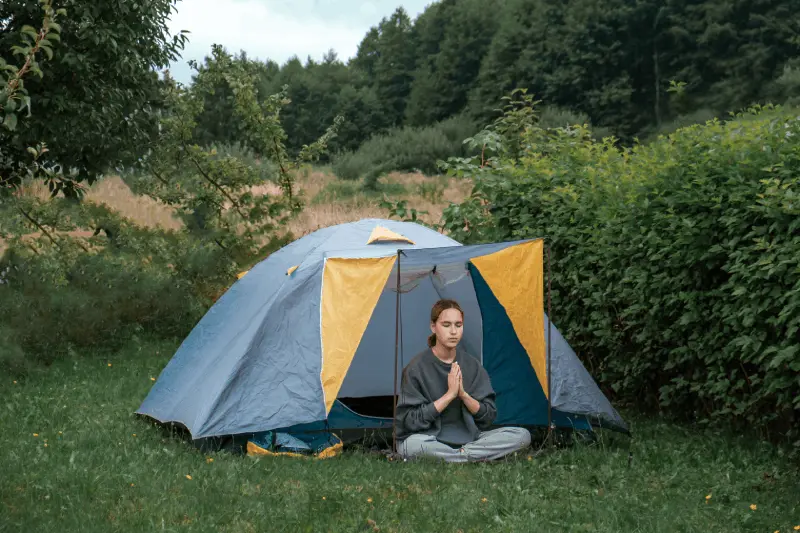
Multi-room tents offer home comfort, but their setups can sometimes take more than an hour. Additionally, the fabric walls between these rooms can block airflow, causing each room to have different temperatures. You will need much stronger heaters or higher-quality sleeping bags to heat a large tent. If you are only camping on weekends, this may not be worth the hassle, but in fixed camps lasting a week or longer, a roomed structure is the best dimensional choice to maintain your mental health and peace.
How Does the Thickness of the Sleeping Mat Narrow the Ceiling Height?
While traditional mats are 1-2 cm thick, modern inflatable camping beds can reach 10-15 cm in thickness. This means that the net height inside the tent (clearance) decreases by 15 cm. If you are using a very thick mattress, you should revise the tent height selection accordingly. Especially at the junction points of inflatable-walled tents, the mattress brings you closer to the ceiling and creates a feeling of constriction in your head/foot area. A comfortable mattress requires a higher ceiling; it is a mistake to think of these two independently.
For Cyclists or Motorcyclists Travelers
What Are the Size Priorities?
If you are camping with a bicycle or motorcycle, volume may be more important than weight. The packed size of the tent determines whether it will fit in your saddlebag or backpack. For these travelers, "motorcycle garage" tents or models with very spacious luggage are often popular. A large internal volume or a massive vestibule is needed to safely store helmets, jackets, boots, and other protective gear. In this case, it is a wise strategy to carry the poles and fly in separate packages to balance the weight.
How Do Tent Organizers Help Save Space Inside the Tent?
How the space is managed inside the tent is as important as the size. Pockets on the walls, a gear loft, and hanging hooks can lift the clutter off the floor, giving you more sleeping space. Having these types of organizer features in the tent you purchase allows you to utilize more than just the physical square footage. While small items (phone, glasses, flashlight) scattered on the floor can make the area look cramped, an organized layout can make even a two-person tent feel like a palace.
How to Check Size and Condition When Buying a Second-Hand Tent?
If you are buying a second-hand tent, do not blindly trust the measurements in the advertisement. Tents can stretch or shrink as they are used and washed. If possible, set up the tent and measure it yourself or enter it to test. The cuts of older models may be narrower than modern standards. Additionally, the loss of elasticity in the poles can prevent the tent from reaching its full shape, causing the internal volume to remain limited. In second-hand purchases, the "felt size" is a much more important criterion than the numbers in the technical specification document.
What Is the Golden Rule to Find Your True Size?
There is no single magic number for choosing the right tent size; however, there is a golden rule: "Always choose a capacity that is one more than the number of people you plan to accommodate and determine the ceiling height according to your sitting comfort." The quality of time spent in nature is directly related to your sleep quality. A tent that is narrow, cramped, and where your belongings are underfoot can overshadow even the most beautiful view. Making a choice with the details in this guide in mind will lead you to a nature home that will make you happy for years to come.