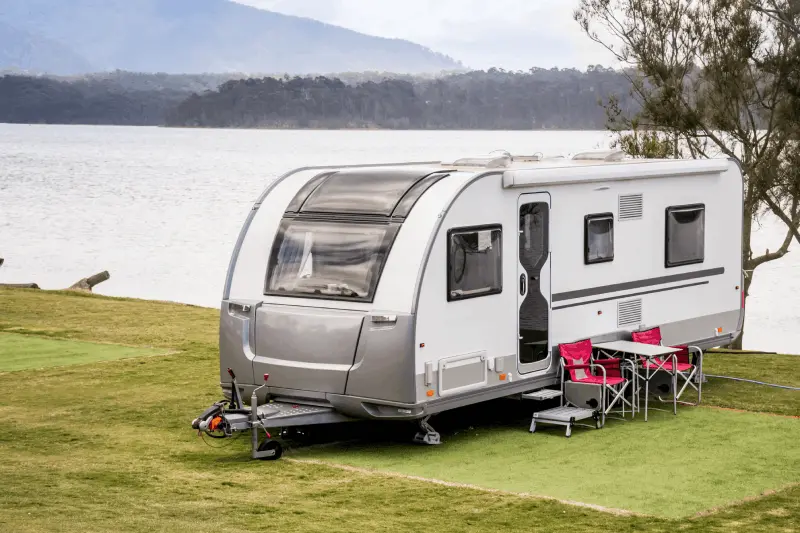
Trailers under 750 kg are one of the most practical solutions for campers who want to enjoy their freedom. However, knowing the legal regulations, technical details, and safety rules behind this practicality is critically important for your safety and to avoid legal penalties. Here is everything you need to know about these processes.
What is a Trailer Under 750 Kg?
Trailers under 750 kg are defined as "O1" class vehicles according to the Highway Traffic Regulation. These trailers are non-motorized vehicles that are towed by a towing vehicle and have a load capacity not exceeding 750 kilograms, providing living space inside. Due to their lightweight, they can be easily towed by many passenger cars. The biggest advantage of this class is that they are exempt from heavy procedures such as registration and taxes. However, this exemption does not mean a lack of rules; compliance with certain technical standards is always mandatory.
What is the O1 Document (Type Approval Document) Used For?
The O1 Document is the most important document that proves a trailer is manufactured in accordance with international standards. A trailer without this document is technically not considered a "trailer" but merely a "mobile cabin." You must request this document from the manufacturer when purchasing. The document certifies the trailer's chassis, weight distribution, electrical installation, and the safety of the signaling system. In traffic inspections or in case of an accident, having this document is the only basis for protecting your legal rights and proving the vehicle's compliance with traffic regulations.
Is a Separate Registration Required for Trailers Under 750 Kg?
No, there is no need to obtain a separate registration (registration document) for trailers under 750 kg. According to current laws in Turkey, O1 class vehicles are not subject to registration. This situation exempts trailer owners from the Motor Vehicle Tax (MTV) paid every year and notary fees. The invoice obtained from the manufacturer and the O1 Type Approval Document are sufficient to prove ownership of the trailer. It is extremely important to always keep these documents with you in your vehicle to present to officials in case of a traffic inspection.
Do These Trailers Have to Undergo TÜVTÜRK Inspection?
One of the most frequently asked questions is about the inspection requirement. Trailers under 750 kg are exempt from periodic TÜVTÜRK inspections. This means that there is no obligation to take the trailer to an inspection station every year or every two years. However, this exemption does not mean that the vehicle can be neglected. The condition of the tires, the operation of the brake system (if any), and the proper functioning of the signaling lights are vital. Even without an inspection, traffic police have the authority to impose fines if they observe a technical defect (for example, if the signals are not working).
Is a Separate Plate Required for the Trailer?
There is no separate plate obtained from traffic registration offices for trailers under 750 kg. These vehicles carry the plate of the towing vehicle. It is mandatory to attach a plate that matches the towing vehicle's plate (it can be square or rectangular format) to the back of the trailer. If your plate does not have a seal or is handwritten, this may lead to charges of "fake plate" or "non-standard plate." Therefore, it is safest and legal to have a stamped third plate made by the drivers' association and mount it on the back of the trailer.
What License Class is Suitable for Towing a Trailer Under 750 Kg?
The issue of licenses can often be confusing. However, if you are towing a trailer under 750 kg, your standard "B" class (car) license is completely sufficient. As long as the weight of the trailer remains below 750 kg, you do not need an additional license class (such as BE). The only thing to pay attention to here is that the total weight of your towing vehicle and trailer must not exceed 3,500 kg; most passenger vehicles combined with a trailer under 750 kg remain well below this limit. If these limits are exceeded, a professional license or additional classes come into play.
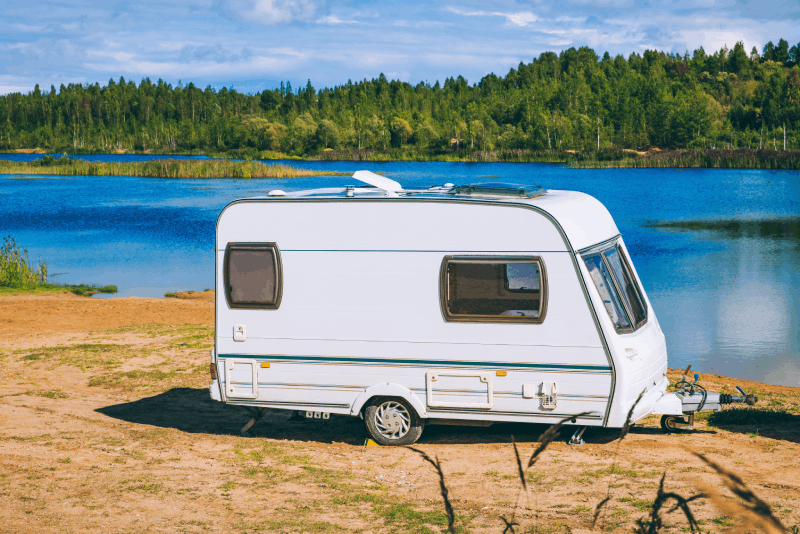
What Documents Should Be Received When Purchasing?
When you purchase a trailer under 750 kg from a manufacturer or dealer, you should receive two essential documents: the sales invoice and the O1 Type Approval Document. The invoice shows that you are the legal owner of the product; the O1 document certifies the vehicle's compliance with technical standards. You should ensure that the chassis number is correctly written on these documents and that the manufacturer's signatures and seals are complete. Additionally, requesting warranty documents for the used equipment (brakes, axles, etc.) will be beneficial for your future service needs.
Is It Mandatory to Obtain Compulsory Traffic Insurance?
It is not mandatory to obtain a separate "compulsory traffic insurance" for the trailer itself. The reason is that the trailer does not have an engine and moves in connection with the towing vehicle. Any damage the trailer may cause to third parties is covered by the towing vehicle's traffic insurance. However, there is a critical point here: The towing vehicle's registration must indicate that it has a "tow bar" installed, and your insurance company must be informed that "I am towing a trailer/caravan with my vehicle." Some insurance policies automatically cover this situation, while others may require a small additional premium (endorsement). If this information is not provided, your recourse rights may be forfeited in the event of an accident.
What Are the Main Differences Between O1 and O2 Documents?
The O1 document is issued for trailers under 750 kg, while the O2 document is for trailers between 750 kg and 3,500 kg. While O1 class is exempt from registration, taxes, and inspection; O2 class is subject to registration like a car, has its own special plate, and must undergo periodic inspections. Although O1 is advantageous in terms of ease of use, those who generally want a larger and more equipped (comfortable) trailer often have to turn to the O2 class. The 750 kg limit in the O1 class is quite strict; it is illegal for a trailer exceeding this weight to be on the road with an O1 document.
How Should the Signaling System at the Back of the Trailer Be?
Since the trailer covers the rear lights of the towing vehicle, it must have a complete lighting group on it. Left-right signals, stop lights, rear parking lights, hazard lights, and license plate illumination must be operational to enhance night visibility. Additionally, reflective devices compliant with regulations must be present on the sides and back of the trailer. The electrical connection is usually provided through 7-pin or 13-pin sockets from the towing vehicle. If this system does not function properly, it endangers traffic safety and can lead to heavy penalties during inspections.
Can You Take a Trailer Under 750 Kg Abroad?
Yes, you can take a trailer under 750 kg abroad, but the process is a bit more detailed. Your towing vehicle's "Green Card" insurance must also include the trailer. Additionally, it is advisable to have English or translated copies of the documents proving ownership of the trailer (invoice and O1 document) in the language of the country you are visiting. Some countries may have different rules regarding the circulation of unregistered (without registration) vehicles within their borders; therefore, it is beneficial to obtain up-to-date information from the relevant consulate or touring organizations before you go.
What Happens If the Weight of the Trailer Exceeds 750 Kg?
If your trailer is declared to be under 750 kg (O1) but exceeds this limit during a weigh-in, you may face serious legal issues. This situation can be classified as "using an unregistered and unlicensed vehicle" and can lead to the vehicle being banned from traffic. Additionally, in the event of an accident, the insurance company may refuse to pay, stating that the vehicle does not comply with the declared weight class. Therefore, you must account for the weight of any additional water tanks, solar panels, and equipment added to the trailer, and ensure you stay within the limit.
Is a Notary Sale Required for Second-Hand Purchases?
Since trailers under 750 kg are not subject to registration, a sale transaction through a notary is not carried out. The sale is made through a "simple agreement" or the transfer of the invoice between the parties. However, caution should be exercised against fraud. Always request the original invoice and O1 document from the seller. Check that the chassis number matches the documents. In the agreement you will make, clearly state the chassis number, model, and the amount paid, and sign it; this will serve as evidence in any future legal disputes.
Is Maintenance Necessary If There Is No Inspection?
The absence of an inspection requirement does not excuse neglecting the maintenance of the trailer. On the contrary, the running gear of a trailer (axle, tires, coupling system) directly affects your safety. At least once a year, the tire pressure and tread depth should be checked, the coupling mechanism should be lubricated, and the chassis should be inspected for rust. Especially in trailers that have been parked for a long time, tires may develop "flat spots" or cracks. You should make technical checks a habit for a safe journey.
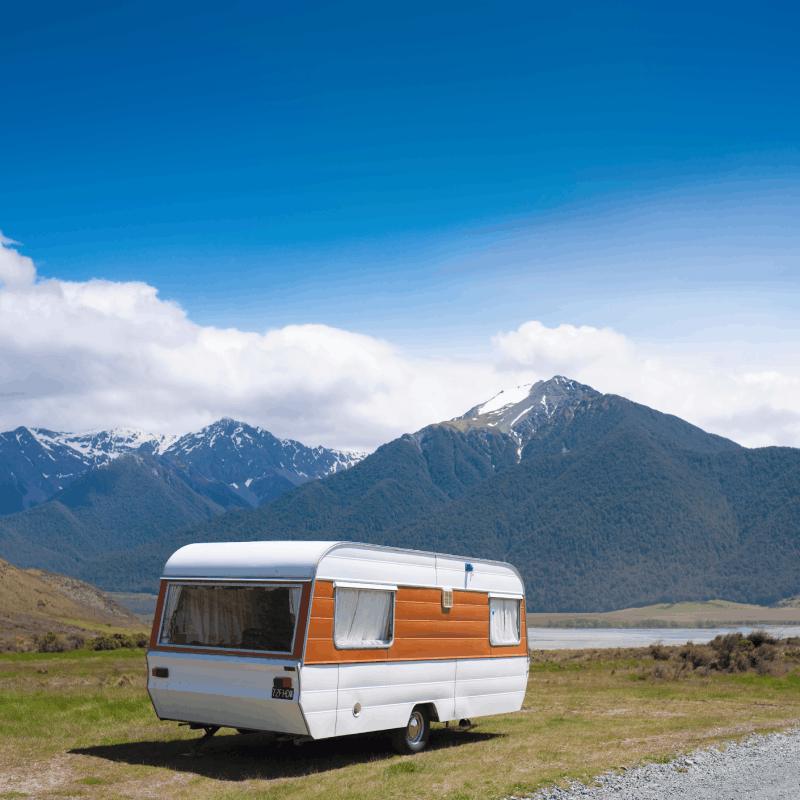
Can Any Vehicle Tow a Trailer Under 750 Kg?
Theoretically, most vehicles can tow this weight, but each vehicle has a "towing capacity." The "towed trailer capacity" for braked/unbraked trailers is specified in your vehicle's registration or user manual. The torque values and cooling system of the vehicle towing a trailer under 750 kg must be suitable for this weight. Vehicles with small engines or weak transmission systems may struggle, especially when climbing steep hills or making sudden stops. This situation can endanger driving safety and lead to mechanical damage (such as transmission burning) in your vehicle.
Can Trailers Be Parked Anywhere in the City?
Trailer parking may be restricted by local municipal decisions and traffic laws. As a general rule, trailers can be parked on the roadside for a short time as long as they do not obstruct traffic and pedestrian passage. However, many cities enforce a "long-term parking ban outside caravan campgrounds." Especially in populated areas, staying overnight in a trailer or leaving it in the same spot for weeks can lead to complaints and the municipality towing the vehicle. When parking, you should always prefer safe, well-lit, and legally permitted spots.
Do Speed Limits Change When Towing a Trailer?
Yes, speed limits are different for vehicles with a trailer or caravan attached. According to the Highway Traffic Regulation, vehicles with trailers must generally travel 10 km/h slower than normal speed limits. For example, on a road where the speed limit for cars is 110 km/h, the limit for a car towing a trailer is 100 km/h. This rule is both a legal obligation and a physical necessity. At high speeds, the "swaying" (snaking) of the trailer becomes much easier and can lead to loss of control.
Is a Brake System Mandatory for Trailers Under 750 Kg?
Legally, a brake system is not mandatory for trailers under 750 kg (O1); unbraked axles can be used. However, safety experts and experienced campers strongly recommend "overrun brake" systems for any trailer over 400-500 kg. When your towing vehicle brakes, the trailer's own weight increases the stopping distance and disrupts the vehicle's balance. A braked trailer, thanks to its mechanism, reduces the load on the vehicle by applying its own brakes, providing a much safer stop.
Can Trailers Without a Type Approval Document Be on the Road?
No, it is illegal for a trailer without a Type Approval Document (O1 document) to be on the road. What we call "substandard production" refers to vehicles manufactured without engineering calculations, which pose a significant risk. If it is understood during a traffic inspection that you do not have your document, your vehicle will be impounded, and you will face heavy fines. Worse, in the event of an accident, this vehicle will be considered "defective," and the owner will bear serious responsibilities. When buying a trailer, it is vital to choose one that is "documented and approved" rather than just "cheap."
Are MTV or ÖTV Paid for These Trailers?
The biggest financial advantage of trailers under 750 kg is tax exemption. No Motor Vehicle Tax (MTV) is paid for these vehicles. Additionally, during the purchase phase, since the trailer is a "towed trailer" and does not have an engine, the Special Consumption Tax (ÖTV) is also not applied; only standard VAT is paid. (The situation is very different for motorhomes, where high ÖTV rates are applied). This makes trailers under 750 kg the most economical option for those seeking a low-budget holiday and hobby.
What Safety Equipment Should Be in the Trailer?
Even though there is no inspection requirement, you should keep certain equipment in the trailer for your own safety. A fire extinguisher, first aid kit, wheel chock (to prevent slipping while parked), and a spare tire (stepney) must be in your kit. Additionally, it is vital to have a reflective vest and a triangular reflector set in case of a breakdown at night. Installing a carbon monoxide detector for gas stoves or heaters inside the trailer ensures your safety while living in an enclosed space.
Why Should Trailers Under 750 Kg Be Preferred?
Trailers under 750 kg are ideal for anyone looking to avoid bureaucracy, seeking an economical solution, and not wanting to deal with the hassle of upgrading their license. Due to their lightweight, they have less impact on fuel consumption compared to motorhomes and allow you to leave the trailer at the campsite and explore the surroundings with your vehicle. If you are not looking for a very luxurious and spacious interior, an O1 class trailer can provide you with years of hassle-free and enjoyable camping experiences. With proper manufacturing, legal documents, and regular maintenance, your trailer will be your best travel companion.
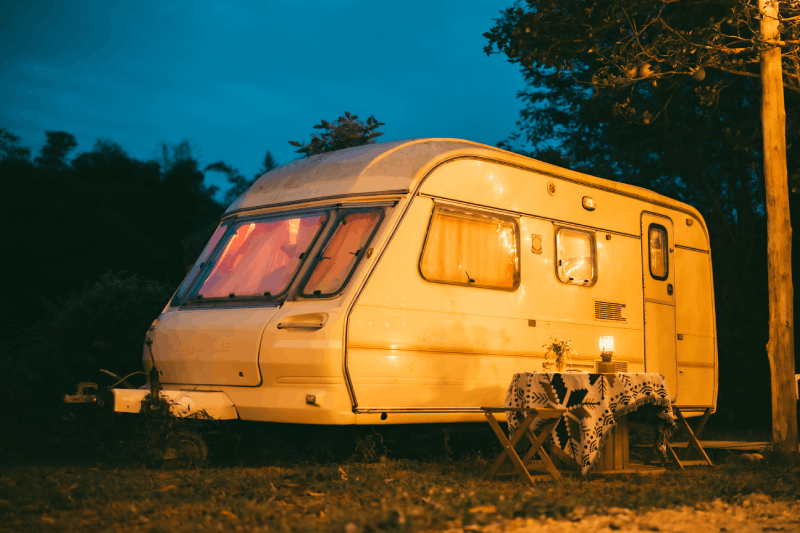
How is the Tow Bar Registered?
The tow bar you install on your vehicle to tow the trailer must be registered in the vehicle's registration. For this process, a "project" must first be drawn up, and TSE approval must be obtained. After going to TSE for inspection with the documents provided by the authorized service that performed the installation, a new registration is obtained from the notary after approval. Towing a trailer with a vehicle that does not have the tow bar registered is illegal and can result in your insurance being voided in the event of an accident. Although this process requires some expense and time, it is the first step towards legal compliance.
Can You Travel Inside the Trailer?
The answer to this question is a very clear "NO." It is prohibited to have passengers inside a moving trailer both in Turkey and in the rest of the world. Trailers pose a risk of swaying and detachment during travel; even if the furniture inside is secured, they do not have systems such as seat belts or airbags to ensure passenger safety. Additionally, the center of gravity of the trailer can be disrupted, endangering driving safety. All passengers must always travel inside the towing vehicle.
What Roads Should Not Be Taken with a Trailer?
Although trailers under 750 kg are lightweight, they limit the performance of the towing vehicle. Very steep ramps, loose dirt roads, or extremely windy bridge crossings are risky areas for trailer drivers. Especially if you have a front-towed vehicle, the weight of the trailer will shift to the rear axle on steep inclines, causing the front wheels to skid. Additionally, narrow city streets can cause the trailer to get stuck due to its wide turning radius. Planning your route in advance and choosing "trailer-friendly" roads will minimize your travel stress.
Is a Trailer Under 750 Kg Suitable for Winter Camping?
Yes, but it requires some preparations. O1 class trailers are generally thinly insulated, so it is essential to install a good diesel heater (such as Webasto). Additionally, to prevent the water system from freezing, the tanks and pipes must be protected. When heading out in winter, it is important that the trailer tires are suitable for the season or that snow chains are ready. Cleaning the snow accumulated on the roof of the trailer is crucial to prevent it from becoming too heavy, and during camping, it is vital to never block the ventilation holes to avoid moisture and condensation.
Can Trailer Insurance (Comprehensive) Be Obtained?
Although many people think that comprehensive insurance cannot be obtained for trailers, this is incorrect. Thanks to special products offered under the name "Trailer Insurance," you can protect your trailer against theft, fire, damages resulting from accidents, and even natural disasters. Especially if you have valuable equipment inside or if your trailer has a high monetary value, obtaining comprehensive insurance for a small annual premium provides great peace of mind. When obtaining insurance, having your O1 document and invoice in order is a fundamental requirement for the insurance company to approve the policy.
What is the Lifespan of a Trailer?
The lifespan of a quality trailer can reach 20-30 years, depending on the materials used for the chassis and body. However, the most fundamental factor determining this lifespan is maintenance. Protecting the chassis from corrosion (rust), ensuring that the silicones and seals at the body joints are renewed to maintain waterproofing is critical. A trailer that takes in water can become unusable in a very short time due to the wood frame rotting. Keeping the trailer covered when not in use to protect it from UV rays will extend its lifespan.
Is It Difficult to Reverse with a Trailer?
Reversing with a trailer is one of the most challenging tasks for beginners. When you turn the steering wheel to the right, the trailer goes left, and when you turn it left, the trailer goes right; this is based on the principle of "reverse logic." To develop this skill, you need to practice a lot in an empty area away from traffic. Always have someone outside the vehicle to give you commands while reversing. To avoid the situation known as "jackknife," you should move slowly and not narrow the angle too much.
What is "Snaking" in Trailing?
Snaking is the uncontrolled swaying of the trailer behind the vehicle. It usually occurs at high speeds, in sudden winds, or due to uneven weight distribution (where the weight is at the very back of the trailer). If the trailer starts to snake, you should never brake hard. The steering should be kept straight, and the foot should be lifted off the gas to allow the vehicle to slow down on its own. To prevent this danger, weight should be distributed to the front of the trailer (the arrow part), and speed limits should never be exceeded.
How Should the Process Be Managed?
Owning a trailer under 750 kg can be a hassle-free and enjoyable process if the right steps are taken. In summary; you should choose a trailer with O1 documentation from a reliable manufacturer, keep your invoice, register the tow bar on your vehicle, and perform technical checks before hitting the road. While the exemption from registration and inspection provides you with a significant comfort zone, adhering to traffic rules and safety standards is your responsibility. Staying within legal limits while enjoying your freedom will always allow you to create safe and happy moments.