How Does Spending Time in Nature Affect Children's Mental Development?
Nature is not just a playground for children; it is also a vast laboratory and therapy center without boundaries. Research shows that time spent outdoors extends children's attention spans, reduces stress levels, and enhances problem-solving skills. Unlike enclosed spaces, nature offers children an unpredictable environment. This uncertainty triggers the child's adaptability and creativity. Playing with soil, attempting to climb a tree, or listening to the sound of flowing water calms the nervous system while invigorating cognitive functions. Therefore, nature activities are not just entertainment; they are fundamental to a healthy growth process.
How Can We Explore the World of Small Creatures with Micro-Safari?
You can start by declaring just one square meter of forest floor or garden as a "protected area." By bringing a magnifying glass, examining the ants, insects, lichens, and soil structure in this small area opens the doors to a completely different world for children. Watching an ant carry many times its own weight or seeing the wings of a ladybug flutter up close sparks biological curiosity. This activity teaches children to focus on details and to be patient. Creating little stories about each creature encountered during the micro-safari is both educational and extremely entertaining.
How Does Creating Art with Natural Materials Nurture Imagination?
How about setting aside traditional sketchbooks and using the materials that nature provides as paint and canvas? A massive "Land Art" project made with leaves, branches, stones of different colors, and flower petals enhances children's aesthetic perception. Making paint from mud instead of using crayons or stacking stones to create sculptures demonstrates the limitless nature of materials. In this process, while the child thinks about how to achieve the most creative result with limited materials, they also learn the concept of transience; because the artwork that will be scattered by a breeze conveys the value of the moment to them.
How Can One Become a Little Explorer with an Edible Plant Guide?
Learning which plants are edible or which ones have medicinal properties can turn into a real survival game for children. Of course, this activity must be done under adult supervision and with accurate resources. Recognizing plants like nettle, rosehip, or wild mint increases the child's respect for nature. Smelling the plants, examining their texture, and discussing their place in the ecosystem strengthens environmental literacy. In this process, the child understands where the products on supermarket shelves actually come from and establishes a concrete connection between the foods they consume and nature.
How Can Adventure Be Revived with Orientation Games in Nature?
Learning to use a compass or determining direction based on the sun's position is an exciting skill for children. By setting up a simple scavenger hunt, you can give children specific coordinates or clues. For example, instructions like "Find the moss-covered rock north of the oldest sycamore" increase physical activity and enhance the logic of navigation. These types of games boost children's self-confidence while teaching them to move independently and develop strategies. Map-reading skills are not just geographical knowledge; they are a logical way of reasoning that they can use throughout their lives.
What Do Children Learn from Preparing Simple Meals Over a Campfire?
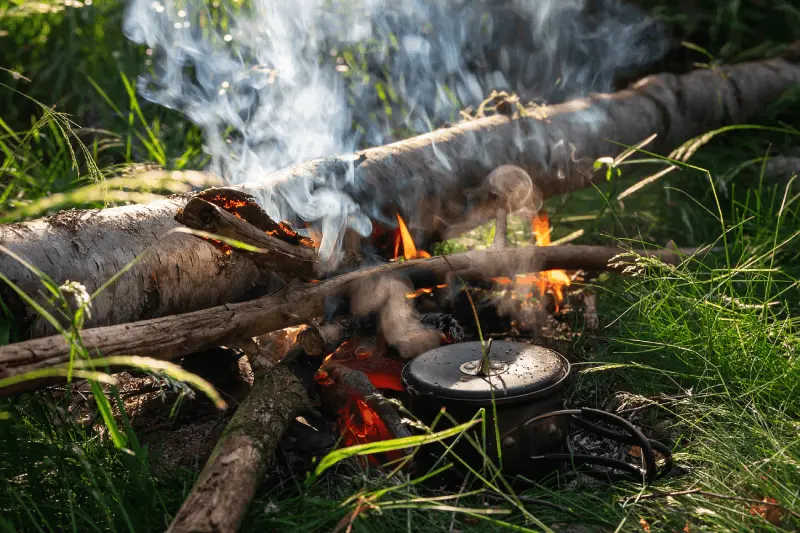
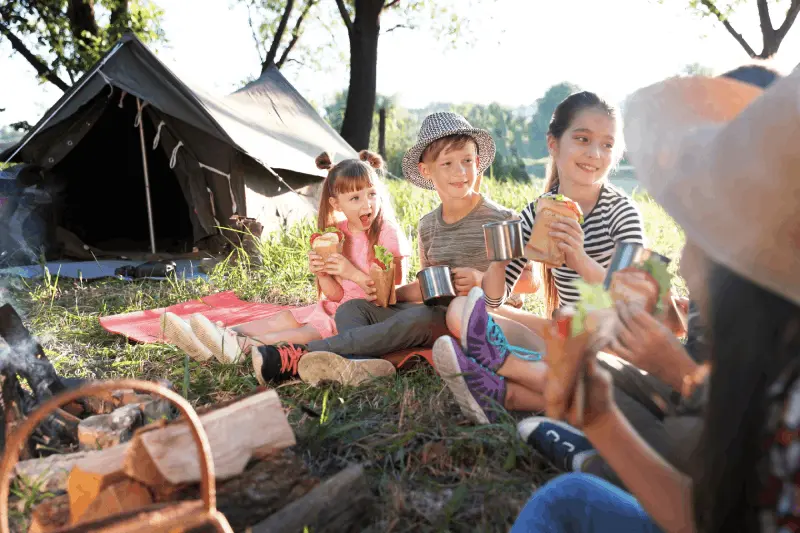
Learning to safely start a fire and cook over it is one of the most unforgettable nature experiences for a child. Collecting firewood, feeding the fire, and placing bread or corn on it with the help of a stick is a process that requires patience. Through this activity, children learn to take responsibility for a task while observing the effect of heat on materials. Eating a simple meal they prepared in the midst of nature gives them a great sense of achievement. Additionally, gathering around the fire strengthens social bonds and keeps the tradition of storytelling alive.
How Is the Night Sky Introduced Through Night Hikes and Star Gazing?
Nature is not only a magnificent scene during the day but also at night. Looking at the night sky from a location away from light pollution allows children to marvel at the vastness of the universe. Recognizing constellations, finding the North Star, or examining the moon with a telescope sparks interest in astronomy. The sounds of owls or rustling leaves heard during night hikes help children overcome their fear of the dark. This exploration tour with flashlights teaches them to use their senses (especially hearing) more acutely. Experiencing how night vision develops is a biological miracle.
How Does Listening to Natural Sounds Sessions Enhance Focus Skills?
Closing their eyes and focusing only on the sounds around them is the best way to regain our attention lost in the noise of the modern world. By playing "Sound Hunt" with children, you can ask them to imitate the sounds of chirping birds, the rustling of the wind, or the sound of a distant stream. Counting how many different sounds they can hear draws them into the moment and provides mental tranquility. This practice is a child-friendly version of meditation. Hearing the rhythm of nature reduces the child's stress while also enhancing their empathy skills; because every sound has a source and that source has a story.
How Is Patience Cultivated Through Stone Painting and Rock Art?
Smooth and clean stones collected from riverbanks are wonderful art materials. Choosing the right ones while collecting these stones, cleaning them, and drawing nature-inspired patterns on them is a process that teaches patience.
It is an activity that requires creativity. Children enjoy the pleasure of giving a new identity to an object through this activity. They can create their own "fun stones" by painting animal figures, flowers, or abstract patterns on stones. This process not only develops hand-eye coordination but also gives children the satisfaction of completing a task they started. Leaving the painted stones in various places in the forest teaches the philosophy of "leaving a trace."How to Conduct Safe and Fun Experiments by the Water?
A stream or lake shore is an excellent laboratory for teaching the laws of physics. Dropping different objects (leaves, stones, branches) into the water to test the buoyancy of water or creating small channels to change the flow direction of the water helps children establish cause-and-effect relationships. Making a boat from paper or tree bark and sailing it is the first step in engineering skills. Playing with water also provides sensory relaxation. However, safety around water should always be a priority in these activities, and children's interactions with water should be monitored closely.
What Activities Can Be Planned to Decode the Language of Trees?
Trees are the silent giants of the forest, and each has a story to tell. Hugging a tree, feeling the texture of its bark, or trying to guess its age increases children's curiosity about the plant kingdom. Leaning against the trunk of a tree and creating "textured copies" with crayons teaches them to differentiate between tree species. Discussing which tree produces which fruit or which birds make nests in which trees shows how interconnected the ecosystem is. Imagining how a tree's roots extend beneath the soil develops abstract thinking skills.
How to Act Like a Detective by Following Animal Tracks?
Looking down at the ground while walking in nature helps us notice that there is a hidden story there. A paw print seen on a muddy path or a feather left by a bird ignites children's imagination. Whose track is this? Where was it going? Was it running fast? Creating a "nature detective" game with these questions elevates children's observation skills to the highest level. Sketching the tracks in a notebook or taking a photo makes this discovery process more professional. Learning about animals' habitats and habits nurtures the instinct to protect them.
How Does Observing Seasonal Changes Alter Our Perspective on Nature?
Nature is in a constant state of change, and following this cycle teaches children the rhythm of life. Visiting the same forest path each season to observe the changing colors, fallen leaves, or newly blooming flowers reinforces the concept of continuity. Keeping a "nature journal" specific to the seasons encourages children to develop their writing and drawing skills while also allowing them to collect data like little scientists. Discussing why the fallen leaves change color in autumn or why trees go to sleep in winter helps them understand biological processes.
How Does Building Their Own Shelter Increase Confidence?
Using large branches and shrubs on the ground to create a simple shelter (bushcraft shelter) is one of the most physical and strategic activities a child can do. Thinking about how to lean the branches against each other, how to block the wind, and how to soften the ground exercises engineering intelligence. Spending time in this "secret base" they built with their own hands gives them a great sense of ownership and security. This activity encourages teamwork; building a large shelter is often much easier and more fun with the help of one or two friends.
How to Enrich Sensory Play by Setting Up a Mud Kitchen?
A "Mud Kitchen" created with a little water, a little soil, and plenty of imagination revolutionizes children's sensory development. Making mud cakes and decorating them with stones and leaves gives children tactile freedom. This play helps them overcome the fear of getting dirty while also strengthening their symbolic play skills. Adjusting the consistency of the mud, mixing materials, and inventing "recipes" is both fun and educational. Scientific insights that strengthen the symbiotic system of microorganisms in the soil highlight the importance of this activity from a health perspective.
How to Focus on Details with a Nature Photography Workshop?
Giving children an old camera or a phone and asking them to capture the "most beautiful thing" or "most interesting texture" they see in nature changes their perspective on the world. Photography teaches them not just to stop and look but to truly see. Trying to capture the veins of a leaf, a grain of sand in a spider's web, or the sunlight filtering through the trees grants them an artistic vision. Discussing the photos they take at home in the evening and asking what they felt at that moment encourages emotional expression. Photography is the most technical and aesthetic way to immortalize fleeting moments in nature.
How to Develop Storytelling Skills by Observing Clouds?
Stretching out on the grass and watching the clouds in the sky is one of the oldest and most peaceful games in the world. Comparing the shapes of clouds to animals, objects, or fairy tales pushes the boundaries of imagination. A story that begins with sentences like "Look, that’s a giant dragon, and that little cloud is its castle" can...
//camperello.com/en/blog/what-are-the-5-rules-to-follow-when-traveling-with-children-in-a-camper">?children's language development and contributes to creative thinking. This activity proves to children that they can have fun without needing anything and that their thoughts can offer them a whole world. It also symbolizes the variability of the sky and the concept of flexibility.How Can We Raise Ecosystem Awareness by Building a Bug Hotel?
Creating a Adding something to a notebook about that day after the trip helps children internalize their experiences. A leaf they made, a drawing of an insect, or a few sentences about what they felt that day; over time, this daily record turns into a treasure. In addition to developing writing and drawing habits, it allows the child to see how much they have learned by looking back at their past experiences. Nature journaling is not just a notebook; it is a reflection of the child's personal relationship with nature. Looking back at these pages years later will remind them of the roots of their love for nature.
Is It Possible to Paint with Natural Pigments?
You can make your own paints using the colors of flowers, roots, and fruits. For example, crushed blackberries yield purple, turmeric root gives yellow, and spinach leaves provide green. For children, this process is an engaging experience that combines chemistry and art. Painting on paper or stones with these natural paints offers a authenticity that surpasses synthetic paints. This activity shows children the source of colors and proves once again how generous nature is. A child who makes their own paint feels they have contributed to every stage of the art process.
How to Participate in Modern Treasure Hunting with Geocaching?
Geocaching is a modern treasure hunt played worldwide where hidden boxes (caches) are found using GPS. Trying to find hidden boxes near you with an app on your phone leads children on an adventure that combines technology with nature. When they find the box, signing the notebook inside or trading a small item fosters a sense of community and the concept of fairness. This game encourages children to explore natural areas they have never been to before. Each box is the end of a discovery story and the beginning of a new curiosity.
How to Teach Basic Survival Skills (Bushcraft)?
Learning to tie knots, trying to set up a simple shelter, or making a water filter are basic bushcraft skills that develop children's practical intelligence. Using ropes to tie branches together teaches them principles of resilience and balance. These skills help them develop strategies to cope with challenges they encounter not only in nature but also in daily life. Working on scenarios like "What should you do if you get lost?" trains children to come up with solutions without panicking. Survival skills are essentially lessons in self-discipline and self-confidence.
How to Prepare a Mini Ecosystem Terrarium?
You can create your own micro-world in a glass jar using some soil, moss, a small plant, and a few stones collected from nature. This terrarium brings the cycle of nature (evaporation, condensation, life cycle) into your home. As children create this small ecosystem and later observe its development, they learn to take responsibility. Observing how a plant grows and how moss comes to life with moisture makes biology lessons tangible. This small world they build with their own hands instills in them a consciousness of protecting and sustaining nature. It is about nurturing a piece of nature with love.
How to Design a Sensory Path with Natural Textures?
At home or at a campsite, you can prepare a path made of sand, gravel, dried leaves, pine needles, and containers filled with water. Having children walk barefoot on these different surfaces stimulates their nerve endings and increases bodily awareness. Discussing which texture is soft, which is hard, or which is ticklish develops their sensory vocabulary. These types of activities are especially great for alleviating the "nature deficit" syndrome in children who grow up in cities. Feeling the world with their soles provides mental grounding and creates an inner balance.
What Endless Opportunities Does Nature Offer for Children?
Nature is the only place that generously offers all kinds of developmental support a child needs - physical, mental, emotional, and social. Taking them to nature is not just about "spending time"; it is an investment in their spirit. The activities in this guide not only prevent children from feeling confined but also allow you to nurture them as a part of nature. Remember, there is no "wrong" game in nature; every stone, every insect, and every breeze is a teacher. Let your children get muddy and dirty; because those messes can be cleaned, but the sense of wonder they gain from nature will guide them for a lifetime.