Why Does Sleep Quality Play a Critical Role in Camping Experience?
Camping is one of the most wonderful ways to connect with nature and escape the stresses of the modern world. However, no matter how much you exert yourself during the day, the quality of sleep you get at night directly determines your energy for the next day. A poor night's sleep not only makes you feel tired; it also leads to muscle aches, lack of concentration, and a decline in your overall mood. To allow the body to rejuvenate, it is essential to be protected from the cold coming from the ground and to have proper support for your spine. Therefore, the selection of sleep equipment is a fundamental pillar of your camping comfort rather than just a simple shopping task. The right equipment transforms your time spent in nature from a torment into pleasure, without making you miss the comfort of your bed at home.
What Has the Technological Development of Sleeping Mats Added to Camping?
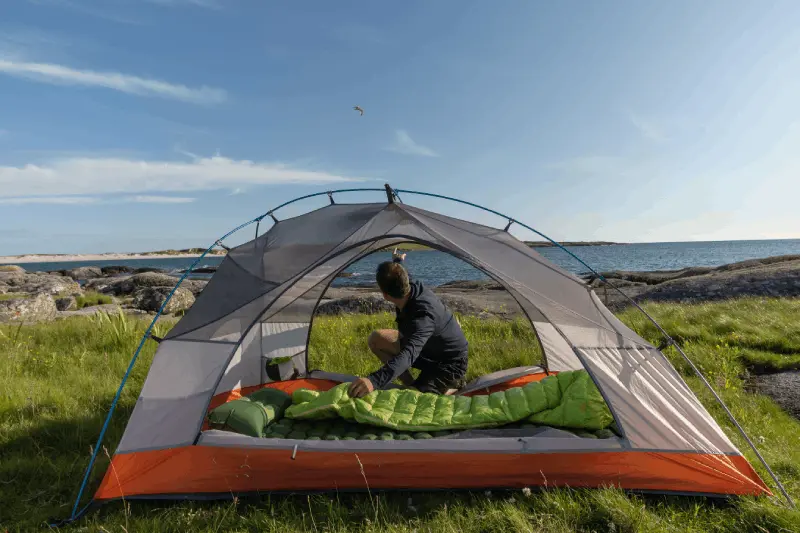
In the past, when one thought of sleeping mats, only simple plastic beds used on the beach came to mind. However, today, mat technology has undergone a revolutionary change. Modern sleeping mats offer tremendous thermal insulation thanks to reflective films used in their inner layers, synthetic fillings, or down feather layers. Additionally, durable materials like "Ripstop" nylon combine lightness and strength. Self-inflating models promise effortless setup by drawing air in when you open the valve, thanks to the open-cell sponges inside. These technological advancements allow campers to achieve much higher comfort with significantly less weight, making quality sleep possible even in the most challenging summit climbs.
Do Folding Camping Beds Offer Traditional Comfort?
Folding camping beds, commonly known as "camp beds," completely elevate the sleeping experience above the ground. The biggest advantage of these systems is that they mimic the feeling of a bed at home. Sleeping elevated off the ground not only provides psychological comfort; it also completely frees you from rocks, branches, or unevenness on the ground. Traditional camp bed designs consist of stretched durable fabrics over sturdy metal or aluminum frames. This structure offers more stable support compared to ground-level mats, especially for individuals suffering from back and lumbar pain. When you add the ventilation capacity that comes with being elevated, camp beds maintain their place as a traditional yet indispensable comfort element, especially in fixed camping sites and long-term stays.
How Should Weight and Volume Factors Shape Your Choice?
If you are driving to your campsite, weight may be a secondary concern for you. However, if you are a backpacker, every gram counts significantly. Sleeping mats are undoubtedly the leaders in this regard. Some ultra-light models can be compacted to fit in the palm of your hand and weigh only a few hundred grams. In contrast, folding camping beds are quite heavy and bulky due to their frame structures. Even when folded, they occupy a large space. This makes them suitable only for vehicle-based camping or military purposes. If you plan to hike for miles on your route, finding space for a camp bed in your backpack is nearly impossible. Therefore, your carrying capacity is the clearest limit determining the type of equipment you will choose.
Why Is Insulation and R-Value Life-Saving?
The main reason you feel cold while camping is often not the weather but the ground you are in contact with. The earth absorbs your body heat like a sponge. The "R-value" found in sleeping mats indicates the resistance of the mat to heat transfer. The higher the R-value, the warmer the mat keeps you. In camp beds, the situation is different; even if you are elevated, the cold air circulating in the space beneath you can chill you through "convection." Therefore, even when using a camp bed, it may be necessary to lay a thin mat on top. Sleeping mats directly address this issue with their insulating materials. Especially in winter camping, a sleeping mat with the right R-value becomes the most critical equipment that determines the fine line between survival and comfort.

How Do Ground Conditions Affect Your Preference?
The area where you set up camp may not always be a flat grassy surface. Rocky, uneven, wet, or snow-covered grounds are the camper's worst nightmare. Folding camping beds, thanks to their four or six legs, completely eliminate the irregularities on the ground. No matter what is underneath you, you will sleep on a flat surface over the taut fabric. With sleeping mats, however, there is only a few centimeters of air between you and the ground. If you are using a very thin mat, a sharp rock on the ground can dig into your back or, worse, puncture your mat. If the ground is extremely uneven or muddy, using a camp bed provides a significant advantage by keeping you clean and elevated. However, if the ground is relatively flat, modern and thick sleeping mats are also quite successful in mitigating these irregularities.
How Does Setup and Packing Speed Change Your Camping Routine?
If you arrive at your campsite and it is about to get dark or it starts to rain, how quickly you set up your equipment is crucial. Most folding camping beds have a "pop-up" or "open-use" mechanism. They can be set up in seconds. The situation with sleeping mats varies by model. Self-inflating mats take a bit of time, while fully inflatable models can take a few minutes to inflate with breath or a pump. During the packing phase, however, camp beds...
It is generally faster; you just fold it and put it in your bag. Inflatable mats, on the other hand, require a bit more patience and technical skill to completely deflate the air and roll the mat. If you are frequently changing places during the camp, the speed of setup and takedown will be a decisive criterion for you.What Does Durability and Material Quality Mean in the Long Run?
The money you spend when buying camping equipment is actually the amount you are paying for how many seasons that product will serve you. Folding camping beds are quite durable thanks to their metal frames and thick canvas fabrics. They can be used for years as long as there is no mechanical failure. Inflatable mats are always at risk against sharp and piercing objects, which are their biggest enemies. Even the slightest thorn or spark can render your mat unusable. Although modern mats reduce this risk with "Ripstop" technology, they are not as "bulletproof" as a camping bed. If you are looking for a long-term investment and durability against rough use, camping beds come to the forefront; however, if you use your inflatable mat carefully and do not part with your repair kit, it can also serve you for many years.
Tent Interior Space Management: Is a Mat or a Bed More Suitable?
The interior volume of your tent limits the dimensions of your sleeping system. The height of most standard dome tents is low. When you use a camping bed, you will be raised about 30-40 cm off the ground. This situation can cause your head to touch the tent ceiling or reduce the spaciousness inside the tent. However, camping beds have a hidden advantage: you can use their lower parts as storage space. By placing your bag and other belongings under the bed, you can create movement space inside the tent. Inflatable mats, on the other hand, allow you to maintain the tent's ceiling height since they are zero on the ground, but they do not create extra space to place your belongings. If you have a family-type tent with a high ceiling, a camping bed is excellent; however, if you are in a low trekking tent, the mat is the only option.
Which is Healthier in Terms of Sleeping Position and Ergonomics?
Everyone's sleeping position is different, and this position determines which equipment you will feel more comfortable on. If you are a side sleeper, you may feel your hips and shoulder bones touching the ground on a thin mat (bottoming out). This can lead to pain. Thick inflatable mats or camping beds are more suitable for side sleepers as they better support body contours. Back sleepers generally feel very comfortable on the taut and flat surface offered by camping beds. Folding beds help distribute body weight over a wide surface, helping to maintain the natural curve of your spine. On the other hand, you can customize the firmness of inflatable mats by adjusting the air inside them. This flexibility can give inflatable mats an edge in personal comfort search.
Why is Airflow Important in Summer Camping?
The inside of the tent can be stifling on hot summer nights. In these situations, the body's heat needs to be expelled. Folding camping beds allow air circulation from underneath due to their height off the ground. This natural circulation reduces sweating and provides a cooler sleeping environment. Inflatable mats tend to trap the air due to their nature and tend to retain heat since they are in contact with the ground. Sleeping on an inflatable mat during scorching summer heat can sometimes create a suffocating feeling. If you often camp in hot climates and during the summer months, the ventilation advantage offered by camping beds can prevent sleepless nights. However, it should be noted that this situation will turn into a complete disadvantage in winter.
How to Protect Yourself from Freezing in Winter Camping?
The rule in cold weather camping is simple: cut off the cold coming from the ground. Inflatable mats, especially those with a high R-value, are the standard for winter camping. Their special insulation layers prevent the freezing cold from the ground from reaching your body. In folding camping beds, the freezing air circulating in the 30-centimeter gap beneath you can cool you from below. A camping bed alone is not sufficient for winter; a high-quality insulated mat must be placed on top of it. If you only have the chance to choose one piece of equipment and the temperature is below zero, your choice should definitely be a quality winter inflatable mat. In conditions where there is a risk of freezing, equipment selection is not just a matter of comfort, but also a safety issue.
Carrying Capacity: Are You Going with a Backpack or by Vehicle?
The answer to this question actually clarifies about 90% of which product you need to buy. For an adventure enthusiast who travels kilometers with a backpack, carrying a 4-5 kilogram camping bed is not a logical option. For these individuals, ultra-light and compact inflatable mats are the only way. However, if you are driving to the campsite, the weight does not matter. As long as there is space in your vehicle's trunk, you can take the heaviest and most comfortable camping bed with you. If you are not using a tent or caravan on top of your vehicle, a camping bed offers you the luxury of bringing your home bed to nature. Therefore, your camping style, that is, your mode of transportation, is the main factor that establishes the balance between luxury and practicality.

Price-Performance Balance: Where Should You Invest Your Money?
Equipment prices vary widely. An entry-level folding camping bed can be similar in price to a high-tech ultra-light inflatable mat. However, the top segment inflatable mats are quite expensive due to the advanced technology materials used. . Camp beds are generally more mechanical and simpler in design, making it possible to find affordable models that perform very well in the mid-range. If your budget is limited and you are camping with a vehicle, a cheap camp bed can provide comfort that a similarly priced cheap mat cannot. On the other hand, if you are a professional camper, every penny you spend is worth the lightness and insulation of that mat. You should evaluate how often and under what conditions you will be camping when making your investment.
What is the Ideal Option for Those with Joint and Back Pain?
As you age or when chronic back pain is involved, getting up from ground level can be difficult. Folding camp beds provide significant ergonomic ease in sitting and standing because they are elevated from the ground. You can sit on your bed as if you were sitting on a chair and get up in the morning without straining your back. With sleeping mats, you need to use your knees and back more to get up from ground level. Additionally, the stability offered by camp beds is more reassuring for those who frequently change positions during sleep. For campers with joint issues, camp beds act like a medical support that ensures they do not disconnect from nature. Therefore, health conditions can be a factor that can surpass technical features during the selection phase.
Is It Possible to Use for Guest Accommodation and Multi-Purpose?
Camping equipment does not necessarily have to be used only in nature. When an unexpected guest arrives at your home or if you are in the process of moving, these products can be lifesavers. Sleeping mats may not be comfortable enough when used as a guest bed or may cause stress due to the risk of bursting. Folding camp beds, on the other hand, appear heavier and have the look of a