What Should You Pay Attention to When Choosing the Ground for Your Tent?
Camping in nature is much more than just securing a tent to the ground. Everything from your sleep quality to the lifespan of your equipment, from personal safety to respect for nature, starts with the few square meters of ground you lay your tent on. In this comprehensive guide, we address the critical phase of camping: choosing the right ground, covering all technical and practical details.
What Are the Physiological and Mechanical Effects of Setting Up a Tent on Sloped Terrain?
Setting up a tent on a sloped surface may seem like just a loss of comfort at first glance, but it actually creates serious physiological pressures on your body throughout the night. Sleeping in a head-down position can lead to blood pooling in the head and cause severe headaches, while having your feet elevated puts strain on the circulatory system in different ways. Additionally, if your sleeping bag slides on your mat, it can cause you to wake up continuously throughout the night and prevent you from entering deep sleep. Mechanically, if the center of gravity of the tent shifts, it can create uneven tension on the poles, jeopardizing the structural integrity of the tent in windy conditions. Therefore, whenever possible, you should prefer flat or very slightly sloped (with the head side elevated) surfaces.
How Do "Widowmaker" Branches from Dead Trees Threaten Campground Safety?
When choosing ground in wooded areas, you should not only look under your feet but also above your head. In camping literature, branches from dead or decaying trees, known as "widowmakers," can suddenly break off and fall even in calm weather. Before determining the ground where you will set up your tent, it is vital to examine the health of the surrounding trees. If you see large, dry branches on the ground, it indicates that the trees in that area are unstable. This risk increases significantly in windy weather. Even if the flatness of the ground is appealing, if there is a tree above with aged and dry branches, you should move away from that spot immediately.
How Do Microclimates and Humidity Levels in Valley Floors Affect Sleep Quality?
While a flat area in a valley floor may seem ideal for setting up a tent, it is actually the point where humidity and cold air accumulate the most. The cooling air at night settles at the bottom by filtering down from the valley slopes; this phenomenon is called a "cold air pool." This situation causes tents in the valley floor to experience nights that are 5-10 degrees colder compared to tents on the slopes. Additionally, the high humidity created by the condensation of water vapor can lead to moisture build-up inside your sleeping bag. Choosing slightly elevated spots above the valley floor that catch a light breeze is a much smarter choice in terms of both temperature balance and humidity control.
How Is the Hidden Flood Risk Analyzed in Riverbeds and Basins?
While sleeping by a stream can be soothing, some of the biggest tragedies in camping history often occur in these areas. Regardless of how high the ground where you set up your tent is above the normal level of the watercourse, there is a risk of sudden flooding from a downpour (even if it rains in mountains kilometers away) that can inundate the stream in seconds. Pay attention to the vegetation on the ground; if you see mud marks on tree trunks or clumps of grass stuck in branches, that area has reached a flood level. Never set up a tent on a completely dry riverbed, a sandy island, or flat areas very close to the water level. A safe ground should be at least a few meters above the highest flow level of the water and should be a point with an open escape route.
How Do You Protect Your Tent Floor and Poles from Punctures on Rocky Ground?
Camping on a hard and rocky surface is a true durability test for your equipment. Sharp stones can puncture the tent's groundsheet (tub floor), compromising its waterproofing and causing your mat to burst. If you must choose such a ground, you should start by clearing the area of large stones. Then, you should create a protective layer using a tent footprint or a thick tarp. Additionally, since staking is impossible on rocky ground, you should know how to use "deadman anchors" with "sandbags" or large stones as weights to secure your tent. Placing extra soft materials under your mat can enhance your comfort by eliminating the bumps created by the rocks.
How Is Static Stability and Wind Resistance Achieved on Sandy Grounds?
Setting up a tent on sand in beach or desert environments requires expertise in securing it. Standard tent stakes cannot hold in sand and can easily come loose in the slightest breeze. When choosing such a ground, digging into the loose sand on the surface to reach a more moist and compact layer will increase stability. However, the real solution lies in using sand stakes or anchoring the tent to buried objects. Since the static structure of the sand changes continuously with the wind, you need to check the tension of your tent several times throughout the day. Additionally, creating a small mat or "clean area" at the entrance to prevent sand from entering the tent minimizes damage to zippers and fabric.
What Are the Principles of Plant Cover and "Leave No Trace" in Forest Floors?
When camping in nature, our choice of ground should carry an environmental ethic. According to the "Leave No Trace" principles, previously used "hardened" surfaces should be preferred over areas with fragile plant cover. If you are in a pristine area, you should choose grassy or durable soil surfaces that will not easily die when stepped on. Grounds with rare flowers, lichens, or mosses are very sensitive and should be avoided as they can be damaged by your tent.
Even a single night can cause their death. The right ground should be a solid surface that leaves minimal trace when you collect your morning tent.Why is the Position of the Morning Sun Important for the Thermal Balance Inside the Tent?
When choosing the ground where you will set up your tent, calculating the sunrise angle determines your morning comfort. In the summer months, a tent facing east at 7:00 AM will reach unbearable heat due to the greenhouse effect, causing you to wake up early. In this case, it would be wise to choose a natural shade (tree or rock) on the east side. However, the opposite is true for winter camps; a ground that receives morning sunlight ensures that the tent, which freezes at night, dries quickly and makes it easier for you to wake up by warming the air inside. Choosing the ground according to the sun's shading patterns based on the season is the most natural way to manage your thermal comfort.
How is Ground Analysis for Lightning Risk Conducted in High Altitude Areas?
When camping in mountainous and high areas, the safety of the ground is measured not only by its flatness but also by electrical risks. Setting up a tent under the highest point in the group or under a solitary tree increases the risk of attracting lightning. The rule of "not the lowest point but not the highest point either" should be applied in ground selection. While the capacity of water pooling in low areas to conduct electricity is high, peak points are direct targets. Ideally, you should choose an area that is not in the middle of a wider flat area, of medium height according to the surroundings, and without sharp edges. If a storm is approaching, you should aim for safer grounds that do not carry landslide risks while considering the conductivity of metal poles.
What are the Insulation and Comfort Advantages of Grounds Covered with Pine Needles?
Pine needles that have fallen to the ground in pine forests serve as a natural carpet. These types of grounds provide both a soft sleeping area and create an extra layer of insulation between you and the ground. The drainage capacity of pine needles is also very high; during heavy rains, water quickly filters below the soil and prevents pooling under your tent. However, there is a risk with this ground: flammability. Dry pine needles ignite extremely quickly. If you are going to use a camping stove or start a fire, you should sweep the needles at least 2-3 meters away from the ground where you set up your tent. Additionally, the contamination of tent fabric by pine resin is a difficult situation to clean; therefore, you should prefer areas without fresh resin seepage when choosing the ground.
What are the Invisible Dangers of Setting Up a Tent on Animal Trails?
Even if there is no obvious path in nature, there are "animal trails" that animals use to go for water or hunting. When examining the ground, pay attention to areas where grasses are flattened and follow a line. Setting up a tent right in the middle of these trails increases your risk of encountering uninvited guests during the night. Animals like bears, wild boars, or deer may panic or curiously approach your tent when they see an obstacle on their familiar paths. A safe ground selection should be at least 50 meters away from these invisible highways, at a point that will not disturb the animals' routine. Additionally, the freshness of the tracks and signs on the ground will provide you with the clearest information about wildlife activity in the area.
What is the Effect of Soil Type on the Holding Resistance of Tent Stakes?
The geological structure of the ground determines how resistant your tent will be against the wind. Loose, sandy soils easily release stakes, while clay soils hold stakes so tightly that removing them can become a torture. In very soft grounds, instead of standard "V" or "Y" type stakes, "snow/sand" stakes with a larger surface area should be used. In hard, compacted soils, thin steel nail stakes are more effective. You should also check the moisture of the soil when selecting the ground; excessively wet soil shows a "liquefaction" effect, reducing the resistance of the stakes to zero. Testing the hardness of the soil with your hand before setting up your tent gives you an idea of how safe you will be against storms during the night.
How to Prevent Flooding in Low Drainage Capacity Grounds?
When camping in rainy weather, the speed at which the ground absorbs water is crucial. Clay soils or densely compacted hard soils hold water on the surface instead of absorbing it, leading to the formation of a pond under your tent. When choosing the ground, finding a slightly elevated area (higher than the central edges) ensures that water flows outwards from the center. Never set up a tent on concave or basin-shaped grounds. If the ground is flat and rain is expected, creating small channels around the tent that do not disturb the natural slope (but should be restored to their original state after this process to avoid harming nature) can be a solution. In modern camping, high-drainage gravel or sandy soils are always the first choice.
How to Detect Insect and Pest Nests in Ground Selection?
The most annoying thing that can ruin a comfortable night's sleep is an army of ants passing through your tent. Before determining the ground where you will set up your tent, observe the area carefully for 30 seconds. Large ant nests, holes from underground bees, or points with heavy insect traffic are not suitable. Especially grounds near decaying stumps are ideal habitats for creatures like termites and scorpions. Additionally, grounds with tall grasses carry a tick risk. Prefer clean and open soils or short-cut grass areas where plant cover is minimal to prevent encounters with these small but effective inhabitants of the ecosystem from the start.
What are the Long-Term Effects of Moist Soil on Tent Fabric and Coating?
The ground is not just a step; it is also a point of chemical and physical contact. Camping on continuously moist soil can damage the polyurethane in the bottom layer of your tent. The tan (PU) coating can cause hydrolysis over time, meaning it can break down. This situation permanently disrupts the waterproofing of the tent. Additionally, acidic components or microorganisms present in the soil can shorten the lifespan of synthetic fabrics. If you must camp on a damp surface, you should definitely use a waterproof ground cover (footprint) and never pack your tent without completely drying its underside during the camping trip. Keeping the ground dry is not only essential for your comfort but also a necessity for the longevity of your thousands of lira worth of equipment.
What is the Role of Wind Corridors and Natural Barriers in Ground Selection?
Landforms directly affect the speed and direction of the wind. The "neck" areas between two hills or narrow valleys create a corridor by accelerating the wind through the Venturi effect. Setting up a tent in such terrains invites the tent to be violently shaken throughout the night and can lead to the breaking of poles. The ideal ground should be at a point that has natural barriers (rock formations, dense vegetation groups, or hills) that cut the wind's speed but do not completely block it (to prevent air circulation condensation). By observing the lean of trees or the direction of the ground cover, you can position your tent in the most sheltered micro-area to determine the prevailing wind direction.
How Should Common Areas and Tent Distances Be Adjusted in Group Camping?
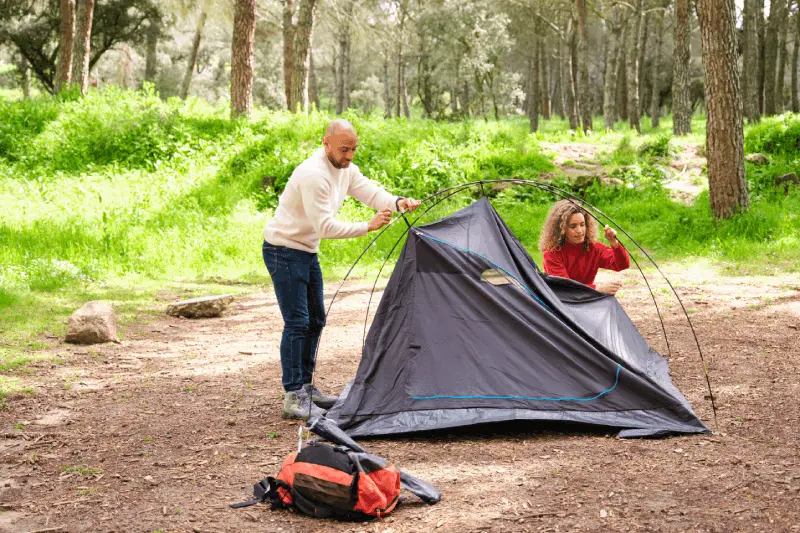
Choosing the ground in an area where multiple tents will be set up requires social coordination. Having tents too close to each other reduces privacy, while being too far apart increases communication and security risks. When determining a flat ground for each tent, at least a 3-4 meter passage area should be left between tents. Additionally, there should be distance between the ground of common areas like kitchens or fire pits and sleeping areas; this way, food odors do not permeate the tents, and the risk of a potential fire spreading is prevented. The overall structure of the ground should be suitable for the size of the group, providing enough flat space for a central gathering area.
What Are the Differences Between Natural Grounds and Man-Made Platforms?
Some organized camping areas have wooden or concrete platforms. While these grounds offer excellent flatness and insulation, they do not allow the use of standard tent stakes. If you are going to camp on a platform, you should know different securing methods such as special "L" type hooks or tension lines to attach to the side rails. Natural grounds are more flexible but require preparation. The biggest advantage of platforms is that they eliminate the risk of flooding since they are elevated from the ground during rainy weather. However, for campers seeking naturalness, a properly selected soil ground is always a more soulful option that allows you to connect with nature.
How Do Seasonal Vegetation Changes Affect Ground Decisions?
The beautiful flowered plain you camped on in spring can turn into a muddy swamp in autumn. Seasonal changes fundamentally alter the structure of the ground. In winter, you need to create a platform by compressing the snow on snow-covered grounds (cold well), while in summer, drought-affected soils can be dangerous during sudden rains as they lose their ability to absorb water. Fallen leaves in autumn can hide stones and holes in the ground, so it is necessary to sweep the ground and check underneath. Each season requires you to look at the ground with a different perspective. Understanding the current cycle of nature helps you accurately interpret the advantages and dangers the ground presents to you.
How Does Using a Tent Footprint Compensate for Ground Selection Mistakes?
No matter how careful you are, sometimes you cannot find the perfect ground. This is where a quality tent footprint comes into play. The footprint is the "sacrificial" layer between the ground and your tent. It prevents small gravel stones that escape the eye from tearing your tent, slightly cuts off the cold coming from the ground, and most importantly, prevents the tent floor from getting dirty. If the ground is very wet, you should use a smaller footprint than your tent's own floor; otherwise, the parts that carry water from outside will act as a channel directing rainwater under the tent. Using a footprint is the simplest and most effective method to tolerate small imperfections in ground selection, extending the lifespan of your equipment for years.
What Are the Ways to Prepare Ground in a Camping Area Without Harming Nature?
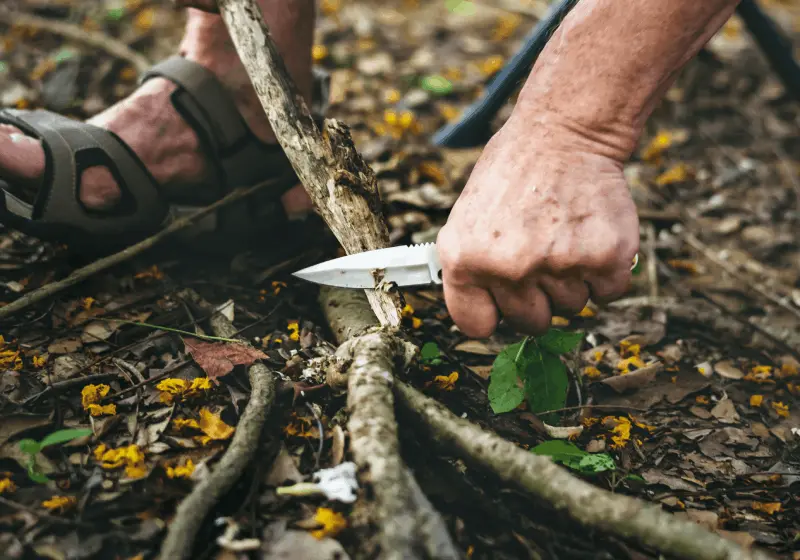
Preparing the ground should not mean manipulating nature. It is acceptable to move small stones aside or clean dry branches, but uprooting live plants, cutting tree roots, or digging deep trenches harms nature. According to the principle of "leave it cleaner than you found it," you should randomly distribute the stones you cleaned back to their original places and lightly aerate the crushed grass with your hands when the camp is over. The less you disturb the natural balance of the ground, the faster the ecosystem of that area will recover. Remember that we are only guests in nature, and the tent we set up is just a temporary point in the thousands of years of history of that soil.
Perfect Ground Means Safe Camping
Choosing the right ground is an art and a skill gained over time. All the details we examined under the headings above determine how solid and peaceful your home in nature will be. Next time you go camping, take at least 10 minutes before pulling your tent out of the bag to analyze the surroundings, the sky, and the ground you are stepping on. You will see that a properly selected ground not only provides a good night's sleep but also offers you that unique feeling of security that comes from being in harmony with nature. Safe and enjoyable camping!