What Hidden Criteria Should Be Considered When Choosing a Solo Camping Area?
Choosing a camping area is fundamental to safety. Instead of focusing solely on the beauty of the view, you should evaluate the strategic location of the area. An ideal area should be far enough from main roads but accessible in case of an emergency. Topographically, it should be located at a height to avoid the risk of flooding, and in the shelter of trees that break the wind to mitigate the risk of storms. Additionally, checking digital platforms to see how the area has been evaluated by other campers in the past will give you critical insights about the human traffic and security history in the area.
What is the Safest Route for a Woman Camping Alone for the First Time?
Instead of diving into the "heart of the wild" during your first solo experience, opting for controlled areas will boost your confidence. Camping areas with toilets, drinking water, and an operator are the safest routes for beginners. In such areas, the presence of fellow nature lovers around you provides psychological comfort. As you gain experience, you can venture further away from settlements to designated camping spots within national parks. When determining your route, choosing areas with strong cell phone signals will help you feel safer initially.
How to Establish the Balance Between "Out of Sight" and "Accessibility" When Determining a Camping Spot?
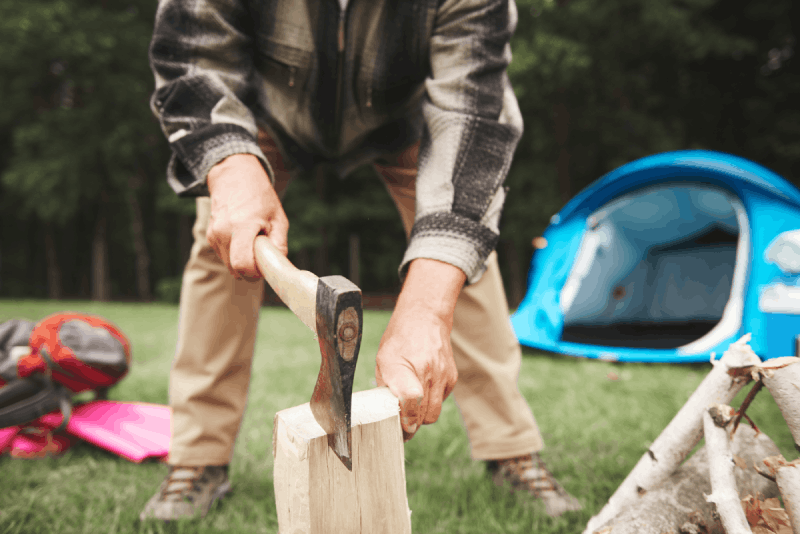
An excellent camping spot is one that is out of unwanted sight but where help can come if needed. An area hidden behind trees or natural elevations, 100-200 meters inside the trail, prevents passersby from noticing you. However, this privacy should not block your escape routes. When setting up your tent, always keep the quickest route to your vehicle or the main road clear. A hidden but not trapped location is the biggest defense tactic for a solo camper.
What Strategies Should Be Followed Instead of Live Location Sharing for Digital Safety?
Instant sharing on social media, no matter how pure your intentions, can expose your location to ill-intentioned individuals. Instead, you should use the "delayed sharing" method. Uploading photos of the area after you have left is the safest way. Send your live location only to a "safety partner" (family member or close friend) via private message. Additionally, to conserve your phone's battery, turn on GPS only when necessary and use satellite communication devices (like Garmin InReach) to ensure your safety even in areas without signal.
What Psychological Ways Are There to Protect Yourself from Animals While Alone in the Wild?
Most of the sounds in nature are actually harmless, but when alone, every rustle can be perceived as a threat. Being knowledgeable about animal behaviors helps you manage this fear. For example, knowing that wild boars or bears typically avoid humans helps you see them not as monsters but as neighbors sharing their habitat. Practicing deep breathing exercises during moments of fear and thinking rationally prevents panic. Accepting that animals are not interested in you and are just going about their own paths is key to sleeping peacefully in your tent.
What Defense Scenarios Should Be Prepared for When an Unknown Guest Arrives at the Camping Area?
Encounters in nature are usually friendly, but being prepared empowers you. Display a polite but distant attitude towards a stranger approaching you. Never directly state that you are alone; white lies like "My friends will be here soon" or "My spouse went to gather firewood" can be deterrents. Your body language should be upright and confident. If you feel threatened, do not hesitate to quickly gather your belongings (or just take the essentials) and leave the area. If your instincts say "go," do not hesitate to distance yourself from that area.
What Are the Often Overlooked Yet Considered "Life-Saving" Equipment in an Emergency Kit?
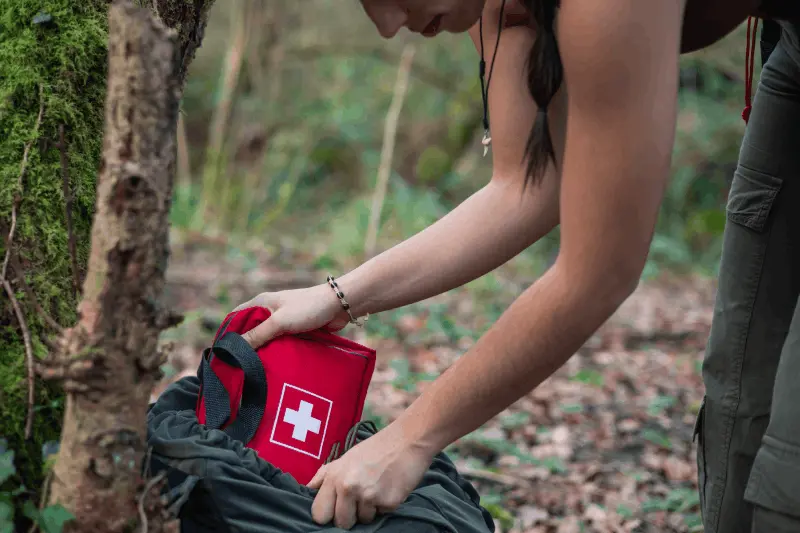
Beyond a standard first aid kit, there are critical tools for solo campers. At the top of this list is a "high-decibel whistle"; it is the most effective way to call for help when your voice is muffled or you are too exhausted to shout. Additionally, a powerful "power bank", spare batteries, and a waterproof lighter are vital. Thermal blankets not only protect against cold but also serve as signaling devices for search and rescue teams with their bright surfaces. These small but effective tools will be your greatest support in tough moments.
What Mental Exercises Can Be Done to Manage Anxiety Caused by Sounds Heard in the Tent at Night?
When darkness falls, the sense of hearing sharpens, and the mind begins to create scenarios. To manage this situation, you can practice "sound identification" exercises. Rationally categorize every sound you hear: "That's the sound of wind in the leaves", "Those are the steps of a small rodent". If your anxiety level rises too high, reading a book or listening to calming music (with one earbud in, so you can hear your surroundings) can change your environment. Remember, nature does not sleep at night; those sounds have always been there, you are just listening to them up close for the first time.
Why is the Direction of Parking Important for Security When Going to Camp by Vehicle?
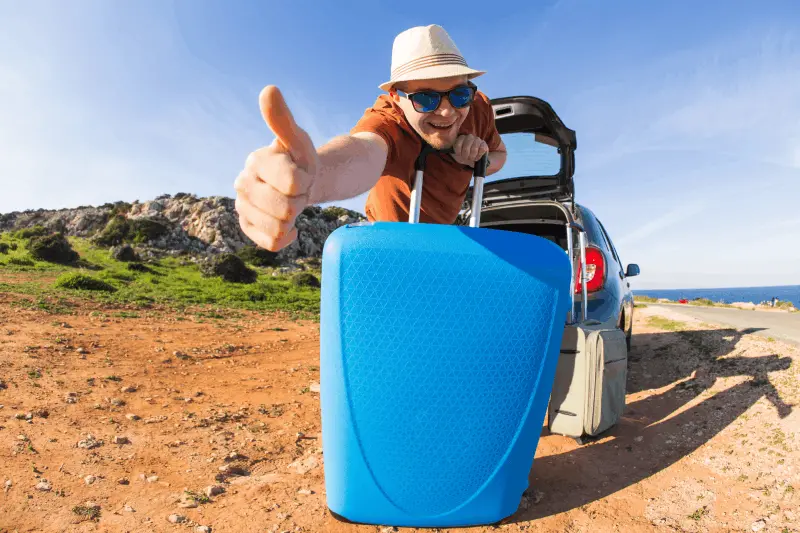
Your vehicle is your quickest escape.
This is your vehicle. Always position the front of the vehicle to face the "exit direction" when parking. You should not waste time maneuvering in reverse in an emergency. Also, always keep your keys inside the tent, within reach, and in a secure place. The "panic button" found in modern vehicles is an excellent defense tool to attract the attention of everyone around with horns and lights when you sense a threat at midnight and to scare off an aggressor.Does Lighting a Fire Pose a Safety Risk for Women Camping Alone?
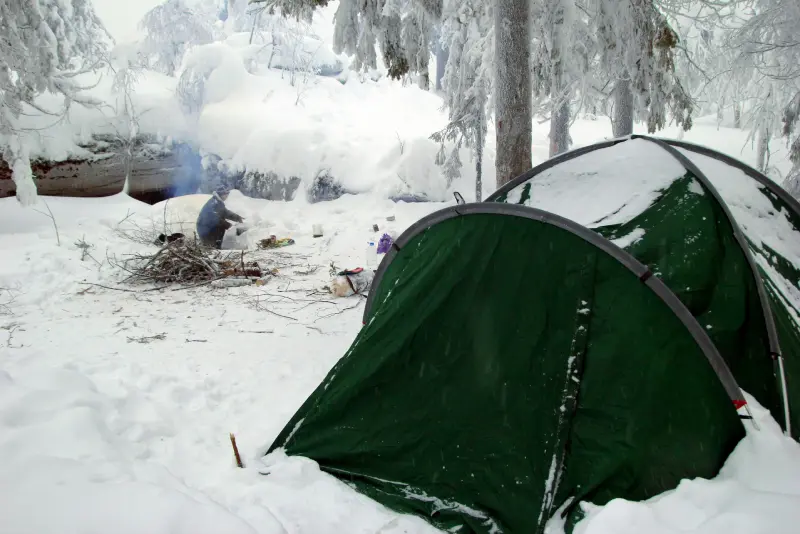
A campfire is both a source of warmth and morale, but it is like a giant flashlight saying "I am here." If your security concerns are high, you might prefer a quality camping lantern and warm clothing instead of lighting a fire. If you do decide to light a fire, choose a small and manageable flame. Make sure to completely extinguish the fire before going to bed. A large and bright fire can make you noticeable from miles away; whereas a small ember meets your needs while keeping your visibility to a minimum.
What "Emergency Protocol" Instructions Should You Give to Your Loved Ones When Communication is Cut Off?
Before heading out, leave a plan with a loved one that includes the following information: exactly where you are going, when you plan to return, and at what point they should call for help if they do not hear from you. A clear instruction like "If I don't call by Sunday at 6:00 PM, send help to these coordinates" can be life-saving. This protocol reduces the constant pressure of having to check in and allows you to camp peacefully. A conscious waiting plan is the invisible insurance of solo camping.
How Can You Control the "I Am Here" Message Sent to the Environment When Setting Up a Tent?
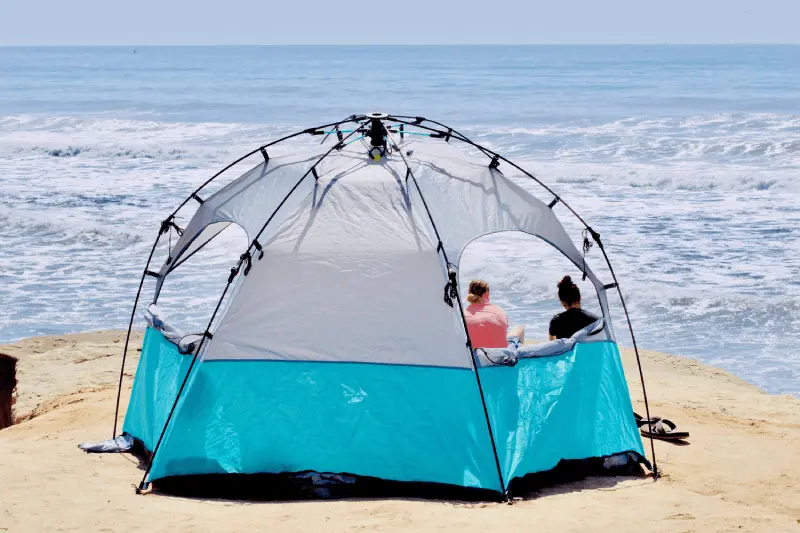
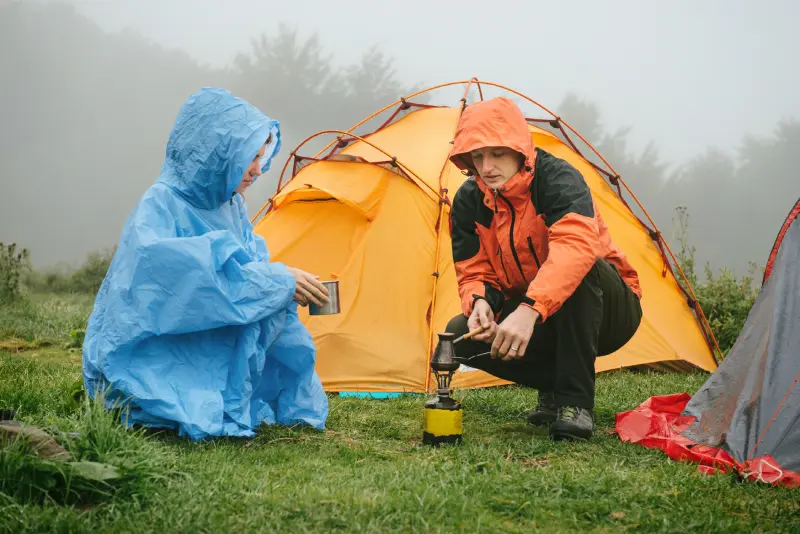
To reduce your visibility, choose equipment in nature-compatible colors. Instead of an orange or bright blue tent, gear in green, gray, or earth tones will help you camouflage in nature. When using a flashlight, only provide enough light to illuminate what is in front of you and avoid pointing the beam at the sky. Keep your conversations at a low volume, and if you are going to listen to music, use one-sided headphones instead of speakers. Silence and a low profile are the best protective shields for a solo camper in the wild.
What Special Precautions Should Be Taken for Medical Needs Such as Insulin While Camping Alone?
If you have a condition that requires regular medication, carry your medications in a redundant and different bags. Obtain equipment suitable for the storage conditions of the medications (for example, cold chain). Additionally, it is vital to carry a "medical ID" or bracelet indicating your medical condition and blood type on you or in your bag. In the event of a fainting or accident, those helping you need to know what to do. Health security is as critical as physical security.
What Does "Listening to Your Instincts" Mean Scientifically as a Solo Traveler?
Instincts are the result of thousands of small pieces of data (smell, sound, visual asymmetry) that our brain collects without our awareness. If a campsite or a person does not feel "right" to you, it is likely because your subconscious has detected a danger. Never underestimate the feeling that "something is off." Even if you cannot find a logical explanation, leaving a place where you feel uneasy can protect you from potentially great risks. Trusting your instincts utilizes a protective mechanism that has evolved over millions of years.
How Should Camping Knives and Other Cutting Tools Be Used for Both Functional and Deterrent Purposes?
A camping knife is primarily a tool; however, it also provides a sense of security. Always carry your knife in an easily accessible but secure sheath. Learn to use it quickly and maintain it. Even when using it for functional purposes (like cutting wood, preparing food), you convey the message that you have control over your tools. Remember, the best defense tool is the one you carry professionally enough that you won't need to use it.
What Are the Negative Effects of "Sharing Moments" on Social Media Regarding Security?
Momentary shares not only reveal where you are but also show what you are engaged in and that your attention is diverted. For an aggressor or thief, the information that you are "online" can mean you are vulnerable. Sharing your posts after the camp is over or after you return to the city ensures that you enjoy the moment and prevents tracking of your digital footprint. Do not forget that the background details in your photos (distinctive rocks, sign remnants) can give away your location. Digital privacy is a continuation of physical security.
Does Setting Up "Natural Traps" Around the Tent Enhance Security or Is It Dangerous?
Simple "early warning systems" like laying dry branches around the tent or hanging bells can enhance your peace of mind. However, these traps must be designed in a way that they will not injure you if you need to exit at night. Avoid complex or dangerous (like sharp wires) setups; as they can put you in a difficult situation as well as strangers. The most effective natural trap is a leaf and branch cover that ensures you hear the sound of someone approaching. Simplicity is always safer.
What Should Be Done First When a Human Voice is Heard Near the Tent at Night?
In such a situation, the first rule is to remain calm and silent. Do not turn on your light immediately; this makes you a direct target. First, listen to the sound and try to understand the distance and intent. If the sound is very close and you feel threatened, use the "panic button" or loudly say "Is someone there? Do I need help?" (decisively). To shout (with a strong voice) shows that you are not hiding and that you are ready. Generally, just being "noticed" is enough for someone with bad intentions to withdraw.
What Are the Invisible Risks of Going Solo Camping Without First Aid Knowledge?
A small cut or sprain in nature can turn into a big problem if not intervened. When camping solo, you must be your own doctor. Taking basic first aid training (stopping bleeding, making a splint, burn treatment) increases your confidence. Knowing which plants are poisonous and how to prevent insect bites allows you to replace fear with knowledge. Knowledge is the lightest yet most valuable equipment in a solo camper's backpack.
How to Overcome the Psychological Pressure of Solo Camping in Rainy or Stormy Weather?
Bad weather conditions can increase the feeling of isolation inside the tent. To overcome this pressure, you must have complete confidence in your equipment. If your tent is waterproof and wind-resistant, the noise outside will remain just a "natural event." During a storm, keep a physical book or podcast with you to distract yourself. Instead of resisting nature's fury, adapting to it and reminding yourself that you are safe will help you maintain your mental resilience.
How Safe Are "Finding a Camping Buddy" Apps for Solo Female Travelers?
Going camping with people you meet online can carry significant risks. If you are going to use such an app, make sure to have the first meeting in a crowded city center. Check the references of the person you are meeting and investigate whether you have mutual friends. Never go to a secluded place on the first meeting. If possible, expand your network by participating in events only with friends you know or trusted women’s camping groups until you get used to solo camping. Trust is something that is built over time.
What Are the Safety Concerns of Camping on Seasonal Migration Routes?
Camping on migration routes of wildlife or livestock can lead to unexpected encounters with guests at midnight. Being in the middle of a herd or on a predator's hunting path puts both your safety and that of the animals at risk. Before camping, examine the animal tracks, droppings, and trampled grass in the area to understand if it is a migration route. Camping too close to water sources can also be risky due to animals coming to drink at night. Observing the traffic of nature ensures a peaceful stay.
What Arrangements Should Be Made to Feel Like You’ve Built a Fortress Inside Your Tent?
Your tent's interior arrangement should make you feel safe. Always keep your shoes inside the tent and ready to wear. Your defense tools, flashlight, and phone should always be in the same spot, within reach. You can lubricate the zippers to reduce the noise when opening the tent zipper. Preventing clutter inside helps you find what you need immediately in an emergency. An organized tent not only provides comfort but also gives a sense of control and thus peace of mind.
How Should the "Distance" and "Politeness" Settings Be When Interacting with Local People?
Interacting with locals can be beneficial for your safety; they know the area best. However, avoid giving too much personal information. Instead of saying exactly where you are camping, use general statements like "I will be staying somewhere around here." Assure them with your politeness but clearly set your boundaries. If a local insists, politely decline and walk away. Good communication can serve as an early warning system for you or a door to help in times of need.
How Do You Monitor the Safety of Your Campsite While Out Exploring During the Day?
When leaving the campsite for a short time, always take your valuable belongings (wallet, phone, keys) with you. Hanging a small lock on your tent zipper (even if symbolic) can deter opportunistic thieves. When you return, check the footprints around your tent or whether the location of your belongings has changed. If you suspect someone has entered your area, it is safest to leave and move to a new location. Area monitoring is a part of proactive safety.
Where Does "Mental Resilience" Fit into Safety Measures in Solo Camping?
Safety is not only about equipment and techniques; a large part of it ends in your mind. Staying calm when faced with an unexpected situation (rain, equipment failure, minor injury) is your biggest defense mechanism. Developing your problem-solving ability will make you more resilient to threats from the outside world. The thought of "I can do this" helps replace fear with self-confidence. Mental preparedness is the quietest yet strongest protector of solo camping.
Is Sleeping Bag Selection Just About Comfort or Is It a Safety Element?
A sleeping bag prevents life-threatening risks like hypothermia by protecting your body heat. However, you should also pay attention to the bag's "quick exit" feature from a safety perspective. A tight zipper can hinder your escape from the tent in an emergency. Ensure that the warmth rating of your bag is at least 5-10 degrees higher than the lowest nighttime temperature in the area. A stressed body cannot think clearly and is prone to panic. Feeling warm and safe is the key to a good night's sleep and a refreshed mind.
What Symbolic Objects Can You Keep With You to Feel "Peaceful" While Camping Alone?
Psychological safety is as important as physical safety. Symbolic objects like a beloved book, a lucky charm, or a photo of a family member can boost your morale during moments when you feel alone and vulnerable. These types of "comfort objects" help reduce stress hormones, allowing you to make more rational decisions. Being alone in nature does not mean you have to feel lonely. A small connection that ties you to your home and loved ones can provide you with peace even in the darkest nights.
Can the Scent of Personal Hygiene Products Attract Wild Animals?
Perfumed shampoos, soaps, and deodorants can be intriguing and foreign scents for wild animals. When camping solo, you should use unscented and biodegradable products whenever possible. Especially food scents and sweet-smelling hygiene products can attract animals like bears or pigs to your campsite. Wiping your face and hands with an unscented wet wipe before bed and keeping scented trash away from your tent can significantly reduce the likelihood of uninvited guests. Being "unscented" in nature is another way to be invisible.
What is the Key That Transforms a Solo Camping Experience from a "Traumatic" Moment to a "Developmental" Experience?
This key is the ability to "acknowledge fear and act with it." During your first solo camping trip, you will likely sleep very little and be startled by every sound; this is normal. However, with each successful camping experience, these fears will be replaced by respect for nature and self-confidence. Being prepared, minimizing risks, and knowing your limits will turn this journey into one of the most educational experiences of your life. Solo camping is not a destination, but a continuous process of rediscovering yourself.
Every moment you spend alone in nature is an opportunity to discover your own strength. These safety measures are not only there to protect you but also to ensure that you reach that unique peace. Happy camping!