What Are the Reasons for Traditional Caravans Not to Go Off the Asphalt?
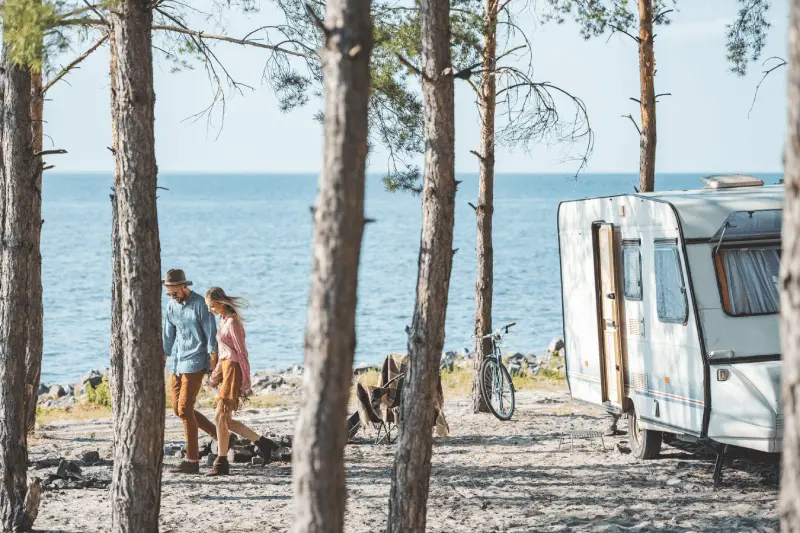
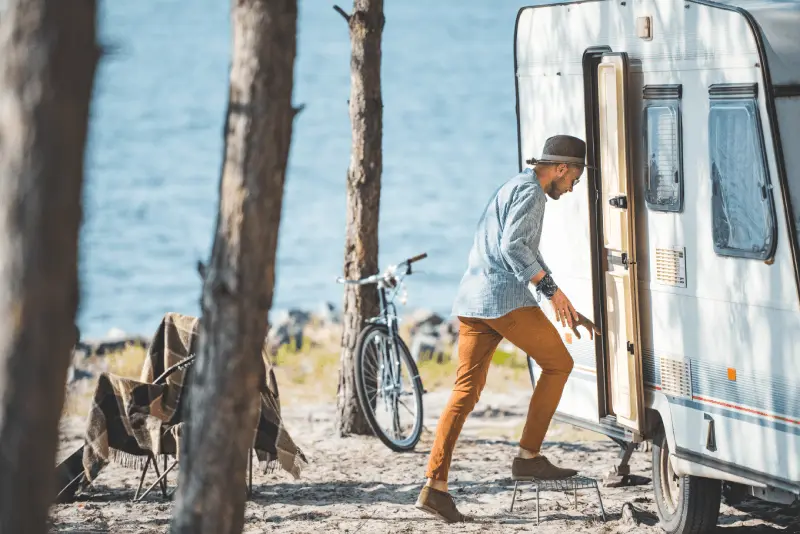
Traditional models, also known as standard white goods caravans, are generally designed for smooth asphalt roads and regular camping areas. The chassis of these vehicles lacks torsional resistance and is quite fragile against vertical movements on rough terrain. The ground clearance is quite low; this can cause damage to the underside of the caravan on the slightest bump or dip. Additionally, the interior furniture joints are made using a screwing method, which leads to loosening and breaking under continuous vibration. For these reasons, standard caravans cannot maintain their structural integrity on bumpy roads leading to the heart of nature.
Why Are Off-Road Caravan Chassis Made of Reinforced Steel?
The most fundamental element that distinguishes off-road caravans from others is their chassis. These vehicles typically use hot-dip galvanized or electrostatically powder-coated high-strength steel profiles. While standard chassis can break instantly under cross torsions encountered in the field, reinforced off-road chassis can absorb this energy or flex back to their original form. Each point of the chassis is calculated according to the pulling force of the winch or the situation of the caravan hanging in the air. This robustness ensures that the vehicle maintains its structural form even on the toughest routes for years, providing long-lasting use.
How Does an Independent Suspension System Provide Comfort in Off-Road Conditions?
Standard caravans usually have a single-piece axle and a rubber torsion system. In off-road models, however, each wheel is equipped with an independent swing arm, coil springs, and dual shock absorber systems. This system ensures that while one wheel passes over a large rock, the other wheel maintains contact with the ground and the stability of the caravan body. Independent suspension reduces road shocks by 80%, preventing the items inside from being displaced. This technology minimizes the bouncing of the caravan during travel, lightening the load on the towing vehicle and maximizing travel safety.
Why Is the Tread Depth and Sidewall Structure of Caravan Tires Important?
The only point of contact of a caravan with the ground is its tires, and in off-road models, these parts are of vital importance. Typically, A/T (All Terrain) or M/T (Mud Terrain) type tires are preferred. The sidewalls of these tires have reinforced layers against sharp rock fragments and thorns. The tread depth increases grip on muddy or sandy surfaces, preventing the caravan from acting as an anchor behind the towing vehicle. Standard caravan tires are unsuitable for deflation processes due to their thin sidewalls, while off-road tires can progress with a wide surface area even at low pressures without coming off the rim.
What Purpose Do Undercarriage Protection Plates Serve That Are Not Found in Standard Caravans?
The biggest risk in off-road driving is having water tanks, gas pipes, and wiring exposed underneath. In off-road caravans, these sensitive components are armored with aluminum or steel protection plates known as "Skid Plates." These plates ensure that the caravan does not slide over a rock and do not transmit impacts directly to the components. While even a stone scraping in standard caravans can puncture the water tank, this risk has been mitigated in off-road models with engineering specifications. This protection gives the user confidence that they will not be left stranded in a remote valley due to a technical failure.
Why Are Coupling Systems Suitable for Off-Road Use, Such as Knott or Al-Ko Brands, Preferred?
The coupling point that connects the caravan to the vehicle is the area that experiences the most stress during off-road driving. Standard 50mm ball couplings have limited movement angles; these couplings can break or detach from the vehicle on steep inclines or during cross transitions. Off-road specific couplings (such as DO35 or similar 360-degree rotating systems) offer free movement in every direction. This allows the towing vehicle and the caravan to remain completely independent at various angles. If the vehicle reaches a tipping point, it does not pull the caravan or block the vehicle where the caravan is attached. This flexibility is the key to true off-road capability.
How Should Solar Panel Capacity Be Calculated for Off-Grid Living?
The biggest advantage of off-road caravans is their ability to stay in nature for weeks without needing any external resources. The source of this freedom is a powerful solar energy system. Typically, monocrystalline panels ranging from 200W to 600W are used. When calculating, the daily consumption of the refrigerator, lighting, water pump, and devices like Webasto is taken into account based on their total wattage. Off-road users often determine a panel capacity that is 30% higher than their needs, considering camping spots under shade. This way, even in cloudy weather, the battery charge level does not drop below critical limits.
How Does the Placement and Protection of Water Tanks Affect Off-Road Driving?
Water is the heaviest load of a caravan, and the placement of this load directly determines the center of gravity. In off-road caravans, water tanks are usually placed directly on top of the chassis, at the closest point to the wheel axle. This reduces the caravan's tendency to sway (snaking). Additionally, these tanks are made from impact-resistant polyethylene material and are surrounded by metal cages for protection against external impacts. In standard caravans, tanks are usually secured with plastic clamps, while off-road models use heavy-duty mounting feet that are resistant to shocks. This way, the splashing effect of water on rough roads is minimized. it does not cause harm.
Why is Composite Panel Body Structure More Durable Against Impacts?
In traditional caravans, a combination of wooden skeleton and aluminum sheet is common, but this structure is weak against water leakage and impacts. Modern off-road caravans use sandwich panels or monoblock fiberglass (CTP) bodies. Composite panels are both lightweight and have incredible strength. The high-density XPS foam inside provides excellent thermal insulation, while the CTP layer on the outer surface is resistant to scratches from tree branches. This body structure eliminates the problems of water tightness caused by shock due to not having a joint (in monoblock models).
Why are Outdoor Kitchen Units Essential in Off-Road Camping?
Off-road caravan users often spend most of their time outdoors. Outdoor kitchen units, designed to prevent food odors and moisture from forming inside, are usually pulled out from the side of the caravan. These units include a stainless steel sink, a double burner, and spacious preparation counters. Cooking in the field is a ritual, and the outdoor kitchen makes this ritual comfortable. In standard caravans, the kitchen is usually inside, restricting mobility in tight spaces. The structure of these modules in off-road models is a significant advantage that integrates camping life more with nature.
How Do Diesel Heaters (Webasto) Perform in High Altitude Conditions?
Winter camps and high-altitude plateaus are the natural habitat of off-road caravans. In these conditions, standard gas heaters may sometimes be insufficient or there is a risk of gas freezing. Diesel heaters (Webasto or Eberspacher) are fed directly from the caravan's main fuel tank or their own small tank. The "High Altitude Kit" found in new generation heaters automatically adjusts the fuel mixture according to the oxygen level at altitudes above 2500 meters. This keeps the inside of the caravan warm with low energy consumption without creating soot. With a silent operation principle and a safe exhaust system, it provides uninterrupted comfort throughout the night.
What Are the Advantages of Lithium (LiFePO4) Batteries Compared to Standard Gel Batteries?
Lithium batteries, which revolutionize energy storage systems, are indispensable for off-road caravans. While standard gel batteries add weight to the caravan, lithium batteries provide the same capacity at half the weight. The biggest advantage is their discharge depth; discharging a gel battery more than 50% shortens its lifespan, while LiFePO4 batteries can be safely discharged at a rate of 90-95%. Additionally, their charging speeds are very high; they quickly store energy from solar or vehicle charging (DC-DC). For a user who wants to manage limited energy in the field as efficiently as possible, lithium technology is not just a luxury, but a necessity.
Why Are the Approach and Departure Angles of a Caravan Vital?
The technical data that determines whether a caravan can progress in the field is its geometry. The approach angle (the height of the front hitch) and the departure angle (the height of the rear end of the caravan from the ground) are critical parameters. In off-road caravans, the rear bumper is usually angled upwards and positioned higher. This prevents the back of the caravan from scraping the ground when entering a steep slope or exiting a river. Standard caravans, however, suffer serious damage to both the chassis and the body due to their long rear overhangs and low structures in such transitions.
How Do Rock Sliders Protect the Integrity of the Body?
On the sides of the caravan, the sturdy metal pipes located just in front of and behind the wheels are called "Rock Slider". These parts not only serve as steps; their main purpose is to protect the caravan body from rocks or tree stumps in narrow passages. If the caravan leans against something from the side, the impact is absorbed by the steel pipes connected to the chassis rather than the body panel. This way, the outer shell of the caravan does not get crushed, and its waterproofing remains intact. Since standard caravans do not have such protective elements, even the slightest side scrape can lead to significant repair costs.
Why Do Dust Sealing Tests Play a Critical Role in Challenging Tracks?
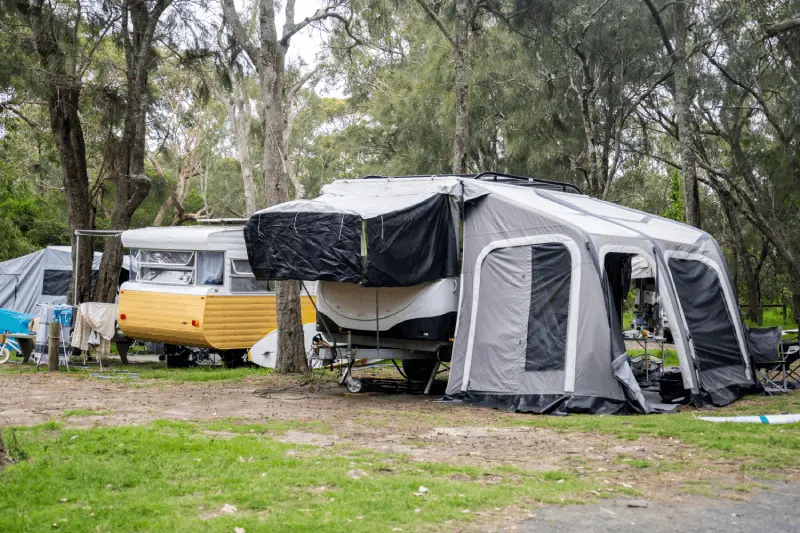
One of the biggest problems encountered while towing a caravan on dirt roads is the dust that enters due to the "vacuum effect". When off-road caravans are produced, double-layer rubber seals are used on doors and windows. Some upper segment models have a "positive pressure system"; this system filters the outside air and pushes it inside, creating a higher air pressure inside compared to the outside. This way, dust cannot enter through the openings. In standard caravans, fine dust entering through ventilation ducts can quickly cover everything from beds to kitchen utensils, turning the camping experience into a nightmare.
Why is Inverter Selection Important for the Safety of Electronic Devices?
When camping in the field, an inverter is needed to use devices that operate on 220V, such as laptops, coffee machines, or hair dryers. In off-road caravans, "Pure Sine Wave" inverters are generally preferred. These devices produce the same electricity as that from the city grid. Cheap models known as "Modified Sine Wave" can damage sensitive electronic boards or cause devices to malfunction. Capacities ranging from 1000W to 3000W offer the comfort of modern life in the middle of nature. Especially when combined with lithium batteries, they can safely handle high current draws.
Gray And S , over time metal fatigue occurs and the carrying caravan may detach. In off-road designs, these hinges are usually greasable and equipped with heavy-duty bearings. Some designs protect the body panels by transferring this load directly to the chassis. Keeping the spare tire securely in place is the most critical assurance for continuing the journey in the event of a tire blowout.
How is the Use of an Overhead Winch Applied in Caravan Recovery Scenarios?
Getting stuck in mud or sand with a caravan can be frightening. In such cases, the winch in front of the towing vehicle may sometimes not be enough on its own. Off-road caravans have This technology is a lifesaver to track the trailer and bring it back when exiting onto the asphalt road with the correct pressure.
What Kind of Conveniences Do Smart Caravan Management Panels (Bluetooth/Wi-Fi) Offer?
A modern off-road caravan is now like a "smart home". Thanks to management panels from brands like Victron, Simarine, or Redarc, you can see the levels of water tanks, how full the battery is, and how many Watts the solar panels are producing at that moment from your phone. You can even turn on the lights from your phone before getting into the caravan or heat the interior by activating the Webasto. This digital monitoring prevents you from encountering surprises, especially in off-grid scenarios where energy management is critical. The ability to control everything from a single screen elevates the user experience to a professional level.
Does the Caravan Need Anti-Sway (ATC) Systems in Off-Road Conditions?
The wind created by a truck passing by while driving at 100 km/h on asphalt can sway the caravan. Electronic systems like ATC (Active Trailer Control) intervene in the caravan's brakes within milliseconds when a sway is detected through gyroscopes in the caravan, pulling it back into line. In off-road conditions (at lower speeds), this system is generally passive, but its presence during long highway drives before reaching the terrain is invaluable from a safety perspective. Especially in windy weather or sudden maneuvers, the technology that allows the caravan to correct itself independently of the driver prevents major accidents.
How Efficiently Do Compressor Refrigerators Work on Uneven Surfaces?
The "absorption" (3-way) refrigerators used in standard caravans need the caravan to be on a flat surface to operate; otherwise, the ammonia cycle inside is disrupted, and cooling stops. In off-road caravans, "Compressor" refrigerators that operate on 12V are used. These devices work like the refrigerators in homes and do not experience efficiency loss even on uneven surfaces up to 30 degrees. They also cool much faster and can maintain their freezer compartments even if the outside temperature rises to 40 degrees. They operate in perfect harmony with solar energy systems with low energy consumption (1-2 Amper per hour).
What Are the Scratch-Resistant Paint Technologies on the Caravan's Exterior?
Classic white-painted caravans quickly become marked on narrow off-road paths where tree branches rub against them. To overcome this problem, many off-road caravan manufacturers use polyurethane-based, durable, and extremely resistant coatings like "Line-X" or "Raptor". These coatings provide complete protection not only against scratches but also against impacts, UV rays, and corrosion. In some models, only the area called the "skirt" is coated, while in others, the entire body is protected with this armor. This paint technology ensures that the caravan maintains its original wild and clean appearance even years later.
How Is the Water Resistance of the Trailer Plug and Electrical Installation Ensured?
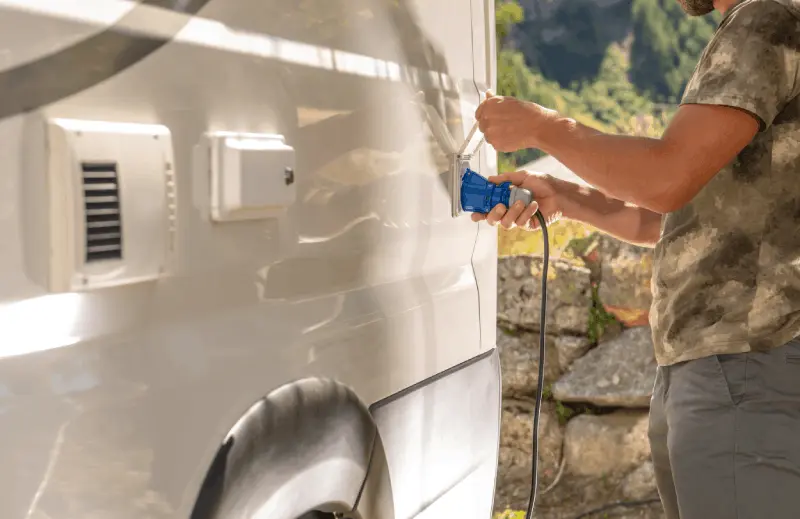
When crossing a stream with the caravan, the last thing you want is for the electrical installation to short-circuit. The 7 or 13-pin plugs used in off-road caravans typically have IP67-rated waterproof seals. All wiring is selected from "marine-type" tinned cables; these cables are resistant to oxidation and corrosion. The cable routes pass through the chassis or protective spiral tubes (slotted tubing). Each line is fused and collected in a main fuse box. This engineering is a quiet but critical detail that guarantees the safety of the electronic components when the vehicle enters and exits the water.
What Is the Functionality of Shock-Absorbing Covers in Caravan Interior Storage Areas?
It is a significant problem when cabinet doors open and items spill out inside a bouncing caravan. In off-road caravans, upper cabinet doors are typically supported by gas struts and have "push-lock" locking mechanisms. When the door closes, it locks and does not move despite vibrations thanks to the strut. Drawers are equipped with "self-closing" and heavy-duty rails; thus, kitchen items remain securely in place during travel. These details ensure that when you arrive at the campsite, you do not find the inside of the caravan looking like a battlefield, maintaining comfort and order.
How Do Heating Cables Work to Prevent Pipe Lines from Freezing in Winter Camps?
When the air temperature drops below -10 degrees, the water installation and tank outside the caravan can freeze. In off-road caravans, low-voltage heating pads and resistance cables wrapped around pipes, known as "Tank Heater", are used. This system, which activates when the temperature drops to a critical level via a sensor, maintains the fluidity of the water. Additionally, the pipe lines inside the living area are typically routed next to hot air ducts (Webasto pipes) to provide natural heating. This way, even on the coldest days of winter, your faucet continues to flow when you wake up in the morning.
Why Is the Night Vision Feature of Caravan Rearview Cameras Critical in Off-Road Conditions?
Reversing a caravan on a narrow path is quite risky due to blind spots. In off-road models, wide-angle cameras mounted at a high point at the back of the caravan provide the driver with a clear view. Cameras with night vision (Infrared) capabilities allow you to see trees or cliff edges even on pitch-black forest roads. Some systems have continuously operating screens in "rearview mirror" mode; this allows you to monitor the traffic (or dust cloud) behind you while driving. From a safety and maneuverability perspective, this technology acts as a helpful driver for those camping alone.
Roof Racks and Rail Systems
How is the Carrying Capacity of Trailers Calculated?
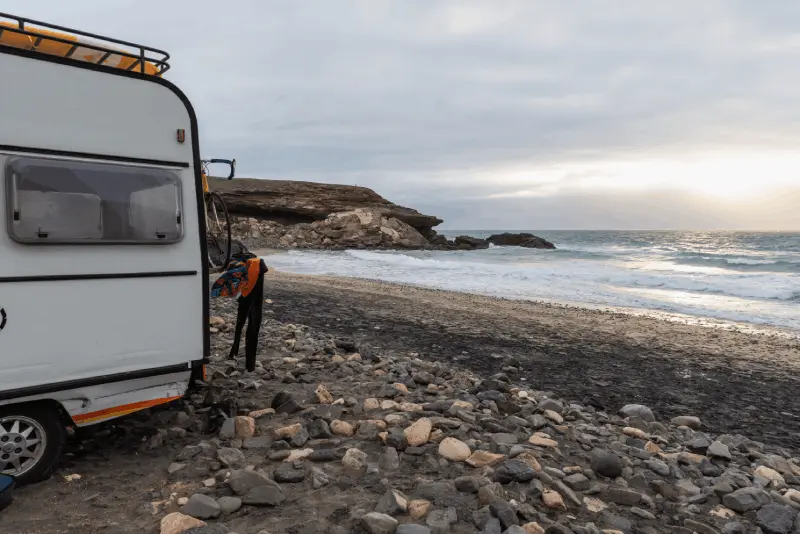
Extra equipment (canoe, bicycle, paddle, sand pallet) is transported on the roof or sides of off-road trailers, which have rail systems. The capacity of these systems is divided into "Dynamic" and "Static" loads. Dynamic load is the weight that the vehicle can carry while in motion (including the vibration factor) and is generally much lower than the static load. When designing the trailer roof, the mounting points of these rails are attached to reinforced or strengthened body brackets. When users load knowing these capacities, they prevent the roof from flexing or the equipment from being thrown off in bumpy roads.
How Does the Aerodynamic Structure of the Trailer Affect Fuel Consumption?
Off-road trailers generally have a "boxy" and high structure, which results in high wind resistance. However, in modern designs, the nose sections (A-frame area) are designed to be streamlined or curved to cut through the wind. An aerodynamic structure not only improves fuel consumption by 10-15%, but also ensures that the trailer is more stable at high speeds and reduces the heating of the towing vehicle. Pop-up models minimize wind resistance by lowering during travel while providing a spacious interior volume by raising during accommodation, combining the advantages of both worlds.
What is the Load of Independent Heating and Cooling Systems on the Battery?
Systems like air conditioning or heaters that increase comfort consume high energy. Diesel heaters draw high current only during the initial ignition (approximately 10 Amperes), and then operate at 1-2 Amperes per hour. However, 12V roof air conditioners put quite a strain on the solar panel and battery system. To meet this load in off-road trailers, a lithium battery bank of at least 200Ah-400Ah and a powerful MPPT charge controller are usually installed. If the air conditioning will be used for a long time, support from a portable generator or "DC-DC charger" (charging from the vehicle) is essential. If the energy budget is managed correctly, it is possible to have a cool sleep even in the hottest deserts.
In Conclusion, Who is Off-Road Trailer Investment Logical For?
A standard trailer is excellent for families looking for a comfortable summer holiday and accommodation in regular facilities. However, if your goal is to get away from the crowds, reach untouched bays where no one goes, and be one with nature in all weather conditions, an off-road trailer is the only option. The higher initial cost pays off with the vehicle's durability, safety features, and the unlimited freedom it offers. An off-road trailer is more than a vehicle; it is a lifestyle that gives you the power to make the most remote points on the map your "home." If you want your adventurous spirit to combine with your comfort, these technological beasts are the right investment for you.