Why is it Critical to Protect Against Wind in Foça's Caravan Camping?
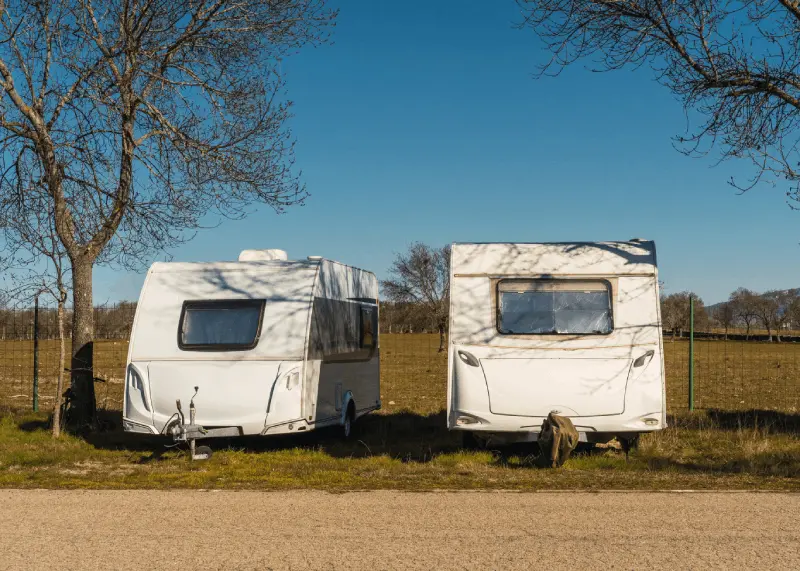
Foça is quite exposed to the strong Poyraz winds coming from the north and the occasionally effective Lodos winds coming from the south. For caravan users, wind is not just a source of noise, but also a factor that threatens safety. In severe winds, the swaying of the caravan can make sleep impossible; it can damage the awnings and solar panels used outside. Especially in light caravans, the aerodynamic pressure created by the wind can lead to balance issues. Therefore, placing your caravan in a geographically sheltered area while staying in this unique landscape of Foça not only saves fuel (by keeping the heat inside) but also extends the lifespan of your equipment. Analyzing the wind should be the first step of your Foça holiday for a peaceful meal and uninterrupted sleep.
Which Bays of Old Foça Serve as Natural Windbreaks?
Old Foça, with its indented coastline and islands stretching just off the shore, actually resembles a natural labyrinth against the wind. The high hills supporting the city create microclimate areas along the coast by blocking the strong winds coming from the northeast. Some small harbors in the Mersinaki area minimize the wind's wave-making capacity due to their depths. The rock formations around these bays act as a wall, protecting caravans from the direct effects of the wind. This natural protection offered by the geography distinguishes Foça from other open coasts and makes these special stops indispensable shelters for caravaners.
Are the Olive Groves Around Kozbeyli Village Ideal for Caravanners Looking to Escape the Wind?
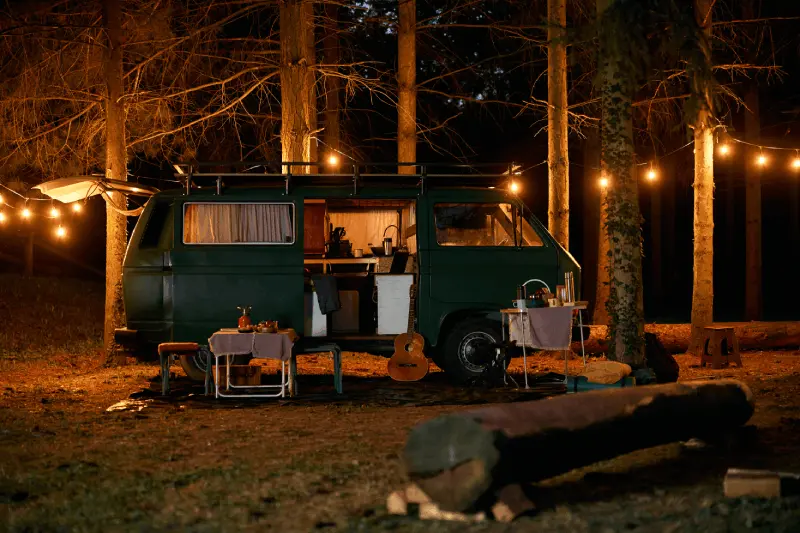
Located at a slightly elevated position surrounded by hills, Kozbeyli is a point where the iodized winds from the sea hit the dense leaves of the olive trees. The caravan accommodation areas around Kozbeyli feel much less wind intensity compared to locations closer to the sea. The centuries-old olive trees here and the region's bowl-shaped topography direct the airflow upwards, creating a calm environment at ground level. A traveler parking their caravan among these olive groves will only hear the rustling of leaves, even if a storm breaks out on the shore. Additionally, the high location turns even a light summer breeze into a refreshing advantage. Kozbeyli is a unique location for those wanting to embrace nature while escaping the wind.
Where Are the Hidden Places in Mersinaki Bays Where the Wind is Least Felt?
The Mersinaki region is famous for its small and deep bays that follow one another. Among these bays, the inner parts behind the headlands serve as real shelters depending on the direction of the wind. When the Poyraz blows, the southern slopes should be preferred, and when the Lodos blows, the northern slopes should be chosen. Some unused areas in the region, although difficult to access by vehicle, offer pockets that completely block the wind once the caravan is set up. The steep slopes of Mersinaki act as physical barriers that reduce the wind's speed. While staying here, it is more appropriate to turn the front of the caravan towards the slopes rather than the sea to reduce the pressure of the wind on the body. These hidden shelters are favorite spots for caravaners seeking silence and tranquility even during the busiest times in Foça.
Can the Pine Forests Along the New Foça Road Protect Your Caravan from Severe Aegean Winds?
The dense pine forests lining the coastal road from Old Foça to New Foça create an excellent barrier from the perspective of winds engineering. The pine needles slow down the wind's speed, while the tree trunks diffuse the airflow, softening severe impacts. When you park your caravan at the clearings at the end of the paths that enter the forest, you will notice that the wind effect is reduced by 60 to 70 percent. This protection offered by the forested area is vital for preserving the warmth inside the caravan, especially during winter camps. However, it is important to be cautious about the fire risk and the softness of the ground while staying in the forest. Waking up to the scent of pine and listening to the distant sound of the wind is the greatest luxury this road offers.
How Does the Deep Structure of Çanak Bay Alter the Effects of Lodos and Poyraz?
As can be understood from its name, Çanak Bay resembles a giant bowl opening to the sea with a narrow mouth surrounded by high hills. This structure ensures that the inner bay remains calm regardless of how choppy or windy the sea is outside. The areas designated for caravans are usually located at the bottom of this "bowl"; this means that the wind is hardly felt due to being blocked by the hills. It is one of the rare places that provides protection against winds coming from both the north and south. The "sheltered pool" feature of Çanak Bay creates a safe play and resting area, especially for caravan families with children. This deep structure, which does not create turbulence from the wind, is one of the few places in Foça where you can safely open your awning.
Which Caravan Camps in Foça Have Modern Protection Systems Against Wind?
Some professional camping areas in Foça have developed artificial features in addition to the natural protection offered by nature. In these camps, tall plants (such as leylandi) are planted between the parcels, or special windbreak panels are used. Another major reason for choosing camping areas is the "blocking" effect created by parking caravans close to each other. Some modern facilities face the direction where the wind blows the hardest. lar concrete or stone walls have positioned caravan parking areas behind these walls. Here, having not only electricity and water facilities but also a social area without wind is a great advantage for comfort-focused campers. It is always beneficial to ask whether there is "wind protection" when choosing a place to stay.
How is the Art of Parking Caravans According to Wind Direction at Foça Beaches Applied?
Instead of bowing to the wind while parking your caravan, managing it is an art. The basic rule of parking at Foça beaches is to ensure that the wind hits the narrowest surface; that is, the front or back of the caravan should face the wind. The wide side surfaces of the caravan act like a sail, increasing the sway. If you are in an open area in Foça, you can angle your vehicle slightly towards the wind to allow the airflow to pass over the body. Additionally, creating an uninterrupted line with other vehicles or natural rocks reduces the "air corridor" effect. Observing the direction of the grass's lay can help you understand the prevailing wind direction at that moment.
Why is the Topography of Sazlıca Bay an Indispensable Stop in Windy Weather?
Sazlıca Bay is not only one of the most popular spots in Foça but also quite assertive in terms of wind protection. The steep slopes around the bay and the small points extending towards the sea serve as windbreaks, reducing the intensity of the wind. The ground structure of Sazlıca is also suitable for the caravan legs (stabilization jacks) to press firmly into the ground, providing extra stability in windy weather. As you move towards the inner parts of the bay, the effect of the wind almost completely disappears. When camping in Sazlıca, it is especially recommended to choose areas behind rock formations, slightly further inland from sea level, to avoid being affected by the evening chill of the wind. It is a rare spot where nature combines the sea and mountain climate without wind.
Do the Access Roads in the Interior of Foça Cut the Sea's Strong Winds?
Foça is not just about the sea; the access roads in the interior offer a quiet and sheltered alternative against the wind for caravans. Just a few kilometers inland from the shore, you will witness how the elevations and vegetation absorb the sea winds. The vines on the paths and the surrounding orchards have a structure that stabilizes the airflow. Staying here means resting in a drier and calmer climate, away from the humidity of the shore and strong winds. In accommodations where permission is obtained from vineyard owners, parking your caravan in the shade of a vineyard house can provide you with an unforgettable night. These roads are undiscovered treasures, free from the wind of Foça.
Which Valleys are Preferred for Caravan Accommodation in Foça During Winter Months?
Winter camping in Foça can be challenging due to the wind; therefore, valleys hold strategic importance. Valleys are protected from direct wind attacks thanks to the surrounding elevations. However, when choosing a valley in winter, the risk of flooding and the quicker cooling of the air should be kept in mind. The high sections of the old, well-drained dried riverbeds extending into the interior of Foça cut the wind without compromising safety. In these spots, while the air flows over the valley, the parking area of the caravan remains calm. The cooling effect of the winter wind (wind-chill) is very high, so these types of depressions will not only provide shelter but also reduce your heating costs.
What are the Important Points to Safely Open the Caravan Awning on Windy Evenings in Foça?
When camping in Foça, the "sudden gust of wind" is your biggest enemy. If you want to open an awning, you should position your caravan so that it stays on the windward side (the side not hit by the wind) of the awning. The body of the caravan should act as a giant windbreaker. If the wind speed increases, you must secure the awning to the ground with storm straps or tension ropes. Using screw pegs suitable for Foça's hard ground prevents the awning from being blown away. However, as experienced campers say: "If you hesitate to open the awning in the wind, don't open it." The variable climate of Foça can fold your awning over your caravan in minutes. Therefore, short and controlled openings are always better.

Where Do Local Fishermen Recommend to Avoid the Wind?
Local fishermen know the wind best; the spots where they moor their boats, referred to as "behind the harbor", are also clues for caravans. Right behind the old Foça harbor, the areas where buildings cut the wind are the most sheltered places for short breaks. According to fishermen, slopes that turn their backs to the sea are always the safest harbors to escape the wind. Especially in the harsh northerly winds of winter, there are small pockets where the air circulation stops, which fishermen call "dead spots". To find these spots, it is sufficient to observe the wind-sheltered sides of the small piers in the area. Local knowledge always provides more accurate results than digital maps.
Can the High Cliffs Around Karadere Block the Wind Like a Curtain?
Karadere region is one of the wildest and most natural areas of Foça, and the massive cliffs here block the wind like an engineering marvel. A caravan parked close to these cliffs can act as a giant barrier against the wind. It seems to be standing behind the wall. The cliffs not only block the wind but also create a warm layer of air around the caravan by slowly releasing the heat they have stored throughout the day at night. While camping in Karadere, it would be wise to be careful of the risk of rock falls and to stay a few meters away from the cliff. This natural curtain offers you a quiet nature experience by completely minimizing the open sea effect of Foça.
How is Wind Forecast Analyzed Through Mobile Applications When Planning a Caravan Camp in Foça?
Using technology in modern camping is the most effective way to protect yourself from the wind. By using applications like Windy or Windfinder, you should not only track the wind speed in Foça but also its direction and the "gust" values. Even if the average wind speed appears low, high gust values can damage your awning or balance. When looking at forecasts for Foça, you should also consider the "land" effect; a wind of 20 knots in open water can drop to 5 knots in a sheltered bay. By following the wind arrows in the app, you can analyze whether the bay you are heading to is "open" or "sheltered" on the map. Revising your plan according to the hours when the wind will change direction can prevent you from having to change locations at midnight.
What Points Should Be Considered for the Insulation of Caravan Windows for a Quiet Night?
The sound of the wind can be as exhausting as humidity. To sleep peacefully on a windy night in Foça, it is essential to check the window seals and ventilation vents of the caravan. Special insulation covers (thermal curtains) attached to the outside of the windows prevent the wind from vibrating the glass surface and making noise. Additionally, the airflow entering from underneath the caravan should be cut off with a "wind skirt"; this not only prevents noise but also stops the heat inside from escaping. Closing or directing the ventilation vents according to the wind direction minimizes the damp sound inside. Instead of fighting the wind outside the caravan, it is possible to have a quiet night by leaving it outside.
Is It Possible to Park a Caravan Without Facing the Wrath of the Wind at English Cape?
English Cape, being the furthest point of Foça, receives wind directly from all directions and is actually known as a "windy" place. However, there is a way to find shelter here: using the small depressions in the middle parts of the cape or the rare trees found there as a shield. When staying at English Cape, you should park your caravan in a way that it can move at any moment without requiring a reverse maneuver, as the wind direction can change very quickly. If the wind is very strong, it is most logical to stay closer to the land where the elevations begin, escaping from the tip of the cape. This place is unmatched for sunsets but requires extra caution for wind protection.
How is the Historical Wind of Siren Rocks Related to the Power of the Wind?
These rocks, believed to be inhabited by sirens that lure sailors with their voices, are actually famous for the mysterious sounds created by the wind passing through the holes in the rocks. This area is an excellent observation point to understand the power of the wind and its dance with nature. Due to the wind, it is difficult to camp very close to the Siren Rocks, but you can use this area as a "compass" to determine the wind direction. If a high-pitched sound is coming from the Siren Rocks, it means that a strong wind is approaching from the open sea. In this case, it means you have time to retreat to the sheltered bays further inside. This point, where mythology intersects with natural events, summarizes the windy character of Foça.
What Do the Old Windmills of Foça Whisper About the Selection of Wind Corridors?
The old windmills at the entrance of ancient Foça were built on the area's most exposed peaks to the wind. The location of these mills actually serves as a "reverse signal" for campers: the line where the mills are located is the main corridor where the wind blows the hardest. Parking your caravan at the foot of these peaks or on the open slopes that the mills face means being a direct target of the wind. The back slopes of the hills where the mills are located are the safest places where the wind speed decreases. Historical structures show us the routes of air currents in nature for thousands of years; by following them, you can easily understand where the wind is strong and where it is weak.
How Do Off-Grid Caravan Users Establish Heat and Wind Balance in Foça?
For off-grid caravans that generate their own energy, the wind is both a friend and an enemy. The wind can cool the air under solar panels, ensuring that the panels work more efficiently, but it also poses a risk of blowing them away when it blows too hard. While staying off-grid in Foça, it is strategic to set up a windbreak on the side of the caravan that does not receive wind and to place the cooking area and panels in a sheltered area from the wind. To prevent the heat inside from dropping rapidly due to the wind effect, insulation materials should be added to the side facing the wind. Avoiding the cooling effect of the wind to maintain energy balance ensures that you do not waste your limited battery capacity for heating.
Is It Safe to Camp Near the Persian Tomb?
The Persian Tomb (Stone House), a historical monument on the road to Foça, and the surrounding wide plains are popular stops for caravans. This area generally has a stable airflow thanks to the surrounding hills that direct the wind upwards. However, the very open nature of the area where the tomb is located can leave you unprotected during sudden storms. When staying near the Persian Tomb, it is better to park your caravan close to small hills or maquis communities to cut off the wind. Without damaging the historical texture, this area offers a safe camping experience. Staying in the wind shadow of the stone structure will reduce wind disturbances throughout the night. This point is a location that can both be intertwined with history and successfully provide reasonable wind protection.
How Do Wind and Humidity Change in Campsites Near Gediz Delta?
Starting right next to Foça, the Gediz Delta is completely exposed to sea winds due to its flat geography. Since there is little natural elevation to block the wind here, artificial structures or dense vegetation are generally used for wind protection. However, the wind in the delta also brings high humidity and salt; this can be corrosive for the caravan's exterior. When camping near the delta, it is better to have the wind at your back to prevent humidity from seeping in through the caravan entrance. Although the wind here has a refreshing effect, the cessation of wind at night can bring humidity and mosquito problems. Therefore, a windy day in the delta can actually be more comfortable than a windless and humid night.
What Are Simple Methods to Measure Wind Speed During Caravan Accommodation?
If you don't have a professional anemometer, you should observe nature to understand the wind in Foça. The way tree branches sway and the "white foams" on the sea surface provide clear information about wind speed. If white foams have started to form on the sea surface, it means the wind has exceeded 15-20 knots, indicating that it is time to close the caravan awning. Another method is to hang a small wind gauge or a simple piece of cloth outside the caravan; the tension of the cloth tells you the "stiffness" of the wind. Additionally, the vibrations on the surface of a glass of water inside the caravan are the simplest "seismograph" method to measure the disturbances caused by the wind in the vehicle.

Can the Gencerli Region Be a Paradise for Surfers and a Nightmare for Caravans?
The Gencerli region on the new Foça side is a meeting point for surfers due to the strong and steady winds that reach here. While this situation is a "paradise" for a surfer, it can be a "nightmare" for a caravan because there are almost no obstacles to block the wind here. If you plan to camp in the Gencerli region, you must rely heavily on your vehicle's wind resistance and securing equipment. If you are there to watch surfers, it is safer to park your caravan only during the day and spend the night in more sheltered bays further inside. You wouldn't want your caravan to act like a sail in a place where the wind fills the surfing sails.
How Much Does the Caravan Parking in Foça Cut the City Wind?
The parking lots inside the Foça harbor effectively block the sea wind thanks to the surrounding buildings and castle walls. Staying in city center parking lots allows you to feel a softer "city breeze" instead of the wild wind in the middle of nature. The inner harbor is the safest refuge for caravans, especially on windy days. However, the noise and crowd factors come into play here as well. If your priority is to be protected from the wind, the streets that turn their backs to the sea on the harbor side will prevent you from swaying like a cradle. This "artificial protection" offered by the urban fabric provides life-saving comfort in emergencies.
Can Natural Maki Vegetation Serve as a Barrier Against Wind?
The characteristic vegetation of Foça, consisting of small trees, shrubs, and plants with hard leaves, is essential for breaking the wind at ground level. When you park your caravan just behind dense maki groups that are 2-3 meters tall, you significantly reduce the turbulence of the wind at wheel level. Although makis do not completely stop the wind, they soften it by "filtering". Additionally, the strong roots of the makis prevent dust from rising in windy weather. Aligning the kitchen area of the caravan with the side where these shrubs are located makes it possible to cook outside. This vegetation, which serves as a natural barrier, is Foça's modest but effective protector against the wind.
How Do You Stabilize Caravan Legs in Foça's Strong Winds?
To prevent the caravan from swaying like a cradle under strong winds, it is critical to use the stabilizing legs (jacks) correctly. Placing wide wedges under the legs distributes the pressure of the wind to the ground and prevents the legs from sinking into the soil. Depending on the sometimes soft and sometimes very hard ground structure of Foça, the legs should be pressed a bit tighter than usual (without crushing the jack). If the wind reaches storm level, placing additional jacks or support blocks between the caravan's jack and the ground will completely eliminate the vibrations. Remember, a well-stabilized caravan gives its occupants a sense of security even if a storm breaks out outside.
What Are the New Locations Emerging in the Wind Maps of Local Caravan Clubs?
Local caravan clubs have an informal map showing which bay has become a "harbor" in which wind, based on years of experience. According to these experienced travelers, the most sheltered places in Foça are generally the south slopes in the northeast wind and the north slopes in the southwest wind. Especially some "sunken" points that can only be reached by dirt roads are meeting points for local caravanners on stormy days. To discover these hidden locations, communicating with Foça caravanners in social media groups or chatting with them at a campsite can lead you to "wind shelters" that you won't find in any guide.
What is the Difference in Protection Between the Old and New Foça's "V" Type Bays?
The "V" type bays that you will see along the coastal road can either be a complete shelter or a wind tunnel, depending on the direction of the wind. If the wind is coming directly into the mouth of the bay, these bays increase the speed by compressing the wind (Venturi effect). However, if the wind blows parallel to the side walls of the bay, the inner parts remain completely sheltered. Therefore, before entering a bay, you should compare the current wind direction with the geographical orientation of the bay. The generally deeper and narrower bays of Old Foça are more successful in breaking the wind compared to the wider and more open bays of New Foça. The closer you park to the pointed end of the "V", the more protection you will have.
How to Ensure Cooking Safety in the Caravan Kitchen in Windy Weather?
Cooking outside is one of the joys of caravan camping, but the Foça wind can constantly extinguish your stove's flame or, worse, create a fire risk. When using an outdoor kitchen in windy weather, you must use metal wind shields. The basic rule is to position the caravan body as a windbreaker. If the wind is very strong, cooking inside (if you have created a sheltered cooking area from the wind) is safer than cooking outside. Additionally, wind can cause gas waste by reducing the combustion efficiency of the gas. Placing your stove behind the caravan doors or in a corner that is shielded from the wind will help your food cook faster.
The wind of Foça is an identity of this beautiful Aegean town. Instead of seeing it as an enemy, enjoy the freshness it offers and turn Foça into an unforgettable camping paradise for you by protecting yourself and your caravan with the right strategies. Wishing you great camping and windless nights!