Can 4 People Really Sleep in a 4-Person Tent, or Is This Just a Marketing Tactic?
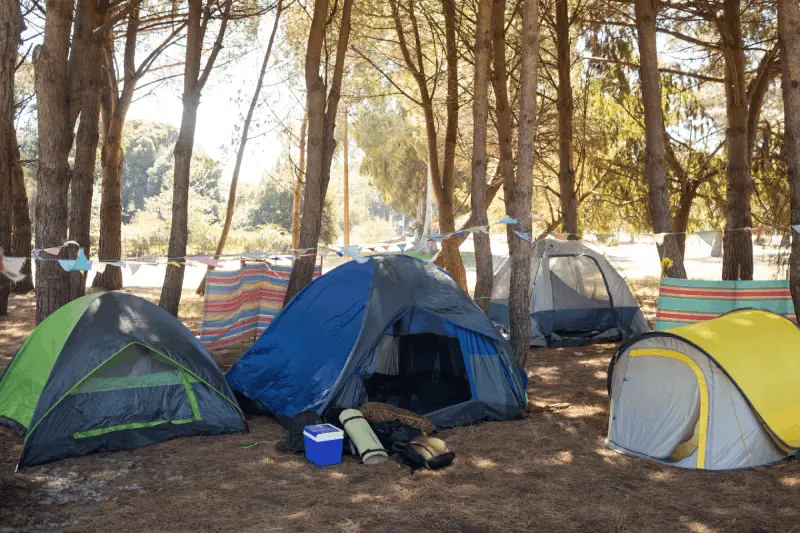
The "number of people" label written on tent manufacturers' tags typically represents standard measurements lined up shoulder to shoulder in a military fashion, side by side without any belongings. If you buy a 4-person tent for a family of 4 at full capacity, you will only have room to sleep inside the tent, and you will be forced to leave your backpacks, shoes, and personal belongings in the luggage area outside (if available). In practical use, a 4-person tent is actually comfortable for two adults and one child or two adults with plenty of gear. It is impossible for 4 adults to turn around without bumping into each other throughout the night. This situation can significantly reduce sleep quality, especially in families with children who move around at night, leading to feelings of fatigue starting from the first day of the holiday.
Is It Necessary for Two People to Work in Sync to Set Up a 6-Person Tent?
Large tents charge the price of the palace comfort they offer during the setup phase. The pole structure of a 6-person tent is generally more complex, and due to its high ceiling, it is physically difficult for one person to reach the central point. If you arrive at the campsite in windy weather, trying to set up a 6-person tent alone can invite broken poles or torn fabric. On the other hand, 4-person tents usually have "pop-up" or simple two-pole systems and can be set up by one person in 5-10 minutes. If your partner has to deal with the kids and the setup is entirely on your shoulders, choosing a more manageable 4-person model or a very practical 6-person model will prevent "causing a disturbance" discussions in the first hours of camping.
Is Transporting a 6-Person Tent with a Vehicle with Limited Luggage Space a Logistics Nightmare?
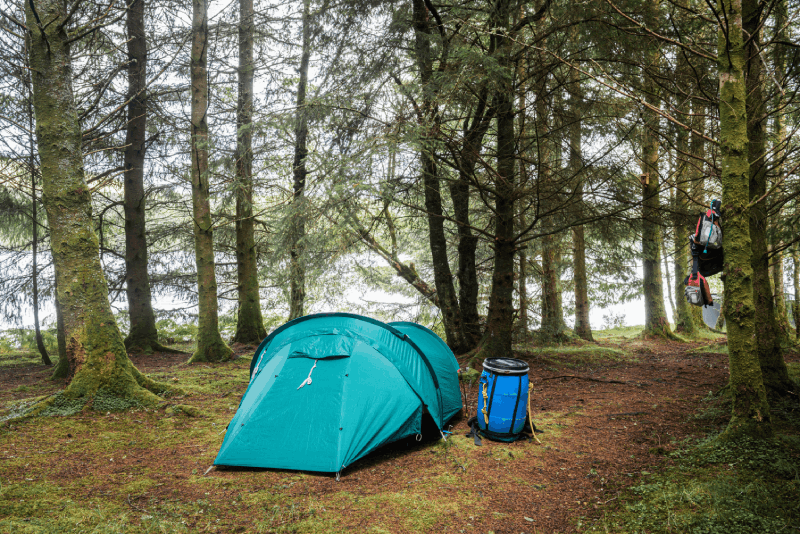
You need to consider not only the tent in its assembled state but also its packed state. 6-person family tents are massive even when folded and can weigh between 15-20 kilograms. If you have a sedan and will also have other essential equipment like a camping kitchen, sleeping bags, chairs, and a cooler in your trunk, the 6-person tent can occupy nearly a third of your trunk space alone. This situation forces you to stack items under the feet of children in the back seat and completely eliminates travel comfort. Before purchasing, you must check the packed dimensions of the tent (in cm) and compare them with the depth of your vehicle's trunk; otherwise, you may give up on the road before reaching the campsite.
Does the Risk of Herni Increase When the Tent's Interior Height Is Less Than 180 Centimeters?
The most overlooked detail in camping life is the freedom to stand inside the tent. Most 4-person tents are of the "dome" type, and their ceiling heights are generally between 140-160 cm. This means you constantly have to bend over while changing clothes or moving around inside the tent. For parents with back sensitivity, moving this way for two days can lead to severe back pain. 6-person tents, on the other hand, are usually of the "tunnel" or "cabine" type and offer ceiling heights of 190-210 cm. This height allows you to walk comfortably inside the tent, stretch upon waking in the mornings, and spend time inside the tent without feeling cramped during rainy weather. If comfort is a priority for you, ceiling height is a more critical criterion than the number of people.
Is It Possible for Children to Get Out of a 4-Person Tent Without Waking Others When They Need to Go to the Bathroom at Night?
Night operations are one of the most challenging parts of family camping. Since everyone is lined up side by side in a 4-person tent, getting the child sleeping in the corner out means at least two people have to jump over or wake them up. Controlling the sound of the zipper in a tight space and preventing the mats from squeaking is nearly impossible. 6-person tents usually have a central corridor or a wide entrance structure. This makes it easier for each individual to reach the main exit from their sleeping area. If you have small children who frequently need to use the bathroom at night, the freedom of movement offered by a 6-person tent turns into a hidden hero that prevents the entire family's sleep from being disturbed.
Is There a Risk of "Sail Effect" Causing Rips in 6-Person Wide Tents in Strong Winds?
According to the laws of physics, the larger a surface area, the more it is affected by the wind. Massive 6-person tents behave like a sail due to their high ceilings and wide side walls. If you are camping in an open area, by the sea, or in a windy meadow, you will need to use many more stakes and guy lines to secure your 6-person tent. A large tent with poor pole structure can collapse inward during a strong storm or break its poles. In contrast, 4-person low-profile tents can shed wind more easily and provide a safer harbor in storms due to their aerodynamic structures. If safety and durability are your concerns, you should definitely choose models that have passed wind tests and have quality aluminum poles when buying a large tent.
Does Carbon Dioxide Accumulation Inside a Small 4-Person Tent Cause Headaches in Hot Summer?
Air circulation is vital in small spaces. The breathing of 4 people in a 4-person tent, especially if the ventilation windows are insufficient, can quickly increase the humidity level inside and cause a drop in oxygen levels. Waking up in the mornings feeling "like you’ve been beaten" or having mild headaches is often due to this inadequate air exchange. 6-person tents have a larger air volume (in cubic meters) and usually have more developed ventilation windows or top vents. This larger interior volume provides a cooler and fresher sleeping environment on hot summer nights. From a health and sleep quality perspective, having a high air volume per person is always an advantage.
Does a Zipper Malfunction in a 6-Person Tent Cause the Whole Family to Stay Outside?
The doors and windows of large tents are also larger, which means more weight is placed on the zippers. In a 6-person tent, children constantly going in and out can strain the zippers. If the tent has only one main entrance and that zipper breaks, the entire family's privacy and safety are at risk. 4-person tents generally have simpler and sturdier zipper structures. However, regardless of which size you choose, you should ensure that the tent is not overly tensioned on the ground to reduce the tension on the zippers during family camping. Additionally, having a zipper repair kit or large safety pins for emergencies nearby will save you from spending the night with the door open in a cold campsite.
Do Some Campsites Charge Extra "Site Occupancy" Fees for Large 6-Person Tents?
Commercial campsites work according to a parcel system to maximize their capacities. A standard parcel is usually designed for a 4-person tent and a vehicle. If you go with a massive 6-person cabin-type tent, your tent's ropes and shade may violate the boundaries of the neighboring parcel. Some camping businesses may charge a "two tent site" fee for tents larger than 10 square meters or direct you to the farthest, least scenic large areas. When making a reservation, it is critical to specify the dimensions of your tent's base and ask, "Is there an extra fee?" to protect your holiday budget. Hidden costs can sometimes ruin even the best equipment's enjoyment.
Does a Thin Material on the Tent Floor Make Children Sick from Cold Coming from the Ground?
No matter the size of the tent, the quality of the floor directly affects health. However, since the floor area of 6-person tents is larger, it is more challenging to clean the stones on the ground or find a perfectly flat spot. In large floor tents, thin polyethylene floors can wear out quickly and allow cold moisture (condensation) from the ground to seep in more. It is easier and cheaper to lay an additional tarp (footprint) under a 4-person tent, which covers a smaller area. If you are going to buy a 6-person tent, make sure the floor material is made of "Oxford" fabric or has a high denier thickness. The insulation of the point where children come into contact with the ground is the most critical factor determining whether they will wake up with a stuffy nose in the morning.
Can 4 People Spend Time Inside a Tent Without Getting Cramped on a Rainy Day?
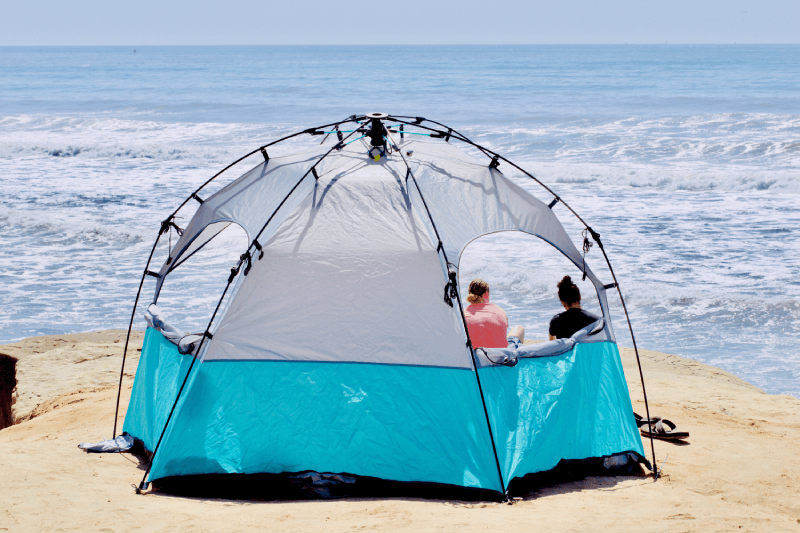
The biggest nightmare of camping is the continuous rain that lasts all day. If you are in a narrow 4-person tent, you will have to sit or lie on the mats until the rain stops; this can lead to children getting cramped and fussy after a while. In a 6-person tent, however, there is usually a spacious "living area" or entrance section. You can place your camping chairs in this area, set up a table, and enjoy the rain by playing card games with the kids. You can even sip your coffee in this area with a small camping stove (provided you are very careful and ventilate). A 6-person tent serves as a comfortable refuge rather than a prison in bad weather conditions.
Can Privacy Be Maintained in a 4-Person Single Room Tent with Teenagers?
As children grow, their need for personal space increases. It is entirely natural for a 12-13-year-old teenager not to want to sleep right next to their parents. Standard 4-person tents usually consist of a single large room, which reduces privacy to zero. Many 6-person tent models, however, have "inner tent" partition panels. With these panels, you can divide the tent into 2+2 or 3+3, allowing children to create their own "rooms." This psychological separation reduces family tension during long-term camps and allows everyone to rest in their own private space. Room divisions are as important a feature for family peace as waterproofing.
If Traveling by Air to Camp, Does the Extra Luggage Fee for a 6-Person Tent Cost as Much as the Plane Ticket?
If you are flying to another city or country to camp, the weight of your equipment is your biggest concern. Airlines usually allow 20 kg of luggage. A 6-person bulky tent alone can push this limit. When you add sleeping bags and other gear, you will inevitably face "oversized" or "extra weight" fees. These fees can sometimes reach half the price of the tent itself. Lightweight 4-person models usually weigh between 3-5 kg and can even fit inside a backpack. While minimalism is a must for air camping adventures, 6-person comfort should be preferred for vehicle-based and fixed-site camping.
Does a Spacious 6-Person Tent Provide Security for Children Afraid of Nocturnal Wildlife Sounds?
"Nature fear" is common among children new to camping. The sound of a branch breaking outside at night or an owl hooting can disturb children. In a 4-person tent, being physically very close to their parents gives children a sense of security. However, in 6-person multi-room tents, children may feel "separated from their family in a different room and alone." To overcome this situation, creating a large area by opening the partitions during the first nights of camping and separating the rooms after the children have adjusted is a strategic approach. The size of the tent should be balanced with the psychological comfort of the children.
Is It Possible to Clean and Dry the Floor of a 6-Person Tent at Home After a Muddy Camp?
The least favorite part of camping is the cleaning process when you return home. If you have returned from a rainy camp, you must completely open and dry the tent to prevent it from getting moldy. You can dry a 4-person tent by setting it up in the middle of the living room or hanging it on the balcony. However, for a 6-person tent, which is 15-20 square meters, you need a massive garden or an empty garage to dry it. If you live in an apartment, cleaning a 6-person tent can turn into a logistical disaster. A dirty and damp tent enters the next season with a heavy musty smell and stains that cannot be removed. Choosing a massive model without considering your cleaning options can shorten the tent's lifespan.
Is a 4-Person Capacity Vehicle Roof Tent Safe Enough to Carry the Total Weight of Your Family?
If you are leaning towards vehicle roof tents, choosing for 4 people becomes much more critical. The 4-person model of most vehicle roof tents strains the vehicle's roof bar carrying capacity (dynamic and static load). The total weight of two adults and two children, plus the tent's own weight (approximately 70-80 kg), can exceed 300 kg on the vehicle's roof. If your vehicle's roof bars are not original or have a low carrying capacity, this can lead to the roof collapsing or creating a hazard while driving. 6-person options in vehicle roof tents are very rare and usually only suitable for large SUVs or trucks. Therefore, if you are considering a vehicle roof system, you should focus on safety limits rather than comfort.
Do "S" Type Zippers at the Tent Door Cause Small Children's Fingers to Get Pinched?
When it comes to details, safety lies in small nuances. In large family tents for 6 people, the doors are usually very large, and the starting and ending points of the zippers are very close to the ground. Small children tend to rush in and out of the tent, and their feet can get caught in the zipper or they can pinch their own hands while pulling the zipper. In 4-person models, the doors are narrower, so this risk is slightly less. However, in some upper-segment 6-person models designed for family focus, zippers have protective fabric layers and large, soft handles that children can easily grasp. When purchasing, you should definitely test the smoothness of the zipper and whether children can use it independently.
Does the Cable Pulled from the Electrical Panels at Campsites Reach Every Corner of a Large 6-Person Tent?
In modern family camping, electricity is a basic necessity, from charging phones to lighting. The electrical panel at campsites is usually 10-15 meters away from the tent. In a 4-person tent, a single extension cord you bring inside can reach everywhere. However, in a 6-person multi-room tent, you may experience a cable mess trying to bring electricity to the head of the bed in the back room. Tripping over these cables can lead to falls in the dark. If you choose a large tent, you should prefer models with cable passage channels (E-port) inside and organize the cable safety in a way that children cannot access.
How Much More Does the Equipment Cost for Heating a 6-Person Tent Compared to a 4-Person Tent?
If you are considering fall or winter camping, heating is the biggest issue. The interior volume of a 4-person tent is small, so even the body heat of the people inside can warm the environment by a few degrees. However, heating the interior of a massive 6-person tent is much more challenging due to its high ceiling and large volume. A small camping heater can make a 4-person tent feel like an oven, while in a 6-person tent, it can only warm the area around it. If you are also camping in cold weather, the heating cost of a large tent (fuel, electricity, or more expensive sleeping bags) can strain your budget. As the size increases, the "heating problem" is added alongside comfort.
How Many Lanterns Are Needed for Lighting Inside 6-Person Models?
Large areas mean more dark spots. In a 4-person tent, a single lantern hung in the middle of the ceiling is enough to illuminate the entire area. However, in a 6-person room model, each room will require separate lighting, and a powerful light source will be needed for the main living area. This means not only the cost of the lantern but also the cost of battery or charging management. If you do not plan the lighting correctly, finding your belongings in the depths of the tent can become a torture. Checking whether the tent you are going to buy has lantern hanging hooks in each room is a small but vital detail for your nighttime comfort.
Is the Quality of the Mosquito Netting in a 6-Person Tent Sufficient Against Stinging or Allergy Risks?
In nature, mosquitoes and insects are unavoidable. Since the surface area of large tents is larger, the mesh parts of the mosquito netting are also larger. If the pores of these nets are not small enough (not no-see-um mesh), microscopic flying insects can seep inside. Allergic reactions or itching related to insect bites in children are the most common health issues that ruin the joy of camping. In 4-person models, there are fewer stitching lines, making it easier to check the entry and exit points. In 6-person models, however, it is essential to ensure that the mosquito nets of each room close perfectly and that there are no gaps under the doors. Health starts with the quality of the mosquito netting.
Is the Tent's Outer Canopy's UV Protection Critical for Children's Skin Health?
Many people think of tents only as protection from rain; however, spending time inside the tent during the day can sometimes be more dangerous than standing in the sun. If the tent fabric is not UV-protected, sunlight can penetrate through the canopy and harm children's sensitive skin. Since large 6-person tents are often used as "living areas" during the day, protecting children who spend all day inside is essential. Fabrics with "silver coating" or high UPF values help keep the interior cooler and protect children from the harmful effects of the sun. This feature is one of the biggest differences between cheap, low-quality large tents and professional models.
Does Leaving Shoes Outside in a 6-Person Tent Create Risks of Scorpions or Snakes?
The first rule of camping is "no shoes inside the tent." In narrow 4-person tents, there is usually no entrance area to put shoes or it is very small; this leads to shoes being left outside, exposed. Shoes left outside can become a great nest for scorpions, spiders, or rarely snakes, especially when they get damp in the cold of the night. The biggest advantage of 6-person tents is that they have a completely enclosed (zipped-in) entrance area. By placing your shoes in this enclosed section, you keep them dry and prevent uninvited guests from entering your shoes. Where the children's shoes will be placed is more than just a matter of simple organization; it is a safety issue.
Does the Polyethylene (PE) Material of the Tent Floor Make a "Rustling" Sound When Moving, Waking Babies?
If you have a baby, even the smallest sound can be the enemy of their sleep. Most cheap 6-person tents have a floor material similar to tarpaulin, which is stiff polyethylene. Every time you move on it or when the child turns, this material makes a loud "rustling" sound. In higher-quality camping tents for 4 people, the floor is usually made of quieter fabric-like materials. If you are going to buy a large family tent and want to avoid rustling sounds, you may need to lay a thin blanket or special tent carpets over the floor. This increases insulation and minimizes that annoying rustling sound, preserving your baby's (and consequently your) sleep.
Is It Safe to Leave Our Belongings Outside When There Is No Room Left in a 4-Person Tent?
Camping areas are generally safe places, but this does not mean you should leave your expensive equipment outside at night. When 4 people sleep in a 4-person tent, there is no room left inside for kitchen supplies, valuable cameras, or clothing bags. Storing these in the vehicle is a necessity, but going to the vehicle every time you need something (especially if it’s raining at night) can be a significant hassle. A 6-person tent gives you the luxury of keeping these valuable items close to you. In terms of safety, having a larger interior volume is always safer against the risk of theft or the risk of belongings getting wet or being disturbed by street animals.
Do the Ventilation Windows of a 6-Person Tent Leak Water in a Strong Storm?
In large tents, ventilation is vital, so there are many windows and vents. However, each window is also a potential point for water leakage. If the "storm flaps" over the windows are not wide enough or the seams are not taped, rainwater can seep in through the seams with the wind. In simple 4-person models, the risk of leakage is lower because there are fewer seams. When buying a 6-person tent, you should check whether all seams are sealed with tape from the inside. The worst moment of a camping trip is waking up to a cold drop of water dripping on your face in the middle of the night.
Is There a Sliding Problem in a Large 6-Person Tent if the Ground Where the Tent Is Set Up Is Sloped?
You can’t always find a flat ground in nature. While a 4-person tent can fit on even a small flat area, a 6-person tent requires at least 15-20 square meters of perfect flatness. If the ground is slightly sloped, the mats inside the large tent can slide downwards during the night, and you may find yourself piled up in the bottom corner of the tent in the morning. Additionally, adjusting the tension of large tents on sloped ground is very difficult; this can cause the canopy to sag and collect rain. If you are generally camping in rugged terrains or wild camps, the flexibility of a small tent can be lifesaving.
Does Transitioning from a 4-Person Tent to a 6-Person Tent Reduce Your Camping Frequency?
This question touches on the psychological aspect of the matter. When you have a practical 4-person tent, saying "let's go camping this weekend" is very easy; because setting up and packing it takes less than 20 minutes. However, if you have a massive 6-person set, squeezing that giant bag into the trunk, spending an hour setting it up, and cleaning it afterward can seem daunting. This can lead to a decrease in your enthusiasm for camping over time and cause your equipment to gather dust in storage. If you are a "quick and tight" camper, a small tent is suitable; if you are a "once a year but in full comfort" camper, a large tent is right for you. The best tent is the one you use the most.
Is It Possible to Find Replacement Poles When the Poles of a 6-Person Tent Break?
The poles of large tents are generally longer and heavier, which increases the stress on them. If you bought a cheap 6-person tent from an unknown brand or place, it may be impossible to find a replacement for a broken pole; this means the entire tent becomes trash. The poles of standard 4-person models are usually universal sizes and can be easily obtained from any camping store. In a crisis moment like a broken pole during family camping, having a repair kit and the availability of parts is critically important. When making your investment, choosing reliable brands that offer after-sales support and availability of spare parts will save you money in the long run.
Does the Tent Door Design Create Accessibility Issues for Disabled or Elderly Family Members?
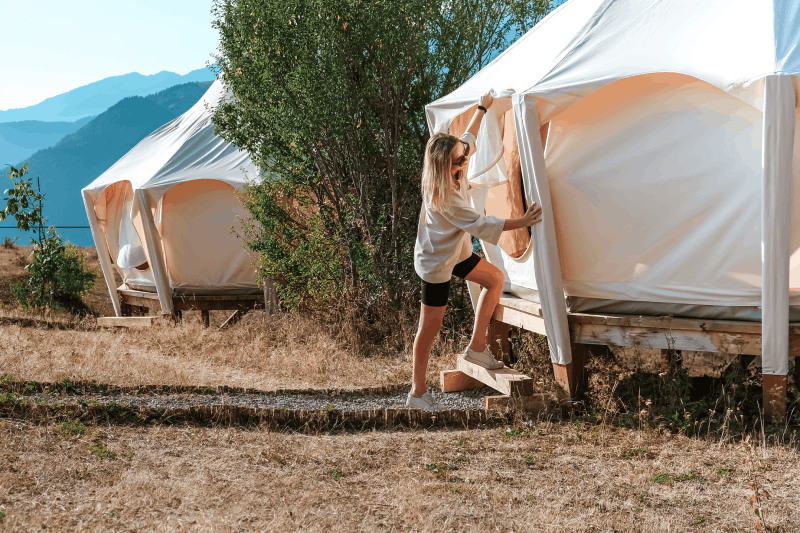
If you have an elderly family member or someone with mobility restrictions in your camping crew, the shape of the tent's entrance is crucial. Most 4-person tents have entrances in the form of "zippered holes" that require crawling or bending to enter. This can be an impossible barrier for a grandparent with knee problems. 6-person cabin-type tents usually have entrances that open like a house door, without any obstacles or low thresholds. Some models even have "D" type hinged doors, which facilitate access even for wheelchairs or walkers (if the ground is suitable). The design of the entrance is essential for an inclusive family holiday.
Are the Number of Pockets Inside a 6-Person Tent Enough to Gather the Clutter of 4 People?
A family of 4 carries dozens of small items when they go camping: glasses, phones, medications, tissues, lanterns, and keys. In narrow 4-person tents, these items often get mixed up between the mats and get lost in the mornings. In quality 6-person tents, however, there are many organizer pockets on the walls of each room. These pockets elevate the clutter off the ground, making the living space feel more spacious and ensuring that critical items (such as an asthma inhaler or lantern that a child may need at night) are always within reach. An organized tent means a peaceful camp.
Which Decision Will Not Make You Regret?
At the end of the day, the choice between a 4-person and a 6-person tent is not just about the number of people; it relates to your comfort level, your vehicle's capacity, and the meaning you attach to camping. If you say, "I just want to be one with nature, just need a place to sleep," a 4-person model may suffice. However, if you say, "the tent is our temporary home, we should live in it," the palace comfort offered by a 6-person model will be worth every penny you spend and every minute you spend setting it up. Evaluate your family's priorities in light of these questions; because even the most expensive equipment is just a burden if it does not meet your needs.