Is Cooking an Entire Chicken Over a Campfire Really a Dream?
Cooking an entire chicken over a campfire is not only possible but also one of the most rewarding culinary experiences that can be done outdoors. Unlike the ovens offered by city life, a campfire imparts that unique smoky flavor and crispy skin to the food. However, this process requires much more than just throwing a random chicken onto the fire. Patience, proper fire management, and equipment selection are the cornerstones of this task. If you apply the right techniques, you can achieve a depth of flavor that you could never reach in your home oven. In this article, we will examine step by step how to turn this "dream" into reality.
Is the Heat Balance at the Heart of the Campfire Sufficient for Chicken?
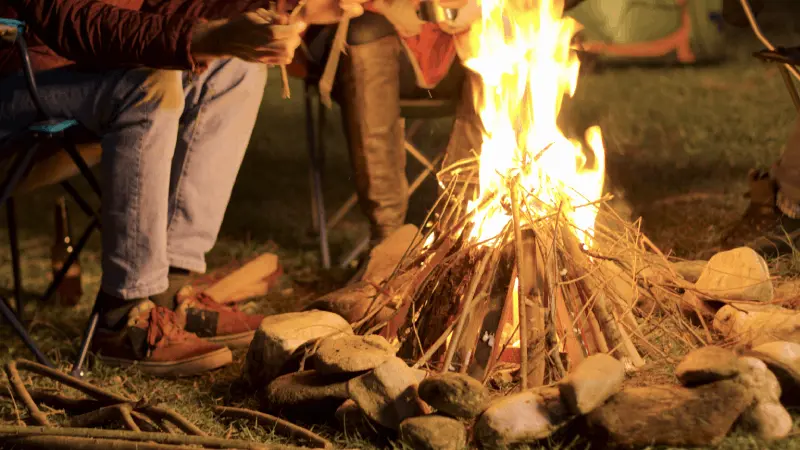
The heat at the center of a campfire can exceed a thousand degrees, but what you need to cook an entire chicken is not roaring flames, but a balanced bed of coals. The chicken's inner part must be cooked enough to be free of bacteria (74-75 degrees), and the outer part should not burn, so the indirect heat technique should be used. Instead of placing the chicken directly over the fire, the most logical method is to pull the coals to the sides to create a heat pool in the center. This way, the chicken cooks slowly with radiant heat, ensuring that its juices remain inside. When you manage the heat correctly, a campfire can be more effective than a professional rotisserie oven.
Which Types of Wood Give Chicken the Perfect Smoky Flavor?
Chicken meat absorbs smoke flavor much faster than red meat. Therefore, the type of wood you choose directly determines the final flavor of your dish. Hardwoods like oak and hickory should be preferred as they provide long-lasting and stable heat. Fruit trees (apple, cherry) add a slightly sweet and fruity smoke aroma to the chicken. On the other hand, you should definitely avoid resinous woods like pine and fir; because these woods can leave a bitter taste and harmful chemical residues on the food. Choosing the right wood not only ensures the chicken cooks properly but also transforms it into a gourmet dish.
Is a Dutch Oven or a Forked Stick More Efficient?
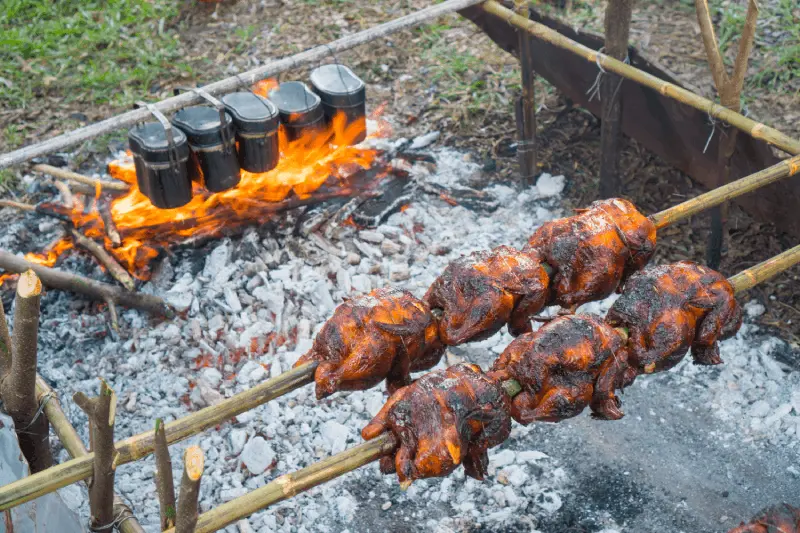
Equipment selection depends on the capabilities of your campsite and your carrying capacity. If you went camping with your vehicle, using a "Dutch Oven" is the safest way. Dutch ovens distribute heat evenly from all sides, creating an oven effect and preventing the chicken from drying out. However, if you want a true bushcraft experience, a spit roast made from a sturdy, fresh branch is unbeatable. The spit roasting method ensures that the chicken cooks in its own fat, guaranteeing extra crispiness on the skin. Both methods have their unique advantages, but in terms of flavor depth, the spit roast is always a step ahead.
How to Utilize Natural Herbs When Marinating Chicken?
When cooking outdoors, you should not underestimate the power of marination. A mixture of an acidic liquid (lemon juice or vinegar) and olive oil that will seep between the fibers of the chicken ensures that the meat stays tender. Wild herbs like thyme or rosemary that you can find around the campsite elevate the chicken's flavor with their fresh aromas. Garlic and onion not only add flavor but also create a protective layer on the surface during cooking. Allowing the marinade to contact the chicken for at least 4 hours, ideally overnight, will be your best defense against the drying effects of the fire.
How to Measure the Internal Temperature of Chicken Without a Thermometer?
A thermometer is indispensable in a professional kitchen, but we may not always have this luxury outdoors. In a thermometer-free environment, you can check the color of the juices by inserting a knife or a sharp stick into the thickest part of the thigh joint. If the juices run clear and transparent, the chicken is cooked; if a pink or bloody liquid comes out, it needs more time. Additionally, if the thigh part easily separates from the joint when you gently shake it, that is also a good sign. However, in terms of food safety, if you have any doubts, it is always safer to keep the chicken on the fire a little longer.
What Knot Techniques Should Be Used When Setting Up a Spit Roast?
If you are going to cook the chicken by rotating it over a stick, it is critical that the setup does not collapse under the weight of the chicken. Using a "Clove Hitch" or "Taut-Line Hitch" to secure the supporting sticks will make your job easier. To secure the chicken to the stick, you should definitely use food-safe kitchen twine or fresh, flexible branches. Using non-slip knots like the "Surgical Knot" will prevent the chicken from falling into the fire while it cooks. The right knot not only preserves the dish but also enhances your camping enjoyment.
Is It Possible to Cook Chicken in Salt in the Depths of Coals?
Perhaps one of the most exotic and delicious methods is the "Salted Chicken" technique. Completely covering the chicken with a moist layer of salt and wrapping it in foil before burying it in the coals ensures that the meat cooks in its own steam. In this method, the chicken never dries out, and the pressure created by the salt allows the flavors to penetrate deep into the meat. After approximately 2-3 hours of burying, the sight that emerges when you break the salt crust is breathtaking. This method is a perfect alternative when you don't want to wait by the fire in windy conditions.
The fire completely isolates the chicken from the external factors that cause burning.What Should the Distance from the Fire Be to Keep the Chicken Skin Crispy?
The signature of a perfect camp chicken is its golden yellow and crispy skin. To achieve crispy skin, high heat is required, but if this heat is too close, the skin will burn before cooking. The "hand test" is lifesaving at this point: If you can hold your hand at the level where the chicken will cook for 4-5 seconds, this is the ideal medium-high heat. Keeping the chicken about 25-30 cm above the fire allows the fats to slowly drip and the skin to gradually brown. If the skin is coloring too quickly, you should increase the distance or move some of the coals aside. Remember, rushing leads to burnt skin.
Is Foil Necessary to Prevent the Wings and Drumsticks from Burning?
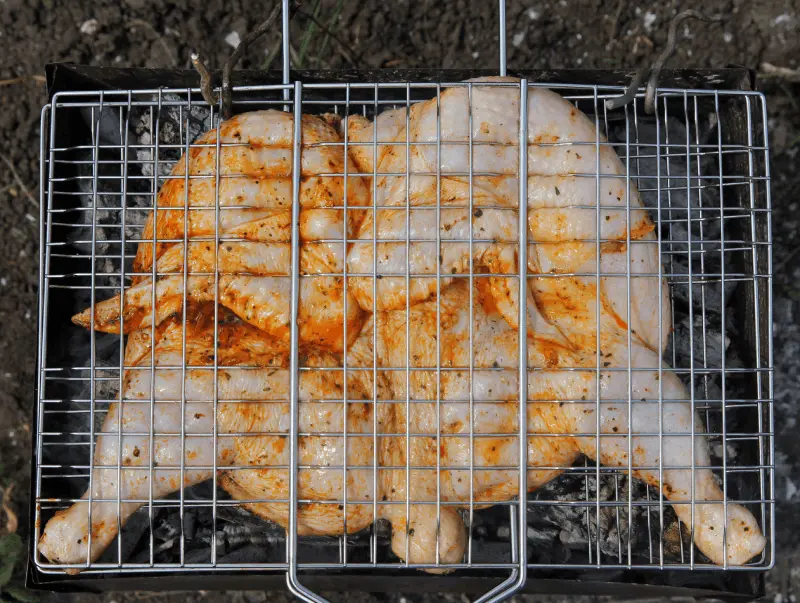
The biggest problem when cooking a whole chicken is that the thin ends (wing tips and the lower parts of the drumsticks) can char before the meat is cooked. To prevent this, the technique of "trussing" the chicken should be used. Tightly securing the wings to the body and tying the legs together ensures that the chicken takes on a compact form. If you still see a risk of burning, you can protect these ends with small pieces of aluminum foil during the first half of cooking. However, be careful when using foil; the shiny side reflects heat while the matte side absorbs it. With proper application, every piece of your chicken will cook evenly.
Why is the Reflector Fire Technique Advantageous in Cooking Chicken?
Building a reflector wall behind the fire is a great idea to prevent heat loss in the wild and increase efficiency. This wall, made of stones or logs, reflects the heat back to the chicken from behind. This way, the chicken starts cooking not only from the front but also from the back. This creates a "back heat processing" effect, which can reduce cooking time by 20% and provide a more homogeneous result. Especially on cold and windy camping nights, using a reflector is the quickest way to create a professional oven effect.
How to Maximize the Maillard Reaction in Open Air?
The Maillard reaction, the chemical name for flavor, is the caramelization of proteins and sugars under heat. To trigger this reaction over a campfire, the chicken skin must be completely dry before it starts cooking. Wet skin causes steaming, while dry skin browns directly. If you thoroughly dry the chicken you took out of the marinade with a paper towel and brush a bit of honey or a sauce containing brown sugar over it, you can accelerate the Maillard reaction. This process will give your chicken that signature deep brown color and rich flavor.
What is the Importance of Resting the Chicken After Cooking?
Many campers fall into the cutting error as soon as they take the chicken off the fire. However, the juices inside the meat have collected in the center under high heat. After taking the chicken off the fire, you should cover it loosely with foil for at least 15-20 minutes to let it rest. During this time, the fibers relax and the juices redistribute back into the meat. When you cut a rested chicken, the juices will flow into your mouth instead of onto the cutting board. Patience is the hardest but most important ingredient in camp cooking; you must give that last 15 minutes to your chicken to do it justice.
How Do Fat Drippings Affect the Fire and How Can They Be Controlled?
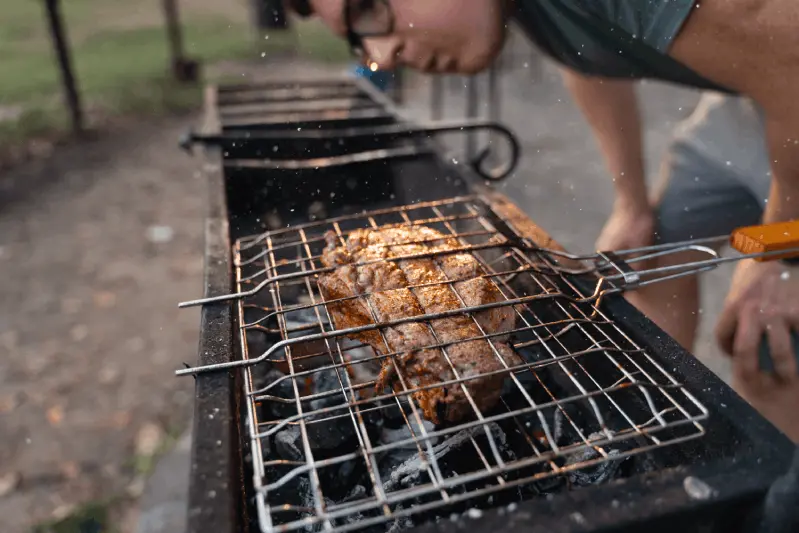
The fats inside the chicken melt and drip down. If these fats fall directly onto the coals, they can cause sudden flare-ups. These flames can cover the chicken with a smoky flavor and even burn it. To prevent this, you should place a "drip tray" directly under the chicken or separate the coals so they do not come under the chicken. The fats that accumulate in the drip tray can later be used to cook vegetables or potatoes that will be served alongside the chicken; this ensures that no flavor goes to waste.
How Do Cooking Times Change at Different Altitudes?
If you are camping at a high altitude, you should remember that the boiling point of water is lower and the air is less dense. This can cause the moisture inside the chicken to evaporate more quickly and extend the cooking time. A chicken that cooks in 1.5 hours at sea level may take up to 2 hours at 2500 meters altitude. Additionally, at high altitudes, the fire requires more oxygen; therefore, you should feed your fire better and protect the chicken from the drying effect of the wind. As the altitude increases, your attention should also increase.
Food Safety in the Wild: How Do We Protect Against Chicken Bacteria?
Chicken meat can harbor dangerous bacteria like Salmonella. To prevent cross-contamination at the campsite, you should not use the board and knife you prepared the chicken on for any other raw vegetables. It is critical to disinfect your hands before and after the cooking process. Also, to ensure that the inside of the chicken is fully cooked, you should focus on the deepest point between the breast and the thigh. The "it won't happen" mentality can lead to your camping trip ending in the hospital. Hygiene rules should come before flavor in the wild.
What Vegetables Go Best with Chicken?
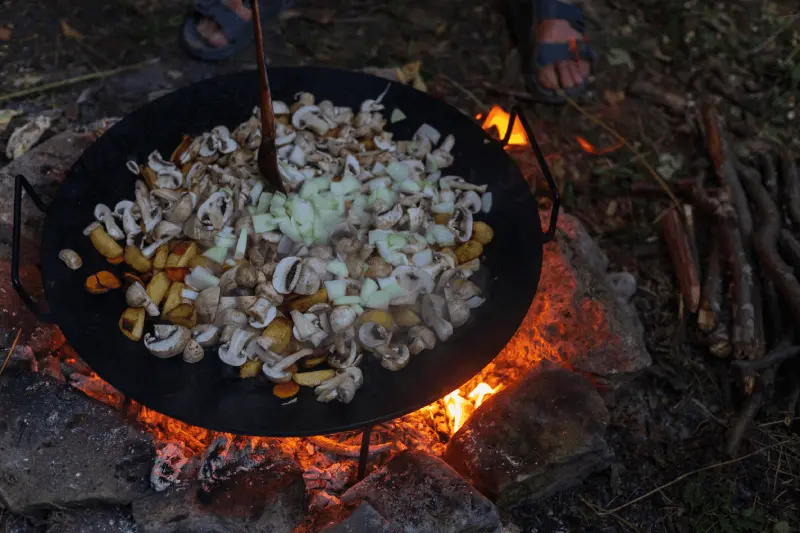
Not evaluating the void underneath while your whole chicken is turning over the fire is a big loss. You can throw all potatoes, foil-wrapped onions, and corn on the edges of the coals. If the drippings from the chicken come over the vegetables, they gain incredible flavor. A salad made with grilled eggplant and peppers, in particular, complements the smoky taste of the chicken wonderfully. Organizing the vegetables to cook faster than the chicken ensures that the entire meal comes to the table (or grill) at the same time.
What Should Be Done with the Remaining Coals After the Campfire Goes Out?
After your meal is finished, managing the fire is part of your responsibility. If you have cooked your chicken and the situation is still ongoing... If you have a hot bed of coals, you can use it to heat water for the next day's breakfast or to create a "heat bank" that will stay warm throughout the night. However, it is our duty to completely extinguish the fire before leaving the campsite and to ensure that the coals have cooled down. A bed of coals that appears to be "extinguished" can turn into a forest fire with a gust of wind. A responsible camper is someone who nourishes both their belly and the nature around them.
Is It More Logical to Roast Cut Chicken Instead of Whole Chicken?
This entirely depends on how much time you have and what kind of experience you are looking for. Cut chicken (wings, thighs, breasts) cooks much faster and has a lower margin for error. However, a whole chicken is much better at trapping the juices inside the meat. Additionally, the visual feast and sense of satisfaction that comes from roasting a whole chicken on a branch is incomparable to cut meat. If you are short on time, go for cut pieces, but if you want a real "feast," don't give up on the whole chicken.
What Does the Color of Smoke Coming from the Chicken Tell Us?
The color of the smoke coming from your fire gives clues about the quality of the burn and flavor. Thin, slightly bluish smoke is a sign of "clean burning" and provides the best aroma. If the smoke is dark black or thick white, it means there is a problem with your fire (likely wet wood or insufficient oxygen). Black smoke will coat your chicken with a bitter, acrid layer. You should keep the smoke under control by breaking your wood into small pieces and ensuring the fire gets enough air. Good smoke is the secret to your hidden spices.
How to Prepare the "Basting Sauce" to Be Applied to the Chicken During Cooking?
Applying a sauce (basting) at regular intervals while cooking chicken ensures that the skin becomes crispy and prevents the meat from drying out. A mixture of olive oil, melted butter, a bit of vinegar, and red pepper flakes is the simplest and most effective basting sauce. You can use a sprig of rosemary like a brush to apply this sauce all over the chicken. Applying the sauce too thickly can lower the heat of the fire, so it's sufficient to apply it every 20-30 minutes. This process will create a layered flavor coating on the surface of the chicken.
How Should Bones and Leftovers Be Evaluated in Nature?
The bones and scraps left after the feast are actually a gold mine. If you are still camping the next day, you can make a wonderful chicken broth by boiling these bones in a pot of water with leftover vegetables. The soup you make with this can be the most unforgettable meal of your camp, whether it's a morning soup or bulgur pilaf. Evaluating leftovers in this way instead of leaving them in nature is a camping philosophy that aligns with the "zero waste" principle. If you won't be consuming them, you should pack the leftovers well and take them far away to avoid attracting wild animals to the camp.
How Does Weather Affect Our Plans for Cooking Chicken?
Cooking a whole chicken in rainy or very windy weather is not a serious challenge. Wind can unpredictably extend the cooking time by dispersing the heat of the fire. In such cases, you must create a windbreak (from stones or earth) around the fire. If it starts to rain, you need to stretch a tarp over the fire at a safe height. No matter how challenging the weather conditions are, it is possible to cook over a campfire with the right protective measures; in fact, these challenges can make the taste of the food even more precious.
What Is the Secret to Ensuring Chicken Gets Color Without Burning the Skin?
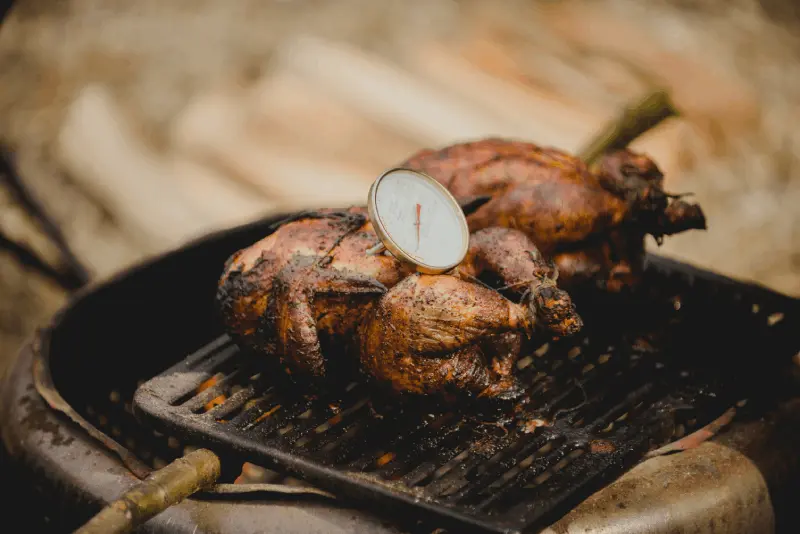
Many novice campers interpret the chicken's skin quickly turning brown as "cooked." However, this is just the outer surface burning. The secret is to gradually increase the heat. During the first hour of cooking, you should keep the chicken at medium heat, not high, to ensure the inside warms up. In the last 15-20 minutes, you should gather the coals under the chicken or bring the chicken closer to the fire to achieve that final browning (searing). This "reverse searing" method yields the best results over a campfire.
What Is the Best Season for Cooking Chicken Over a Campfire?
While each season has its own advantages, autumn and spring are the ideal times for cooking chicken over a campfire. Summer's extreme heat makes it difficult to wait by the fire, while winter's freezing cold makes it challenging to maintain the fire's heat. In mild weather, the fire's heat remains more stable, allowing you to enjoy your time by the food. However, there is no atmosphere quite like a whole chicken turning on a crackling fire in the snow. With the right equipment, every season is chicken season.
What Is the Vertical Roasting Technique?
If you cannot set up a horizontal turning mechanism, you can also roast the chicken by hanging it down from a tripod. By securely tying the chicken by the neck and preparing a bed of coals underneath, the heat rises and envelops the chicken from all sides. If you ensure that the chicken rotates slowly around its axis while hanging, you will achieve an incredibly even cook. This method provides a "set and forget" convenience, especially on windless days.
Are the Nutritional Values of Chicken Cooked Over a Campfire Preserved?
The nutritional values of meats that come into direct contact with fire and smoke are quite well preserved when cooked under controlled conditions. Chicken provides the energy you need for camping activities with its high protein and low-fat content. However, you should be careful not to consume the charred parts that result from burning the meat, as they contain carcinogenic substances. Cooking a whole chicken in its own juices and over a slow fire is one of the cooking methods that minimizes vitamin and mineral loss. Eating a meal in a natural setting, accompanied by fresh air, is also nourishing for the soul.
Why Is It Important to "Listen to the Silence" While Cooking Chicken?
This may sound a bit philosophical, but the sounds during cooking can tell you every step of the process. This explains. The speed of the "crackle" sound coming from the chicken indicates how high the temperature is. A very fast and loud crackle is a sign that the chicken is burning. A light and regular dripping sound indicates that everything is going well. Cooking in nature is like a meditation that requires you to use all your senses. When you listen to the sound of the fire and the chicken's reaction, you will achieve the best result without needing technology.
How Many People Can Be Satisfied with One Chicken and How Should Portioning Be Done?
A standard whole chicken (approximately 1.6 - 1.8 kg), along with roasted vegetables and rice/bread, comfortably feeds 4 adults. The classic method for portioning is to separate the thighs first, then the wings, and finally slice the breast meat. For the butchering process in a camping environment, a sharp hunting knife or a multi-purpose knife will suffice. If you are a large group, setting up two different setups and cooking two chickens at the same time will reduce the waiting time and ensure everyone has a hot meal.
Is It Possible to Turn the Chicken Cooking Experience into a "Ritual"?
Cooking a whole chicken over a campfire is not just about satisfying your hunger; it is about creating a story. Every step, from lighting the fire to selecting the wood, from tying the chicken to cutting that last slice, is a ritual. While chatting with your friends around the fire, watching the chicken slowly turn golden is an invaluable pleasure. This experience is the most delicious way to slow down in the face of modern life's speed and connect with nature. You will savor the effort you put into every bite.
What Are the Cleaning and Ecological Responsibilities After Camping?
You have eaten your meal, your hunger is satisfied; now it is time to leave no trace behind. Never leave chicken bones and food scraps exposed at the campsite; this not only creates pollution but also invites wild animals like bears, pigs, or foxes to your camp. You should put all your waste in sealed bags and take them to the nearest trash point. Restoring the fire pit to its original state and not mixing the ashes into the soil (if it is not a permitted area) is our basic duty. Leaving nature cleaner than we found it shows our respect for it for the next chicken feast.
Is Cooking Chicken Over a Campfire a Test of Mastery?
Absolutely yes. Someone who can successfully cook a whole chicken over a campfire has passed the "graduation" exam of camp cooking. This process, which requires heat management, patience, technical knowledge, and harmony with nature, transforms you from an ordinary camper into a true outdoor gourmet. You may make mistakes at first; the skin may burn a little or the inside may remain slightly pink. However, with each attempt, your connection with the fire will strengthen, and eventually, you will reach that perfect, smoky, juicy whole chicken. Now add that whole chicken to your list for your next camping trip and let yourself be immersed in the fire's embrace.