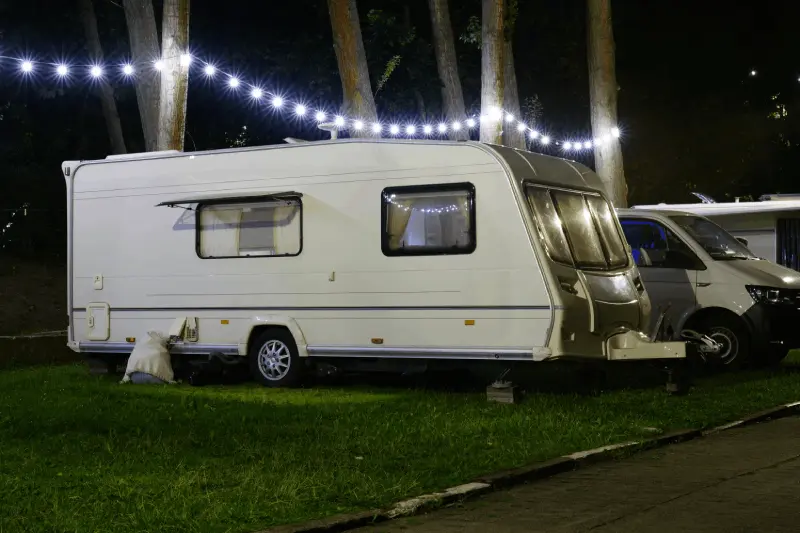
When entering the caravan life, budget is one of the most decisive factors in the decision-making process. Towable caravans generally offer much more economical options during the purchasing phase because they do not have complex mechanical systems like an engine or transmission. Especially the O1 certified towable caravans under 750 kg are budget-friendly due to tax exemptions and the absence of annual inspection requirements. On the other hand, converting a panel van into a caravan or purchasing a ready-made motorhome brings serious cost items such as the vehicle itself, engine maintenance, high insurance premiums, and special consumption tax (ÖTV). If you already have a towing vehicle, entering this world with a towable caravan can be a financially much more sustainable start. However, the compact structure offered by a panel van can save you money on campsite fees in the long run.
Manoeuvrability and Parking Issues: Which Type of Caravan is More Advantageous in the City?
When it comes to driving dynamics, panel van type caravans have an undeniable advantage. Using a panel van is very similar to driving a standard commercial vehicle or a large SUV; you can enter narrow streets, use city parking lots, and easily perform reverse maneuvers. In contrast, the situation with a towable caravan is much more complicated. Towing a vehicle with a joint structure behind your vehicle makes reversing a serious skill. Sharp turns in the city, narrow streets, or crowded coastal roads can be a source of stress for towable caravan users. If your understanding of vacation is to be constantly on the move, visit city centers, and wake up in a different spot every day, the agility of a panel van will provide you with great freedom. A towable caravan, on the other hand, is designed to stay in spacious campsites along a more defined route.
Living Space and Comfort Analysis: Which Model Should You Prefer for a Spacious Kitchen and Living Area?
Although comfort and interior volume expectations vary from person to person, towable caravans generally offer a more spacious living area compared to a panel van of the same length. In panel vans, the driver's cabin, engine compartment, and wheel wells significantly encroach on the interior volume. In contrast, the entire body of a towable caravan is designed solely as a living space. This means larger countertops, bigger beds, and a spacious bathroom. Especially during long stays, the "home feel" offered by a towable caravan is more pronounced. In panel vans, every square centimeter is accounted for; the kitchen is generally smaller, and the bathroom is more compact. If you enjoy cooking and spending time inside the caravan is important to you, the architectural flexibility of a towable caravan will make you happier. However, if you embrace a minimalist lifestyle, the practical solutions offered by a panel van can also be quite satisfying.
Technical Equipment and License Requirements: Which Caravans Can You Use with a Class B License?
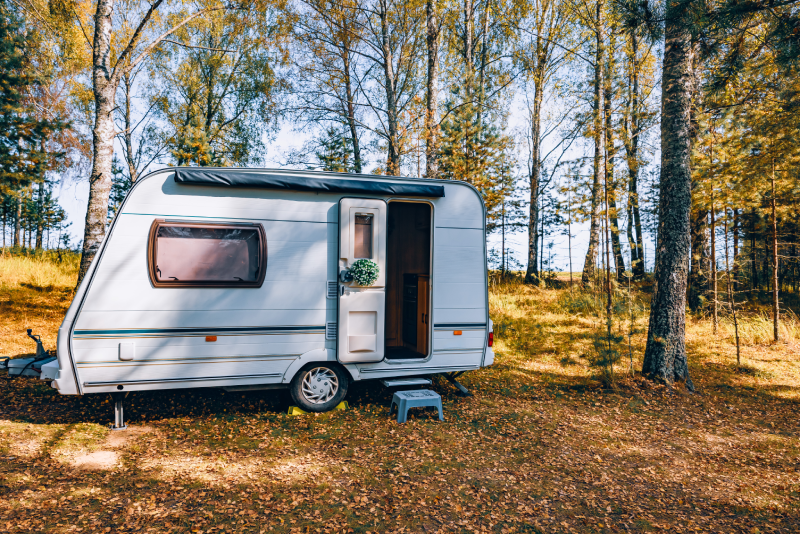
According to legal regulations in Turkey, Class B license holders can tow O1 certified caravans under 750 kg without needing any additional documents. However, if the weight of the caravan exceeds 750 kg (O2 certified), it becomes mandatory to obtain a Class BE license, which means additional exams and costs. On the panel van (motorhome) side, vehicles with a maximum weight not exceeding 3,500 kg can also be used with a Class B license. The most critical technical detail to pay attention to when purchasing a towable caravan is the towing capacity of your towing vehicle. The technical values in your vehicle's registration must be suitable for the weight of the caravan you will be towing. Additionally, while there is a preliminary preparation process for installing a tow hitch and registering it in the vehicle's documents for a towable caravan, you can directly switch to the steering wheel in a panel van. These technical details are vital to prevent legal issues for first-time caravan buyers.
Accommodation Flexibility: How Does a Towable Caravan Provide Freedom to Explore by Separating the Vehicle?
The biggest "secret weapon" of a towable caravan is the ability to leave the caravan stationary at the campsite and explore the area with your towing vehicle. Once you settle into a campsite, you can secure your caravan, open your awning, and set up your kitchen. After that, you can take your vehicle out on narrow mountain roads, head into the city center for shopping, or easily reach the beaches. For panel van users, every movement means transporting the entire home. Even to go to the market, you need to gather the glasses on the table, close the awning, and secure all your belongings. This situation can sometimes be tiring for travelers who will stay in one place for a long time. If you prefer to "stay put but explore the surroundings comfortably," a towable caravan is unmatched.
Insulation and Climate Control Performance: Which Caravan Structure is More Suitable for Winter Camping?
If you want to travel with a caravan in all four seasons, insulation will be your most important concern. Panel vans have a metal body by nature. Metal conducts heat very quickly; this means rapid cooling in winter and rapid heating in summer. High-quality insulation materials and workmanship are essential in panel van conversions. On the other hand, factory-produced towable caravans are generally made from composite materials known as sandwich panels, which contain insulation foam inside. This structure provides a more natural advantage in terms of thermal insulation compared to a metal body. Heating the interior in winter may require less energy in towable caravans. However, in panel vans, the vehicle's own heating system warming the rear living area is a significant comfort. In a towable caravan, since no one is inside during the journey, you may find the caravan freezing when you arrive.
Maintenance Costs and Depreciation: Which Type of Caravan Loses Less Value in the Long Run?
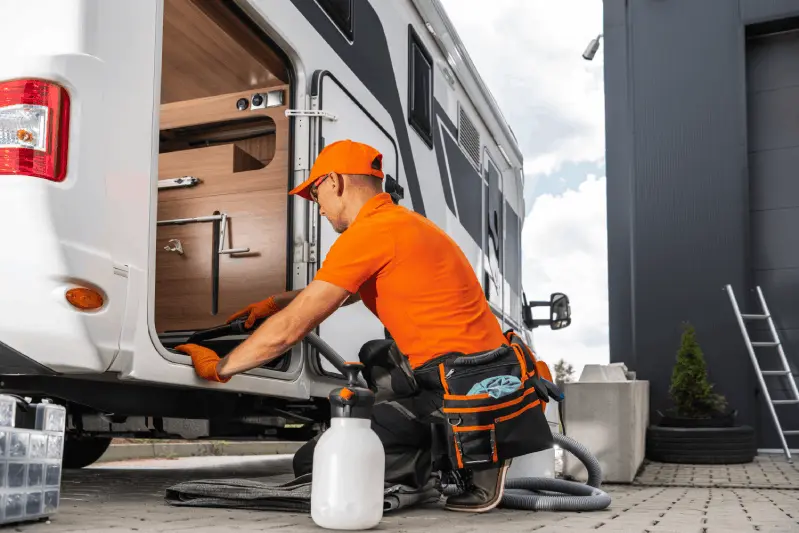
From an economic perspective, towable caravans have minimal mechanical failure risks because they are "moving rooms." Only simple components like tires, brake systems, and corner braces need maintenance. This keeps long-term operating costs very low. In panel vans, however, the maintenance of the entire engine, transmission, front assembly, and electronic components adds to the caravan's cost. As the vehicle ages, mechanical expenses may increase. In terms of depreciation, both types tend to retain their value in the Turkish market, but as the mileage of panel vans increases, their value decreases, while a well-maintained towable caravan's value generally remains stable under market conditions. If you are looking for a low-risk investment for first-time caravan buyers, a towable caravan can be seen as a safer harbor. Because in a panel van, you take on the responsibility of both a vehicle and a home at the same time.
Safety and Driving Stability: Is a Panel Van or a Towable Caravan Safer in Windy Conditions?
Road safety is the most frightening topic, especially for novice caravaners. Towable caravans are significantly affected by side winds due to their structure. The airflow created when passing large trucks or strong winds on viaducts can cause the caravan to sway (snaking). If this situation is not controlled, it can lead to serious accidents. To reduce this risk, special towing heads called "stabilizers" should be used. Panel vans, on the other hand, provide a much more stable driving experience because they have a single-piece body. Although they may catch side winds due to their high roofs, controlling them is much easier compared to a towable caravan. In terms of braking distance, panel vans also exhibit more predictable performance. For someone using such a vehicle for the first time, getting used to the weight balance and swaying risk of a towable caravan will take time.
Off-Grid Living and Energy Systems: Which Caravan Type Has Higher Solar Panel Efficiency?
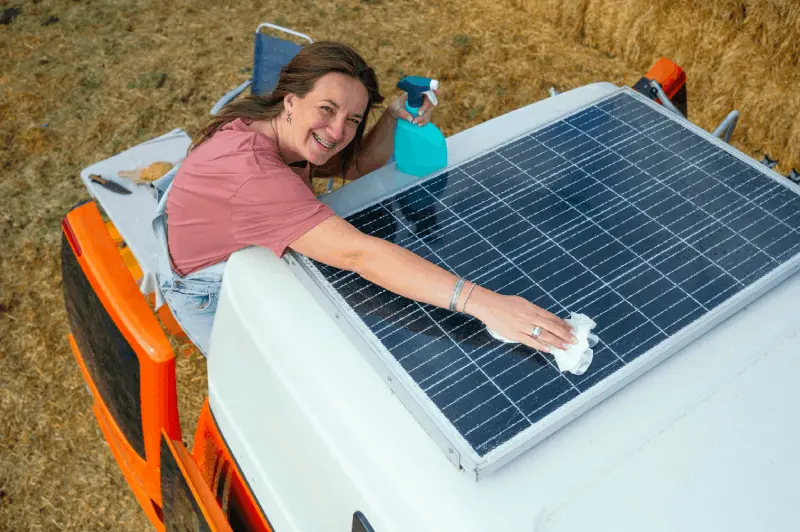
Energy production is critical for an off-grid lifestyle. The roof space of panel vans is limited; it is generally difficult to install large solar panels due to the sunroof, ventilation fans, and the vehicle's narrow structure. Towable caravans, however, have a wider and flatter roof area, allowing them to carry more solar panels. This enables the charging of higher-capacity gel or lithium batteries. When it comes to energy independence, the physical space advantage offered by a towable caravan allows for the use of larger refrigerators or more electrical devices. However, a panel van's advantage is that it can charge its living batteries while driving through the vehicle's alternator. In a towable caravan, due to the distance of the cable drawn from the vehicle to the caravan, this charging efficiency is generally lower.
Interior Design and Customization: Is a Panel Van More Flexible for Those Who Want to Design Their Own Caravan?
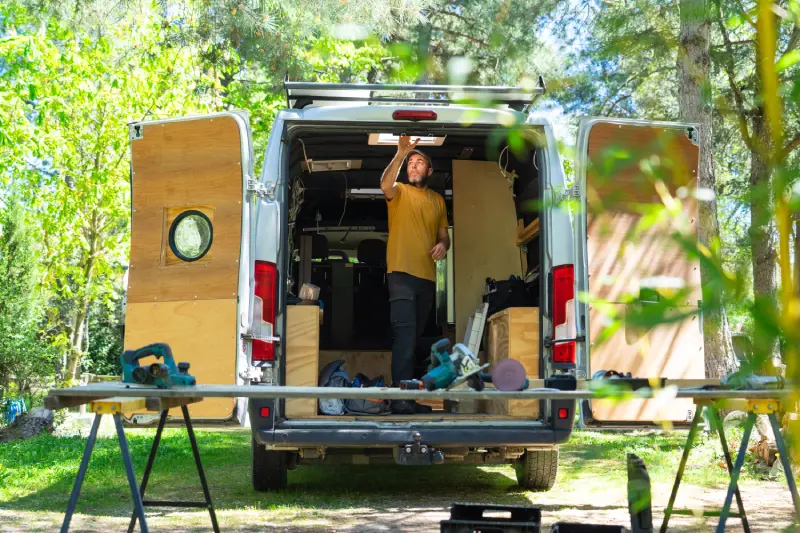
If you want to create your dream caravan from scratch, a panel van conversion offers you an endless playground. You can determine everything from the kitchen to the bed, the type of furniture to be used, and the lighting. This process is quite enjoyable but can also be quite laborious. In towable caravans, however, it is usually done based on ready-made models; since they are factory-produced, making significant changes can disrupt the structural integrity. Transforming that narrow but warm atmosphere of a panel van into a "personal refuge" is a great passion for hobbyists. While towable caravans offer more of a standard hotel room or home comfort, a well-designed panel van (campervan) can turn into a work of art that reflects the owner's character. However, it should be noted that this process requires technical knowledge and patience.
Family Structure and Number of People: Which Caravan is More Practical for Families with Children?
The number of people traveling in the caravan plays a critical role in model selection. While a panel van can be extremely sufficient and romantic for a couple, the space inside a panel van quickly starts to shrink for families with children. The bunk systems offered in towable caravans are a great solution for families. Having a dedicated sleeping area for children reduces the clutter inside the caravan. In panel vans, tables that convert into beds are often used, which brings the hassle of converting the living room into a bed every morning and evening. Additionally, bathrooms and toilet areas in towable caravans are generally more spacious, providing great convenience for children's hygiene needs. If you are a large family planning long vacations, the spaciousness and privacy offered by a towable caravan will undoubtedly provide a more peaceful camping experience.
Waste Water and Fresh Water Capacity: Which Model Stands Out in Terms of Storage Space?
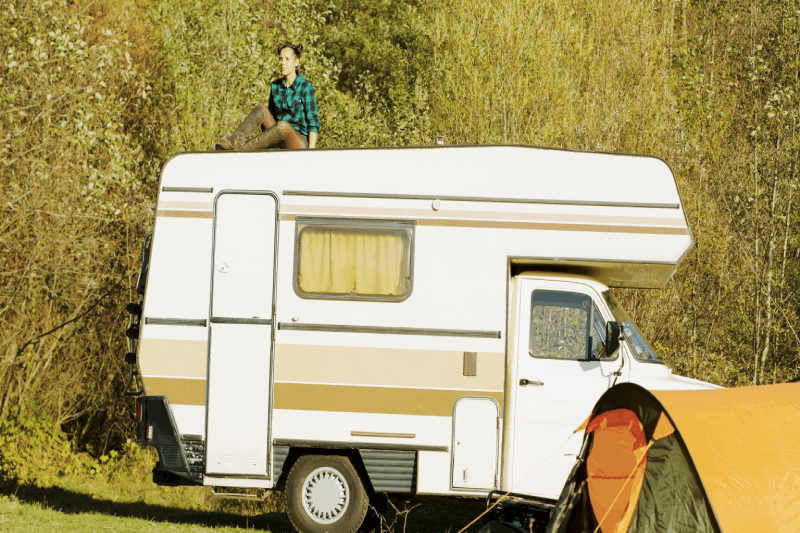
Water capacity is the most important factor determining the duration of freedom in a caravan. In panel vans, due to the limited space under the vehicle, water tanks are generally around 100-150 liters. In towable caravans, however, due to the more flexible structure, sometimes higher-capacity tanks can be accommodated. However, to fill the water tanks in a towable caravan, it usually requires bringing water from outside instead of moving the caravan (with wheeled containers). Panel van users can generally easily fill their tanks by pulling up to a gas station. Grey water (waste water) management is also similar; in towable caravans, a portable waste water tank (roll-tank) is generally used, while panel vans have a fixed tank and a drainage valve. This difference can be an advantage or disadvantage depending on your camping habits.
Safety and Theft Risk: Which Caravan is More Secure When Staying Outside Campsites?
Safety is one of the first questions that comes to mind when staying in remote natural areas or on the outskirts of cities. Panel vans can sometimes appear to be just a commercial vehicle from the outside (providing the possibility of "stealth camping"). This can allow you to stay in safe areas without drawing attention. Additionally, in case of a potential danger, you have the option to move from the rear living area to the driver's seat without opening the doors. In a towable caravan, however, you need to exit and get into the towing vehicle, which can create a security vulnerability. Additionally, towable caravans are more susceptible to theft with just a few locks being cut. In panel vans, however, engine immobilization systems and modern security equipment make theft more difficult. If you plan to sleep on the roadside or in random spots rather than campsites, a panel van will provide you with a greater sense of safety.
Second-Hand Market and Selling Speed: Which One Will Sell Faster When You Want to Change Your Caravan?
A caravan is a passion, and sometimes this passion may lead you to want to switch to another model. At this point, liquidity becomes important. In Turkey, the motorhome (panel van) market is very active, but due to high prices, the buyer base is more limited. Towable caravans under 750 kg are considered the "entry-level" to caravanning, appealing to a much wider audience and generally changing hands very quickly. Especially branded and imported towable caravans can retain their value even in foreign currency. In panel vans, however, the age and mileage of the vehicle can complicate the selling process. If you are starting your caravanning journey with a "trial and error" method and considering changing models in the future, starting with a towable caravan and selling it later may be financially less burdensome.
Mechanical Failures and Breakdown Risk: Is a Motorized Vehicle or a Towing Vehicle More Risky?
When you buy a panel van, its mechanical reliability is the guarantee of your vacation. If you experience a mechanical failure on the road, you will have to go to the workshop with your home. This means your vacation will be interrupted at that point, and you may have to wait for days for repairs inside the caravan. In the scenario of a towable caravan, even if your towing vehicle breaks down, you can safely leave your caravan at a campsite or parking lot with the help of a tow truck, and continue to stay in your caravan while your vehicle is being repaired. You can even rent another vehicle if necessary to continue towing your caravan. This modular structure provides you with more maneuverability in the face of technical failures. For first-time caravan buyers, the "fear of breakdown" is a crisis that can be managed more easily with a towable caravan.
Minimalist Lifestyle Philosophy: Is a Small Campervan Enough to Seek Happiness in Tight Spaces?
Caravanning is not just a vacation; it is a way of simplifying life. If you are someone who aims to see a lot with few belongings and prefers practicality over luxury, a panel van (campervan) will give you an unparalleled sense of freedom. It is like taking the comfort of a backpacker to the next level. You can approach scenic cliffs that large caravans cannot access and enter narrow bays. A towable caravan, on the other hand, is more about the philosophy of "bringing your home with you." If you enjoy bringing a lot of clothes, kitchen utensils, and equipment with you, a panel van will limit you. However, if you say, "I just need a bed, a stove, and a great view," the compactness of a panel van can make you feel like the happiest person in the world. This decision is entirely related to your definition of luxury and comfort.
Noise Insulation and Sleep Quality: Which Caravan Structure Minimizes Road Noise the Most?
During travel, it is not an issue if no one is inside the towable caravan. However, during accommodation, the fiber or aluminum panels of towable caravans transmit rain noise or outside noise differently compared to the metal body of a panel van. A well-insulated panel van can be as quiet as a car cabin, while a poorly constructed caravan may make noise in the wind. In terms of sleep quality, towable caravans generally offer larger bed options, making them more advantageous. In panel vans, beds are usually limited according to the width of the vehicle (generally 180-190 cm), which can be a serious issue for tall individuals. In a towable caravan, however, the orientation and size of the bed are more flexible. If a good night's sleep is sacred to you, do not make a decision without checking the bed sizes.
Technology and Smart Home Systems: Which Caravan Type is Easier to Integrate Modern Caravan Technologies?
Nowadays, caravans are becoming "smart." Remote-controlled heaters (Webasto), battery monitoring systems, and internet features can be used in both types. However, panel vans tend to have more technological control panels that can integrate with the vehicle's own CAN-BUS system. In a panel van, you can keep the rear camera continuously on during driving and monitor vehicle data from the living area. In towable caravans, however, systems that wirelessly transmit data between the vehicle and the caravan (such as TPMS - tire pressure monitoring) are more common. If you are a technology enthusiast, the compact structure of a panel van offers a more organized space to keep all wiring and control systems together. In a towable caravan, however, the installation takes longer routes.
Kitchen and Gastronomy Experience: Which One Has More Counter Space for Those Who Love Cooking in a Caravan?
If you are a gourmet traveler and cooking with local ingredients in the caravan is a passion for you, counter space is of vital importance. In panel vans, the stove and sink are usually on the same small block, making it difficult to find space to prepare food. Additional countertops (made of marble or wood) that open to the outside usually help. In towable caravans, however, the kitchen block is usually long enough to rival a home kitchen. In fact, some models even feature "L-shaped kitchen" designs. Larger refrigerators (140 liters and above) have become standard in towable caravans, while panel vans generally use more modest 90-liter cabinets. If cooking is at the center of your vacation, a towable caravan can offer you a real chef's kitchen.
What Are the Most Critical Questions You Should Ask Yourself When Choosing the Caravan That Best Suits Your Lifestyle?
After all these technical and practical details, the final decision is entirely up to your character. You should ask yourself these questions: "Do I want to be constantly on the move and be in a different city every day, or would I prefer to settle into a campsite and stay there for a week?", "How confident am I behind the wheel, and am I ready to carry an additional load behind me?", "Is my budget only enough for the purchase, or can I also cover high operating costs?", "Will I only use the caravan in summer, or do I want to sleep in snowy mountains in winter as well?" The answers to these questions will guide you to the right model. Remember, the best caravan is the one in which you feel the happiest and most free. Both types have their own unique challenges and beauties; what matters is how you want to write this story.