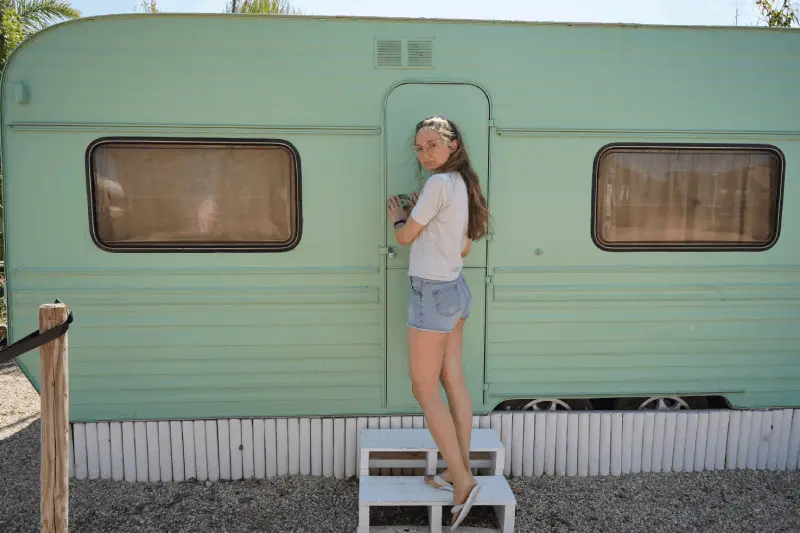
Why is Caravan Entry Comfort More than Just a Step?
Comfort in caravanning begins with the first step you take inside. Steps are engineering marvels that fill the critical gap between the caravan's chassis and the ground. They do not just serve as a ladder; they also act as a barrier that prevents dust, mud, and water from entering the vehicle. The right step choice not only determines your setup speed when you reach the campsite but also protects your joint health during the countless entry and exit movements you repeat throughout the day. Therefore, step selection is an ergonomic decision that directly affects the livability of a caravan.
Where Did the Design Evolution of Manual Caravan Steps Begin?
Manual steps have been around since the early years of caravanning and are systems that provide reassurance with their simplicity. The first models were merely hinged iron plates, while today they have evolved into spring-loaded and locking mechanisms made from high-strength aluminum alloys. The primary aim in the design of manual steps is to carry maximum weight with minimum weight. These steps have been an indispensable standard for off-grid living caravanners for years, as they do not require any energy source.
What Types of Motors Are Used in Electric Step Systems?
At the heart of electric steps are typically high-torque, low-speed 12V DC motors. These motors are designed to handle the weight of the step and any potential resistances on it (such as a stuck stone or snow accumulation). Usually protected by waterproof coatings, these motors ensure the step's forward and backward movement through an infinite screw mechanism or gear set. The brushless motors used in modern systems provide quieter operation and longer lifespan, raising the standards in the luxury caravan segment every day.
What Advantages Do Manual Steps Offer During Installation?
The biggest advantage of manual steps is that they do not require any electrical installation during assembly. Once suitable screw holes are drilled into your caravan's chassis, installation is completed with just mechanical fastening. You won't have to deal with complex processes like running cables, connecting to the fuse box, or introducing the vehicle brain (CAN-bus). This simplicity saves a significant amount of time, especially for DIY users building their own caravans. Additionally, the mechanical nature of errors made during installation makes repairs much easier compared to an electric system.
Can Electric Steps Be Used in a Caravan Without Electrical Wiring?
Theoretically, it is possible to install an electric step, but this requires an additional battery and control unit. If your caravan does not have a solar panel or a living battery system, you will need the energy from the vehicle's motor or an external power source each time you want to operate the step. This situation may contradict the intended use of the caravan. However, some modern electric steps can open and close thousands of times with just a small lithium battery pack due to their low energy consumption. Still, a healthy 12V infrastructure is always the best solution for full integration.
How Much Does the Type of Step Affect the Weight of the Caravan?
In caravanning, every gram counts. Manual steps typically weigh between 4 to 7 kilograms, while electric models can weigh between 10 to 18 kilograms due to the motor and heavy mechanical components. If you have a caravan with a limit of 3,500 kg, this difference may seem insignificant; however, when considering the total weight of all accessories, saving 10 kilograms from the step could mean an extra water tank or an additional battery. For those seeking lightweight options, aluminum manual steps will always continue to provide a weight advantage.
Which Step Coating is More Effective on Slippery Surfaces?
On rainy or snowy days, the surface of the step can pose a serious safety risk. Manual steps typically come with factory-finished textured metal surfaces. In electric models, more modern, non-slip rubber materials or specially designed channels on anodized aluminum are preferred. However, in both types, the most effective solution is the addition of "anti-slip" tapes or rubber mats to the surface. When stepping onto the step with wet shoes, structures that allow water drainage are more commonly found in manual models and are a detail that enhances safety.
How Does Step Height Play a Role in Joint Health?
The ground clearance of the caravan determines how many steps the step needs to have. If the step height is too high on a single-step model, it increases the load on the knee and hip joints. Especially for older users, electric double-step models provide significant comfort. While there are double-step options in manual steps, pulling them out each time can be challenging for back health. In this regard, electric steps have an ergonomic advantage as they offer the ideal step height with a single button press.
Why is the Risk of Failure in Manual Steps Much Lower?
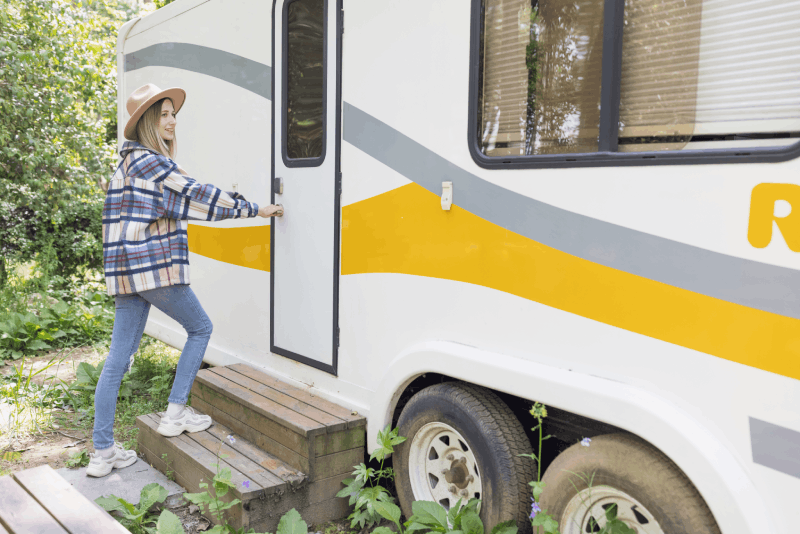
The principle of "fewer parts, fewer problems" applies perfectly to manual steps. The only thing that can fail in a manual step is the rusting of the hinges or the loosening of the spring. In electric steps, however, there are dozens of different scenarios such as motor burnout, cable breakage, sensor malfunctions, or control board errors. Water that seeps into the motor of an electric step after passing through a muddy road can render the entire system inoperable. A manual step, even if it gets stuck in mud, will continue to work like the first day after a simple cleaning, making it more reliable for extreme conditions.
What Do Common Error Codes in Electric Steps Indicate?
Advanced electric step systems provide audible alerts or error codes on the control panel when a problem occurs. Generally, an "Overcurrent Error" indicates that the step has hit an obstacle or that the mechanism is stuck. A "Connection Error" usually stems from corrosion in the ground line leading to the chassis. While these codes inform the user about where the problem is, they often require a multimeter and technical knowledge. There is no such situation with manual steps; if the step is not opening, your chances of intervening immediately by visually inspecting the problem are much higher.
How is the Protection of Mechanical Components Ensured on Dusty and Muddy Roads?
Caravan steps are positioned in a location that is directly exposed to all dirt thrown up by the vehicle's wheels. Manual steps are prone to dust accumulation due to the exposed hinges; however, these parts can be easily washed. In electric steps, the protection of the motor and gearbox is critical. If you travel on dusty roads, you need to regularly lubricate the moving parts of the electric step with dry silicone sprays. Greases based on oil can attract dust, creating a sanding effect, so material selection is vital during the maintenance process.
Why is Compatibility with Door Width Important When Choosing a Caravan Step?
Not every step fits every caravan door. If the width of the step is narrower than the door frame, it can cause a loss of balance during entry. Manual steps are generally produced in standard widths (40 cm, 44 cm, or 55 cm). Electric steps, on the other hand, have a wider range, and some models are wide enough to cover the entire door frame of the caravan. The mounting feet of the step must overlap with the support points on the caravan chassis. Choosing a wrong width can lead to installation difficulties and cause the step to flex and suffer from metal fatigue over time.
How Does the Automatic Closing Feature Enhance Driving Safety?
The most crucial safety feature of electric steps is that the step automatically retracts when the vehicle's motor is running. Forgetting to leave the step open while driving can lead to hitting a pedestrian, a tree, or a sidewalk in a narrow street. In manual steps, this control is entirely dependent on the driver's memory. Although a "step open" warning light can be installed inside the cabin for manual models, the automatic operation of electric systems provides a lifesaving layer of safety, especially for tired or distracted drivers.
Is the Locking Mechanism in Manual Steps Sufficient for Safety?
Manual steps are usually secured in the closed position with a spring or a latch. However, on very bumpy roads or during jolting drives, this mechanism can loosen, and the step may open by itself. This poses a significant risk while driving. Quality manual steps have safety locks to prevent this risk. In electric models, the infinite screw design of the motor keeps the step locked when closed; meaning that it is almost impossible for the step to move without electricity. Nevertheless, periodic lock checks are essential for safety in both systems.
Is Step Lighting a Luxury in a Night Campsite?
Not being able to see the step while getting off the caravan in a pitch-black campsite can lead to serious accidents. Most electric steps come with integrated LED strips that automatically activate when the step is opened. This lighting not only illuminates the step but also the ground where you will step. Such a feature is not typically found in manual steps. However, you can address this deficiency by installing small solar-powered LED lights or battery-operated motion sensors on the manual step. Still, the integrated and bright lighting offered by electric models provides undeniable comfort during nighttime use.
Can the Rust Resistance of Aluminum Steps Compete with Steel?
Old-style manual steps were generally made of painted steel and began to rust within a few years. Today, both manual and electric quality steps are made from anodized aluminum. Aluminum not only offers lightweight properties but also shows superior resistance to corrosion. However, the connecting elements and motor screws inside electric steps can sometimes be made of steel, which can lead to "galvanic corrosion" in humid environments. The quality of the material should be a crucial criterion, especially for those camping by the seaside, regardless of the brand of the step.
Are Double-Step Steps Essential for High Caravans?
4x4 caravans or truck-based caravans have a significantly higher chassis height. In these vehicles, a single step leaves a massive gap between the ground and the caravan. To close this gap, double-step steps are essential. Opening manual double-step models requires twice the effort and strength. Electric double-step models, however, elegantly extend and retract like a ladder. If you have a knee problem or your caravan is higher than 50 cm from the ground, the ease of use offered by electric double-step models is worth every penny.
Which Step Type Has a Lower Risk of Finger Pinching for Children?
Electric steps apply a certain force while in motion. Although modern models have "obstacle detection" sensors, they can still pose a risk for curious little fingers. In manual steps, however, the movement is entirely under the user's control. However, the spring mechanism of manual steps can close quickly when closing the step, which can lead to finger pinching. For safety, both systems should teach children how the step operates, and especially electric models should have the child lock or main switch activated during camping.
What is the Effect of Salt Water on Steps for Caravanners Living by the Coast?
Salt air is the biggest enemy of metal parts. The electronic circuits and motor windings inside electric steps can oxidize over time due to salty moisture. This can lead to the step sticking or completely failing. In manual steps, salt can cause the hinges to stiffen. If you spend a lot of time by the coast, it is recommended to seal all electrical connections of the electric step with liquid sealant or special protective sprays. For manual steps, washing the mechanism with fresh water after each camping trip is sufficient to extend its lifespan.
Which Lubricating Sprays Should Be Preferred for Step Maintenance?
The biggest mistake in step maintenance is using thick grease or WD-40-like products indiscriminately. WD-40 is good for cleaning but does not provide long-term lubrication. Thick grease attracts dust like a magnet, causing the mechanism to wear out. The ideal solution is dry lubricants containing "PTFE" or lithium white grease sprays. These products create a thin, slippery, and dust-repellent film on the moving parts of the step. Ensuring that no water leaks into the gearbox of electric steps and checking this area once a year keeps the system running smoothly for years.
How to Activate the Manual Rescue Mode in Electric Steps?
Every electric step user fears that the step will malfunction while in the open position and will not retract. In this case, you cannot move the caravan. Fortunately, most quality electric steps have a "manual rescue" pin. When you pull this pin, the motor's gears disengage, allowing you to push the step in manually and continue your journey by tying it with a rope. It is crucial to learn how to do this before the step malfunctions. In manual steps, there is usually no such problem; if the step gets stuck, it can generally be mechanically resolved with a puller or a lever.
How Do Uneven Grounds in Campsites Affect the Stabilization of Steps?
When you park your caravan on uneven terrain, the distance of the step from the ground can be very little on one side and very much on the other. If electric steps hit the ground when fully extended, the motor may strain and blow a fuse. In manual steps, you do not have the chance to feel the risk of hitting the ground; they either fully extend or remain closed. The best solution on uneven ground is to place support wedges under the step. This way, the load on the step's mechanism is reduced, and the step's flexing and creaking are prevented.
What Do the Load Capacity Standards on Steps Indicate?
Generally, caravan steps have a load capacity between 120 kg and 200 kg. In manual steps, this capacity is usually higher because there are fewer moving parts, and they are more rigidly connected to the chassis. In electric models, however, there is a load limit for the motor and gears. If the step is stepped on before it is fully extended, the motor gears may strip. When purchasing, it is essential to look at the difference between "static load capacity" and "dynamic load capacity." Dynamic load represents the weight applied while in motion (when stepped on while opening) and is always much lower than static load.
What is the Difference Between Manual and Electric Steps in Terms of Noise Pollution?
When you arrive at a campsite late at night or want to get out early in the morning, the sound of the step can disturb your neighbors. The "clank" sound of manual steps is quite loud, and the noise of metal hitting metal can be heard throughout the campsite. Electric steps, on the other hand, generally operate with a quieter motor sound. However, an electric step that has not been maintained can be more annoying than the sound of a manual step. If silence is important to you, you can minimize the noise in both systems by adding small rubber pads to the impact points.
Which Step Type Affects the Aerodynamic Structure of the Caravan More?
Every protrusion under the caravan increases wind resistance, affecting fuel consumption. Modern electric steps are designed to blend almost seamlessly with the caravan body when in the closed position. Some models are entirely hidden within the body. While the difference in fuel consumption may be less than 1%, the wind noise created by manual steps at high speeds can disturb some sensitive drivers. For those seeking aesthetic and aerodynamic integrity, electric hidden steps are always a step ahead.
Why is Manual Step Installation Preferred in DIY Caravan Construction?
For those building their own caravans, budget control and technical simplicity are everything. A manual step costs around 100-150 Euros, while a quality electric step can range from 400-800 Euros. Additionally, installing an electric step requires running cables under the vehicle, insulating, and accessing the fuse panel, which can take hours. A manual step can be mounted in ten minutes with just four screws. In DIY projects with limited time and budget, manual steps are always the first choice as they offer both economic and practical solutions.
What Standards Should the Insulation of Electric Step Wires Follow?
Electric steps are located in the area of the vehicle that is most exposed to water and mud. Therefore, the cable connections must be waterproof according to IP67 or IP68 standards. Connections made using only electrical tape will corrode after a few rains and may cause the step to malfunction. It is essential to use heat shrink tubing and waterproof connectors (like Superseal). Additionally, to prevent the cables from getting caught in branches during driving, they should be placed inside spiral hoses and secured tightly to the chassis.
How Does Snow Accumulation in Winter Conditions Prevent Step Movement?
For those camping in winter, the choice of step is crucial. If snow enters the mechanism of an electric step, the motor may strain to open the step, causing it to blow a thermal fuse or break the mechanism. In manual steps, it is easier to open a frozen mechanism by pouring warm water or gently shaking it. If you are traveling in very harsh winter conditions, it may be wise to cover the electric step with a winter protective cover or leave it open during the camping period. Nevertheless, the most reliable companion in winter is always a simple manual step.
How Should the Adjustment Process for Pets on Steps Be Managed?
For dogs and cats, caravan steps can sometimes be intimidating. Especially the sudden movement of electric steps and the noise they make can scare animals. Some pets' paws can get caught in the wide openings of manual steps, leading to injuries. To reduce this risk, it is best to cover the step with a carpet. This carpet prevents slipping and stops the animal's claws from getting caught between the metal gaps. Additionally, to prevent the electric step from accidentally closing while pets are using it, it is recommended to disable the system from the remote or switch during camping.
Does the Height of the Steps Change the Risk of Hitting the Bottom of the Caravan?
The lowest point under the caravan is usually the step. It is very common to hit the step when descending from high lifts or driving on bumpy country roads. Manual steps are generally thinner and sit closer to the body when closed. Some electric models may reduce the ground clearance by 2-3 cm due to the motor protrusion. If you have a caravan with off-road capability, you should always check how far the step hangs down when closed. Heavy-duty manual steps with protective features are safer in this scenario.
Do Steps Have a Deterrent Effect Against Theft?
While steps are not direct security equipment, their condition can send a message from the outside while you sleep in the caravan. Some caravanners retract the electric step at night to reduce the risk of theft. This can somewhat deter someone from climbing into the caravan and give the impression that the vehicle is "ready to move." In manual steps, it is easier for someone from the outside to close the step. Some advanced electric step systems can be modified to sound an alarm inside when someone touches the step from the outside. However, the real security lies in the door locks.

Does Using Lithium Batteries in Caravans Improve Electric Step Performance?
Lithium (LiFePO4) batteries provide a much more stable voltage curve compared to lead-acid batteries. Electric steps can draw high current instantly when opening or closing. In older batteries, when the voltage drops, the step may move slowly or get stuck. Lithium batteries, however, always provide high voltage until the last moment, allowing the step's motor to operate at full performance. Additionally, in lithium battery systems, the step can open and close thousands of times without negatively affecting battery health. If you plan to use an electric step, a lithium infrastructure will ensure you experience this comfort without interruption.
Do the Textured Surfaces on Steps Wear Down Shoe Soles?
Do the necessary textured surfaces for safety damage your shoes over time? The sharp metal textures on manual steps can wear down soft-soled slippers or shoes over time. However, this wear is a much more acceptable situation than the risk of slipping and falling. If you are concerned about the lifespan of your shoes or enjoy walking barefoot inside the caravan, you can install a "step mat" made of soft rubber on the step. These mats increase comfort and minimize the dirt from your shoes entering the caravan.
Can Electric Steps Provide Physiotherapy Support for Older Caravanners?
As age progresses, mobility can become limited. Pulling a manual step open by bending or using your foot can lead to loss of balance and falls. Electric steps allow users to enter the caravan safely without exerting any physical effort. This is not only a luxury but also a supportive technology that helps older caravanners maintain their independence. A sturdy step that automatically lowers with the press of a button or when the door opens can even increase the motivation of an older user to continue their caravan life. In this sense, electric steps are invaluable in terms of accessibility.
Will Old Mounting Holes Fit the New Step During Replacement?
If you want to replace an existing manual step with an electric one, you will usually need to drill new holes. Each brand and model has different mounting bracket dimensions. However, some manufacturers (like Thule, Project 2000) design their manual and electric models to fit the same chassis connection points. Before making a purchase, you should compare the mounting scheme of your old step with the product you are going to buy. If the holes do not match, it may be wiser to have an adapter plate made instead of drilling new holes in the chassis to preserve the structural integrity of the caravan.
Does Caravan Insurance Cover Accidents Caused by Steps?
Forgetting to retract the caravan step and hitting something is usually classified under "the collision of moving parts with external factors" in insurance policies. However, insurance companies may have difficulty compensating if there is an automatic closing system in the vehicle and the user has disabled this system. In manual steps, forgetting to leave the step open is entirely considered "driver error." In any case, to benefit from insurance after an accident caused by the step, it is crucial that the step is installed according to standards and that periodic maintenance is not neglected.
Why Are Step Certifications Important According to European Standards?
In caravan accessories, certifications like "CE" and "ECE R10" prove that the product has passed certain safety and electromagnetic compatibility tests. These certifications are particularly critical for electric steps; because a non-standard motor can disrupt other electronic systems in the caravan (such as the refrigerator control board or solar panel regulator). The quality of the plastic and metal used in uncertified products may not meet the declared load capacity, which can lead to the step breaking during use. For your safety, you should always prefer certified and reputable brands.
Can Solar Panels Meet the Daily Energy Consumption of Electric Steps?
An electric step draws about 5-10 Amper of current during its opening or closing cycle, but this process only lasts 3-5 seconds. The total daily energy consumption is actually very low (usually less than 1 Ah). This consumption can easily be compensated by even the smallest solar panel (for example, 100W). Therefore, it is unnecessary to give up on electric steps due to the fear of "running out of battery." The most important thing is to have a healthy cable gauge and robust fuse connections that can handle the high current drawn by the step motor at that moment.
What Modifications Can Be Made for Step Sound Insulation?
DIY methods are quite effective in reducing the metallic sounds of steps. For manual steps, you can create self-adhesive rubber seals at the contact points where the step closes. In electric steps, adding Teflon washers to the moving arms reduces noise caused by friction. Additionally, applying sound insulation paint or foam-based soundproofing tapes to the inside of the step can turn the "tin can" sound into a dull sound when stepped on. These small touches not only make the step feel of higher quality but also minimize noise pollution in the campsite.
Which Step is Most Compatible Aesthetically with the Caravan Body?
If aesthetics are a priority for you, electric "drawer-type" models are the most elegant option. When closed, these steps completely disappear under the caravan and only appear as a thin metal line. Manual steps, however, always leave some visibility under the vehicle and can sometimes disrupt the modern design of the caravan. In the new generation luxury motorhomes, the step is hidden with a plastic cover painted in the body color. However, remember that the best step is the one that performs its function best and does not leave you stranded; aesthetics should always come second to safety and durability.
Why Do Step Sensors Alarm While in Motion?
Sometimes, even when everything is closed, you may hear a "step open" warning inside the cabin. This situation usually arises from dirt or misalignment of the limit switch sensor of the electric step. Vibrations caused by rough roads can cause the sensor to mistakenly detect the step as "open." In manual steps, such electronic alarm systems are installed later and can experience similar issues. To resolve the issue, it is necessary to clean the contact points of the sensor with a contact spray and ensure that it is securely in place. If the alarm does not stop, pulling the fuse may be a temporary solution.
Does the Foot Opening Technique of Manual Steps Trigger Back Injuries?
Many caravanners try to open the manual step by pushing or pulling it with their foot to avoid getting their hands dirty. This movement can cause you to adopt an unstable position on one foot, especially if the step is stiff or the springs are very strong, leading to back injuries like herniated discs. The safest method is always to open the step with your hand in a controlled manner. If you must open the step with your foot, make sure to support yourself and avoid sudden movements. These types of physical strains are the biggest evidence of why an electric step is a more logical investment in the long run.
Which Brands Stand Out in Terms of Spare Part Availability?
Worldwide, brands like Thule, Lippert, and Project 2000 are leaders in the caravan step market. It is quite easy to find spare motors, springs, gears, or step surfaces for both manual and electric models from these brands. However, in less known or Chinese brands, a simple motor failure can lead to the entire step being discarded. In manual steps, the brand is not as critical because parts are generally standardized and can be repaired even in a metal workshop. For long-lasting use, it is best to choose brands with a widespread service network and spare part support.
Should the Caravan Chassis Be Reinforced to Carry the Weight of the Step?
Under normal conditions, caravan chassis are produced ready for step installation. However, if you are a very heavy user or plan to install a heavy electric step with double steps, you should ensure that the mounting points do not flex. If the chassis slightly bends when you step on the step, this can lead to water leaks or structural cracks over time. In this case, it may be necessary to add supporting steel plates to the chassis. A professional installer will ensure that the step is positioned to distribute the load not only on the chassis but also on the strongest points of the chassis.
How Does Step Selection Reflect Your Caravanning Philosophy?
Ultimately, the choice between manual and electric steps is not just a technical preference but also a reflection of your caravanning philosophy. If you are a "minimalist" who believes in "less stuff, more peace," who is not afraid to tackle the toughest roads and solve any problems on your own, a manual step is best for you. However, if you are a "comfort enthusiast" who says, "the caravan is my second home, and I will never compromise on comfort" and loves the conveniences offered by technology, you should not give up the elegant and effortless entry and exit that an electric step provides.