
How to Protect Caravan Chassis from Rust?
These vehicles, which symbolize freedom for caravan owners, are exposed to the wear and tear effects that occur over time. The chassis, in particular, is the part that carries the entire weight of the caravan and is most susceptible to external factors. Rusting of the chassis is not only an aesthetic issue but also a serious problem that threatens the structural integrity and safety of the vehicle.
Why Does Caravan Chassis Rust and How Does the Oxidation Process Begin?
Most caravan chassis are made of steel, and when steel comes into contact with the oxygen and moisture it encounters in nature, it undergoes a chemical reaction. This process is known as "oxidation." When water molecules cling to the metal surface, they combine with the oxygen in the atmosphere to form iron oxide, or rust. The lower parts of the chassis are in constant contact with mud, water, and humid air that splashes from the road. Especially the corner points where moisture is trapped and the insides of profiles are the places where this process starts the fastest. Once corrosion begins, it progresses into the metal, reducing the material's resistance and leading to structural damage that is difficult to reverse.
How is White Rust Formation Detected and Prevented in Galvanized Chassis?
Hot-dip galvanizing provides excellent protection for caravan chassis, but it can encounter a problem known as "white rust." White rust is a white, powdery substance formed by the oxidation of the zinc coating in excessively humid and oxygen-deprived environments. It is usually seen in newly galvanized chassis that are stacked very closely together or covered with tarpaulin. To prevent this, the galvanized surface must always be allowed to breathe. If white rust has formed, the surface should be cleaned with a stiff brush and locally repaired with zinc-rich paints. If this oxidation on the galvanized layer is not intervened in time, it can completely consume the protective zinc layer.
Why is Hot-Dip Galvanizing the Safest Option for Caravans?
Hot-dip galvanizing is the process of dipping metal into a molten zinc bath at approximately 450 degrees Celsius. Unlike paint, this method creates a molecular bond between the metal and the zinc. It is the safest option for complex structures like caravan chassis because the zinc bath penetrates all internal voids, weld points, and inaccessible corners. This way, not only the outer surface but also the inner part of the profile is protected against corrosion. Additionally, since galvanizing provides "cathodic protection," even if a small scratch occurs on the surface, the surrounding zinc atoms are sacrificed to prevent the steel from rusting.
How to Combat Saltwater Corrosion for Caravans Staying by the Sea?
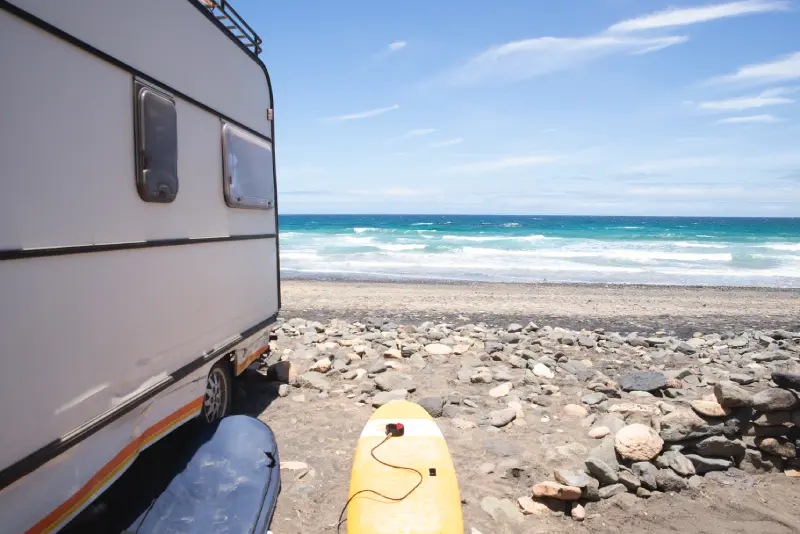
Sea air is an extremely aggressive environment for metal surfaces due to its high sodium chloride content. Salt can increase the corrosion rate by up to ten times by enhancing the conductivity of water. Caravan owners who frequently stay by the sea should wash the chassis with fresh water on a weekly basis. However, this may not be sufficient; lanolin-based or special marine-type protective sprays should be applied to the chassis to prevent salt from settling into the metal pores. These products create a hydrophobic film layer on the metal, preventing direct contact with saltwater and prolonging the life of the chassis by preventing crystallization.
How Do Chassis Protective Waxes Stop Corrosion in Hidden Areas?
The biggest enemy of chassis is unseen rust. The inner parts of chassis profiles are the places where water and moisture are most easily trapped but hardest to clean. Cavity Wax, or cavity wax, has been specially developed for these areas. This liquid is sprayed into the chassis through holes using a long hose and nozzle. Once the wax spreads over the surface, it dries to form a flexible and adhesive layer. Since it never fully hardens, it does not crack with the movement and flexing of the vehicle. This layer completely cuts off the air and moisture inside, effectively stopping internal corrosion.
What Advantages Do Epoxy Resin-Based Primers Provide for Caravan Understructures?
If your chassis is not galvanized or if its existing paint has deteriorated, the strongest protective shield is an epoxy primer. Epoxy primers create an excellent bond with the surface they are applied to due to their two-component chemical structures and form a waterproof barrier. Their chemical resistance is very high, and they are quite durable against stone chipping from the road. Using epoxy primer on caravan chassis completely cuts off the metal's contact with air. It also provides a solid foundation for the topcoat paint or sealant to be applied. Once the epoxy layer hardens, it becomes as smooth and durable as glass, preventing even the smallest point of rust from seeping through.
How Should Oil and Dirt on Metal Surfaces Be Removed Before Applying Sealant?
The sealant (Undersealing) application can have the opposite effect if the surface preparation is not done correctly, trapping rust beneath the metal. Before application, the chassis should be washed with high-pressure hot water and cleaned of all mud. Then, all grease, diesel, and oil residues on the surface should be cleaned with industrial degreasers and thinners. If there are loose rust flakes on the surface, they should be completely scraped off using a wire brush or sandblasting method. Applying sealant to a surface that is not clean and dry will cause the material to flake off in a short time. Surface preparation constitutes eighty percent of the success of the process.
What Are the Biggest Mistakes Made When Using Rust Converters?
Rust converters are chemicals that convert iron oxide into a black, protective organic metal compound. However, the biggest mistake is applying it directly over a thick layer of rust. The converter is only effective on a thin surface rust (flash rust). If applied over thick rust flakes without cleaning, it cannot reach the underlying layers, and rust continues to progress from below. Another mistake is waiting too long to apply a primer after using the converter. The treated surface must be sealed with an epoxy primer or suitable paint. Additionally, applying it over clean metal that has not rusted can also lead to adhesion problems.
How Does Magnesium Chloride Spread on Roads in Winter Damage the Chassis?
The salt and magnesium chloride solutions spread on roads to combat icing in winter are a nightmare for the chassis. These chemicals are "hygroscopic," meaning they absorb moisture from the air, creating a constantly wet and corrosive layer on the metal surface. Magnesium chloride stays on the metal much longer than regular sodium chloride (table salt) and is difficult to remove even after washing. After winter trips, the underside of the caravan should be washed not only with water but also with special shampoos that neutralize salt. If there are exposed metal spots on your chassis, these winter chemicals can create deep pits within a few months.
What Methods Are Followed to Increase the Corrosion Resistance of Weld Seams on the Chassis?
Weld points are the areas where the structure of the metal changes due to heat and become the most susceptible to corrosion. If the slag and spatter formed during welding are not cleaned, they become focal points for the onset of rust. In chassis protection processes, weld seams should be especially sanded and additionally saturated with "cold galvanizing" sprays. In professional applications, sealants known as "seam sealers" are applied over the weld lines to prevent water from entering the weld pores. Ensuring that these areas are coated uniformly prevents the chassis from weakening at its joints and maintains overall strength.
What Should Be Considered in the Maintenance of Chassis from Brands Like AL-KO and Knott?
Chassis from global brands like AL-KO or Knott are usually produced with high-quality hot-dip galvanizing. Applying standard black sealant to these chassis is generally not recommended as it complicates monitoring the condition of the chassis and can reduce ventilation. The most important thing to pay attention to in these chassis is the mechanical parts. Torsion axle arms, brake cables, and coupling mechanisms should be regularly lubricated with lithium-based grease. For the main body of the chassis, simply keeping it clean and touching up with silver-colored zinc paints if the galvanizing layer is damaged is sufficient. Unnecessary heavy coatings can disrupt the balance of these sensitive engineering products.
Do Pressure Washing Machines Damage Chassis Protective Layers?
While high-pressure water is a great tool for cleaning the chassis, it must be used carefully. Water at 150 bar or higher can strip soft coatings from close range or force water into cable connections. Additionally, dirty particles can be pushed into seals and bearings by the pressure of the water. During washing, the nozzle should be kept at least 30-40 cm away from the chassis, and the angle of the water should be adjusted to be indirect rather than direct. Especially, water should not be directed straight onto insulation materials and electrical boxes. After cleaning, the chassis must be left in a breezy area to dry completely.
How is the Risk of Rust Trapping Managed Under Bitumen-Based Coatings?
Old tar-based or bitumen-based sealants can harden and crack over time after drying. Water seeping through these micro-cracks can enter beneath the coating, causing the chassis to rust silently inside, even if it appears intact from the outside. To manage this risk, transparent or wax-based protectors should be preferred. Transparent products allow you to see the point where rust has started immediately. If bitumen is to be used, a rust-inhibiting primer must be applied underneath, and crack inspections should be conducted annually. The thickness of the bitumen application is not as important as its elasticity and complete adhesion to the surface.
How to Prevent the Chassis Number and Type Label from Rusting and Being Worn Away?
The chassis number (VIN), which identifies the caravan, is usually engraved on metal and can become unreadable when rusted, causing significant problems during inspection. To protect this number, thick paint or dark sealant should not be applied over it; otherwise, it becomes impossible to read. The best method is to clean this area and then apply a transparent, high-strength varnish or a thin layer of grease over it. Some caravan owners prevent corrosion by applying a transparent foil over the chassis number. Cleaning this area with only a light degreaser before inspection ensures that the number remains bright and readable at all times.
How Does Lubricating the Brake System and Mechanical Connections Delay Rusting?
The chassis is not just made of metal profiles; it also contains brake cables, springs, and moving connections. These parts cannot be painted, but they must be protected from corrosion. The entry points of brake cables and spring mechanisms should be regularly lubricated with silicone or lithium grease, which has water-repellent properties. The grease layer creates a microscopic film on the metal, preventing water from adhering. Especially rust in brake mechanisms can lead to brakes locking or failing, risking driving safety. Periodic lubrication of moving parts prevents rust and ensures smooth operation of the mechanism.
What Are the Risks of Parking on Wet Soil or Grass for Extended Periods?
The ground where you park your caravan for an extended period plays a decisive role in the health of the chassis. Wet soil or grassy areas continuously emit moisture vapor (evapotranspiration) directly onto the chassis. This prevents the underside of the chassis from ever fully drying out. Ideally, the caravan should be parked on a concrete or gravel surface with good drainage. If you must stay on grass, a thick plastic cover can be laid under the caravan to act as a moisture barrier. Moisture rising from the ground is the most insidious factor that accelerates corrosion in enclosed spaces and must be controlled.
Does Using Stainless Steel Bolts on a Galvanized Chassis Cause Galvanic Corrosion?
Many caravan owners install stainless steel bolts on galvanized chassis, thinking they will not rust. However, this can initiate a dangerous process known as "galvanic corrosion." When two different metals (steel chassis and stainless bolts) come into contact in a humid environment, the more "active" metal (usually the chassis) quickly corrodes. This means the chassis metal around the bolt will dissolve. If stainless steel is to be used, a plastic or rubber washer must be placed in between to break electrical contact, or isolation pastes like "Tef-Gel" should be used. Using galvanized bolts that are suitable for the original equipment is always safer and more compatible.
Why Should the Ventilation Holes on the Chassis Be Kept Open to Prevent Rust?
The design of caravan chassis includes drainage and ventilation holes to expel moisture from inside and maintain pressure balance. Many users make the mistake of sealing these holes with sealant or silicone to prevent water ingress. When this is done, there is no way for the condensation water that forms inside to escape, and rusting begins from within the chassis. When performing chassis protection, it should be ensured that these holes remain open; if they are blocked, they should be cleared with a thin wire or screwdriver. Healthy air circulation is the most natural and effective method to keep the inner surface of the metal dry.

Why is Dry Ice Blasting a Revolutionary Method in Chassis Restoration?
The most challenging process in restoring old caravans is cleaning years of accumulated sealant and rust. Dry ice blasting is the process of blasting pieces of dry ice at -78 degrees onto the surface at high speed. This method removes dirt, grease, and old coatings without damaging the underlying metal or electrical wiring. The cold shock causes the dirt layer to crack, and the gas expansion created by the sublimation of the ice blasts the contamination off the surface. Since no water or sand is used, it leaves no residue on the surface and does not cause abrasion. This is the most luxurious and effective method used to restore sensitive chassis surfaces to their factory freshness.
Are Polyurethane-Based Coatings Sufficient for Impact and Abrasion Resistance of the Chassis?
Polyurethane coatings represent the most durable class of sealant materials. Their flexibility and impact absorption capacities are very high. When applied to the chassis, they not only prevent rust but also reduce the noise of stones chipping off the road. Once the polyurethane layer dries, it becomes incredibly resistant to abrasion and does not easily scratch. However, the application of these materials requires professional equipment, and their removal is quite difficult. For caravans that make long-term off-road trips, coating the underside with polyurethane is one of the best investments to prevent mechanical damage and corrosion.
How Should the Water Drainage Channels Inside the Chassis Be Checked?
The most neglected point in chassis maintenance routines is the inspection of drainage channels. These small gaps, usually located at the lowest and rear points of the chassis, can easily become clogged with road mud. To check, a light spray of water should be applied to the chassis, and it should be observed whether the water drains from these holes. If water is accumulating inside the profile, it means a layer of mud has formed inside. In this case, the channel should be cleaned with a thin, flexible guide. After the cleaning process, applying water-repellent wax sprays inside the chassis ensures that water flows more easily into the holes and does not adhere to the surface.
Can Static Powder Coating Be Sustainable for Caravan Chassis in the Long Term?
While static powder coating provides a visually smooth and durable surface, it poses certain risks for caravan chassis. The paint layer is very hard and can create microscopic cracks when the chassis flexes. Additionally, if a hole is created in the paint due to stone impact, rust can spread insidiously beneath the paint (filiform corrosion). If static powder coating is to be applied, a zinc-based primer or galvanizing must be applied underneath. Powder coating alone may not be sufficient in the long term, especially in areas that receive impact. Therefore, questioning the flexibility of the paint and the adhesion of the underlying layer is critical from a sustainability perspective.
Can the Flexibility of the Chassis Cause Protective Coatings to Crack?
While caravans are in motion, their chassis flexes continuously to some extent. This flexing, especially due to road bumps and turns, causes the metal to move at a microscopic level. If the paint or protective coating applied to the chassis is too hard and brittle (like some low-quality epoxies), it will crack as a result of these flexes. Cracks invite moisture to seep in. Therefore, the products used in the chassis must have "elastomeric" properties, meaning they should be able to flex. Rubber-based sealants and special waxes retain their protective properties for years because they can stretch and contract with the movement of the metal.
What Do Corrosion Tests (Salt Spray Tests) Indicate About the Lifespan of the Chassis?
Salt spray tests conducted in laboratory environments (ASTM B117) measure how resistant a coating is to corrosion. The scientific answer to the question "How long will my chassis protection last?" is hidden in these tests. A quality galvanized coating or epoxy system is expected to successfully pass a 1000-hour salt spray test. Requesting this data when purchasing a caravan or selecting protective products ensures the longevity of your investment. Of course, real-world conditions differ from laboratory conditions; however, these tests are the most reliable indicators of the chemical resistance and structural integrity of the product.
Do Physical Damages to the Chassis While Lifting the Caravan with a Jack Trigger Rusting?
Negligence during the use of a jack is the biggest enemy of chassis protection. The metal head of the jack can crush the galvanizing or paint layer on the chassis, leaving the metal exposed. These "exposed" spots turn into rusting zones as soon as they come into contact with oxygen. When lifting the caravan, a hard rubber or wooden block should always be placed between the jack and the chassis. After the process is completed, the points where the jack made contact should be checked, and if there are any scratches or dents, they should be immediately repaired with rust-inhibiting spray or paint. Remember, even the strongest armor loses its effectiveness when pierced at the smallest point.
How Should the Chassis Protection Strategy Change According to Climate Conditions?
The climate in which your caravan is located directly affects the frequency of maintenance. In dry and low-salt areas like Central Anatolia, chassis maintenance can be done every 2-3 years, while in humid or salty coastal areas like the Black Sea or Aegean, this period should be reduced to 1 year. In very hot climates, bitumen-based coatings can soften and flow, so high-temperature resistant polyurethane products should be preferred in these areas. In cold climates, the freeze and crack resistance of coatings should be prioritized. Choosing materials according to the region where you will use your caravan ensures that you avoid unnecessary costs and receive the highest level of protection.
What is the Relationship Between the Electrical Wiring on the Chassis and Corrosion?
The electrical wires running over the chassis can trigger a process called "electrolytic corrosion" if they are improperly secured or if their insulation is compromised. The weak electric current leaking from the cable tries to flow into the ground through the metal chassis, and combined with the humid environment, it ionizes the metal, causing it to corrode rapidly. Cable channels should not be painted over the chassis; they should be insulated with plastic clamps and protective spiral tubes. Additionally, the negative (-) terminals of the chassis should be kept clean and free of oxidation. A healthy electrical system is much more important for preserving the chemical stability of the chassis than is commonly believed.
What Equipment Should Be Used During a Professional Chassis Protection Process?
While it is possible to perform chassis protection on your own, special equipment is essential for professional results. A compressor with at least 50 liters, a spray gun, long nozzles that can rotate 360 degrees for the insides of profiles, a needle scaler for surface cleaning, and a high-resolution endoscope camera are required. The endoscope camera should be used to check the insides of the chassis before and after the application. Additionally, lifting the caravan with a professional lift allows for a more homogeneous and complete spraying against gravity. The right equipment ensures that the coating reaches every millimeter.
How Does the Process of Reviving an Old Caravan Chassis Work?
The restoration process requires patience and meticulousness. The first step is to clean all the old paint and rust using sandblasting. Once the metal is stripped bare, the structural integrity of the chassis is checked with crack and fracture tests. If there are weakened sections, they are reinforced (welded) with new steel parts. Then, immediately (before the metal oxidizes), a zinc-rich primer is applied, followed by an epoxy protective layer, and finally a shock-resistant sealant. If this process is done correctly, even a 30-year-old chassis can become more durable than a brand new chassis. The basic rule is to never cover the surface without completely removing the rust.
Why is Chemical Compatibility Among Chassis Protection Materials Critical?
Applying products with different chemical compositions on top of each other can cause them to dissolve each other or lead to adhesion problems. For example, if a solvent-based sealant is applied under a water-based primer, the solvent can soften the underlying primer, leading to complete peeling of the coating. It is always necessary to use supporting system products from the same brand or to ensure compatibility by reviewing technical data sheets (MSDS). The chemical bond (cross-linking) between the primer, intermediate layer, and topcoat ensures that the protective layer on the chassis acts as a single unit. Compatibility is the hidden parameter that determines the lifespan of the protection.
The techniques and tips in this guide will not only secure your caravan's chassis for today's use but also for the coming decades. Remember, rusting is not a fate; it is the result of neglect.