Why is a Caravan Solar Panel System Necessary?
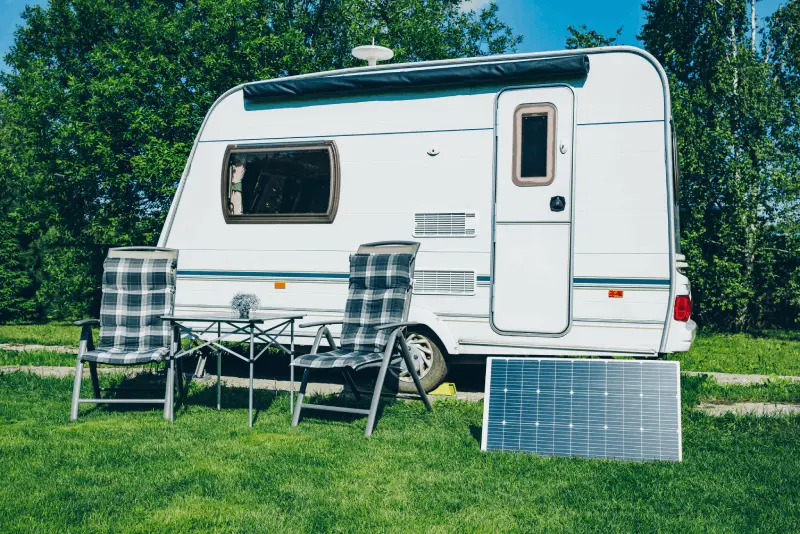
Having a solar panel system in your caravan allows you to spend time in the heart of nature without relying on campgrounds or external electricity sources. Basic needs such as refrigeration, lighting, water pumping, and charging technological devices require continuous energy. Solar panels provide a clean and silent energy source, protecting nature while reducing your energy costs to zero in the long run. With this system, you won't compromise on the comforts of modern living even when staying in a secluded cove or deep in the forest.
How is Energy Needs Accurately Calculated?
Before starting the system installation, you should determine the total daily watt-hour (Wh) energy consumption. To do this, you need to multiply the wattage (W) of each device in the caravan by the number of hours it will operate daily. For example, if a refrigerator with a power of 50 Watts runs for 24 hours (approximately 12 hours of compressor running time is calculated), it consumes 600Wh daily. After summing up all devices, adding a loss margin of 20-30% to the found figure ensures that the system won't leave you halfway even on cloudy days.
Should Monocrystalline or Polycrystalline be Chosen?
In areas with limited space like caravans, monocrystalline panels are generally the best choice. Monocrystalline panels have higher efficiency rates and produce more energy per square meter. They also perform better than polycrystalline panels in low light conditions and partially cloudy weather. Although polycrystalline panels are more economical, monocrystalline technology has become the industry standard in modern caravan conversions to make the best use of the limited space on the caravan roof.
Are Flexible Panels or Rigid Panels More Advantageous?
Rigid panels (with aluminum frames) are far superior in terms of durability and ventilation. They are mounted with air gaps left at the bottom, preventing heating issues and maintaining efficiency. Flexible panels stand out for their lightweight and adaptability to curved surfaces; however, they can heat up when mounted directly on surfaces and may have a shorter lifespan. If your weight limit is not very critical and your roof is suitable, it is recommended to choose rigid glass panels for their long lifespan.
What is the Difference Between MPPT and PWM Charge Controllers?
A charge controller transfers the energy from the panel at a voltage suitable for the battery. PWM devices are simpler and cheaper but lose some energy as heat. MPPT (Maximum Power Point Tracking) devices convert the high voltage from the panel to the current needed by the battery, providing efficiency increases of up to 30%. Using an MPPT device, especially during winter months or when the panels are not operating at full efficiency, is vital for the overall efficiency of the system.
Should Gel Batteries or Lithium (LiFePO4) Batteries be Preferred?
Traditional gel batteries are affordable and reliable but only allow you to use 50% of their capacity (deep discharge limit). Lithium (LiFePO4) batteries offer more than 90% of their capacity, are much lighter, and can be charged and discharged thousands of times. Although the initial cost is high, lithium batteries are the most logical investment for caravans due to their long lifespan of up to 10 years and fast charging capabilities.
What Should Be Considered When Choosing an Inverter?
An inverter converts the 12V or 24V DC current in the battery to the 220V AC current used by household devices. When making a selection, you should consider the total wattage of the devices you will be using simultaneously. For example, if a hairdryer (1500W) and a laptop charger (60W) will be used at the same time, an inverter that can provide at least 2000W of continuous power is required. Additionally, the inverter's own idle power consumption should be low; otherwise, it can drain your battery even if you are not using anything.
What is the Difference Between Pure Sine and Modified Sine Inverters?
Sensitive electronic devices (laptops, coffee machines, modern televisions, and refrigerator compressors) require a clean energy wave to operate properly. Pure sine inverters produce the closest and highest quality electricity to the city grid. Modified sine inverters are cheaper but can cause heating, noise, or malfunctions in motorized or sensitive devices. For your caravan comfort and device safety, you should definitely choose a device with "Pure Sine Wave" features.
Why is Cable Cross-Section Calculation Important?
In low voltage systems (12V), serious voltage drops can occur due to the current flowing through the cable. If the cable cross-section is insufficient, energy is converted to heat, and system efficiency decreases, even posing a fire risk. Cables used in the lines from the panel to the controller, from the device to the battery, and from the battery to the inverter should be of appropriate thickness according to the distance and current (Amper). Generally, 6mm² cables are preferred for panel lines, and for the battery-inverter connection, thicker cables such as 25mm² or 35mm² are used depending on the current.
How Should Fuses and Switches be Used?
Safety is the most important part of the caravan electrical system. Fuses of appropriate amperage should be placed between the panels and the charge controller, between the controller and the battery, and between the battery and the inverter. These fuses protect the system in case of any short circuit or overload. Additionally, using a main switch (Battery Switch) to completely cut off electricity during maintenance or emergencies increases safety and facilitates system management.
How Should the Caravan Roof be Prepared?
How to Install Panels?
When installing panels, it is advisable to avoid drilling into the ceiling as much as possible. Instead, special ABS mounting feet and strong adhesives (such as SikaFlex 252 or 552) should be used. After thoroughly cleaning the mounting surface and preparing it with a "primer", the feet are installed, and the panels are screwed onto these feet. This method ensures both waterproofing and allows air gaps beneath the panel, preventing the panel from overheating. If there is a ceiling rail in your ceiling, mechanically securing the panels to these rails is also a safe alternative.
What Materials Should Be Used for Waterproofing?
For cable entries, a "cable entry gland" must be used. This piece serves as a protective cover that prevents water leakage at the point where the cable enters the ceiling. Polyurethane-based mastics or MS polymer adhesives should be preferred for construction and insulation processes. Materials like silicone, which dry out and crack over time, cannot withstand the vibrations that occur while the caravan is in motion. Waterproofing tests should be conducted regularly, and especially the cable entry points should be checked periodically.
Is Series Connection or Parallel Connection More Suitable?
This choice depends on the capacity of your charge controller and the shading situation. In a series connection, the voltage increases, which allows the charge to start earlier in low light, but if a single panel is shaded, it affects the entire system. In a parallel connection, the current increases; even if one panel is shaded, the others continue to operate at full power. In caravans, parallel connections or hybrid configurations like 2 series - 2 parallel are generally more reliable against the risk of partial shading.
What Order Should Be Followed When Making Battery Connections?
The golden rule when commissioning the system is this: connect the battery first, then the panel. You should connect the charge controller to the battery first so that the device recognizes the battery voltage (12V or 24V) and adjusts itself accordingly. If you connect the panel first, the device may not know where to direct the high voltage, and internal circuits may be damaged. When dismantling the system, you should do the exact opposite; first disconnect the panel connection, then disconnect the battery cables.
What Factors Increase Solar Panel Efficiency?
The biggest factors affecting efficiency are the angle of the panel, its cleanliness, and its temperature. As panels heat up, their efficiency decreases, so it is critical to have airflow beneath them. Additionally, since the sun comes at a lower angle during winter months, tilting the panels directly towards the sun can significantly increase efficiency. When dust, pollen, or bird droppings accumulate on the panel surface, they block photons from reaching the cells; therefore, cleaning the panels at regular intervals can increase production by 10-15%.
How Does Shading Affect the System?
Solar panels are made up of interconnected cells. A small branch or the shadow of a ventilation cover falling on the panel can dramatically reduce the output power of the entire panel, not just that area. Although some modern panels have "bypass diodes", it is best to position the panels away from elements that could cast shadows, such as ventilation fans or satellite antennas, during the design phase. Shading can also cause heating (hot-spot) in the cells, shortening the lifespan of the panel.
How is Electrical Safety Ensured in Caravans?
To ensure the safety of the installation, all cables must be routed through spiral tubes (conduit). This prevents the cables from being damaged due to friction while the caravan is in motion and avoids short circuits. Appropriate connectors and fuses must be used at connection points, and loose connections should be avoided. Loose connections can create arcs and cause fires. Additionally, proper grounding of the entire system and selecting the right capacity fuses are fundamental safety measures that protect both the user and the caravan.
Are Smart Monitoring Systems (Bluetooth/Screen) Necessary?
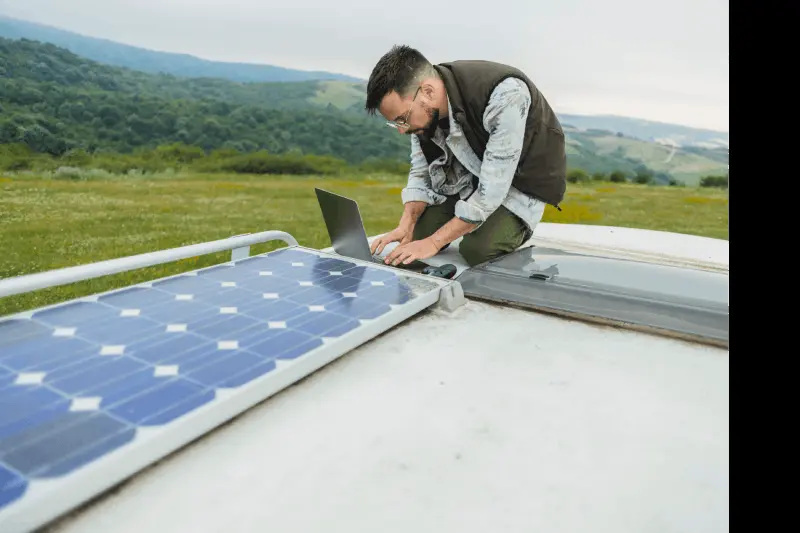
They are highly recommended. Monitoring your battery's state of charge, instantaneous consumption, and how many watts the panels are producing through a smartphone app or an external screen allows you to manage energy effectively. Not knowing when the battery will run out is one of the biggest stressors while camping. With Bluetooth-enabled devices from brands like Victron and Epever, you can monitor the health of your system in real-time and detect any potential faults or efficiency losses early.
How is a DC-DC Charger (Vehicle Charging) Integrated into the System?
Charging the house batteries from the vehicle's alternator during insufficient sunlight on winter days or long night trips is a significant advantage. DC-DC chargers take the irregular current from the alternator while the vehicle's engine is running and convert it into an excellent charging current for the house battery. This device works in harmony with smart alternators and prevents the vehicle battery from depleting by only charging while the engine is running. When used in conjunction with a solar system, it offers complete energy independence.
How to Add External 220V Charging Support?
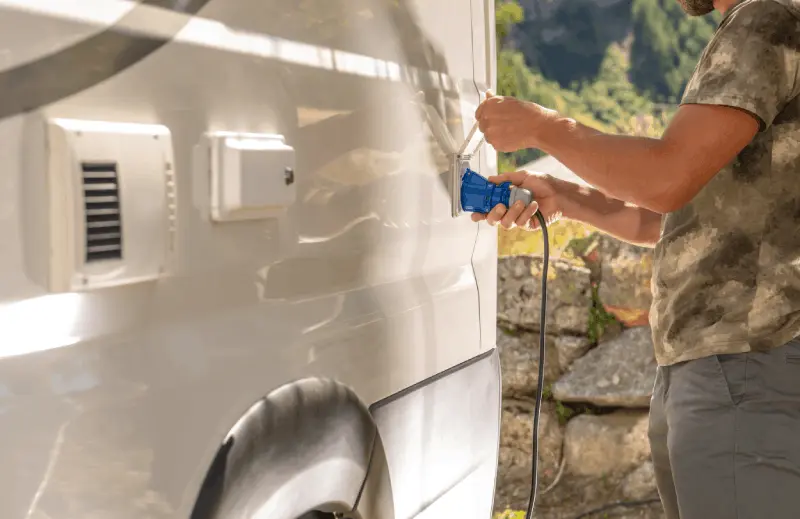
Sometimes you may want to draw electricity from an external source while staying at campgrounds or preparing the caravan in front of your home. For this, a "battery charger" (rectifier) should be added to the system. A marine inlet socket mounted outside the caravan allows for 220V input, which charges the batteries and can also be directed to the sockets inside the caravan by bypassing the inverter. The r-charger units combine these two functions into a single device, reducing system complexity.
How to Clean and Maintain Solar Panels?
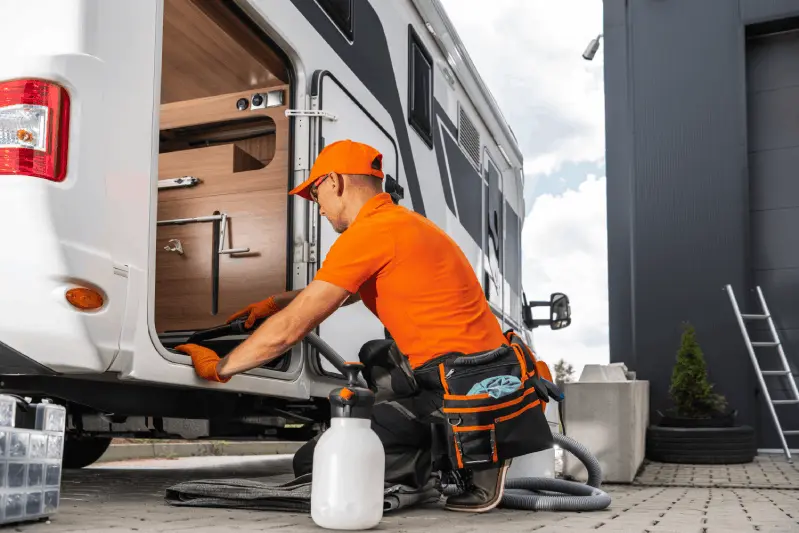
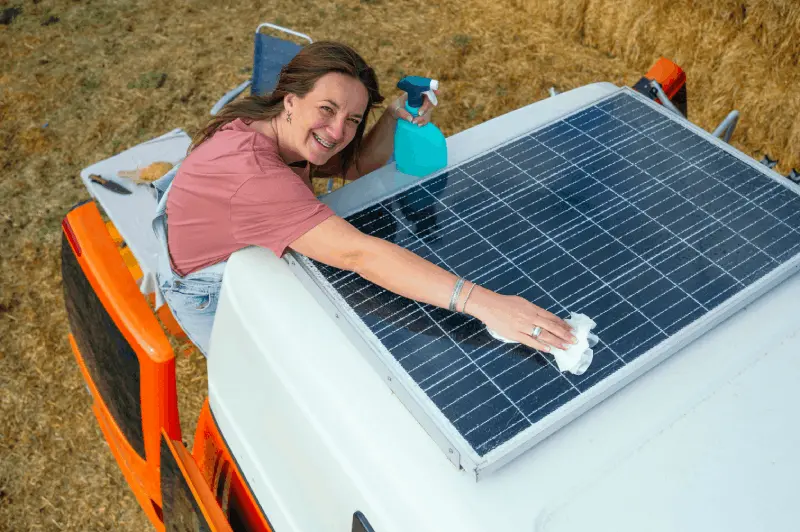
The maintenance process is quite simple but should be done regularly. The panels should be wiped with plenty of water and a soft cloth when they are cold (early in the morning or late in the evening). Harsh chemicals or abrasive brushes should not be used; as they can scratch the protective layer or glass on the panel. Additionally, all cable connections, fuse slots, and mounting feet should be checked for safety once a year. Screws that loosen over time due to vibration should be tightened, and cable ends showing signs of oxidation should be cleaned.
How Does Solar Energy Efficiency Decrease in Winter Months?
The angle of sunlight in winter is equalized, and the day length shortens. Additionally, cloudy and rainy days significantly reduce energy production. A system that produces 300W in summer can only produce 50-60W in winter. To overcome this situation, you should either increase the number of panels, reduce consumption, or turn to additional sources like DC-DC charging. The layer of snow that falls on the panels completely halts production; therefore, keeping the panels clear in winter camps is of vital importance.
How Should Fault Detection and Multimeter Usage Be?
If your system is not producing energy, the first step is to measure with a multimeter. By measuring the voltage (Voc) in the cables coming from the panels and the voltage at the battery terminals, you can determine where the fault is. For example, if there is voltage coming from the panel but not from the controller, the device may be faulty or the fuse may have blown. Learning to use a multimeter allows you to solve simple problems (broken cable, loose terminal, etc.) yourself without needing professional help when you are stuck on the road in your caravan.
What Determines the Costs of Caravan Solar Sets?
Costs largely depend on the technologies chosen and the quality of the components. A system with lithium batteries and MPPT devices can be 2-3 times more expensive than a system with gel batteries and PWM devices. However, when considering long-term efficiency and lifespan, quality equipment pays for itself. Additionally, the warranty periods of brands, cable qualities, and installation workmanship are also factors that affect the total budget. Choosing cheap equipment often leads to failures in a short time, resulting in higher costs.
Should You Set Up Your Own System or Get Professional Support?
If you have basic electrical knowledge, manual skills, and the ability to use a multimeter, you can set up your own system by following ready-made diagrams. This provides you with both cost advantages and helps you get to know your system better. However, in complex systems, especially in the structuring of lithium batteries' BMS or high-power inverter installations, it is safer to get support from an expert. It should never be forgotten that a wrong connection can lead to a caravan fire.
How Can I Upgrade My System in the Future?
It is possible to upgrade your system when your energy needs increase. For this, it is easier if the charge controller and cables you initially chose can handle the panels that will be added in the future (oversizing). For example, if you start with a 40A device instead of a 20A device, you can increase capacity later by simply adding a new panel. On the battery side, it is not recommended to connect batteries of different ages or brands; therefore, when increasing capacity, the battery group should be completely renewed or additional batteries of the same model should be added.
What Can Be Done for Energy Savings in Caravan Life?
Solar energy is a limited resource; therefore, saving is more economical than expanding the system. All lighting in the caravan should definitely be LED. The refrigerator door should be opened as little as possible, and the internal temperature of the caravan should be kept under control. When using the Webasto (diesel heater) in winter, keeping the fan speed low preserves battery life. Additionally, charging devices during the hours when the sun is at its highest angle ensures that you use energy directly from the panel and reduces the load on your battery.
Is It Possible to Have Complete Freedom with a Caravan Solar Panel System?
Yes, it is possible to live completely autonomously in a caravan with a properly calculated and quality equipment system. This lifestyle, which we call "off-grid," allows you to stay in the most pristine corners of nature, away from the hustle and bustle of campgrounds. The solar panel system is at the heart of modern caravanning and continues to provide you with years of free, quiet, and hassle-free energy once set up. With proper planning, careful installation, and regular maintenance, you can also generate your own energy.