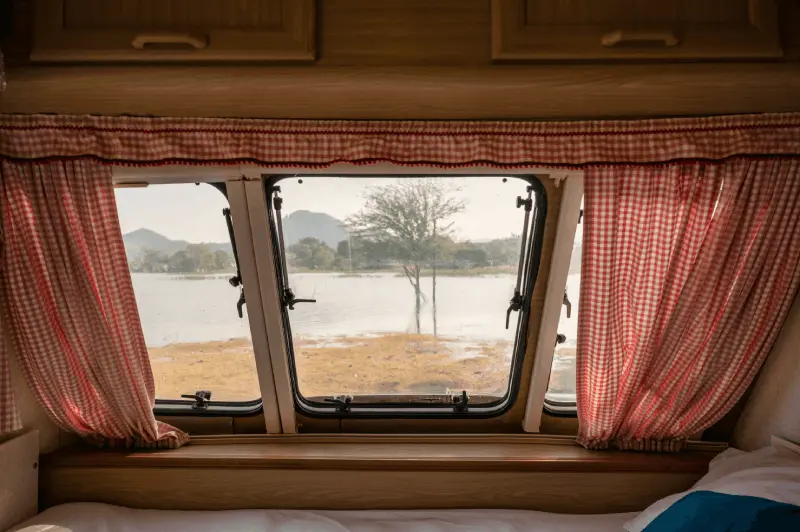
Why Should Both Mosquito Nets and Sunshades Be Preferred for Caravan Windows?
Comfort in caravan living relies on the ability to protect oneself from external factors while being in harmony with nature. Mosquito nets installed on caravan windows prevent mosquitoes, houseflies, and other pests from entering the interior, especially when staying by the lake or in wooded areas during the summer months. This is essential for uninterrupted sleep and a hygienic living space. Sunshades not only provide privacy but also balance the internal temperature of the caravan. Thermal sunshades reflect sunlight, preventing excessive heating of the interior and minimizing heat loss during winter. Therefore, using these two systems together transforms your caravan into a livable home throughout the four seasons.
How to Accurately Measure Window Dimensions Before Installation?
The most critical stage of installation is taking accurate measurements. A mismeasured frame can either prevent the glass from closing or cause light and insects to seep in from the edges. When measuring, you should measure the width and height of the caravan window from the inside (light area). However, measuring just the glass opening is not enough; you must also consider the width of the surface where the frame will sit on the flat ground. Checking whether the caravan walls are curved is important for the frame to fit perfectly. Although standard measurements (for example, 50x30 cm, 70x40 cm) are often used, custom-built caravans may require millimeter measurements. Always apply the "measure twice, order once" rule when taking measurements to avoid costly mistakes.
What Are the Advantages of Cassette Mosquito Nets and Sunshade Systems Compared to Other Models?
Cassette systems are compact mechanisms where the mosquito net and sunshade are housed in a single aluminum or plastic casing. The biggest advantage of these systems is that they offer an aesthetic appearance and ease of use. Since they have a roller (screen) structure, they can be stopped at the desired level. Additionally, thanks to their cassette structure, the mosquito net fabric and sunshade are protected from external factors, dust, and the damaging UV rays of the sun when not in use. These models, which are more practical to install than other systems, provide a professional factory appearance to the original structure of the caravan. Their long-term durability and hidden mechanisms make them the most popular choice among caravan users.

What Should Be Considered to Avoid Damaging Glass Seals During Installation?
The rubber seals that ensure the caravan windows are airtight are the parts that require the most attention during installation. When screwing the mosquito net frame, the screws should not come into contact with these seals. It is essential to determine the exact position of the seal before drilling screw holes and to keep the drill bit away from this area. If the frame must rest on the seal, a gap should be left that does not crush the seal, or special spacer tools should be used. Excessive pressure on the seals can lead to deformation of the rubber over time and cause the caravan to leak. After installation, it is crucial to manually check whether the seals can move freely and whether the glass closes completely.
What Is the Most Suitable Screw Type for Plexiglass Caravan Windows?
Most caravan windows are made of acrylic or plexiglass. These materials are rigid but brittle. The type of screws to be used during installation should be selected according to the interior panel material of the caravan (plywood, MDF, or plastic coating). Screws made of stainless steel, with fine threads and pointed tips, are generally preferred. The length of the screws should not exceed the thickness of the caravan wall; otherwise, an unseen hole may form from the outside. If the screw will come directly to a plexiglass surface, it is essential to drill a pilot hole with a drill bit slightly smaller than the screw diameter to prevent the material from cracking. Additionally, to embed the screw heads into the frame, a hole must be made, ensuring an aesthetic finish.
How to Dismantle Mosquito Nets on Old Caravan Windows?
Before installing a new system, it is necessary to remove the old one to create a clean working area. Old mosquito nets are usually held in place by hidden screws under plastic covers. First, carefully pry off these covers with a fine-tipped screwdriver without damaging them. Then loosen the screws but support the frame with your hand before completely removing it; as old systems may sometimes be supported by adhesive. If the frame is attached to the wall, gently heat it with a heat gun (or hairdryer) to soften the adhesive. Slowly separate the frame with a spatula. Clean any old adhesive residues left on the wall surface with thinner or special cleaners to prepare for the new installation.
What Is the Difference Between Installing Aluminum Framed Systems and Plastic Frames?
Aluminum frames are generally heavier and more durable, thus may require more screw points during installation. The flexibility of aluminum is lower, making it critical for the wall to be perfectly straight for successful installation. Plastic frames, on the other hand, are lighter and can adapt somewhat to the slightly curved walls of the caravan. However, care should be taken not to overtighten when screwing plastic frames; excessive torque can cause the plastic to crack. Aluminum and plastic have different expansion rates during temperature changes. Therefore, keeping screw holes slightly wider in aluminum frames can prevent the frame from warping during seasonal transitions. In both materials, the stability of the corners should always be tested after installation.
How Should Sunshades Be Positioned to Prevent Thermal Bridges in Plexiglass Windows?
A common problem encountered in caravan windows is the accumulation of heat resulting from leaving very little space between the sunshade and the glass. This can create a "thermal bridge" that can lead to excessive heating and cracking of the plexiglass. It is recommended to leave at least a 1-2 centimeter air gap between the sunshade and the glass surface during installation. If you are using a cassette system, instead of mounting the cassette at the very top of the glass, install it slightly further inside to allow for air circulation. Especially since fully blackout sunshades reflect a lot of heat, this gap will extend the life of the glass. The ventilation gap will also significantly reduce condensation on the glass.
How to Choose the Right Screw for Caravan Interior Coating?
The interior walls of caravans are usually made of thin poplar plywood or ABS plastic panels. When installing on these surfaces, it is better to use "washer screws" or "wide-headed screws" instead of standard screws, as they distribute the load over a wider area. If the interior panel is very thin, using screws alone may not be sufficient; in this case, applying adhesive (such as Sika or similar mastics) behind the frame will increase strength. Using stainless screws is essential for long-lasting durability, considering the high humidity levels inside the caravan. For aesthetic purposes, it is recommended that the colors of the screws match the frame or that screw concealment caps are used.
How to Check the Tension Adjustment of Spring Mechanisms During Installation?
In roller-type mosquito nets and sunshades, the proper gathering of the fabric or material depends on the spring tension. If you notice that the system is closing too slowly or too quickly during installation, you can adjust the tension using the adjustment screw on the side of the cassette. Over-tightening the spring will shorten the lifespan of the mechanism and may cause the cords to break; leaving it too loose will cause the fabric to sag and lead to aesthetic issues. The ideal adjustment is to have the fabric stop where you leave it without being too tight. After installation, open and close the system at least 10 times to ensure the mechanism operates stably.
Is It Necessary to Use Adhesive When Installing Corner Connection Accessories?
Most cassette mosquito systems are assembled by connecting four main parts (two side rails, one top cassette, one bottom rail). Corner connection accessories lock these parts together. While simply screwing may often be sufficient, due to the constant movement of the caravan and exposure to vibrations, applying a small amount of plastic adhesive or quick adhesive to the corners strengthens the structure. This process also prevents annoying rattling sounds that may develop over time. However, care should be taken when using adhesive; if you need to change the fabric later, excessive adhesive can make it impossible to remove.
How to Eliminate Gaps That Occur When Placing the Mosquito Net Fabric into the Channel?
One of the most frustrating moments during installation is when the mosquito net fabric slips to one side or gathers in the middle, creating gaps. This usually results from the side rails not being mounted perfectly parallel to each other. If there is a gap or bulge on one side, measure the distance between the side rails from the top and bottom millimetrically. Even a one-millimeter deviation can cause the fabric to wind unevenly over a long distance. To eliminate the bulge, fully open the fabric and ensure it is slightly taut before rewinding it. If the problem persists, check the point where the fabric is attached to the bottom rail and ensure it is evenly distributed in the channel above the fabric.
Is It Possible to Install Sunshades Without Blocking Night Vision?
Caravan owners sometimes want to see outside while also preventing light from entering the interior. In this case, dual systems come into play. Systems that offer "semi-transparent" fabrics and "blackout" fabrics together can be preferred. If you adjust the installation level to lock the sunshade at a medium level instead of fully closing it, you can reduce the sun's burning effect while preserving the view outside. Additionally, in some systems, the sunshade operates from the bottom up, while the mosquito net works from the top down. This type of installation allows for ventilation from the bottom while providing privacy from the top. Installing with these needs in mind enhances the enjoyment of use.
How to Install Flexible Frames on Curved Caravan Windows?
Many panel van conversions use windows that are curved to fit the vehicle's outer body. However, mosquito net frames are usually straight. In this case, there are two ways to install: either add wood or plastic strips (framework) under the frame to cover the curvature difference, or use flexible frames. Trying to force a straight frame onto a curved surface can lead to both the frame breaking and the mechanism jamming. Before installation, measure the deepest point of the curve and support this gap with filler material to create a flat platform for the mosquito net. This ensures the mechanism operates smoothly.
Do Magnetic Mosquito Net Systems Come Off While the Caravan is in Motion?
Magnetic mosquito nets are a great alternative for caravan owners who do not want to drill holes or are looking for a temporary solution. However, the quality of the magnets used in these systems is crucial. If the magnets are weak, the mosquito net may open due to the caravan's vibrations or wind. Strong neodymium magnets should be preferred during installation. The surface where the magnet will be applied should be thoroughly cleaned with alcohol, and the adhesive should be allowed to cure for 24 hours. If the magnet's strength is sufficient, they will not come off while in motion. Still, it is a good habit to check that the mosquito nets are closed and secure before heading out on a long trip.

What Should Be the Installation Distance to Protect the Reflective Property of Sunshade Fabric?
The exterior-facing surface of sunshades is usually covered with a layer of aluminum foil or silver-colored reflective material. For this layer to effectively reflect heat, it should not come into contact with the glass. If the fabric touches the glass, it will allow heat to enter through "conduction" instead of reflecting it. During installation, it is recommended to position the cassette approximately 1.5 - 2 cm inside from the glass to ensure maximum efficiency of this reflective property. Additionally, ensuring that the gaps at the edges of the fabric are completely covered by the side rails will prevent "light leakage" while also enhancing the heat shield effect. The correct distance means less operation of the air conditioning inside the caravan and results in energy savings.
Where Should Insulation Tapes Be Applied to Prevent Rattling Sounds After Installation?
Keeping the interior of the caravan quiet while in motion is key to comfort. If the mosquito net frame directly contacts the wall, it can create a constant rattling sound (trim noise) due to vibrations. To prevent this, apply thin sponge strips or self-adhesive rubber tapes with a thickness of 1-2 mm to the back surface of the frame that touches the wall before installation. You can also place small felt pieces under the moving parts inside the side rails. Using plastic washers while tightening screws also prevents metal from rubbing against metal or plastic against the wall. These small details will permanently prevent annoying sounds from occurring during travel.
What Are the Methods for Installing Without Damaging the Original Structure of the Caravan?
For users who do not want to drill into the interior walls of their caravans, there are adhesive methods or clamping systems available. High-strength double-sided tapes (VHB tapes) or hybrid polymer adhesives can securely hold lightweight mosquito net frames. However, surface preparation is crucial in this method; a clean and dust-free surface is a must. Another method is "tension-framed" systems that fit tightly into the window opening without requiring any screws. However, it should be noted that in very hot areas, adhesives may soften, so it is always safer to support them with small hidden screws at least from the corners.
Are There Different Installation Challenges Between Blackout Sunshades and Semi-Transparent Sunshades?
Blackout sunshades are generally made from thicker and heavier fabrics. This weight increases the load on the side rails during installation. For complete blackout to be achieved, the side rails must sit flush against the wall, and the fabric must not extend outside the rail channel. Semi-transparent fabrics are more flexible and can tolerate small errors during installation more easily. When installing blackout sunshades, it is recommended to install small plastic pieces called "light seals" at the corners to prevent even the slightest light leakage. Adjusting the spring tension according to the fabric thickness is also the most important technical difference between these two types.
How to Integrate Safety Locks for Caravan Owners with Children?
Caravan windows are usually at a height that children can easily reach. When installing the mosquito net system, it is crucial to add safety locks that will prevent children from opening the mosquito net or window uncontrollably. Some modern mosquito net models come with self-locking bottom rails. If your system does not have this, you can install simple "stop" latches on top of the side rails. These latches ensure that the mosquito net can only be opened to a certain level. Additionally, to prevent sunshade cords from wrapping around children's necks, it is advisable to prefer spring or motorized hidden systems instead of corded systems, which will elevate safety in the caravan.
What to Do If the Caravan Window Handle and Lock Mechanism Hit the Mosquito Net Frame?
This is the most commonly encountered "geometric" problem in caravan installations. When the mosquito net frame is installed, it may restrict the movement of the handles or locks that are used to open the glass. To solve this issue, fully open and close the glass before installation to mark the path the handles will take. If there is contact, use "depth-increasing" spacers to mount the mosquito net mechanism 1-2 cm further away from the wall. Alternatively, you can replace them with "low-profile" window handles offered by some manufacturers. Your goal should be to create an ergonomic setup that allows you to lock the glass comfortably without needing to open the mosquito net.
How Do the Drying Times of Mastics Used During Installation Affect the Process?
If you are using adhesive mastic during installation, timing is everything. After applying the mastic to the back of the frame, do not start screwing immediately; waiting a few minutes for the mastic to slightly "skin over" will provide better adhesion. However, you must tighten the screws before the mastic completely dries so that the mastic spreads over the surface and acts as a seal. After the mastic has dried (usually 24 hours), you can clean any excess from the edges of the frame with a utility knife. Do not move the caravan until the mastic has fully cured to prevent the frame from shifting due to vibrations. It is advantageous to perform the installation in dry weather, as humid air can extend the drying time.
What Is the Critical Role of Brush Seals in the Mosquito Net Mechanism?
The small brushes located at the bottom rail and side rails of cassette mosquito nets are not just for aesthetics. These brushes close the gap between the fabric and the frame, preventing even the smallest fruit flies from entering. During installation, ensure that these brushes are not crushed or jammed inside the rail. If the frame is not perfectly parallel to the wall, the brushes may remain exposed on one side. Ensuring that the brush seals do not rub against the glass or wall also prevents dust from entering and stops the fabric from vibrating excessively in the wind. Replacing worn brush seals with new ones during the installation phase increases the system's efficiency by 100%.

What Are the Frame Color Selection and Painting Techniques Suitable for the Caravan's Interior Decoration?
Mosquito net frames usually come in white, cream, or anthracite colors. If the color of your caravan's furniture does not match, you can paint the frames before installation. Electrostatic powder coating is best for aluminum frames, but if you are doing it at home, be sure to use a "metal primer." For plastic frames, acrylic spray paints that can be applied to plastics should be preferred. Perform the painting process before installation, while the parts are still unassembled. Do not forget to mask the moving parts and the channels through which the fabric passes with masking tape; paint residues can cause the mechanism to jam. Choosing the right color ensures that the mosquito net looks like a part of the caravan rather than just an accessory.
What Are the Differences in Installation Guides Between Imported and Domestic Mosquito Net Systems?
Installation guides for imported brands like Remis and Dometic are usually very detailed and come with special templates. By applying these templates to the wall, you can accurately determine the hole locations. In domestic productions, the guides may sometimes be insufficient. In this case, instead of trial and error during installation, use the frame itself as a template. While imported products generally use metric screws and special clips, domestic products may prefer standard sheet screws. Regardless of which system you use, it is essential to adhere to the torque values specified by the manufacturer and pay attention to the directions of the parts (arrow indicators) to minimize installation errors.
What Is the Ideal Tension to Be Given During Installation to Prevent Sunshade Cords from Breaking?
In corded (pleated) systems, the alignment of the holes through which the cords pass and the tension of the cords determine the lifespan of the system. If the cords are too tight during installation, the tension increases, and the cords may break in a short time; if they are too loose, the pleated fabric will sag. The ideal tension should be enough to keep the fabric in place without sagging. Ensure that the plastic corner accessories through which the cords pass are unobstructed. If the cord is rubbing against something, smooth that area with fine sandpaper. After installation, applying a small amount of silicone spray to the cords can reduce friction and extend their lifespan for years.
How to Install Moisture-Resistant Mounting in Bathroom and Kitchen Windows?
In installations made in humid areas such as bathrooms and kitchens, corrosion is the biggest enemy. In these areas, 316 quality stainless steel screws must be used. The mastic applied behind the mosquito net frame should have waterproof properties (such as antibacterial silicone). Additionally, to prevent mold from forming in the mosquito net fabric due to moisture, "fiberglass" fabrics should be preferred during installation. On the kitchen side, cassette systems with fully closed models are more suitable to prevent cooking vapors (oil particles) from clogging the mechanism. A mounting plan that does not block ventilation channels will also prevent moisture from being trapped inside.
Is It Logical to Install Mosquito Nets from the Outside of the Caravan?
Generally, caravan mosquito nets are mounted on the inside, but in some special cases (for example, in windows that do not open outward), external mounting may be necessary. The biggest challenge of external mounting is that the system will be exposed directly to sunlight, rain, and wind. In this case, the material used must be UV resistant, and the screws must be isolated with exterior-grade mastic to prevent water ingress. Since mosquito nets mounted externally will get dirty very quickly, they should be designed to be easily removable and cleanable. Aesthetically, they should be considered a last resort, as they may disrupt the external lines of the caravan.
How Do Air Leaks Resulting from Installation Errors Affect Caravan Heating?
If there is a gap between the mosquito net frame and the wall, there will be continuous air circulation through this gap. The warm air inside escapes through this gap in winter, while hot air from outside enters in summer. This causes your heater or air conditioner to consume more energy. At the end of the installation, check for air leaks by moving a candle or lighter flame around the frame. If there is a leak, seal these areas with clear mastic or thin sponge strips. Good insulation not only protects against insects but also preserves the energy efficiency of your caravan.
Why Is Proper Alignment of Cord Paths Important in Installing Pleated (Accordion) Mosquito Nets?
Pleated mosquito nets are indispensable for modern caravans due to their aesthetic structures. These systems work by a series of cords passing through the fabric. During installation, the top and bottom rails must be perfectly aligned. If the bottom rail is slightly ahead or behind, the cords will stretch diagonally, disrupting the folding pattern of the fabric. This can lead to tearing of the fabric or breaking of the cords. Always use a level during installation and ensure that there are no obstructions or screw heads in the channels through which the cords pass. A clear cord path ensures that the pleated system operates quietly and smoothly.
How to Reinstall the Mosquito Net After the Caravan Window Has Been Repaired?
Sometimes, you may need to remove the mosquito net system for glass replacement or hinge changes. When reinstalling, instead of using the old screw holes, fill these holes with wood filler and adhesive and let it dry to ensure that the new screws hold more securely. If you are going to use the old holes, use a larger screw to prevent stripping. Be sure to replace any seals or sponges that were deformed during removal. Cleaning any dust that may have gotten into the mechanism and lubricating the rails with silicone spray will restore the system to its original performance.
How to Calculate Material Expansion in Installations Made in Winter Conditions?
In cold weather, plastic and aluminum parts contract. If you are installing in freezing conditions, do not clamp the parts too tightly together. When the weather warms up, these parts will expand, and if no gap is left, the frame may warp or crack. The ideal installation temperature is between 15-25 degrees. If you must install in winter, heat the interior of the caravan thoroughly and wait for the materials to reach room temperature. Keeping screw holes slightly wider ("tolerance gap") will allow for seasonal movements of the materials.
What Are the Ways to Install Without Voiding the Warranty on Caravan Window Accessories?
Many quality mosquito net systems are under warranty, but improper installation can void this warranty. To protect the warranty, use the original screws and mounting accessories that come with the product. Do not make unauthorized holes in the body of the product (especially in the cassette part). If a part does not fit perfectly, contact the manufacturer instead of forcing it. Documenting the installation process with photographs can serve as proof in case of a manufacturing defect in the future. Additionally, be sure to confirm whether the warranty remains valid for installations made outside of authorized service centers at the time of purchase.
What Should the Final Checklist Include After Installation?
When you have completed the installation, be sure to follow these steps:
1- The mosquito net and sunshade should be fully opened and closed at least 5 times.
2- The locking handles of the glass should operate smoothly without hitting the mosquito net.
3- The lights should be turned off, and any light leakage from outside should be checked.
4- Check for any movement or rattling by applying pressure to the frame by hand.
5- Ensure that the screw concealment caps are properly seated.
6- Inspect the fabric for any snagging or tearing. These final checks will prevent you from encountering surprises when you hit the road and ensure that you receive the reward for your efforts.