Why Should EN ISO 23537 Standards Be Your First Criteria?
When purchasing a sleeping bag for winter, the "Comfort", "Limit", and "Extreme" values that you encounter are not just numbers. The EN ISO 23537 (formerly known as EN 13537) standards indicate that the bag has been tested in a laboratory environment on thermal mannequins. If you are planning to go out in sub-zero temperatures, it is crucial to base the "Comfort" value for female users and the "Limit" value for male users. The Extreme value is merely a survival limit, and sleeping at this level is impossible; it only prevents you from dying of hypothermia. Therefore, it is advisable to choose bags with a comfort rating at least 5-10 degrees lower than the expected lowest temperature of the area you are going to, providing you with a safety margin against unexpected weather changes. You should definitely avoid unbranded products in winter conditions.
Why is the Goose Down Fill Weight Ratio Unmatched?
If you are looking for a bag rated for minus 10, 20, or 30 degrees, goose down is an unrivaled option. Goose down is one of the best insulators in nature because its ability to trap air molecules is much higher than that of synthetic fibers. The higher the "Fill Power" (FP), the more insulation the bag provides with less down. Bags with a Fill Power of 800-900 are ideal for extreme winter conditions because they are incredibly lightweight and take up very little space in your pack. However, it should be noted that goose down loses its insulating properties completely when wet. Therefore, having a water-repellent (DWR) coating on the outer fabric or the down itself being treated with a hydrophobic process provides a significant advantage in winter camping.
In What Extreme Situations Can Synthetic Fill Materials Save Lives?
Although goose down is the king of winter, synthetic fill materials come to the forefront in very humid and wet winter conditions. Synthetic fibers retain their shape even when wet and continue to insulate by trapping air pockets. If you are in an area with heavy snowfall, where freezing and hypothermia are common, or if you are on a route where the bag is likely to get wet, a quality synthetic bag can be your safe haven. Although modern synthetic technologies are beginning to approach the lightness of goose down, they can still be heavier and bulkier to provide the same insulation value. Nevertheless, their budget-friendly nature and quick drying make synthetic options particularly appealing for novice winter campers.
How Should the Relationship Between Fill Power Value and Volume Be Interpreted?
The numbers written on sleeping bags, such as 650, 750, or 850, indicate how many inches of cubic volume one ounce of down occupies. A high Fill Power value means more warmth with less weight. In winter bags, a high FP value not only means ease of carrying but also allows your body heat to be trapped more quickly inside the bag. Trying to go out in minus 20 degrees with a bag of low FP value means carrying a massive load in your backpack. If you are going on a long winter expedition with a backpack, stretching your budget to choose a model with an 800+ FP value will help you conserve your energy and warm up faster at the campsite. As volume increases, the insulation layer thickens, making it harder for the cold air outside to penetrate.
Why is Mummy Shape Cut Indispensable in Winter Conditions?
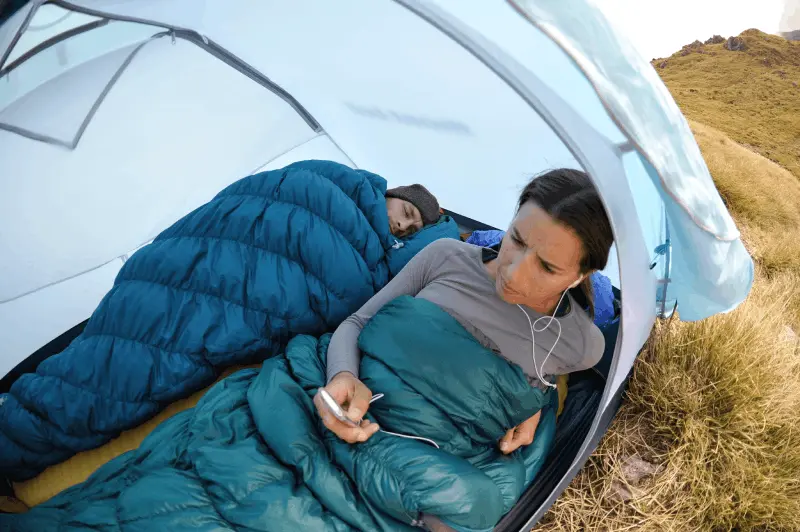
While rectangular or wide-cut bags may be comfortable in summer, they can be fatal mistakes in sub-zero temperatures. Mummy shape bags minimize the amount of dead air inside the bag by closely following the body's contours. The less air volume you need to heat, the less energy your body expends to keep warm. When choosing a winter bag, shoulder width and footbox design are critical. A narrow cut can lead to insulation compression (cold spots), while a very wide cut can create uninsulated cold air pockets. The ideal winter bag should have an ergonomic design that fits snugly around you but allows for movement with a layer of thermal clothing inside.
How Does Box-Wall Baffle Construction Prevent Heat Bridges?
The stitching method of a sleeping bag plays a key role in keeping warmth inside. The "stitch-through" method used in cheap bags causes insulation to drop to zero at the seams and creates cold spots. Professional bags made for sub-zero temperatures use a "Box-Wall Baffle" construction. In this system, the down chambers are connected by vertical walls, ensuring that down is evenly distributed at every point and preventing heat loss through the seams. When you check the seams of the bag you are considering, you can tell if the down is finished at the seam. If you only feel two layers of fabric at the seam, that bag may leave you shivering on harsh winter nights.
Why Are Integrated Heat Collars and Zipper Draft Tubes Critical Details?
The areas where your body heat escapes the most are the bag's zipper and neck area. A quality winter sleeping bag should have a thick "draft tube" that runs along the zipper, filled with down or synthetic insulation. This tube prevents cold air from seeping through the zipper teeth. Similarly, the "neck collar" at the shoulder area prevents the warm air inside the bag from being "pumped out" as you move. When this collar is tightened, warm air is trapped in the body area. In sub-zero temperatures, the absence of these two details can reduce the bag's warmth rating by 5-10 degrees, regardless of what is written on the label. Having a mechanism that prevents the zipper from snagging also provides great convenience in emergency situations at night or when ventilation is needed.
What Is the Function of Hood Design and Adjustable Cords?
The human body loses a significant amount of heat from the head area. The hood of a winter sleeping bag should completely wrap your head and be adjustable enough to narrow down to just outside your nose. A good hood design should have an anatomical structure that prevents the moist breath escaping from your mouth and nose from entering the bag, even when you are lying on your side. For the cords to be easily found in the dark, they should be made of different textures (for example, one round and the other flat), which is a professional detail. Having more filling in the inner part of the hood also creates an additional barrier against the cold coming from the ground. Remember, if your head is cold, the heat of your entire body will drop.
Why Are Outer Fabric Technologies and Water Vapor Permeability Important?
In winter, you are not only dealing with the snow outside but also with the sweat and moisture inside the bag. The outer fabric is expected to be made of high-tech, thin yet durable ripstop nylon like Pertex Quantum or similar. These fabrics prevent the escape of heat while allowing the body moisture to be expelled (breathability). Additionally, the fabric must have a quality DWR (Durable Water Repellent) coating to prevent the water dripping onto the bag from condensation inside the tent from wetting the fabric. The more durable the outer fabric is in sub-zero temperatures, the higher the wind resistance of your bag will be. Some extreme models use completely waterproof membranes at the foot and head sections.
Does Using a Sleeping Bag Liner Increase Warmth by How Many Degrees?
The most economical way to enhance the performance of a sleeping bag is to use an inner liner. Liners made from materials like silk, cotton, or fleece can raise the bag's warmth by 3 to 8 degrees. Technical liners with thermal properties can increase this warmth by up to 15 degrees. Liners not only provide warmth but also protect the inner part of the bag from your body oils and sweat, extending the bag's lifespan; because washing the bag can damage its insulation. In winter camps, professionals also prefer vapor barrier liners (VBL) to minimize moisture entering the bag, but this method requires serious moisture management experience.
Why Won't a Sleeping Bag Insulate Without a High R-Value Sleeping Pad?
Even if you have the best sleeping bag in the world, if you don't have good insulation between you and the ground, you will be cold. Heat transfers directly to the ground through conduction. Therefore, the choice of sleeping bag is entirely linked to the choice of sleeping pad. The insulation strength of pads is measured by their "R-Value." For winter camping, pads with an R-value of at least 4.0 and above should be preferred. If the ground is icy or snowy, it is recommended that this value be 5.0 or 6.0. Many winter campers achieve double-layer protection by placing a closed-cell foam pad under their inflatable pad. Inflatable pads provide excellent insulation because the air inside is stagnant, but you should always be prepared for the risk of punctures.
Why Is Footbox Insulation Extra Important?
The extremities of the body, such as hands and feet, are the first places to get cold in winter. In quality winter bags, the foot area is usually reinforced with more filling. The "anatomical footbox" design ensures that your feet do not compress the insulation in their natural position (upward). If the bag is too tight at the foot end, your toes will crush the insulation and create cold spots. In some specialized models, the foot section is designed to be slightly wider to accommodate frozen boots or liners that will be worn the next day. Keeping your feet warm directly affects your overall comfort; therefore, you must pay attention to the quality of the filling and the stitching in this area.
What Are the Thermal Differences Between Women's and Men's Models?
Women are physiologically more prone to getting cold than men. Therefore, manufacturers use more filling in the torso and foot areas of sleeping bags designed specifically for women. Additionally, women's models are generally cut shorter and with narrower shoulders, which reduces unnecessary space that needs to be heated inside. When a woman user chooses a men's bag, she should consider the "Comfort" rating, not the "Limit" rating. Conversely, a typical male user may feel cramped in a women's bag, crushing the insulation and getting cold. It should be noted that the thermal efficiency of gender-appropriate ergonomics can affect performance by 15-20% when purchasing a winter bag.

How Does Sleeping Bag Size Selection Affect Heat Loss?
The logic of "a bigger bag is more comfortable" can freeze you in winter camps. Every cubic centimeter of empty air left inside the bag is an extra burden your body has to heat. Choosing a bag that fits your height is critical for thermal efficiency. If the bag is too long, the space left at the foot end will act like a cold air reservoir. In this case, it is recommended to fill the empty foot area with spare clothes. On the other hand, in a bag that is too short, the insulation at the hood and foot will be stretched, causing heat loss from these areas. Before purchasing, make sure you can lie comfortably in the bag without straining the seams.
Is the Zipper Side and the Ability to Combine Two Bags Necessary?
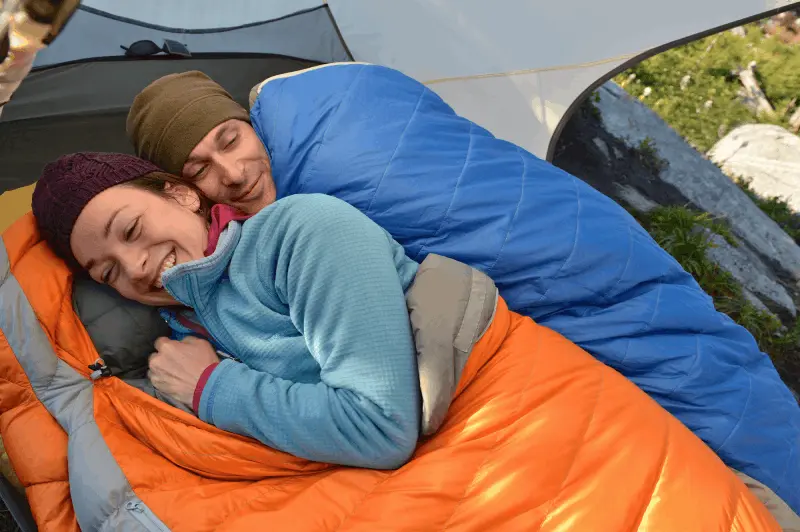
In winter sleeping bags, a left (Left Zip) or right (Right Zip) zipper option is usually offered. For right-handed users, a left zipper is more ergonomic. However, the main issue in winter is whether two bags can be combined. While combining bags may seem romantic if you are camping with your partner, in winter, it can be a challenge.
This situation can lead to a significant loss of heat. Cold air can easily seep through the gap between two people, and mummy-type sleeping bags do not work efficiently when their openings are joined together. In sub-zero temperatures, it is safest and warmest for each camper to sleep in their own sleeping bag, covering their neck and head with their own warmth.What to Wear Inside a Sleeping Bag During Winter Camps?
A common misconception is to enter the sleeping bag with very thick clothes. However, for the insulation inside the bag to work, your body heat needs to spread into the bag. Wearing too many layers can restrict blood circulation and cause sweating. The ideal is to enter the bag with a clean and dry set of synthetic or wool (merino) thermal underwear, dry socks, and a beanie. If you are still cold, wearing your jacket inside the bag may compress the insulation, so it might be more logical to lay the jacket over the bag instead. The most critical rule is this: Never enter the sleeping bag with clothes that you have worn all day, that are sweaty or damp; this moisture can cause you to freeze at night.
What is Hydrophobic Treatment Against the Danger of Wet Down?
The biggest enemy of down is moisture. The "Hydrophobic Down" technology developed in recent years involves coating each down fiber with a water-repellent polymer at a microscopic level. Thanks to this process, down absorbs 90% less moisture and dries 70% faster than regular down, even when wet. In sub-zero temperatures, the moisture from your breath inside the tent inevitably condenses on the sleeping bag. Choosing a hydrophobic down sleeping bag prevents the bag from becoming heavy and losing its insulation during prolonged winter climbs. This technology is one of the most significant innovations that combines the comfort of down with the durability of synthetics.
Why is the Difference Between a Stuff Sack and a Storage Bag Important?
Taking care of a winter sleeping bag is as important as choosing one. A "stuff sack" is used to compress the bag as much as possible when going to camp. However, you should never leave the bag in this sack while storing it at home. Fibers that are constantly under pressure (whether down or synthetic) lose their elasticity over time and do not loft (loss of loft). This means a permanent reduction in the insulation properties of the bag. You should store your sleeping bag at home in the spacious, breathable "storage bag" provided or loosely on a hanger. A quality bag can maintain its thermal value for 10-15 years under proper storage conditions.
How Does Sleeping Bag Cleaning Affect Thermal Value?
When your bag gets dirty, sweat and skin oils cause the fibers to stick together and not loft. A bag that does not loft cannot trap air and provide warmth. You should avoid washing your winter bag too frequently, but if there is visible soiling, you should wash it with special cleaners. For down, special soaps called "down wash" should be used, and it should be dried in a dryer on low heat, along with a few tennis balls. The tennis balls help prevent the down from clumping together and ensure it lofts again. A clean and lofty bag performs much better in sub-zero temperatures than a dirty one.
What Compromises Should Not Be Made When Balancing Price and Performance?
Winter sleeping bags are not cheap equipment, but if your safety is at stake at minus 20 degrees, saving money can be risky. If your budget is limited, you might compromise on weight (by buying a heavier synthetic bag), but you should never compromise on thermal value. The reliability of the brand, warranty conditions, and real user reviews can be more valuable than the data on paper. Remember that your winter tent, mat, and sleeping bag are your life support systems. A quality zipper, durable outer fabric, and realistic thermal rating will be worth every penny you spend. For extreme winter conditions, choosing the "most reliable" rather than the "cheapest" can be life-saving.
Is It Wise to Buy a Second-Hand Winter Sleeping Bag?
While the second-hand market may seem attractive, one must be very careful with winter sleeping bags. You cannot know how the bag was stored by its previous owner. If the bag has been kept in a stuff sack for years, it may have lost a significant amount of its thermal value, even if it looks new from the outside. Additionally, the frequency of washing the down and the detergents used determine the lifespan of the bag. If you are not buying from a reliable source or suspect an issue with the loft of the bag, you should not take this risk in winter conditions. Even if you are buying second-hand, you should always choose models that meet EN standards, and inspect the product and check its volume before purchasing.
What Emergency Measures Should Be Taken If You Start to Get Cold at Night?
If you start to feel cold inside the bag, it usually means that your heat production (metabolism) has dropped or that you are pushing the limits of the bag. As an emergency solution, you can fill a leak-proof water bottle (like a Nalgene) with hot water and place it inside your socks or against your core area. This will quickly warm the air inside the bag. Additionally, a drop in your blood sugar can prevent your body from producing heat; eating a high-calorie snack (like chocolate or nuts) inside the bag can rev up your metabolism. If you are still shivering, try to increase your insulation by layering your spare clothes on top of each other, and never neglect to solve this issue before falling asleep.
Why Does Brand Selection in Winter Sleeping Bags Instill Confidence?
Brands like The North Face, Marmot, Mammut, Mountain Hardwear, or Western Mountaineering do not just test their products in the lab, but also in the world's highest... They test at the peaks. The suits of these brands in sub-zero temperatures generally reflect the specified values accurately. Local or lesser-known brands may sometimes use low-quality materials or inadequate stitching techniques to reduce costs. Winter camping is an experience of survival, and preferring established brands that reflect this experience in their products will make you feel safer in extreme situations. Corporate brands are always a step ahead in matters such as technical support and parts replacement.
Why Is It Dangerous to Breathe Inside a Suit?
You may want to completely tuck your head inside the suit to protect yourself from the cold, but this is a big mistake. The moisture in your breath penetrates the insulation inside the suit and freezes there. After a few hours, your suit starts to get damp from the inside and loses its insulating power. Ideally, you should tightly seal only the area around your mouth and nose. If your face is very exposed, using a balaclava or a hat is much healthier. Not breathing into the suit is the most basic user rule to maintain the performance of goose down suits throughout the night.
Are Zipper Anti-Jamming Devices Necessary When Choosing a Sleeping Bag?
When you need to get up to go to the bathroom at midnight in minus 20 degrees or when it feels too hot inside, the zipper getting stuck in the fabric can turn into a complete nightmare. In winter sleeping bags, there are reinforced parts or special rail systems on the inner side of the zipper. This small detail prevents the fabric from getting caught in the zipper teeth. In harsh winter conditions, having this mechanism work smoothly while your hands are in gloves or when you are sleepy is not only about comfort but also a safety feature that allows you to quickly exit the suit in a panic. Having a two-way zipper on the sleeping bag you choose and being able to open it easily from the inside is an additional advantage.
What Should Be Considered When Choosing a Winter Suit for Children?
Since children's body masses are smaller, they lose heat much faster than adults. The length of winter suits produced for children should fit the child's height perfectly; a child will never stay warm in a suit that is too big. Additionally, considering that children may be active at night, systems that connect the mat and the suit can be preferred. Synthetic insulation is generally a safer haven against the risk of getting wet in children's models. When camping with children in sub-zero temperatures, it is crucial to choose a suit with an insulation value well above the child's tolerance (warmer) and to provide quality lower insulation (mat) as the top priority.
Should You Air Out Your Sleeping Bag Every Morning While Winter Camping?
Yes, during winter camps, you should take every opportunity to air out your sleeping bag in the sun. The moisture released from your body during the night gets trapped in the fabric and insulation of the sleeping bag. In the morning, taking the sleeping bag out of the tent (if the weather is dry) and laying it on a tree branch or on top of the tent ensures that this moisture evaporates. A sleeping bag that has been aired out will keep you much warmer the next night. However, care should be taken to ensure that the bag does not fly away in windy conditions and does not come into direct contact with the ground. When packing the sleeping bag, instead of rolling it up, stuffing it randomly helps prolong its life by ensuring that the insulation is compressed from different areas each time.
What Is the Lifespan of a Sleeping Bag and When Should It Be Replaced?
The lifespan of a sleeping bag depends on the quality of the materials used and how well it is cared for. Goose down sleeping bags can perform for 15-20 years if stored correctly, while synthetic bags may lose some of their insulation capacity within 5-7 years due to the fibers compressing over time. If you notice that some areas are completely flat when you hold your sleeping bag up or if the bag is no longer as "fluffy" as before, it means it's time for a replacement. Before going into sub-zero temperatures, measuring the loft (thickness) of your bag and comparing it with the manufacturer's initial data is the most technical way to understand whether the bag is still safe.