
What Are the Engineering Criteria That Determine a Vehicle's Towing Capacity?
A vehicle's towing capacity is calculated based on a combination of many parameters, such as the structural integrity of the chassis, the engine's cooling capacity, the braking force, and the torque transfer efficiency of the transmission. Engineers determine this figure by simulating every scenario, from the vehicle's ability to climb hills to the safe stopping distance in an emergency. When the capacity is exceeded, this mathematical model collapses, and the components face stress far beyond their design intentions.
How Does Mechanical Stress on the Piston Rod Increase When the Maximum Torque Limit is Exceeded?
The torque produced by the engine is transmitted to the crankshaft through the downward motion of the pistons. Under excessive load, the engine is forced to produce high power at low RPMs. This situation increases the risk of "low-speed pre-ignition" (LSPI) while exponentially increasing the pressure on the piston rods (connecting rods). These metal parts, which have some flexibility under normal operating conditions, can develop microscopic cracks under loads exceeding the towing capacity or, in the worst-case scenario, can bend, causing the engine to completely seize.
Why Are the Radiator and Cooling Fan Insufficient Against Extra Heat Load?
The efficiency of the engine depends on maintaining the operating temperature within a specific range. However, a caravan that exceeds the towing capacity causes the engine to operate continuously at full load. A standard radiator and cooling fan are not designed to dissipate such high thermal energy. As a result, the coolant reaches its boiling point, pressure increases, and hoses may burst. Continuous operation at high temperatures can lead to deformation of the engine block casting.
How Does the Viscosity of Transmission Fluid Degrade Under Excessive Shear Heat?
The transmission is the most critical component that transfers power from the engine to the wheels. Especially in automatic transmissions, the torque converter generates incredible heat under excessive load. When the transmission fluid exceeds 100-120 degrees, it begins to lose its chemical structure. The fluid "thins out" and can no longer form a protective film between the gears and clutches. This situation can lead to burning of the clutches inside the transmission and open the door to revision costs in the thousands.

How Does Excessive Pressure on Differential Gears Cause Metal Fatigue?
The weight of the towed caravan creates immense shear pressure on the side faces of the differential gears. Every kilogram above the towing capacity increases the micro-slips on the contact surface between the gears. Over time, this leads to metal fractures known as "pitting" and results in a grinding noise. Heating in the differential housing can also cause the oil seals to harden and leak, posing a risk of leaving the system without lubrication.
How Does Thermal Shock in Brake Discs Affect Stopping Distance?
On long descents with a caravan, the vehicle's brakes work to control both its own weight and the excessive load behind it. When brake discs reach temperatures of 500-600 degrees, "brake fade" occurs. The thermal shock that forms on the surface of the discs alters the crystalline structure of the material and can lead to warping of the discs. In this case, a severe vibration is felt in the brake pedal, and the stopping distance can become dangerously long.
Why Does the Turbocharger Shaft Wear Out Early Due to High Exhaust Gas Temperature?
The turbocharger, found in most modern diesel and gasoline vehicles, spins using the energy of the exhaust gases. Towing a caravan under excessive load causes the exhaust gas temperature (EGT) to rise to critical levels. The turbo shaft spins at thousands of RPMs in this heat, and lubrication becomes crucial. However, the heating of the oil and the increase in EGT can lead to the formation of carbon deposits in the shaft bearings, causing the turbo to seize or the shaft to break.
Is the Oil Pump's Flow Rate Sufficient to Lubricate Extra Engine Load?
Many drivers assume that the engine's lubrication system operates with the same performance under all conditions. However, under excessive load, the pressure in the bearing clearances increases, making it difficult for the oil to remain in these clearances. A standard oil pump may struggle to deliver sufficient flow and pressure to every point while operating at the limits of the engine. Insufficient lubrication can lead to the wear of main bearings and catastrophic engine damage known as "bearing failure."
How Much Damage Does Clutch Slippage Cause to the Transmission Input Shaft?
In manual transmission vehicles, moving an excessive load strains the thermal limits of the clutch. The friction material can glaze or lose its ability to grip due to burning. The irregular torque spikes that occur during this time impose non-linear loads on the transmission input shaft and synchronizers. These vibrations in the input shaft can cause premature failure of the transmission bearings and structural damage that leads to harsh shifting.
How Do Torsional Forces on the Chassis Affect Door Alignments?
The chassis of the vehicle is designed to provide a certain rigidity to resist a specific towing load. The caravan exerts a constant lever effect on the chassis through the tow hitch. If the load exceeds capacity, especially on rough roads, torsional buckling can occur on the chassis. The first sign of these bucklings is that the doors do not close as easily as before, creaking noises from the roof joints, and misalignment of the trunk lid. Chassis damage jeopardizes the overall safety of the vehicle.
Why Do Shock Absorber Valves Burst Under Excessive Hydraulic Pressure?
The weight of the caravan continuously applies pressure to the vehicle's rear suspension. Standard shock absorbers use the flow of oil through their internal valves to dampen this weight. Under loads exceeding capacity, sudden dips or bumps can exceed the design limits of hydraulic pressure within the shock absorber. This can lead to the breaking of the valves or the bursting of seals, causing the oil to leak out. A "blown" shock absorber sets the stage for the caravan to sway uncontrollably on the road.
How Does Deformation in Tire Sidewalls Damage the Rim Edge?
Excessive load increases the vertical pressure on the tire sidewalls. The tire gets excessively crushed between the rim and the road. This deformation can lead to the breaking of the cords (carcass) inside the tire. Additionally, during turns, the sidewall of the tire that flexes can cause the rim edge to scrape the ground or take a hit. Excessive heating of the tires can also lead to sudden blowouts, causing fatal accidents for both the vehicle and the caravan.
How Does the Electronic Stability Program (ESP) Misinterpret Faulty Data?
In modern vehicles, the ESP system continuously monitors wheel speeds and the vehicle's yaw rate. A weight exceeding the towing capacity fundamentally alters the vehicle's physical response times and dynamics. When the system detects that the vehicle is skidding or losing control, it attempts to intervene, but the momentum created by the massive weight at the rear is greater than the braking force calculated by the computer. This inconsistency can cause the system to fail or trigger an accident by applying brakes to the wrong wheel.

How Does Excessive Thermal Load Stress the Cylinder Head Gasket?
Excessive loading raises the pressure and temperature in the combustion chamber. The expansion coefficients between the aluminum cylinder head and the cast block are different. The cylinder head gasket is responsible for accommodating this difference. However, due to exceeding capacity, the continuous high temperature can cause the head to expand beyond control and lead to the burning of the gasket. An engine with a burned gasket mixes coolant with oil, filling the engine with a sludge-like mixture and destroying the entire mechanism.
How Do Cracks in the Exhaust Manifold Distort Oxygen Sensor Data?
A motor towing a caravan that exceeds capacity can cause the exhaust system to become a glowing mass. This excessive heat can cause the cast exhaust manifold to expand and crack. Air leaking from the cracks can lead the oxygen sensor (lambda sensor) to believe that the engine is running a lean mixture. The computer unnecessarily increases fuel injection to correct this error, which can lead to fuel consumption spikes and carbon buildup inside the engine, causing valve damage.
What Happens to Axle Shafts When the Differential Lock Remains Engaged?
In some four-wheel-drive vehicles, the differential lock or low range is used when towing heavy loads. When making a turn on a hard surface with a caravan that exceeds capacity, the torsional stress on the axle shafts exceeds their limits. The splined ends of the axle shaft can shear off or the shaft can break in half. This situation means the vehicle becomes immobile and incurs not only towing costs but also expensive parts replacements.
Why Do Engine Mounts and Transmission Mounts Lose Their Rubber Structure?
The engine and transmission are connected to the vehicle's chassis with rubber-supported mounts. These mounts dampen vibrations. However, in cases of exceeding capacity, the torque reaction from the engine stretches these mounts to their limits. The rubber material, remaining under continuous stress, hardens due to the engine's heat and can tear. A broken engine mount can cause the engine to hit metal against metal, rupture radiator hoses, and misalign gear paths.
How Does the Alternator's Electrical Load Shorten Battery Life?
Many modern caravans draw high current from the vehicle while in motion for the refrigerator and battery charging. The vehicle's alternator operates at full capacity to meet both the engine's own needs and the electrical demands of the heavy load behind it. The diodes inside the alternator overheat and efficiency drops. This situation can lead to the vehicle's battery not being sufficiently charged, causing the battery plates to sulfinate and shorten their lifespan. Electrical faults pose a hidden danger that can leave the vehicle stranded.
How Do Fuel Injectors Cause Misfiring Under Rich Mixture Pressure?
Excessive power demand causes the engine control unit (ECU) to keep the injectors open longer. When the injectors operate at maximum injection capacity continuously, they can experience wear and carbon buildup on the needle tips. This condition, known as "injector misfire," leads to fuel entering the combustion chamber without being atomized. Unburned fuel can wash away the oil film on the cylinder walls, leading to ring wear and a loss of engine compression.
Why Does the Steering Pump Overheat Under High Maneuver Resistance?
A heavy caravan disrupts the weight distribution on the vehicle's front wheels. Especially when maneuvering in tight spaces, the steering system must generate extra hydraulic pressure to direct this immense load. The hydraulic fluid overheats, thins out, and the vanes inside the steering pump begin to wear out. The steering's struggle with the weight and the whining sound from the pump indicate that the system is on the verge of failure.
How Does the Caravan's Wind Resistance Increase the Engine's Aerodynamic Load?
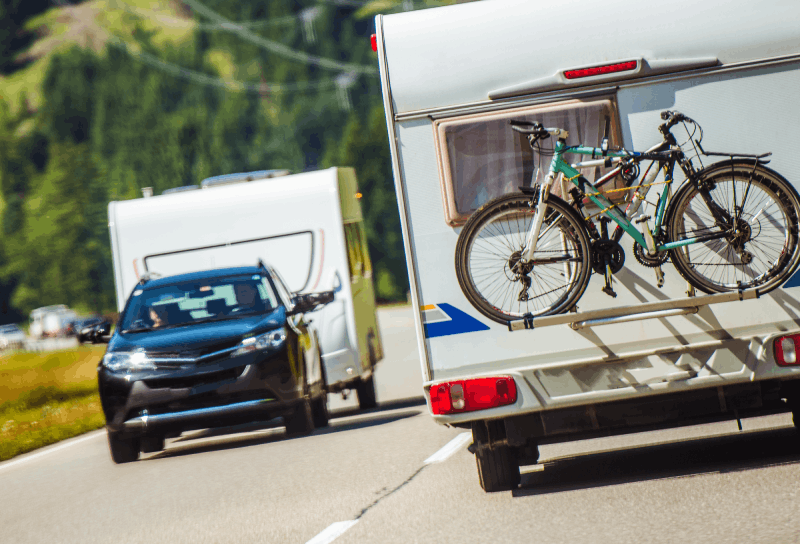
The calculations for towing capacity include not only weight but also the frontal area of the caravan. A wide and tall caravan creates a massive air wall, especially at speeds over 80 km/h. The engine must produce extra torque to overcome this wind resistance. This situation pushes the limits of shear, causing fuel consumption to increase two to three times while the load on the drivetrain increases exponentially with speed.
What Is the Risk of Gear Stripping When Transmission Cooling Channels Are Blocked?
In many vehicles, transmission fluid is cooled by passing through a small section inside the main radiator. Under excessive load, microscopic metal particles that break off in the fluid can clog these narrow channels. When the transmission fluid cannot perform its cooling function, the tolerances between the gears change. When the gears do not mesh properly, gear stripping occurs under high torque. This means that the metal parts inside the transmission can scatter everywhere, leading to a complete breakdown of the system.
Why Does the Brake Master Cylinder Leak Under Prolonged Pressure?
In a vehicle that attempts to stop under continuous heavy load, the driver presses the brake pedal much harder. The rubber seals (piston cups) in the brake master cylinder deform under this high hydraulic pressure. Over time, these seals begin to leak hydraulic fluid from their edges, causing the brake pedal to gradually sink to the floor (pedal fade). This situation is one of the most frightening types of failure that can result in the vehicle not stopping at all during an emergency braking situation.
How Does Exhaust Back Pressure Melt the Internal Structure of the Catalytic Converter?
When the engine operates continuously at full load, unburned fuel particles can reach the exhaust system. The catalytic converter or diesel particulate filter (DPF) can overheat under this high temperature and pollution load. The ceramic honeycomb structure inside the converter can melt and clog the passage. The narrowing of the exhaust outlet can cause the engine to suffocate, leading to the exhaust valves overheating and burning, dramatically reducing engine performance.
Why Do Wheel Bearings Start to Whine Under Lateral Loads?
The sway of the caravan continuously applies lateral forces to the vehicle's rear wheel bearings. The steel balls inside the bearings create microscopic pits on the bearing surfaces under this pressure. This damage manifests as an increasing whining noise during driving. If bearing damage progresses, catastrophic scenarios such as the wheel hub locking up or the wheel coming off can become a reality.
Why Do Long-Term Fuel Trim Data in the Vehicle Computer (ECU) Become Corrupted?
The ECU continuously updates the fuel map according to driving habits. Hundreds of kilometers driven under excessive load can cause the computer to forget the "normal" driving conditions and run the engine on rich or aggressive maps continuously. Even after disconnecting the caravan, the vehicle's rough idling, excessive fuel consumption, or stalling can result from the adaptation values being corrupted beyond their physical limits.
Why Do Spare Tire Compartments and Trunk Wells Show Structural Cracks?
The mounting points for the tow hitch are often at the extreme end of the chassis. Under loads exceeding capacity, this area is subjected to continuous bending moments. As the chassis flexes, this flexing is transmitted to sheet metal parts like the trunk well and spare tire compartment. The spot welds at these joints can break, or "stress cracks" can form on the sheet. These damages not only reduce the value of the vehicle but also allow water and exhaust gases to leak inside.
How Does the Air Filter and Intake Manifold Get Damaged Under High Vacuum?
To tow a load exceeding capacity, the engine must continuously operate at high RPMs and full throttle, applying a very high vacuum to the intake manifold. If the air filter is somewhat old or of poor quality, this vacuum can tear the paper structure of the filter, allowing dust to enter the engine directly. Additionally, the plastic flaps in the intake manifold can break and fall into the cylinder due to high air speed and temperature, potentially destroying the engine within seconds.
Why Does Oil Pressure Drop When the Transmission Filter Gets Clogged with Metal Debris?
The wear of gears and friction materials caused by excessive load releases a fine cloud of metal dust into the transmission fluid. The transmission filter tries to catch these debris but quickly clogs. When the filter is clogged, the oil pump cannot generate the pressure the system needs. Low oil pressure can cause rough shifting or slipping of the gears. This situation can lead to unrepairable burns and deep scratches inside the transmission.
How Are Wiper Motors and Lighting Groups Affected by Overheating?
This is perhaps the least considered effect. However, the trapped heat under the hood can be 30-40 degrees higher than normal due to exceeding capacity. This heat can cause headlight sockets to melt, burn the windscreen wiper motor's windings, and make the insulation of electrical wires brittle. The effect of this heat under the hood can lead to unexpected failures in even the smallest electrical components of the vehicle.
Why Does the Vehicle's Warranty and Insurance Become Invalid Under Excessive Load?
Modern vehicles store driving data in modules that can be referred to as "black boxes." If you go to service after a failure and it is detected that the engine was strained under a load exceeding its towing capacity (excessive torque demand, continuously high EGT, etc.), your warranty can be immediately voided. More importantly, in an accident caused by exceeding capacity, insurance companies may conduct a technical inspection and refuse to pay by finding "primary fault." This situation can put you under a massive financial burden.
Why Should You Always Adhere to the Towing Capacity?
As you can see, straining a vehicle beyond its towing capacity not only increases fuel consumption but also threatens everything from the internal structure of the engine to the integrity of the chassis molecules. While it may seem like there is no problem in the short term, metal fatigue and thermal deformation progress silently and can leave you stranded on the road at the most unexpected moment, likely on a deserted road. Always ensure that you do not exceed the limits set by the manufacturer by even a kilogram for your safety, the longevity of your vehicle, and your budget. Don't let your vacation turn into a nightmare.