What Basic Principles Should Be Considered When Starting a Campfire?
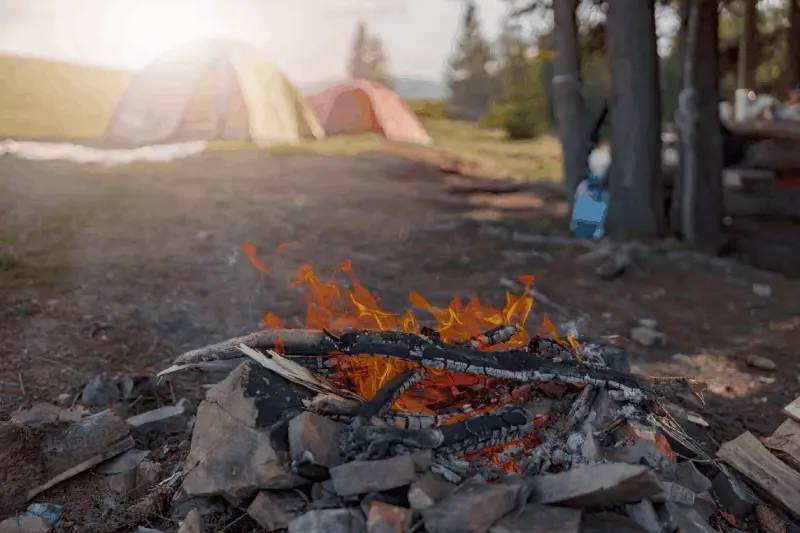
The foundation of starting a campfire lies in the balance of heat, oxygen, and fuel, known as the "Fire Triangle." When one of these three elements is missing, it is impossible to ensure the continuity of the fire. Before starting the fire, determining the wind direction in the area, clearing combustible materials from the ground, and creating a safe stone barrier is the first step of professionalism. Additionally, it should not be forgotten that the fire needs to be built up gradually. Instead of starting with large logs directly; one should adhere to the hierarchy of tinder, kindling, and fuel wood. This systematic approach allows you to achieve a successful fire even in the most challenging weather conditions by using energy efficiently.
Why Do Hardwoods Provide Longer Lasting Heat for Campfires?
The density of the woods is the most important factor determining their burning duration and the total amount of energy they produce. Hardwoods like oak, beech, and hornbeam have a denser fiber structure. This density slows down the penetration of heat into the wood cells, allowing the wood to burn more slowly, more controllably, and at a much higher temperature. When burned, hardwoods leave behind high-energy carbon residues known as "coals." These coals continue to emit heat for hours even after the flames have gone out. While softwoods flare up and extinguish suddenly, hardwoods promise a stable heat that lasts throughout the night, making them indispensable as primary fuel.
Why is Beech Wood Considered the Gold Standard in Campfires?
Beech wood is considered the top-tier fuel for both professional campers and fire enthusiasts. The reason for this is that beech has an incredibly high energy density (BTU value). Beech burns slowly, produces little smoke, and offers an immense quality of coals. It is the wood type that provides the most stable heat for cooking processes. However, for beech to burn at full efficiency, it must be well-seasoned. Fresh beech is difficult to ignite due to its high moisture content and wastes energy by turning water into steam while crackling. A fully seasoned beech log will provide you with the cleanest and most efficient heating experience in nature.
What Should You Pay Attention to When Cooking with Hornbeam Wood?
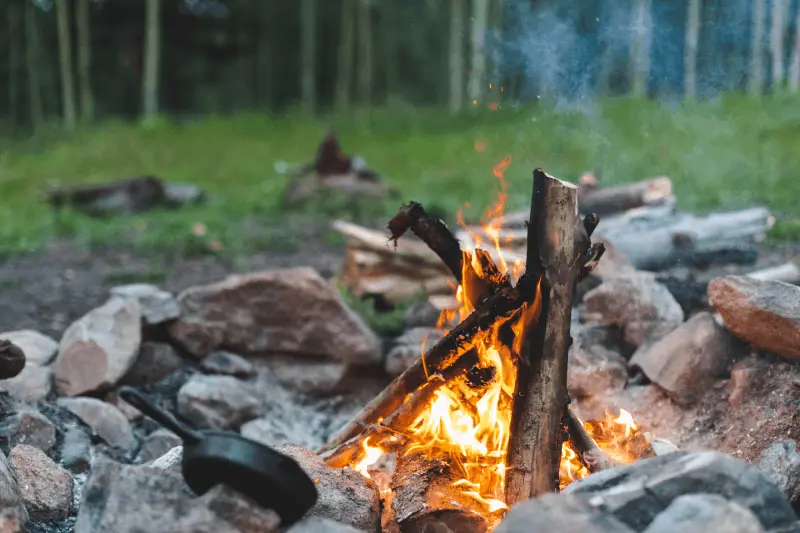
Hornbeam, also known as "ironwood," competes with beech in terms of burning properties. Due to the extremely high heat it produces, it is especially excellent for searing meat in a cast iron pan or for quick boiling processes. However, the heat from hornbeam can be so high that if not monitored, it can burn the outside of your food while leaving the inside raw. When cooking with hornbeam, it is healthier to use the glowing coals that have started to turn white rather than the direct flame. Additionally, since the coals of hornbeam remain durable for a long time, they continue to provide an ideal heat environment for brewing your tea even after your meal is cooked.
How is Birch Bark Used as a Natural Tinder?
The bark of the birch tree is one of nature's most miraculous igniters. The natural oils and resins contained within this bark allow it to catch fire easily, even when wet. When you crumble the outer layers of the bark, which are as thin as paper, into a bundle with your hands, it can ignite with just a single spark. When birch bark burns, it produces a very intense and bright flame, which helps quickly heat up the small twigs you place on top. However, it is crucial not to peel this bark from living trees; collecting bark from fallen or dead birch trees ensures both ethical behavior and optimal performance.
How to Protect Yourself from Spark Emissions When Using Pine Wood?
Pine wood, like other softwoods with needle leaves, contains a lot of resin and air pockets in its structure. While these features allow it to ignite very quickly, they also bring the risk of "popping" and emitting sparks during combustion. These small explosions, caused by the expansion of the resin pockets, can create holes in your synthetic clothing or tent. When using pine wood, always create a safety corridor around the fire and maintain a distance of at least 2-3 meters from the fire. Additionally, using pine only as kindling in the initial fire-starting phase and switching to more stable hardwoods as the main fuel is the most effective method to minimize this spark risk.
How Does the Pleasant Aroma of Cedar Affect the Camping Atmosphere?
The cedar tree adds an aromatherapeutic dimension to the campfire. The characteristic and refreshing scent it emits when burned instantly transforms the ambiance of the campsite. Cedar not only smells good but also has the property of repelling insects and mosquitoes, making it a great option for summer camps. However, since cedar is also a softwood like pine, it burns very quickly and does not leave behind lasting coals. It is generally most logical to use cedar as "pleasure wood" by throwing a piece or two onto the main fire from time to time. This way, you can enjoy the beautiful scent without wasting your fuel.
Which Types of Wood Have the Highest Heat Value?
The heat value (BTU) of every tree in nature varies. The woods with the highest heat value are generally those that grow the slowest and have the densest texture. At the top of the list are usually Acacia, Beech, Hornbeam, and Black Locust. These trees contain the most carbon per unit volume, resulting in a tremendous amount of energy when burned. For example, a cubic meter of dry beech wood produces about twice the amount of energy compared to other types. can provide the heat generated by the amount of pine wood. This information is particularly advantageous when planning the amount of wood you will carry in your backpack or vehicle during winter camping; it allows you to heat for a longer time with less volume.
How Does Burning Green Wood Negatively Affect Your Camping Experience?
The biggest mistake many novice campers make is trying to burn green wood found on the ground or on living trees. Green wood contains more than half of its mass as water. When you throw this wood into the fire, a large portion of the heat is used to vaporize the water inside rather than burning the wood. The result is less heat, plenty of throat-burning black smoke, and a fire that tends to go out frequently. Additionally, the creosote (soot) that comes out with the smoke can make your cooking pots impossible to clean by sticking to the bottom. For a pleasant camping experience, you should prefer "dead" wood that is cracked, grayish, and has started to shed its bark.
Why is the Drying Process of Wood (Seasoning) Vital?
For wood to be ready to burn after being cut, its moisture content must drop below 20%. This process is called "seasoning" and can take anywhere from 6 months to 2 years, depending on the type of tree. Seasoned wood is much lighter than green wood and produces a hollow sound when struck instead of a solid sound. During the drying process, the water between the wood fibers evaporates, and these voids facilitate the penetration of oxygen into the wood during combustion. When camping in nature, finding dried branches that have remained attached to the lower parts of trees, have not touched the ground, and have been sunlit will provide you with the closest result to "home-dried" wood quality.
What are the Burning Differences Between Red Pine and Black Pine?
These two types, which we frequently encounter in the Anatolian geography, show differences in fire performance despite looking similar. Red pine is very rich in resin content; this allows it to burn with a very aggressive, hot, and bright flame. Red pine is unmatched as a fire starter (kindling). Black pine, on the other hand, has a slightly denser structure and burns for a bit longer than red pine. However, both types burn smoky and fall short compared to hardwoods in cooking. If you only have pine types available, you should be prepared to continuously feed the fire and know that your clothes will smell strongly of smoke.
Why are Fruit Trees Rare and Valuable in Campfires?
Wood from fruit trees such as apple, cherry, plum, and pear is considered gourmet fuel in the campfire world. When these woods burn, they not only provide high heat but also impart a unique fruity aroma to the food. Especially cherry wood is indispensable for those interested in smoking. Since fruit trees are usually obtained from garden prunings, they are hard to find in the wild. If you bring some dry apple or cherry wood with you, you can elevate the flavor of a barbecue you make over the campfire to a professional restaurant level. Their densities are close to that of beech, so their burning times are quite satisfying.
When is the Teepee (Native American Tent) Fire the Best Choice?
The teepee structure is the most effective fire-building method for beginners. The logs leaning against each other to form a pyramid or tent shape allows oxygen entering from the bottom to rise to the center, heating it and spreading the flames quickly upwards. This method yields the best results, especially when you want to dry wet wood and ignite the fire quickly. Since the heat concentrates at the top of the pyramid, it is very easy to ignite larger pieces you place on top. However, the teepee structure burns very quickly and is difficult to control when it collapses. Once the fire is well established, it is wise to switch to more stable Log Cabin or Star Fire models.
Why Does the Log Cabin Fire Structure Provide Heat Throughout the Night?
The Log Cabin method is created by stacking logs parallel to each other and on top of each other (as if building a log cabin). The biggest advantage of this structure is that the void inside creates an oven effect. While the outer logs burn slowly, the coals inside maintain their heat and prevent the wind from extinguishing the fire immediately. The Log Cabin provides much more stability and longer-lasting heat compared to the teepee. It also offers a flat platform for cooking when you place a grill on top. A Log Cabin built with large logs before going to bed can withstand burning gradually, ensuring you find warm coals when you wake up in the morning.
How is Star Fire Set Up to Save Fuel?
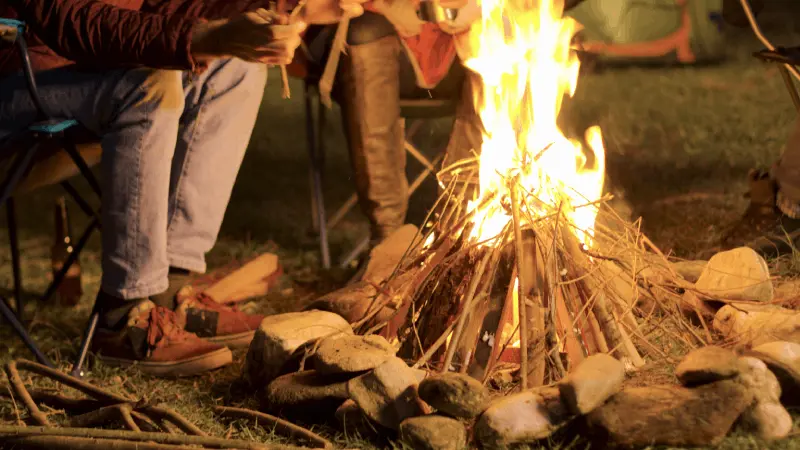
Star Fire is one of the oldest methods used, especially when you have a limited wood supply or want to keep the fire under constant control. Large logs are extended towards a small fire point in the center like the arms of a star. Only the tips of the logs burn. As the wood runs out, you push the logs towards the center by hand. This way, you prevent all the wood from burning up at once. This method, frequently used by cowboys in Western films, reduces light pollution and collects heat only at the point you need it. If you won't be away from the fire throughout the night, this is the most economical way to heat.
How is the Dakota Fire Hole Dug for Stealth and Efficient Cooking?
The Dakota Fire Hole is an engineering marvel designed for stealth camping and windy conditions. Two connected tunnel-shaped holes are dug into the ground. One
While the fire burns in the pit, the other pit provides fresh air (oxygen) intake. This structure burns the fire in such a way that it creates a vacuum effect underground, making the fire very hot and minimizing smoke. Since heat is trapped underground, the cooking performance is incredible, and the flames of the fire are almost never visible from the outside. Additionally, the fire does not go out even in severe storms. However, when using this method, you must ensure that you do not damage the root structure of the soil and that you perfectly close the pit when you are done with your work.
How Does Reflector Fire Reflect Heat to Your Tent on Cold Winter Nights?
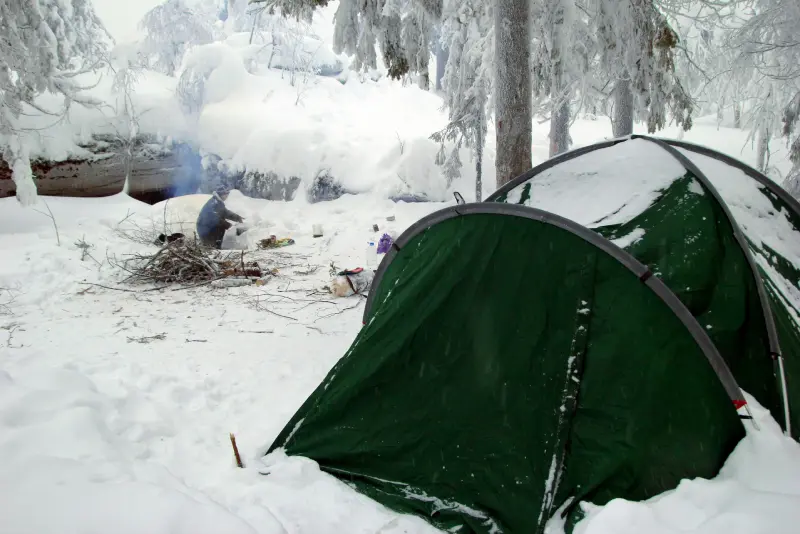
In winter camping, it is not enough to just light a fire; you need to direct the heat produced towards yourself. A reflector fire is a wall system about a meter high made from logs or stones placed behind the fire. The radiant heat that escapes from the fire and would normally go to waste bounces off this wall and reflects back into your tent or shelter like a mirror. This method can noticeably increase the ambient temperature by 5-10 degrees. If you also consider the direction of the wind while building the reflector wall, you will have created both a windbreak and a stove that traps heat.
Why Does the Upside Down Fire Method Produce Less Smoke?
Unlike classic fire methods, in the You must ensure that the branches of the rising heat do not dry out and catch fire; a vertical clearance of at least 5 meters is ideal. There should be no dry grass, leaves, or roots within a 1.5-meter radius around the fire. This "sterile area" is the most critical barrier that prevents a small spark, which could be carried by the wind, from turning into a forest fire. Safety should always come before comfort.
What is the "Touch-Out Cold" Principle When Extinguishing a Fire?
The only safe way to leave a campfire is for the embers to be "touch-out cold." Simply pouring water on the fire is not enough; the coals underneath can still continue to burn while the water evaporates. When extinguishing the fire, pour water, stir the coals with a stick, and pour water again. Repeat this process until you feel no heat when you hold your hand over the coals (moving it just above without touching). If you do not have water, you should throw dirt on the fire to cut off its oxygen and continuously stir to cool it down. Remember, a single ember that has not been extinguished can ignite a fire miles away with a gust of wind hours later.
What Do the Leave No Trace Principles Mean for Campfires?
To love nature means to leave it as you found it. According to the "Leave No Trace" (LNT) principles, you should prefer previously used fire areas whenever possible. Creating a new fire area permanently alters the soil's microbiological structure. If you open a new site, you should scatter the stones when you are done, spread the coals over a wide area (after cooling), and restore the area to its original natural appearance. When collecting wood, you should never cut branches from living trees; only use dead wood on the ground. The best trace left behind by a camper is no trace at all. Acting with this awareness ensures that we can leave these areas for future generations.
How Has the Art of Starting a Fire Evolved with Modern Magnesium Rods?
Lighters and matches can get wet or break, but a magnesium rod (ferrocerium rod) works in any condition. Starting a fire with this tool, which produces sparks up to 3000 degrees, is an art. The secret to success lies in preparing the right tinder. You should place materials like cotton, dried fine grasses, or birch bark right at the base of the magnesium rod. When scraping the rod, use slow and firm movements to ensure that large spark pieces fall directly into the tinder. Developing this skill is a "graduation" level in camping and will boost your confidence in survival in any emergency. It is important to practice at home or in safe areas to gain the necessary skills.
How to Find Resin-Rich "Fatwood" in Nature?
The most valuable treasure you may encounter on nature walks is "Fatwood." Especially after pine trees fall, the resin that accumulates in the root sections or branch points makes this wood waterproof and incredibly easy to ignite. These pieces, which are usually amber or dark orange-red in color, smell strongly of pine even when scraped with a knife. Breaking the fatwood into small pieces and carrying it in your backpack guarantees that you can start a fire even in the toughest storms. While walking in nature, your eyes should be on the hardened and color-changed branches of dried pine stumps; that is your natural fuel depot.
Is an Axe or a Knife More Suitable for Splitting Wood?
This entirely depends on the scale of the work you are doing. An axe is indispensable for chopping large logs and preparing the main fuel that will burn throughout the night. However, a sturdy camping knife provides more precise control for preparing fine kindling or splitting medium-sized logs using the "batoning" method. Splitting wood by striking your knife with another piece of wood (batoning) is especially lifesaving in camps where carrying an axe can be burdensome. Ideally, you should know the functions of both tools and have the one that suits your needs on hand. Remember, a sharp tool is always safer than a dull one because it requires less physical force and has a lower risk of slipping.
How to Avoid Carbon Monoxide Danger While Sleeping Next to a Campfire?
While sleeping by the fire may seem very romantic, it poses a significant risk in enclosed or semi-enclosed shelters. Carbon monoxide is a colorless, odorless, and silent killer. If you are lighting a fire at the mouth of a cave or in a very enclosed shelter, you must ensure that ventilation is perfect. You should never attempt to light a fire inside a tent or to heat charcoal. If the smoke from the fire is coming directly at you, it is not only uncomfortable but also toxic. Reducing the fire before going to bed, removing flammable materials, and ensuring that the wind carries the smoke away from you are essential for safe sleep.
How to Stockpile Wood for a Fire That Will Burn All Night?
Many campers think that the amount of wood they collect before sunset will be sufficient, but usually, the wood runs out by midnight. A professional rule of thumb is: Gather the amount of wood you think will be enough, then gather three times that amount. For a fire that will burn all night, you should have wood in different sizes: twigs for finger thickness, logs for arm thickness, and main trunks for knee thickness. Categorizing your wood by size and stacking it next to the fire (but at a safe distance) will save you the hassle of searching for wood in the dark. Additionally, covering the wood with a tarp will protect your fuel from rain or snow that may fall overnight.
Are There Benefits of Ash for the Garden or Campsite?
The ashes left from a campfire, when used correctly, are actually not waste but a source of minerals. O dun cool potassium, calcium, and magnesium are rich. If you are camping on your own land, you can adjust the soil's pH value by mixing the cold clay with the soil and providing natural fertilizer for the plants. Additionally, clay can also be used for cleaning; a mixture of some clay and water (in a paste form) serves as a fantastic natural abrasive to remove stubborn fuel stains under your pots. It is even known that clay water was used as a disinfectant in ancient times. However, instead of collecting clay in nature, it is more suitable for environmental health to spread it over a larger area according to LNT principles.