What is a Caravan Awning and Why is it Needed?
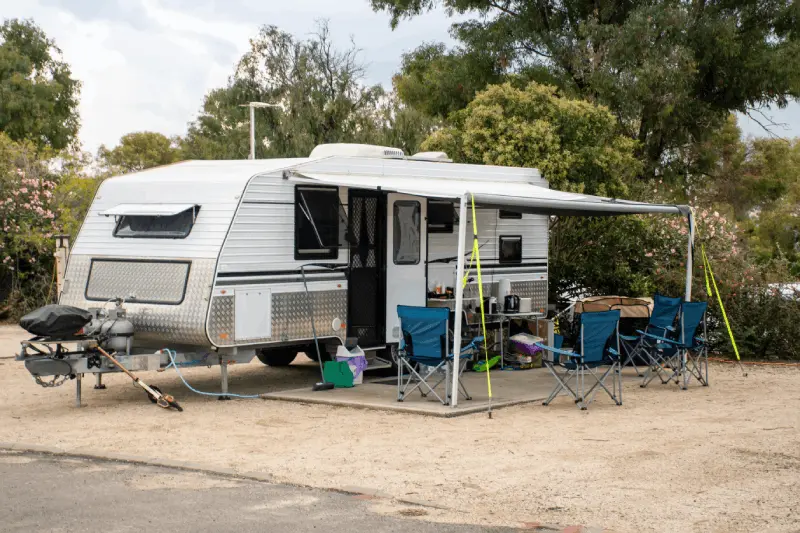
A caravan awning is essentially a portable canopy system that is mounted on the exterior of the caravan, expanding the outdoor living space and providing protection from the sun, rain, and other weather conditions. For campers who spend time outdoors, the awning serves not only as a shade but also functions as an "outdoor living room" that extends the interior space of the caravan. Especially on hot summer days, it prevents the interior heat of the caravan from increasing by blocking direct sunlight, while allowing time spent outside in mild weather. However, the biggest challenge of this system is its extreme sensitivity to wind due to its large surface area. Wind resistance is the most critical technical feature that ensures this system remains standing.
How Does Wind Resistance Affect Caravan Holidays?
A caravan holiday means freedom, but this freedom relies on the ability to adapt to natural conditions. A high wind resistance awning is one of the most important factors that ensure your holiday is peaceful. When using an awning with low wind resistance, even the slightest breeze can cause the fabric of the awning to flap violently, create noise, and make the structure tremble, seriously disrupting your holiday comfort. Wind resistance not only ensures that the awning does not physically tear apart but also reduces the load on the caravan's body by absorbing the vibrations created by the wind. With strong wind resistance, you can continue to use your awning safely without panic during sudden weather changes or close it in a controlled manner.
What Kind of Material Damage Can Insufficient Wind Resistance Cause?
Underestimating the power of the wind can lead to quite costly consequences for caravan owners. An awning with insufficient wind resistance can suddenly be blown away by a strong gust, creating a lifting effect. This situation can not only tear the fabric of the awning or break its arms but can also cause serious damage to the caravan body to which the awning is attached. Issues such as bending of the caravan's outer sheet, enlargement of screw holes at the mounting points, or the awning hitting the caravan's windows can mean repair costs in the thousands. Choosing a high-quality model with strong wind resistance is actually an investment made to avoid such potential damage costs in the long run.
What Role Does the Awning Fabric Play in Wind Resistance?
The resistance of an awning to wind is directly related not only to the frame but also to the quality of the fabric used. These fabrics, typically made from acrylic or PVC-coated polyester, are tested for tear resistance and tensile strength in windy conditions. Low-quality fabrics can stretch under the pressure of the wind, causing "sagging," which makes it easier for the wind to catch the awning like a parachute. High-quality, UV-protected, and tightly woven fabrics distribute wind energy across the surface, increasing resistance. Additionally, the strength of the fabric's edge seams and reinforcements at the attachment points to the frame are vital details that prevent the wind from tearing the fabric apart.
How Do Frame Structure and Material Quality Form a Shield Against Wind?
The main factor determining the wind resistance of the awning is the mechanical skeleton beneath the fabric. Typically made from aluminum alloys, the thickness of these arms and the engineering at the joint points determine how much wind the awning can withstand. Advanced models use "tension arms" and spring systems that absorb sudden impacts from the wind, allowing for some flexibility. If the frame is too rigid (stiff), the risk of breaking increases, while if it is too weak, it can collapse with the wind. Therefore, maintaining that delicate balance between flexibility and strength is essential for ideal wind resistance. Stainless steel connection elements and high-strength cast parts form the greatest defense line of the frame against the wind.
Do Wind Sensors and Automatic Systems Save Lives?
With the advancement of technology, caravan awnings have also become smarter. Wind sensors (anemometers) found in electric models have the ability to automatically close the awning when wind speed exceeds a certain threshold. These systems protect your awning during sudden storms when you are not at the caravan or while you are sleeping. For users who do not want to worry about wind resistance, these types of automatic systems are a real "life-saver." The sensor activates the motorized mechanism by measuring the oscillation created by the wind or the direct air speed and retracts the awning safely into its cassette. This is an invaluable feature for the safety of both the awning and the caravan.
How Do Installation Errors Weaken Wind Resistance?
Even if you buy the highest quality and most wind-resistant awning, if the installation is done incorrectly, it will be defenseless against the wind. The brackets to which the awning is attached to the caravan body must be mounted at the correct points, with appropriate screws and sealing elements. Incorrect alignment or loose installation can transmit the vibrations created by the wind directly to the weak points of the caravan, leading to cracks and mechanical fatigue. Additionally, the angle at which the awning is opened also affects wind resistance; a very steep or very horizontal opening can facilitate the wind entering beneath the awning. A professional installation ensures that the awning distributes all wind loads evenly, extending the lifespan of the system.
How Do Different Types of Awnings Perform Against Wind?
There are various options available, such as cassette awnings, bag awnings, and classic camping tent types. In terms of wind resistance, the most successful ones are generally the cassette (wall-mounted) models, as their connection to the caravan body is much more stable. Bag awnings, on the other hand, tend to sway more in windy conditions despite being lighter and more practical. Fixed, ground-anchored awning rooms show the highest resistance to wind when properly tensioned, as they have side panels that prevent wind from getting underneath. However, each model has its own wind limit, and the climate conditions of the area to be traveled must always be taken into account when making a selection.
What Should Be Considered When Using Awnings in Windy Weather?
No matter how high the wind resistance is, every mechanical system has its limits. The biggest mistake of campers is leaving the awning open in all weather conditions. When the wind starts to increase in intensity, storm straps or stakes that secure the awning arms must be used. These additional supports reduce the wind load by relying on the ground. However, when the wind speed starts to exceed 30-40 kilometers per hour, the most logical and safe action is to completely close the awning. Additionally, giving a slight tilt when opening the awning can help the wind flow away from the top. The mindset of "nothing will happen" is often the thought pattern that leads to the biggest damages in camping.
Why is Wind Resistance a Primary Priority from a Safety Perspective?
Safety during a caravan holiday is not limited to driving safety; environmental safety at the time of accommodation is also of vital importance. An awning that breaks off due to the wind can harm not only its owner but also other caravans, tents, or people in the vicinity of the campsite. A metal arm that comes loose or a heavy piece of fabric that tears and flies away can turn into a weapon that can cause serious injuries. Therefore, wind resistance is not just a comfort factor but also an ethical and legal responsibility. By choosing a quality awning, you protect both yourself and other campers around you.
Does Aerodynamic Design Contribute to Fuel Savings?
An awning interacts with the wind not only when it is open but also when it is closed. The external design of cassette awnings mounted on the side of the caravan affects the vehicle's aerodynamic structure. Modern designs with low wind resistance (i.e., those that easily cut through the air) positively affect fuel consumption by minimizing wind resistance during driving. Older, bulky awnings that catch the wind can produce sounds similar to wet noise during driving and increase drag, putting more strain on the engine. Therefore, while selecting models with high wind resistance, considering the aerodynamic form when closed provides a significant advantage for both your wallet and your driving comfort.
Is Wind Resistance a Condition for Long-lasting Use?
A caravan awning is not a cheap accessory, and it is not expected to be replaced every year. The most important factor determining the lifespan of the awning is how much mechanical fatigue caused by the wind it can withstand. An awning with low wind resistance experiences micro-level flexing and stretching in every windy weather; this can lead to cracks in metal parts and fiber breakage in the fabric over time. Wind-resistant models are designed to eliminate these stress factors, allowing them to serve without issues for 10-15 years. Inquiring about wind resistance data when making an investment essentially means questioning the durability and lifespan expectations of that product.
What Do Certifications and Standards Tell Us?
International standards scientifically reveal how resistant an awning is to wind. For example, according to European Union standards, awnings are classified into wind classes (Class 1, Class 2, Class 3). A Class 3 awning has been tested and approved to withstand much stronger winds. Checking for the existence of these certifications when purchasing an awning helps you understand whether the wind resistance claimed by the manufacturer is a reality in practice. Saying "wind-resistant" is easy, but proving it with a certification is an engineering achievement. These documents provide assurance about many details, from the quality of the materials used to the accuracy of the design.
What Do User Experiences Say About Wind Resistance?
When you talk to experienced campers, you can see that they all have at least one "horror story" related to the wind. User reviews and forums are great resources for learning which brands and models have failed in terms of wind resistance and which have stood firm even in the toughest storms. Many users warn newcomers by sharing how cheap models with unspecified wind resistance fell apart in the first serious wind. User experiences also provide practical tips on how much side products like storm feet or additional tension rods increase wind resistance. Learning from the mistakes of others can save you from an expensive learning process.
Is It Possible to Control the Wind with the Right Awning Selection?
In conclusion, choosing a caravan awning...
wind resistance is a criterion that should come much earlier than aesthetics or price. Systems that understand the strength of the wind, can bend to this force, and can protect themselves when necessary are an indispensable part of caravan life. When the right fabric technology, a solid skeletal structure, intelligent sensors, and perfect assembly come together, the wind ceases to be a threat. On the journeys you take with your caravan to the heart of nature, if you want the shade over your head to bring you only peace, you should see wind resistance not as a luxury but as a necessity. Remember, the weather in nature can change at any moment; but with the right preparation, you can always stay safe.