Why is Caravan Insulation So Important?
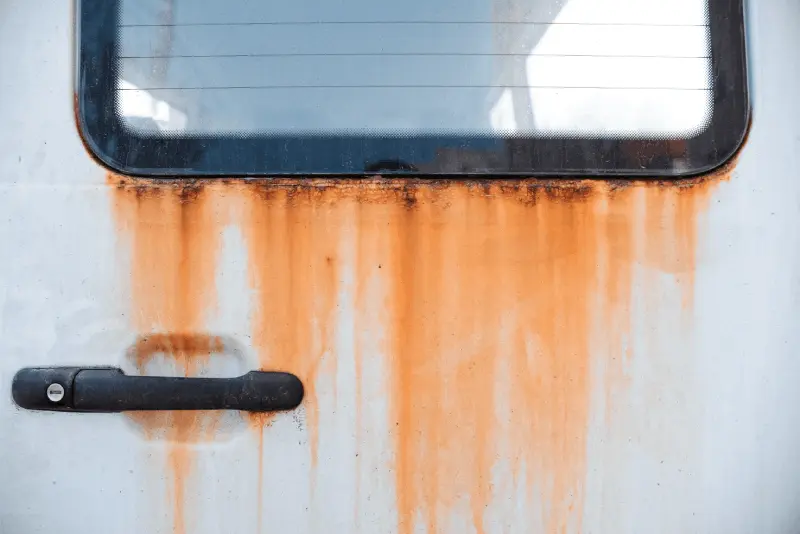
Caravan living offers the freedom of being in nature, but it also brings the risk of being defenseless against changing weather conditions. The metal body of the caravan has a structure that conducts heat very quickly. This situation causes the interior to turn into an oven in the summer and to face freezing cold in the winter. Quality insulation not only increases comfort but also allows heating and cooling systems to operate more efficiently by providing energy savings. Additionally, proper insulation application prevents metal fatigue and corrosion, extending the lifespan of the vehicle.
What is a Thermal Bridge and How Does it Occur in Caravans?
A thermal bridge is a weak point where heat transfer occurs much faster than in insulated areas. In caravans, this situation is usually seen in metal frames, screws, windows, and door frames. Insulation material can be of high quality, but if a metal piece creates a continuous connection between the outside and inside, heat will enter or escape through this path. Thermal bridges not only lead to heat loss but also cause condensation at these points, significantly increasing the risk of mold and rust.
Is it Possible to Completely Prevent Thermal Bridges?
Theoretically, it is impossible to reduce heat transfer to zero, but with the right materials and application techniques, thermal bridges can be practically reduced to a negligible level. The key is to create a continuous barrier between the metal chassis of the caravan and the interior cladding material. The way to completely prevent thermal bridges is not just to fill gaps but to thermally break every point where metal contacts. This can usually be achieved by using layers of flexible materials with high insulation values, such as elastomeric rubber foam.
Is Elastomeric Rubber Foam the Best Material for Thermal Bridges?
Elastomeric rubber foam is considered the gold standard in caravan insulation. The biggest advantage of this material is that it does not absorb moisture due to its closed-cell structure and perfectly conforms to metal surfaces with its flexible structure. Especially when applied in self-adhesive rolls, it completely covers the metal frames, physically blocking thermal bridges. Unlike other materials, rubber foam adapts to the expansion and contraction movements of metal, which helps maintain the integrity of the insulation in the long term.
Does Spray Polyurethane Foam Seal All Gaps?
Spray polyurethane foam is an excellent solution, especially for hard-to-reach corners and intricate structures. It expands upon application, penetrating even the smallest holes and forming a monolithic insulation layer. This layer minimizes the formation of thermal bridges as it completely cuts off air leaks. However, its requirement for professional equipment during application and the potential for deformation on metal surfaces if applied incorrectly are disadvantages. Nevertheless, it is undoubtedly one of the most effective methods for achieving a gap-free insulation layer.
How Should XPS (Extruded Polystyrene) Boards Be Used in Caravans?
XPS boards are known for their high compressive strength and low thermal conductivity coefficient. Their use is quite common in the floors and large panel areas of caravans. However, since XPS is a rigid material, gaps may remain when placed directly on metal frames. These gaps can lead to the formation of thermal bridges. To prevent thermal bridges, XPS boards should be supported with elastomeric rubber strips or polyurethane mastics. Placing a thin layer of felt or rubber between the metal and XPS is a critical step to ensure thermal break.

How Does a Moisture Barrier Affect Thermal Bridges?
Many caravan owners think that insulation is only for retaining heat, but moisture management is a hidden factor that determines the success of insulation. When warm air inside hits the cold metal surface, condensation occurs. If the insulation material cannot seal thermal bridges, these points become centers where water droplets accumulate. A quality moisture barrier or insulation material with a closed-cell structure prevents this moisture from reaching the metal surface. This way, both heat performance is preserved, and structural damage is prevented.
How Should the Metal Frames of the Caravan Be Insulated?
The largest thermal bridges inside the caravan are the vertical and horizontal metal studs that support the walls. Simply filling the gaps without insulating these studs can reduce the efficiency of insulation by 40%. The solution is to create "thermal strips" or elastomeric rubber sheets with a thickness of 6-9 mm on these metal surfaces. While interior cladding panels (such as plywood) are screwed to these studs, placing plastic washers between the screw and the metal can also provide a small but effective thermal break.
How Much Role Does Floor Insulation Play in Preventing Heat Loss?
Warm air rises, but cold air also collects at the floor. The underside of the caravan is the area most exposed to the outside and where the wind constantly blows. A thermal bridge that forms at the floor will cause your feet to constantly feel cold and will rapidly decrease the indoor warmth. A continuous insulation layer should be provided between the metal chassis and the floorboard by using XPS or high-density rubber boards on the floor. The screw fastening points and wheel arches are the most suitable places for the formation of thermal bridges; these areas should be protected with extra layers.
Do Materials Like Wool and Stone Wool Insulate Thermal Bridges?
Fibrous materials like stone wool or sheep wool have excellent thermal resistance. However, the biggest problem with these materials is their tendency to retain moisture. When condensation occurs in the caravan, it seeps between these fibers, causing the material to lose its properties and accelerating corrosion on metal. Additionally, fibrous structures are not dense enough to adequately wrap around metal frames. If these materials are to be used, they must be packaged with a very strong moisture barrier and additionally supported with rubber bands to cover thermal bridges.
How Can Windows and Doors Be Eliminated as Thermal Bridges?
The biggest "holes" in the caravan are the windows and doors. Glass surfaces already conduct heat, but the main issue is the frames. Aluminum frames are very strong thermal bridges. At this point, it is necessary to use thermally broken frames or to insulate the insides of the frames with insulation fillers. Additionally, the gaps around the windows must be completely sealed with spray foam or sealing tapes. Insulated curtains or external mats to be used at night are the most practical way to control these massive thermal bridges.
What Measures Should Be Taken Against Thermal Bridges in Ceiling Insulation?
Since sunlight directly hits the ceiling of the caravan, the highest heat gain occurs here in summer. Ceiling openings act like conductors that transfer this heat directly inside. The use of reflective (reflective) foils in ceiling insulation is very effective for reflecting radiant heat back. However, there should be an air gap left between the foil and the metal, or the foil should be applied over rubber foam. The installation points of the ceiling vents (Heki) should be equipped with special sealing elements to prevent thermal bridges.
Do Screws and Fastening Elements Cause Heat Transfer?
Thousands of screws penetrate the insulation layer of the caravan and reach the metal body. Each screw acts as a thermal bridge at a microscopic level. In professional conversions, wooden spacers are used to reduce direct contact of screws with the metal frame. First, insulation is applied to the metal frame, then wood is placed on top, and finally, the inner panel is screwed to this wood. This method is called "thermal separation" and is the most professional approach to eliminate thermal bridges at a mechanical level.
How Should the Caravan's Wheel Arches Be Insulated?
Wheel arches are the areas where both road vibrations and cold air enter the most intensely. Since they are usually made of thin metal, they work like massive cooling blocks. To insulate these areas, first, sound insulation panels (to cut vibrations) should be used, followed by a thick layer of elastomeric rubber foam. Due to the curved structure of the arch, spray foam can also be preferred to provide a seamless covering in this area.

How Can You Test for the Absence of Thermal Bridges?
After insulation is completed, the most reliable way to detect thermal bridges is to use a thermal camera. On a cold day, when you heat the inside of the caravan and look outside with a thermal camera, the points where heat is leaking will appear as bright lines. If you can see the traces of the metal frames from the outside, it means there is a thermal bridge there. This test should be done before the inner coverings are installed to have the last chance to correct any mistakes.
Are Insulation Materials (Foil) Sufficient on Their Own?
Thin insulation foils, also known as "astronaut insulation" in the market, are great at reflecting radiant heat but are very weak against heat transfer through conduction. A single foil cannot prevent the thermal bridge on the metal frame. Foil only makes sense when used as an additional layer over a thick insulation material (such as rubber foam). If you want to completely block thermal bridges, you should focus on materials that contain "mass" and have low conductivity.
Are Air Leaks Considered Thermal Bridges?
Technically, thermal bridges occur through solid materials, but air leaks also cause similar losses through "convection." A cable passage hole that is not sealed with silicone, mastic, or foam creates a significant weak point even in the best-insulated wall. The strategy to prevent thermal bridges should go hand in hand with the air sealing strategy. The caravan's "breathing" should be provided through controlled ventilation openings, not through the insulation layer.
Does Material Density Affect Thermal Bridges?
Contrary to popular belief, very dense materials do not always provide better insulation. What provides insulation is the trapped stagnant air within the material. However, when it comes to "closing" thermal bridges, it is important that the material does not get crushed. For example, if you use a low-density material on a floor that will have furniture on it, the material will compress and lose its insulation value. This can lead to the formation of an artificial thermal bridge at that point. Therefore, the correct density of the material should be chosen according to the application area.
Why is the Choice of Adhesive Important in Insulation?
Many people use ordinary adhesives when bonding insulation materials to metal. However, the adhesive itself also has thermal properties. The left Ventilation can damage the structure of insulation material or dry out over time, causing the insulation to separate from the metal. An air gap between metal and insulation is the most ideal environment for condensation. Therefore, products that are heat-resistant, flexible, and provide a complete surface structure should be preferred.
Is there a "super material" that completely blocks thermal bridges?
In conclusion, there is no "super material" that creates miracles on its own; however, elastomeric rubber foam is the material that comes closest to preventing thermal bridges, both in terms of ease of application and physical properties. A real solution is a combination of the flexibility of rubber foam, the void-filling capability of spray polyurethane, and proper engineering planning. When you thermally cut all contact points between the metal and the interior space, your caravan will turn into a true comfort zone.