Which Are the Most Stable Dirt Roads for Winter Camping in the Bolu Aladağlar Region?
Located in the south of Bolu, the Aladağlar area offers a more stable driving opportunity compared to other regions, despite heavy snowfall during the winter months. Especially the connecting roads between Sarıalan Plateau and Aladağ Lake are safer against mud traps due to their infrastructure being rocky and hard. The main reason for choosing these roads is that they are kept constantly open due to forestry activities in the region, and the ground has been compacted by heavy vehicles. Adventurers using this route for winter camping can evaluate the wide plains along the roadside as safe camping areas. However, it is essential to have a snow shovel and a steel rope with you, as they will be lifesaving in sudden weather changes.
Which Alternative Routes Should Be Used to Safely Reach Yedigöller Basin Under Snow?
The road to Yedigöller National Park can generally be closed through Bolu center due to heavy snow in winter. In this case, the safest alternative is the northern road that goes through Mengen. The Mengen road generally has less snow depth and a lower elevation compared to the Bolu center road. On this route, the stabilized roads within the forest allow passage for 4x4 vehicles even in winter conditions. Especially the forest roads around the Dirgine area are protected from the wind as they are located within the valley, reducing the risk of being caught in a snowstorm. While following this route, it is the most logical way to get information about the current situation from the villages along the road and to follow the tractor tracks used by the locals to reach a safe camping spot.
Where Are the Easiest Points for Vehicle Evacuation in the Winter on the Forest Roads Around Sarıalan Plateau?
Sarıalan Plateau is one of the most visited areas in Bolu during winter, but it is also one of the regions where the harshest winter conditions are experienced. The biggest advantage of the forest roads here is their proximity to the main road and settlements. In case of a potential stranding situation, the main routes passing through the plateau center are the quickest points for the Gendarmerie and AFAD teams to reach. For safety, it is advisable to prefer side roads that go no more than 1-2 kilometers into the main road. These short-distance forest roads make it easier to notice hidden ice under the snow and allow you to reverse without straining your vehicle's towing capacity. When setting up a winter camp, always park your vehicle facing the exit direction, as this will speed up your evacuation process when you encounter a frozen ground in the morning.
How to Identify Curves Carrying Landslide and Avalanche Risks in Winter on the Mudurnu Sülüklü Lake Road?
Although Sülüklü Lake has an incredible beauty in winter, the road can be quite steep and risky. To proceed safely on this road, attention should be paid to the curves that pass under steep slopes. Areas where vegetation cover is sparse and rocky can pose a landslide risk due to the weight of the snow in winter. To identify these curves, one should look at the slope of the snow accumulations on the upper part of the road; if there are cracks in the snow layer or sliding traces downwards, one should not stop in that area. The safest winter route is the sections of the road that are close to the valley floor and have dense tree cover. When exiting to Sülüklü Lake, it is essential to use chains and to honk the horn when approaching the narrowest parts of the road to warn any oncoming vehicles.
What Is the Safety Level of the Forest Interior Side Roads Connected to the Kartalkaya Road from Bolu Center in Winter Conditions?
Although the Kartalkaya road is one of the best-maintained roads in Turkey, the forest interior side roads connected to this road have a completely different character. These side roads are generally preferred by campers who want to avoid the vehicle congestion heading to the ski resort. The safety level is moderate because road maintenance is not performed in these sections. However, the ground usually provides a grip surface under the snow due to its gravelly nature. The biggest risk on these roads is sudden fog and visibility issues due to high altitude. If your vehicle is not equipped with off-road gear, it is most logical not to stray too far from the main Kartalkaya road. The forest roads here break the wind due to the density of the pine trees, creating sheltered micro-areas for setting up tents.
How to Combat Icing on the Forest Roads Around Göynük Çubuk Lake?
Çubuk Lake is surrounded by windmills and pine forests, creating a fairytale atmosphere in winter. However, the forest roads around the lake can experience severe icing overnight due to the effects of water. The best way to combat this icing is to analyze the sunlit and shaded parts of the road. The roads on the northern slope of the lake may form invisible ice layers known as "black ice" since they receive almost no sunlight. To ensure a safe winter camp, slightly reducing your vehicle's tire pressures can increase the contact surface with the ground, reducing the likelihood of sliding on the ice. Additionally, actively using the engine brake and avoiding sudden steering movements while progressing on these roads is crucial.
Why Are the Forest Roads Around Taşlıyayla Lake on the Seben Road Less Dangerous in Winter?
The Taşlıyayla Lake area has a flatter topography compared to other regions of Bolu. This flatness makes it much safer to progress on the winter forest roads because the risk of steep slopes and cliffs is minimal. Although snowfall turns these areas into a massive white desert, the rows of trees that define the boundaries of the road reduce the likelihood of straying from the route. It is low. Additionally, the ground structure of the region is quite solid, and the risk of swamp formation under the snow is low. Taşlıyayla, which offers a wide movement area for winter camping, is considered the safest "wide area" camping region around Bolu, especially for large groups and those carrying heavy camping equipment.
What Are the Routes with the Least Risk of Snow Type Between Kıbrıscık and Seben Passes in Winter?
The Kıbrıscık region is one of the highest and most rugged geographies of Bolu. Using forest roads in this area during winter requires great caution. The routes with the least snow type risk are generally the lower paths that pass through the valleys and are known as "stream bed" routes. Roads that go over high ridges can close within minutes due to snow drifts formed by the wind. Therefore, those camping in the Kıbrıscık forests should avoid ridge lines and prefer smaller flat areas surrounded by hills for more protection. These routes receive less wind and have a lower likelihood of snow accumulation.
What Should Be Done for Safe Night Driving on Forest Roads Around Abant Lake National Park?
Although Abant is very popular in winter, the forest roads under protection around the national park are quite dark and deserted at night. The most important rule for safe night driving is that the vehicle's lighting system must be complete. In addition to standard headlights, fog lights and, if possible, LED bars on the vehicle help you see the road more clearly by preventing snowflakes from reflecting light. Additionally, wildlife is very active in the roads around Abant in winter; a deer or wild boar can appear at any moment. Therefore, it is necessary to drive well below speed limits and constantly watch for reflections on the roadside (animal eyes). Instead of trying to reach the campsite at night, it is always safer to set up camp during the day and spend the night at a fixed point.
Can the Forest Connections on the Old Road of Bolu Mountain Be a Lifeline Route for Winter Campers?
Although the old Istanbul-Ankara road of Bolu Mountain has become calmer with the opening of the tunnel, it is a strategic point for winter campers. The forest connections around this road provide a significant safety advantage due to their proximity to the main road. If weather conditions suddenly worsen in deep forests, it is possible to quickly reach the asphalt road via these connection roads. Additionally, the forest roads in this area are affected by the salting operations of the Highway teams; that is, the salts carried by vehicle tires help the ice at these connection points to melt faster. For novice winter campers, these micro roads around Bolu Mountain are the best starting point for getting into winter.
How Is Snow Depth Estimated on the Transition Roads Between Pürenli and Balıklı Plateaus?
Pürenli and Balıklı plateaus are located on the Mudurnu-Gölyaka border and are among the places where snow is deepest in winter. Before proceeding on these roads, one should look at the lower branches of the pine trees along the roadside to estimate the snow depth. If the lower branches of the trees are completely covered with snow, it can be said that the snow thickness in this area exceeds 1 meter. Additionally, transformers or signposts on the road can also be used as measuring units. If you do not have a 4x4 vehicle and high clearance, trying the transition roads between the plateaus poses a significant risk. For safe winter camping, early winter periods when the snow has not yet fully compacted or periods when the roads have been partially opened by construction machines should generally be preferred.
How Much Should Navigation Devices Be Trusted on Winter Forest Roads in Bolu?
Standard navigation applications (Google Maps, Yandex, etc.) can often be misleading on snow-covered forest roads in winter. These applications may show roads that are open in summer but completely covered in snow or blocked by landslides in winter as "open." The safest approach is to use professional GPS devices that work offline and provide topographic maps and elevation data. Additionally, having a printed map of your route and knowing how to use a compass is vital when electronic devices run out of battery due to the cold. Mobile signal may not be available deep in the Bolu forests, so determining your route in advance and leaving your coordinates with someone close is a fundamental safety rule.
Is Making a Snow Shelter a Safe Option in Case of Getting Stuck on Forest Roads?
If your vehicle breaks down on a deserted forest road in Bolu and help will take a long time to arrive, making a snow shelter can be a lifesaving "survival" technique. However, this process is only safe if there is sufficient snow depth (at least 1.5 - 2 meters) and proper training. Snow is an excellent insulator due to the air pockets inside, and while the outside temperature may be -20 degrees, the inside of the shelter can remain around 0 degrees. The most critical point to pay attention to is to create a ventilation hole in the roof of the shelter and to close the entrance in a way that does not allow wind in. However, this should be seen as a last resort. The first priority should always be to stay inside the vehicle and try to keep warm by conserving fuel.
How Can Tracks of Wild Animals in Bolu Forests Be Used to Determine Safe Camping Areas in Winter?
The snow cover in winter reveals all the boundaries of the forest. Before determining the area where you will set up camp, you must examine the tracks around. If you see fresh wolf or bear tracks, that area is an active passage route for that animal and is not safe for camping. Fresh tracks leading to stream beds indicate that animals are going to drink water. The safest areas are elevations that offer a clearer view with less wildlife traffic. Animals generally avoid walking in deep snow to conserve energy and may use the paths opened by humans. Therefore, camping... Your tent should not be set up right on the road, but a little inside the road where you can see the road, as it provides both safety and privacy.
How Should Fallen Trees Along the Forest Road Be Selected for Making a Fire in Winter Camp?
In the harsh winter of Bolu, fire is a source of warmth and morale. However, not every fallen tree is suitable for making a fire. Wood that is buried under snow and wet produces a lot of smoke and gives off little heat. The best fuel is "standing dry" trees that are still upright but dead. If you find a fallen tree along the forest road, you should choose the parts that do not touch the ground. The resinous branches of pine trees (pitch), are excellent for starting a fire. When lighting a fire, you should not place it directly on the snow; instead, you should first make a base (grate) with thick wood to prevent the snow from melting and extinguishing the fire. It is critical from a safety perspective to not sleep without extinguishing the fire and to protect the area with a wall of snow from the wind.
How Safe Are Stream Roads for Meeting Water Needs in the Winter Forests of Bolu?
Obtaining water by melting snow is a process that requires a lot of fuel and time. For this reason, forest roads close to streams are attractive for winter campers. However, stream banks in winter can be quite slippery, and the ice layer underneath can be deep. When approaching the stream to get water, you should use a pole to check the thickness of the ice. Additionally, if you are going to take water from a frozen lake, you should not stray too far from the shore. You must filter or boil the water you obtain; because even in winter, there is a risk of parasites in the water. The safest water source is small streams that flow quickly and are not frozen. Instead of setting up camp right next to the water source, setting up 50-100 meters away will reduce humidity and ensure a warmer night.
Why Is Vehicle Maintenance and Cleaning Important When Returning from Forest Roads After Winter Camping?
When your winter camping adventure is over and you exit the forest roads onto the asphalt, your job is not yet finished. The salt and chemicals used on highways can seriously damage your vehicle's undercarriage and brake system. Additionally, mud and stones on forest roads can get stuck between tire treads, causing imbalance and slipping on asphalt roads. At the first opportunity, you should clean the underside of the vehicle, wheel wells, and rims with pressurized water. Also, you should check the condition of your windshield washer fluid, which can freeze in low temperatures. Winter camping is one of the most demanding activities for your vehicle; therefore, performing a general mechanical check when you return home is essential for the safety of your next adventure.
What Are the Restrictions Imposed by the Bolu Governorship and the Forest Regional Directorate for Winter Forest Roads?
In Bolu, some sensitive ecosystems or wildlife conservation areas may be temporarily closed to civilian vehicle access in winter. Especially under severe winter conditions, in regions such as Yedigöller or Aladağlar, the governor's decision may implement "no vehicle access without chains" or complete road closure actions. Not complying with these restrictions not only results in a fine but also puts your life at risk. Checking the official website or social media accounts of the Bolu Governorship before you go, or calling the local traffic teams for information is the best course of action. Remember that these bans are not meant to spoil the enjoyment of campers but to prevent incidents of getting stranded and freezing.
How Should Ventilation Inside the Tent Be Adjusted to Prevent Carbon Monoxide Poisoning During Winter Camping?
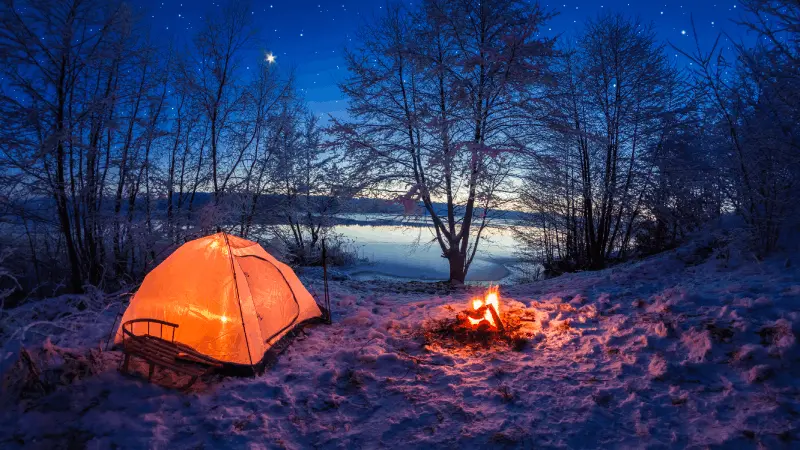
In the stillness of forest roads, the biggest mistake in freezing cold is to close all the vents of the tent and run the heater (gas or wood) inside. Carbon monoxide is a colorless and odorless killer. You should always leave a small amount of the ventilation windows in the ceiling of your tent open, even if it snows. If you are using a stove inside the tent, you should periodically go outside at night to check that the chimney outlet is not blocked by snow. The safest winter camping is to rely on a quality sleeping bag and thermal clothing for warmth, and to use the heater only briefly just before going to bed. You should never leave any fuel-burning heater running while you sleep.
Is There Such a Thing as "The Safest" for Winter Camping in Bolu, or Is There Always a Risk?
In nature, especially in the winter forests of Bolu, one can never speak of absolute safety. Nature is unpredictable; the sky can close within an hour, and paths can become impassable. The term "safe" is synonymous with being prepared. The safest route is the one you know best, the one you discovered in summer, and the escape routes you are familiar with. To minimize risks, you should rely on your knowledge and experience rather than your equipment. Camping alone in winter poses a significant risk in places with dense forest structures like Bolu; it is always a golden rule to travel with at least two vehicles and a trained group.
How Do Heavy Snow Loads on Tree Branches in Dense Forested Areas Pose a Danger to Campers?
When camping in the vast fir and pine forests of Bolu, do not forget to look up at the sky. Dead or heavily snow-laden branches, known as "Widowmakers," can suddenly break under the influence of the wind and fall on your tent. When choosing the tree under which you will set up camp, you should prefer trees that do not have excessive snow load on their branches and appear healthy. Especially, you should never camp under old and leaning trees. While it is still snowing, you should periodically check the trees around the tent (to avoid damaging the tent). Shaking the snow on top in a controlled manner from a distance can prevent you from waking up to unexpected noise and danger at night.
What are the 5 Critical "Safety" Equipment You Need to Bring for Winter Camping Around Bolu?
To survive in the winter forest roads of Bolu and camp safely, the following five pieces of equipment are essential: 1. A quality shovel (to free the vehicle from snow and prepare the campsite), 2. A satellite communication device or a powerful radio (to call for help when the phone has no signal), 3. A synthetic or goose down sleeping bag with a comfort rating of at least -15, 4. A portable battery booster (for a depleted vehicle battery in the cold), 5. At least 3 days' worth of backup food and water (in case of road closures). These items are not luxuries; they are basic necessities in winter conditions. Setting out with missing equipment can lead to irreversible consequences in Bolu's harsh wilderness.
What are the Key Points for Tire Pressure and Chain Use in Winter on Bolu's Forest Roads?
Most drivers think of chains only when the vehicle has completely stopped, whereas in winter camping, chains are a tool for "progress." If the snow starts to deepen on the forest road, you should put on your chains without waiting to get stuck. Additionally, reducing tire pressures to 15-20 PSI levels (only on soft ground and at low speeds) expands the vehicle's surface area and helps it "float" on the snow. However, once you hit asphalt, you must return the tires to their original pressure immediately. Remember that just winter tires may not always be sufficient on icy slopes in Bolu's deep forest roads; you should always have at least one pair of heavy-duty chains in your trunk.
How to Prevent Night Humidity and Condensation Inside the Tent in Winter in Bolu?
The humidity level in Bolu's lakes region is very high in winter, causing significant condensation (moisture) inside the tent. When you wake up in the morning, you may find your gear damp. To prevent this, you should ensure there is an air gap between the outer fly and the inner tent. Building a wall of snow around the tent can block the wind but should not completely obstruct ventilation. Additionally, trying to dry wet clothes inside the tent increases humidity; instead, it is more effective to reduce moisture by keeping clothes inside your sleeping bag. A thick mat or XPS insulation board placed under the tent will cut off the cold moisture from the ground, enhancing your comfort and safety.
Is it Ethical and Legal to Use the Mountain Houses Around Bolu as "Emergency Shelters" in Winter?
The houses in Bolu's plateaus are private property, and breaking their doors is not legal under normal circumstances. However, in cases of life-threatening danger, risk of freezing, or being stranded, the principle of "necessity" may apply. If you have to take shelter in a mountain house, you must compensate for any damage you cause (such as breaking a window) by contacting the owner later and replacing any firewood or food you used with new ones or their equivalent in cash. For winter campers, the best approach is to use these houses not as shelters but merely for location reference and windbreaks. You should always aim to meet your shelter needs with your own professional equipment.
How to Access Road Assistance and Rescue Services in Winter on Forest Roads?
In a tourist yet wild area like Bolu, off-road clubs and local rescue teams can be lifesavers. It may be beneficial to save the contact information of organizations like the Bolu Off-Road Club (BOLOFF) before you go. You can also reach AFAD and Gendarmerie Search and Rescue (JAK) teams through the 112 Emergency Call Center. When calling for help, you should provide your location along with a "distinct landmark you last passed" (a junction, sign, plateau name) and GPS coordinates. If you get stranded, tying a colored cloth to your vehicle's roof or periodically flashing a light throughout the night will make it easier for search teams to find you from the air or ground.
What is the Best Time Frame and How to Track Weather for Winter Camping in Bolu?
The most balanced time for winter camping in Bolu is generally late January to early February; during this period, the snow layer has settled and hardened. For weather tracking, you should look at detailed modeling applications like "Windy" or "Meteoblue" rather than just general forecasts. Especially, "Snow Line" and wind speed data are critically important. If there is a forecast of more than 20 cm of snow within 24 hours and wind speeds exceed 40 km/h, entering the forest roads can be tantamount to suicide. Ideally, the best days are right after a major storm, when the weather clears up and the freezing cold begins; on these days, the sky is as clear as glass, and the scenery is unparalleled.
What Should Be the Fundamental Philosophy for a Safe Winter Camping Experience in Bolu?
Winter camping in Bolu and its surroundings is not a display of strength but an art of harmonizing with nature. Your fundamental philosophy should be "not to dominate nature, but to play by its rules." The safest forest road is the one that does not exceed your limits. You should allocate more time to the preparation phase than the camping duration, and always have a "Plan B" and "Plan C" ready. Bolu's unique wilderness can be both very generous and very unforgiving in winter. By following the advice in this guide, with the right equipment and the right mindset, you can experience the most unforgettable and safe winter adventure of your life. Remember, the best camp is the one where you return home safe and can tell the story.