Does an Aluminum Top Get Very Hot in the Sun and Damage the Materials on It?
One of the biggest fears of campers, especially in regions with scorching heat like the Aegean or Mediterranean, is that an aluminum table turns into a heat collector. Aluminum is a metal with high thermal conductivity by nature; this can cause the surface to reach levels that can burn your hand when exposed to direct sunlight. If you place a plastic container or a material prone to melting on the table, this heat transfer can damage your items. On the other hand, wood, being a natural insulator, stays much cooler under the sun and does not discomfort you when touched with bare hands. However, nowadays, quality aluminum tables are coated with special static powder paints to somewhat balance this heat absorption. Still, if you don't have a shaded area, a wooden top is a step ahead in terms of comfort.
Does Food Residue Fill the Gaps Between Wooden Table Parts and Cause Odor?
Folding wooden tables are generally made of slats called "roll-top," which have rubber or strings between them. While this architectural design allows the table to fold, it invites food crumbs, fruit juices, or oils spilled while eating to seep into those narrow gaps. If you do not meticulously clean these gaps at the end of the camping with a thin tool like a toothbrush, over time, organic waste can start to breed bacteria there and emit an unpleasant odor. Food residues combined with moisture can penetrate the fibers of the wood, turning into a nightmare for hygiene-conscious campers. Aluminum tables, on the other hand, generally have smoother surfaces and are easier to disinfect with a single wipe since they have fewer joints.

If I Forget My Wooden Surface Outside in the Rain, Will It Warp and Become Unusable?
Natural conditions are unpredictable, and it is not uncommon to forget your table outside during a sudden downpour at night. If the wooden table you purchased is not made of a highly water-resistant type like solid teak or iroko (most camping tables are made of pine or bamboo due to cost), water can penetrate the fibers, causing the wood to expand. This expansion can loosen the screws at the joints, cause the tabletop to warp, and may prevent the table from closing flat ever again. Aluminum tables, however, do not have this risk; aluminum has a natural resistance to rust, and there is no deterioration in its physical structure when it comes into contact with water. Therefore, for "laid-back" campers who do not want to deal with the weather, the durability of aluminum is of vital importance.
Does an Aluminum Surface Bend When It Takes a Hard Hit or Does It Return to Its Original Shape?
While aluminum is known for its lightness, it exhibits "plastic deformation" characteristics against mechanical impacts. This means that if you drop a heavy camping pot on it or if a heavy suitcase rests on it in the trunk, if a dent occurs, it is nearly impossible to restore that dent to its original state. When you try to bend the metal back, it usually whitens in that area or may crack due to metal fatigue. Wood, on the other hand, is more "forgiving" in this regard. When it takes a hard hit, it may develop a scratch or a small dent, but this does not compromise the overall structural integrity of the table and can generally be repaired by sanding and varnishing. If you are rough with your equipment and it will be under other items in the trunk, the thin aluminum surface may deform aesthetically in a short time.
If Children Try to Climb Up by Holding the Edge of the Table, Will the Table's Balance Be Disrupted?
Safety is the number one priority in family camping. Aluminum tables are generally very light, so their centers of gravity are higher, and when a child hangs on the edge, the likelihood of the table tipping over is quite high. Additionally, the locking mechanisms of aluminum legs can sometimes be weak against lateral forces. Wooden tables, however, stand more firmly on the ground due to their natural weight. The weight of a wooden table helps it remain stable under pressure applied from the side, just as it prevents it from flying away in the wind. If there is a hot tea or food on the table and your child risks bumping into it, the static weight and stability that wood offers provide a much more reassuring option to prevent possible accidents.
Does Saltwater Vapor from the Seaside Cause Corrosion on Aluminum Surfaces?
Many campers believe that aluminum will never rust, but they overlook the fact of "oxidation." Especially if you are camping by the seaside, the saltwater vapor in the air can react with the aluminum surface, forming a white, chalky layer on it. This can cause the table to lose its shine and the joints to harden over time, making it difficult to open and close. In wooden tables, if there is a quality protective layer on it, salty air does not lead to structural deterioration. However, it should be noted that if the screws at the joints of the wood are not made of stainless steel, those screws can rust and start to rot the wood from the inside. In both cases, wiping the equipment with a damp cloth after use by the sea will extend its life.
Do I Need to Dry the Wooden Table Every Time Before Putting It in the Bag?
The most tedious part of logistics is the packing phase of camping. If you hastily put a wooden table that has been wet with morning dew into your bag and store it that way until you get home, in a closed and airless environment, the wood will quickly start to mold. Since wood has a porous structure, it traps moisture, and it takes time for this moisture to be released. Therefore, you must dry the wooden table before every packing, and if possible, let it sit in the sun for a while. An aluminum table, on the other hand, does not absorb water. You can wipe the water off it with a cloth in seconds, and even if the table is damp, you can safely put it in the bag; there will be no issues like mold or musty smell on aluminum. If your time is limited and you need to move quickly, the practicality of aluminum is a huge advantage.
Does the Squeaking Sound of an Aluminum Table Disturb Camping Neighbors in the Night Silence?
In the famous night silence of camping areas, even the smallest sound can turn into a huge racket. Aluminum tables are designed to produce metallic squeaks or "squeaks" whenever you move the table or place a heavy object on it due to the friction of metal parts against each other. Especially in cheaper models, the gaps at the joints (tolerances) are often too large, causing them to rattle even in the wind. Wooden tables, on the other hand, naturally absorb sound. The friction between the pieces is softer, and when you place something on the table, it produces a solid sound without a metallic echo. If you want to listen to the sounds of nature and not disturb those around you, the quiet and peaceful experience of using wood is invaluable.
How Often Should I Oil the Wooden Table in a Year, and Is This an Additional Cost?
To maintain the aesthetic appearance and durability of a wooden table, you must perform maintenance at certain intervals. If you are a user with a "buy and forget" mentality, wood may disappoint you. Sunlight and water gradually wear down the protective layer on the wood, causing the table to lose its color and become porous. You need to oil the table at least once a year or twice depending on how often you use it with teak oil or special wood protectors. This means an additional cost of approximately 200-500 TL and will take a few hours of your time. Aluminum tables, however, do not have such periodic maintenance costs. It is sufficient to wash your table with soapy water when it gets dirty. In terms of long-term operating costs and time management, aluminum is undoubtedly the lazy but smart camper's friend.
Does the Paint Peel Off When I Place a Stove on the Aluminum Table Due to Heat?
It is very common to place a gas stove or a hot pot directly on the table in a camping kitchen. Most aluminum tables are painted for aesthetic purposes, and these paints are generally resistant up to 200 degrees. However, if the radiant heat from the stove or the bottom of the pot exceeds these values, the paint may start to bubble and then peel off. This not only leads to an ugly appearance but also leaves the table vulnerable to external factors. In wooden tables, however, if you place an extremely hot pot on it, a burn mark (blackening in a ring shape) may occur on the surface. Wood burns, but it does not peel off like paint and does not mix into your food. In both types of tables, it is always the most logical move to use a trivet or heat insulation mat to protect your investment.
Do the Legs of the Table Sink into Mud and Sand?
This question is more related to the design of the legs than the top surface of the table, but material selection is critical as it affects the overall weight. Aluminum tables are generally light, so they often have thin and "U" shaped or pointed legs. On soft ground (mud, loose sand), these legs can sink into the ground, disrupting the balance of the table or causing one side of the table to completely collapse. Wooden tables, being heavier, are generally designed with wider and sturdier bases. However, the weight of the wood itself also increases the risk of sinking on soft ground. The main thing to pay attention to here is whether the legs have wide "feet" regardless of the material. If an aluminum table has wide feet, it can stay on the surface without sinking due to its lightness.
Does the Folding Mechanism Rust and Jam Over Time?
The heart of a folding table is its hinge and locking system. In aluminum tables, these parts are usually made of aluminum or reinforced plastic, which minimizes the risk of rust. However, sand grains or dust that get into these mechanisms can lead to wear over time and cause the locks to jam. In wooden tables, the folding mechanism is generally secured with metal screws and hinges. If these screws are not "galvanized" or "stainless steel," they can oxidize over time, staining the wood and making it impossible to open the table. Especially in "roll-top" wooden tables, the rubber bands losing their elasticity or breaking over time is a hidden risk that can render the table completely unusable.
Which One Is More Compact in Terms of Space in the Trunk?
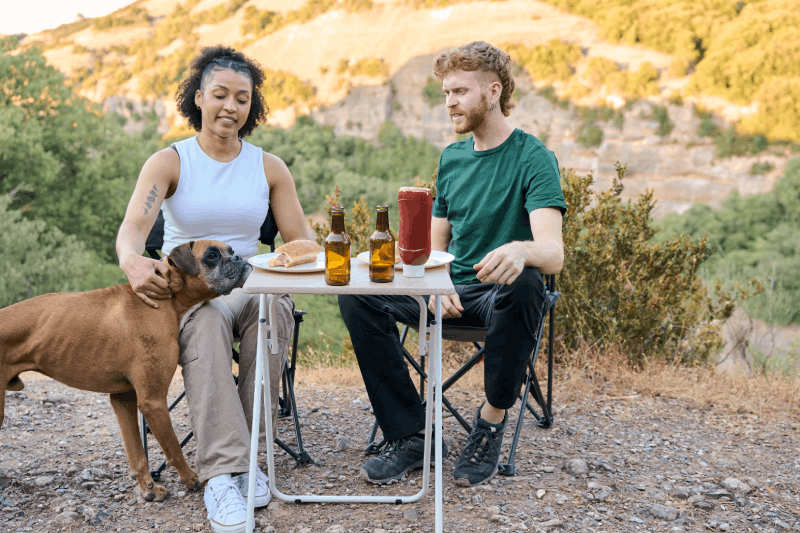
When going to camp by car, trunk space is invaluable. Aluminum tables generally fold in an "accordion" shape, and their legs can also fold into themselves, turning them into a very thin bag. Some aluminum models take up even less space than a camping chair when folded. Wooden tables, however, tend to be bulkier and heavier when folded due to the specific thickness of the wooden slats. If you have a small vehicle or need to make room for other equipment in your trunk, the incredible compactness that aluminum offers can be a lifesaver. Fitting a wooden table into the trunk requires strategic thinking like a puzzle piece, while you can easily squeeze an aluminum table into any gap.
If I Cut Something on the Table with a Knife, Will It Cause Permanent Damage?
It may not always be possible to carry a cutting board while camping. If you try to cut bread or vegetables directly on the table, deep and sharp scratches can form on the aluminum surface. Aluminum is a soft metal, so it can be easily gouged by a knife strike, and these scratches not only ruin the aesthetics of the table but also lead to bacterial buildup inside. A wooden table, however, can act like a natural cutting board. The knife marks that form on it blend with the character of the wood and add a sense of "lived-in" to the table. Moreover, you can completely eliminate scratches on a wooden table by sanding it later, but you can never restore a cut on aluminum. If you enjoy preparing meals on the table, wood is much more tolerant in this regard.
Are the Sharp Edges of an Aluminum Table Dangerous for Children?
Aluminum tables are often made from thin sheets, so the edges can be quite sharp. Although manufacturers try to round these edges, cheap models may leave metal burrs called "flashing" or corners that can cause serious injuries upon impact. This poses a safety risk, especially in a camping area with active, running children. Wooden tables, on the other hand, are generally made from thicker materials, and all corners are rounded by sanding. The soft texture of wood causes much less harm in the event of a potential head bump compared to the cutting effect of metal. If you have safety concerns, you should definitely check whether there are plastic protective caps on the corners when buying an aluminum table.
Is the Carrying Capacity Sufficient for Setting Up a Heavy Camping Kitchen?
Are you going to place just two coffee mugs on your table, or are you going to put a 10-kilogram cast iron pot, a camping stove, and kitchen utensils on it? The carrying capacity of aluminum tables is generally limited to 20-30 kg, and when this weight is concentrated in the center, the table may bend. Especially if the connection points of the legs are plastic, there is a risk of breaking under this weight. Wooden tables are structurally more rigid and durable. A quality wooden camping table can comfortably carry 50 kg and above. If you plan to use your table as a "preparation counter" and place heavy equipment on it, you need that solid sense of security that wood provides. Trying to deal with a boiling pot on a bending aluminum table can pose a significant risk.
Can the Height of the Table Legs Be Adjusted According to Uneven Ground?
The ground in nature is not always flat like a carpet. One of the biggest advantages of aluminum tables is that many models have telescopic (adjustable) legs. By adjusting each leg to a different length, you can level your table even on uneven ground. This feature prevents your soup from pooling on one side of the plate or the table from constantly wobbling. Wooden tables rarely have adjustable legs; they are usually of fixed height. This forces wooden table users to resort to primitive methods like placing stones or pieces of wood under the table to achieve balance. If the places you camp are generally uneven terrains, this technical advantage offered by aluminum will directly affect your comfort.
Is It Challenging for a Woman or Young Person to Carry the Weight of a Wooden Table Alone?
Camping is a physical activity, but the weight of the equipment can sometimes turn this hobby into a "burden." While an average wooden camping table weighs between 6-10 kg, a similarly sized aluminum table weighs around 2-4 kg. If you need to walk 500 meters from the parking lot to the campsite, that 5-6 kg difference can make your arms feel like they are going to break. Especially for solo camping women or young people who want to carry their own equipment, the lightness of aluminum is a significant freedom. Wooden tables, however, are generally suitable for campers who use "vehicle-mounted tents" or can park their vehicle right next to the table. Weight is a fundamental factor that determines the energy you will expend not only while carrying but also while setting up and packing the table.
Does Static Electricity Build Up on the Surface of an Aluminum Table?
Most people do not think about this, but in dry and windy weather, when you touch an aluminum table with your synthetic clothes, static electricity can build up in your body. You may feel a small but annoying "zap" sound every time you touch the table. This can pose a slight risk, especially for those working with sensitive electronic devices (laptops, cameras) on the table. Wood, being a non-conductive material (insulator), does not have this problem at all. A wooden table always gives you a "grounded" and natural feeling. If you spend a lot of time with technological devices at the campsite and dislike static electricity, the insulating nature of wood will provide you with a more peaceful working environment.
Does the Table Become Very Slippery When Dew Falls on It at Night?
When you wake up in the morning, the moisture accumulated on the table reacts differently depending on the surface's character. The smooth and painted surface of an aluminum table can turn into a "ice rink" when combined with dew. A glass or light object placed on the table may easily slip and fall to the ground. Wood, however, absorbs moisture to some extent due to its porous structure or provides higher friction due to its surface texture. This ensures that your items remain more stable on the table. If you leave your items on the table at night, the risk of finding them on the ground in the morning is higher on an aluminum table. While this may seem like a small detail, a broken glass or spilled coffee can ruin your camping morning.
Do Sunlight Fade the Color of the Table Over Long-Term Use?
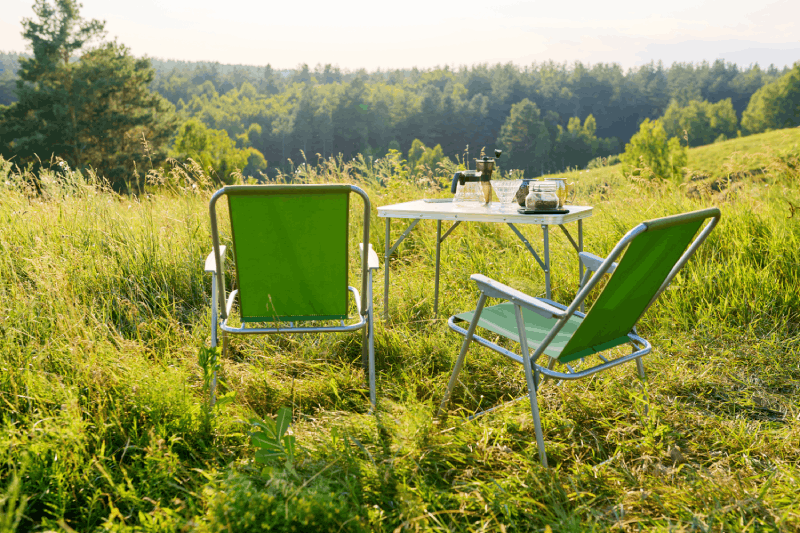
Sun's UV rays can wear down even the most durable materials. Aluminum tables are generally protected with anodized coating or powder paint; these coatings are quite resistant to sunlight, but over the years, the paint may become dull or "chalky." Wood, on the other hand, reacts much faster under sunlight. A wooden table without a protective varnish can start to gray and crack within a few months. If you want your table to maintain its original color, aluminum will look newer for a longer time. However, some campers appreciate the "aged" look of wood as it matures under the sun and grays. This is entirely a matter of aesthetic preference; however, in terms of structural integrity, the color of aluminum will fade much more slowly.
Can an Aluminum Table Tip Over and Get Damaged in Windy Weather?
Unexpected gusts in camping areas are always a risk. The biggest disadvantage of aluminum tables is their lightness. If there is nothing heavy on it, a strong wind can easily lift the table and throw it several meters away. During this fall, the thin legs of the table can break or the locking mechanisms can get damaged. Wooden tables, however, stand like a fortress against the wind due to their weight. If you do not want to deal with anchoring the table to the ground, the weight of the wood is your biggest advantage. If you are using an aluminum table, you may need to anchor its legs to the ground with stakes or place a heavy stone on it during windy weather. Otherwise, you may find yourself having to collect your table from the neighboring campsite in the morning.
How Many Minutes Does It Take for One Person to Set Up the Table?
Every second counts when setting up camp, especially when it is about to get dark. Aluminum tables generally have "one-piece" mechanisms; you pull out the legs, and they snap into place, then clip the tabletop on. This process usually takes 30-60 seconds. Wooden tables, especially roll-tops, can sometimes be more complicated. Aligning the slats, stretching the rubber bands, and fitting the pins into their slots can take you 2-3 minutes, and sometimes you may need a "third hand." If you set up and pack your table frequently (for example, if you camp in different places every day), the practicality of aluminum will save you a lot of time. However, if you are going to stay in a fixed camp for several days, the 2-minute difference in setup time becomes insignificant.
Which One Is a More Logical Investment in Terms of Price/Performance?
The final decision is usually made by our wallets. You can find an entry-level aluminum camping table in the range of 800-1500 TL, while a quality wooden table can cost 2500-5000 TL or more. Aluminum offers you more functionality (lightness, compactness, durability) for less money. Wood, on the other hand, is more of an investment in "lifestyle" and "aesthetics." If your priority is simply a solid surface to eat on, aluminum is undoubtedly the more logical investment. However, if you see camping as a ritual, want that warm wooden texture in your photos, and are willing to maintain your table for years, the extra money you spend on wood will return to you as "spiritual" satisfaction. In terms of durability, a well-maintained wooden table can be a family heirloom, while an aluminum table may complete its mechanical lifespan more quickly.
Will a Pen Puncture the Paper When Writing on the Table?
For digital nomads or those keeping camping journals, the smoothness of the table's surface is critical. Most aluminum tables have a textured or patterned surface to increase lightness. If you try to write on a single sheet of paper on this surface, your pen may get caught in those grooves and tear the paper. Wooden tables, although they are slatted, generally have a wider and smoother surface for each slat. Still, in both types of tables, the gaps between the slats make writing difficult. If you plan to work on the table, it is essential to place a hard pad or mousepad on top of your aluminum table. On a wooden table, the width of the slats reduces the likelihood of your pen getting stuck, but you should not expect complete smoothness.
Is It a Problem If the Aluminum Table Cools My Knees in Cold Weather?
If you are camping in winter, the warmth of your equipment directly affects your comfort. When you sit under an aluminum table, the metal surface quickly absorbs the cold from the environment and radiates cold air waves to your knees. Every time your knees touch the table, that icy metal feeling can startle you. Wood, however, is a natural insulator; even in cold weather, it gives you a warm feeling when touched. When sitting inside a winter tent or by the fire, the thermal comfort that a wooden table offers is much more preferable compared to the metallic cold of aluminum. The difference between placing your hand on a freezing aluminum table and a warm wooden surface on a cold winter morning can even affect your camping motivation.
Do I Need to Use Special Chemicals to Clean the Table?
Hygiene is key to maintaining your health in nature. To clean an aluminum table, any dish detergent, alcohol wipes, or even just water will suffice. The non-porous structure of aluminum does not hold dirt. However, you cannot use "any chemical" for a wooden table. Very harsh detergents or bleach can strip the protective oil from the wood and lighten its color. You should generally wipe your wooden table with a damp cloth and only use mild soaps for stubborn stains. If organic liquids like meat juices spill on the table, cleaning it is much more laborious due to the fibrous structure of wood compared to aluminum. For those seeking cleaning practicality, aluminum is undoubtedly the champion.
Does the Squeaking Sound from the Luggage Turn the Journey into a Nightmare?
Even a "clunk clunk" sound from the luggage during long journeys can drive a person crazy. Aluminum tables can make metallic squeaking or clanking sounds if they are not packed tightly enough or if the parts are not secured together. Wooden tables, being heavier, tend to stay more stable in the luggage, and even if they bump into something, the sound they make is more muffled and manageable. When placing your aluminum table in the trunk, make sure it does not come into contact with other metal items (like chair legs), or you may feel like you are in a blacksmith's shop throughout the journey. The quiet and dignified presence of a wooden table is a small but significant advantage for a peaceful journey.
Do the Legs of the Table Scratch the Floor or Delicate Surfaces?
You may want to use your table not only while camping but also sometimes on your balcony or in your living room. The feet of aluminum tables are usually made of hard plastic or metal; this can leave deep scratches on the floor or tiles when dragged. Wooden tables generally have wider legs and are sometimes rubber-supported, making them safer for indoor use. If you plan to use your table for various purposes, you should check whether the aluminum model has soft protectors under its legs. A wooden table can also serve as a "guest table" more easily due to its compatibility with home decor.
What Is the Risk of Choosing a Brandless Product When Buying?
There are many brandless or "no-name" camping tables on the market. In aluminum tables, brandless products often use very thin sheets and the connection points are made of low-quality plastic; this can lead to the table breaking on the first use. In wooden tables, however, brandless products usually mean unseasoned and low-quality wood; this table can warp, crack, or rot within a few months. In both cases, choosing a well-known brand provides you with spare parts and warranty support. Remember that a camp table is a one-time purchase; a cheap table leaving you stranded halfway through your needs can end up costing you much more than the savings you made.
Which User Type Should Choose Which?
If I were to summarize from the perspective of a content strategist and an experienced camper: If your priorities are lightness, speed, maintenance-free structure, and affordability; you should definitely get a Table with an Aluminum Surface. It is the best choice for those traveling by motorcycle, those with small vehicles, and those who say "I can't be bothered." However, if aesthetic, stability (non-wobbliness), wind resistance, and a natural camping atmosphere are more important to you, and you do not mind the weight and maintenance of the table, then A Wooden Top will make you much happier. While aluminum wins with its "indifference to harsh conditions," wood wins by being a "lifelong friend with proper care."