Why is Choosing the Right Gear Critical When Approaching Steep Hills with a Caravan?
In heavy vehicles like caravans, downshifting before starting to climb a steep hill minimizes mechanical stress by keeping the engine within its torque band. Attempting to change gears in the middle of the hill can lead to loss of momentum and excessive heating of the clutch plate. Ideally, you should select a lower gear that matches the engine's highest torque range just before starting the climb. This way, the ascent can be completed with a stable pulling force without straining the engine, optimizing fuel economy.
How Should the Boiling Point of the Coolant Be Tested Before Climbing?
Climbing a steep hill can cause the engine's operating temperature to rise significantly. If the antifreeze concentration in your coolant is low or if there are air bubbles in the fluid, the boiling point of the water decreases, leading to engine overheating. Before the journey, the freezing and boiling points of the fluid should be checked with a refractometer. Additionally, leaks in the expansion tank or blockages in the radiator can lead to excessive heating of the engine within seconds under high loads on the hill; therefore, pressure testing of the system is also crucial.
What is the Role of the Transmission Cooler in Automatic Transmission Caravans?
Many modern caravans have automatic transmissions, but steep hills are the biggest challenge for these systems. Continuous gear shifting and losses in the torque converter can cause the transmission fluid to overheat and lose its viscosity. An external transmission cooler ensures that the fluid remains at the ideal temperature on steep inclines, preventing gear wear. If your vehicle lacks this equipment, switching the transmission to "L" or manual mode on very steep hills to avoid unnecessary gear shifts is the most critical move to extend the system's lifespan.
What Loading Techniques Reduce the Risk of Wheel Spin in Rear-Wheel Drive Caravans?
In rear-wheel drive motor caravans, there is usually a traction advantage as the center of gravity shifts backward when climbing a hill. However, on wet or loose surfaces, it is essential to distribute the weight evenly over the rear axle. Keeping the water tanks full or storing heavy equipment in the rear compartment (over the axle) helps the tires grip the ground better. On the other hand, having too much cargo at the back can reduce the contact of the front wheels with the ground, compromising steering control; therefore, a balance of 60% rear and 40% front weight, known as the "golden ratio," should be maintained.
What is the Role of the Stabilizer During Towing with a Caravan?
While climbing, not only the engine power but also the compatibility between the vehicle and the caravan is tested. The stabilizer head found in towed caravans dampens vertical and horizontal oscillations, preventing the rear of the vehicle from swaying. Wind corridors on the hill or the air pressure created by passing trucks can push the caravan sideways. An active stabilizer prevents these external forces from being transmitted to the towing vehicle, allowing the driver to focus solely on the road and dramatically reducing the risk of losing control.
How Can We Minimize Turbo Lag to Prevent Power Loss?
One of the biggest issues in diesel-powered caravans is "turbo lag" at low RPMs. When you have to stop and start on a steep hill, the vehicle remains sluggish until the exhaust gas pressure needed to activate the turbo builds up. To prevent this, you should keep the engine RPM slightly higher at the moment of takeoff and wait for the turbo to spool up without excessively straining the clutch (or torque converter). Gradually pressing the gas pedal prevents sudden fuel injection, avoiding engine strain and providing maximum torque with cleaner combustion.
How Can the Negative Impact of Air Conditioning Use on Engine Load in Steep Inclines Be Mitigated?
The air conditioning compressor is a component that draws power directly from the engine, and in a heavy vehicle like a caravan, this loss can amount to 5-10 horsepower. Keeping the air conditioning on while climbing very steep and long hills can trigger overheating and cause you to lose traction. Turning off the air conditioning or switching it to "eco" mode until you reach the top ensures that the engine can deliver all its energy to the wheels. If the heat becomes unbearable, rather than cracking the windows, temporarily turning off the air conditioning to allow the engine to cool down is the most sensible approach.
What is the Mathematical Impact of the Total Weight of the Caravan on Hill Performance?
According to the laws of physics, every extra 100 kg increases the energy expended against gravity. Being close to the "Gross Vehicle Weight Rating" (GVWR) limits of the caravan means that the engine has to exert 10-15% more effort on each degree of incline. This not only results in a loss of speed but also increases the thermal load on the brakes and engine components. Strategies for reducing weight, such as emptying unnecessary water tanks before the journey or sourcing heavy canned goods from markets along the route, can feel like a "lifesaver" on hills.
When Should the "Tow/Haul" Option Be Engaged Between Driving Modes?
The "Tow/Haul" mode found in modern towing vehicles and some motor caravans alters the transmission software to raise the gear shift points. This mode prevents the transmission from continuously "hunting for gears" on steep hills and allows the engine to work more efficiently.
allows for longer durations in low revs. Additionally, it enhances the gas pedal response, providing the driver with a more controlled acceleration opportunity. Activating this mode both on the ascent and descent of a slope is an extremely professional choice in terms of both engine health and driving safety.How to Coordinate Using the Handbrake and Hill Start Assist When You Have to Stop on a Slope?
When traffic is congested on a steep slope or when you need to stop, the risk of rolling back is the most stressful moment for caravan drivers. If your vehicle does not have "Hill Hold" (Hill Start Assist), classic handbrake-clutch coordination is vital. Keeping the handbrake pulled while bringing the vehicle to the biting point, you should release the handbrake the moment you feel the vehicle wanting to move due to the engine's vibration. During this process, excessive acceleration should be avoided; otherwise, this can cause the clutch to burn or the tires to spin (slip), making the start impossible.
How Should Communication Be Established with Other Drivers in Narrow and Steep Passages?
Steep slopes on mountain roads are often narrow, and you may be blocking the road with your caravan. When you encounter an oncoming vehicle, traffic rules generally give priority to the vehicle coming downhill (because it is much harder for a stopped vehicle to start again on a slope). Flashing your lights or signaling with your indicator to convey the message "I am coming out" can ensure that the oncoming driver waits in a suitable pocket. Additionally, checking the traffic building up behind you in your mirrors and yielding the road at the first suitable opportunity is both gentlemanly and reduces the traffic pressure on you.
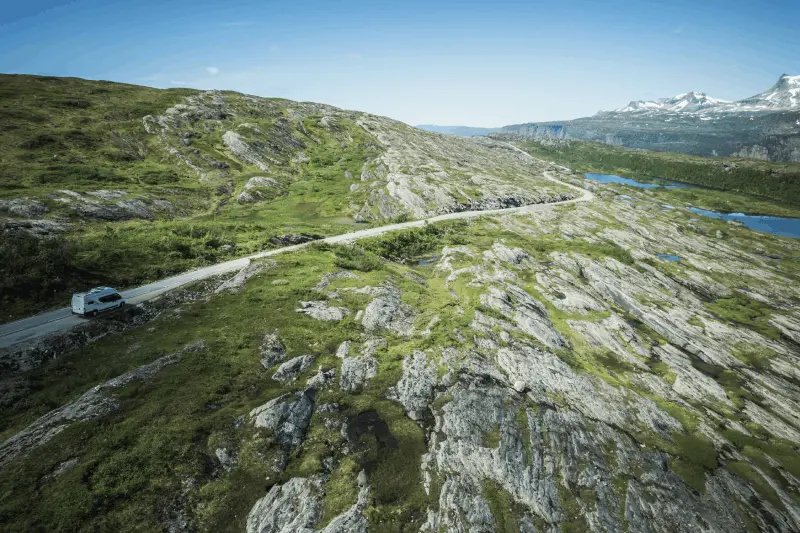
How to Find the Ideal RPM Range That Minimizes Fuel Consumption?
Many drivers think that pressing the gas pedal all the way down while climbing a slope is better; however, this only leads to fuel waste. The torque curve of your vehicle (usually between 1800-2500 RPM in diesels) is the most efficient point. Maintaining this RPM range by pressing the gas pedal at 70-80% helps stabilize your climbing speed and prevents fuel consumption from reaching astronomical figures. If the vehicle is losing speed, instead of pressing the gas more, downshifting will allow the engine to "breathe" and increase thermal efficiency.
When Should the Differential Lock Feature Be Activated in Vehicles with This Feature?
The differential lock found in some 4x4 or heavy-duty caravans prevents one wheel from spinning freely and absorbing all the power on steep and slippery slopes. If the ground is muddy, wet grass, or loose gravel, the lock should be activated before starting to climb. However, it should be noted that turning sharply with a locked differential can cause serious damage to the drivetrain (axle shaft, etc.). Therefore, the condition of the system should be continuously monitored on flat areas or at the entrance of turns, and it should only be used in case of necessity.
What is the Safe Stopping and Cooling Protocol When Signs of Overheating Are Observed?
The biggest mistake to make when the temperature gauge enters the danger zone is to stop the engine immediately. When the engine is suddenly stopped, the water pump also stops, and the heat inside the block cannot be dissipated, leading to the risk of the cylinder head blowing. Instead, you should stop in a safe place, shift to neutral (or P), and let the engine idle. Running the heater at the highest setting and fan speed helps draw the engine's heat into the cabin, assisting the radiator. The best method is to open the hood and wait for the engine to cool down with natural airflow until the gauge returns to normal.
How is the Strength of the Tow Bar and Connection Points Tested During Climbing?
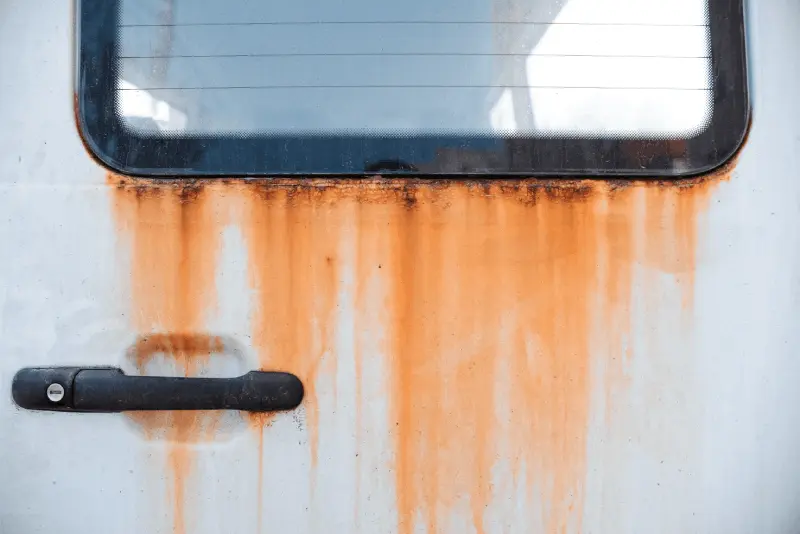
During a steep climb, the gravitational force pulls the caravan backward, creating vertical and horizontal loads on the tow bar. Before the journey, the torque values of the connection bolts should be checked, and any rust should be inspected. If metallic sounds like "clunk" are heard during the climb, this indicates that there is a loosening in that connection. You should stop immediately and check. Additionally, the tension of safety chains or cables should also be adequate to hold the caravan in case of a potential separation.
What is the Contribution of Tire Pressure to Slope Climbing Performance?
Tires are the only contact point of your caravan with the road. A tire with low pressure creates more rolling resistance while climbing a slope and unnecessarily strains the engine; it also poses a risk of bursting due to excessive flexing of the tire sidewalls. On the other hand, very high pressure increases the risk of slipping by reducing the contact area with the ground. The pressure values recommended by the manufacturer for "laden weight" should be strictly adhered to. Especially the pressure of the rear tires should be at a level to counter the additional load on steep slopes.
Why Does the Diesel Particulate Filter (DPF) Show a Tendency to Clog on Steep Slopes?
When climbing a steep slope with a caravan, the engine operates under high load with a rich mixture, which can lead to more soot production. If the slope is attempted to be climbed at low RPM, the exhaust temperature may not reach the level needed to clean the DPF, and soot accumulates. This can trigger a "drop from towing" warning. The solution is to climb the slope at a high enough RPM (approximately 2500 RPM) to increase the exhaust gas temperature. This way, passive regeneration occurs, and the engine's exhaust system cleans itself during the climb.
What is the Effect of Brake Discs on Slope Performance?
How Can the Thermal Shock on the Slope Be Prevented?After successfully climbing a steep slope, a descent usually begins immediately. The heated rims and engine components during the climb, combined with brake usage during the descent, can lead to the brake fluid boiling. Taking a short break when you reach the top to allow the brakes and tires to cool down is a critical safety measure. If the climb has been very long, it is healthier to move the vehicle slightly to cool it down (cooling with airflow instead of static cooling) to prevent damage to the rim hub and from there to the wheel bearings due to the heat in the discs.
How Does the Use of an Inclination Meter (Clinometer) Affect Driving Decisions?
Many campers try to estimate how steep the road is by eye, but optical illusions can be misleading. An inclination meter clearly shows how steep the road is, allowing you to make objective decisions about gear selection and when to take breaks. For example, a 12% incline can be challenging for a standard vehicle but critical for a loaded caravan. Having this data helps you know the limits of the engine and transmission and allows you to shift to the correct gear while still at the base of the slope, thus avoiding panic maneuvers.
How Does the Location of the Caravan's Water Tanks Disrupt Balance on a Slope?
Water tanks, usually located in the middle of the caravan, can suddenly shift the center of gravity due to the sloshing of the liquid inside as the slope steepens. This situation, known as the "Free Surface Effect," can cause the rear of the vehicle to suddenly become heavier, leading to the front wheels losing traction, especially in partially filled tanks. The safest way is to fill the fresh water tank completely or empty it entirely before entering routes with steep slopes, and to ensure that the waste water tanks are emptied. Fixed weight is always more predictable than shifting weight.
What Maneuvers Prevent the Caravan from Skidding on Curvy and Inclined Roads?
Steep slopes often combine with sharp "U" turns. At these points, due to the length of the caravan, one should avoid the mistake of "cutting the corner." The rear wheels of the caravan come in tighter than the towing vehicle; therefore, it is necessary to enter turns with a wide angle and prevent the wheels from hitting the shoulder or curb. Instead of accelerating in the middle of the turn, pressing the gas after straightening the steering at the exit of the turn increases traction and eliminates the risk of the rear of the caravan skidding (fishtailing).
Why Should Exhaust Gas Temperature (EGT) Be Monitored in Turbocharged Vehicles?
Under heavy loads and on steep slopes, turbocharged engines can push exhaust gas temperatures up to 700-800 degrees. If you have an EGT gauge, you can see the risk of turbo vanes melting if this temperature exceeds the critical limit. The safest action for the driver is to downshift when the EGT rises, increasing the amount of air entering the engine and ensuring faster evacuation of exhaust gases. This is the most effective engineering trick to reduce the internal temperature of the engine and directly protects the engine's lifespan.
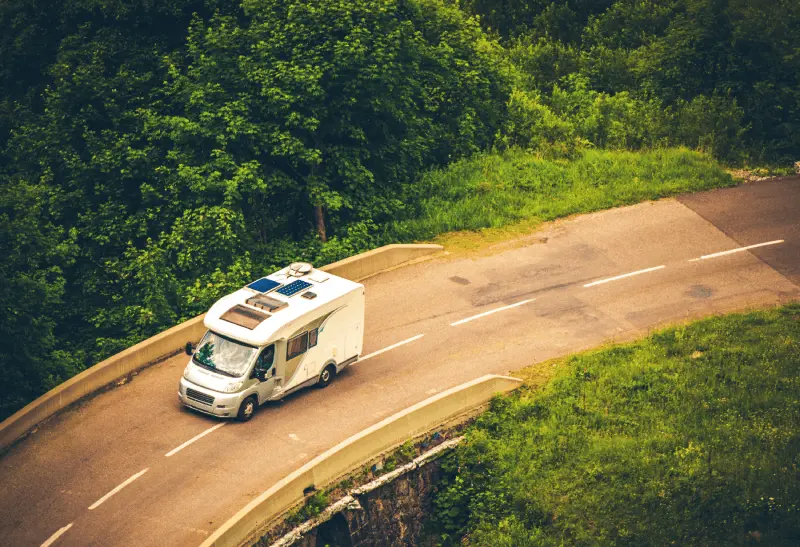
In What Situations Does the Zigzag Technique for Exiting Become a Lifesaver?
In very extreme situations, if the ground is very slippery and the vehicle cannot proceed in a straight line, if the width of the road allows, making very slight zigzags can artificially reduce the climbing angle. However, this technique is extremely dangerous on roads open to traffic and should only be considered as a last resort on wide, unpaved roads. Sudden steering turns during this maneuver can cause the tires to ride on the sidewalls and come off the rim; therefore, movements should be soft and controlled.
What Technical Equipment Can Overcome the Fear of Reversing with a Caravan?
Utilizing technology reduces driving stress. "Removable brake systems" or "electric parking brake modules" that can be added to your caravan later keep the vehicle stationary for you when you stop on a slope. Additionally, having a rearview camera always active provides psychological comfort by allowing you to see the traffic and ground behind you. If you are using a manual vehicle, software updates that provide "start assist" on slopes can also be applied by authorized services to certain models.
How Does Cleaning the Air Filter Determine the Climbing Power?
A steep slope is where the engine needs maximum air-fuel mixture. A clogged air filter on dusty roads reduces the amount of oxygen entering the engine, leading to a "rich mixture" error and consequently power loss. To prevent your engine from experiencing "shortness of breath" during the climb, the filter should be checked at the beginning of the journey, cleaned with pressurized air if necessary, or replaced with a new one. Clean air intake reduces the temperature in the combustion chamber and allows the engine to rev more easily, enabling you to climb the slope more quietly.
What is the Effect of Battery and Alternator Health on Electric Support Systems?
In modern caravans, steering assistance, ABS, and traction control systems (TCS) operate electrically. When the engine runs at low RPM but high load on a steep slope, the alternator's inability to produce sufficient current can weaken these systems. Having your battery in good condition absorbs voltage drops during sudden power needs (for example, when ABS engages). Checking voltage levels before the slope is a vital preparation for caravan owners with electric brake control units.
How Does the Coefficient of Friction on the Road Surface Limit the Climbing Angle?
Every road has a "friction limit." Asphalt can melt due to heat. The fine layer of dust on the surface can completely eliminate the traction of the caravan on steep slopes of about 15-20%. In such cases, slightly reducing the tire pressure (by 2-3 PSI) can increase the contact area to enhance the tires' grip capacity. However, as soon as the slope ends, the tires should be returned to their original pressure. Carefully examining the road surface and choosing the cleanest, most textured area is a subtle detail that affects the driving experience.
What is the Damage of the Rear Axle Weight on the Front Wheel Traction in Motor Caravans?
In front-driven motor caravans (platforms like Ducato, Transit), when weight is transferred to the rear on a steep slope, the front wheels tend to lift off the ground. This leads to both loss of traction and causes the steering to "come loose." To manage this risk, heavy items should be placed behind the front seats or between the axles whenever possible. If traction loss begins, slightly turning the steering wheel to the left or right can help the tires find new grip and continue climbing.
What is the First Move to Make When You Receive a Transmission Overheat Warning?
If you see a "Transmission Overheat" warning on the panel, you should pull over to a safe area without panicking. However, you should not turn off the engine; as the transmission fluid circulates through the torque converter. Keeping the vehicle in neutral while parked allows the transmission pump to circulate the fluid and pass it through the cooler. During this time, you should ensure that the cooling fans are working. After waiting for about 10-15 minutes, the viscosity of the fluid will return to normal, and you will be able to continue driving.
How Should the Psychological Preparation and Panic Management of the Caravan Driver Be?
As important as the technical aspect, the calmness of the driver is also crucial. Panicking in the middle of a steep slope during a breakdown or blockage can lead to incorrect gear shifts or wrong braking decisions. The answer to the question "What will I do if I stop?" should be prepared in the mind (pull the handbrake, turn on the hazard lights, try to accelerate slowly). Taking a deep breath and listening to the engine helps you understand the feedback the vehicle gives you (vibration, smell, sound). A confident driver is someone who can conquer even the steepest slopes without pushing the vehicle's limits.
Why Are "Escape Ramps" on the Side of the Road Used When Climbing with a Caravan?
Although they are generally designed for descents, escape ramps can be lifesavers for a caravan that has completely given up on the engine or has a broken transmission while climbing. If the vehicle starts to slide back uncontrollably on the slope, and the brakes are not holding or the handbrake is slipping, heading towards these sand pits can save lives. However, to avoid reaching this point, it is essential to perform regular maintenance on the vehicle and never shift to neutral while climbing (even engine braking in reverse is a resistance). This is the most fundamental rule.
Why Should "Summit Check" Be a Routine for Every Caravan Driver Before Descending?
Every steep slope you climb has a descent as well. Taking a few minutes to rest your engine before shutting it off when you reach the top and determining your "descent strategy" during this time can protect you from major disasters. Checking which gear you will use for the descent (usually one gear lower than the one you climbed in), the condition of the brakes, and the upcoming turns on the road from the map is a professional habit. This short break allows both you and your vehicle to gather the necessary energy and cooling for the next stage.