
Does Down Insulation Really Not Dry When Wet and Is It Recommended for Zero Insulation?
The biggest nightmare for many campers is the sleeping bag getting wet due to water being spilled on it or condensation inside the tent. Down insulation is a natural fiber based on protein, and when it gets wet, it loses its "lofty" structure and clumps together. This means the air pockets inside the bag disappear; in other words, insulation is completely lost. If your down sleeping bag somehow gets soaked, it is nearly impossible to dry it in the field. You will need a professional dryer and tennis balls to prevent the down from clumping together. However, the modern "Hydrophobic Down" technology has somewhat reduced this risk. Still, if you are going to a wet area and have no guarantee of keeping your bag dry, down insulation may leave you at risk of freezing in the middle of the night. This concern is particularly valid for those camping in the humid Black Sea plateaus or during rainy seasons.
Will a Sleeping Bag Rated for -10 Degrees Really Keep Me Warm Without Shivering?
The degree ratings on sleeping bags are often the biggest marketing trick or the most misunderstood technical data. Most users think that a bag rated for -10 will keep them warm at -10 degrees. However, one should look at the EN 13537 or the new ISO 23537 standards. These standards offer three categories: "Comfort", "Limit", and "Extreme". If you don’t want to shiver at -10 degrees, the number you need to look for is the "Comfort" value. Many cheap brands present the "Extreme" (risk of death) value as the main rating of the bag. Additionally, your metabolism, how much you eat that day, your level of fatigue, and the quality of the mat underneath you directly affect this rating. If you say, "I have a low metabolism," it is safest to expect a performance that is 5-10 degrees above the temperature the bag claims to be rated for. So if you are looking for comfort at -10, you should actually look for a bag with a comfort rating of -15 or -20 to ensure you don’t wake up shivering in the middle of the night.
Do Synthetic Bags Lose Their Shape and Warmth After a Few Washes?
Synthetic bags, while generally cheaper than down, raise serious question marks regarding long-term durability. Synthetic fibers are essentially plastic-based threads, and every compression (putting in a backpack) or washing process breaks these fibers down on a micro level. After a few years of heavy use, you will notice that a synthetic bag's "loft" or fluffiness has decreased. While the filling material inside loses its homogeneity and clumps in some areas, you may see that in some areas only the outer fabric remains. This leads to the formation of "cold spots". Especially synthetic bags washed in home washing machines with incorrect detergent and high spin cycles can lose 30% of their insulation properties in one go. If you plan to wash your bag after every activity, you should know that the lifespan of synthetics will be much shorter compared to down and that over time it will not provide the same warmth as on the first day.
Will the Zipper Inside the Bag Get Stuck and Trap Me?
It may sound funny, but waking up in the pitch dark to go to the bathroom and getting stuck in the bag because the zipper gets caught in the fabric is a real panic reason. Many cheap or poorly designed bags do not have a snag guard to prevent the inner lining from getting caught in the zipper teeth. When you try to quickly pull the zipper while half asleep in the middle of the night, the thin lining fabric can get caught between the teeth, and the zipper gets stuck. This not only traps you but can also lead to tearing the fabric or completely breaking the zipper if you force it. A quality bag will have a stiff plastic strip or a special head design that prevents the fabric from getting caught in the zipper. If the bag you are considering does not have this feature, you may find yourself trying to cut your bag open in the middle of the night. This is a critical mechanical detail that we always recommend our clients check as content strategists.
Does Taking Up Too Much Space in My Backpack Turn Into a Logistics Nightmare?
If you are a backpacker, every cubic centimeter in your backpack is precious. Synthetic bags take up about twice as much space as down bags that provide the same warmth. No matter how tightly you compress a synthetic bag, at some point it becomes "rock solid" and does not shrink further. This means you will have to allocate half of your backpack just for the sleeping bag; this leaves no room for food, water, and other gear. Down bags, on the other hand, have an incredible compressibility; they can shrink down to the size of a soccer ball. However, there is a hidden cost and risk here: If you keep the bag compressed in your carrying bag for too long (even while storing it at home), the fibers or down structure will deteriorate. Logistically, attaching the bag outside your backpack disrupts balance and increases the risk of the bag getting wet or torn. Therefore, volume is not just a matter of comfort, but also a direct logistical issue related to how comfortably you can travel your route.
If I Have an Allergic Reaction, Will a Down Sleeping Bag Trigger a Sneezing Fit?
This is one of the biggest concerns for health-conscious potential buyers. Many people think they are allergic to down, but often the real allergen is not the down itself but dust mites that settle between the fibers or the down not being cleaned well enough. Quality brands go through multi-stage washing and sterilization processes to make the down hypoallergenic. However, for individuals with asthma or severe allergies, the leakage of down particles through the fabric pores can cause nasal congestion, sneezing, and itching throughout the night. Synthetic bags are much safer in this regard; because the inorganic structures significantly reduce the risk of harboring allergens. If your health and uninterrupted sleep depend on this, you may need to use a "dust-mite" protective cover before buying down or directly turn to high-quality synthetics.
If I Am Over 1.90 Meters Tall, Will My Feet Press Against the End of the Bag and Cause Heat Loss?
Standard sleeping bags are generally designed for people between 180-185 cm tall. If you are tall and get into a standard bag, your feet will compress the insulation material at the very end of the bag. Remember, a sleeping bag does not heat you; the insulation material (loft) that traps your body heat keeps you warm. When your feet compress the insulation or fiber at the end of the bag, there will be no air pockets left to provide insulation there. This means the outside cold will be directly transmitted to your feet (conduction). Result: Even if your body is warm, your feet will feel like ice, making it impossible for you to sleep. Buying a bag that is not "long" just because it is cheap means you will be curled up in a fetal position all night and straining the blood circulation in your toes. This is a matter of health and thermal efficiency beyond comfort.
Is There a Hygiene and Bedbug/Flea Risk in Used or Second-Hand Bags?
This is the topic that those with limited budgets are most curious about but hesitant to ask. Sleeping bags directly absorb the sweat, oil, and skin flakes that our bodies release during sleep. When you buy a second-hand bag, you are essentially purchasing all the biological waste of a stranger. If the bag has not been properly cleaned (which is difficult for down bags), it may contain microscopic organisms, mold spores, or worst of all, bedbug eggs. Additionally, you cannot know how the previous user stored the bag; if they left it wet in a compression sack, mold may have formed in the filling, and that mold smell never goes away. Even if you are not hygiene-conscious, insulation performance (insulating power) is reduced by a filling material that has been filled with someone else's sweat. Therefore, it is vital to inquire whether the bag has been professionally cleaned when buying second-hand.
Will Cold Air Seep In Through the Gap at the Shoulder of the Bag?
The warm air inside the sleeping bag is like the air in a balloon; it wants to escape through the smallest opening. If the bag does not have a "draft collar" at the neck, every time you move, you pump the warm air out of the bag (bellows effect) and invite the cold air in from outside. Many people focus only on the filling material of the bag, but the insulation design in the shoulder and neck area actually determines 30% of the bag's performance. If there is a gap inside the bag and you cannot seal the neck area properly with the drawstrings, even the most expensive down bag will not keep you warm. Your concern should be: "Will cold air get in when I turn from side to side in this bag?" If the collar design is weak, the answer is unfortunately yes.
Are Local Brands More Reliable Than Global Brands?
This topic is often a dilemma of price-performance and trust. Global brands (North Face, Marmot, Mammut, etc.) have undergone years of laboratory testing and international certifications (such as RDS - Responsible Down Standard). You can trust the ratings on these brands because they have passed independent tests. In local or unbranded products, you may find that a bag labeled "comfort -20 degrees" actually only performs at -5 degrees; because these values are often untested, estimated figures. However, it should not be forgotten that local brands have also improved significantly in recent years, providing price advantages and offering service/repair options. Your concern should be: "How much risk does the price difference put on my safety on that mountain?" If you are making a critical summit climb, it makes sense to trust the certified tests of a global brand, but for a weekend picnic camp, a local brand may be sufficient.
If I Wash It in the Washing Machine, Will the Down Clump Together and Become Useless?
The biggest fear of down sleeping bag owners is the washing process, and this fear is not unfounded. If you wash a down sleeping bag with regular detergent and fabric softener, the natural oils on the down will be lost, and the down will clump together into small hard balls. After drying, there will be empty pockets and hard clumps inside the bag; the bag will no longer be different from a blanket. Synthetic bags are more resistant to washing, but they can also lose their shape in incorrect heat. Therefore, it is necessary to use professional cleaning kits (down shampoos) and to tumble dry at very low heat for hours. The answer to the question "Will washing my bag ruin its performance?" is "yes" if you do not have the right equipment. Therefore, putting a "liner" (sleeping bag liner) inside the bag to keep it clean is the most professional solution.
Will I Freeze in the Mountains in Spring with a Summer Sleeping Bag?
The idea that "any bag works in summer" has caused thousands of campers to spend the night shivering, even on the brink of hypothermia. In mountainous areas and plateaus, even if the daytime temperature is 25 degrees, the temperature can drop to single digits or even zero as soon as the sun sets. Summer sleeping bags usually have a very thin layer of insulation and only protect you around 15-20 degrees. Trying to sleep in a summer bag at a plateau where the temperature drops to 5 degrees at night is like trying to sleep in the snow with just a thin blanket. Logistically, while it offers the advantage of lightness, you should never set out with a summer sleeping bag in the spring months (April-May or September-October). Your question should be "what is the lowest expected nighttime temperature?" and your bag should provide comfort at least 5-10 degrees below that estimate. Otherwise, your trip will turn into a survival struggle rather than an adventure.
Does Mat Selection Directly Affect the Insulation Performance of the Bag?
Most people make the mistake of spending thousands on a sleeping bag and buying a cheap mat for 50 lira underneath. A significant portion of heat loss comes not from the air but directly from the ground (cold from the ground). The down or fiber inside the sleeping bag loses its insulation properties because it is compressed by your weight. The only thing that will protect you from the cold coming from the ground is your mat. If your mat's R-Value (insulation coefficient) is low, even if you have the best sleeping bag in the world, you will feel cold from your back, and this cold will spread throughout your body. In the dilemma of "Is my bag defective or is my mat insufficient?", it is usually the mat that is at fault. If you are going winter camping, an R-value of 4 and above is required, while for summer camping, a mat around 2 is essential. Overlooking this hidden logistical detail means wasting your investment in the bag.
Do Women-Specific Designed Bags Really Make a Difference?
Is this just a marketing tactic or an anatomical necessity? Scientific data shows that women lose heat more easily than men metabolically, and especially the foot areas tend to get cold more quickly. Women-specific bags are wider in the hip area, narrower in the shoulder area, and contain extra filling material at the foot and waist areas. Additionally, the "Comfort" rating of women's bags is generally higher than that of men's versions. If you are a woman and are buying a unisex bag, you will expend more energy to heat the gaps inside, and your feet are more likely to get cold. Therefore, instead of asking "Why is X brand women's bag more expensive?", you should consider how much the extra insulation it offers will enhance your comfort. This is not a luxury but a physiological necessity.

Is the Waterproofing of the Bag's Stuff Sack a Necessity?
As critical as the bag itself, the features of the stuff sack you carry it in are also crucial. If water seeps into your backpack or you place your backpack on a wet surface, the bag needs to stay dry. Most standard bag stuff sacks only protect against dust; they are not waterproof. Especially if you are using a down bag, having a stuff sack in the form of a "dry bag" is not a luxury but a vital necessity. Additionally, the straps on the stuff sack help you compress the bag, but it is a common logistical problem for these straps to break at the seams. The answer to the question "Will this sack protect me in a downpour?" is no; you should definitely get an additional waterproof sack. Remember, a wet sleeping bag is just a weight, a useless piece of fabric.
How Can I Be Sure That Down Is Obtained Ethically?
For a conscious consumer, this is a moral obligation. The down industry can unfortunately sometimes involve cruel methods such as live-plucking or force-feeding. When purchasing a bag, you should check whether it has the RDS (Responsible Down Standard) or TDS (Global Traceable Down Standard) logo on it. These certifications guarantee that the down is obtained as a byproduct of the food industry and that animal welfare is monitored by independent auditors. If the bag is very cheap and has no certification, it is likely produced through unethical means. The question "Did an animal pay the price for this bag being cheap?" should be in the mind of anyone with an ethical consumption vision. Quality brands even allow you to track which farm the down came from through a code on the bag.
Should I Sleep in the Bag with Clothes or Naked?
This is one of the most debated "urban legends" in the camping world. Some claim that sleeping naked keeps you warmer, but the physical reality is different. A sleeping bag retains the radiant heat your body emits. If you wear thick and tight clothes, you prevent your body heat from spreading inside the bag, and you will feel cold until the air inside the clothes warms up. The ideal method is to sleep in clean and dry thermal underwear inside the bag. Getting into the bag with wet or sweaty clothes is the biggest mistake; because that moisture will try to evaporate while absorbing your body heat and will ruin the insulation of the bag. Your question should be "Are these clothes blocking the air circulation inside the bag?" Instead of dressing too thickly, relying on a quality thermal layer and the performance of the bag will always yield more efficient results.
Does the Side of the Zipper Affect Comfort of Use?
Although it seems like a simple detail, the side of the zipper on the bag directly affects the ergonomics of use. If you are using your right hand (if you are right-handed), it is much easier to open and close a bag with the zipper on the left side (Left Zip); because your right hand applies better force by pulling across. If you want to couple two bags together, one must have a right zipper (Right Zip) and the other a left zipper. Additionally, in your tent layout, having the zipper facing the tent door provides great convenience in entry and exit. Buying a bag without asking "Which side is more natural for me?" may lead to frustration when you find yourself searching for the zipper on the wrong side in the middle of the night. This is a practical logistical barrier that particularly restricts your mobility in tight spaces (small tents).
Do Very Cheap Bags Rip in the Middle of the Night and Leave Me Stranded?
Supermarket bags or unbranded products on the market are often made from very thin and low-quality fabrics that do not have "ripstop" (tear-resistant) properties. These fabrics can easily tear from end to end if they get caught on something or if you make a sudden movement inside the bag. If your down bag tears, all the insulation material inside will escape within minutes, rendering the bag useless. Additionally, in low-quality bags, it is very common for cold air to seep in through the seams we call "cold spots". The question "Will these seams withstand my movements or will they tear at the first tension?" is a vital safety concern for those going on long expeditions. Cheap bags usually offer one-time comfort, while quality equipment provides you with a safe shelter for years.
Does Humidity in the Campsite Ruin the Bag's Insulation Overnight?
Not just rain, but high humidity in the air (foggy weather, lakeside) also affects the sleeping bag. Down insulation absorbs moisture from the environment like a sponge. If you are camping in a humid environment for several days and do not have the chance to air out and dry your bag during the day, the bag's "loft" will start to decrease a little more each day. By the third night, you will notice that the bag does not keep you warm as it did on the first night. Synthetic bags are much more resilient in this regard; they maintain their performance in humid environments. Your question should be: "How humid will the place I am going to be, and will I have the chance to dry the bag?" If you wake up every morning in a soaking wet fog, it means your down bag's performance will quickly decline. In this case, synthetic bags or professional models with water-repellent coatings (DWR) should be preferred.
Mummy Type or Rectangular: Will My Movement Be Restricted?
Mummy-type bags fit the body snugly and are the best in terms of heat efficiency because there is very little space inside that needs to be heated. However, if you have a claustrophobic nature or move your legs a lot while sleeping, a mummy bag may feel like a "prison" to you. Rectangular bags offer more room for movement but are very difficult to heat and can be cumbersome. The concern of "Can I turn in this narrow bag or will I be stuck?" is critical for comfortable sleep. Some modern designs solve this problem with "stretch" seams; they wrap the body while allowing for movement. If you are someone who turns a lot in your sleep, the narrow cut of a mummy bag may cause you to wake up throughout the night. Therefore, you should not decide on the width measurements of the bag without comparing them to your own body shape.
Why Is Baffle Design Not Just a Visual Detail?
The seams on the outside of the sleeping bag are actually the "baffles" that keep the insulation evenly distributed. These baffles prevent the down or fiber inside from gathering at one end of the bag, ensuring that the insulation remains homogeneous. If the seams are made directly from the outer fabric to the inner fabric (stitch-through), there is no insulation at those seams, and cold air can enter from there. Quality bags use a "box wall" construction; there is a vertical fabric wall between the seams, thus preventing cold spots from forming. The question "Why do some areas of this bag look thinner?" is a sign of a faulty baffle design. In a poorly designed bag, you may see the insulation at the foot area sliding up to the shoulders during the night, leaving your feet exposed. This is a technical engineering detail and one of the most important factors determining the price of the bag.
Will Storing the Bag Incorrectly at Home Shorten Its Lifespan?
This is the biggest hidden cost resulting from user error. Sleeping bags should never be stored in those small compression sacks (stuff sacks). If you leave the bag in that sack for months, the filling material (whether down or synthetic) will lose its elasticity and "die". When you take the bag out again, it will not regain its original loft, and its insulation properties will permanently decrease. Sleeping bags should be stored at home in a large fabric bag or hung up, preferably without being compressed at all. The question "Does storing the bag in its stuff sack save space?" Yes, it does; but this saving will return to you as having to sleep frozen on your next camping trip and needing to buy a new bag. To avoid making this logistical mistake, you should never throw away the large storage bag that comes with the bag.
Do Hood Adjustments and Drawstrings Prevent My Face from Freezing?
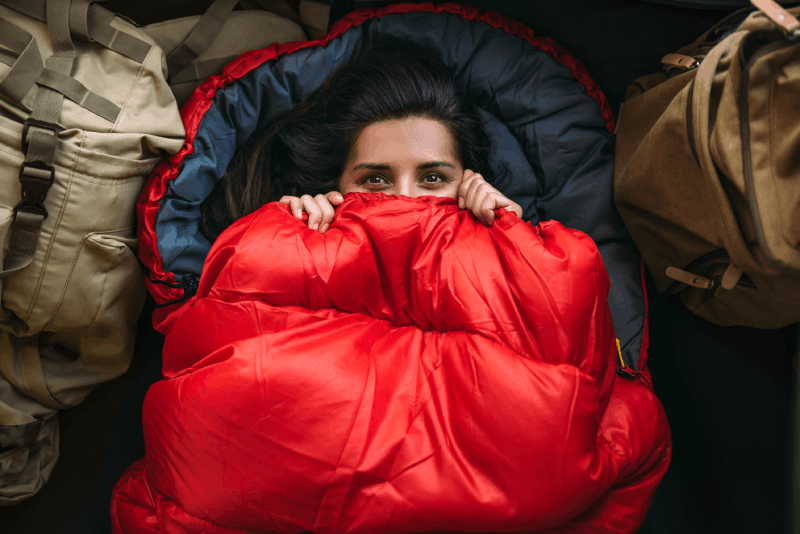
On a freezing night, while the rest of your body is inside the bag, the only part left exposed is your face. If the design of the bag's hood is poor, you will continuously lose heat from your nose and forehead. A good hood system should wrap your entire head so that only your eyes and nose remain exposed. The quality of the drawstrings is also important; soft but sturdy drawstrings that can be easily adjusted even with gloves should be chosen. The concern of "Will the hood loosen and slide off my head in the middle of the night?" determines the quality of your sleep in a windy tent camp. The extra insulation layer (hood baffle) inside the hood cuts off the air circulation around your head, ensuring that your head stays warm even on stormy nights. This detail is a basic necessity, especially for high-altitude activities.
Is the Pocket Inside the Bag Really Necessary or Just Superfluous?
Most modern sleeping bags have a small pocket at the level of the chest. At first glance, it may seem like a superfluous detail, but it is a great solution in terms of logistics and practicality. In freezing cold, you need to keep your phone's battery from dying, your headlamp's batteries from freezing, or your contact lens solution from turning to ice by keeping them warm with your body heat. "Can I just put my phone under my pillow?" No, because everywhere outside the bag is freezing. The inner pocket ensures that you can safely store valuable and temperature-sensitive items. If there is no pocket in the bag, you may find yourself struggling with your phone at the bottom of the bag all night. This is one of the features we consider most important in the "small but life-saving" detail category as content strategists.
Is Warranty and Repair Service a Requirement When Buying a Sleeping Bag?
A sleeping bag can last you 10-15 years if used correctly. However, during this time, the zipper may break, the fabric may tear, or the insulation may decrease. Especially if you are buying a high-priced professional model, the repair service offered by the brand is of vital importance. While most global brands offer lifetime warranties, it can be difficult to find someone to help at some local retailers. The question "If my bag tears, who will I take it to?" is related to protecting your investment. While self-repair kits (tenacious tape) can be useful in the field, professional sewing or down replacement services extend the life of the bag. Therefore, you should pay attention not only to the purchase price but also to the technical support network behind the product. Repairing a bag is a much more economical and environmentally friendly solution than buying a new one.
Is the Color of the Bag Just an Aesthetic Preference?
The color of a sleeping bag is often seen as a personal preference, but there are two important practical aspects: Safety and Drying. If you need to be rescued by helicopter in an emergency or if you get separated from your team in foggy weather, a contrasting color like orange or bright yellow can save your life. On the other hand, dark-colored (especially black or navy blue) bags absorb sunlight faster, which helps the bag dry out more quickly when ventilating in the morning. The questions "Will I be noticed if I get lost in nature?" or "Will my bag dry quickly in the sun?" are logical reasons behind color selection. Of course, green tones may be attractive for camouflage enthusiasts, but visibility in extreme conditions should always be a priority.
Does the Texture of the Inner Fabric of the Bag Cause Discomfort on My Skin?
Synthetic nylon fabrics can sometimes feel "plastic-like" or give a "cheap" sensation, which can be very uncomfortable, especially when you sweat. Some bags have inner linings made of brushed polyester or microfiber, which feel more like cotton sheets. The question "Will I feel like I’m sleeping in a plastic bag all night?" is the finest detail of comfort. If your skin is sensitive, you should check the hand-feel of the inner lining. Poor quality linings can both cause sweating and irritate your body due to friction. A good inner fabric should have moisture-wicking properties to quickly move moisture away from your skin. This is not just a matter of comfort but a technical necessity that keeps you dry throughout the night.
Why Should the Footbox Design Be Wide?
When we sleep, our feet naturally fall to the sides. If the foot area of the sleeping bag is too narrow or has a flat design, your feet will stretch the fabric of the bag and crush the insulation there. An anatomically shaped (trapezoidal) footbox allows your feet to rest in their natural position, relieving blood circulation and ensuring maximum insulation. The test of "Can I wiggle my toes?" is the first thing you should do inside the bag. Cramped feet mean faster cooling feet. Especially in winter camps where there is a risk of frostbite, the extra space and insulation quality in the foot area are of vital importance. This is a niche design detail where engineering and anatomy come together.
Should Shoulder Width Be Tested When Buying a Sleeping Bag?
Many campers look at the length of the bag but neglect the shoulder width. If your shoulders are broad and the bag is tight, you will struggle to zip it up and feel pressure in your chest. This pressure not only creates discomfort but also causes the insulation material of the bag to compress, allowing cold air to seep in from your shoulders. You should check, "Can I take a deep breath inside the bag?" If you feel like you are wearing a corset, that bag is too small for you. Sleeping in a bag that restricts your movement leads to muscle aches and waking up tired in the morning. Therefore, in mummy-type bags, shoulder width (girth) is as critical a parameter as length when making a selection.
Is the Biggest Factor Affecting Price the Quality of the Insulation or the Brand Value?
In the world of sleeping bags, there is a significant price and performance difference between "800 Fill Power" down and "600 Fill Power". Fill power indicates how much volume an ounce of down occupies; as the number increases, the bag becomes lighter, more compressible, and warmer. The reason a brand may be very expensive is not just its logo but the high-quality, rare down and ultra-light outer fabrics it uses. The answer to the question "Is it worth this much money?" is "yes" if you carry the bag on your back every weekend and count every gram. However, if you go camping by car once a year, spending thousands on the highest technical features may not be a rational investment. When balancing your needs with your budget, you should distinguish between marketing promises and actual technical data.