Camping is the purest form of being one with nature; however, when the sky turns gray and the first drops start to fall, the quality of your tent, which is the only protection between you and nature, becomes crucial. A camper's worst nightmare is waking up in the middle of the night to find cold water seeping into their sleeping bag. In this guide, we will explore how the water column values expressed in "mm" (millimeters) are not just numbers, but actually affect your comfort, health, and camping budget in detail.
Does a 2000 mm Water Resistance Leave Me Halfway During Continuous Rain Overnight?
A 2000 mm water column value technically means that the fabric can withstand the pressure of a 2-meter water column placed on it. However, rain in nature is not just a vertical weight; it is a kinetic energy that comes with the wind. In light to moderate rain, this value is more than enough to keep you dry. If the area where you will camp is constantly drizzling or experiences standard spring rains, 2000 mm is a safe harbor.
However, in continuous and heavy rain overnight, the pressure exerted by the wind on the fabric can challenge this "static" resistance. Especially if water accumulates at points where the tent is not pitched tightly, the pressure at that point increases, and the risk of leakage arises. Therefore, if you choose a tent with a 2000 mm value, it is critical that the setup is perfect and that a slope is created to allow water to flow quickly off the fabric. Otherwise, you always run the risk of waking up with a damp sleeping bag in the morning.
Does the Specified Mm Value for the Ground Fabric Allow Water to Seep Inside During Knee Bending or Elbow Contact?
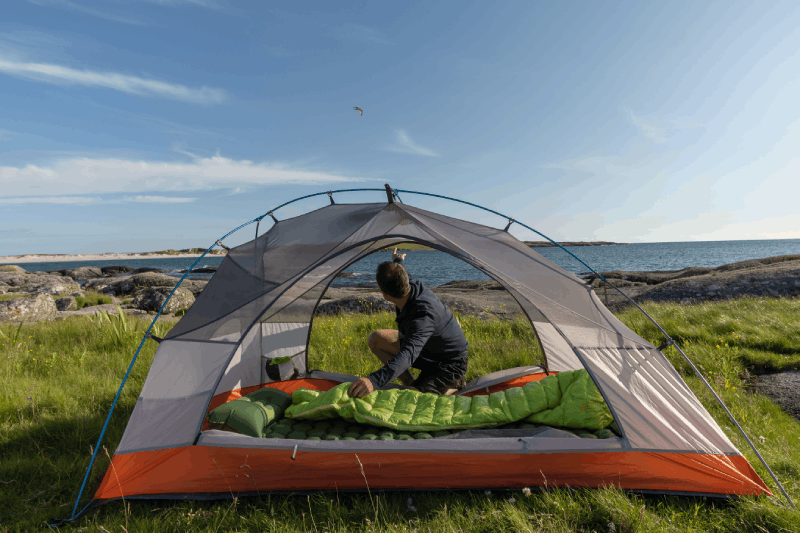
The biggest mistake a novice camper makes is focusing solely on the mm value of the top canopy. However, the floor of the tent is the area exposed to the highest pressure. When an 80-kilogram adult kneels inside the tent, their body weight is concentrated on a small point, creating a force equivalent to approximately 5000-8000 mm water column value at that point. If the waterproofing value of your ground fabric is at a low level like 3000 mm, it can "seep in" under pressure from the wet ground at the moment you kneel.
This situation not only causes hygiene issues but also leads to the bottom part of your sleeping bag getting wet quickly. For a healthy and comfortable camping experience, the ground fabric should have a value of at least 5000 mm, ideally 10,000 mm. If you have a ground fabric with a low value, you should definitely place an additional "footprint" (tent footprint) underneath. This extra layer prevents physical abrasion and helps to stop pressure-related leaks, keeping you from getting stuck in the mud.
Do High Mm Value Fabrics Increase the Humidity Level Inside the Tent and Soak My Sleeping Bag?
As the waterproofing value increases, the fabric's pores generally become tighter or a thicker polyurethane (PU) coating is applied. While this effectively blocks water from outside, it can also restrict air circulation inside to the same extent. This is where the phenomenon we call "condensation" comes into play. The water vapor created by your breathing and body heat during the night can condense on the cold surface of the tent canopy if it cannot escape, turning into water droplets.
In a tent with a value of 10,000 mm, if the ventilation windows are insufficient, you may find that the sleeping bag at your head end is soaked from your own breath when you wake up in the morning. This is not a leak but a ventilation error. When choosing a high mm value tent, you must ensure that it has wide ventilation openings and a double-wall structure. The fabric's waterproofing is as important as its "breathability" for your comfort and to avoid rheumatic pains.
Does the Mm Level of the Polyurethane Coating Trigger the Flammability Risk or Chemical Smell of the Tent?
The intense "plastic" smell that hits your nose when you buy a new tent is actually the odor of the polyurethane coating that makes the fabric waterproof and the seam tapes. This smell can become more pronounced, especially in closed and warm weather. In some low-quality or standard outdoor productions, the chemical compounds used to achieve high mm values can cause headaches or allergic reactions in sensitive individuals.
From a safety perspective, it is essential to check whether these chemical coatings comply with fire retardant standards. Some coatings used for high water resistance can melt quickly or release toxic smoke when exposed to fire. Therefore, it is not enough to just look at "how many mm"; you should also check what certifications the fabric has (for example, CPAI-84). To stay dry without compromising your health, reviewing the brand's material safety data sheets or paying attention to complaints about odors in user reviews would be a wise strategy.
Can the Pressure Exerted by Wind in Stormy Weather Exceed the Specified Mm Value?
The mm values measured by tent manufacturers in laboratory conditions are based on still water pressure without wind. However, in the real world, wind blowing at 50-60 kilometers per hour can hit raindrops against the fabric at bullet speed. This dynamic force of the wind can instantly increase the pressure of the water on the fabric by 2-3 times. For example, a fabric with a value of 1500 mm can be stressed as if it were under a pressure of 4000 mm in windy weather.
This logistical challenge poses a serious safety risk, especially in open terrains or high-altitude campsites. If you are going to storm-prone areas, you should choose a tent with high wind resistance and at least a 3000 mm water column value, even if it doesn't rain. While the wind tries to push water into the fabric's pores, the needle holes at the seams become your weakest point. Therefore, not only the mm value but also the aerodynamic structure of the tent is an integral part of its waterproofing sustainability.
Does Strengthening a Low Mm Value Tent with Water-Repellent Sprays Improve the Performance of a Professional Tent?
Many campers try to reduce costs by buying a cheap tent and spraying it with DWR (Durable Water Repellent) sprays. However, this is merely a logistical misconception. Water-repellent sprays ensure that water beads and runs off the fabric, but they do not permanently change the water pressure resistance (i.e., mm value) of the fabric's fundamental texture. Professional tents with high mm values have multi-layer coatings that penetrate between the fabric fibers during the manufacturing phase.
Sprays applied from the outside lose their effectiveness after the first few rains or under the UV rays of the sun. This results in additional maintenance costs and time loss for you. Additionally, applying spray before each camping trip can exceed the price of a quality tent in the long run. If you are going to extreme conditions, it is more logical to choose a model that has passed high-pressure tests and has factory-taped seams rather than relying on temporary solutions, as this will be the best investment for your safety. The way to avoid hidden costs is to buy the right equipment all at once.
Do Tents Below 3000 mm Pose a Health Risk in Tropical Climates?
In tropical climates, rain is not just a natural event; it is almost a wall of water. In these regions, having a mm value of 3000 or above is not only a matter of comfort but also a health necessity. Sleeping in a constantly wet environment can lead to a rapid drop in body temperature (hypothermia). Additionally, the fabric absorbing water and becoming heavy can raise the humidity level inside the tent to over 90%, triggering respiratory discomfort.
Tents with insufficient mm values can cause a phenomenon known as "misting" in tropical rains; that is, the raindrops hit the outer canopy so hard that they create a fine mist inside. This can lead to the dampening of all your gear, electronic devices, and food, thus causing spoilage or mold. To protect your health and avoid tropical diseases (such as moisture-related fungi), a minimum of 3000 mm should be considered as a lower limit in these geographical areas, and ideally, professional equipment of 5000 mm or more should be selected.
Does the Increasing Mm Value of the Tent Prolong the Drying Time of the Fabric and Cause a Musty Smell in the Bag?
This is one of the most common hidden logistical challenges faced by campers. Tents with high mm values and thick coatings are excellent at keeping water out, but they take much longer to dry when wet compared to thin, low mm value fabrics. If you fold your tent and put it in your bag without fully drying it after a rainy camp, that high water-resistant coating will trap moisture inside.
Within just 24 hours, bacteria can start to grow inside the tent, and that infamous "damp smell" will permeate the fabric. Worse yet, mold can eat away at the polyurethane coating, permanently damaging the fabric's waterproofing properties (mm value). If you are using a high mm value tent, when you return home, you should definitely lay the tent out in the middle of the living room or on the balcony and ensure it is completely dry. Packing it wet with the thought of "it doesn't leak anyway" is the biggest user error that shortens the lifespan of your expensive equipment.
How Durable Are the Mm Values of Ultra-Light (UL) Tents' Thin Fabrics Against Abrasion on Hard Surfaces?
In the world of ultralight backpacking, very thin (for example, 10D or 20D) silicone-coated nylons are used to shed grams. These fabrics typically have modest water values of 1200-2000 mm but are very expensive. The critical question here is: How long can these thin fabrics maintain that mm value on rocky or thorny ground?
A small scratch or abrasion can reduce the fabric's water resistance to zero at that point. If you are going to camp on hard surfaces, you should also consider the "denier" (thickness) value of the fabric as much as the high mm value. Focusing solely on the mm value and choosing a very thin fabric can lead to disappointment at the moment of first contact with the ground. Logistically, if the ground is uncertain, it is better to choose more durable (with ripstop features) and high abrasion-resistant models, or at least a protective footprint, as this will extend the waterproofing lifespan of your tent.
Does the Mm Value Cause the Fabric to Crack at Freezing Point When Camping on Snow?
The biggest fear encountered in winter camps is that the waterproof layer will harden and crack due to the cold. Standard polyurethane (PU) coatings can lose their flexibility in extreme cold (usually below -10). If your tent's mm value is very high but the coating material used is not suitable for winter conditions, microscopic cracks can form on the fabric when setting up or folding the tent.
These cracks can lead to water seeping in during snowmelt or the next rain. For snow camping, tents with "siliconized nylon" (SilNylon) coatings are more suitable because silicone penetrates the fibers and retains flexibility in the cold. Setting up a tent that is not labeled "4 seasons" but has a high mm value on snow can end the lifespan of that coating in a single night. If you do not want your tent's fabric to tear like paper while fighting for survival in winter, you should choose models with chemical compositions that are resistant to cold.
Are the Quality of the Seam Tapes Strong Enough to Ensure the Specified Mm Value is Truly Protected?
Even if a tent's fabric is resistant to 10,000 mm of water column, if the tapes at the seams are of poor quality, the tent's actual value is 0 mm. Water always takes the easiest path, and this path is usually through the thousands of tiny holes created by the sewing needles. Factory-made "heat-taped" seam tapes can shift over time due to moisture, heat, and improper folding.
Especially in cheap brands, while the mm value is kept high as marketing material, the cost of seam tape is often overlooked. Before purchasing a tent, you should open it up and check the seam lines; the tapes should be transparent, seamless, and fully bonded to the fabric. If you see any lifting at the edges of the tapes, that tent will leak water at the seams or corner joints during the first serious rain. This is a technical defect that is difficult to repair and can ruin your camping experience.
Do Transparent Parts in Windowed Tent Models Provide Protection Compatible with the Main Fabric's Mm Value?
The windows added for visual comfort are often considered the "weak link" in the waterproofing hierarchy. Transparent PVC or TPU panels generally have a much higher mm value (they are completely waterproof) because they are not woven like the main fabric. However, the real issue is the stitching points where these panels are joined with the main fabric. The thermal expansion coefficients of the two different materials (one flexible nylon, the other rigid plastic) are different.
Under the sun, these joints that expand and contract in the cold at night can turn into leakage points where the mm value cannot be maintained over time. Additionally, low-quality transparent panels can degrade over time due to UV rays and harden. If you want a tent with a view, make sure that the windows have protective covers (storm flaps) made from the main fabric. Closing these flaps when the rain intensifies reduces the pressure on the window seams, minimizing the risk of leakage.
How Many Years After Second-Hand Purchases Does a Tent's Mm Value Completely Lose Its Function?
When buying a second-hand tent, the "3000 mm" label can be misleading. Waterproof coatings begin to age from the moment they leave the factory. The average lifespan of a PU coating depends on storage conditions and ranges from 5 to 10 years. If the previous owner stored the tent in a hot attic or packed it wet after each camp, that 3000 mm protection may actually have dropped to as low as 500 mm.
The easiest way to understand if the coating has deteriorated is to touch the inner surface of the fabric; if it feels sticky to your hand or white powders are coming off, the waterproofing feature has ended due to "delamination" (layer separation). When considering second-hand purchases, keep this hidden cost in mind and try to ask for the production date of the tent. A tent older than 5 years, regardless of how high the mm value is, has the potential to turn into a sieve at any moment.
Do High Mm Value Tents Endanger Oxygen Levels Inside During Family Camping?
In crowded family camps, the accumulation of carbon dioxide inside the tent is a serious safety issue. Tents with 5000 mm and above, while excellent at blocking water from outside, minimize the air exchange inside. If all doors and windows are tightly closed out of fear of storms, the breaths of 4-5 people inside can quickly lead to "stagnation" of the air.
This situation can create a risk of oxygen deficiency or overheating (overheating) during sleep, especially for small children and babies. When choosing a family-type tent, you should consider not only the mm value but also the width of the "mesh" areas on the tent's ceiling and whether these mesh areas allow airflow while protecting against rain. For a safe camp, waterproofing should be designed as a shield that breathes, not like a prison wall.
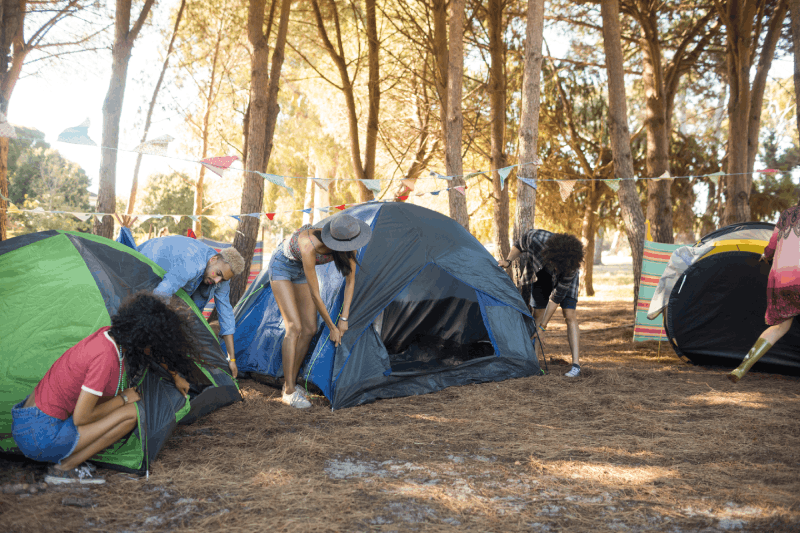
Is the "1000 mm" Mark on Cheap Market Tents a Result of a Real Rain Test or Just Marketing?
The "1000 mm" expression on very cheap tents sold in large supermarket chains is often just the theoretical value of the fabric in its raw state. Most of these tents are produced without taping at the seams. In a real rain test, a fabric with a 1000 mm value can only withstand a light drizzle lasting 10-15 minutes. In real rain with wind, water flows inside like a river through the seams.
These types of tents fall into the "festival tent" or "beach tent" category, and using them for overnight stays in rainy weather is a serious logistical mistake. If your budget is limited and you have purchased such a tent, you should definitely stretch a large tarp over it. Otherwise, you may have to spend the night in your car or seek shelter in a facility at the slightest rain. In camping, "cheap meat stew" often means a wet and cold night.
Does the Waterproofing Layer Suffer from Scratches During the Packing of the Tent, Compromising the Mm Value?
Randomly stuffing your tent into your bag or folding it harshly at the end of each camp can microscopically damage the protective film on the fabric. Especially in thick-coated (high mm) fabrics, "white lines" can start to form at the fold lines over time. These lines indicate that the coating is beginning to separate from the fabric and that the water resistance is compromised.
As a logistical tip; instead of folding your tent at the same fold lines each time, sometimes fold it in different directions or use the "stuffing" method recommended by the brand (some technical fabrics prefer to be randomly placed rather than folded, thus avoiding stress accumulation at the same point). Additionally, applying pressure with your knee to stuff it into the tent bag can also damage the mm value of the ground fabric. The gentler you are with your equipment, the longer it will keep you dry.
Does the Warranty Coverage of the Tent Include Leaks Below the Specified Mm Value?
When you buy a tent and it leaks during the first rain, applying for a warranty may not always be a solution. Many brands tie their "waterproofing guarantee" only to material defects. If the user has set up the tent incorrectly, has not opened the ventilation, or has not drained the water that accumulates on the tent, brands consider this a user error.
Especially damages caused by extreme storms that exceed the "mm" value are generally not covered by warranty. During the purchasing phase, be sure to ask about the brand's "waterproofing guarantee" and how many years the seam tapes are guaranteed for. Some premium brands offer lifetime seam tape repair; this is an invaluable service for maintaining the waterproofing performance (mm value) of the tent in the long run. Reading the fine print on the warranty document can save you from potential future liabilities and extra repair costs.
Does Getting Caught in the Rain with Summer Tents Permanently Damage the Tent's Lifespan and Fabric Fibers?
Summer tents typically have low water resistance of 1000-1500 mm and plenty of mesh area. The main enemy of these tents is not the rain itself, but the combination of sun and humidity that comes after the rain. If you get caught in the rain with a summer tent and do not dry it immediately after opening it to the sun, the moisture trapped between the fabric fibers can create a "cooking" effect.
This situation accelerates the separation of the low mm value coating from the fabric and damages the UV resistance of the fabric. If you encounter a sudden storm with a summer tent, you should rinse the tent with fresh water as soon as the camp is over (because rainwater is acidic or contains mud) and dry it in the shade. If you take proper care, even a low mm value tent can serve you for years; however, if neglected, a single rainy weekend can make the tent's fabric as fragile as "paper".
Is the Difference in Mm Between the Inner and Outer Canopy in Double-Walled Tents a Strategic Choice to Prevent Condensation?
Technically, the inner tent is usually not waterproof; it is made only from breathable fabric and mesh. The waterproofing duty belongs entirely to the outer canopy (flysheet). The strategic detail here is that even if the outer canopy has a very high mm value, the distance between the inner tent and the outer canopy matters. If the outer canopy has a very high mm value and is touching the inner tent (due to setup error or wind), the pressure of the cold water from outside can "transfer" to the inner tent and wet the person inside.
Therefore, when choosing a high mm value outer canopy, you should check how far it can stay away from the inner tent (the tension points). In quality tents, the outer canopy is 3000 mm, while the inner tent is only designed to be windbreak. This "air gap" prevents condensation and creates an insulation layer. Instead of just looking at the mm value, examining the architectural harmony between these two layers is the key to having a dry and warm night.
Does the Relationship Between the Mm Value and Air Pressure Change as the Camping Altitude Increases?
Rain at sea level is not the same as rain at an altitude of 3000 meters. At high altitudes, air pressure is lower, but UV radiation and wind speed are much higher. Low air pressure can slightly facilitate the passage of water droplets through the fabric's pores (capillary effect). Additionally, sudden weather changes at high altitudes can leave a significant amount of water in a very short time.
This is why tents with at least 3000-5000 mm values are always recommended for high-altitude camps. In "expedition" type tents used for summit climbs, mm values can go up to 10,000; because the risk there is not just getting wet, but freezing to death. As altitude increases, each unit of protection provided by your tent's mm value determines your margin for survival. When planning logistics, you should choose the mm value based on the highest point you will reach, as this is the only way to prevent a disaster on the mountain's summit.
The "mm" values that come up when choosing a tent are not just a measure of waterproofing; they are also a promise given to the geography, climate, and personal comfort expectations of where you will camp. If you are a hobby camper who goes on weekend getaways, 2000-3000 mm offers you an ideal balance; however, if you are planning challenging mountain conditions or long-term tours, you should consider models of 5000 mm and above, along with seam quality and ventilation capacity. Remember, the most expensive equipment in nature is the one that gets you wet; the cheapest equipment is the one you buy once and stay dry for years.